Design of backdoor
Aim: To design the back door inner panel and the Hinge, Gas stay, Wiper motor and Latch reinforcements according to the engineering standards and given design considerations.
Introduction:
Backdoor is a sheetmetal component and plays major role in BIW components of an automobile, it prevents the passengers from accidents. Backdoor should be designed by the help of some design considerations, they are:
1. Rear Visibility.
2. Hinge and latch reinforcements.
3. Gas stay and wiper motor reinforcements.
Rear Visibility is one of the design consideration must be taken while designing the backdoor, because the driver has to observe the vehicles which are coming behind the car and windsheild of the backdoor must be placed accordingly. So rear visibility is considered as the one of the design consideration.
Hinge reinforcements are provided on the inner panel of the backdoor, these allows the backdoor to open and close. Latch reinforcement must be positioned exactly perpendicular to the axis of the hinge reinforcement and it should follow the trajectory which is drawn from the center of the hinge axis. So this is also considered as one of the design consideration of the backdoor.
Gas stay reinforcement helps to position the backdoor at an certain angle for required period, they must be positioned accordingly. Wiper motor reinforcement must be provided to position the wiper motor which helps to clean the windsheild glass of the backdoor.
These are the major three considerations msut be kept in mind while designing the backdoor. There are some considerations such as material, mastic data points, provision of room for lights and embosses.
Components:
1. Back door Outer panel Upper.
2. Back door Outer panel lower.
3. Back door Inner panel.
4. Hinge reinfrocement.
5. Gas stay reinforcement.
6. Wiper motor reinforcement.
7. Latch reinforcement.
These are the components of the backdoor and these components should be designed and assembled. Let us discuss them breifly:
1. Back door Outer panel Upper:
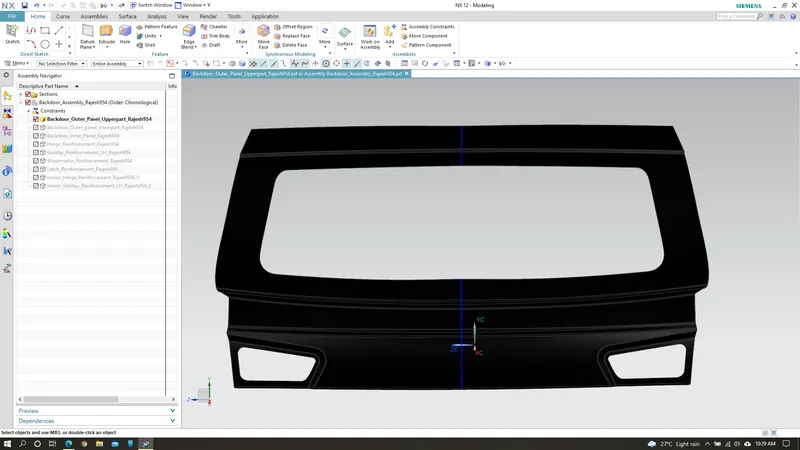
Back door outer panel upperpart is provided by the styling team which is generally produced by scanning the prototype, the part which is obtained from the styling team consists of major drawbacks, these flaws must be adjusted properly.
Ex: Gaps between the surfaces, self intersection of surfaces.
These kind of flaws must be addressed properly and back door outerpanel is the visible to the naked eye so certain mastic data points should be provided rather than going for welding. 0.7mm thickness is applied to the outer panel upper.
2. Back door Outerpanel Lower:
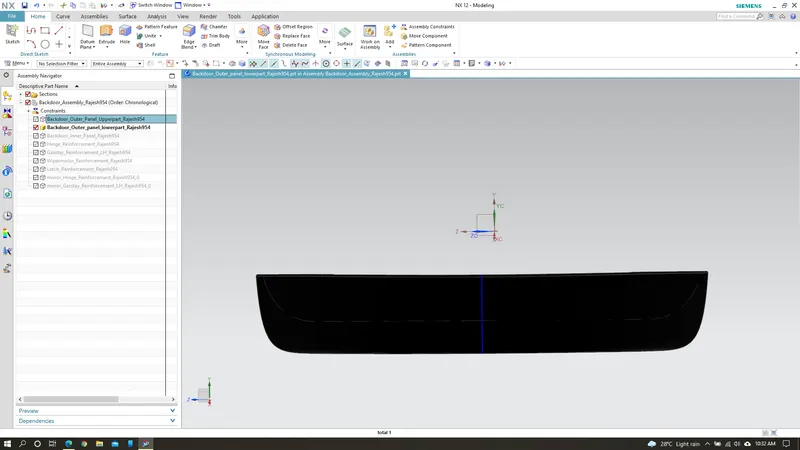
This surface is also obtained from the styling team and flaws msut be addressed before designing inner panel both outerpanel upper and lower helps to provide hemming with the inner panel of the back door. 0.7mm thickness is applied to the lower panel.
3. Back door inner panel:
Backdoor inner panel should be designed by offsetting the both outerpanel lower and upper surfaces and with the help of law extension and trim and extend back door is designed. This panel plays major role as this contains all the reinforcements and embosses.
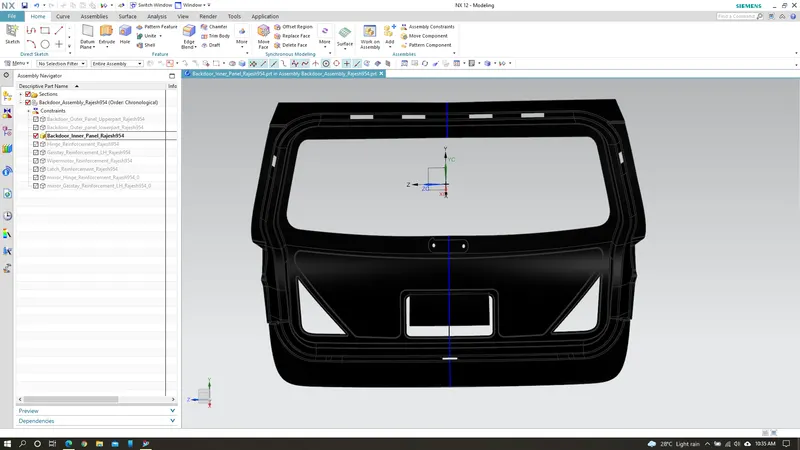
All the reinforcements must be provided on the inner panel and embosses msut be provided to improve local area strength of the component.
Embossing is a stamping process for producing raised or sunken design in sheet metal. These embosses allows the force to dissipate to other directions rather than focusing at a single point.
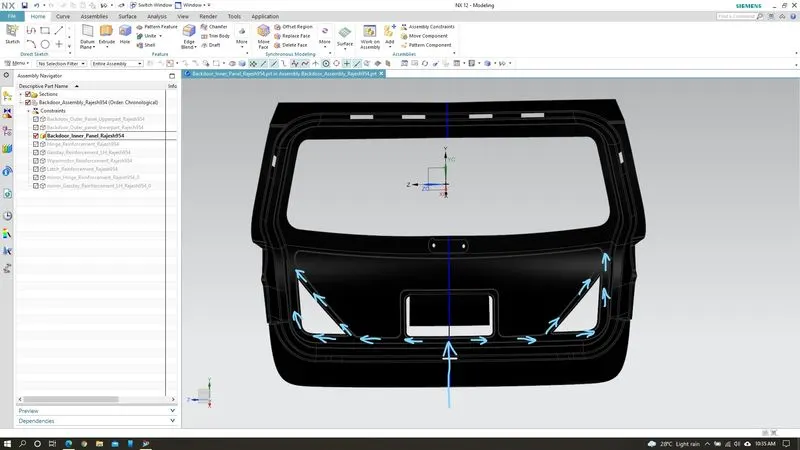
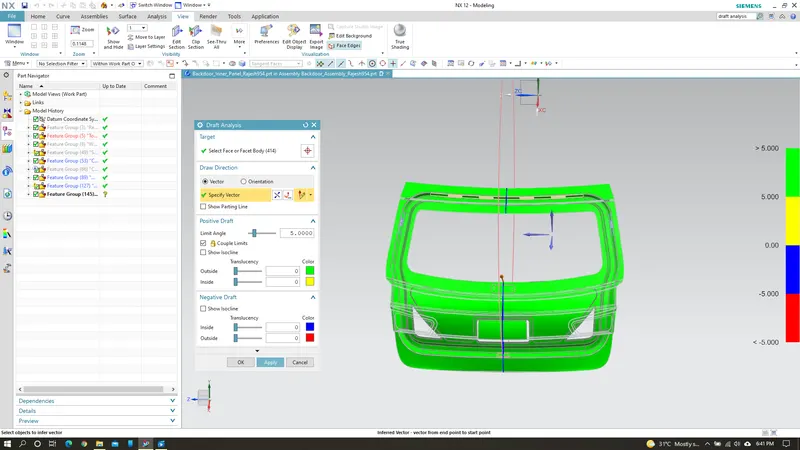
Draft analysis should be done to check whether the surfaces are performing positive draft of negative draft, negative draft is unlikely for manufacturing sheet metal components.
Draft analysis of the inner panel:
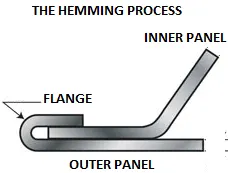
Hemming is the process of joining two sheetmetal components with the help of roller die. It is the process bending/rolling the flange of the outer panel with the inner panel.
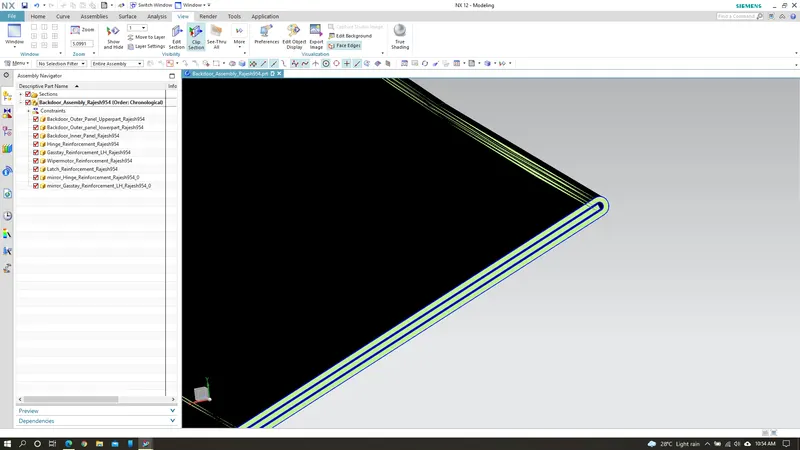
0.7mm thickness is applied to the outer panel and inner panel and 0.2mm clearance is provided to the inner panel and outer of the backdoor.
4. Hinge Reinforcement:
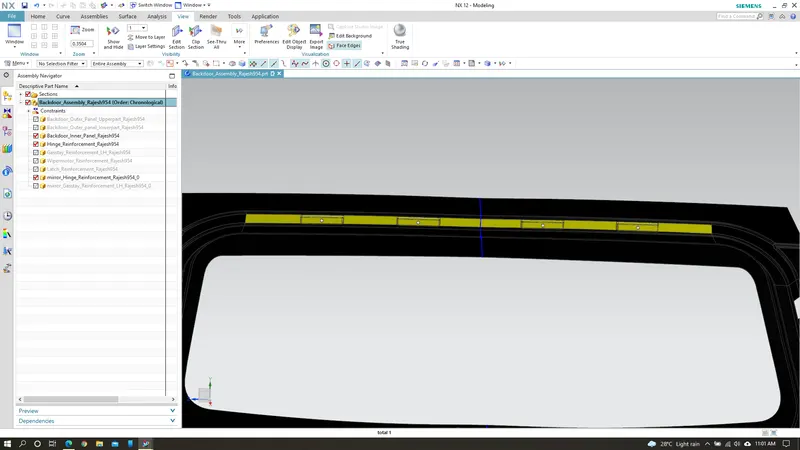
Hinge reinforcement is provided on the inner panel for opening and closing the backdoor. These hinges must be provided on both left and right side of the backdoor. A mirrored copy of the hinge reinforcement is used in the assembly of the backdoor. 0.7mm thickness is applied to the hinge reinfrocement.
5. Gas stay reinforcement:
Gas stay reinforcement is used to positon the backdoor at certain angle and 0.7mm thickness is applied and provided on the inner panel of the backdoor.
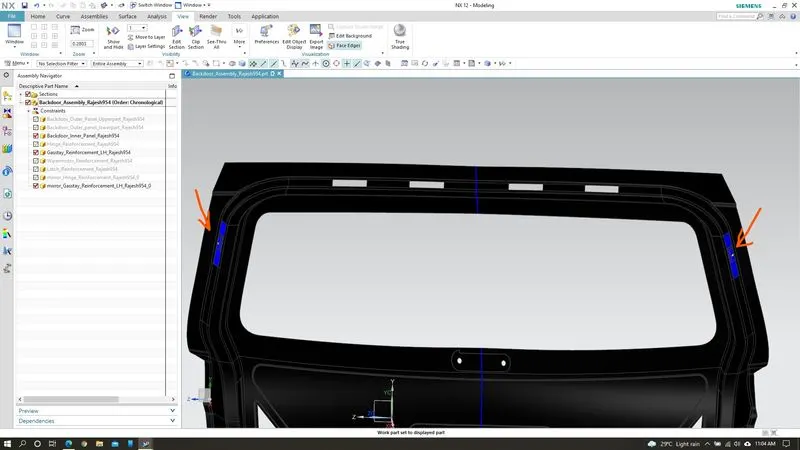
6. Wiper motor reinforcement:
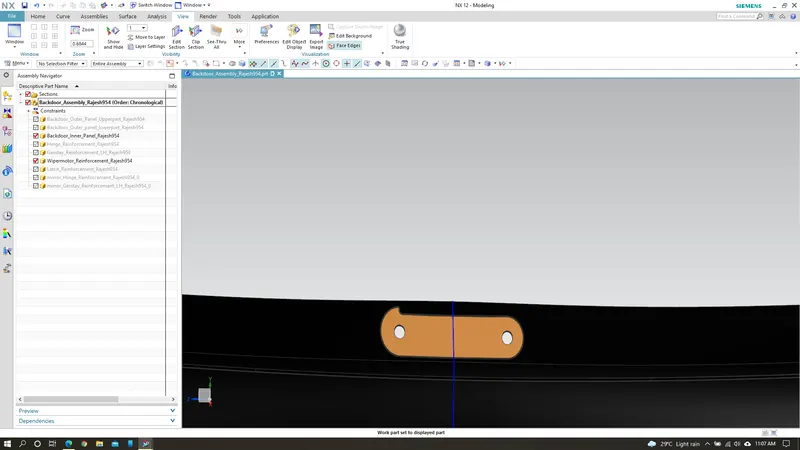
Wiper motor reinforcement is provided on the inner panel which helps in mounting the wiper motor on it. 0.7mm thickness is provided to the reinforcement and provided with edge blends.
7. Latch reinforcement:
Latch reinforcement is provided on the inner panel which helps to close the backdoor and also locks the backdoor with the help of striker. Latch and striker must be positioned perpendicular to the hinge axis and must follow the trajectory which is drawn from of the center of the hinge axis. 0.7mm thickness is applied to the latch reinforcement and the trajectory is shown in the image below:
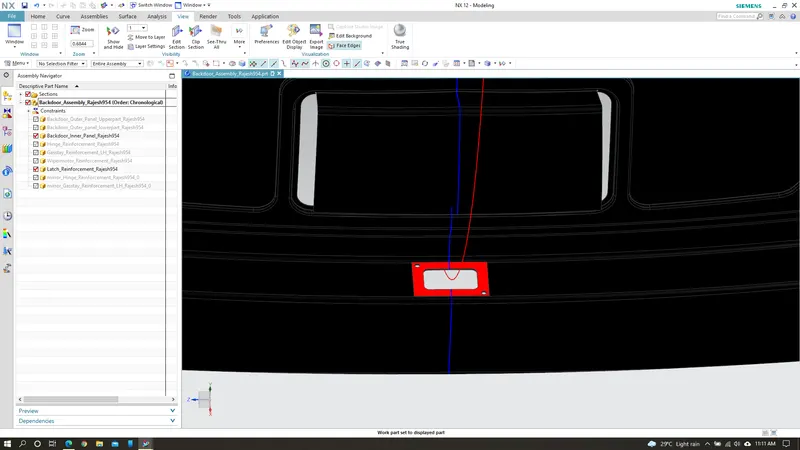
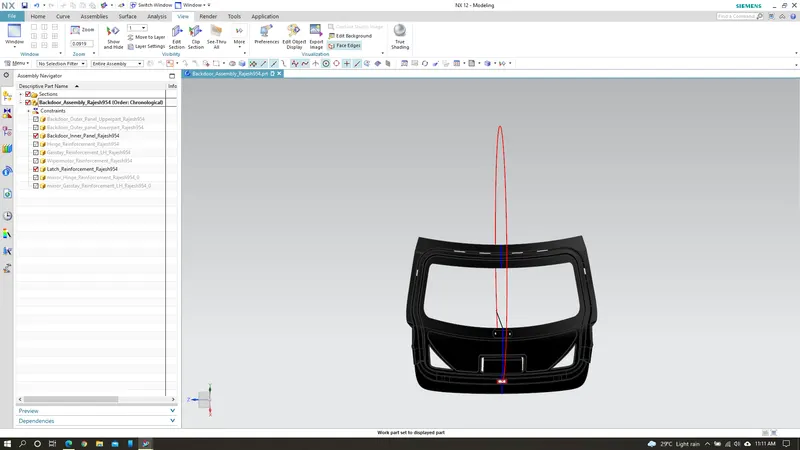
Latch trajectory is indicated in the above image with red circle.
Assembly:
All the components of the backdoor were assembled and the thickness of 0.7mm is applied to the all components and the image is shown below:
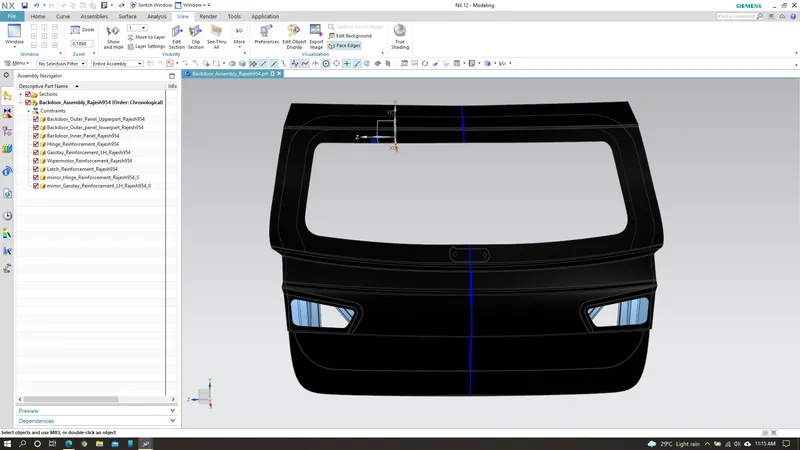
Conclusion:
Backdoor is designed according to the design considerations and assembled it with the sub components.