Design of backdoor
BACK DOOR CHALLENGE
- AIM- Use the provided styling surface to come up with a back door design, use appropriate design methodologies, and provide the necessary reinforcements and embosses.
- INTRODUCTION-
Back door is a hinged door/tailgate at the rear end of the vehicle. It is used for loading & unloading cargos, or to get passenger in & out. The back door comprises of certain components which form the back door assembly together. The back door is mainly operated by gas-stay components in order to reduce the effort of lifting the back-door while opening. In top-end higher luxury vehicles are provided with powered back-door driven by electric motor, with press of button opening & closing of back-door can be operated without human efforts.
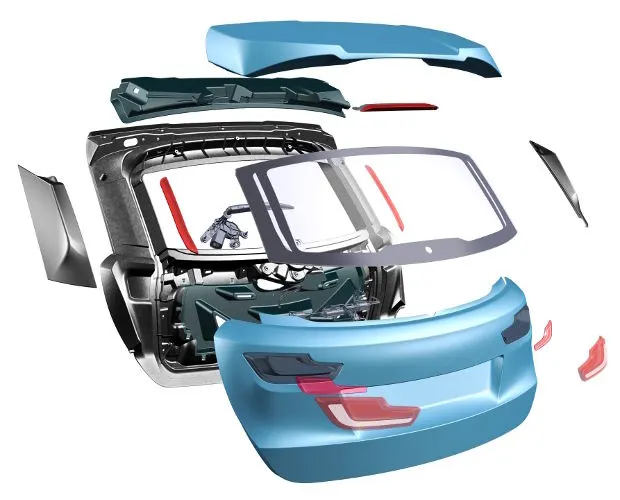
Back door assembly mainly consist of outer upper panel, outer lower back panel, inner panel & reinforcements. The two outer panel i.e., outer upper back panel & outer lower back panel which is later joined together by welding process to become a single unit component. Manufacturer mainly uses their materials like Aluminium & steel are easy to draw it into desired shape & make budget friendly.
- TYPES OF BACK-DOOR BASED ON MOUNTING POSITION
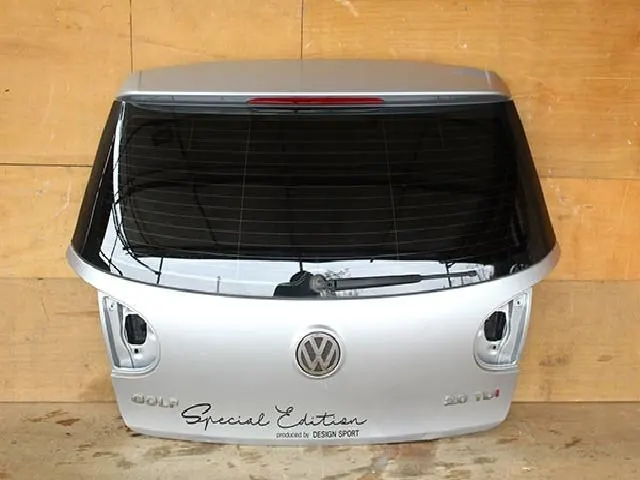
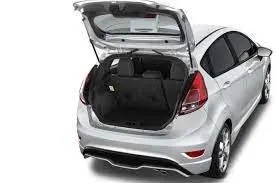
- TOP-MOUNTED DOOR- Top mounted back door is designed near the roof side of the sealing flange & the gas-stay mounting near corner side of the sealing flange. This type of back doors is used in a station wagon, pickup trunk and some of the sport utility vehicles. Today's modern cars use top mounted tailgating system which are both powered and also gas stay supported.
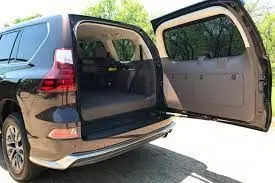
- SIDE MOUNTED DOORS- Side mounted back door rolls in the sideways direction just like co-passanger, passenger side door. They mainly used in MPV type van, Suv’s, pickup truck vehicles. It is much easier as compared to top-mounted door & generally smaller in size.
- BOTTOM SIDE DOOR/SPLIT TYPE- Bottom type or split type backdoor system is used in estate type cars, pickup trucks and some luxury SUVs. These are most convenient type of backdoor in which the bottom split is used as a support or even as a table for the touring people.
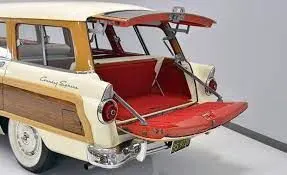
- TYPE OF WORKING MECHANISM ON BACK DOOR
1) GAS-STAY – Gas- stay is a support device for the back-door & engine hood in automotive by means of actuation mechanism, containing fluid or inert gas inside the cylindrical tube.
It is designed to be used for upward lifting doors, once the door is slightly moves upward, gas-stay lifted by itself to open position.
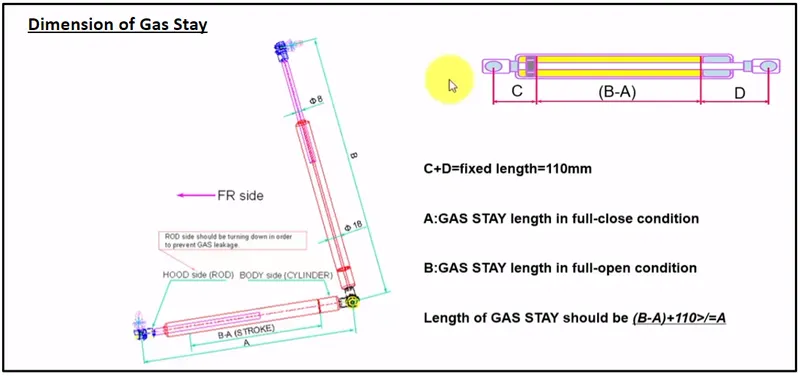
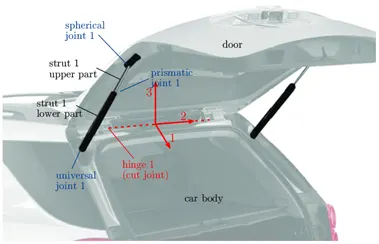
2) POWERED LIFT SYSTEM- Power trunk lid system is another sophisticated but modern way of trunk/liftgate opening mechanism which is to automatically open and close of the trunk/liftgate and release of the latch by the touch of a button.

- LOAD CASE ANALYSIS
(1) BEND TEST
(2) TORSION TEST
(3) ABUSE CASES
(4) DENT TEST
(5) ASSY LOAD CASES
(6) ENDURANCE TEST
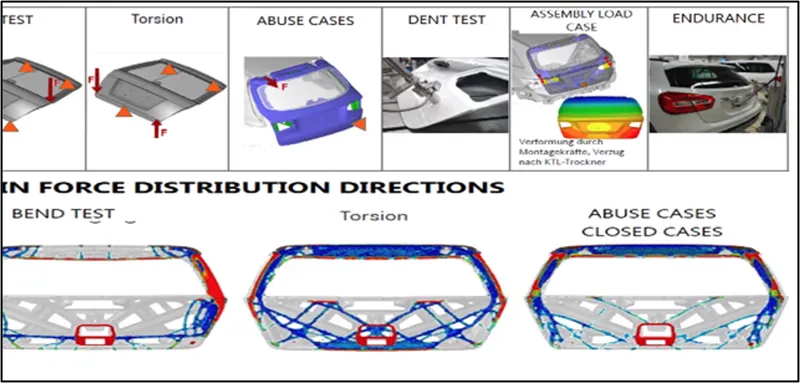
- MANUFACTURING METHODS
Currently in manufacturing, the manufacturer is approaching the weight reduction of the components by choosing the materials selectively, according to the budget oriented & give quality product to the consumers. For liftgate/tailgate production the manufacturer’s is using steel & Aluminium.
The budget-oriented vehicles mainly use Steel for deep drawing method but for producing the components always is heavy as compared to cast Aluminium. Design for the deep drawing method should have at least 7-10 degrees of draft angle. This done due to the punching of the die on the sheet metal to give the desire shaped on the sheet metal like steel i.e., stamping process so that irregularities are not formed & some other issues in the sheet. Addition components like reinforcements are placed locally where the strength is less to withstand it.
Some branded manufacturer’s is producing casted aluminium for liftgate/tailgate. Cast aluminium requires 3 degrees of draft angle & no reinforcement is needed. The manufacturer’s produce their components by pattern-making which can be used to shape the mould cavity with accurate dimension. Then mould is prepared to receive the molten metal, in this case Aluminium. This metal aka Aluminium is melted down into hot liquid form & pour the molten liquid metal to the runner in the moulded cavity to get the desired shape. It is a vey light weight component & helps in weight reduction of the vehicles.
Ultimately, it depends on the manufacturer’s choice the what materials is using to produce within the budget & deliver to the consumers.
- BACK DOOR ASSEMBLY
The back door assembly consists of following components
(1) Outer Panel
(2) Inner Panel
(3) Hinge reinforcements
(4) Gas-Stay reinforcements
(5) Wiper-motor reinforcements
(6) Latch/Striker reinforcements
OUTER PANEL-
The outer panel is styling skin surface of the back door. It is a BIW components which is the aesthetic part of the vehicle. The coating is provided for multi-stage protection which has the property from scratch resistance, rust-proof & gives smooth finishing. It has also the provision for tail- light mounting, license-plate light mounting & license plate mounting. Some the vehicles are having wiper motor mounting also.
There are 2 panel one is outer upper panel & other one is outer lower panel which is joined together by welding process to generate a single unit component.
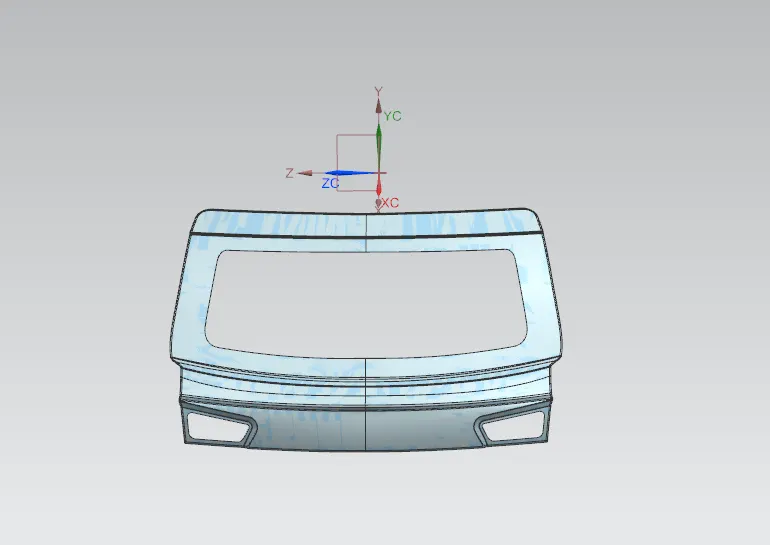
OUTER UPPER PANEL
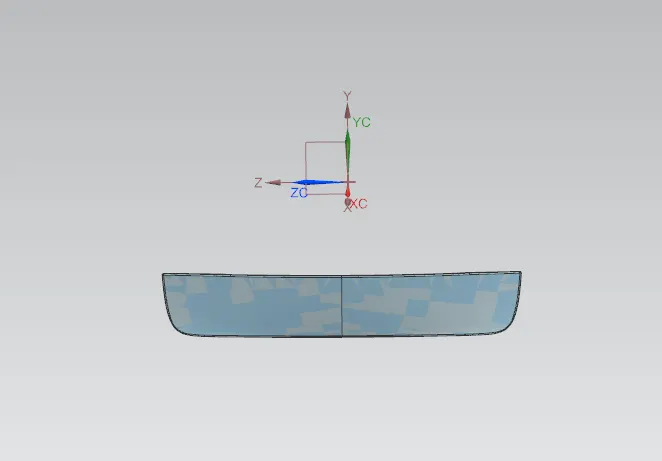
OUTER LOWER PANEL
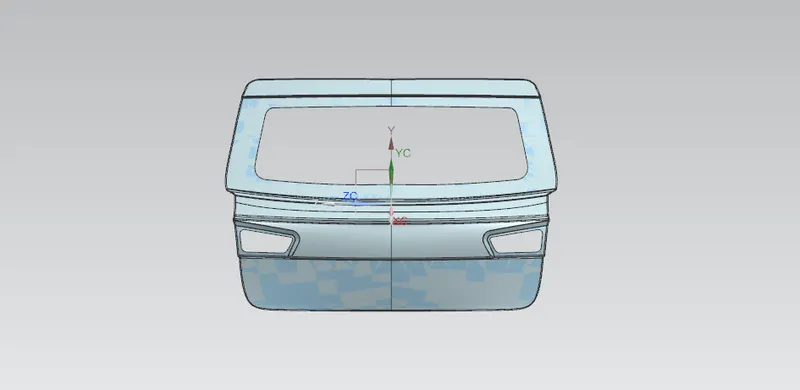
OUTER PANEL
INNER PANEL-
Inner panel is the integral component which strengthen the outer panel or door assembly. It is the most important part because lot of the components are integrated like hinges mounting, gas-stay mounting, latch/striker, wiper-motor mounting, glass guide channel, moulded trim etc. The integration method is suitable method for stamp out a single blank & reduce number of tools for preparing the components.
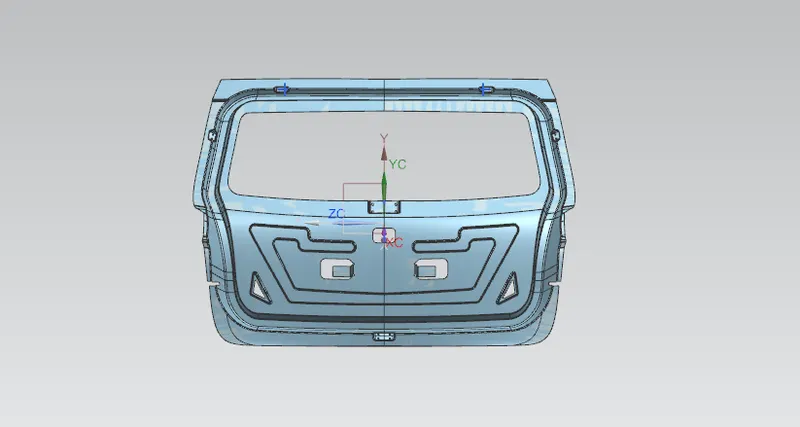
INNER PANEL
REINFORCEMENT-
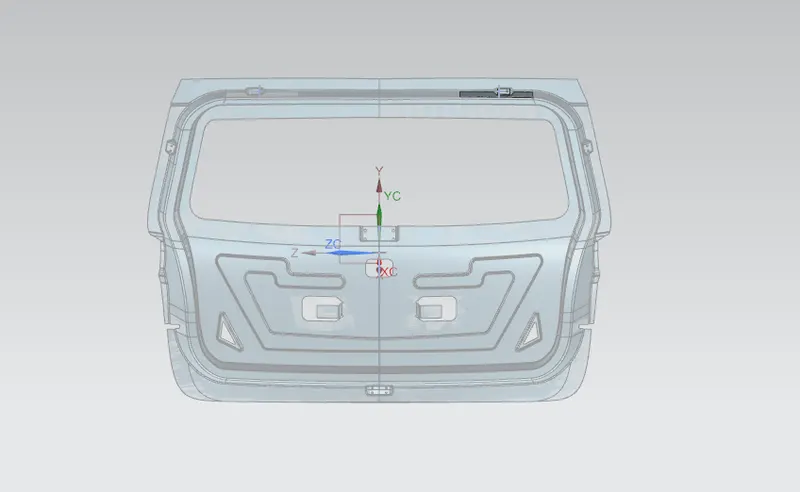
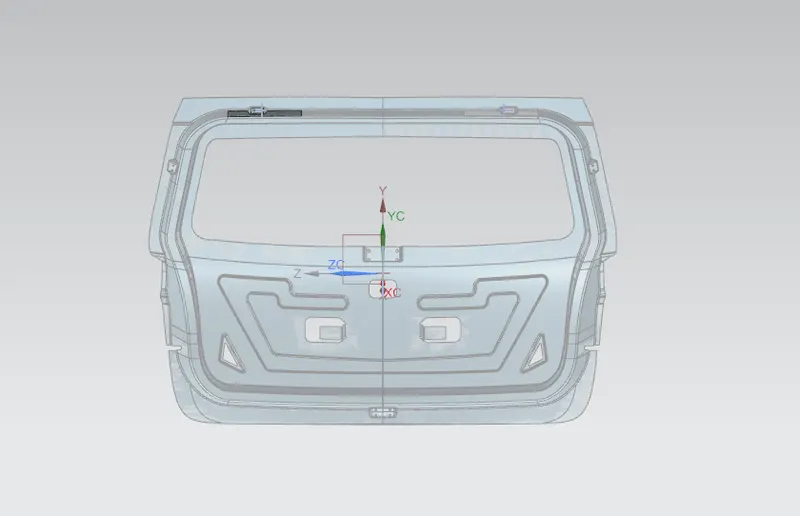
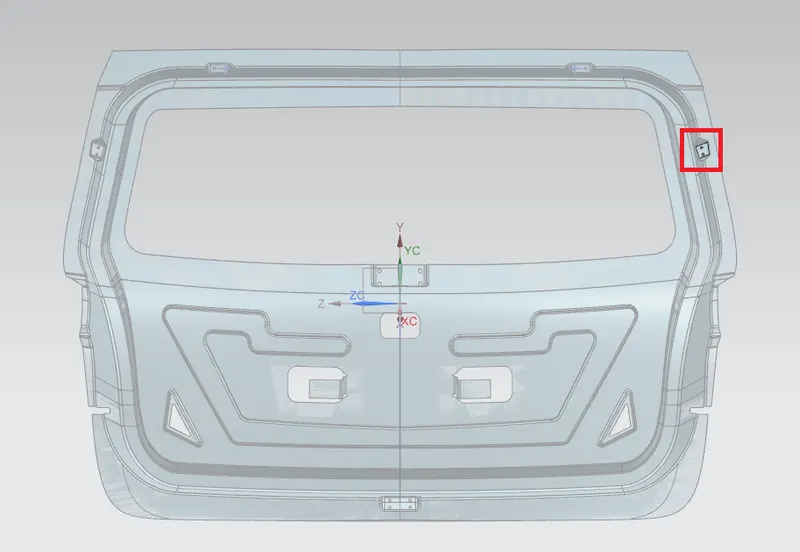
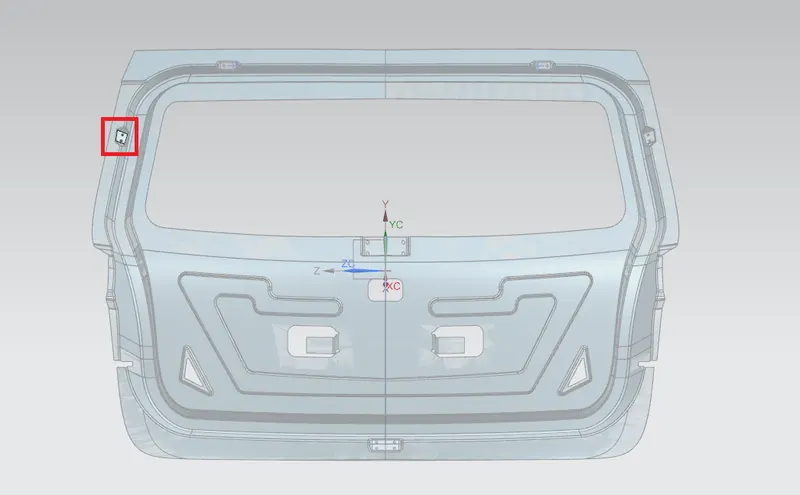
Reinforcement is the additional components which is given to compensate to lose of strength which is happen in the area locally. For back door there certain area where reinforcement is placed in like hinge mounting, gas-stay mounting, wiper motor-mounting & striker mounting.
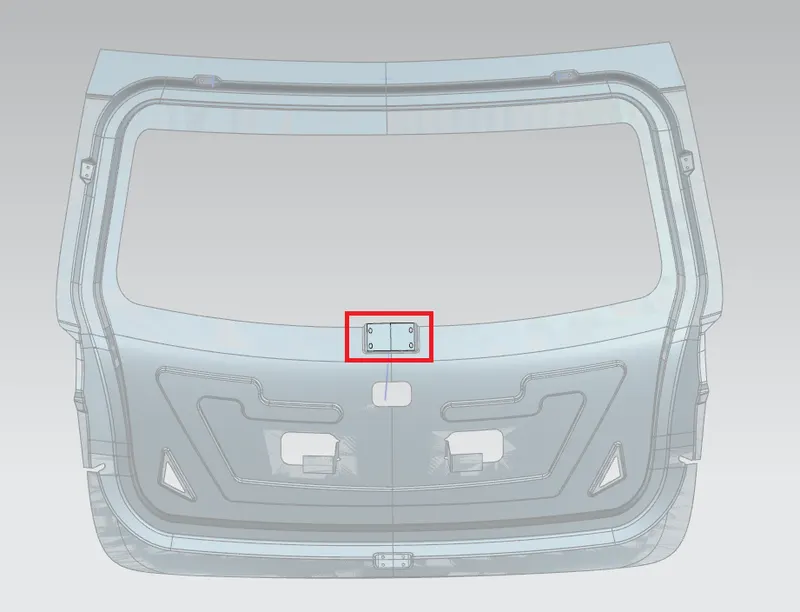
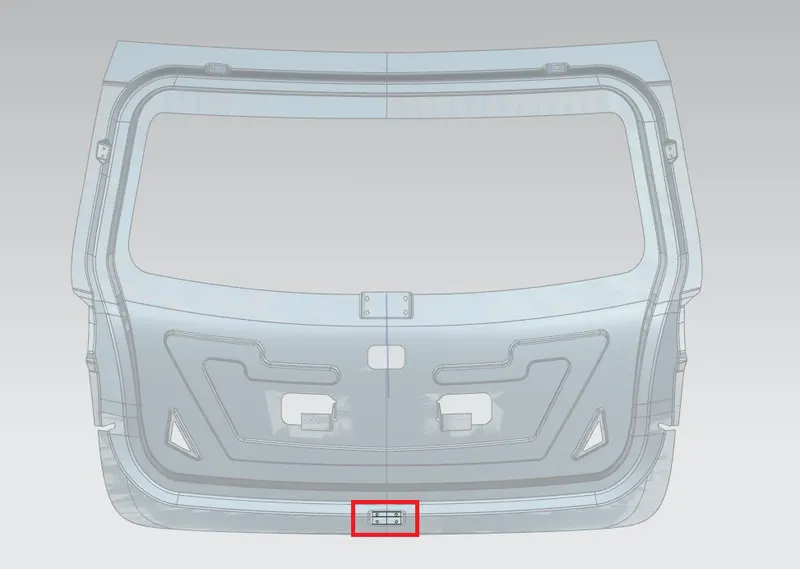
- DESIGN METHODOLOGY
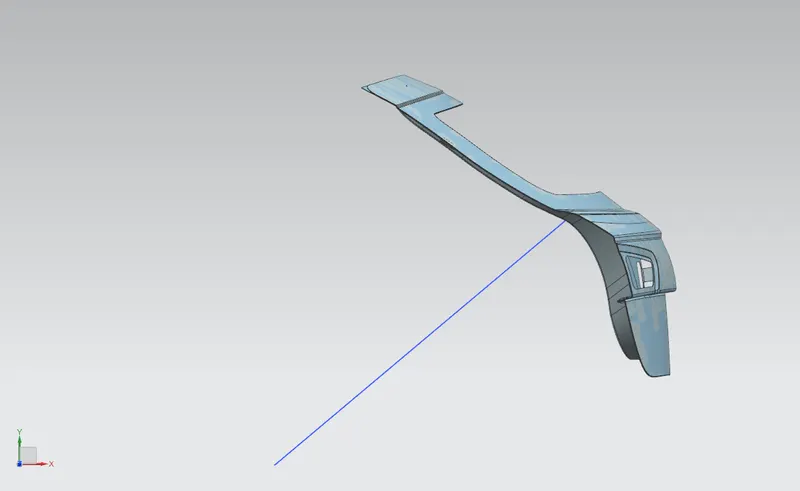
TOOLING AXIS- Tooling axis is nothing but the direction which helps the design the components to give the draft angle with respect to the tooling direction.
HEMMING-
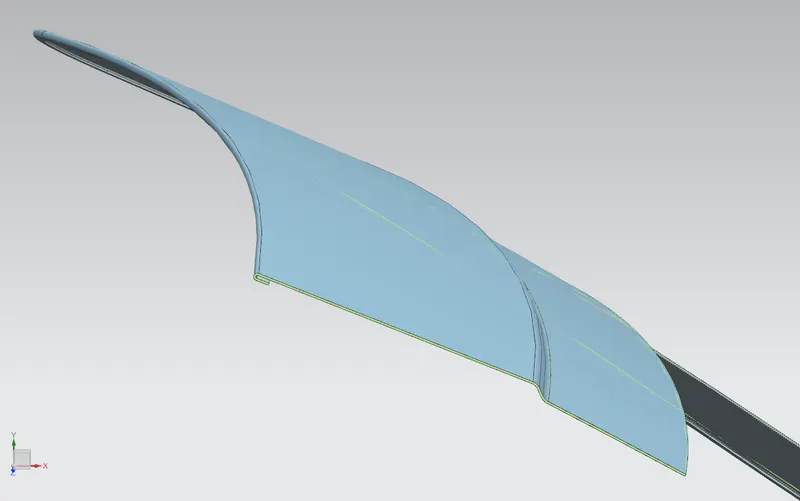
Hemming is a forming operation in which the edges of the sheet are folded over another part in order to achieve a tight fit. Usually hemming operations are used to connect parts together, to improve the appearance of a part and to reinforce part edges. To increase crash resistance the gap between the hemmed panels is filled with a high-strength adhesive which also prevents from corrosion.
HEMMING
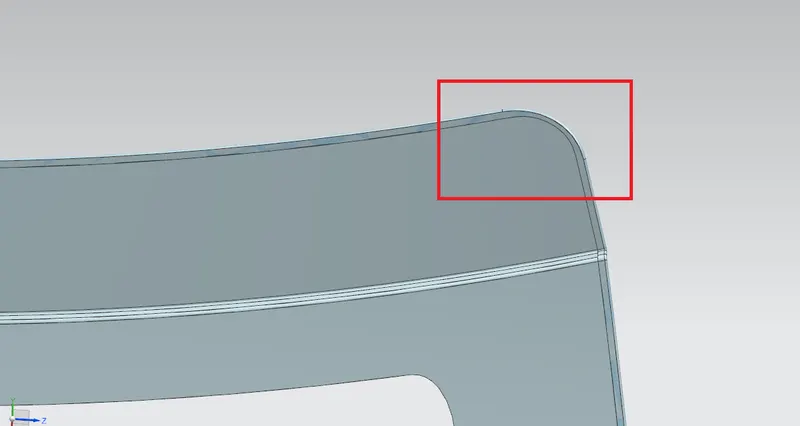
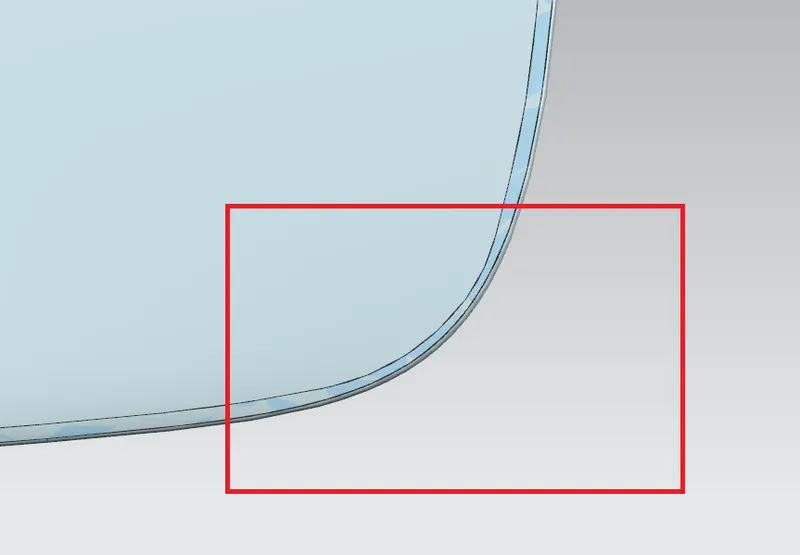
RELIEF CUT-
Relief cut is done the on the corner of the hemming region of the assembly panel to avoid wrinkle formation on the surface by the rolling operation.
LATCH/STRIKER TRAJECTORY-
Backdoor is the swinging part which rotates about hinge axis. The position and orientation of latch striker is important for proper opening and closing of the backdoor. The positioning is done by sketching a circle with centre as the axis of the hinge which passes through the striker at appropriate position with respect to inner panel.
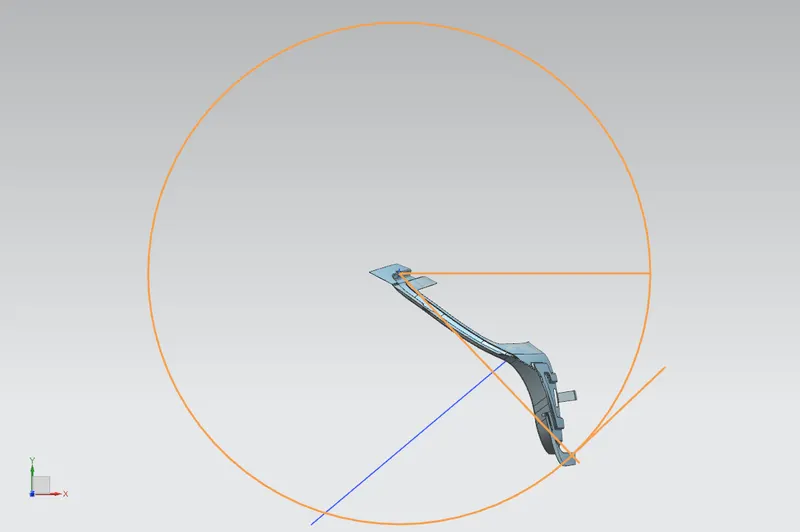
LATCH/STRIKER TRAJECTORY
- CONCLUSION
Back-door design has been completed.