Design of backdoor
AIM: To design a back door with appropriate reinforcement using the provided styling surface data.
OBJECTIVE:
- To correct the given styling surface for surface discontinuity.
- To design an inner panel from the corrected styling surface/outer panel.
- To provide inner panel with all the necessary reinforcements.
- To join the inner panel and outer panel through hemming.
BACK DOOR/TAIL GATE
A complicated vehicle component like a back door or sometimes known as tailgate must meet high standards of visual appeal, ensure a proper fit, and conceal several hidden elements like hinges, lock mechanisms, and electrical wiring. backdoors must also maintain their stability and watertightness when being exposed to mechanical and climatic forces that can cause deformation. ng an efficient car or any automotive.
Backdoor has many importnat components. Some common components are highlighted in figure.
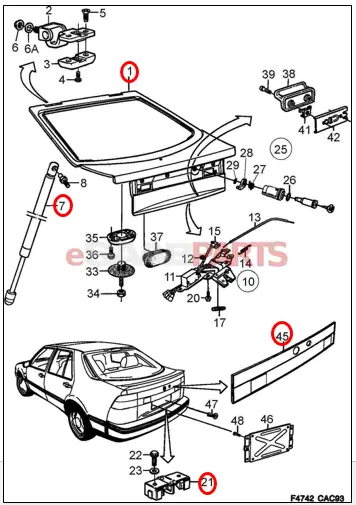
| Fig 1: Different parts of back door (esaabparts.com) |
- Outer panel upper (1).
- Outer panel lower (45).
- Striker (21).
- Gas stay (7).
- Inner panel.
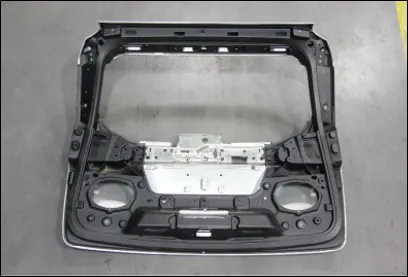
| Fig 2: Inner panel of back door (Richard Berkmortel) |
General processes involved in manufacturing a of door is shown in figure below
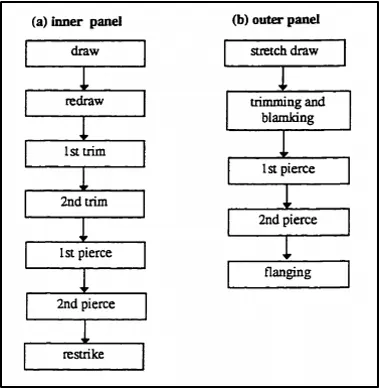
| Fig 3: Manufacturing process of door (Essam Shalash,1996) |
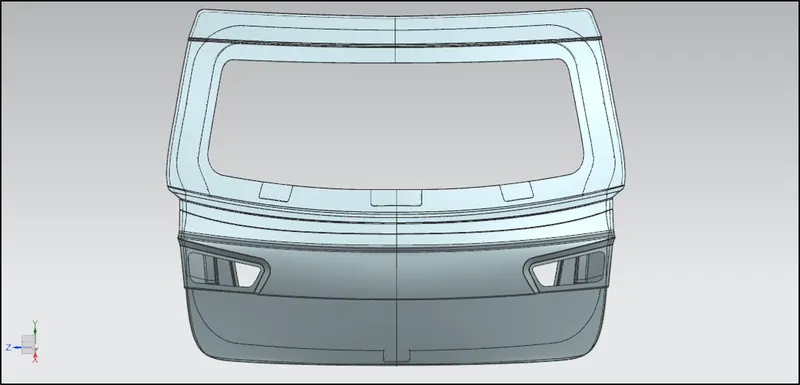
In this project we design a backdoor with the help of given styling surface as shown in figure 4.
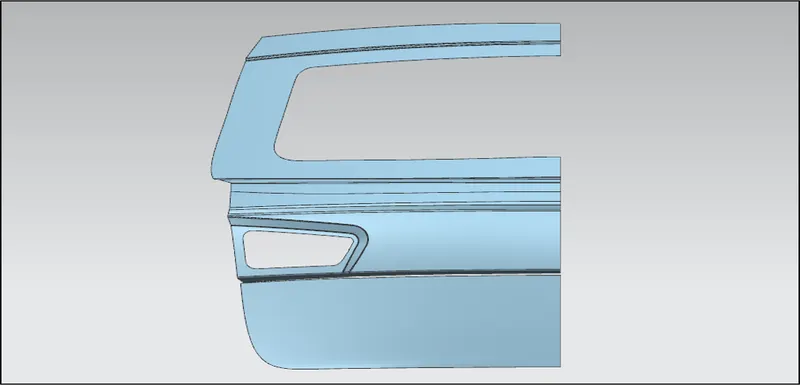
| Fig 4: Styling surface |
Given styling surface is checked for discontinuity using examine geometry as shown in figure 5.
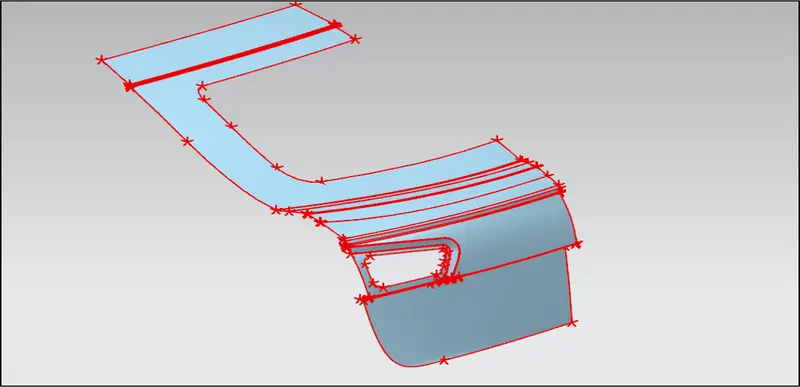
| Fig 5: Surface discontinuities |
Using bridge curves and through meesh surface, irregularities in surfaces are corrected.
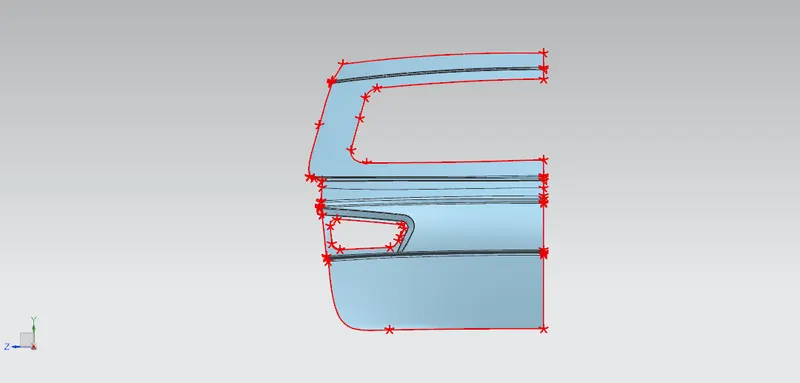
| Fig 6: Corrected surface |
INNER PANEL
Inner panel is the supporting member of the backdoor which houses the wiring, drives and motors for wiper and all the reinforcements. It dissipates the shocks from impact away from the door.
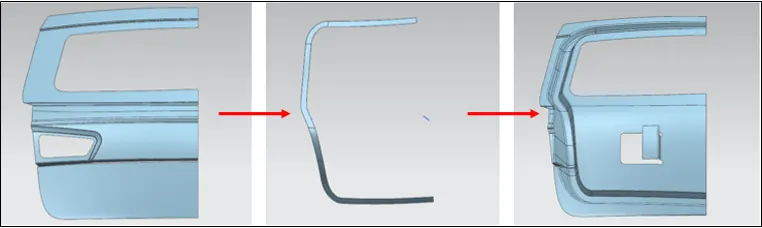
| Fig 7: Back door development |
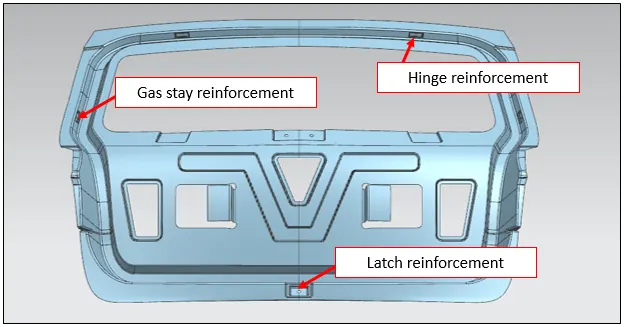
| Fig 8:Back door inner panel with reinforcements |
Reinforcements are provided to give strength to the places whenever material is removed from a place.
DRAFT ANALYSIS
Draft analysis is performed along the tooling direction, to check whether the sufficient draft is provided or not. As seen the draft provided is sufficient.
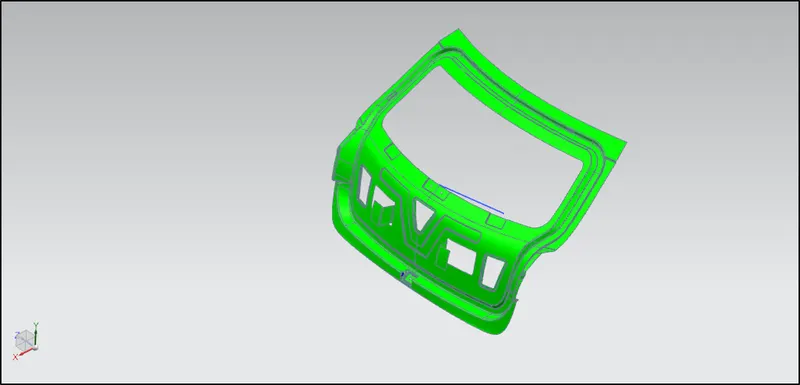
| Fig 9: Draft analysis |
LATCH POISITON
Latch posiiton is found out by drawing a circle from the center of hinge axis as show in figure 10.
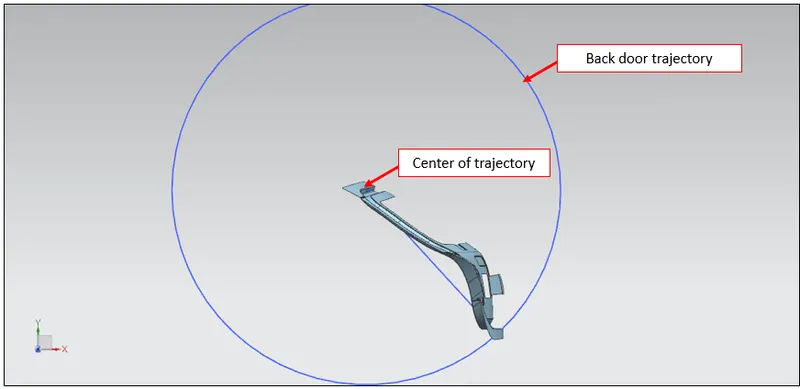
| Fig 10: Latch position |
HEMMING
Process used to join the styling surface and inner surface because conevention joining process will destroy the appearnce of styling surface.
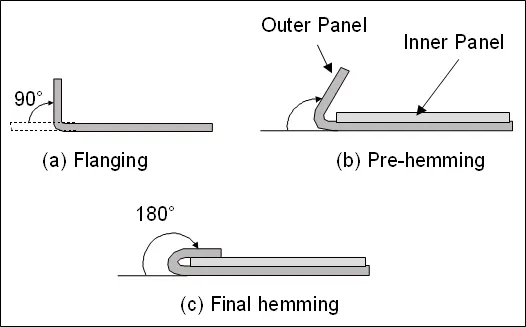
| Fig 11: Hemming process |
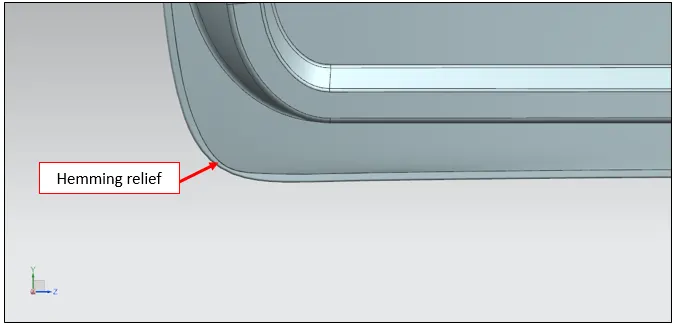
| Fig 12: Back door hemming with relief |
| Fig 13: Final back door design |
CONCLUSION
- Correction of the given styling surface for surface discontinuity is completed.
- Design of inner panel from the corrected styling surface/outer panel is completed.
- Inner panel with all the necessary reinforcements is designed.
- Inner panel and outer panel are joined through hemming.
Hence a backdoor from given styling surface is designed