Design of backdoor
BACKDOOR:
- Top Mounted
- Bottom Mounted
- Side Mounted
TOP MOUNTED:
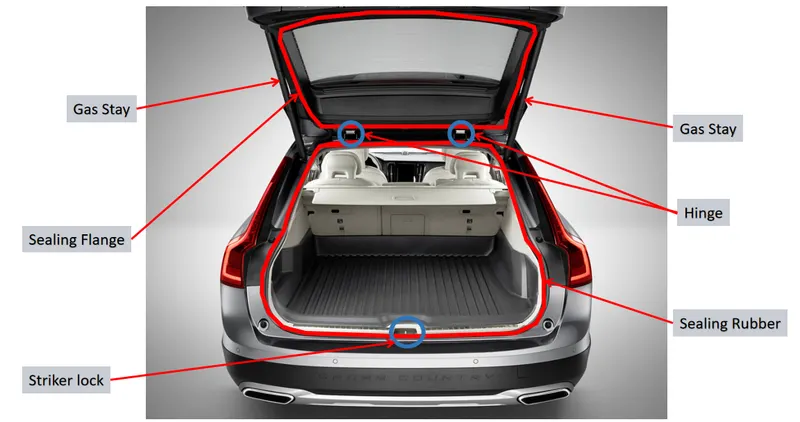
A station wagon, pickup truck, and some sport utility vehicles use this style of the back door. Modern automobiles have top-mounted tailgating systems that are powered and gas-powered. Compared to side-mounted or bar doors with canter pillars, these top-mounted tailgates offer better rear visibility.
BOTTOM MOUNTED:
Pickup trucks, and some high-end SUVs all use this bottom-type or split-type backdoor system. These are the most practical back doors because the bottom split can be used to support or even serve as a table for tourists.
SIDE MOUNTED:
Compared to top-mounted doors, these side-mounted or barn doors are much simpler. These doors can be opened easily and are typically smaller in size. Side-mounted doors are used in van-type MPVs, SUVs, and pickup truck vehicles. These doors are more practical for the people who handle the goods. Accidental head impacts are also avoided by these doors. The side-mounted doors make loading and unloading cargo much simpler.
MECHANISM TYPES:
- GAS STAY
- POWERED LIFT SYSTEM
GAS STAY:
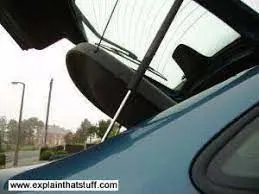
The best and most popular tailgate mechanism, from lower segment cars to luxury car segments, is the gas stay type backdoor. The ideal tailgate parts include a hinge, a door, a gas stay, and some rubber beadings for the door's seal.
POWERED LIFT SYSTEM:
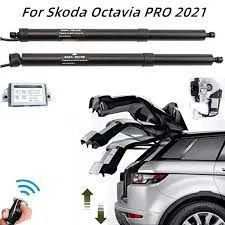
Another sophisticated method of opening a trunk or liftgate is a power trunk lid system, which uses a button to release the latch and automatically open and close the trunk or liftgate.
COMPONENTS OF BACKDOOR:
INNER PANEL:
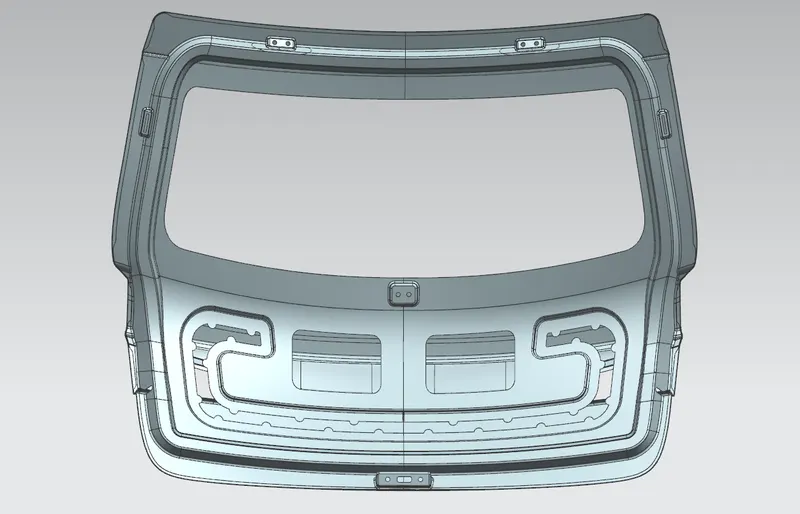
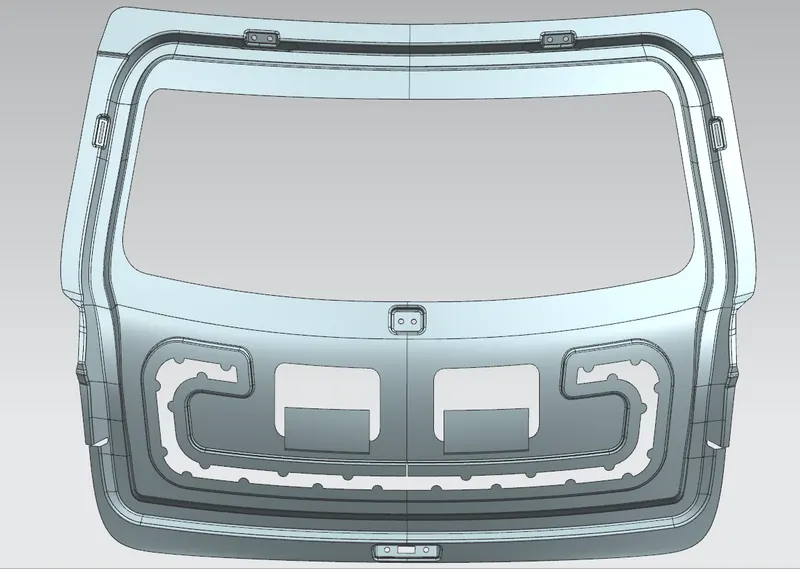
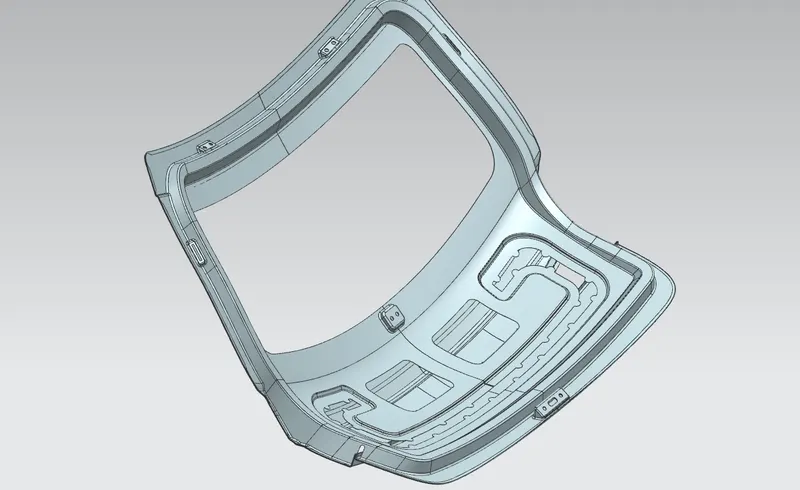
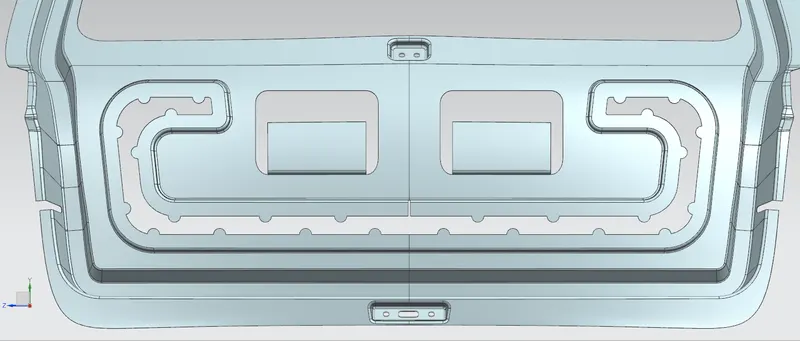
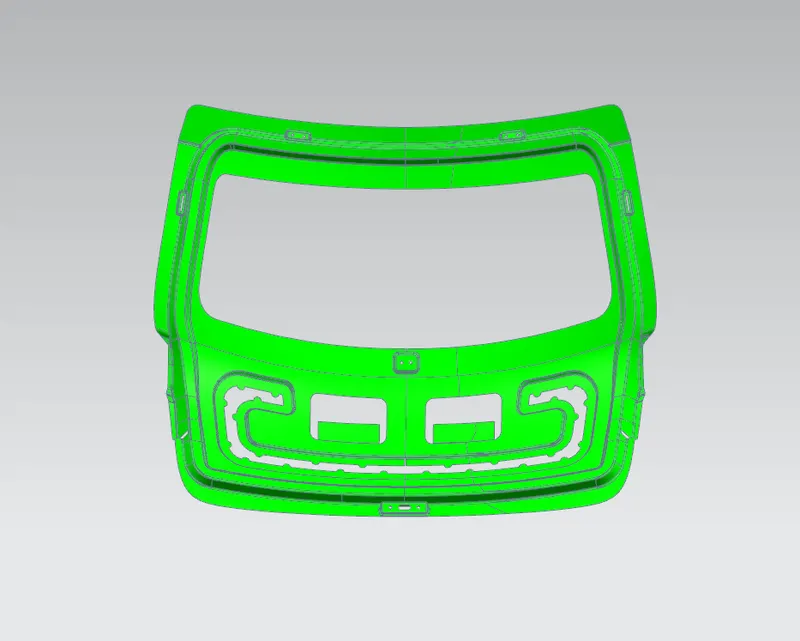
One of the most crucial parts of the backdoor assembly, the inner panel is used to strengthen the door assembly and is where all of the accessories, including the latch, glass guide channel, moulded trim, and hinges, are mounted. An integration method is a potential approach. The part is formed using the integration method from a single blank. This lessens the number of tools required, lowers the cost of assembly, and solves any fit ability issues.
OUTER PANEL:
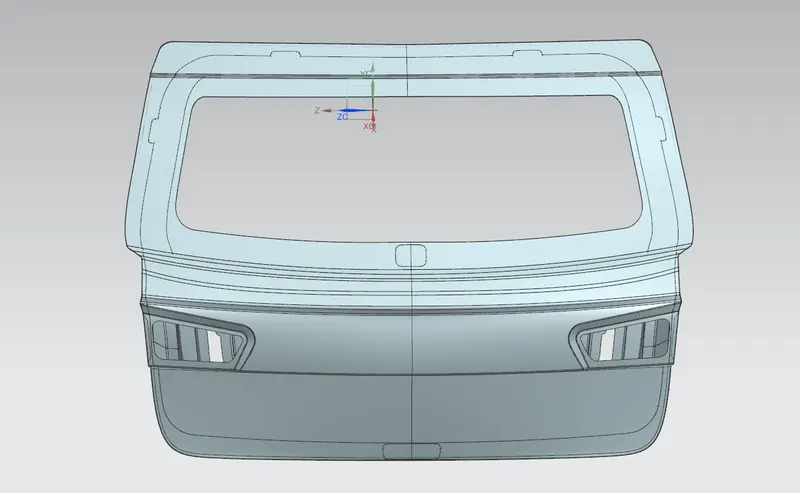
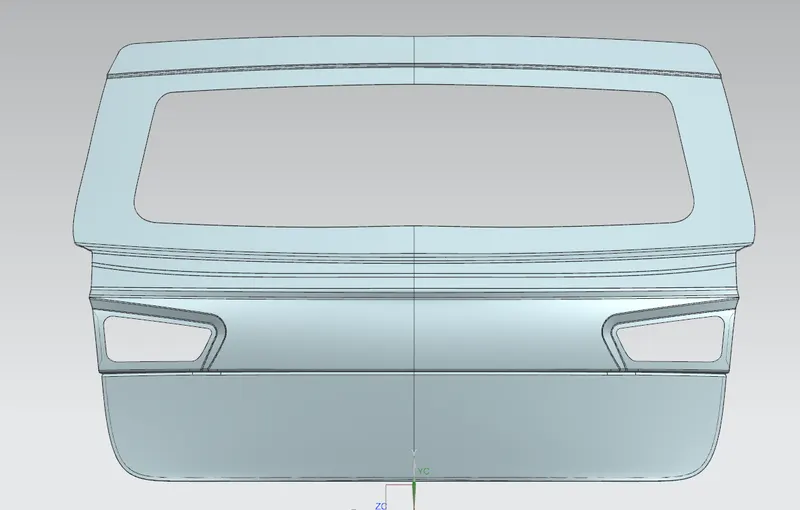
Similar to other BIW components, the back door's outer panel serves as the vehicle's decorative element. The offered coating is a multi-stage coating with the qualities of scratch resistance, rust prevention, and slick and appealing finishes. Additionally, the outer panel includes mounting holes for the tail lamp, rear fog lamp, and license plate. The majority of hatchback cars are equipped with wiper motors.
HINGE REINFORCEMENTS:
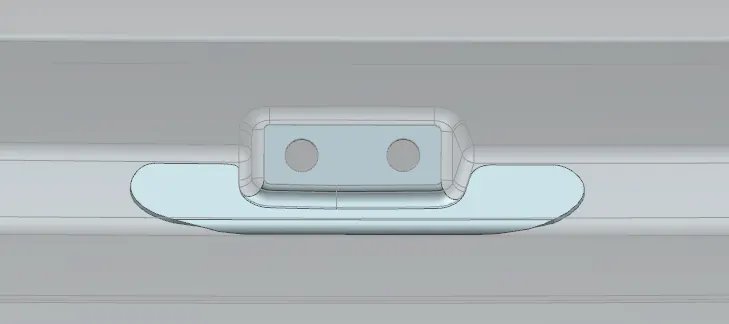
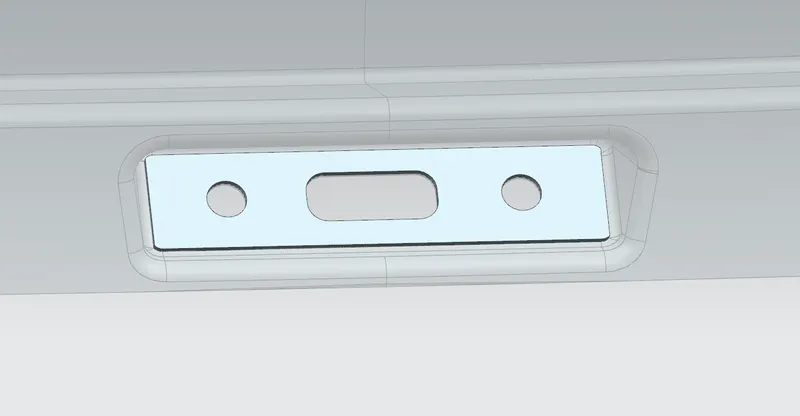
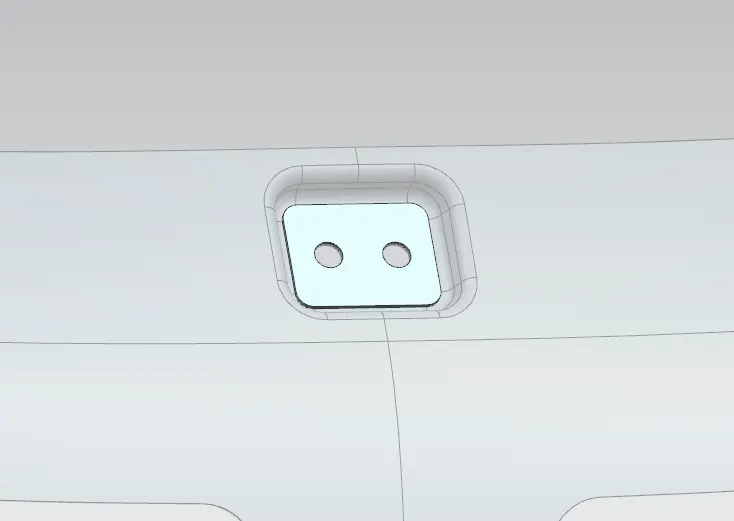
Hinges are fixed on the inner with the help of hinge reinforcements. This creates contact between the car and the backdoor and hence it enables the backdoor to open and close.
DESIGN METHODOLOGY:
- Creating assembly workbench
- Creation of Tooling Axis
- Create an inner panel and Outer panel
- Sealant flanges on Inner panel
- Embosses on the inner panel
- Hemming flange and corner reliefs
- Provide mastic clearances
- Thicken Inner and Outer panel
- Add Hinge, Striker, Gas-stay,and Wiper motor Reinforcements
- Latch trajectory
- Edge blends, mastic spots, and other features
DESIGN CONSIDERATIONS:
TOOLING AXIS:
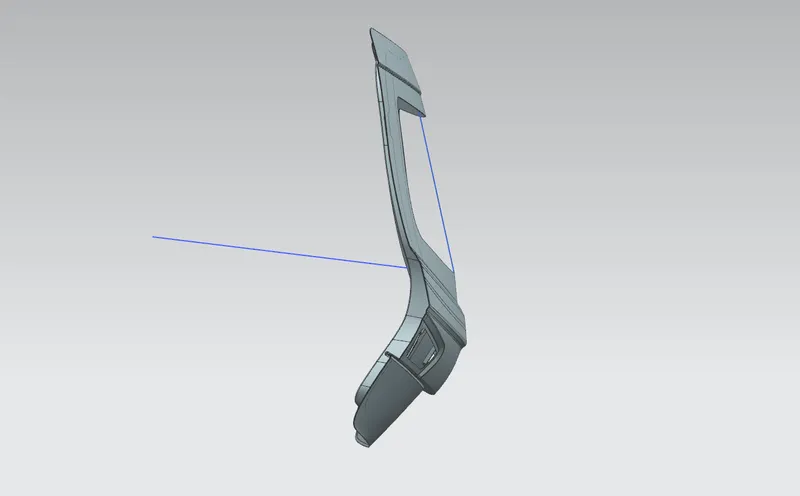
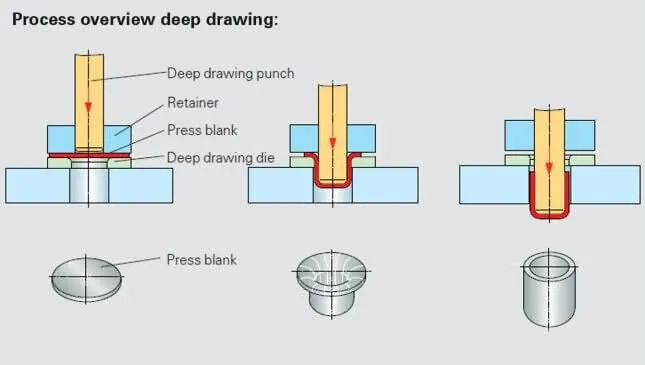
Deep drawing will be used in the production of the back door. A tool called a core and die is used in the deep drawing process. The tooling direction is the inclination angle of the core, which follows a single straight path. The tooling axis is designed in such a way that the manufacturing team can use it as a guide and when manufacturing the part. It was created using a top-down approach.
LATCH TRAJECTORY:
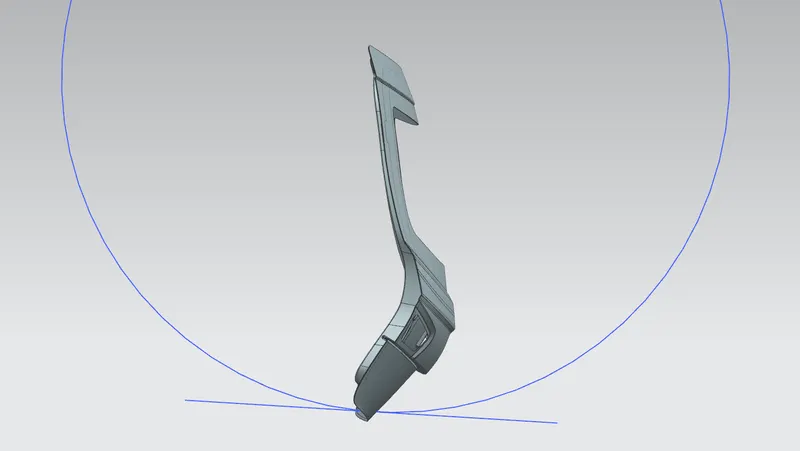
The latch trajectory depicts the striker's route while a vehicle's backdoor is opened and closed. The established criterion based on the average height of a person determines the radius of the circular trajectory. From the hinge axis up to the latch, the radius is calculated.
HINGE AXIS:
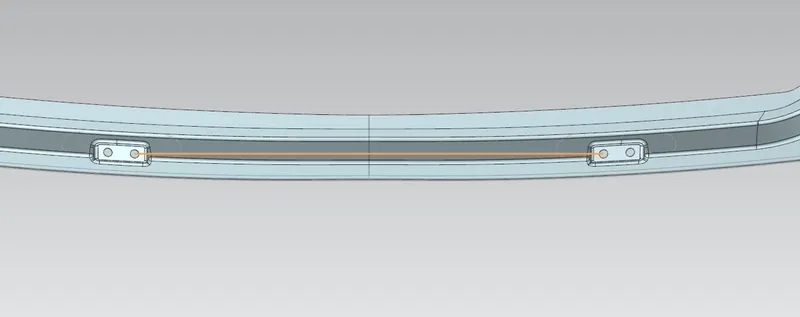
DEEP DRAWING:
A sheet metal blank is radially dragged into a forming die by the mechanical action of a punch during the sheet metal forming process known as deep drawing. So, it is a material-retention shape modification process. When the drawn element is more deeply recessed than it is in diameter, the method is referred to as "deep" drawing. Redrawing the portion using a series of dies does this. The material retention property causes a radial drawing stress and a tangential compressive stress in the flange region. Wrinkles in the flange are caused by these compressive forces. By employing a blank holder, which serves to assist regulated movement, wrinkles can be avoided.
LASER BEAM WELDING:
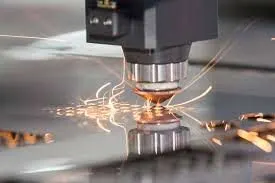
Laser beam welding is a type of fusion welding in which two metal pieces are fused together. The cavity between the two metal pieces that are to be joined is focused by the laser beam, which acts as a concentrated heat source.
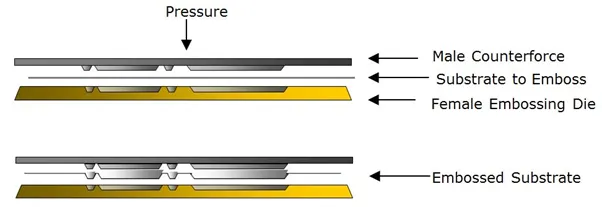
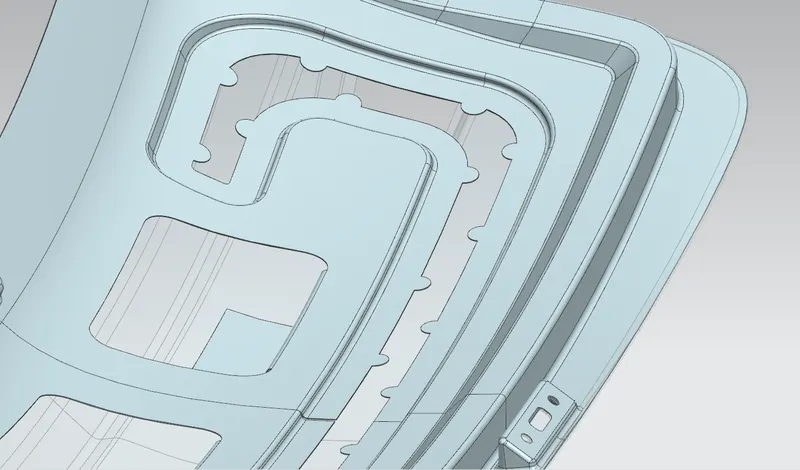
EMBOSSING:
A stamping technique called sheet metal embossing is used to create raised or sunken designs or reliefs in sheets of metal. This procedure can be carried out using male and female roller dies that are matched, or by sliding a sheet of metal or a strip of metal between rollers to create the desired pattern. To provide a lustrous, 3D impression, it is frequently used with foil stamping.