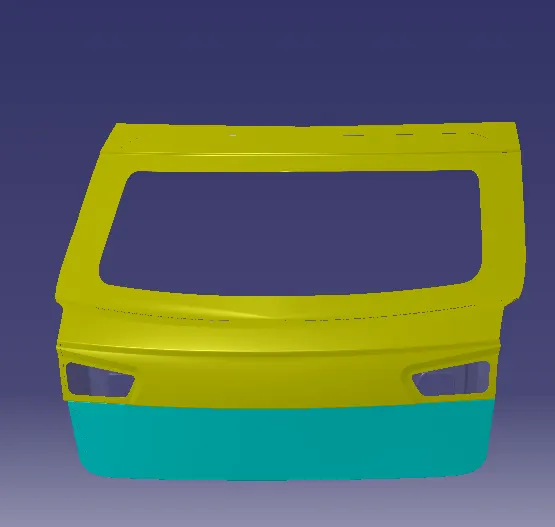
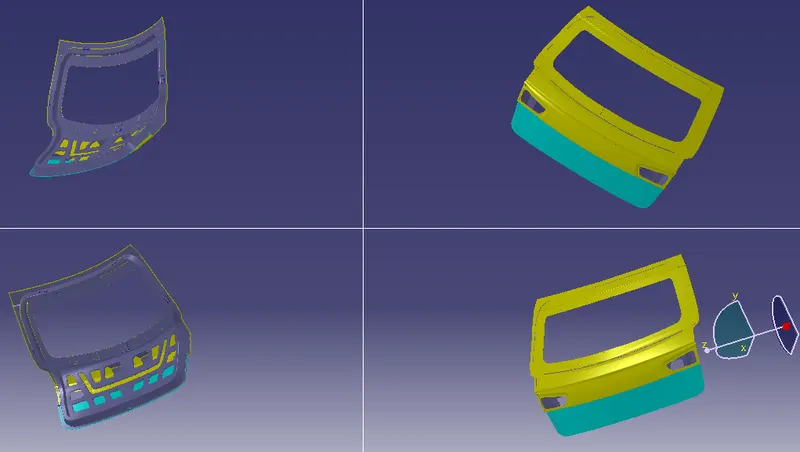
Design of backdoor
AIM: To develop car door panels and to design necessary reinforcements and embosses from the given styling surface.
INTRODUCTION: A car door is a type of door, typically hinged, but sometimes attached by other mechanisms such as tracks, in front of an opening that is used for entering and exiting a vehicle. A vehicle door can be opened to provide access to the opening, or closed to secure it. These doors can be opened manually, or powered electronically. Powered doors are usually found on minivans and race cars, or modified cars.
The most common door which can be found in car market is the classic door. It is the most common door used, it is well known to everyone because it opens like the typical door in a conventional house. Being very common, the assembly becomes fitting, cheap, and also simple although it has a disadvantage because a huge lateral space is needed for its manipulation. The same disadvantage can be found in a gull-wing door although
this door makes easier the entrance as its opening is in the upper side of the car.
Unlike other types of doors, the exterior side of the vehicle door contrasts in its design and finish from its interior side (the interior part is typically equipped with a door card (in British English) or a door panel (in American English) that has decorative and functional features.
The exterior side of the door is designed of steel or other material like the rest of the vehicle's exterior. In addition, its decorative appearance, typically colored with a design, is intended to match with the rest of the vehicle's exterior, the central purpose being to add to the overall aesthetic appeal of the vehicle exterior.
A vehicle typically has two types of doors: front doors and rear doors. Loosely related are vehicle hoods and vehicle trunk lids. There are also doors known as a "hatch".
YPES OF BACK DOOR BASED ON WORKING PRINCIPLE: The back door opening of the cargo area may be hinged from top, bottom and side.If it is hinged from the bottom it is called TAILGATE.
There are three types of back doors
1.Back door
2.side-mounted back doors
3.Top-mounted back doors.
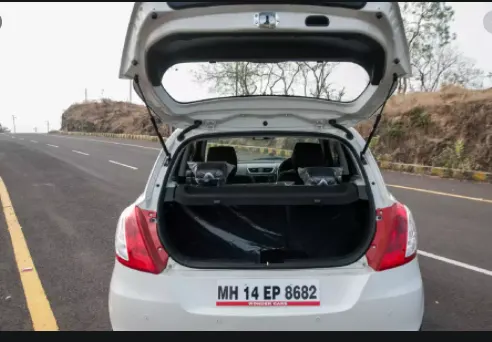
1.TOP MOUNTED BACK DOOR: This type of back door is used in a station wagon, pickup trucks, and sport utility vehicles. Today top-mounted tailgate systems which are both powered and also gas stay supported. These top mounted tailgates provide greater rear visibility compared to the side-mounted or backdoor which has a central pillar in it .
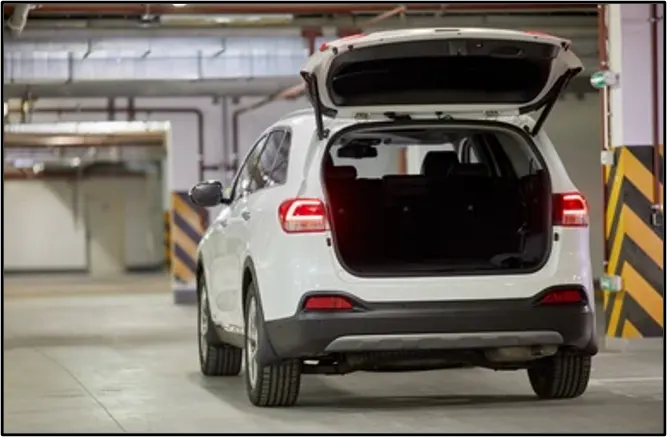
2.SIDE MOUNTED BACK DOOR: This type of back door is usually mounted on the one which is used in van-type MPV's, SUV's, pickup trucks vehicles, These type of side mounted doors or barn doors are a lot easier compared to the top-mounted doors. These doors are smaller in size and can be easily accessed. These doors are more convenient for the good handlers for long and lengthy components where one door is kept open.It is a lot easier to load and unload items inside-mounted back doors.
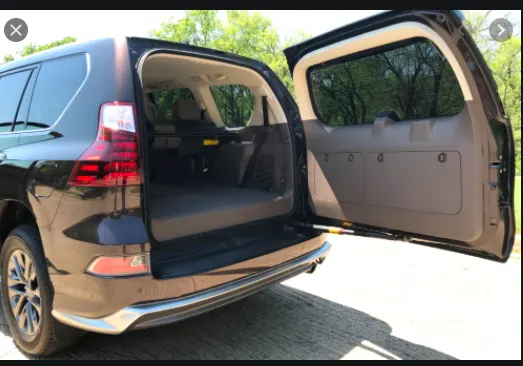
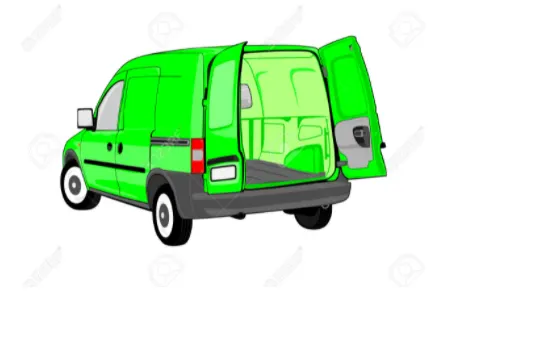
3.BOTTOM MOUNTED SIDE DOOR: This bottom type back door system is used in the car types such as Pickup trucks and some luxury SUV's .These are the most convinient type of back door in which the back door is split and used as a support and even as a table fot the tour-going people.
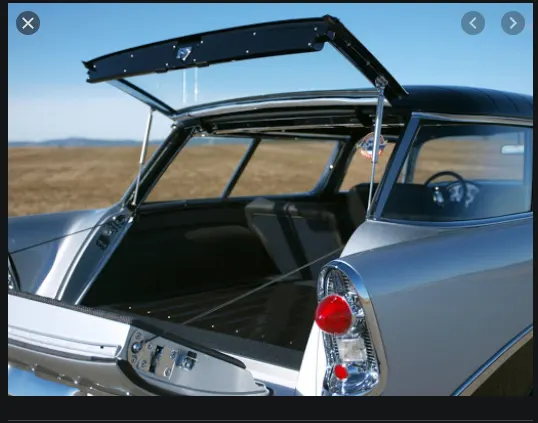
OUTER PANEL:
The outer panel of the back door is similar to the other BIW components where it is the aesthetic part of the vehicle. The coating provides is of multi-stage which has the property of scratch resistance, rush prevention, and smooth and attractive finishes .the outer panel has also had the provisions for the tail lamp, rear fog lamp and also has the provision for license plate mountings, most of the hatchback cars have the provision for the wiper motor.
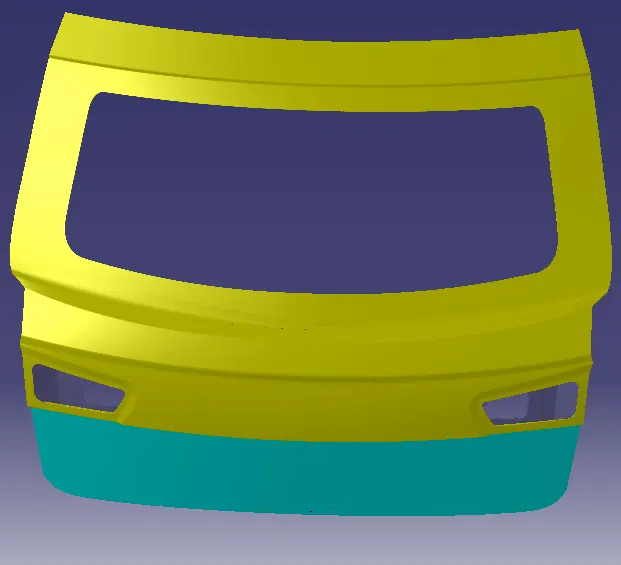
INNER PANEL:
The inner panel is a component that is used for strengthening the door and is one of the most important components on which the accessories are mounted like hinges, glass guide channel, mounted trim latch, etc. The possible method is the integration method .In the integration method, the part is stamped out of a single blank. This reduces the number of tools needed for the assembly cost and eliminates any fit ability problem.
REINFORCEMENTS:
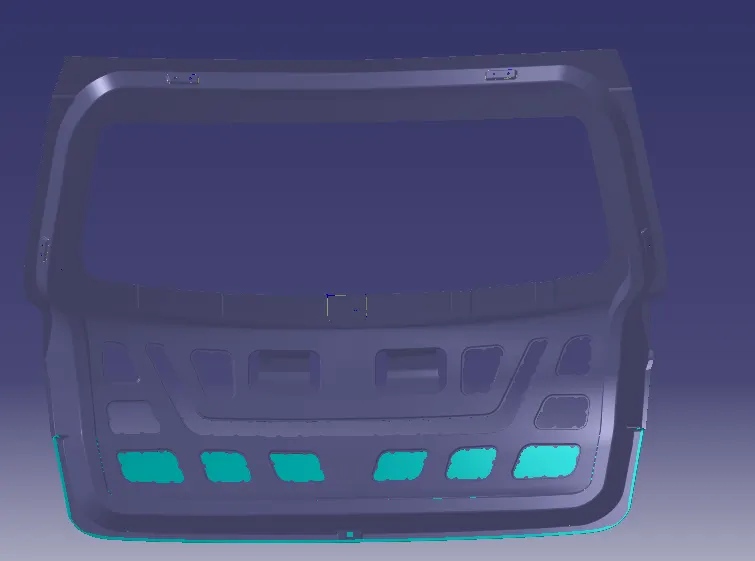
The inner panel accommodates the latch and striker actuation, wiper motor actuator , Trims mountings, Hinge and Gas stay embosses , V-Emboss latch, etc and therefore the necessary cut-outs are provided various reinforcements are also spot welded to the inner panel.
HEMMING:
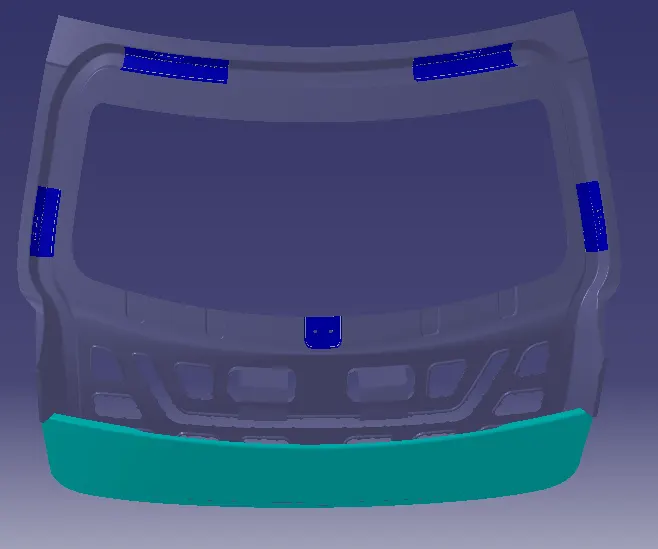
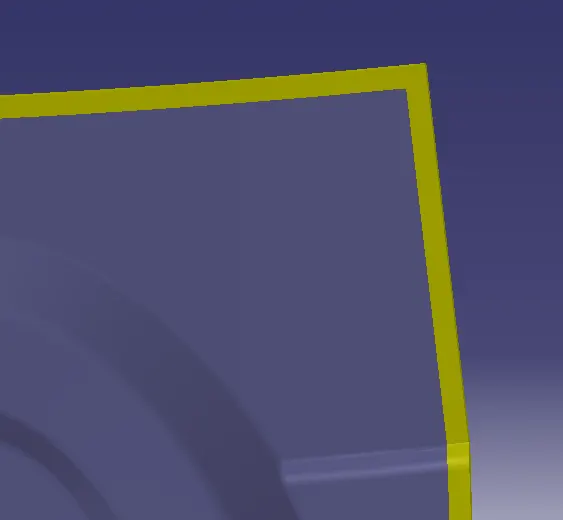
Hemming is a metalworking process in which a sheet metal edge is rolled over onto itself. The outer and inner panels are joined together using Hemmingoperation as we do for other closure and swing components. There is a 0.2 mm gap between the two panels and 1-2 mm clearance at the edge of the inner panel. This space is provided for the sealant to ooze out and spread properly between the panels after the Hemming process in order to achieve water tightness.
REIENFORCEMENTS AND EMBOSSES:
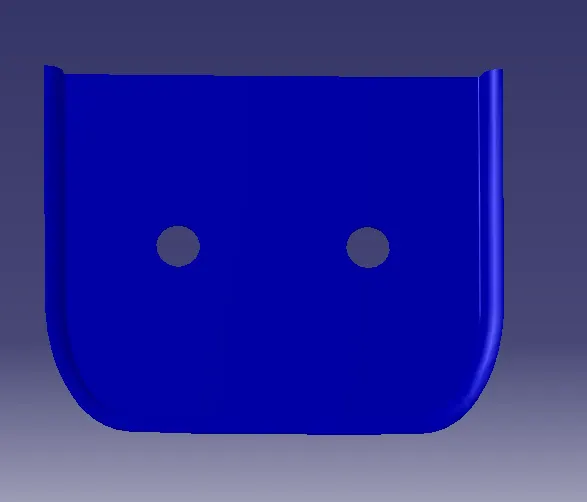
Reinforcements and embosses are added or designed to compensate for the loss of strength in a region or area due to the load acting there. In the back door's caseload acts in the form of Hinge, Gas Stay, and Latch & Striker. These load cases are determined with the help of various tests and simulations.
GAS STAR REIENFORCEMENT:
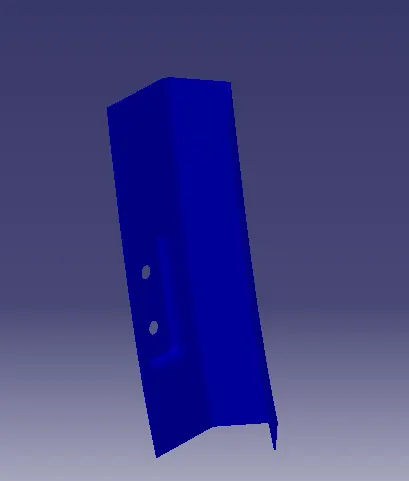
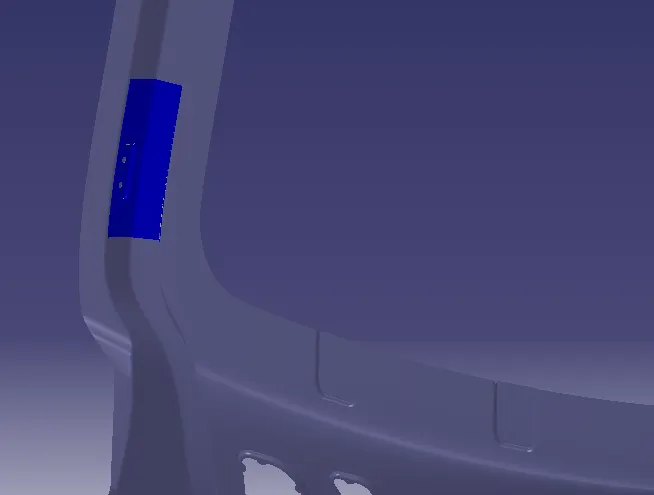
Gas Stayisa device used for supporting the back door in its open position. Gas stays require no manpower and are engaged into support position automatically as the back door opens. One end of the Gas Stay is fixed on the backdoor and the other end on the Body Side or on the Back door stationary area. Embossing ng is provided at the Gas Stay mounting area to compensate for the functional holes punched.
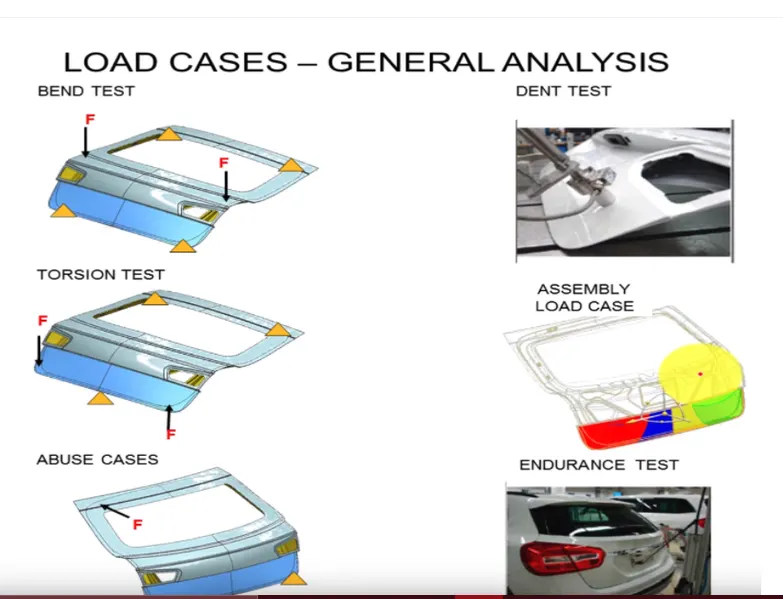
Various simulation tests like the Bend test, Torsion test, Abuse test performed on the back door, as shown above, reveals that there a very weak zone developed at the Gas stay region. To compensate for that, reinforcement is added in that region.
HINGE REINFORCEMENT:
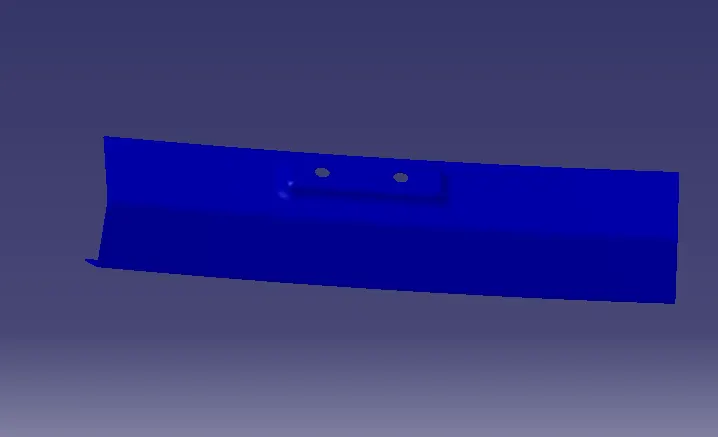
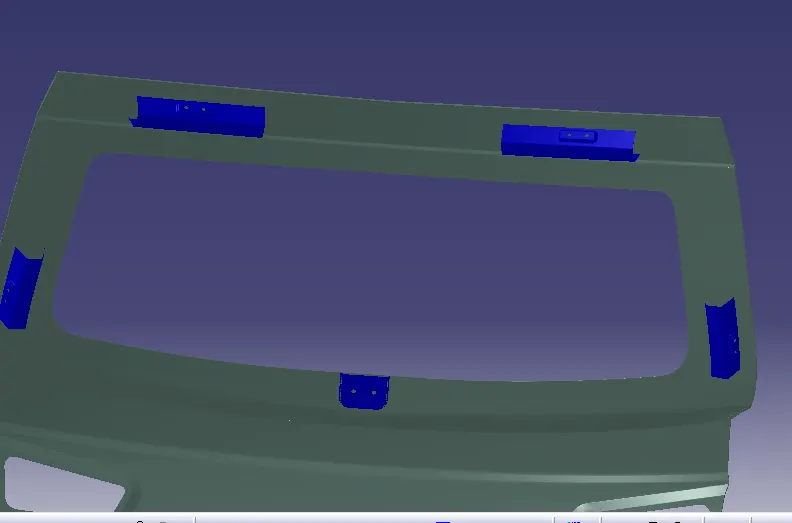
Hinges enable the opening and closing of the back door. One end of the hinge is fixed on the backdoor and the other end on the Roof, on both sides. Hinges can be placed outside or inside the backdoor. Similar to Gas Stay, Hinge reinforcements are added in this region to compensate for the weak zone developed due to the load acting while opening and closing the backdoor.
LATCH AND STRIKER REIENFOECEMENT:
The Latch & Striker forms the locking mechanism of the backdoor with the car. Due to regular opening, closing, and over slamming of the backdoor, there is stress developed in the Latch and Striker area. Further, during a rear collision, this area will be the first point of contact. To compensate for the same, reinforcements are added in this area.
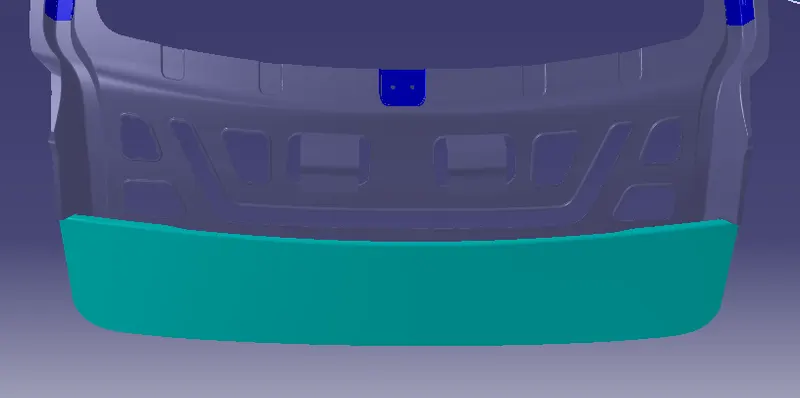
TOTAL ASSEMBLY OF THE CAR BACK DOOR: