Configuration and Characteristics of Lithium-ion Battery Model
OBJECTIVES:
- Configure the generic battery model in MATLAB from the datasheet of a lithium ion battery
- Simulate generic battery model charge discharge using UDDS data
The lithium-ion datasheet used for this project is:
https://www.ineltro.ch/media/downloads/SAAItem/45/45958/36e3e7f3-2049-4adb-a2a7-79c654d92915.pdf
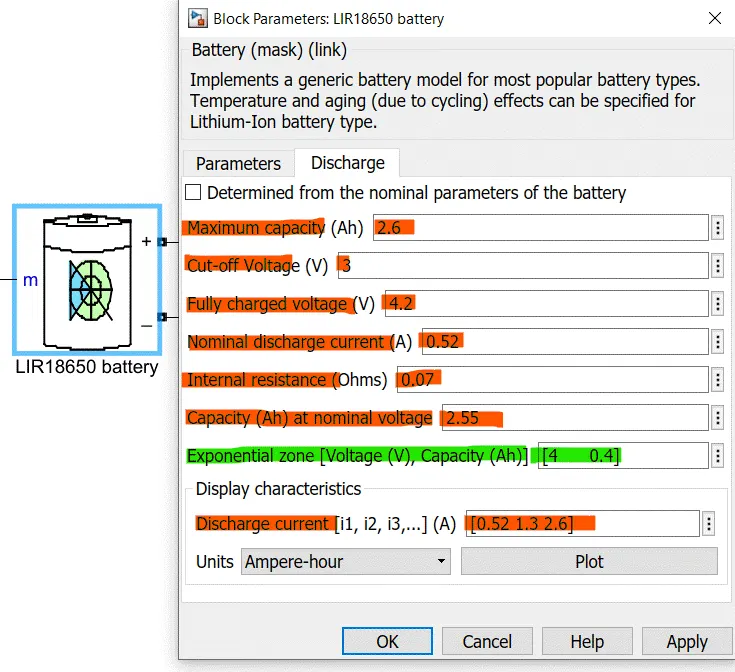
Data used to configure the battery:
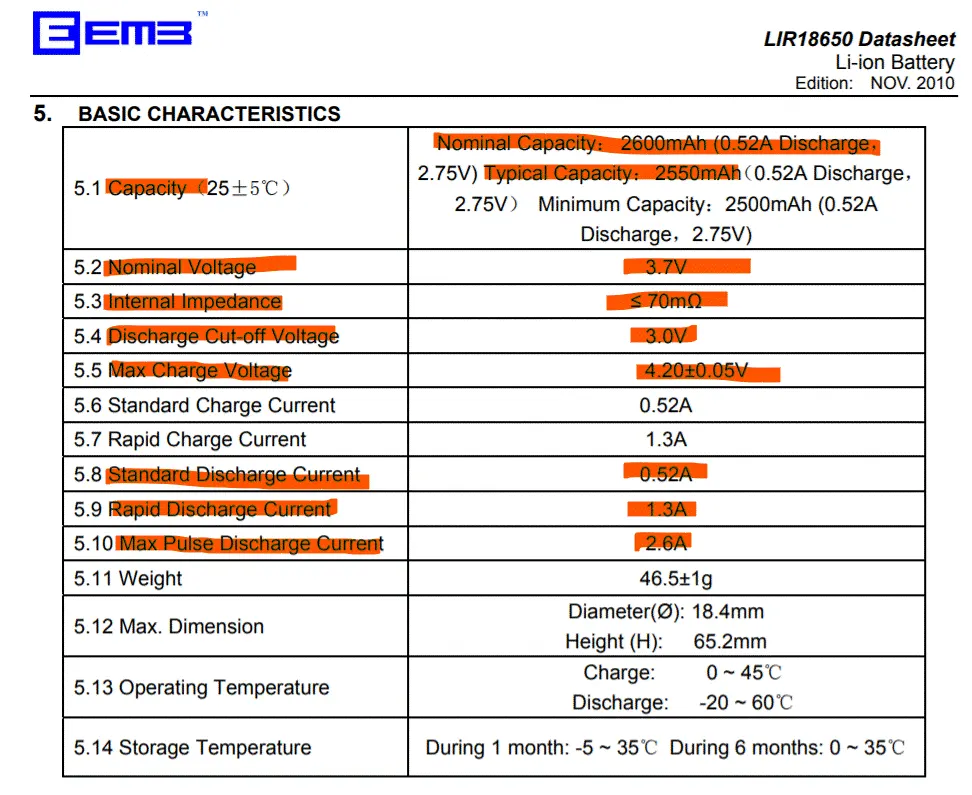
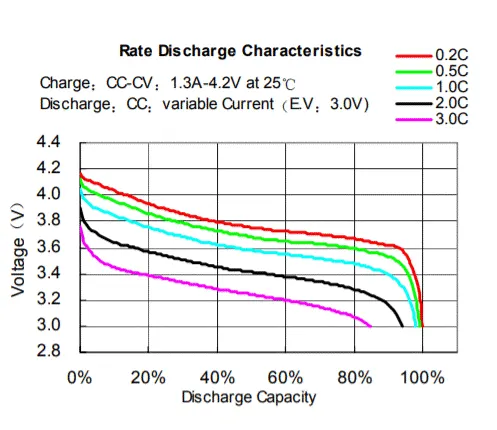
According to the above data, `V_exp` and `Q_exp` can be determined by looking at the discharge characteristic curve:
Output: the following discharge curves can be plotted from the inputted data above
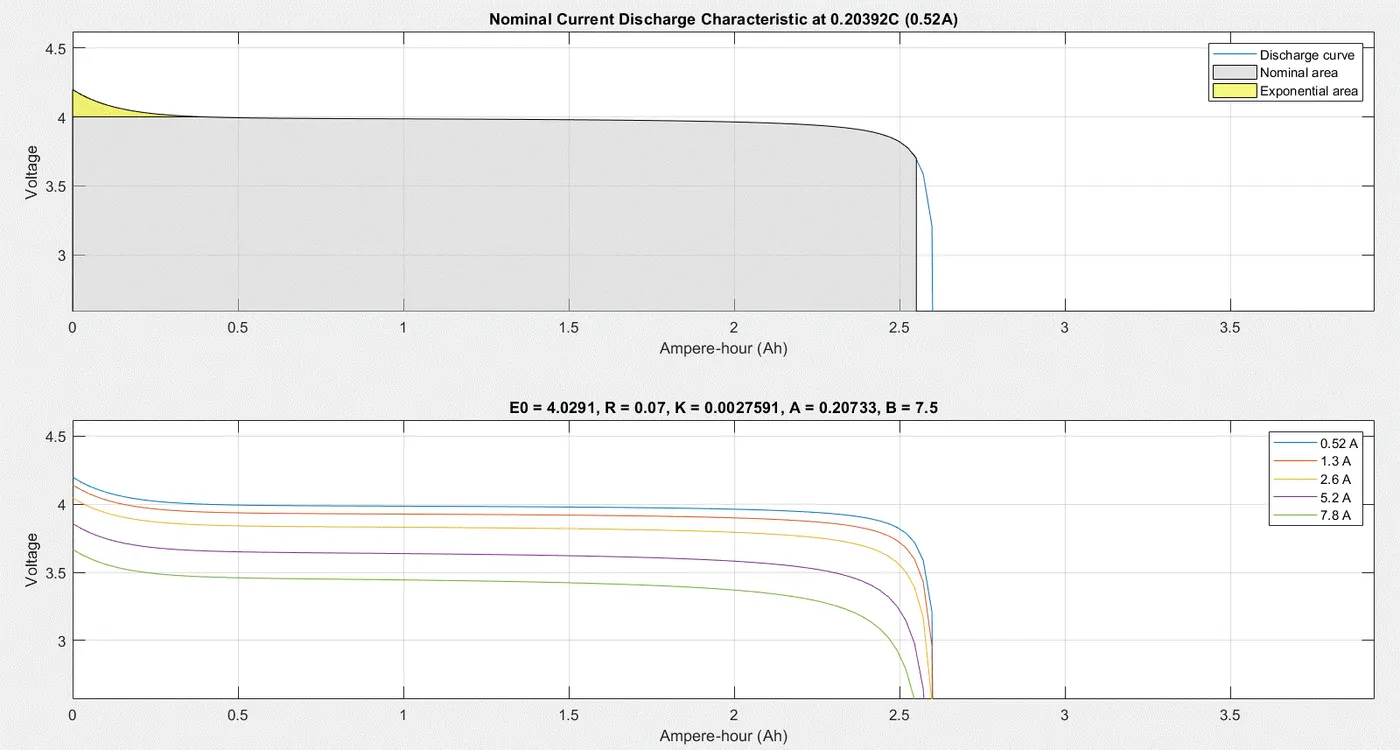
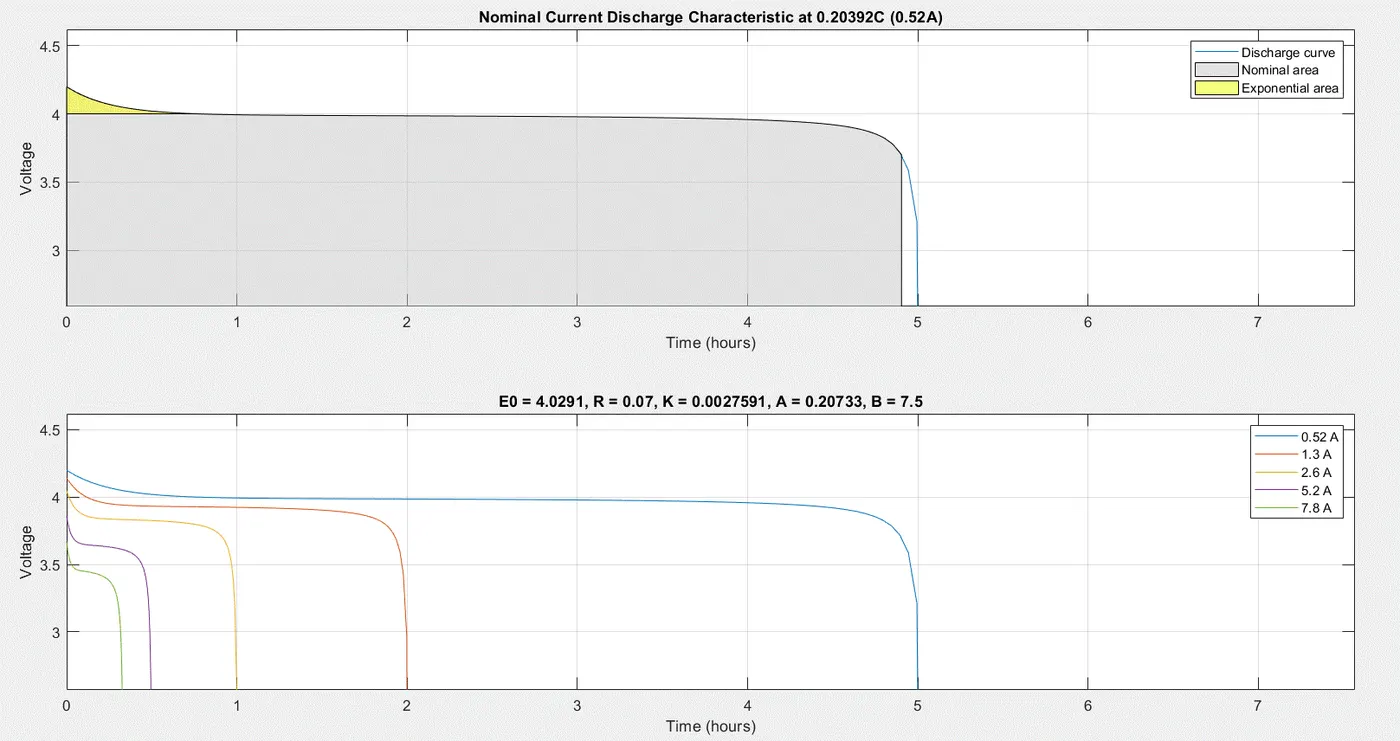
- The maximum capacity of this battery is 2.6Ah, while the standard discharge current rate is 0.52A, which makes it a standard discharge of 0.2C rate, capable of running for 5 hours at 0.52A. Intuitively, that would mean that the battery should be able to run at 2.6A for 1 hour. However, due to Peukert's law, this is not possible in reality due to the internal resistance and heat generated by the battery when it has to supply a higher current. If the battery were discharged at a 1C rate i.e. 2.6A, then it should certainly run for less than 1 hour due to reduced capacity.
- According to the discharge curves in the datasheet, it is shown that when the battery is discharged at 7.8A or 3C, then the capacity reduces to about 85% i.e. from 2.6Ah to `approx`2.2Ah. In addition, due to Peukert's law, the battery should not be able to run for 20 minutes at 7.8A. However, the curves plotted above depict that the capacity has only reduced from 2.6Ah to `approx`2.53Ah and it will also run for 20 minutes at 7.8A - both of which should not be the case. Hence, this implies that this built-in battery model in MATLAB/SIMULINK does not account for Peukert's law and and that internal resistance of the battery does not vary with the amplitude of the current.
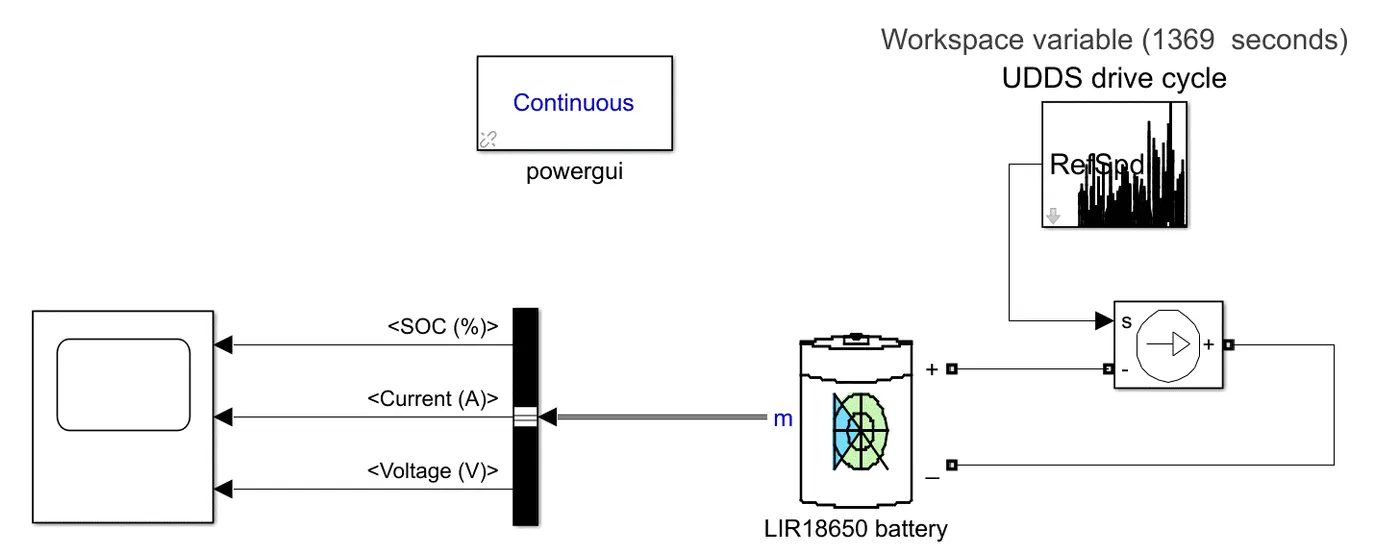
SIMULINK MODEL:
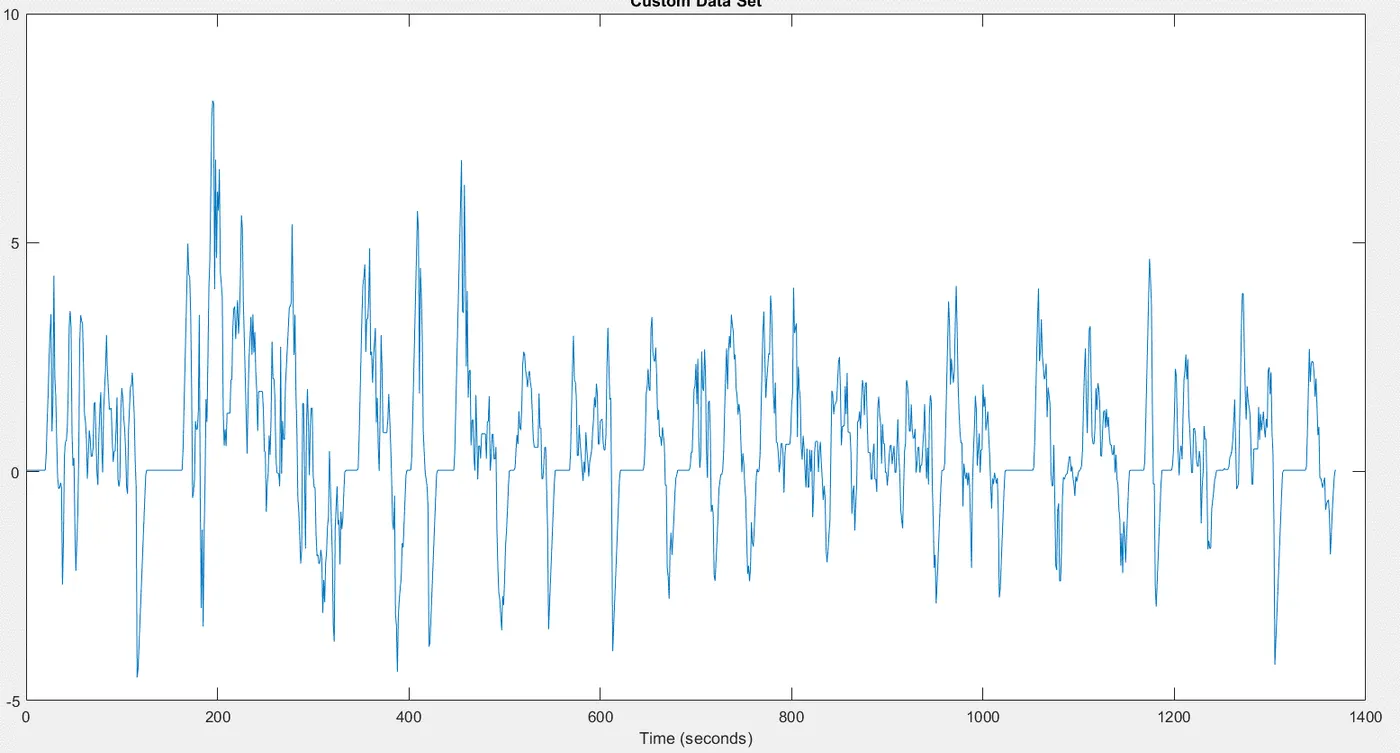
UDDS drive cycle (Current vs Time):
OUTPUT:
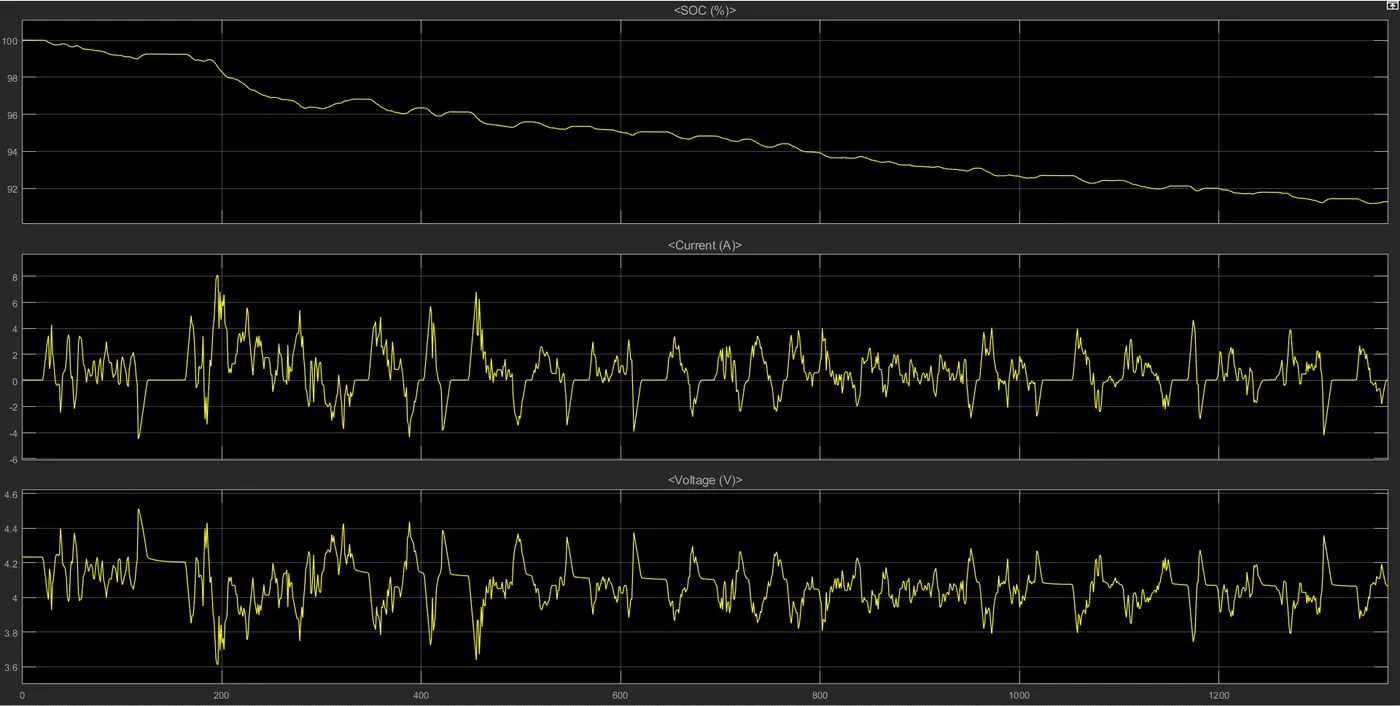
- According to the battery configured and the UDDS drive cycle (in terms of current and time), the output shows how the battery would react.