Combustion
Introduction
Combustion modeling and simulation is a very common study that is performed using CFD in recent times. The availability of powerful CFD packages such as Ansys Fluent allows for this.
Many properties and observations can be identified and carefully studied by performing simulations using CFD. For example, Soot modeling can be done, where systematic approaches can be taken to study how soot emissions can be reduced. Environmental norms require reductions in toxic chemicals from exhaust gases, such as in marine ships and vehicles. This forces designers and researchers to make changes in the combustion processes.
Similarly, in this project, a simple combustion chamber is modeled and used to perform an axisymmetric simulation using CH4 and O2 at the inlets. To reduce the production of NOx at the outlet and avoid pollution, water addition has been simulated and the effects have been studied.
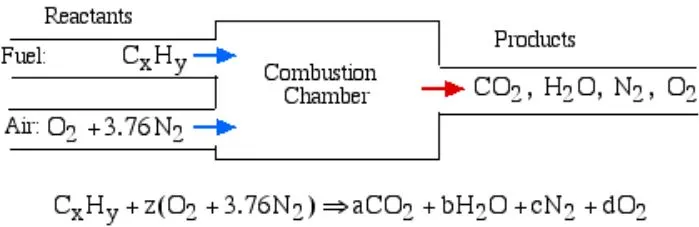
The basic stoichiometric combustion equation followed is
Objectives
- To perform a combustion simulation on a combustor model and plot the variation of the mass fraction of the different species’ in the simulation using line probes at different locations of the combustor
- To identify the effects of increasing the water content in the Fuel to combat NOx emissions from the combustion chamber.
Geometry and Solving approach
First, a 3D model of a combustor chamber has been imported into spaceclaim. While the 3D model could directly be used for the simulation, in order to save computational cost and time, it has been split using the split body command to obtain a 2D model. The pre-processing is done using the Axisymmetric model available in Ansys Fluent.
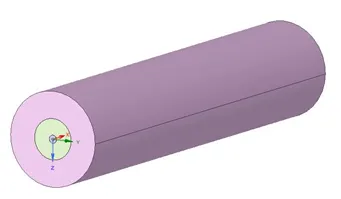
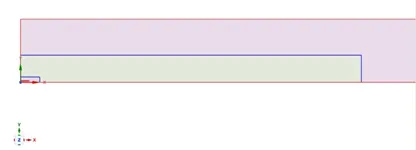
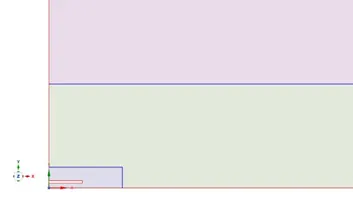
Share topology is enabled in order to obtain a uniform and conformal mesh throughout the model.
Mesh Details
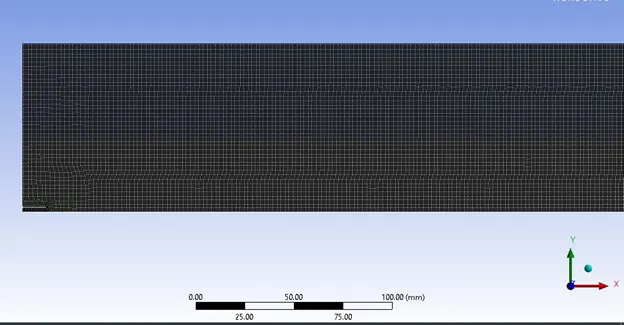
A mesh of size 0.8 mm is used, leading to the generation of 105,996 elements. It is visible that the mesh is extremely fine and that no further refinement is necessary.
Pre-Processing
A K-epsilon realizable turbulent model is used. Since the flow is turbulent, and it is desired that the eddy dissipation model is enabled, the K-epsilon model is used. The absence of a burner is justified by the use of an Eddy Dissipation model, which enables mixing and combustion due to turbulence. Eddy Dissipation model allows fast and accurate processing of the species.
A steady state solver is used as the final result is to be studied in this simulation.
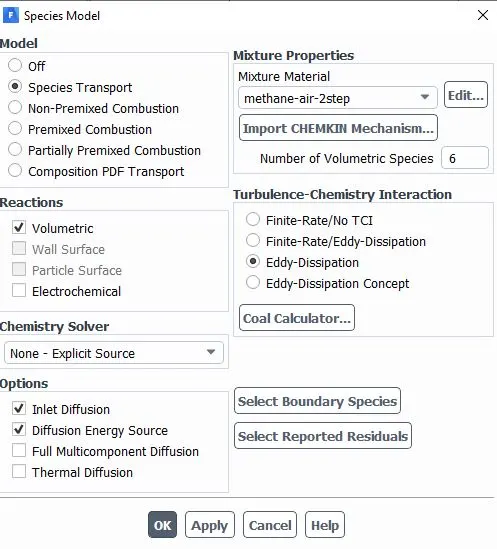
Volumetric type is enabled as reaction takes place in a gaseous phase (Air and Fuel).
Inlet diffusion is enabled, so that diffusion terms are solved at the inlet in a pressure based solver.
The mixture is methane-air-step. This model allows the addition of water as well.
The following settings have been enabled in the “Species” section.
Boundary conditions:
Air inlet velocity - 0.5 m/s
Species – O2 mass fraction of 0.23
Fuel inlet velocity – 80 m/s, so that effective dispersion and mixing of fuel and air can take place at high velocity.
Species – CH4 mass fraction of 1
The mass fractions have been estimated using the stoichiometric equation of air combustion with methane.
Prompt and Thermal NOx models have been enabled, as this is a non premixed combustion simulation. In cases of premixed combustion simulations, fuel NOx should also be enabled.
The simulation was run for 1500 iterations, using a hybrid initialization.
Results
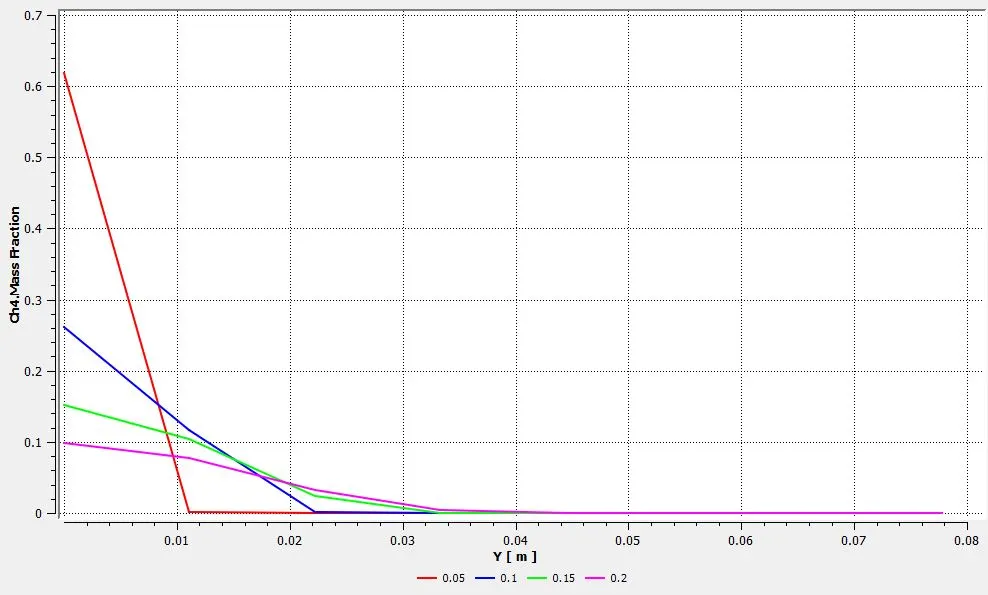
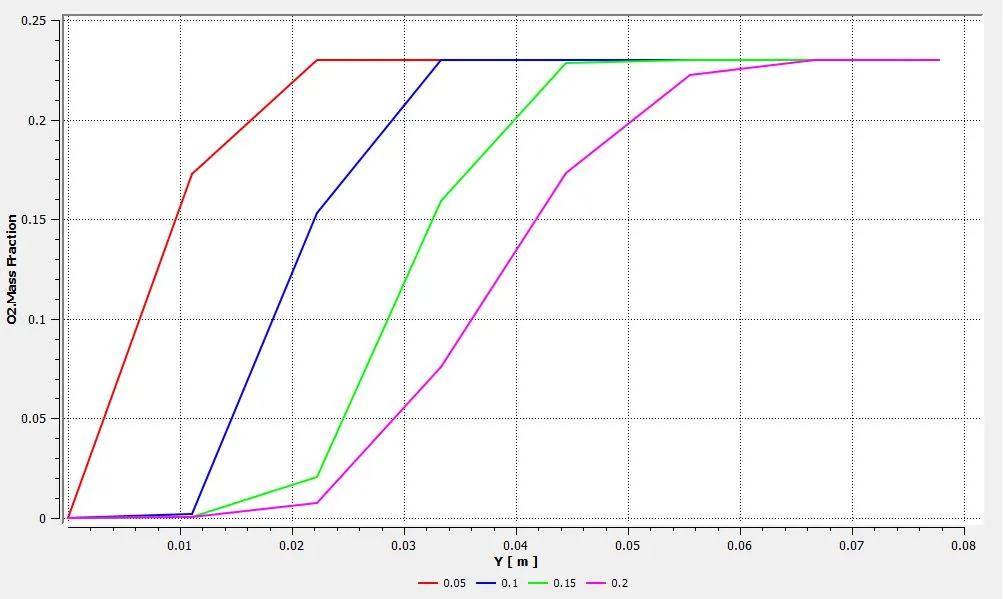
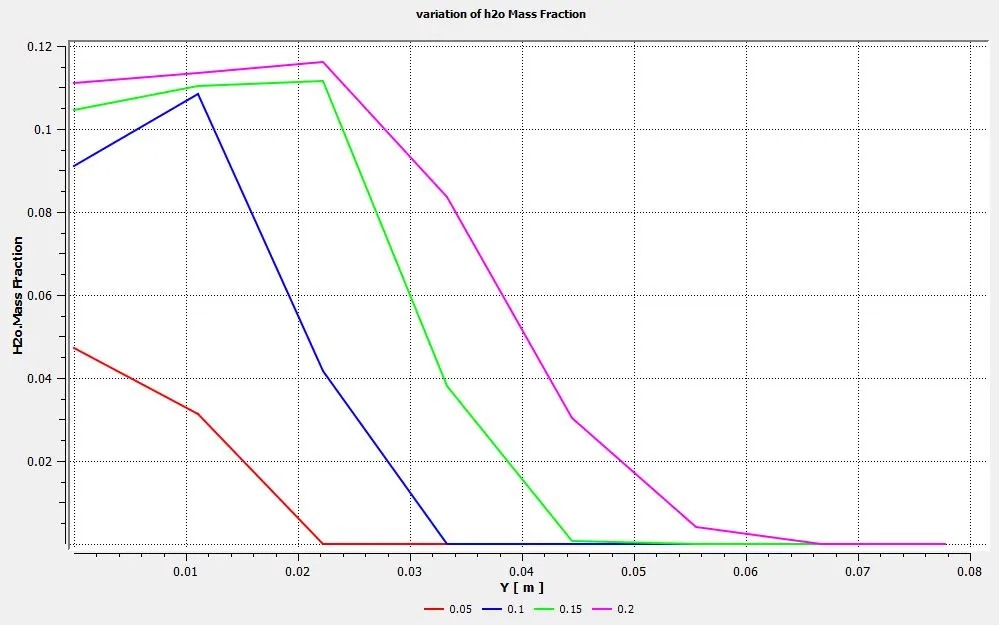
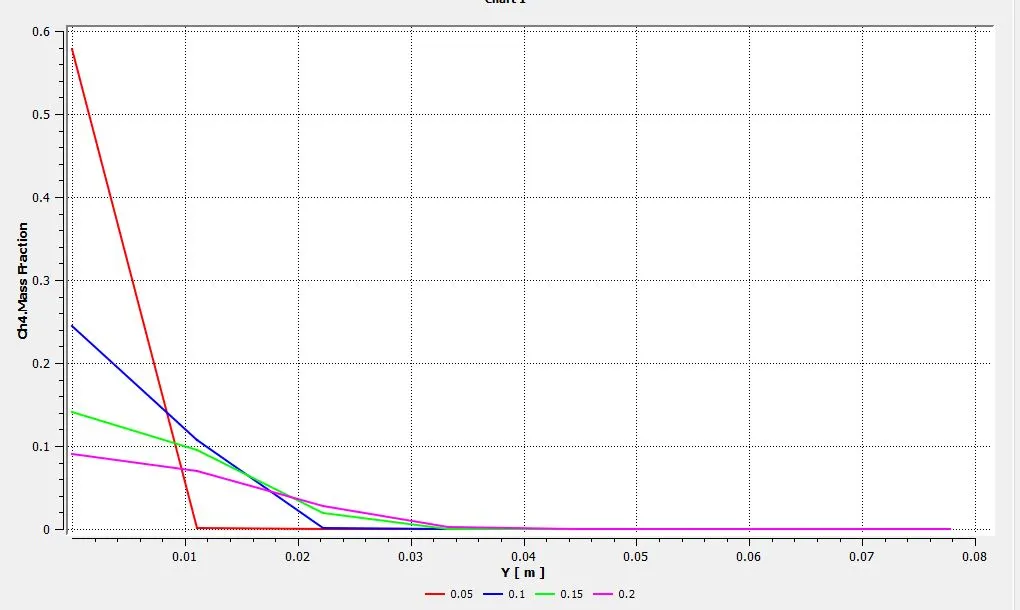
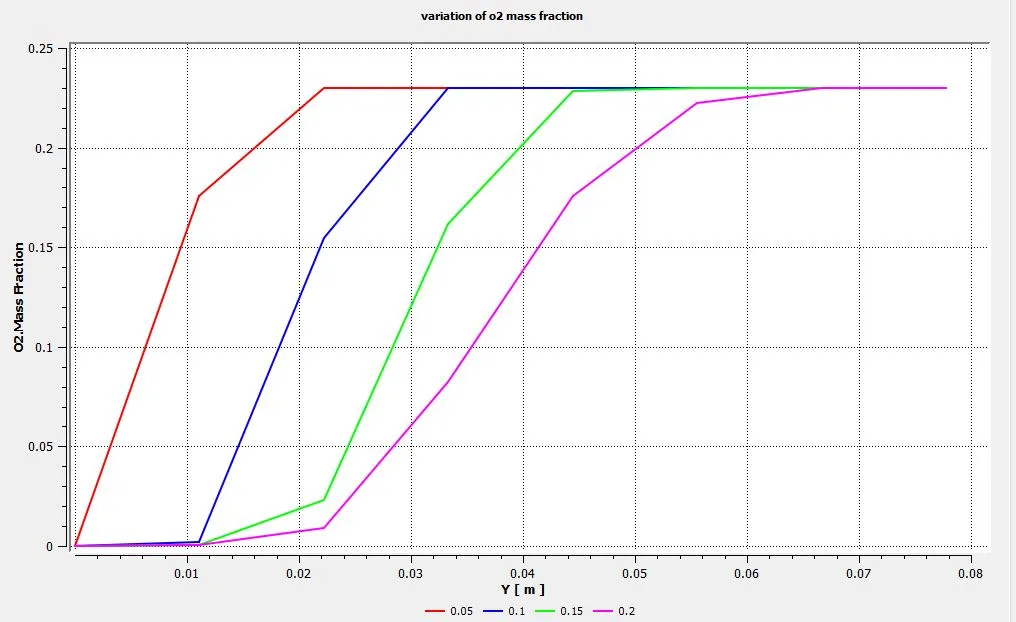
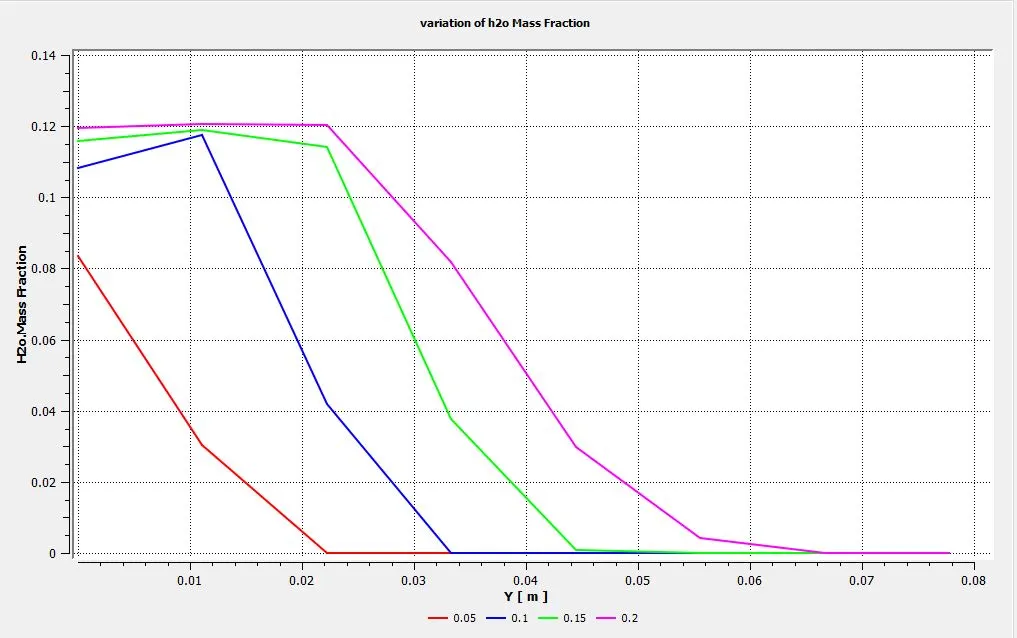
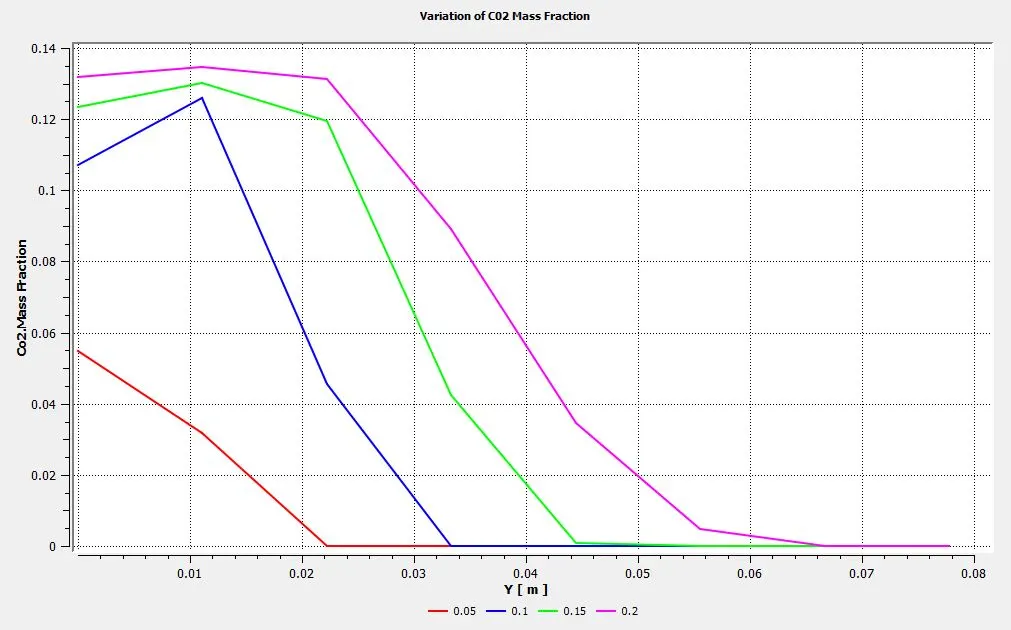
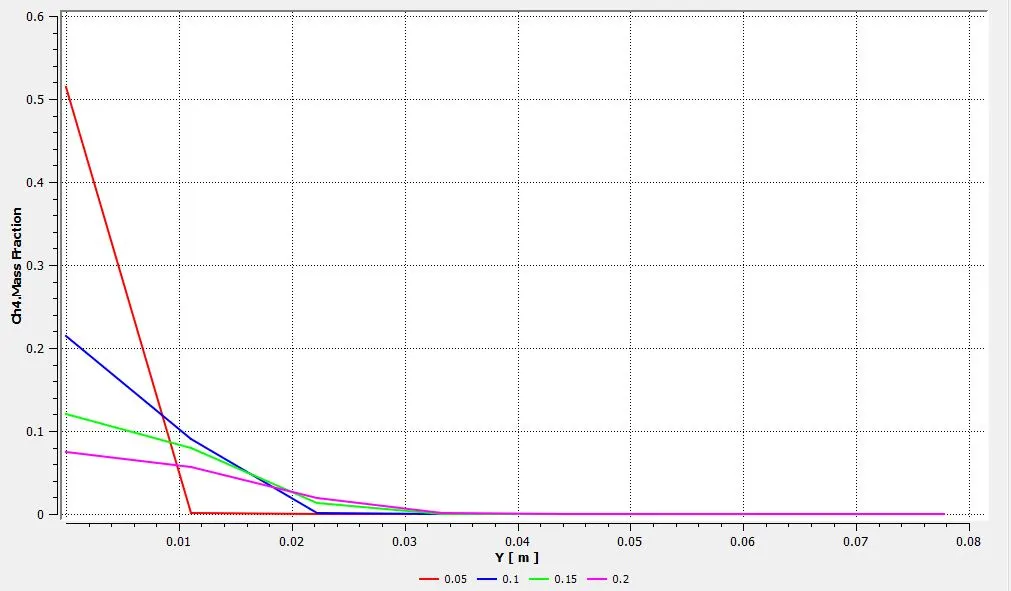
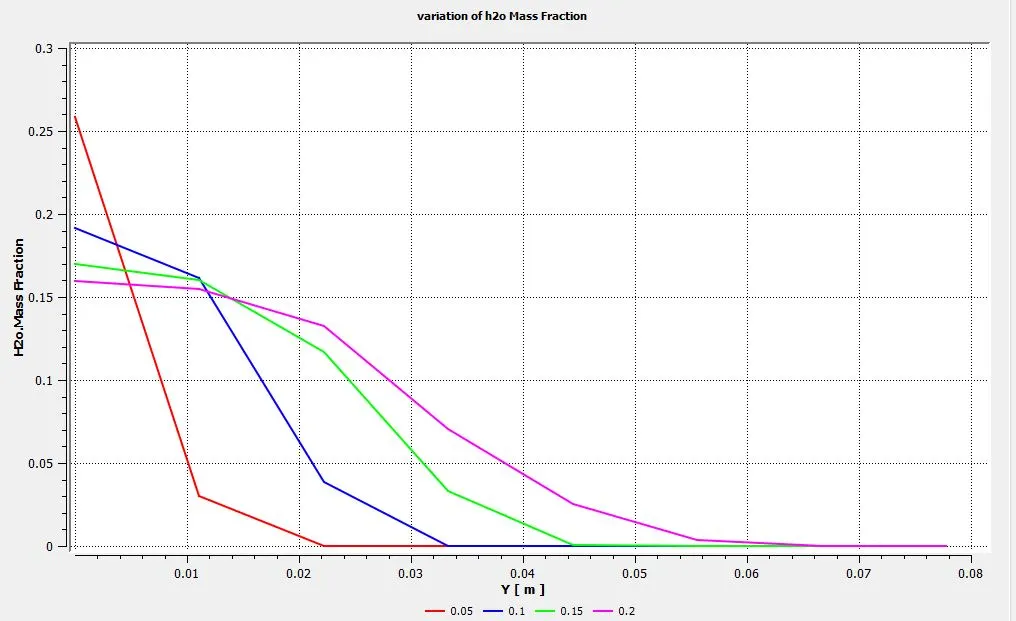
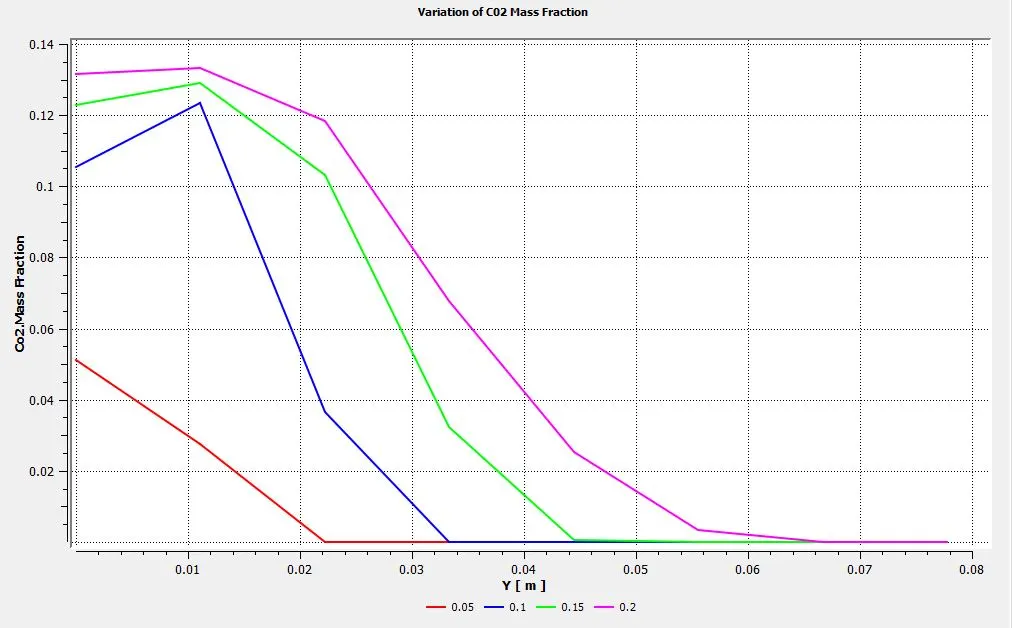
For all cases, 4 line probes have been plotted at distances 0.05 m from each other and the inlet. Mass fractions have been studied across these probes.
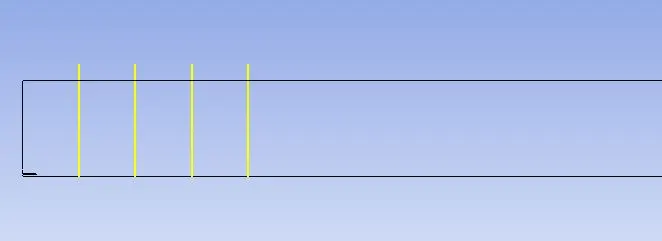
Case 1: No water mixed with fuel.
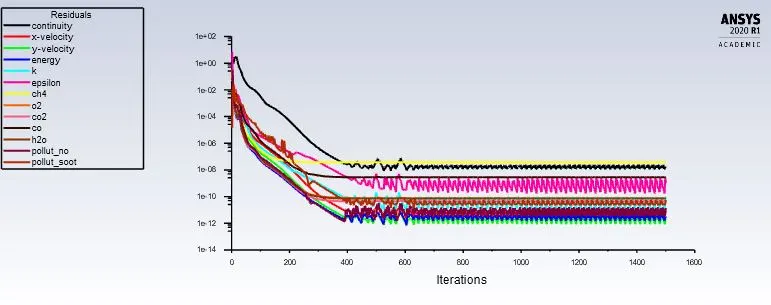
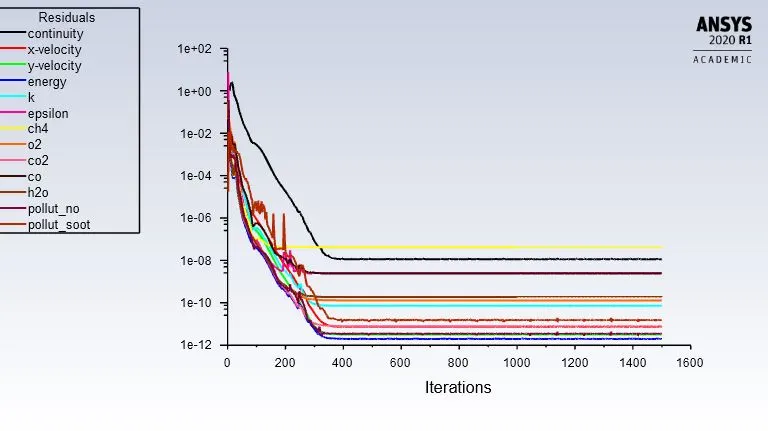
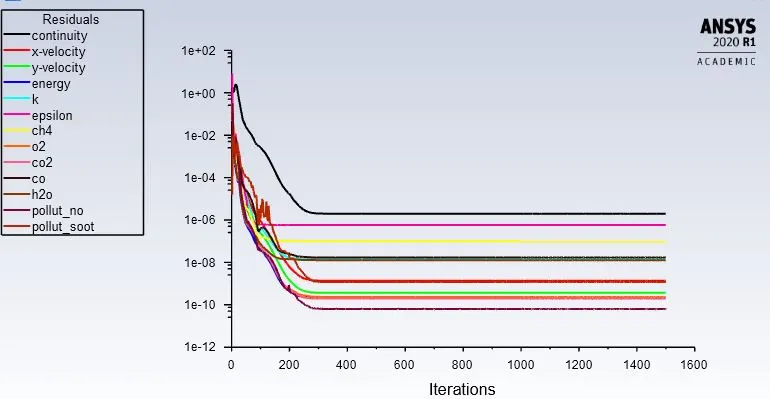
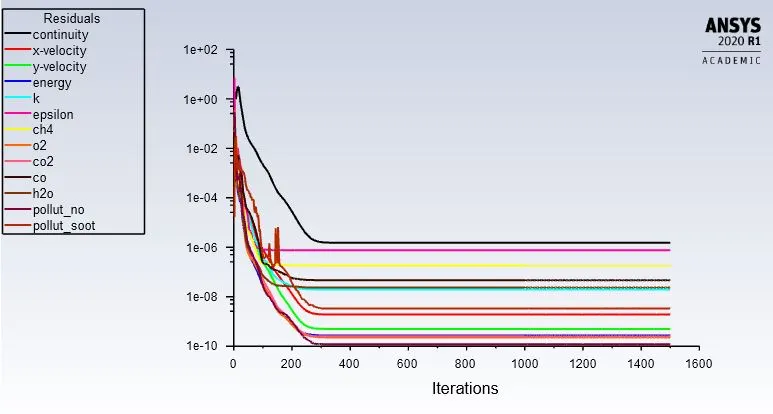
It is clear that the solution has converged observing the scaled residuals.
The mass fraction of pollutant NOx at the outlet is 
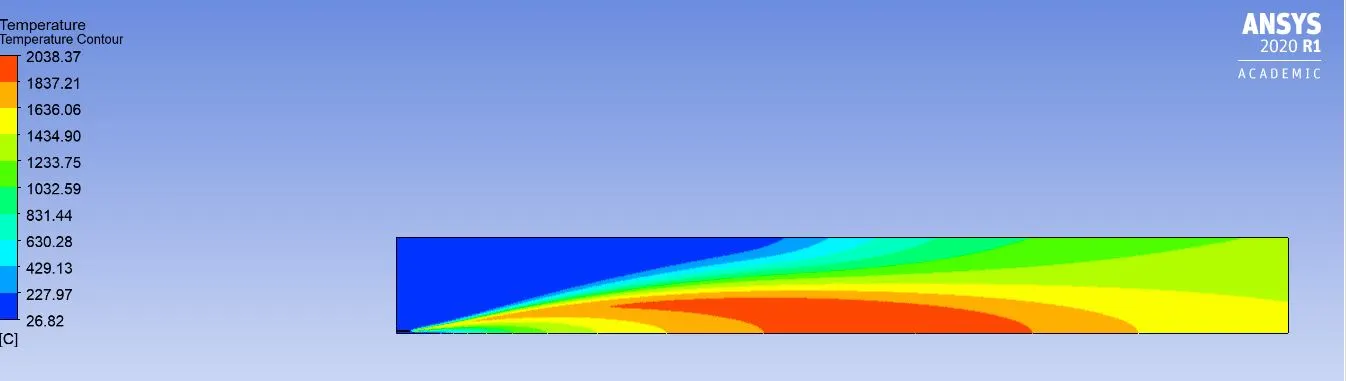
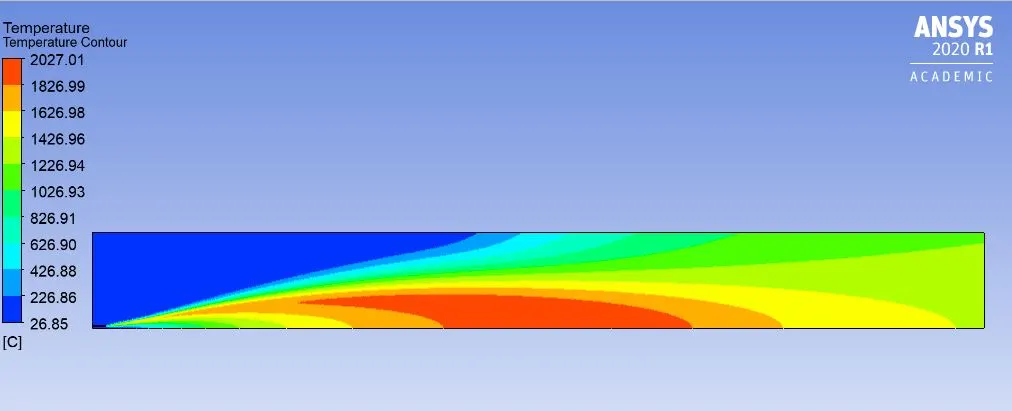
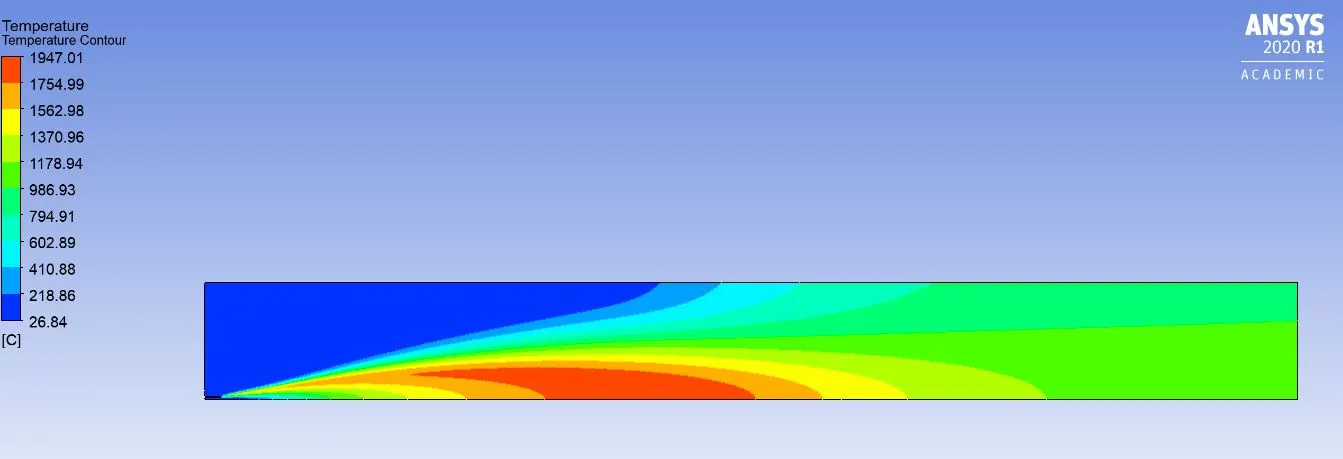
Temperature contour
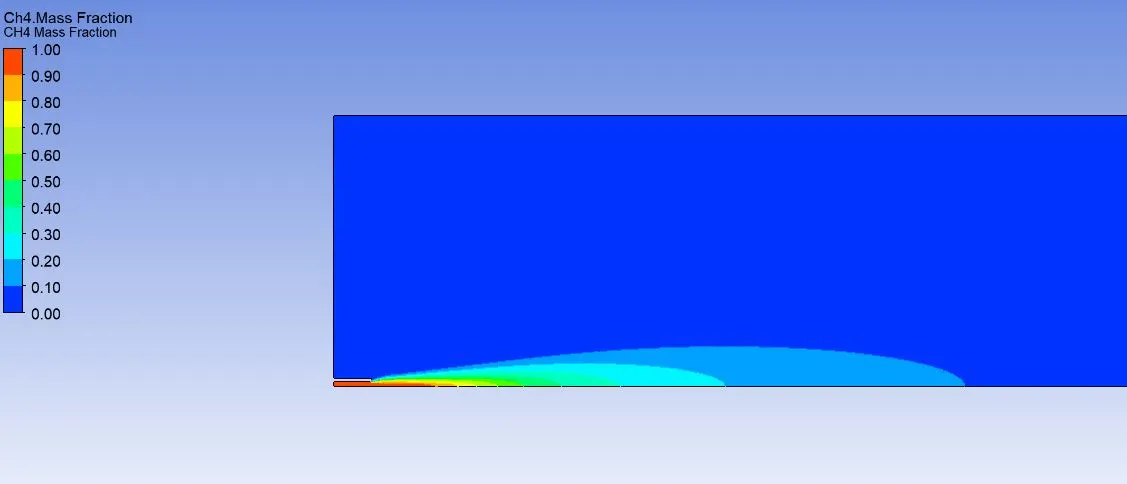
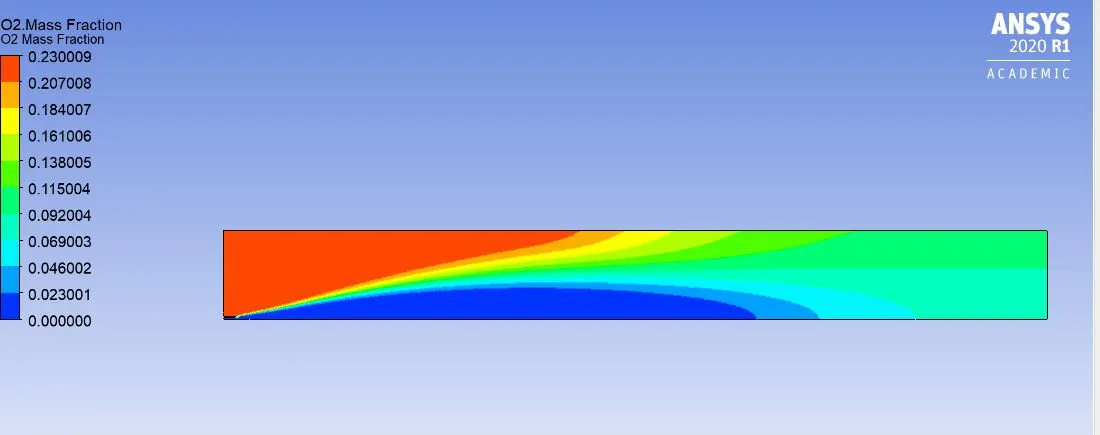
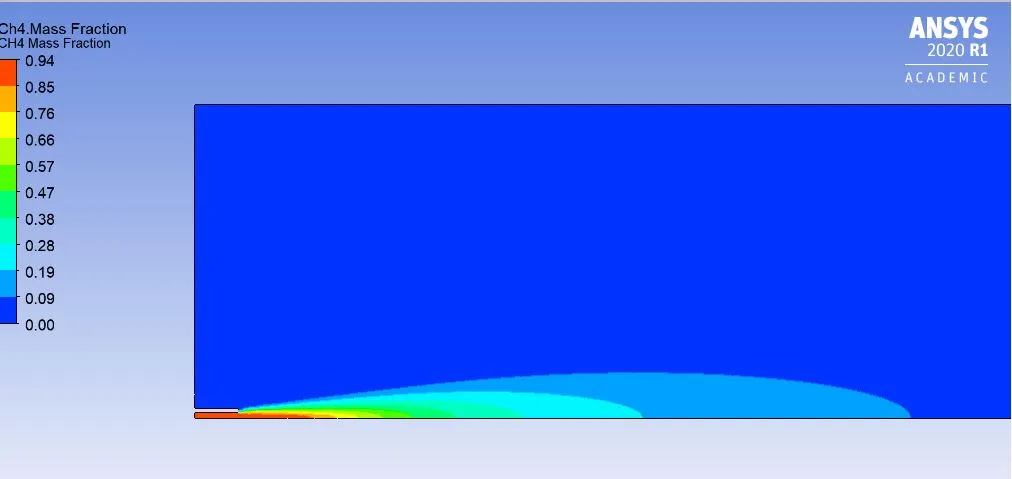
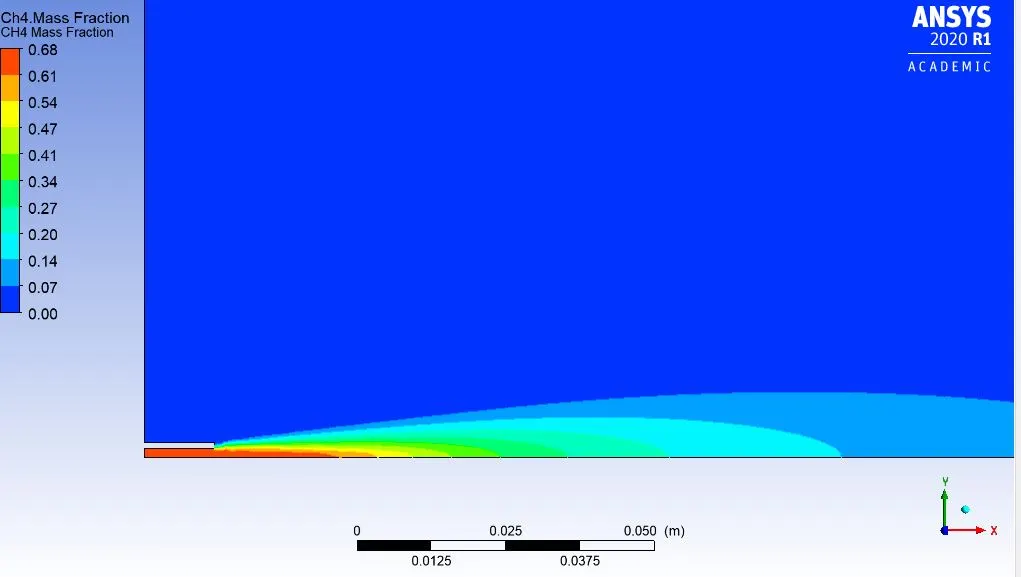
Mass fraction contours of CH4 and O2
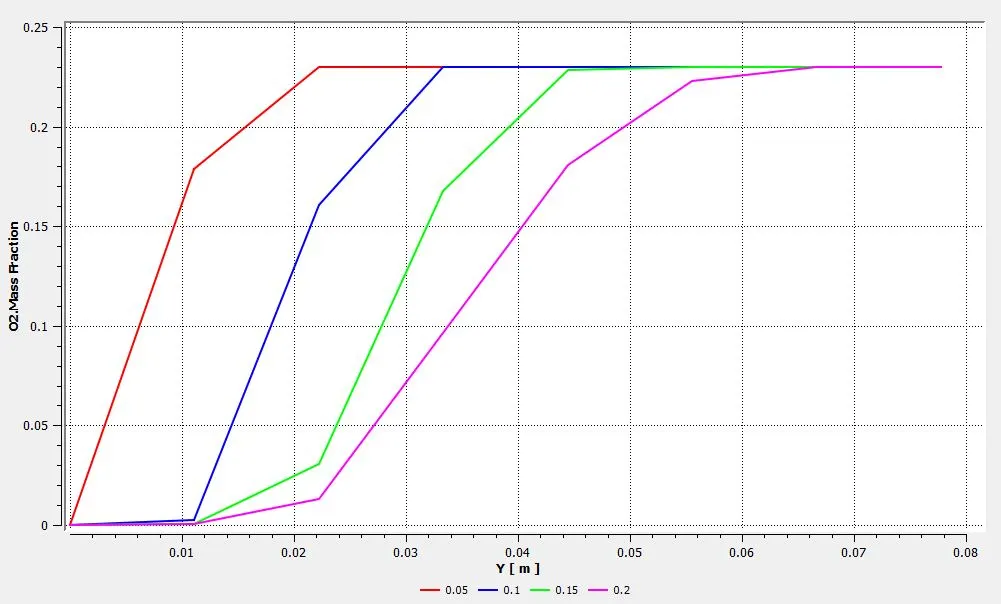
Variation across line probes of CH4 and O2 Mass fraction
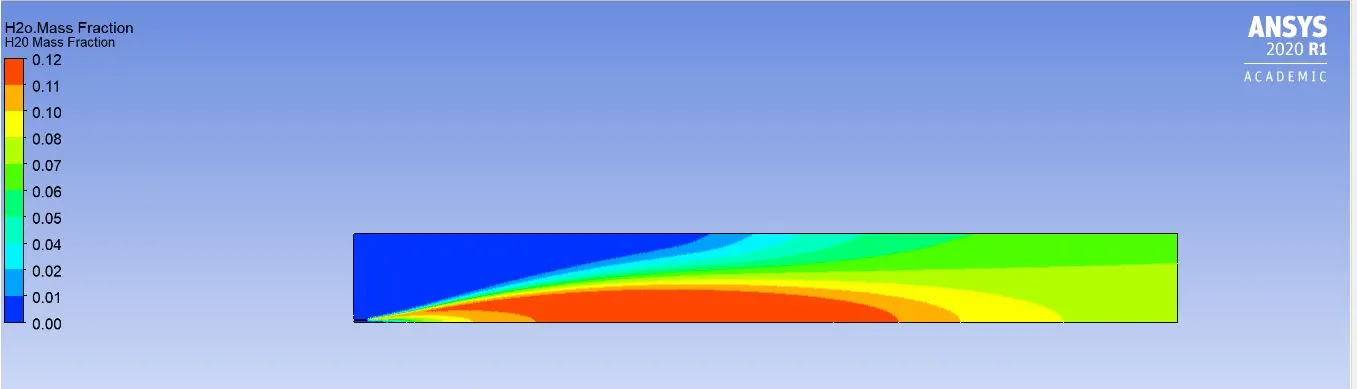
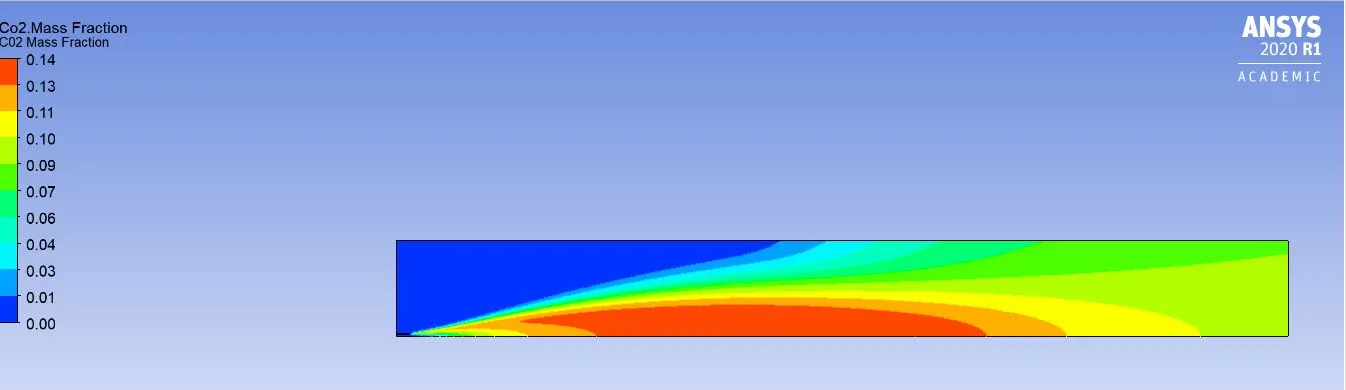
Mass fraction contours of H2O and CO2
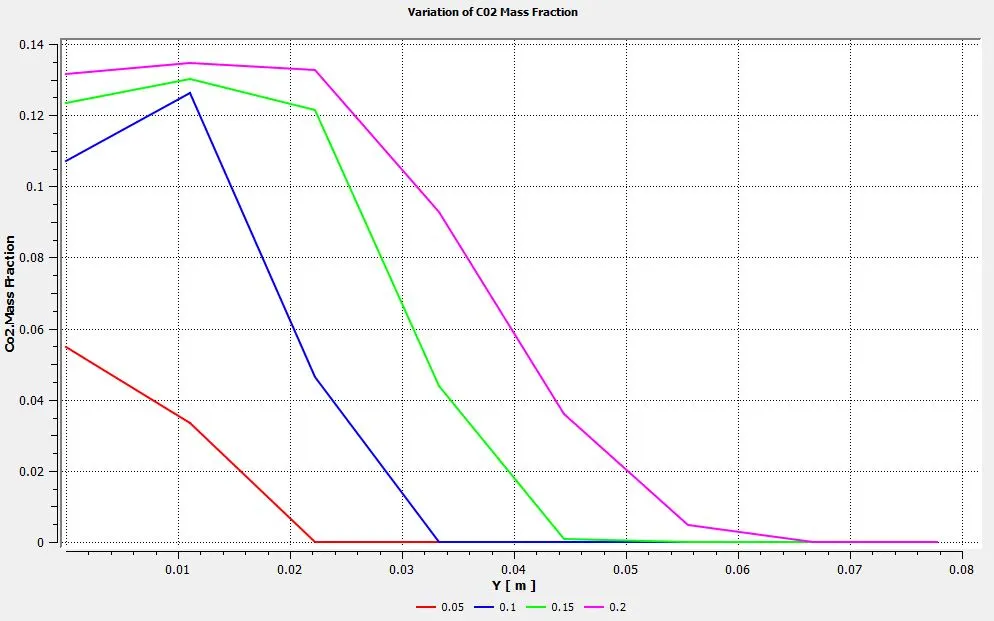
Variation across line probes of H2O and CO2 Mass fraction
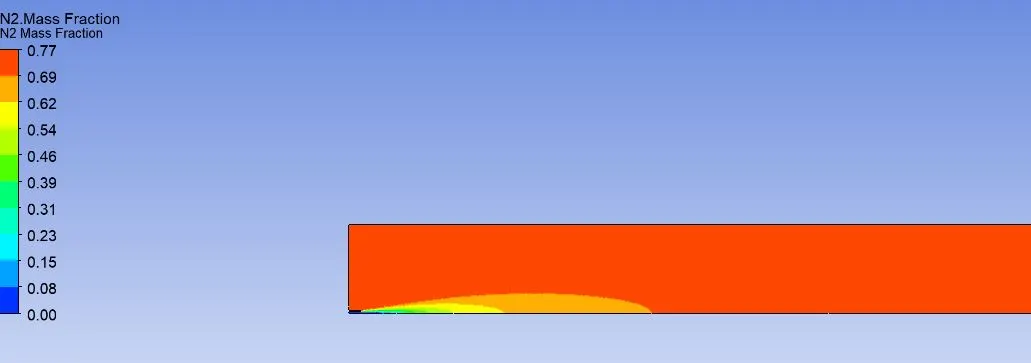
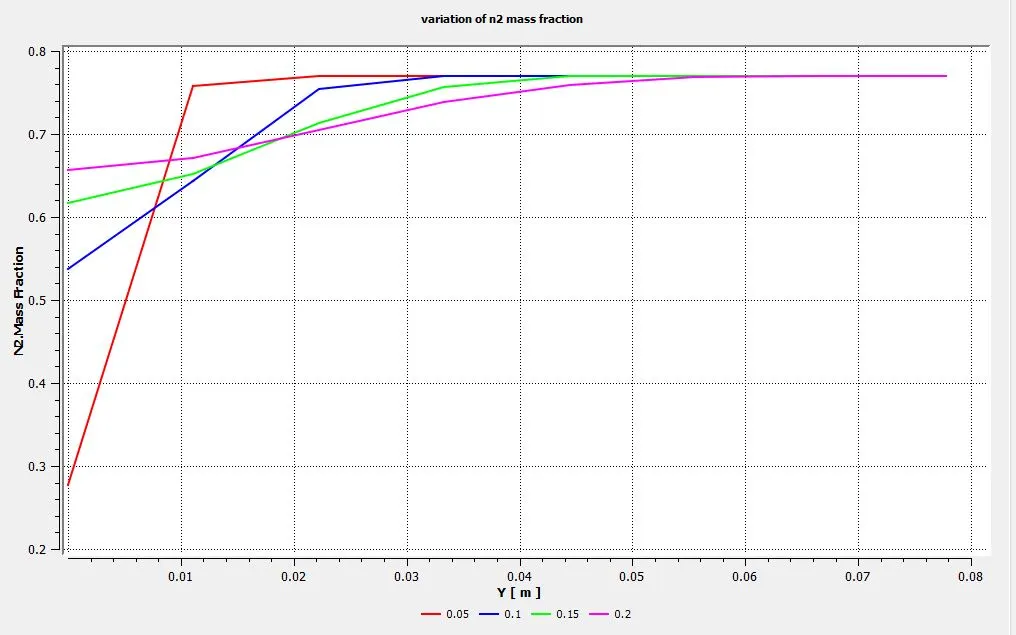
Mass fraction contour of N2 and variation across line probes
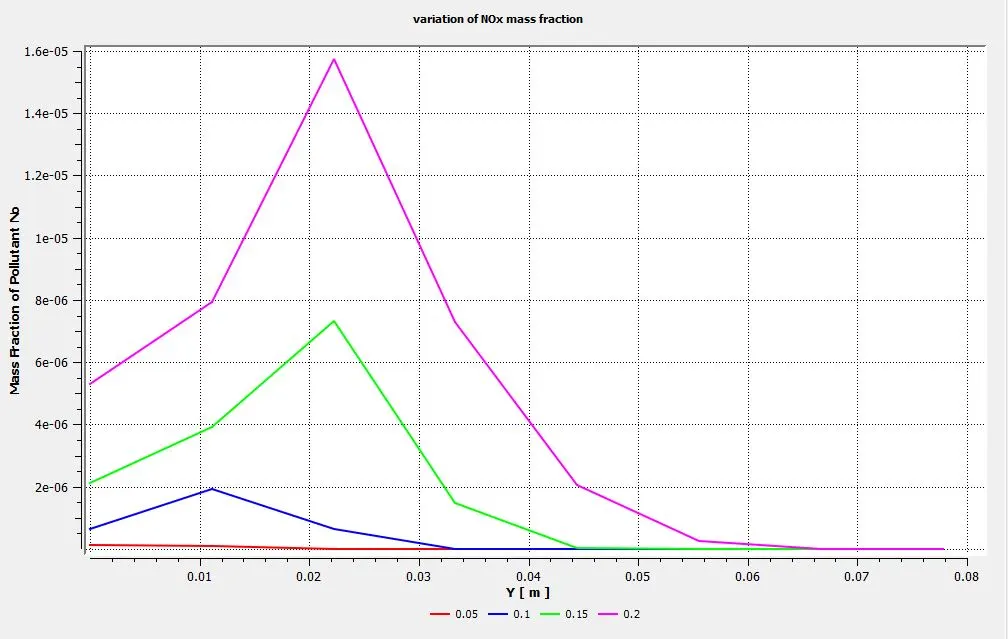
Mass Fraction contour of NOx pollutant and variation across line probes
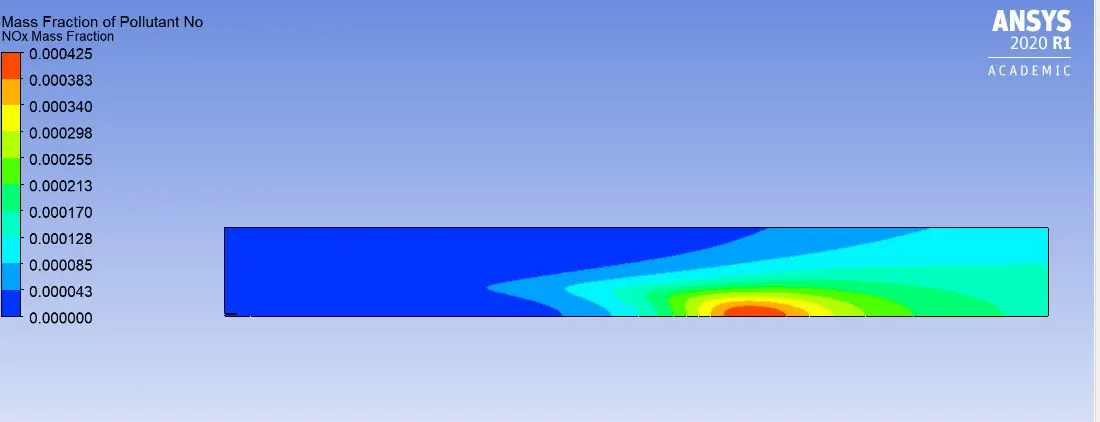
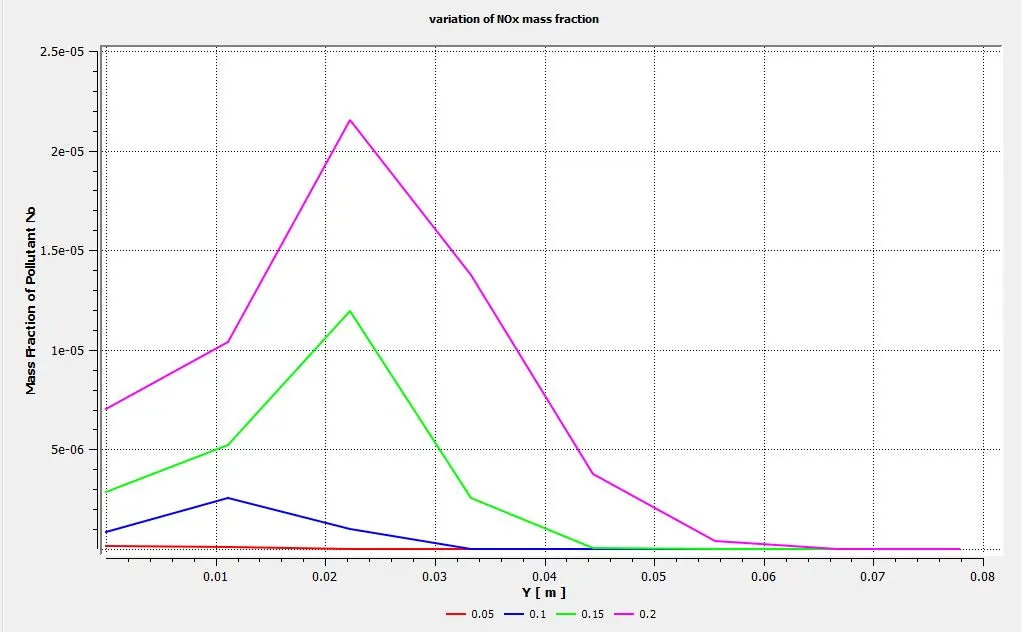
From running the simulation using no water mixed with the fuel, it is observed that some pollutant of NOx is observed at the outlet.
Due to stringent policies on pollution, it is often proposed to add water with the fuel to reduce the NOx formation.
The next three cases will observe the changes in quality of pollutant formed at the outlet by the addition of 5, 15, and 30 Percent of water respectively.
Case 2: 5% water mixed with fuel by volume
The mass fraction of the pollutant NOx at the outlet is 
Temperature contour
Mass fraction contours of CH4 and O2
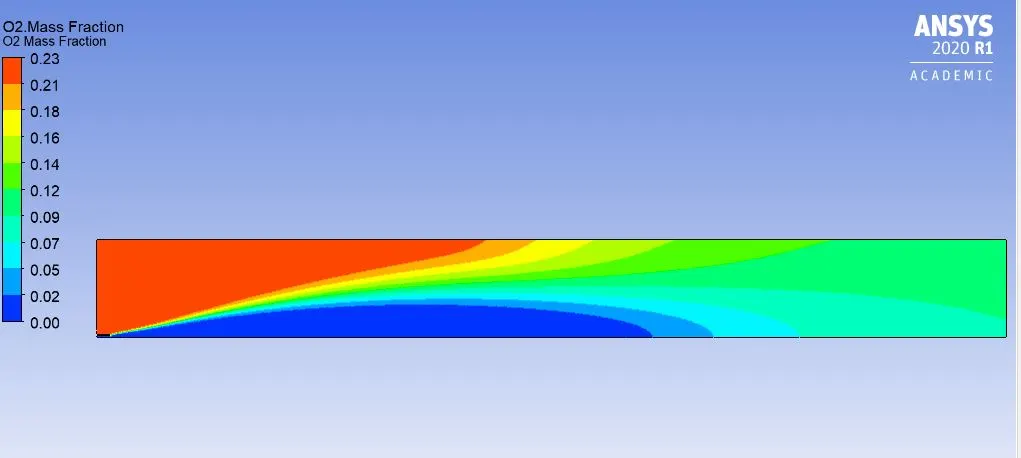
Variation across line probes of CH4 and O2 Mass fraction
Mass fraction contours of H2O and CO2
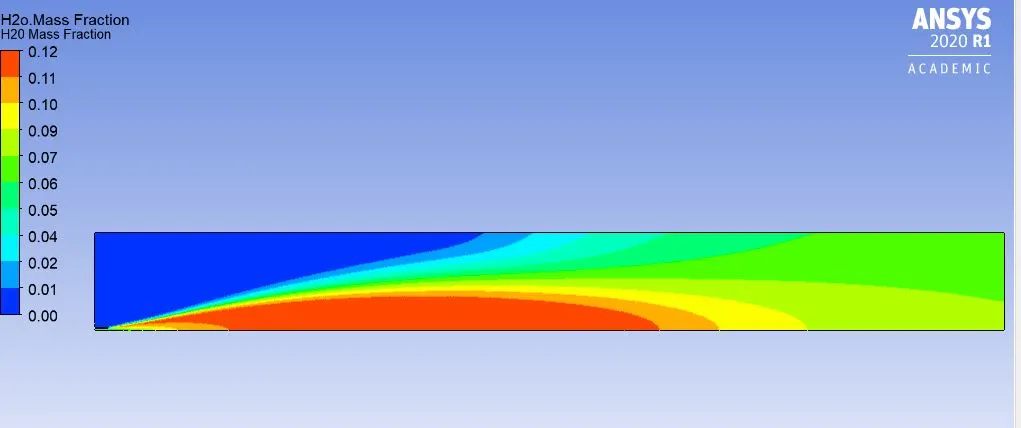
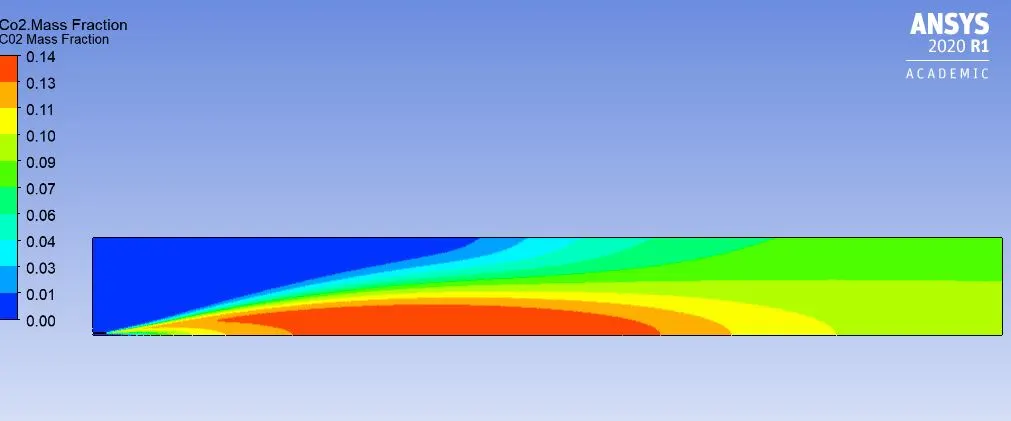
Variation across line probes of H2O and CO2 Mass fraction
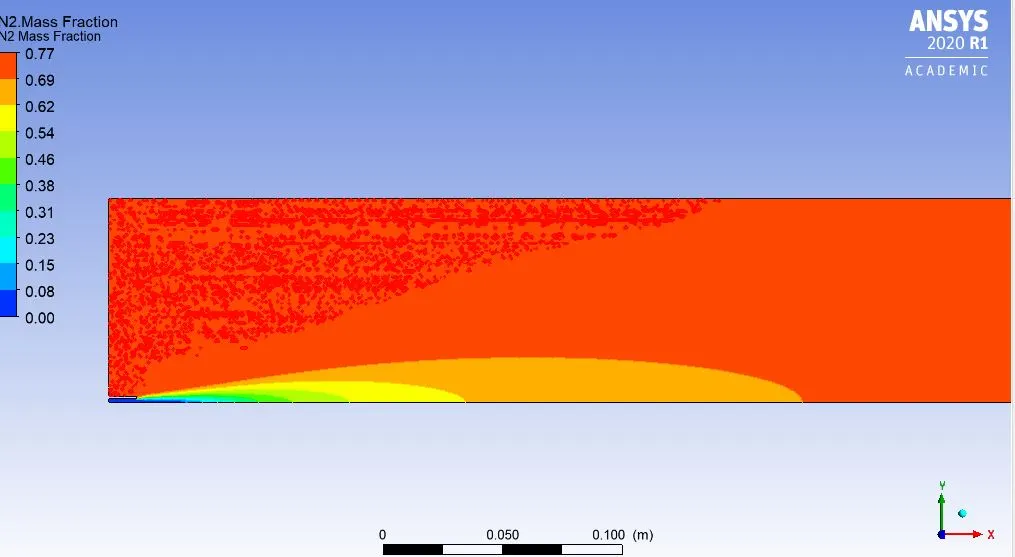
Mass fraction contour of N2 and variation across line probes
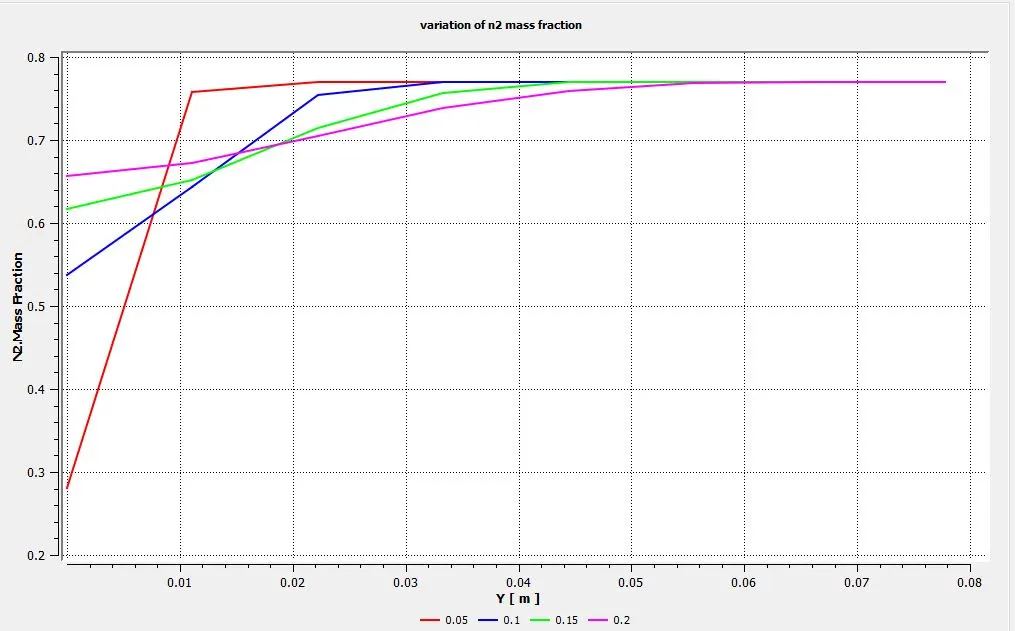
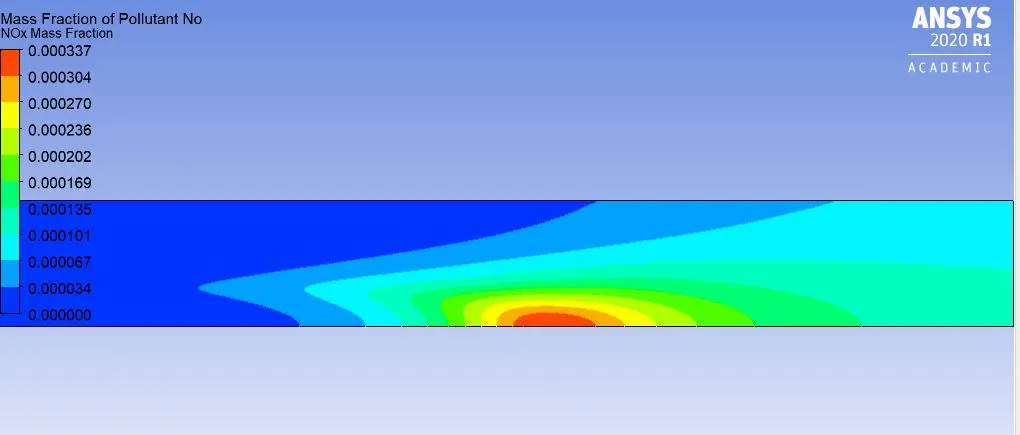
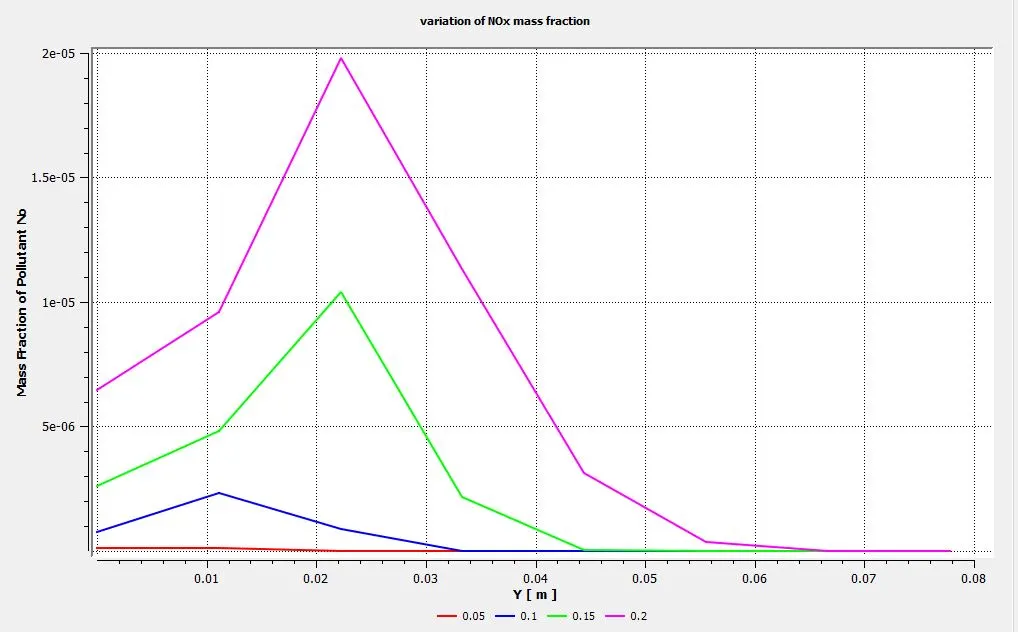
Mass Fraction contour of NOx pollutant and variation across line probes
Case 3: 15% water mixed with fuel by volume
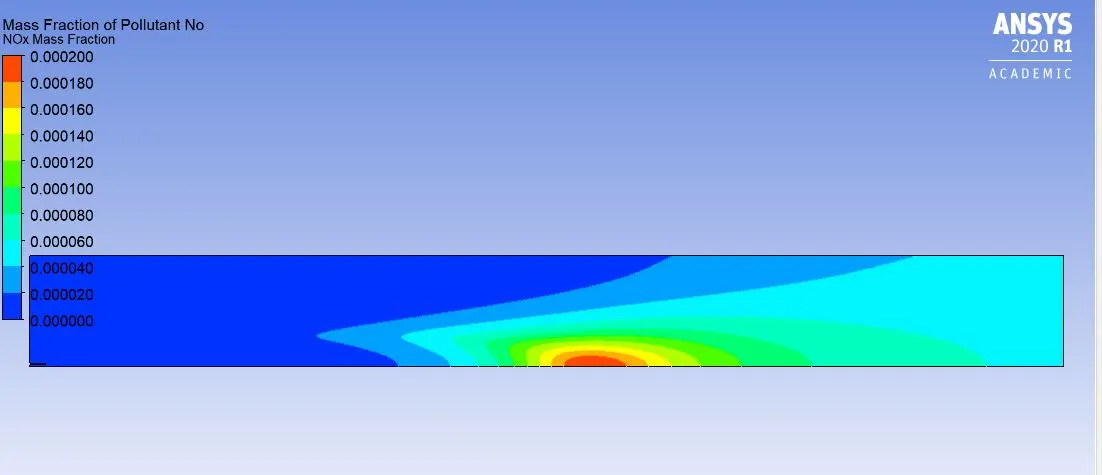
The mass fraction of the pollutant NOx at the outlet is 
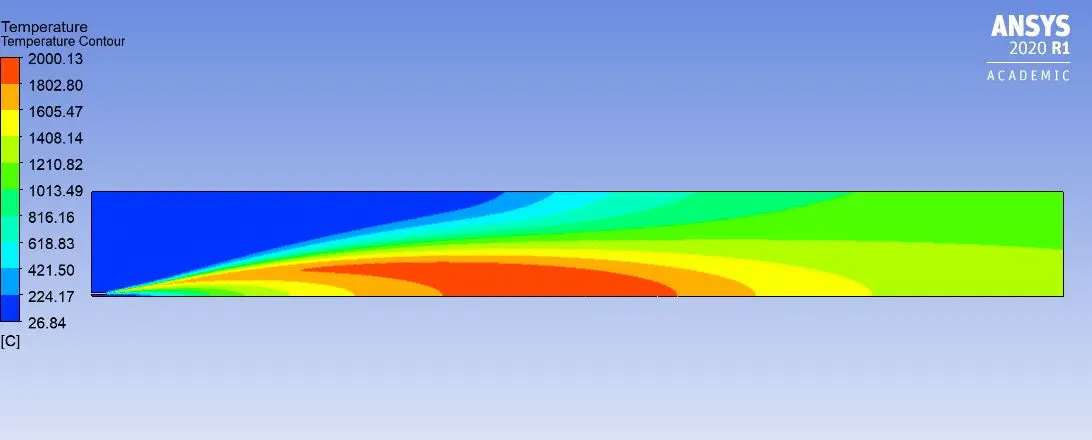
Temperature contour
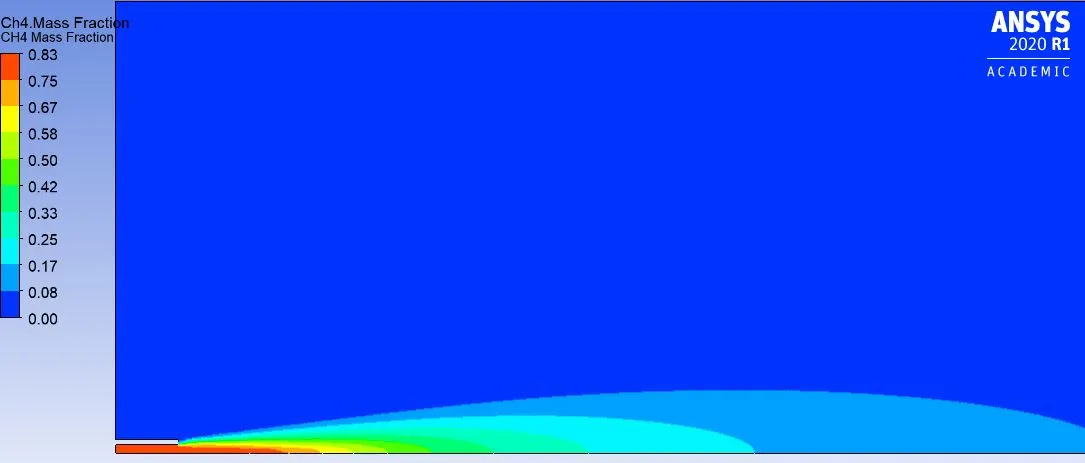
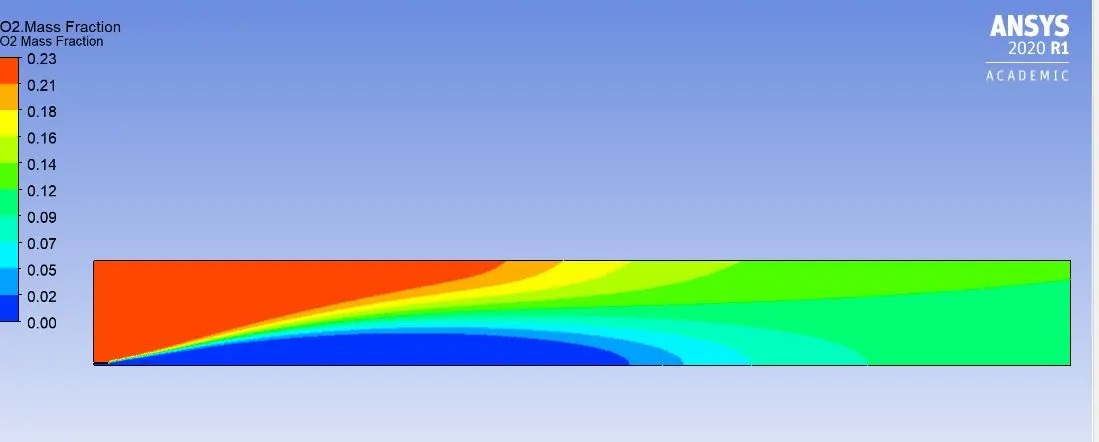
Mass fraction contours of CH4 and O2
Variation across line probes of CH4 and O2 Mass fraction
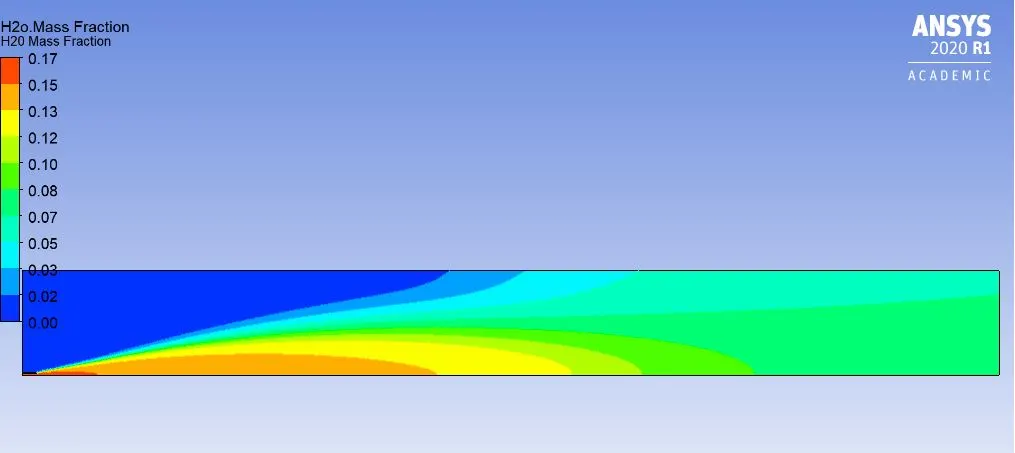
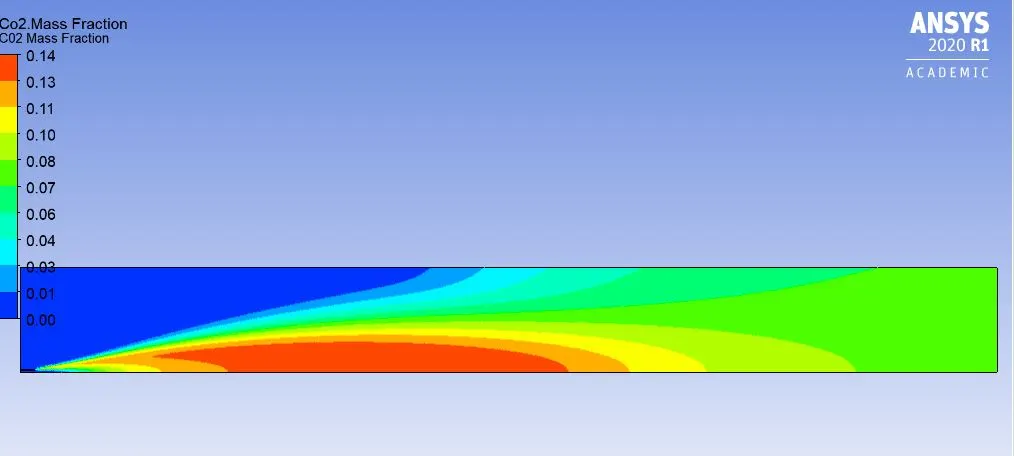
Mass fraction contours of H2O and CO2
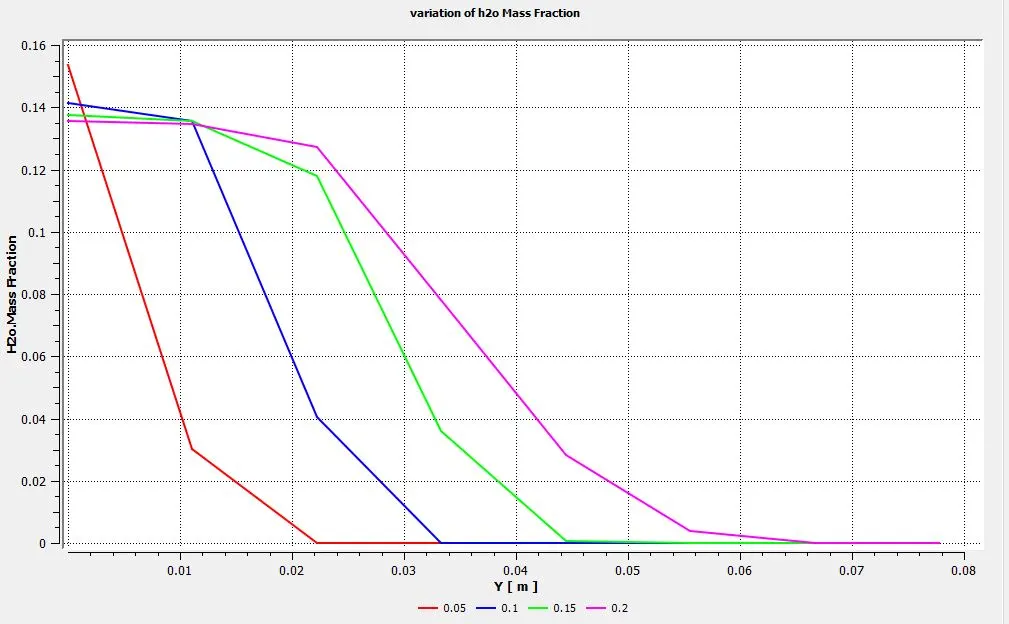
Variation across line probes of H2O and CO2 Mass fraction
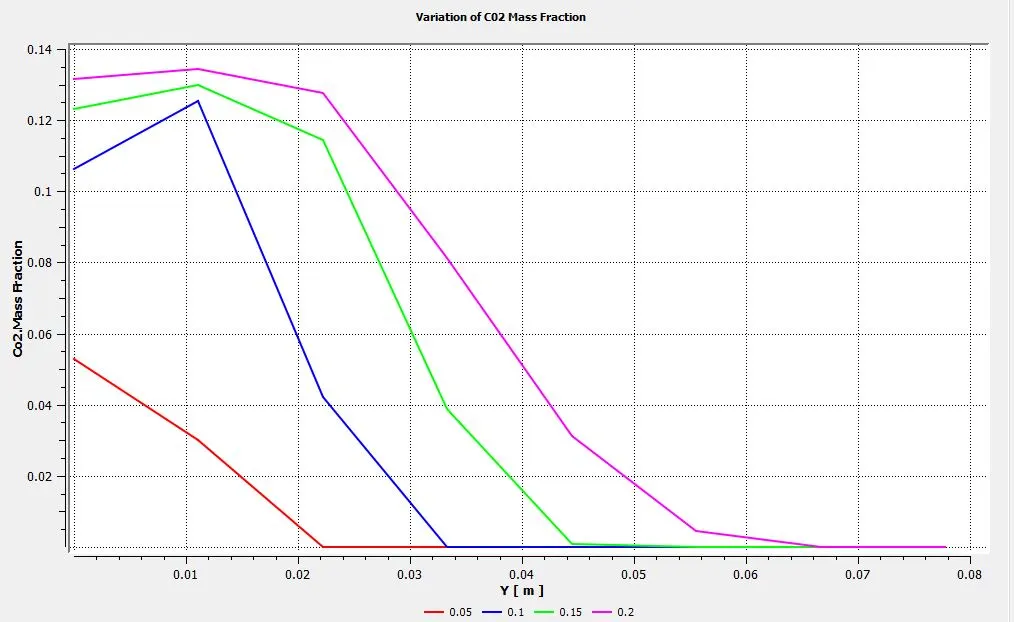
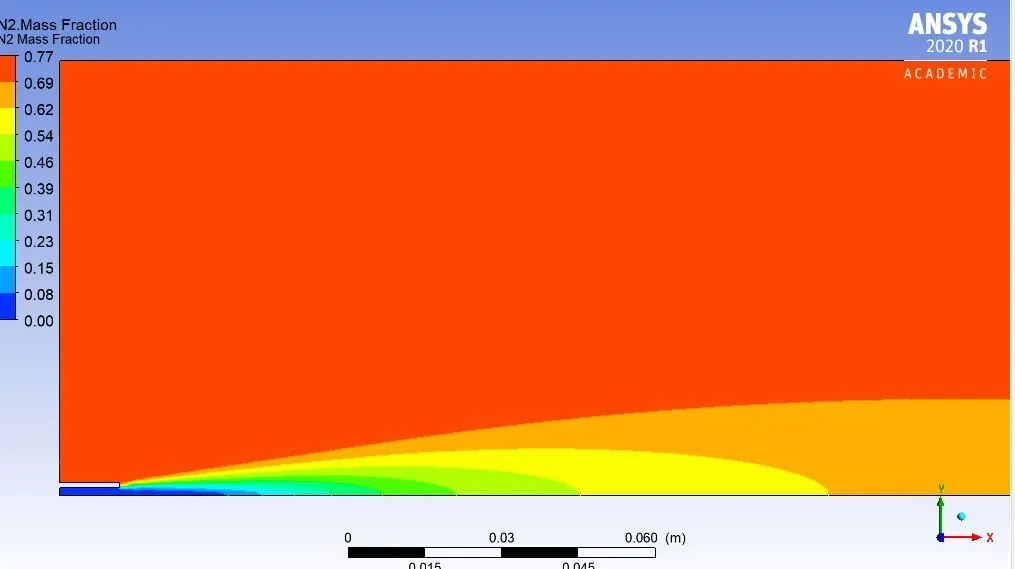
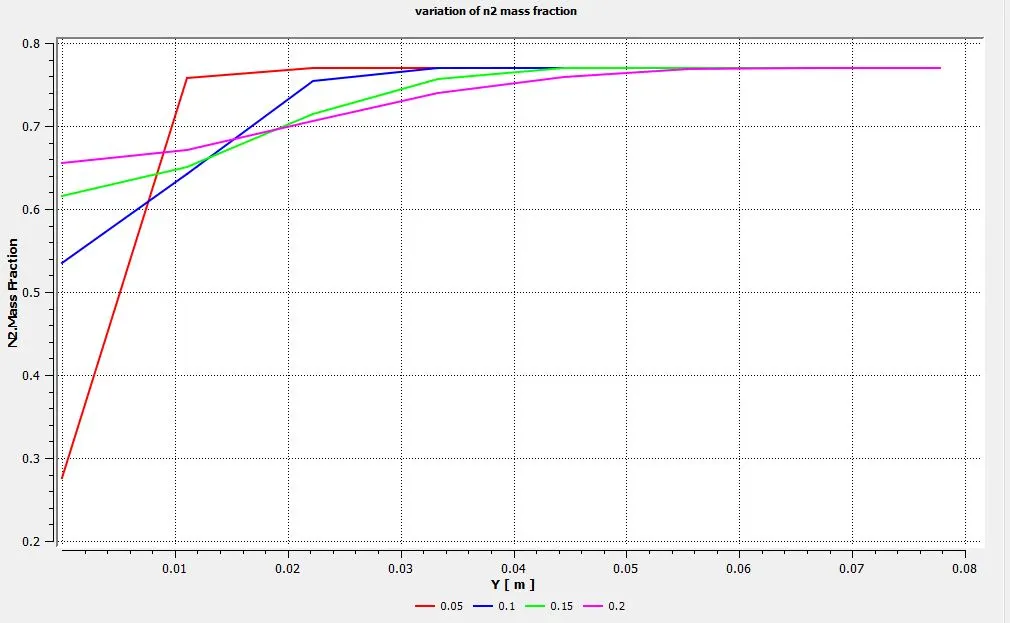
Mass fraction contour of N2 and variation across line probes
Mass Fraction contour of NOx pollutant and variation across line probes
Case 4: 30% water mixed with fuel by volume
The mass fraction of the pollutant NOx at the outlet is 
Temperature contour
Mass fraction contours of CH4 and O2
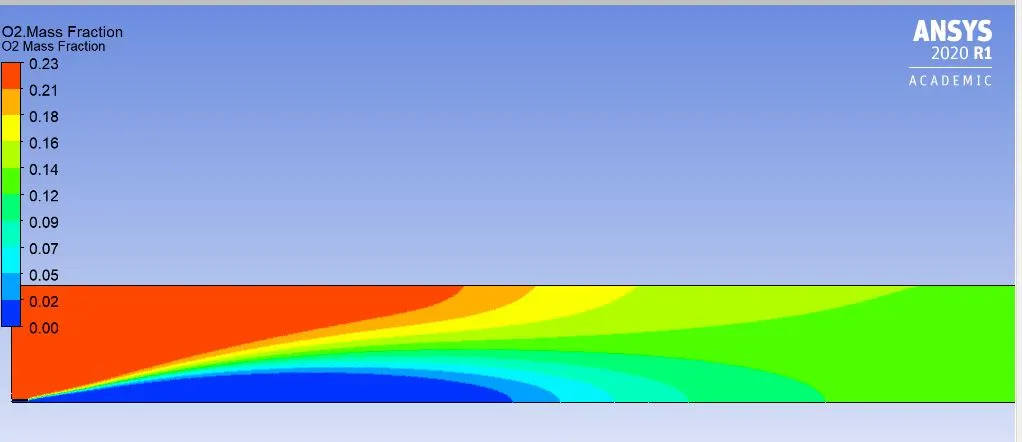
Variation across line probes of CH4 and O2 Mass fraction
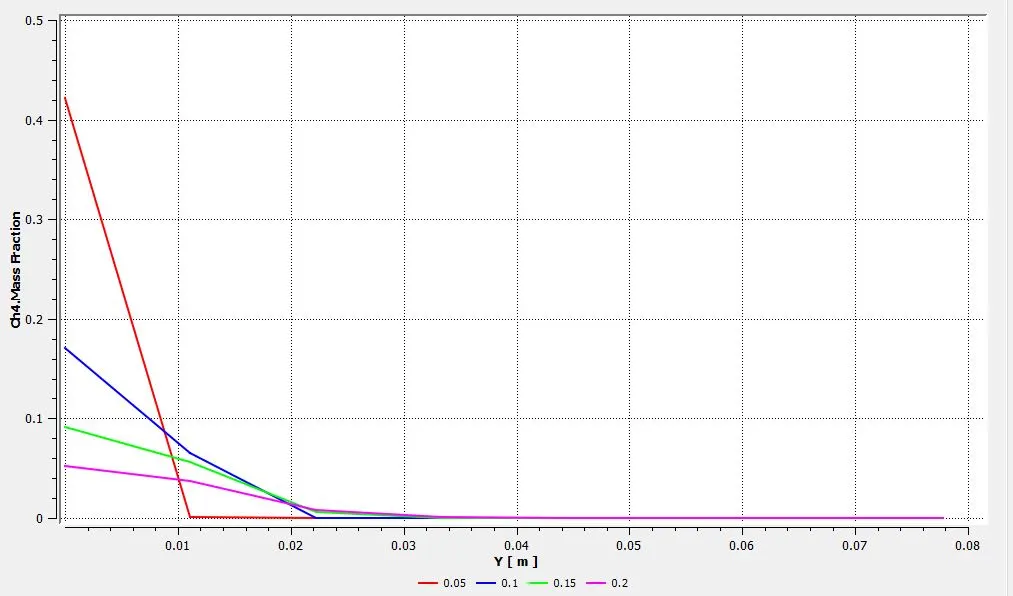
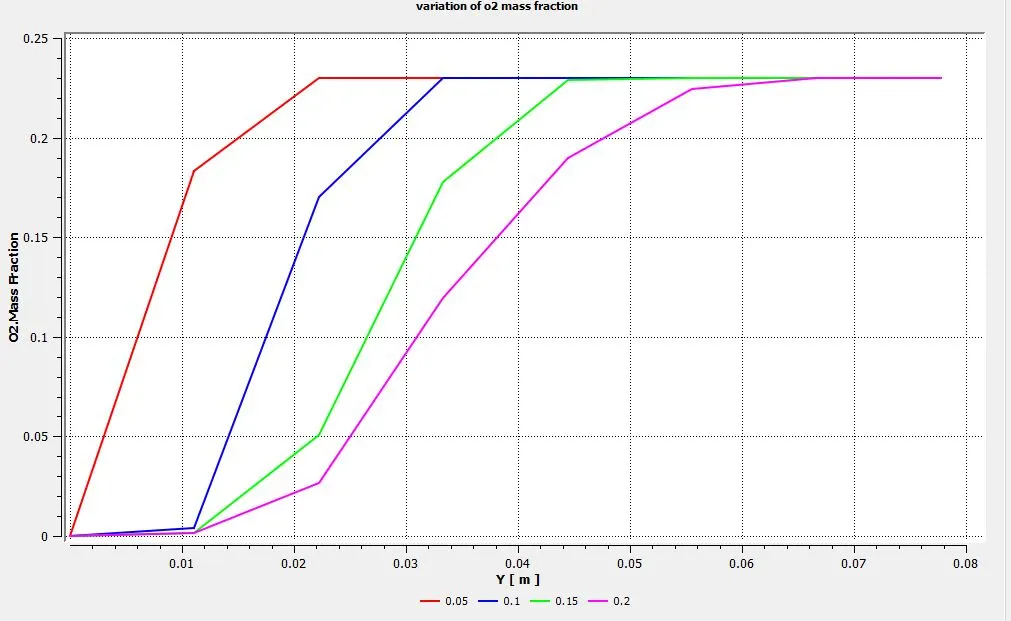
Mass fraction contours of H2O and CO2
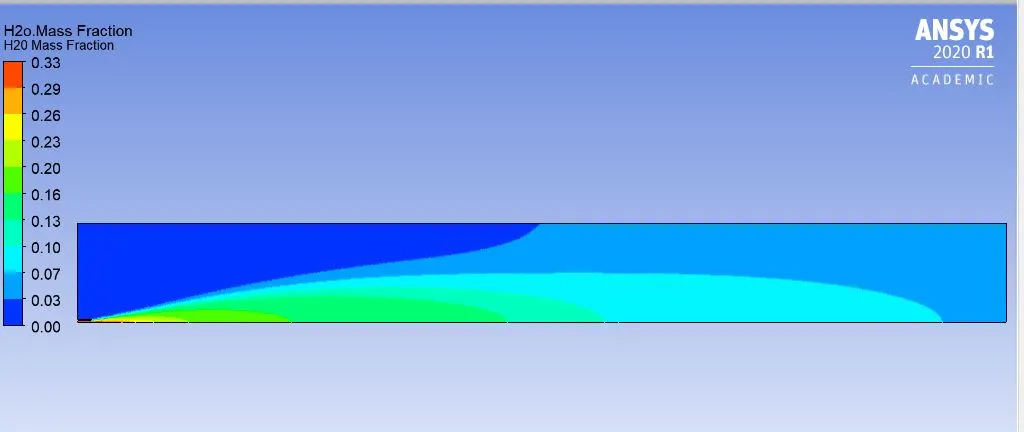
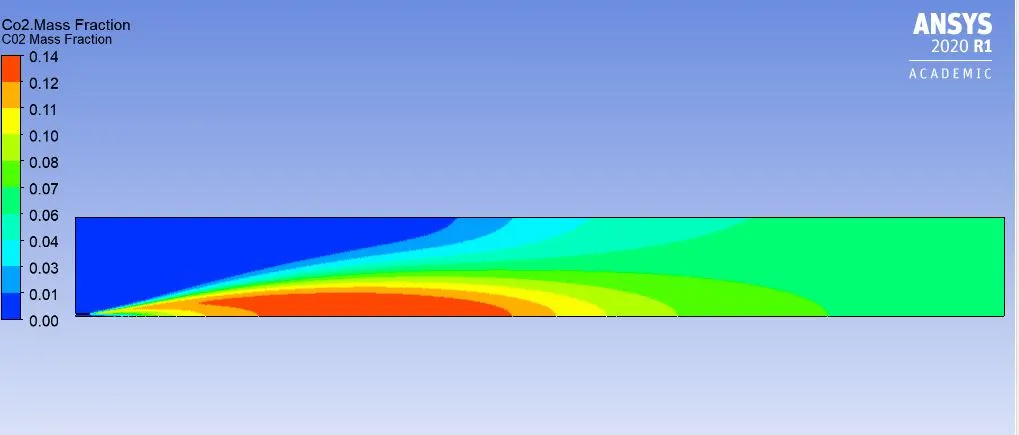
Variation across line probes of H2O and CO2 Mass fraction
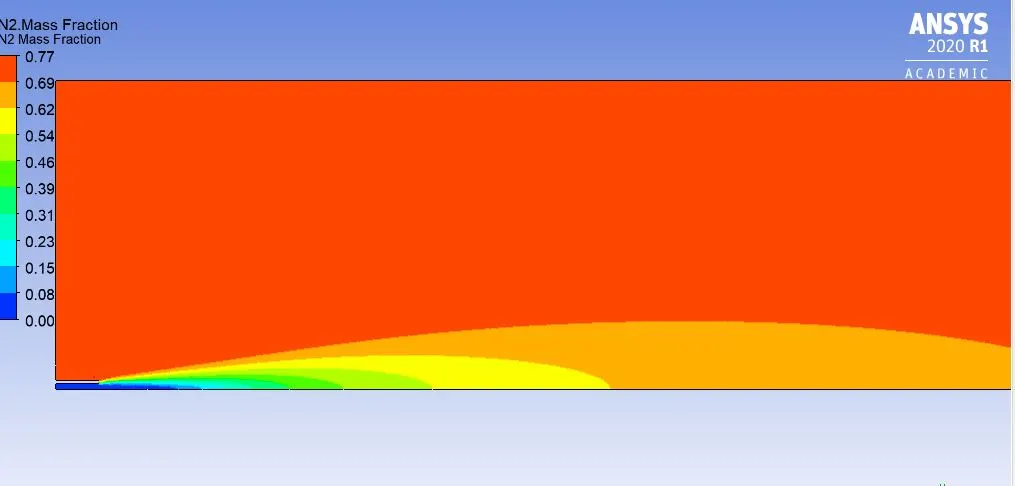
Mass fraction contour of N2 and variation across line probes
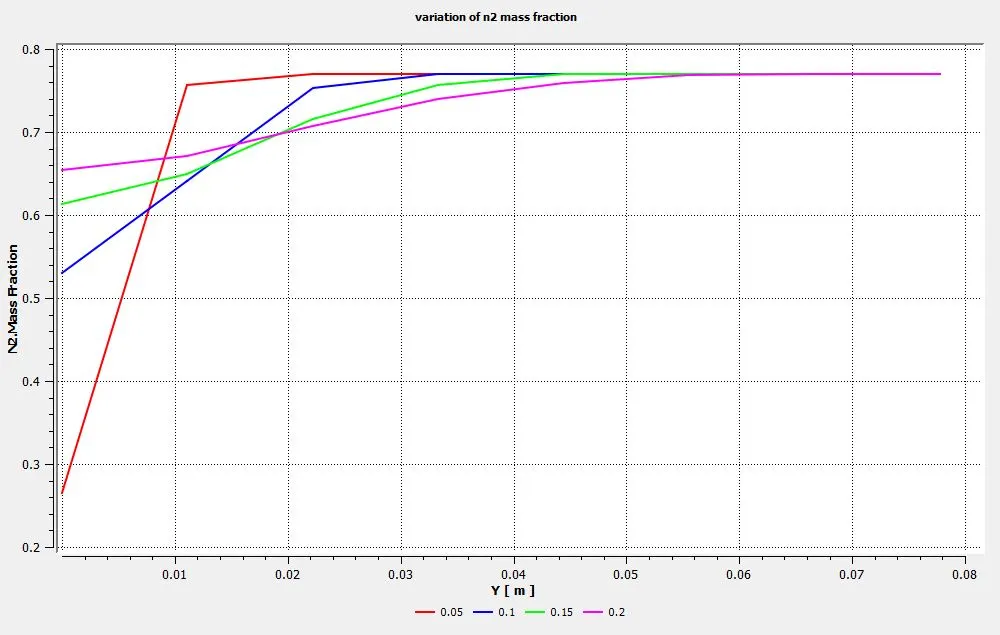
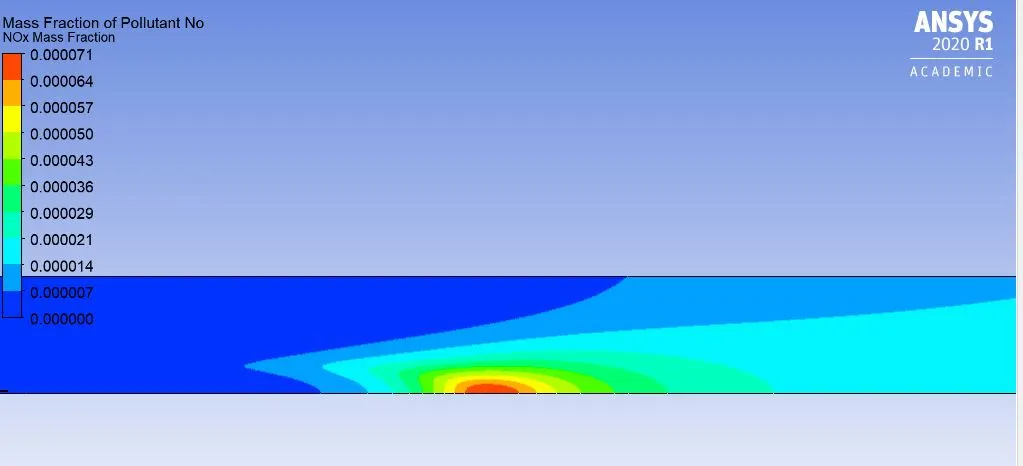
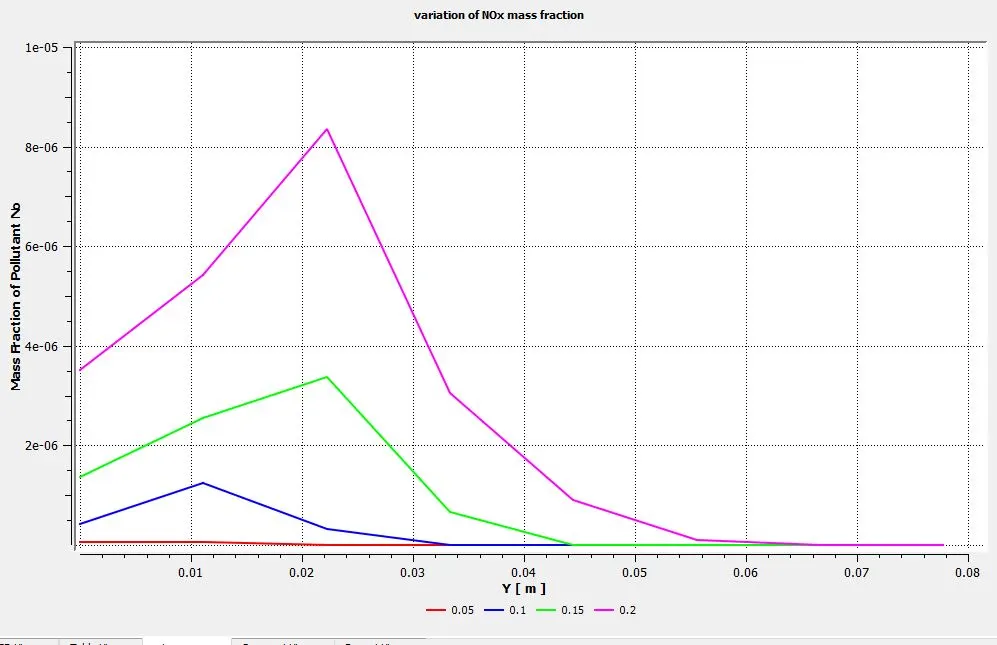
Mass Fraction contour of NOx pollutant and variation across line probes
Conclusion
It is clearly observed that adding water to the fuel at inlet reduces the mass fraction of NOx pollutant at the outlet. This is desired in order to reduce pollution.
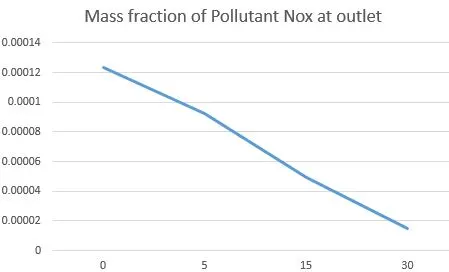
Percentage of water mixed with fuel
Nonetheless, too much water must not be added. This is because too much water may cause rusting of the inlet chamber. It could damage the pistons and cylinder walls. Hence a small amount of water addition seems acceptable to reduce NOx pollutant emissions from an exhaust.