Challenge -1
1.For the already Build electric vehicle model in the tutorial section of the GT suite change the below given parameters as such,
- Increase the Vehicle mass by 50%.
- Increase the Drag coefficient by 5%.
Compare the results for the traction motor power without changing the drive cycle.
SOLUTION:
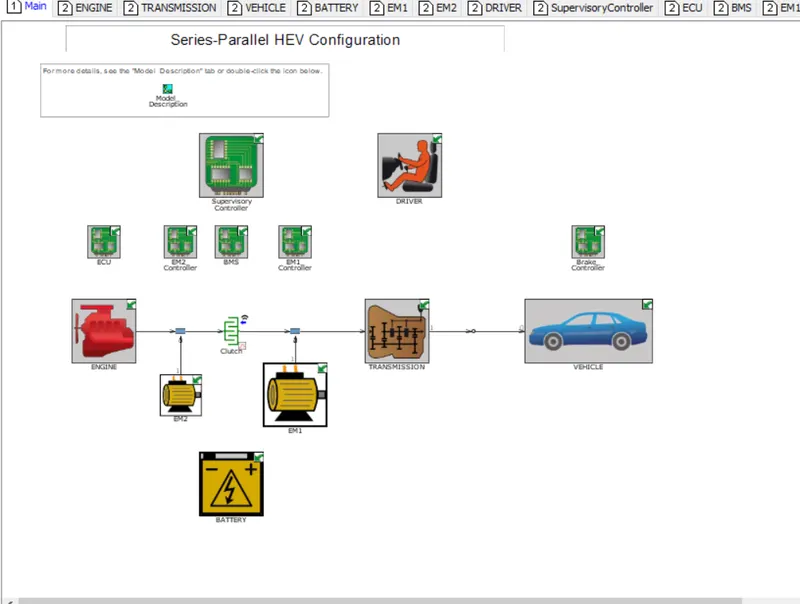
The SERIES-PARALLEL HEV CONFIGURATION was selected Parallel_Series_hybrid.gtm example was modified based on requirements:
OVERALL MODEL:
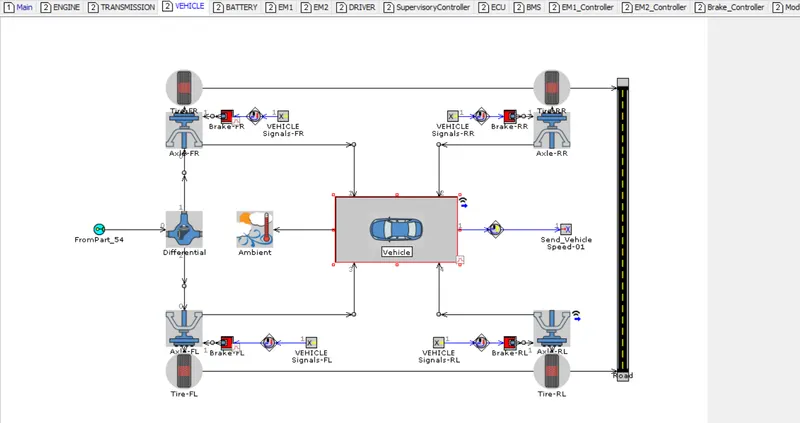
THE VEHICLE MODEL:
The Drivecycles used are:
1.FTP 75
2. HEFT
3. US06
4. NEDC
The vehicle mass was incremented by 50% from 1500 to 2250 kg
The vehicle drag co-efficient was incremented by 5% from 0.31 to 0.3255
The above parameters were attached with 4 cases and compared with both initial and later values as shown in case setup by making 8 cases from initial 4 cases that is 2 cases for each drive cycle:
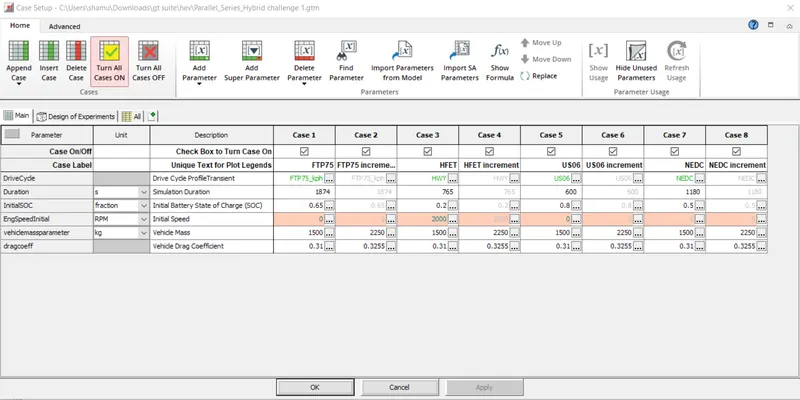
The initial SOHC, Initial speed, and the drive cycle was kept similar to initial conditions of the example model parameters.
RESULTS:
COMPARISON OF TRACTION MOTOR POWER WITH RESPECT TO EACH CYCLE :
Traction motors are powered by electricity and generate the power to rotate the wheels of the train. The turning force produced by traction motors is transmitted to the wheels via the driving gear unit and axle.
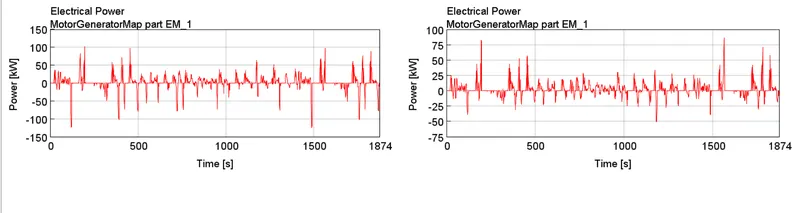
FTP 75 DRIVE CYCLE TRACTION MOTOR OR ELECTRICAL POWER OF EM1 CASE 1 AND 2:
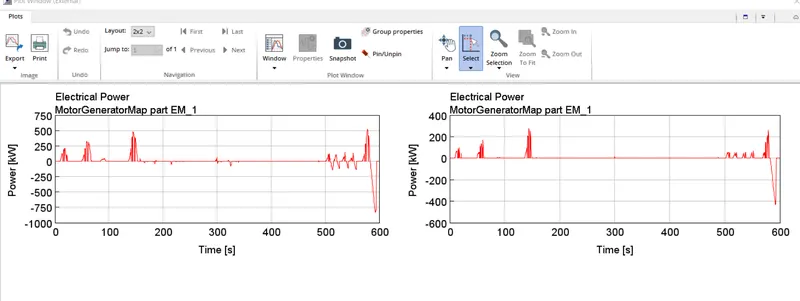
HEFT DRIVE CYCLE TRACTION MOTOR OR ELECTRICAL POWER OF EM1 CASE 3 AND 4:
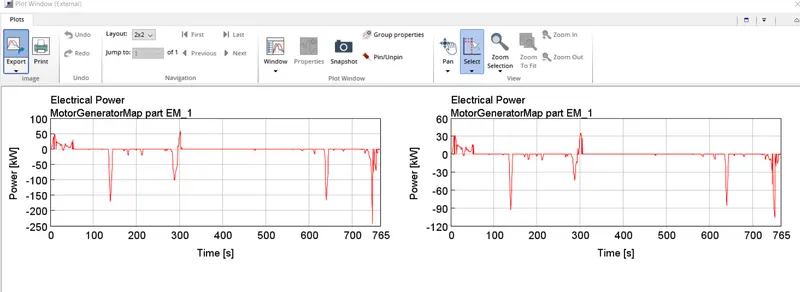
US 06 DRIVE CYCLE TRACTION MOTOR OR ELECTRICAL POWER OF EM1 CASE 5 AND 6:
NDEC DRIVE CYCLE TRACTION MOTOR OR ELECTRICAL POWER OF EM1 CASE 7 AND 8:
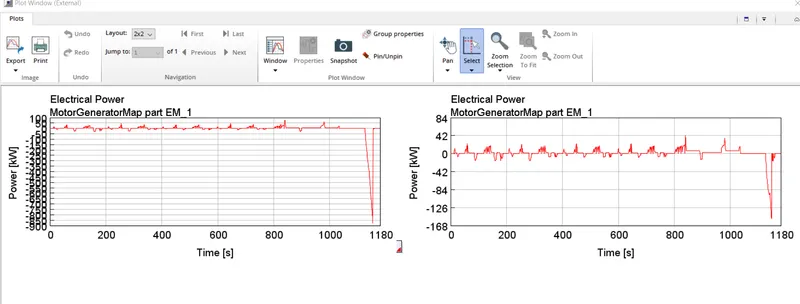
The above 8 cases show the comparison and how the magnitude of power changed from less mass to an increase in mass by 50 %
and also the drag co-efficient which requested more power from the traction motor to meet the requirements and demands with
respect to individual drive cycle standards.