Assignment 4
1. The SI v/s CI Engine parameters are compared and the respective differences are being listed accordingly:
The input specifications vary and therefore the output is also different for each setup.
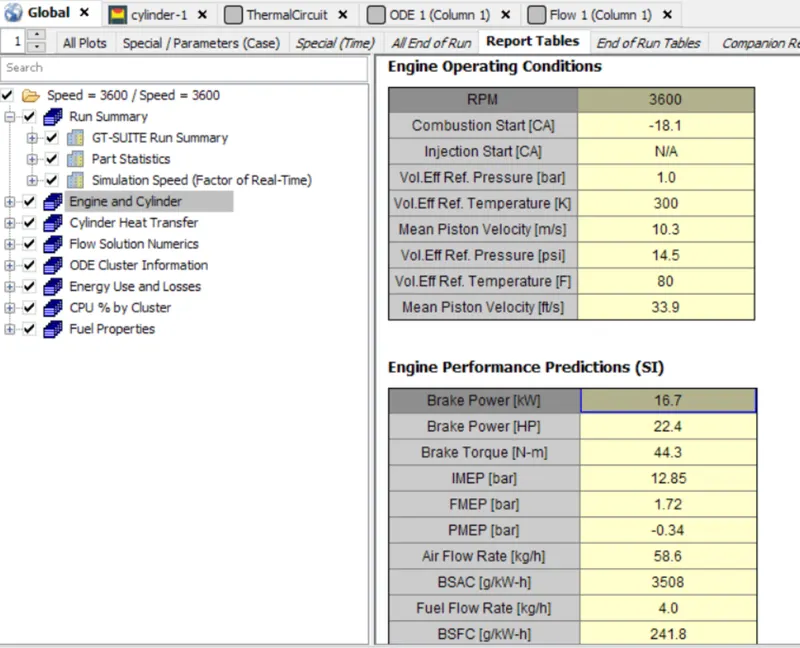
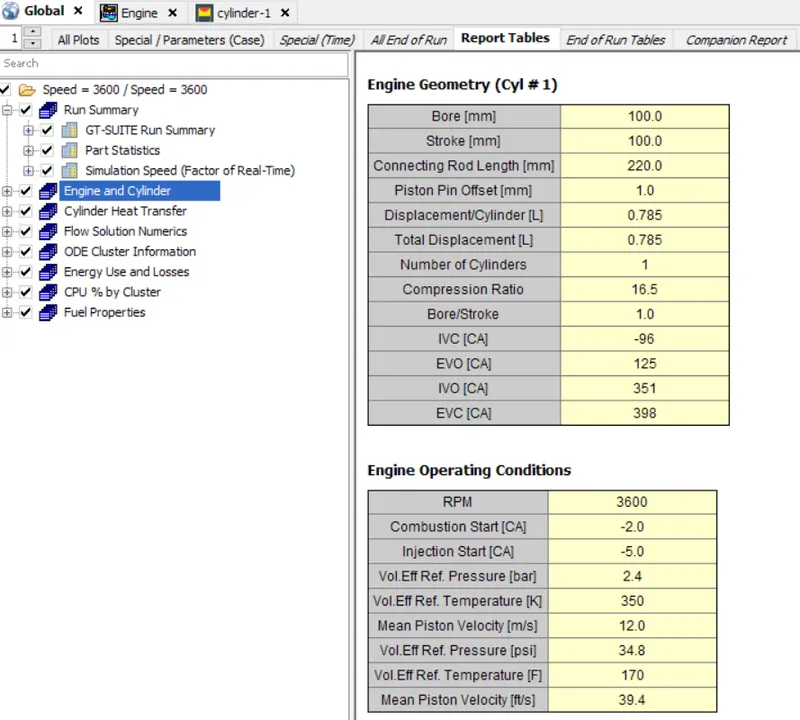
The 3600 RPM was set for both engines and the bore diameter was different as 100 mm and 86 mm for CI and SI engine respectively.
The combustion took place by a spark plug in the SI engine and the direct fuel injection system in the CI engine.
The combustion start happens at different angles -18.1 and -2.00 respectively in SI and CI engine.
The other difference is that injection start angle -5.00 is present in the CI engine whereas it is absent in the SI engine as it takes place with spark ignition.
The mean velocity and the pressure difference are found to be different in both cases which vary according to particular in-cylinder conditions.
The compression ratio is 16.5 and 9.5 in CI engine and SI engine respectively.
SI ENGINE:
CI ENGINE:
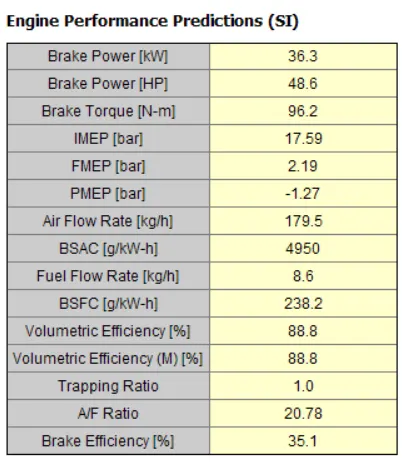
The Power and Torque values are different in each case as shown below:
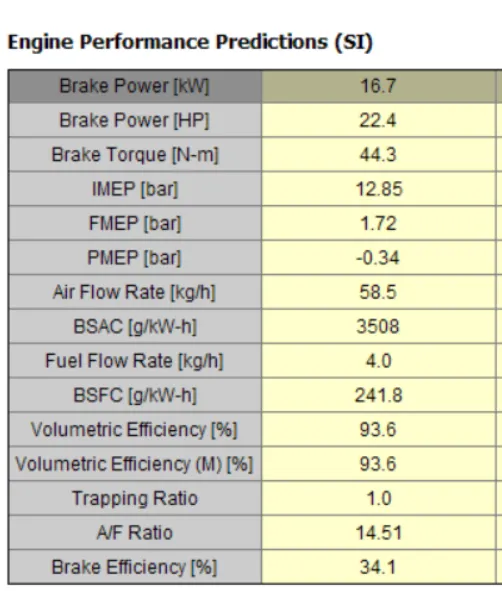
Brake power: The brake power value was found to be 16.7 kW and 36.3 kW in SI and CI engine respectively.
Brake Torque: The brake torque obtained was 44.3 Nm and 96.2 Nm in SI and CI engine respectively.
Air fuel ratio: It was 14.51 and 20.78 in SI and CI engine respectively.
The internal mean effective pressure (IMEP) was 12.85 bar and 17.59 bar in SI and CI engine respectively.
BSFC: Brake-specific fuel consumption is 241.8 g/kW-h and 238.2 g/kW-h in SI and CI engine respectively.
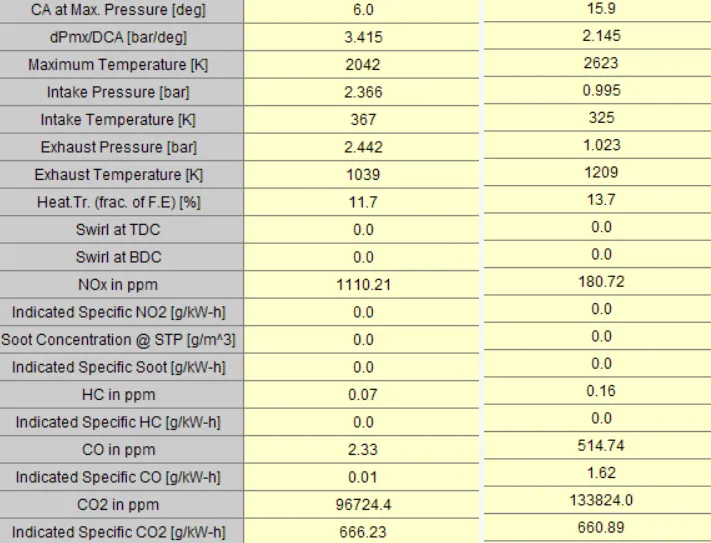
Exhaust gases: The amount of NOx produced is higher in CI engine compared to SI engine which is 1110.72 ppm and 180.72 ppm respectively. whereas, the CO and CO2 produced are less in CI engine and almost negligible CO is produced in CI engine.
SI ENGINE:
CI ENGINE:
CI AND SI ENGINE:
2.
BSFC: Brake-specific fuel consumption is 241.8 g/kW-h and 238.2 g/kW-h in SI and CI engine respectively. This means the fuel consumed is less in the CI engine compared to the SI engine to generate the 1kWh of the output.
Exhaust temperature: The exhaust temperature is 1209K and 1039K in SI and CI engine respectively
A/F ratio: It was 14.51 and 20.78 in SI and CI engine respectively. This means the SI engine consumes more fuel with respect to air than the CI engine.
3.
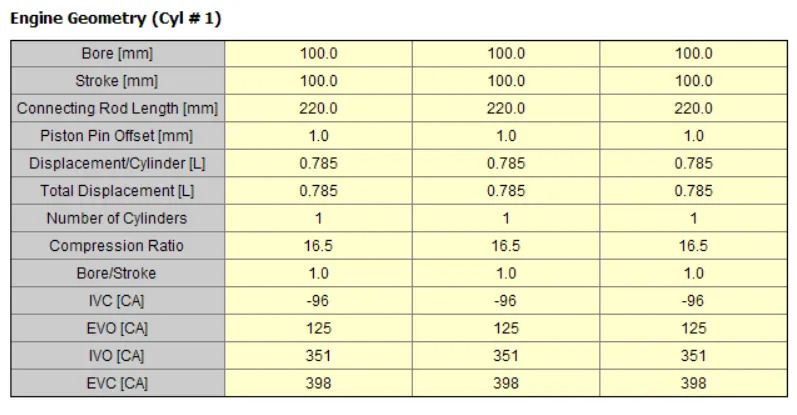
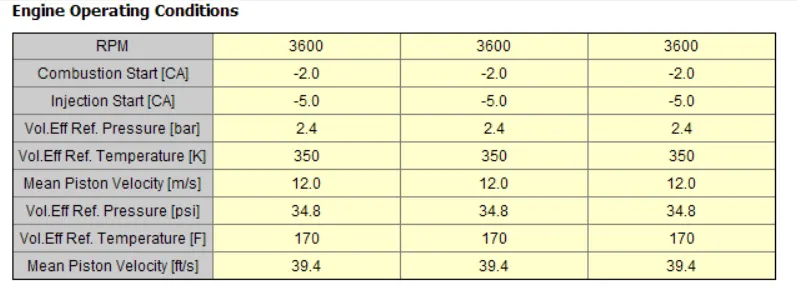
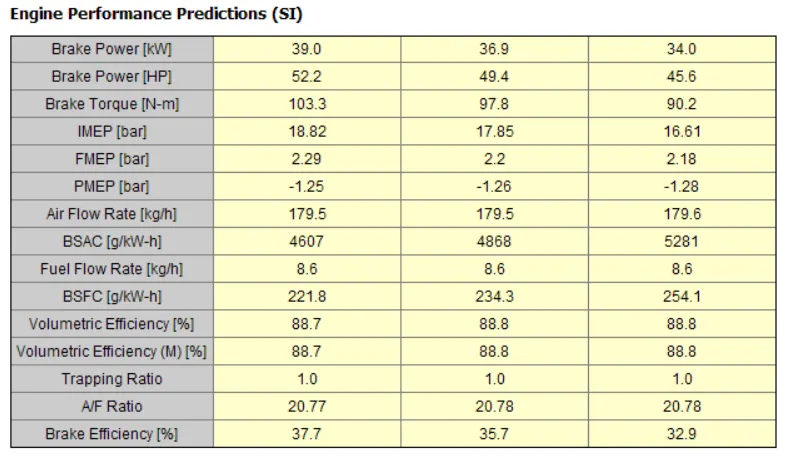
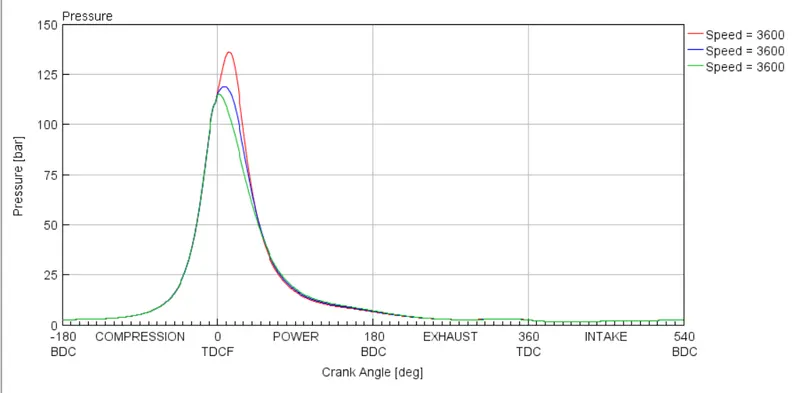
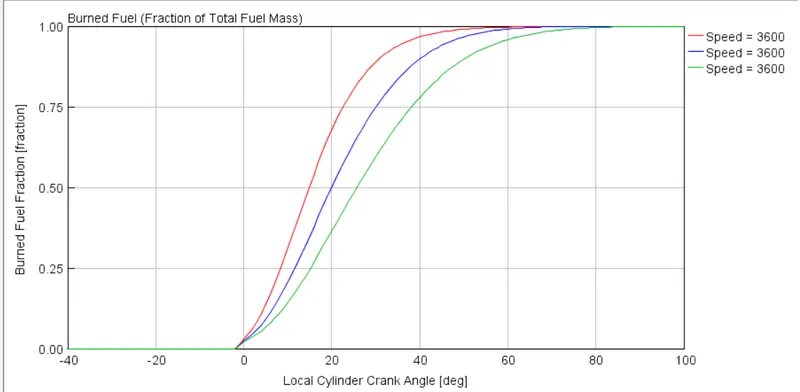
The MFB50 Value i.e the Main burning duration value was changed to 25, 33 and 42 respectively for 3600 RPM in three cases
The engine geometry, operating conditions, and performance parameters are shown below in the table for the respective MFB values of 25, 33, and 42 respectively.
PLOTS:
The Pressure v/s crank angle:
Burned fuel fraction v/s the local cylinder crank angle:
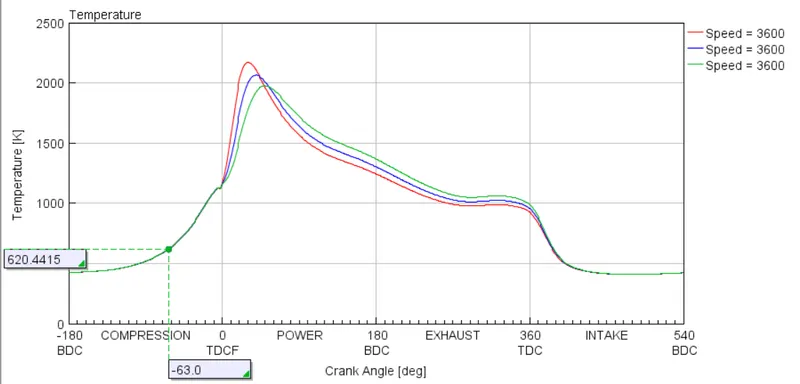
Temperature v/s crank angle: