Calibrating a SI-Engine for Maximum performance
AIM :
To calibrate and run a case study for the Suzuki Hayabusa GSX - 1300R engine for maximum power and maximum torque conditions.
ENGINE SPECIFICATIONS :
The specifications of the SI engine on which we are going to conduct the case study are as follows.
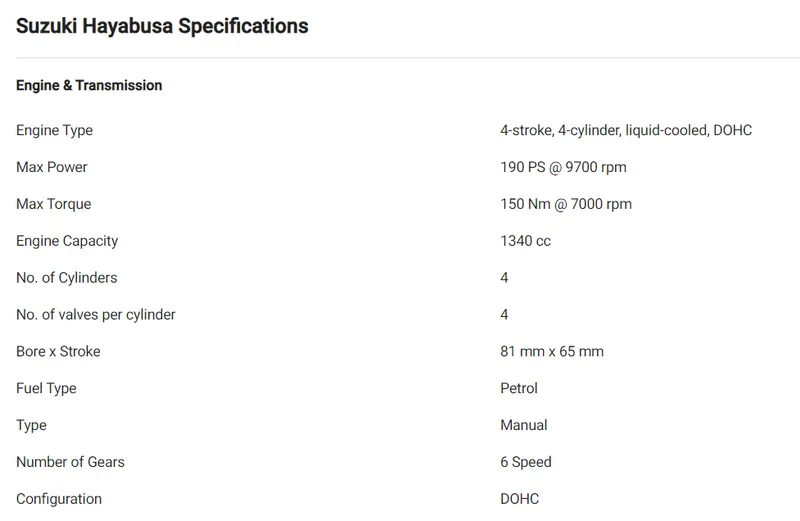
The SI engine in context is a 44 – stroke, 44 – cylinder DOHC (Dual Overhead Cam) with a total of 1616 valves (44 valves per cylinder).
- Maximum Power Output = 190190 PS�� @ 97009700 rpmrpm
- Maximum Torque = 150150 Nm�� @ 70007000 rpmrpm
- Compression Ratio = 12.5:112.5:1
ENGINE MODELLING :
We use the inbuilt example of a 4 cylinder GDI engine in GT – SUITE as a reference structure for the engine modelling. The structure of the engine model is as shown.
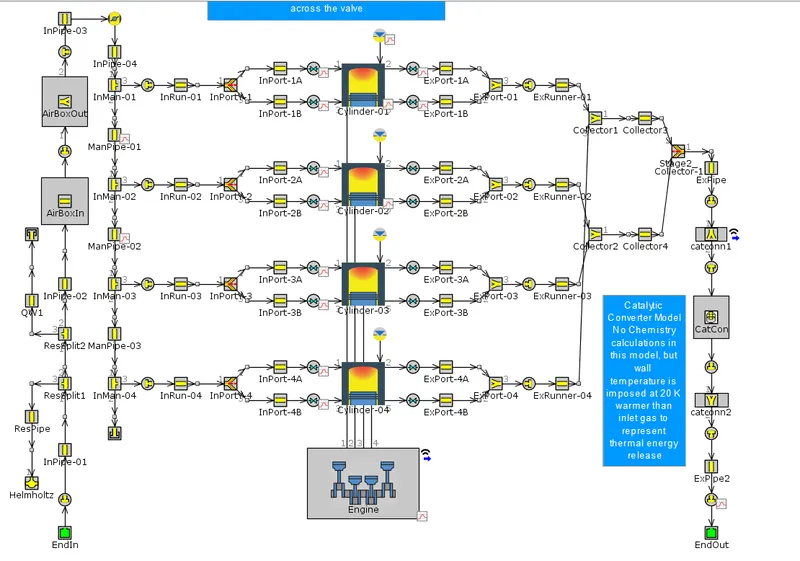
For this reference model, we change the required parameters as per our engine specifications.
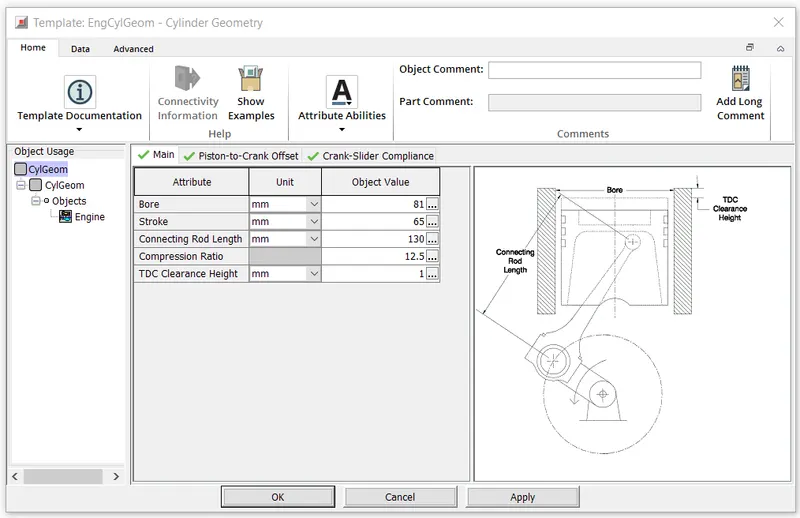
1. BORE & STROKE
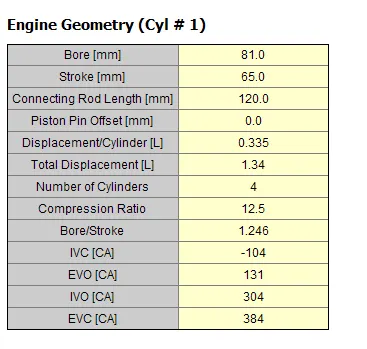
As per the engine specifications, the bore and stroke lengths of the cylinder are 81 mm and 65 mm respectively.
Compression Ratio = 12.5 : 1
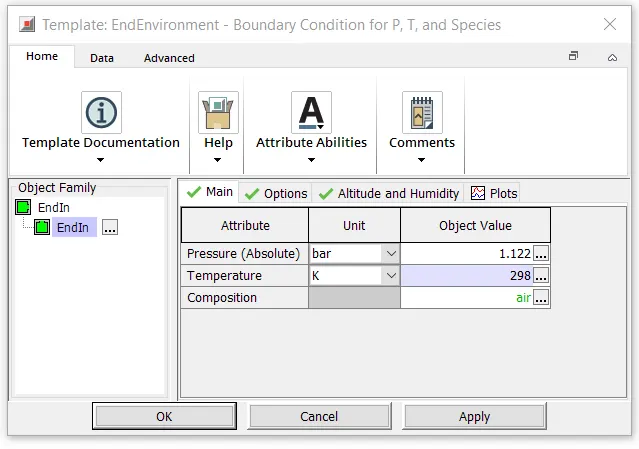
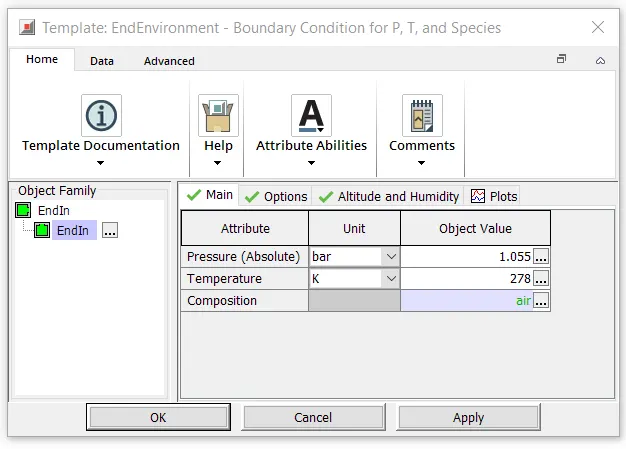
2. INLET AIR PRESSURE
In order to obtain our required power output of 190 PS at 9700 rpm, we increase the inlet air pressure from a default value of 1 bar to 1.122 bar. A higher intake pressure helps to form a better homogeneous air – fuel mixture and thereby increasing the density of air in the mixture.
3. FUEL CONTROL
We achieve a torque rating of 150 Nm at 7000 rpm by controlling the fuel entering the engine cylinders. This is controlled by varying the amount of air entering the cylinders, which consequently alters the F/A ratio of the engine and thereby increasing the torque output of the engine.
In order to achieve this, we provide a cold – air intake, by reducing the temperature of air to 278K. A cold-air intake improves turbulence to the combustion chamber, allowing fuel and air to mix more uniformly and detonate much more evenly; this improves compression and leaves less fuel waste.
In addition to this, we increase the density of air entering the cylinder and thereby obtaining our required torque rating.
CASE SETUP :
We setup the respective parameters for the case study for two different engine speeds of 7000 rpm and 9700 rpm as follows.
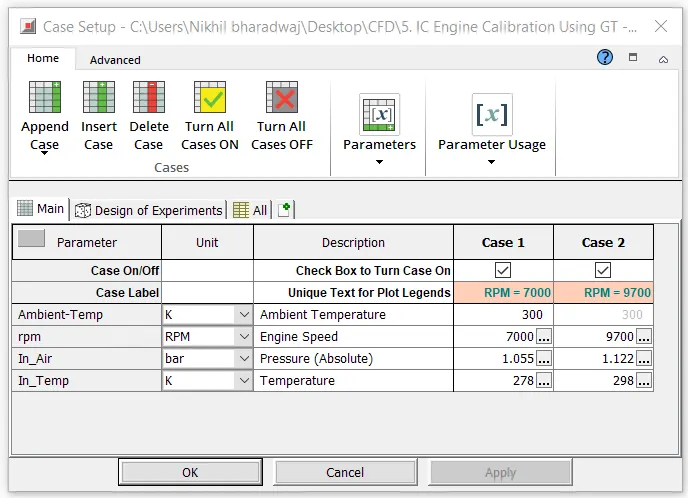
Finally, we define the plots of the outputs which we require from the simulation and we move on to run the case.
RESULTS :
By running the simulation for the above case setup parameters, we obtain our respective results as shown.
1. ENGINE GEOMETRY
2. POWER & TORQUE OUTPUT
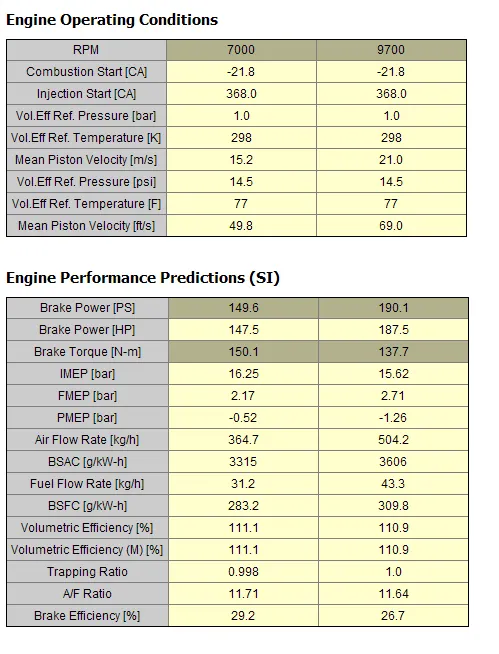
In reference to the engine specifications, we have successfully obtained our power output of 190 PS @ 9700 rpm and also the torque rating of 150 Nm @ 7000 rpm as shown.
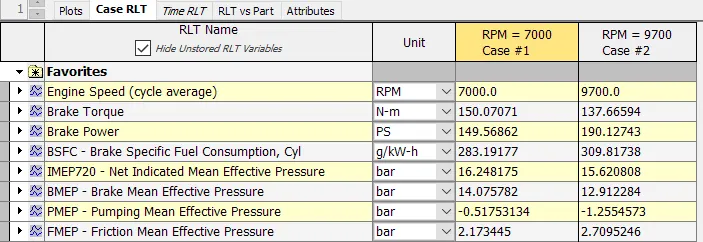
Combining the data of both the cases in a single table, we get.
PLOTS :
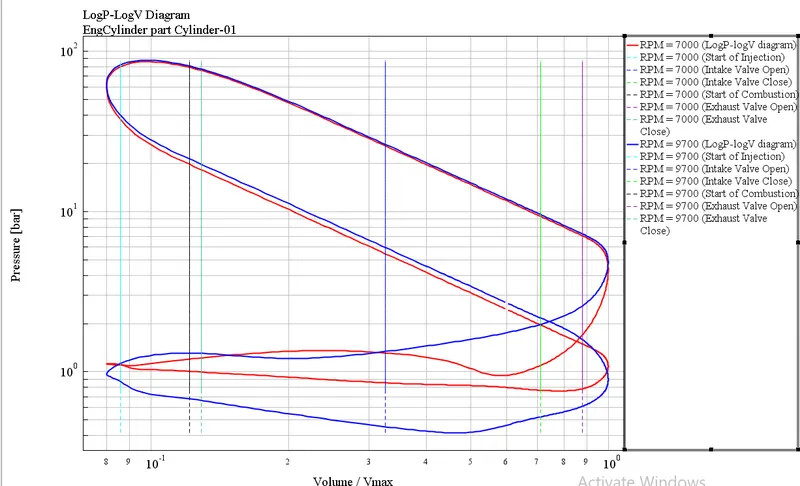
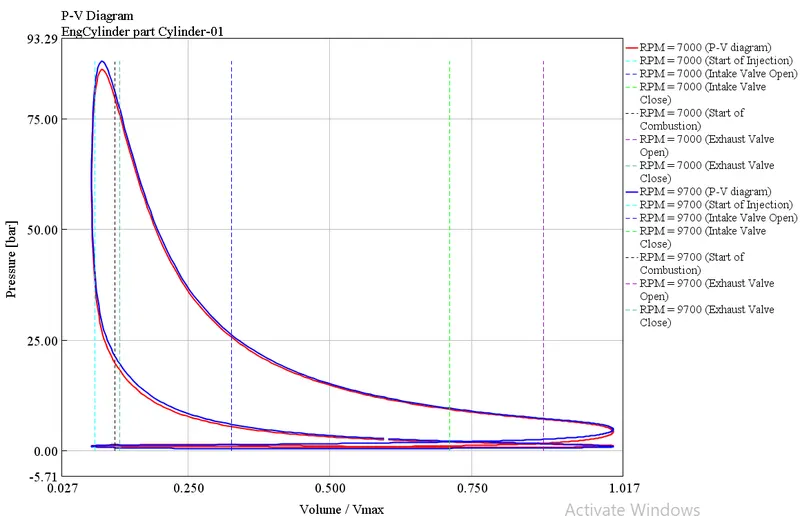
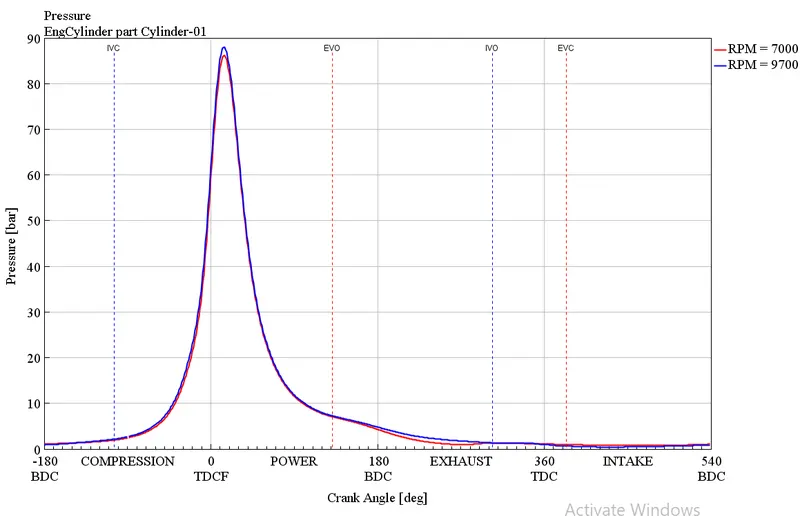
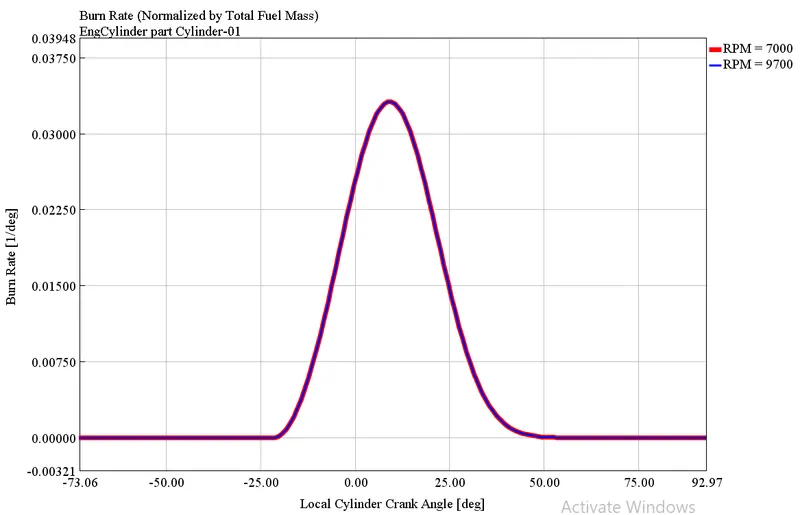
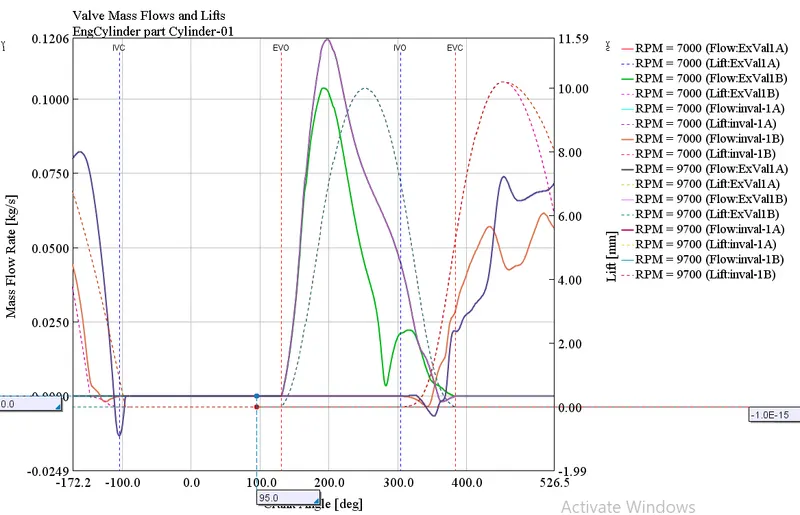
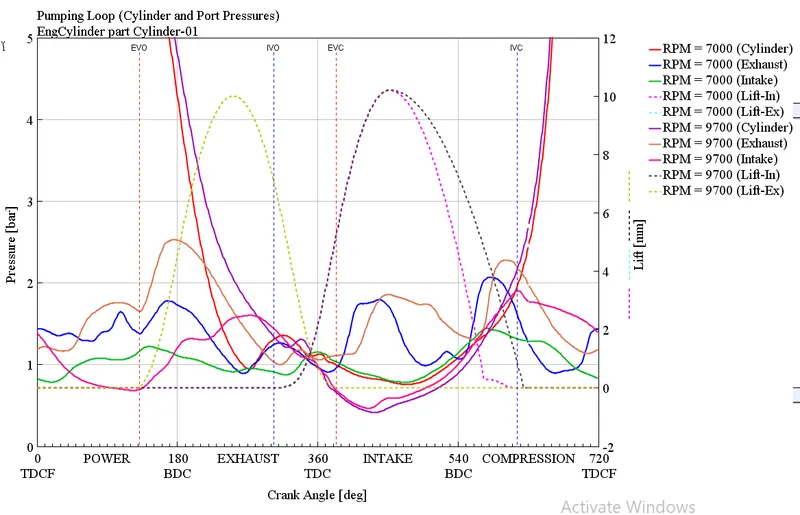
From the data obtained, we compare the plot results of both the cases as follows.
1. Log P-V Plot
2. P-V Plot
3. In – Cylinder Pressure
4. Burn Rate
5. Valve Mass Flow
6. Pumping Loop
CONCLUSIONS :
A case study for the Suzuki Hayabusa GSX - 1300R engine has successfully been run for maximum power and maximum torque conditions using GT – SUITE and the engine has been successfully calibrated.
The results and outputs of the simulation have been post – processed as shown above along with the respective plots.