Bird Strike - Project - 2
Aim: To simulate the Bird-strike on Aero-engine using explicit analysis in Ls-Dyna
Instructions need to followed
Bird Strike in Aero Engine:
This is a classic nonlinear transient dynamics problem similar to car crash and mobile drop. While accurate modelling of the problem requires advanced techniques such as SPH, this problem can be solved using generic explicit solver. Here are the information required to model the phenomenon.
The blades should rotate at a constant velocity but the casing should remain stationary. The cylindrical bird model should travel along its own axis and hit the blades. Use elastic material for the bird(2000MPa) and the casing(200GPa). The material model for the blades is attached. The velocity of the engine blades and the birds can be chosen so that blade failure can be seen within a short span of time.
A few extra requirements for this project:
- Follow a consistent numbering approach 100000+ for nodes, 500000+ for elements, and 1000+ for the parts. All other keywords should be numbered within 10000-19999 while following a range for each one.
- The bird, casing, and the blades should be in different input files and there should be one main file referencing all the input files. The main file should contain only references. Control cards and boundary conditions should be there in another separate file. The reference include path should be such that the folder can be copied anywhere and it is able to correctly reference all the file and run the simulation.
These two requirements are must in a professional setting when dealing with large models and multiple people working with the same model simultaneously.
Bird-Strike
A Bird-strike sometimes called bird strike, bird ingestion (for an engine), bird hit or bird strike hazard (BASH) is a collision between an airborne animal (usually a bird or bat) and moving vehicle usually an aircraft.
Although it’s true that there is no way you can be completely sure of avoiding a bird strike. Bird strikes usually occur when aeroplane is flying at low altitudes. Therefore the most favourable condition for bird strike are during take-offs and landings ( or other related phases of the aeroplanes. The reason for this is obvious, mostly birds are fly at low altitude, to there is greater risk of hitting an airborne animal.
What Happens during a Bird Strike?
Birds usually collide with any of the forward facing edge of the airplane, which includes the wing, nose cone, and the most common site is the jet engine. There have been cases of birds hitting the windshield or canopy of airbuses and fighter jets, which can result in the cracking of the surface of canopy or windshields. These cracks sometimes disrupt the air pressure inside the cabin and result in altitude loss or other flight related problems. The severity of damage done by the bird striking depends upon a few factors including speed difference, direction of impact and the weigh and size of birds.
Let take a perspective, consider a 5Kg bird hitting an airplane at relative velocity of 275kmph, can you figure out how much of an impact this translates into?
The most dangerous condition arises when birds hits the turbine and got caught in the engine, this event is refer to jet engine ingestion, since the bird is ingested by the engine.
After being struck in the engine, the bird can cause a disruption in the rotatory motion of the fan blades, result in partially or complete failure of engine, now what can a sudden failure on one such engine do to an airplane??? Flocks of birds are even more dangerous as they can have more severity impacts to the blades and engine of the gas turbine of the aeroplane.
So a bird strike are major threat to the aircraft structures, as a collision with bird during flight can lead to serious structural damage. Computational method has been used for more than 30 years for the bird proof design of such structure, being an efficient tool compared to the expensive physical certification tests with real birds. At the velocity of interest, the bird behave as soft body and flows in fluid like manner over the target structure, with the high deformation of the spreading material being a major challenge for finite element simulations.
Bird strike simulation on aircraft structure have been performed and improved since the late 1970’s. A large variety of bird impactor geometries, material, masses, densities and modelling methods exist now days, there are three established techniques for numerical bird impactor modelling are used Lagrangian, Eulerian, and SPH. The best approach depends upon the specific application, software package, computational resources and parameters setup.
#1 Initial issue facing failure of contact between hub and blade
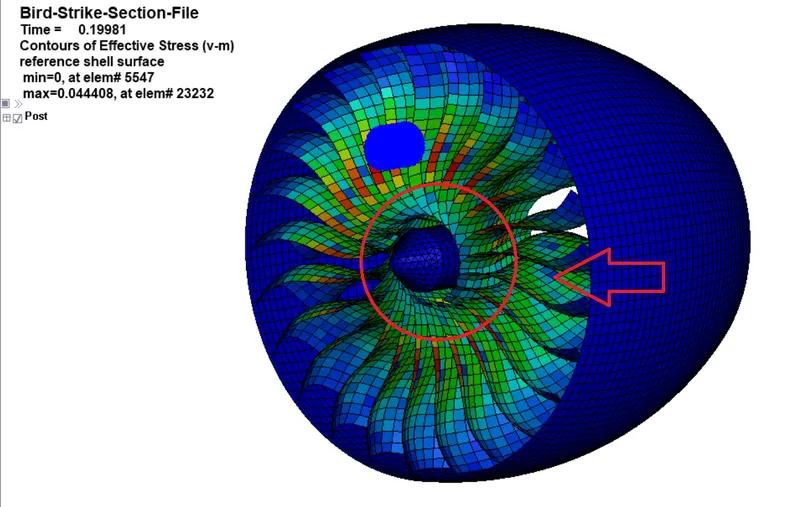
This issue is removed by defining the TEID _SURFACE_TO_SURFACE contact between hub and blade
#2 Issue with the contacts, lead to bird bounce back after striking
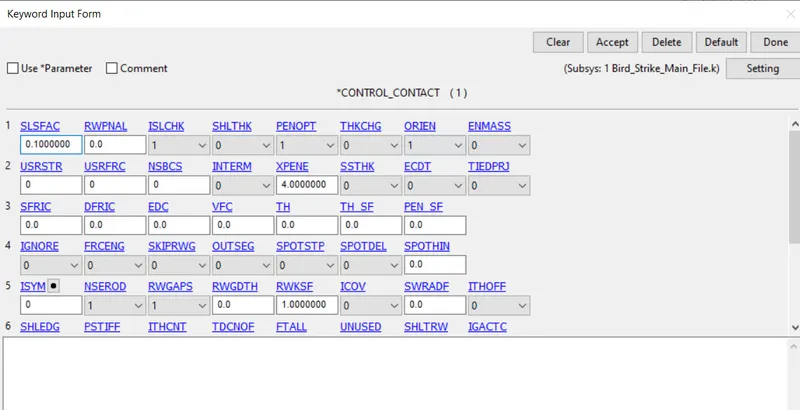
This issue is removed by using the Control contact card and by tweaking the value of SLSFAC and SFS or SFM to maintain the stability criteria.
Procedure:
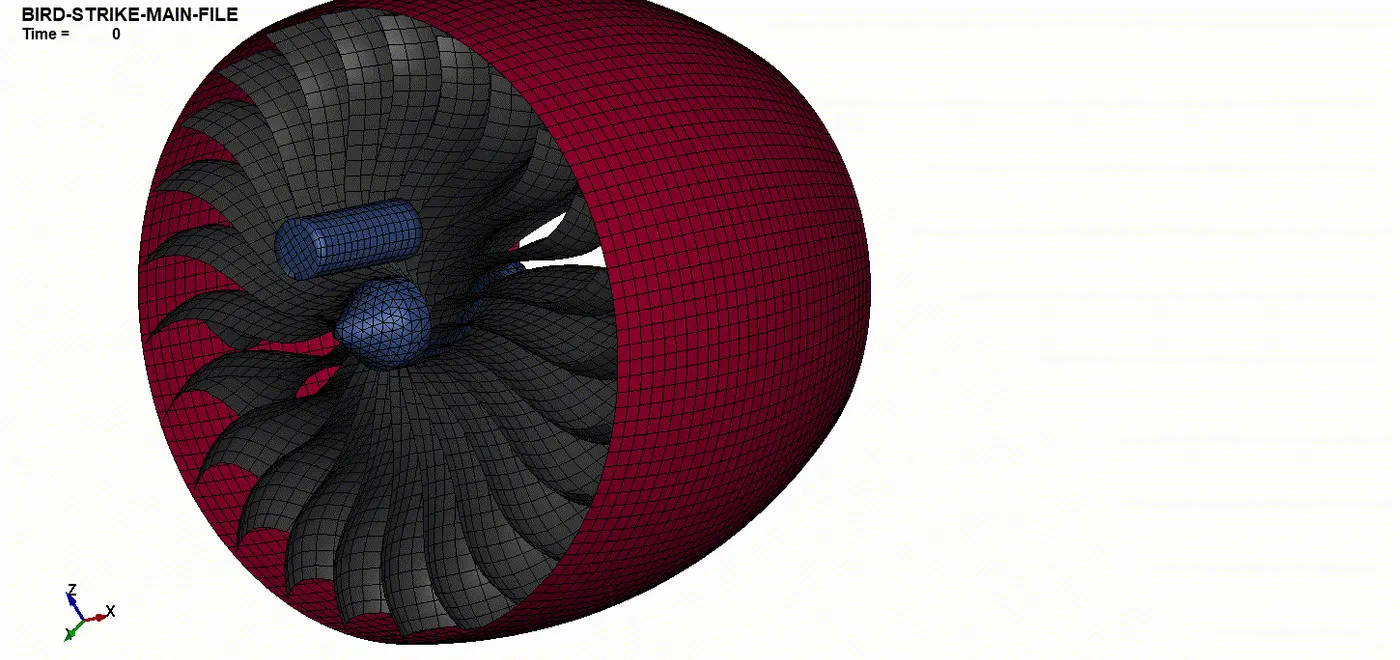
The given keyword file BIRD_STRIKE consist of nodes and elements for all four parts collectively, I.e. Engine casing, Blades, Hub, Bird model.
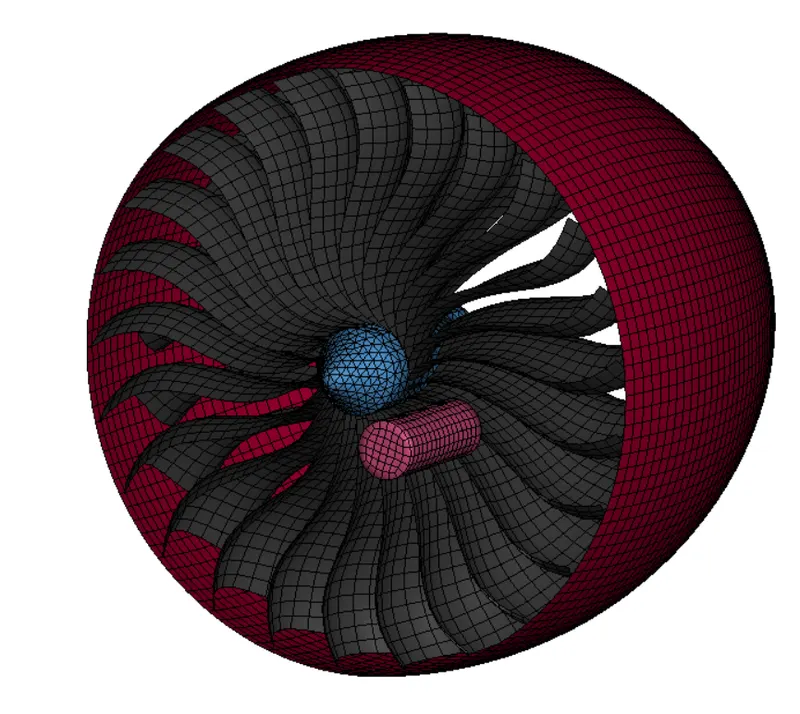
Separates the given parts by assigning the keyword file, those file are distributed and saved as .k Keyword file.
Separate parts have to given the ID starting from 1000 as per instruction
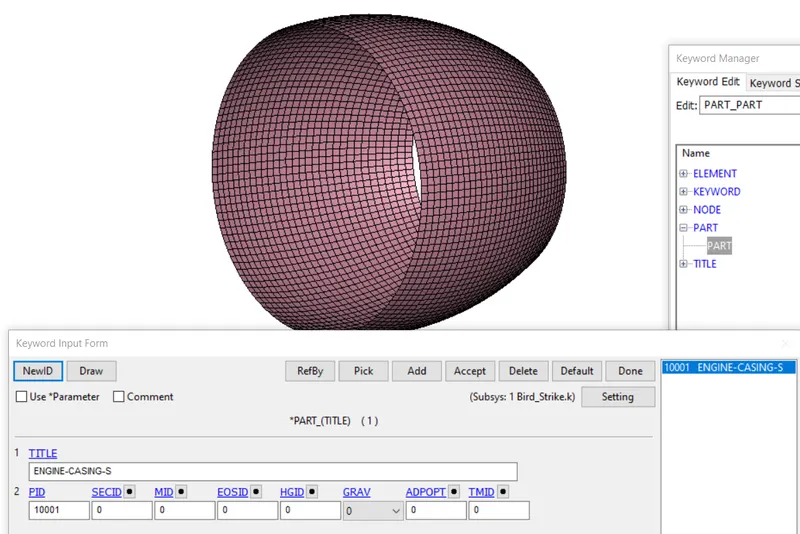
Engine Casing (Saved as separate part)
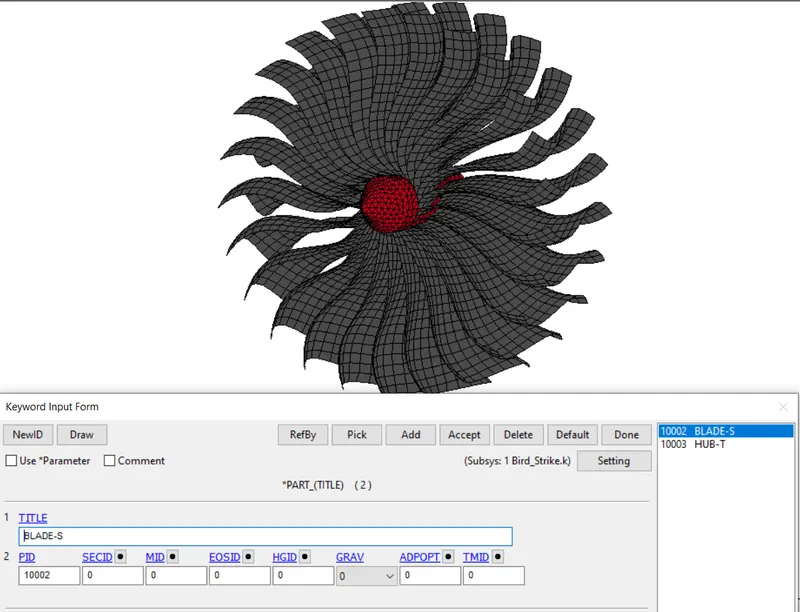
Blade & Hub (as separate part)
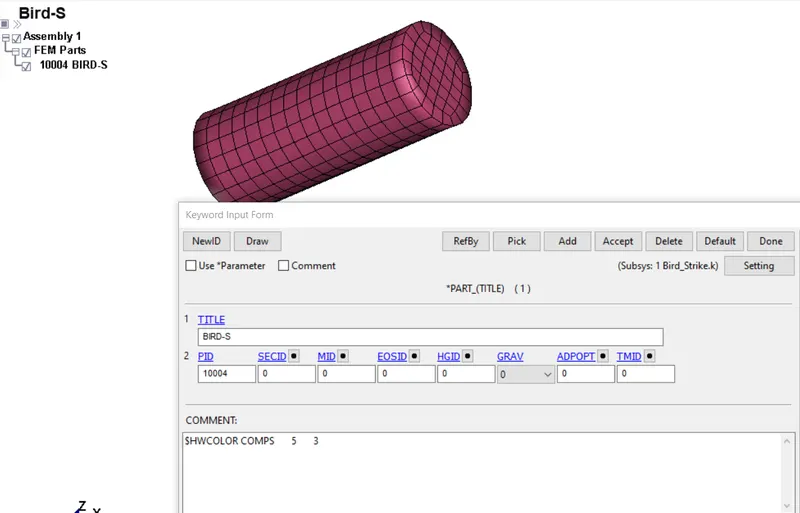
Bird (as a separate part)
Note: For this model the unit system to be followed here is Kg mm ms
Renumbering of the Nodes and Elements as per instructions
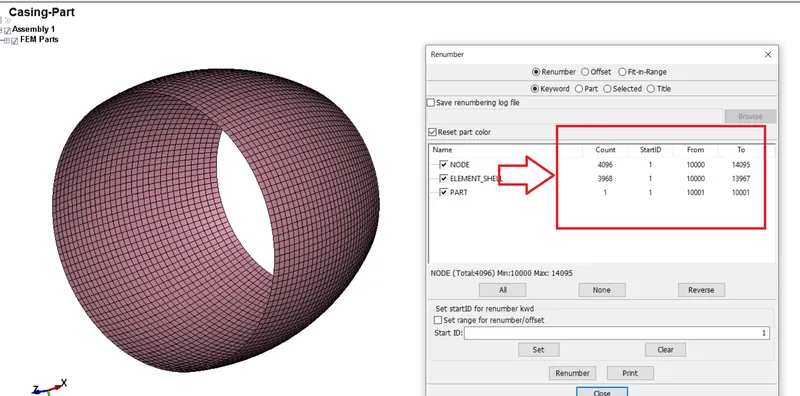
Renumbering of Nodes and Element for casing part
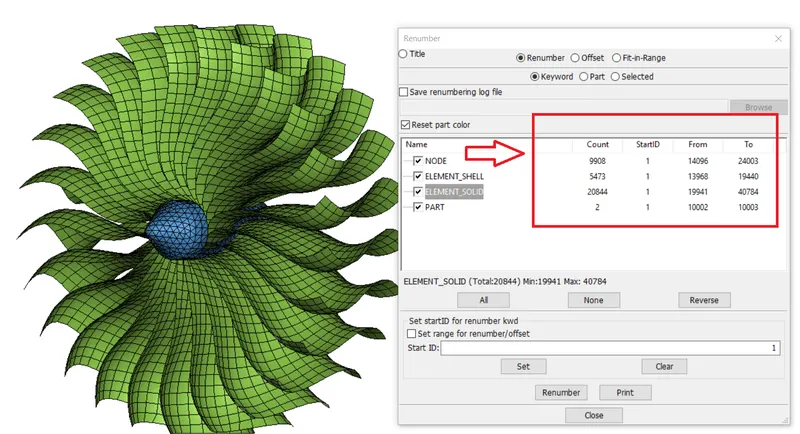
Renumbering of Nodes and Element for Blade and Hub Part
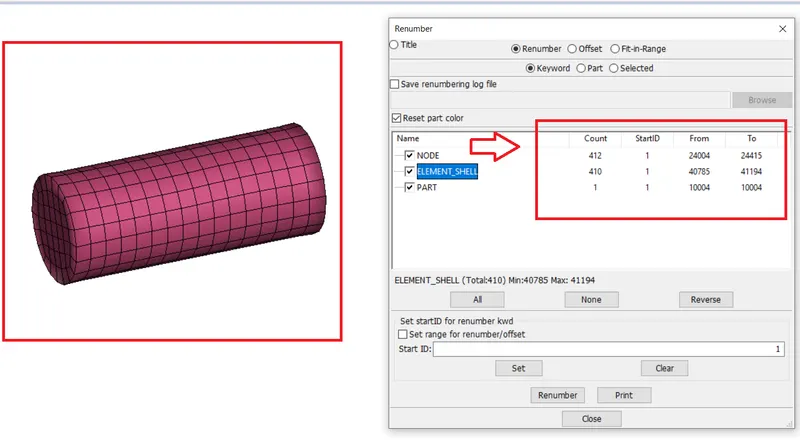
Renumbering of Nodes and element for Bird part
Material Definition
Material for the turbine blade is given and we have to define it according to our unit systems, and need to created individually in separate file for reference during setup of the Bird strike case.
For Blades *MAT_024_Piecewise_Linear_Plasticity_card is given with properties of Aluminium, Density-2.73e^-6, Youngs Modulus-68.94, Poisons ratio- 0.33 Yield Stress-0.0133, Failure Flag-0.2723 and non-linear portion is defined as load curve.
Note: The failure flag that is defined here is very simple and sometimes in complex loading cases it doesn’t gives us accurate results, so it is better to use card with possible failure criteria.
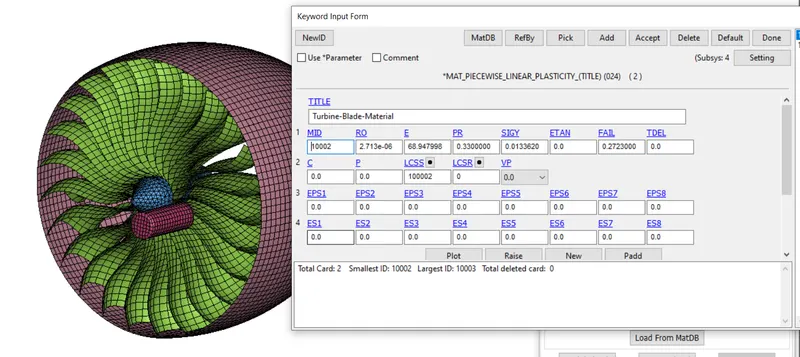
Turbine Blade Material
For Turbine Casing *MAT_ELASTIC card material is used for steel material and the steel properties are assigned Density- 7.800e-06, Youngs modulus- 210, poisons ratio-0.33
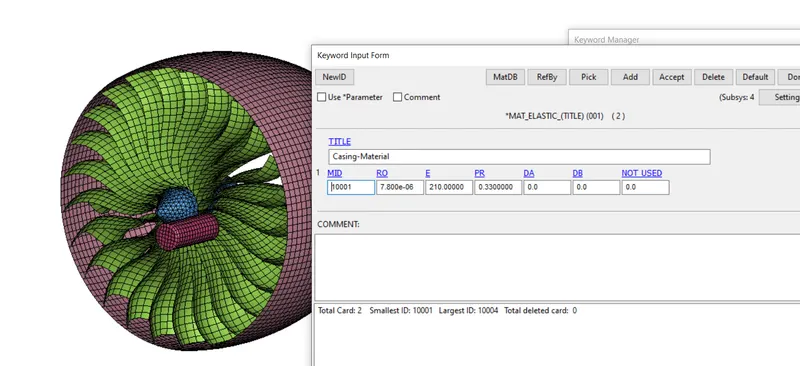
Casing Material
For HUB *MAT_024_Piecewise_Linear_Plasticty card is used and steel property is assigned as Density- 8.200e-06, Youngs Modulus- 145 Poisons ratio 0.30 Yield stress- 0.8100
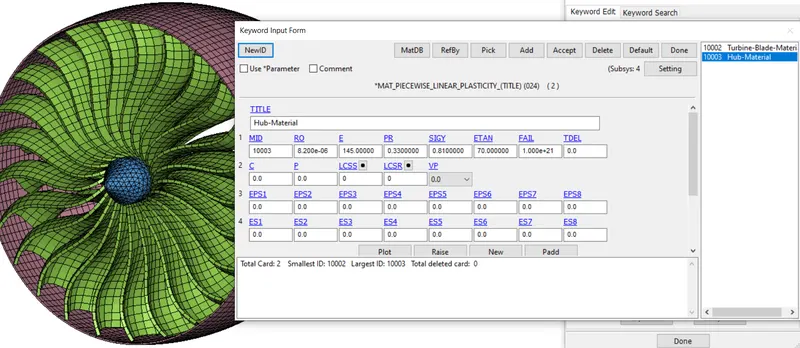
Hub Material
For Bird *MAT_ELASTIC card selected and properties are assigned from journal Bird Strike Modelling-Based on Lagrangian Formulation
The given Density- 2.00e-06, Youngs Modulus- 2.000 Poisons ratio- 0.47
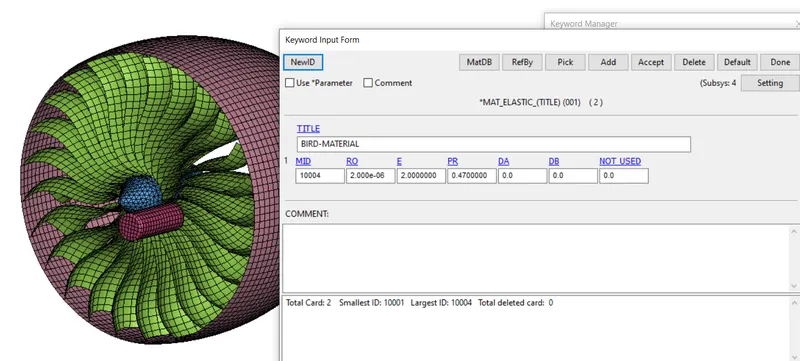
BIRD Material
Section Definition
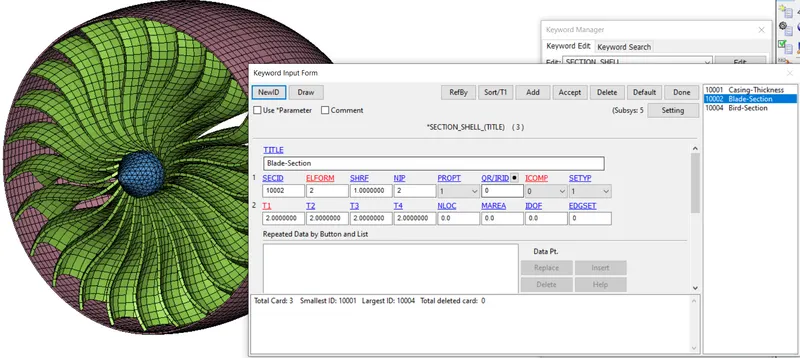
Section card is created individually upon the following FE models, i.e. bird, blades, hub, Turbine casing.
Blades: Thickness is assigned to 2mm
Bird: Thickness assigned 20mm
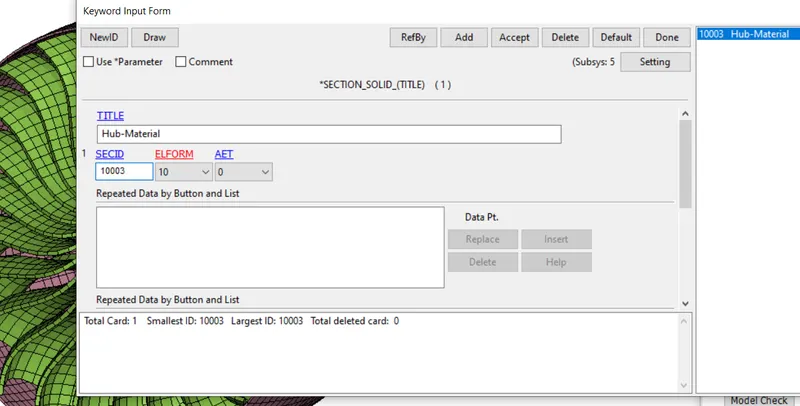
HUB Section-Solid with Element formulation of 10 with ESID 1 in Control Solid
Contact Definition
Contacts are created using Part ID type, SSTYP = 3 & MSTYP = 3
Hence the blade should rotate according to the Hub, so *CONTACT_TIED_SURFACE_TO_SURFACE is used to tied the surfaces with blade as slave and hub as a master.
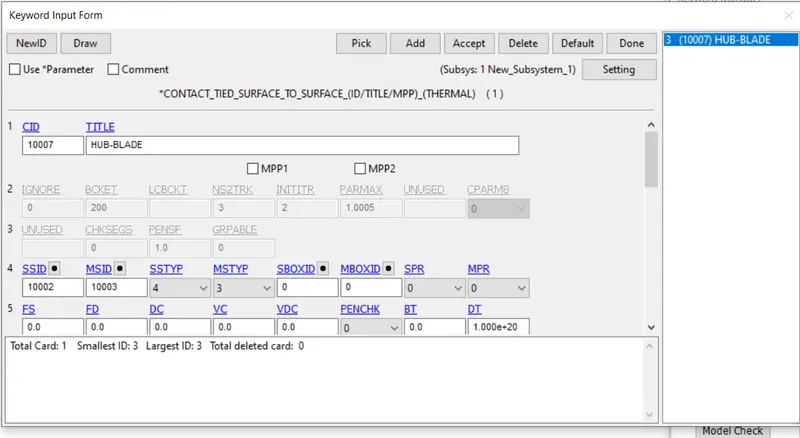
Contact between Hub and Blade
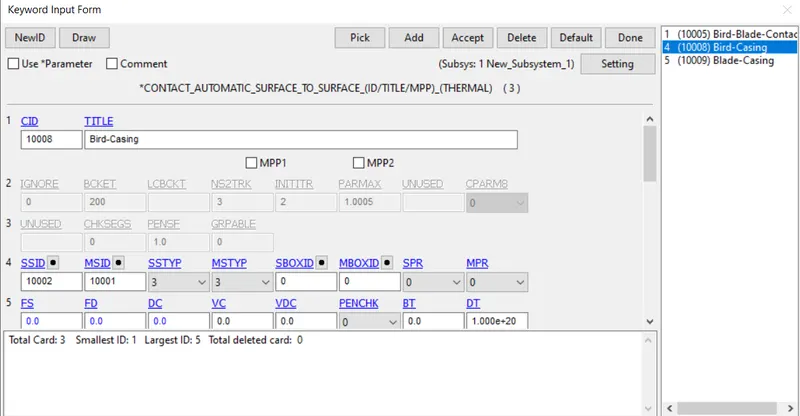
Contact between Bird & Casing
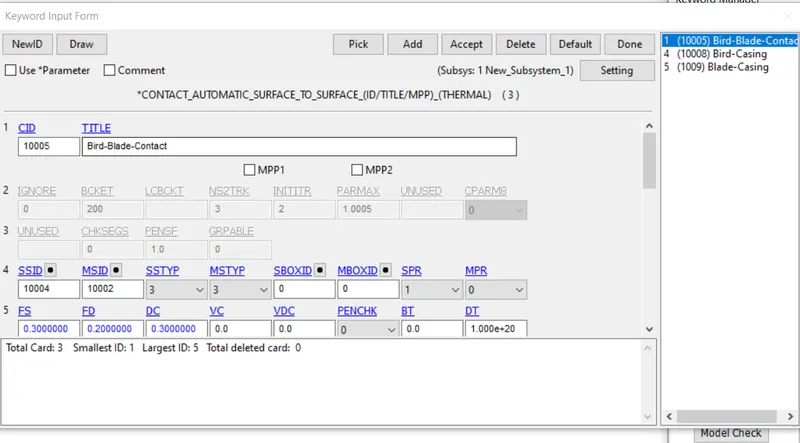
Contact between Bird & Blade
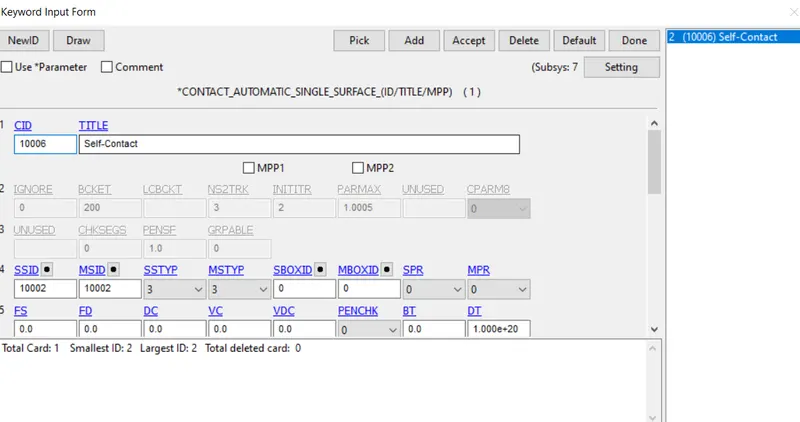
Self Contact for Blade
The need of this contact is because once the birds hits the blades the deformed blades not support to penetrate each other so here *CONTACT_AUTOMATIC_SINGLE_SURFACE used.
Boundary conditions
SPC
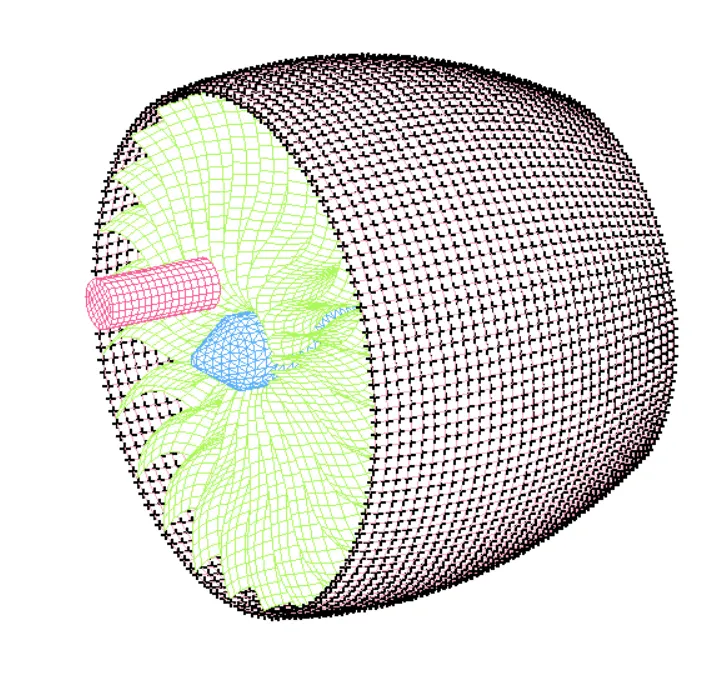
Initial Velocity:
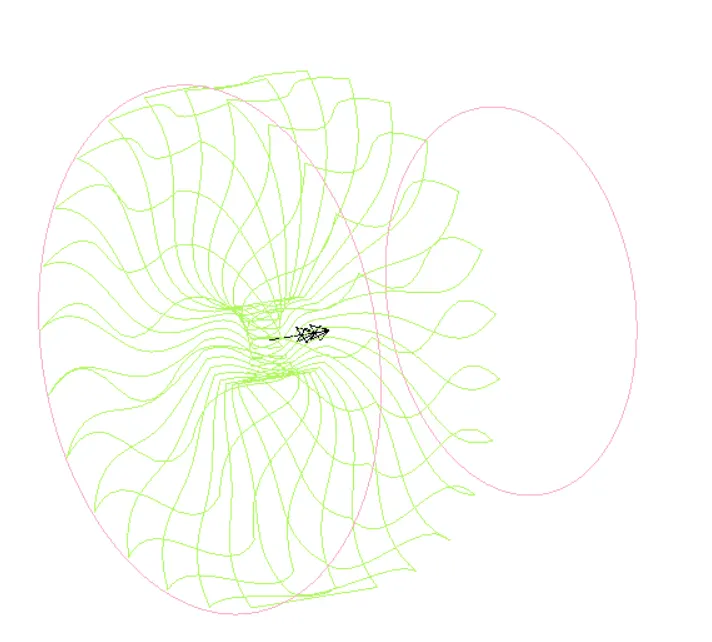
The average velocity of bird travels is observed to be approximately 20 to 80mm/ms , but relative velocity between bird and plane is more as compared to this, here we take the velocity of bird to be 70mm/ms and doesn’t consider the movement of the Turbine
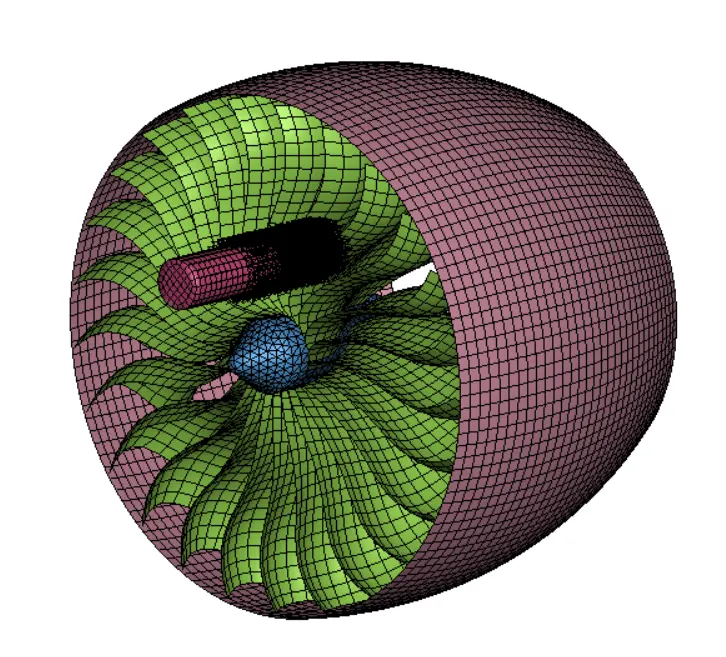
Initial velocity to the blade
The angular velocity of the blade is roughly around an average speed of around 3000 to 5000 rpm, considering 5000 rpm and convert it into radian, form which angular velocity omega = 0.41rad/ms with Nx = 1 (x-direction Cosine)
Controls and Database Definition
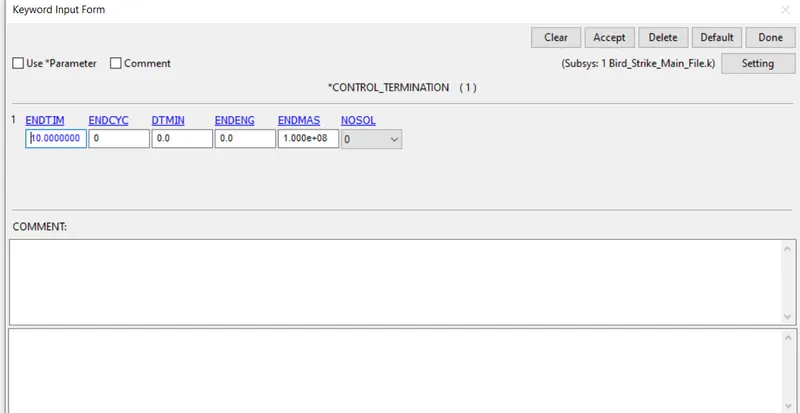
Termination time:
Control Time Step / Mass Scaling
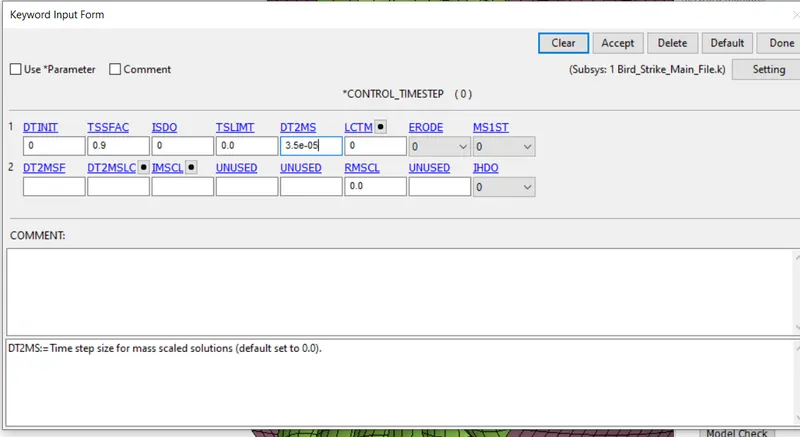
For mass scaling after certain iteration, the time step card is given with DT2MS – 0.001 and TSSFAC = 0.9
Control Contact
This card is most important card in order to get accurate results, there is knob of SLSFAC and SFS or SFM we can tweak, so that our contact time step should become larger, means model time step need to be less than the contact time step in order to maintain the CFL criteria. Otherwise it will solve the problem in different manner, and leads to inaccurate result.
*CONTROL_CONTACT
Control Solid
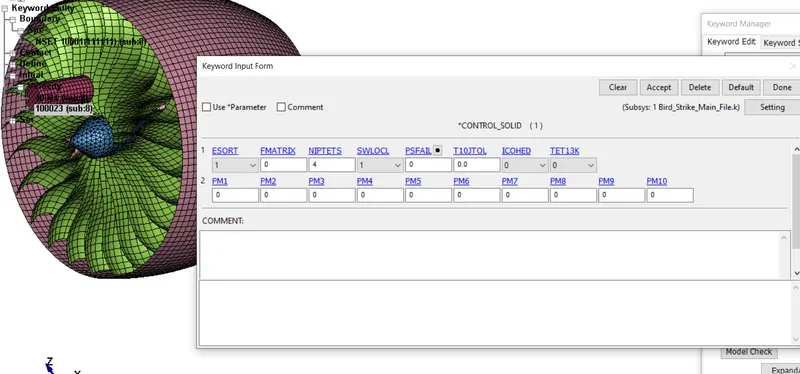
DATBASE Definition
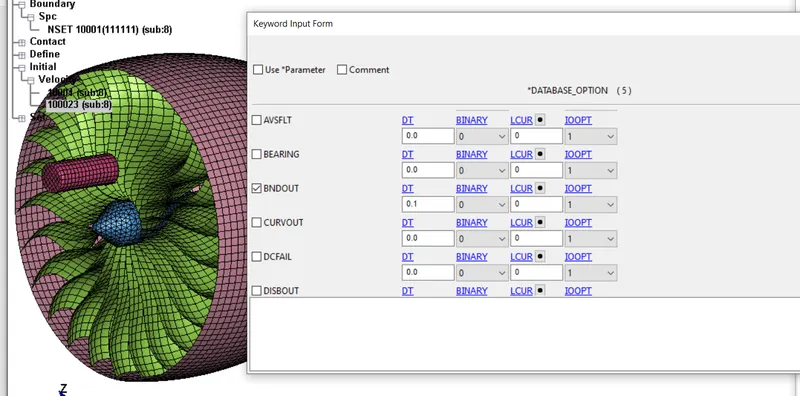
ASCII
Generally a list of output request is specified with the time interval between output DT= 0.1ms fo GLSTAT, BNDOUT, MATSUM etc…
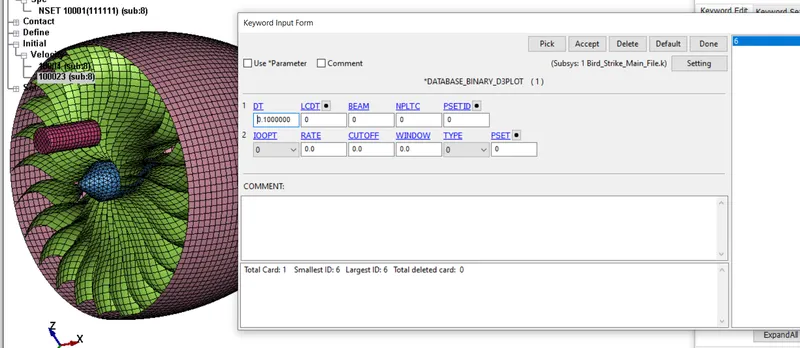
Binary d3 plot with output frequency of 0.1
All the FE Models, Contacts and Boundary condition which are saved separately are included in the main file using the *INCLUDE Keyword
Instruction to be followed: The bird, casing, and the blades should be in different input files and there should be one main file referencing all the input files. The main file should contain only references. Control cards and boundary conditions should be there in another separate file. The reference include path should be such that the folder can be copied anywhere and it is able to correctly reference all the file and run the simulation.
So all the reference file should included into the INCLUDE FILE
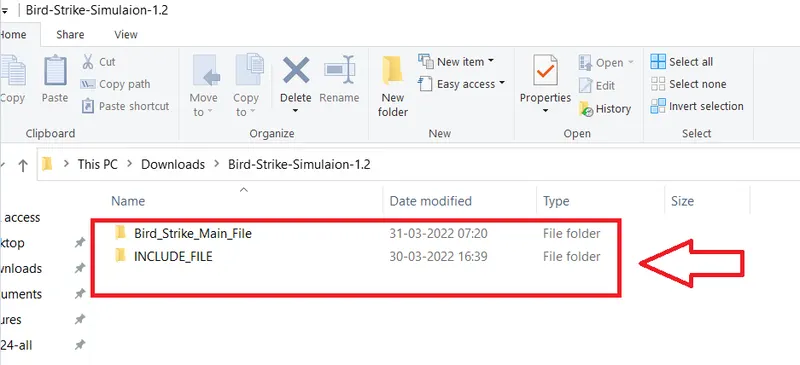
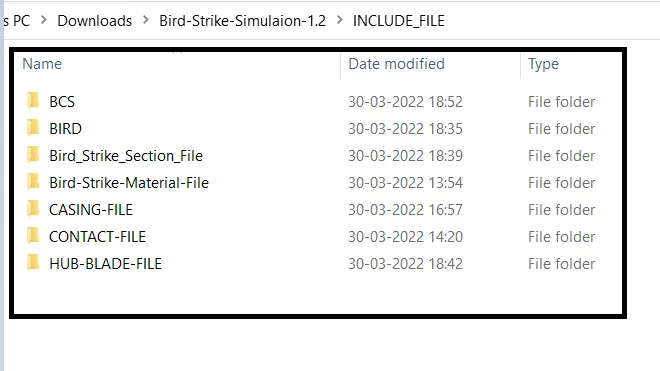
INCLUDE FILES (Reference Files)
All these files are taken as reference file for setup of bird strike setup in the Main file
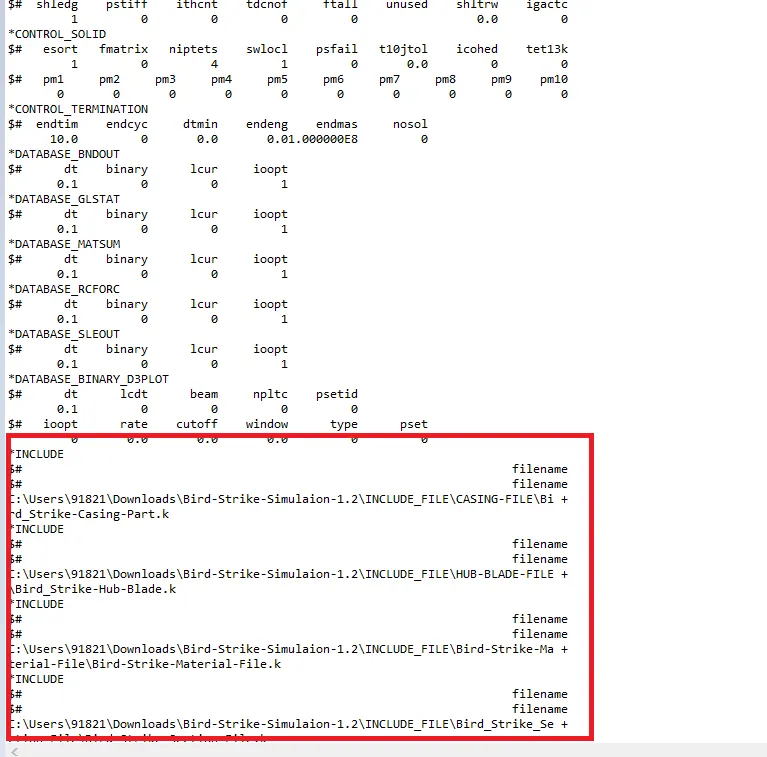
Include files
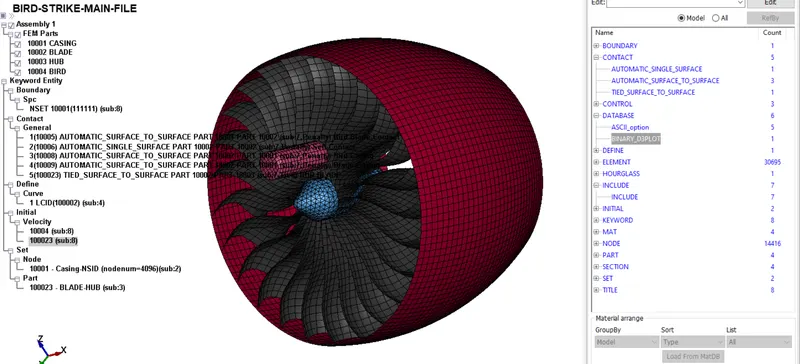
Bird-Strike Main File
Results:
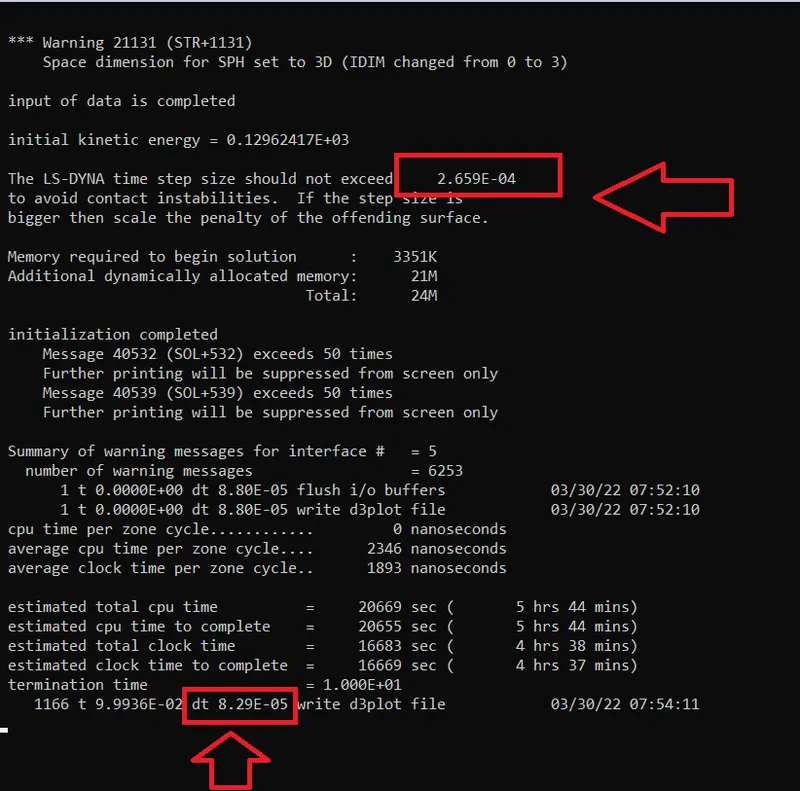
Model time step is less than the contact time step (Hence it maintains the stability criteria)
Note: The ls dyna time step should not exceed the contact time step which is 2.659e-04 to avoid contact instability. If the step size is bigger than scale the penalty of offending surface
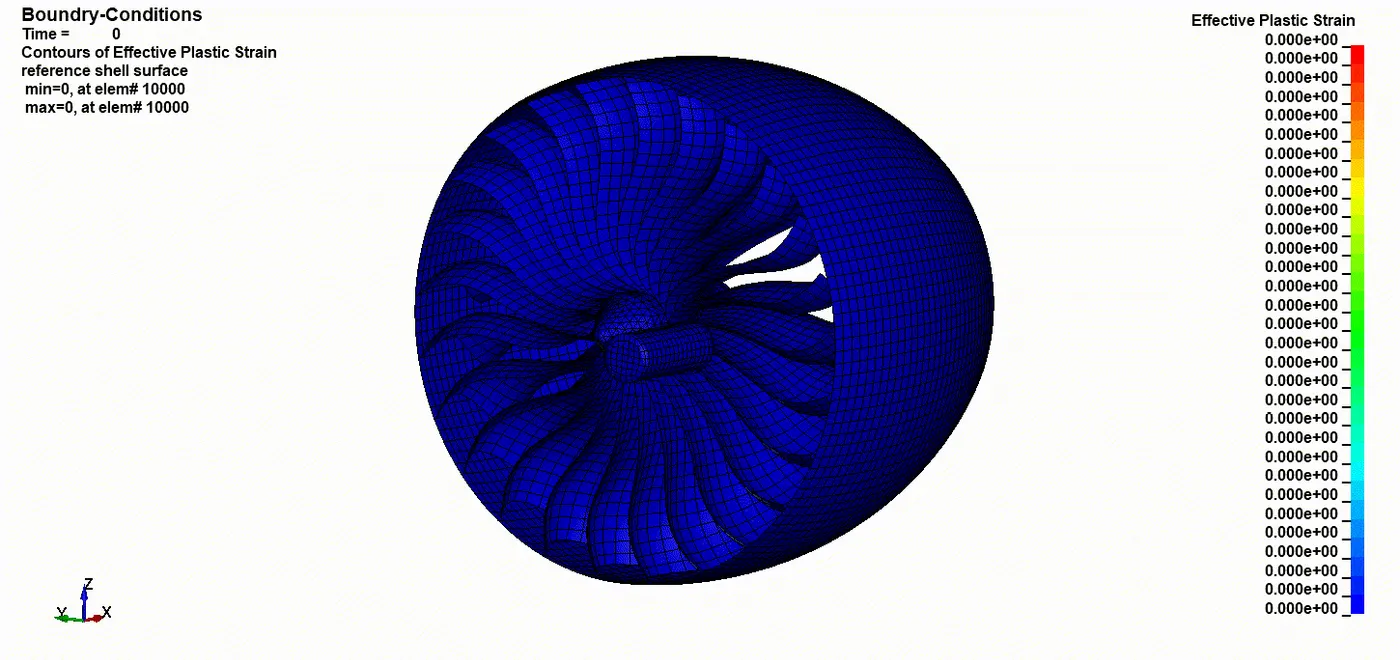
Effective Plastic Strain
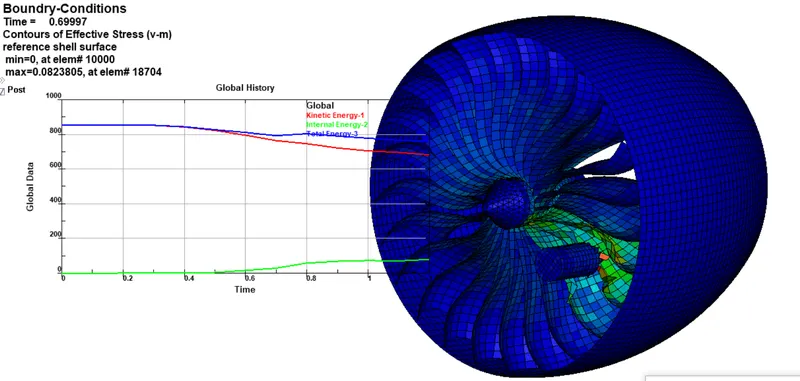
Internal energy / Kinetic energy / hourglass energy
When the bird hit the blades with velocity of 70kmph, the internal energy increases and Kinetic energy decreases due to the impact on the blades, as there is no such hourglass formation and the total energy of the system slightly decrease due to the eroding and deletion of the element during impact.
Contact Energy
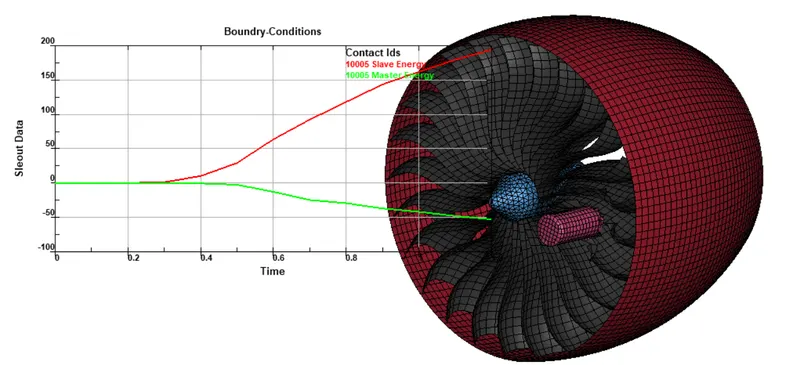
There is no such sudden bump in the energy, as both slave and master energy are equal and opposite to each other because of stability criteria is maintained.
Resultant Impact Force / Contact Force
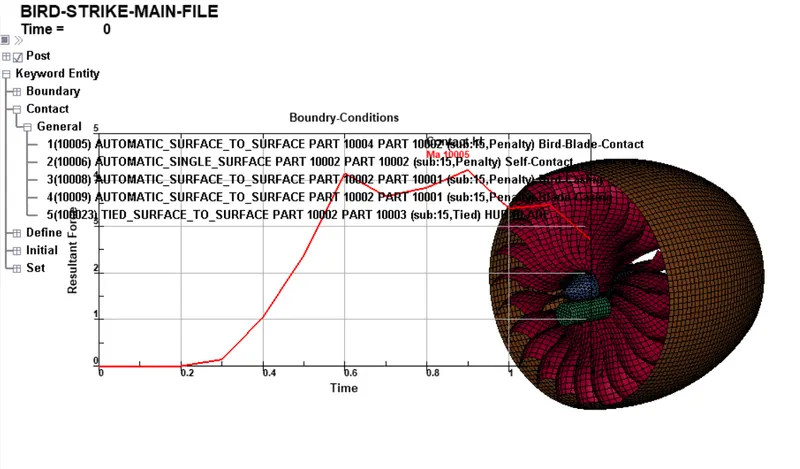
Maximum impact force = 4.22KN
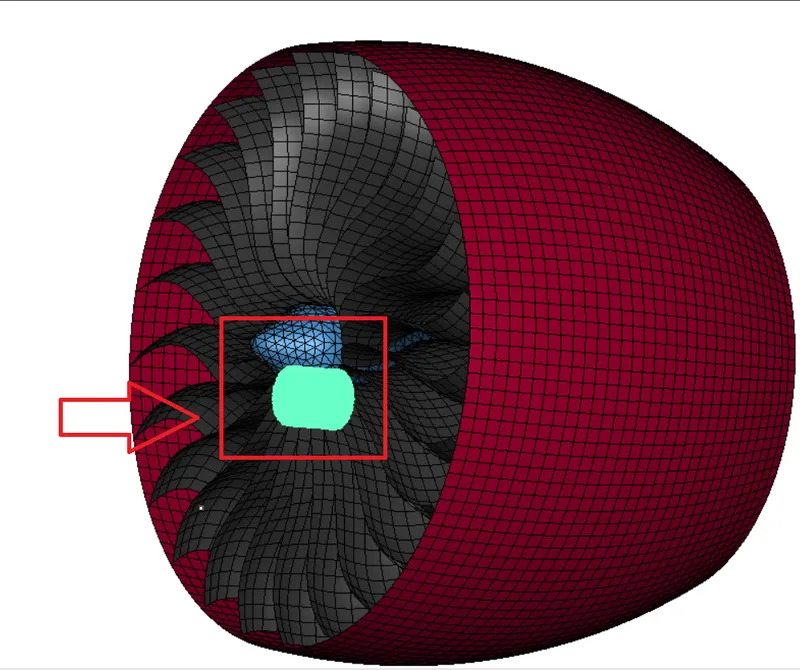
Now we are using the SPH (Smooth particle Hydrdynamic) approach to modelling Bird Strike Simulation [1]
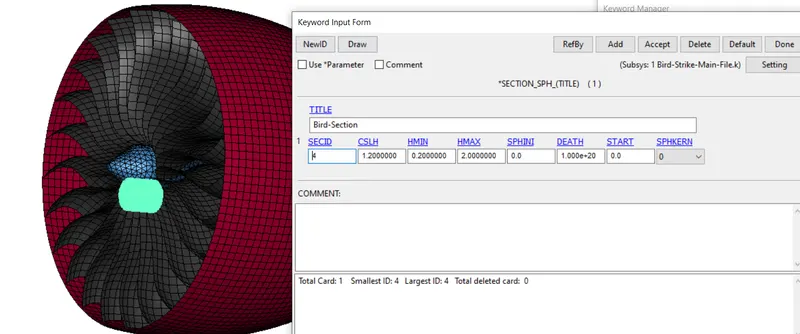
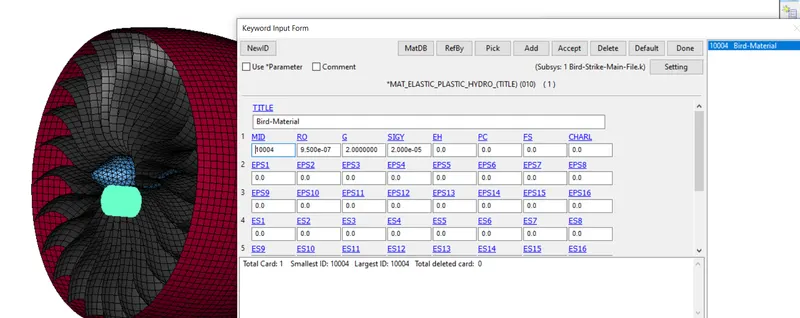
Rest of things and procedure are same, only change here is the bird is made up of particles SPH particles and for that we have to define the different material, section and Equation of state to the bird (SPH Particles)
SPH Section
SPH Material
Equation of State for Bird Material
In some situation an EOS is required in order to accurately simulate the material behaviour. Equation of state determines the hydrostatic, or bulk, behaviour of the material by calculating pressure as function of density and perhaps, energy and / or temperature. Situations that calls for an EOS are characterized by very high strain rates, material pressure far in excess of yield stress and propagation of shock waves.
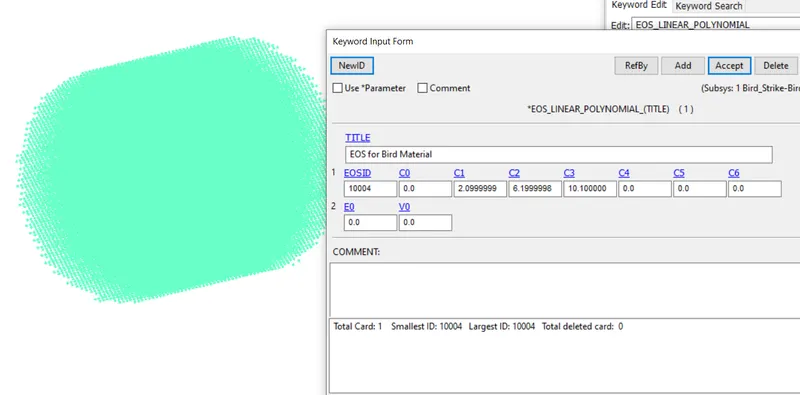
EOS for Bird Material
After modelling bird rest of procedure are same as mentioned above
Results:
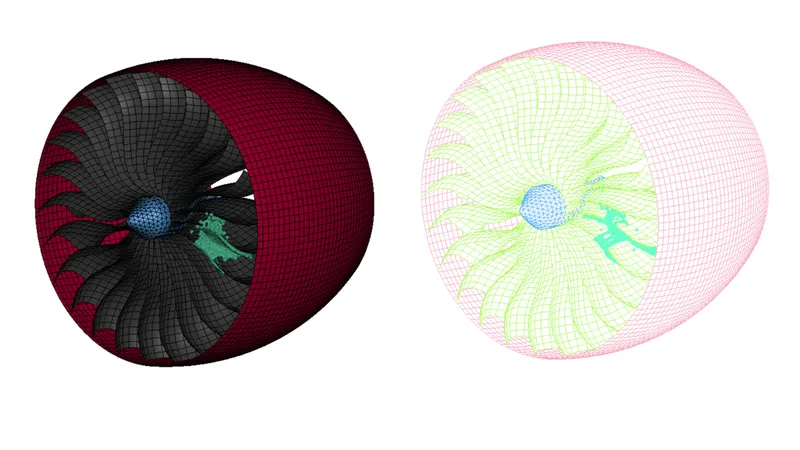
Bird Impact
Bird Strike Impact Force
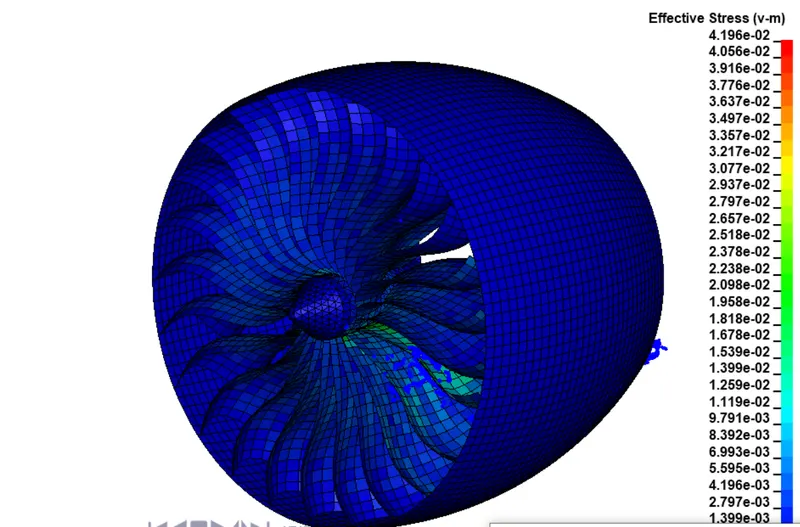
Maximum Effective Stress = 41.96 Mpa
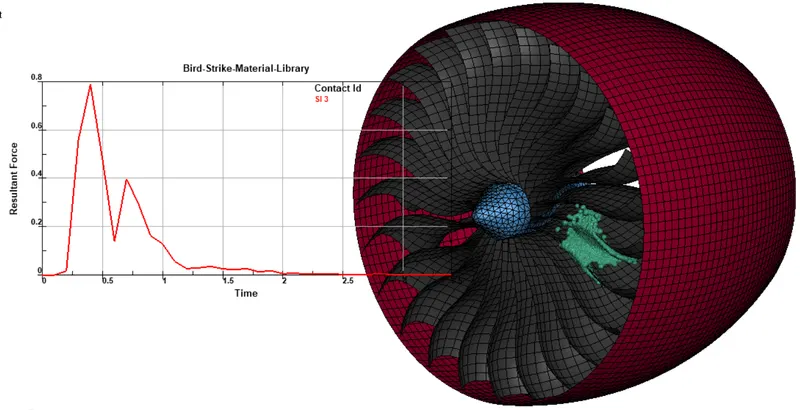
Maximum Impact Force = 0.789 KN (Considering Bird as very soft material)
We can fluctuate in the density and other parameters for larger impact force
Conclusion: Hence we are able to model the Bird-Strike scenario by both Langrangian and SPH (Smooth particle Hydrodynamic) approaches and also understand about the model setup by refereeing the files by using *INCLUDE Keyword and also able to understand about the contacts importance in these types of simulations.
References: https://www.researchgate.net/publication/258630574_Smooth_Particle_Hydrodynamic_Approach_for_Bird-Strike_Analysis_Using_LS-DYNA [1]