Bird Strike - Project - LSDYNA
AIM
To perform a bird strike simulation in LS-DYNA and extract the results.
PROCEDURE
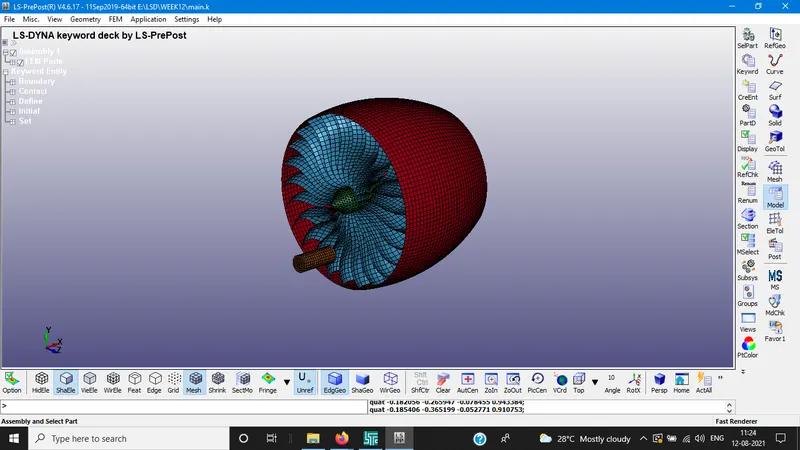
The project file contains hub,blade,engine casing and bird models. The blade rotates at a constant velocity and the engine casing should remain stationary. The cylindrical bird travels along its own axis toward engine and hit the blades. All the parts should be in single input file and should have consistent numbering.
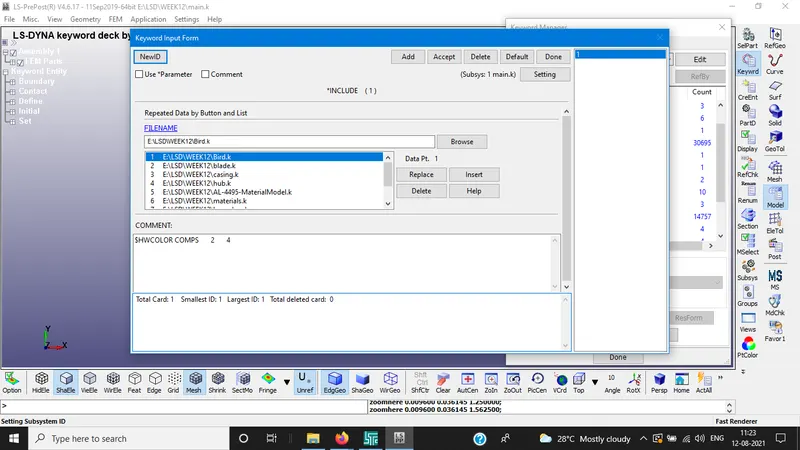
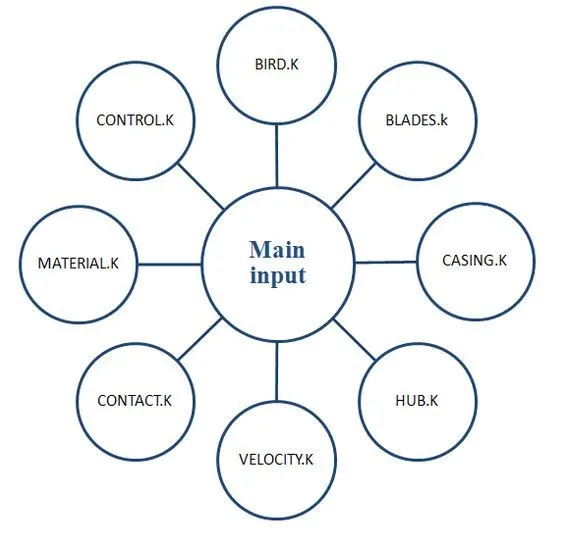
The given file contains four different parts, hub,blades,engine casing and the bird. So, these parts are separated and placed into a single input file. This can be done through creating new subsystems and moving parts to respective subsystems or it can be done easily by keeping one part and deleting other parts from the model. Similarly,all parts, contacts, materials, sections, boundary conditions and velocities are separately designed by respective .k files and are called into the main file through *include keyword. Important properties would be discussed below and the *input keyword will be discussed at the end. The unit system chosen for this analysis is gm-mm-ms.
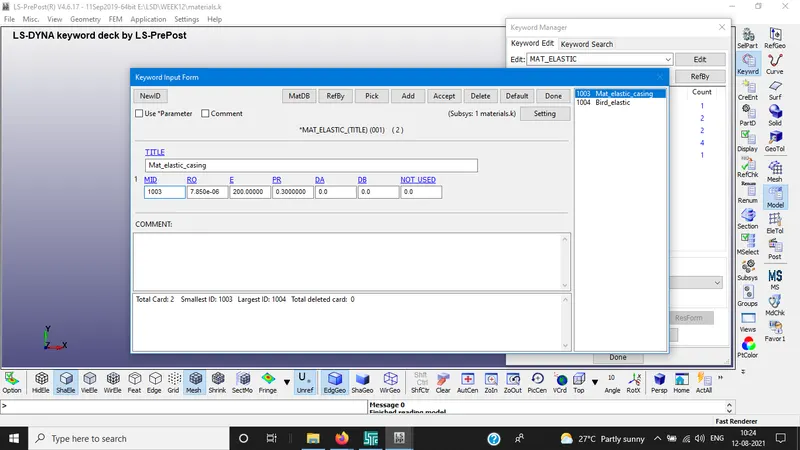
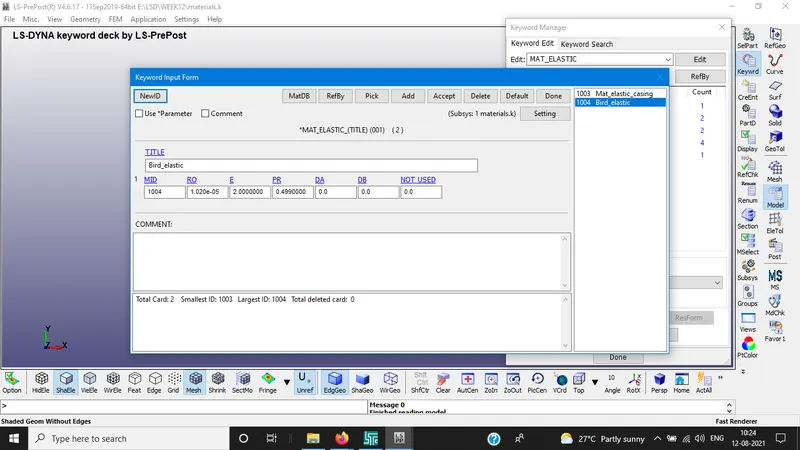
The Young's modulus for the bird is given as 2000Mpa and for the casing is given as 200Gpa. Both bird and casing are modelled by an elastic material. The density and poisson's ratio values are taken similar to human muscle values. Similarly, the engine casing is defined with the properties which are similar to the metal.
MATERIAL CARDS OF BIRD, CASING,HUB and BLADES:
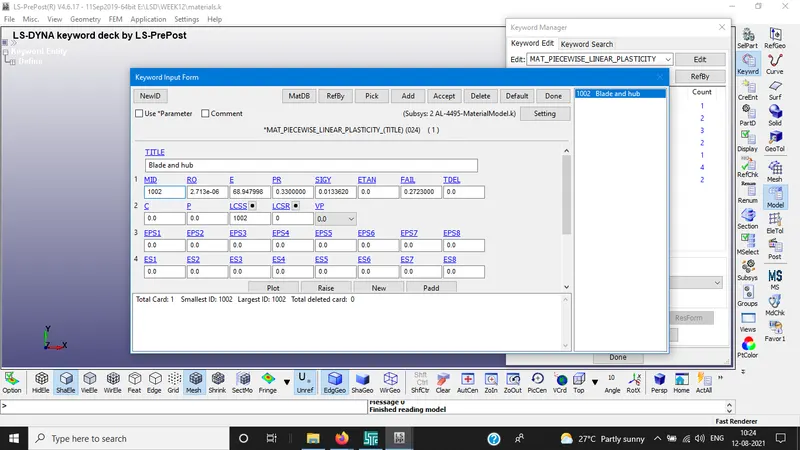
The engine blades are modelled with the piecewise linear plasticity model. These blades are the outermost parts of the engine are called as fan blades. These blades work at low temperatures and are lightweight. They are made up of titanium and so titanium material properties are used to define these blades.
The hub is also modelled with piecewise linear plasticity model and the material properties for hub defined similarly to the general metal.
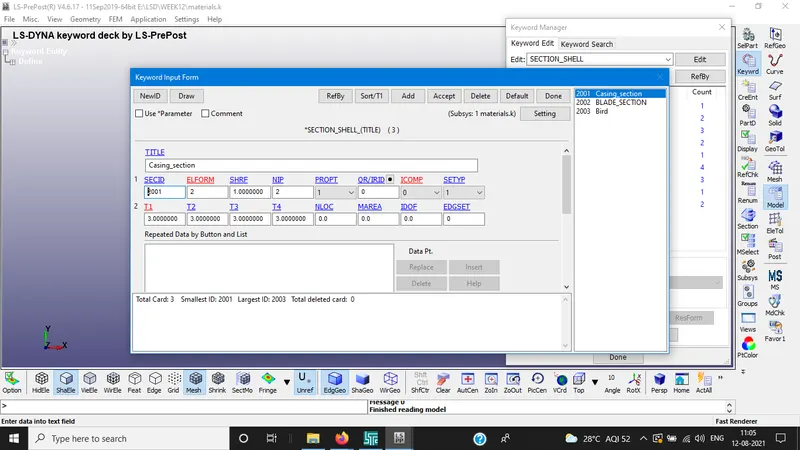
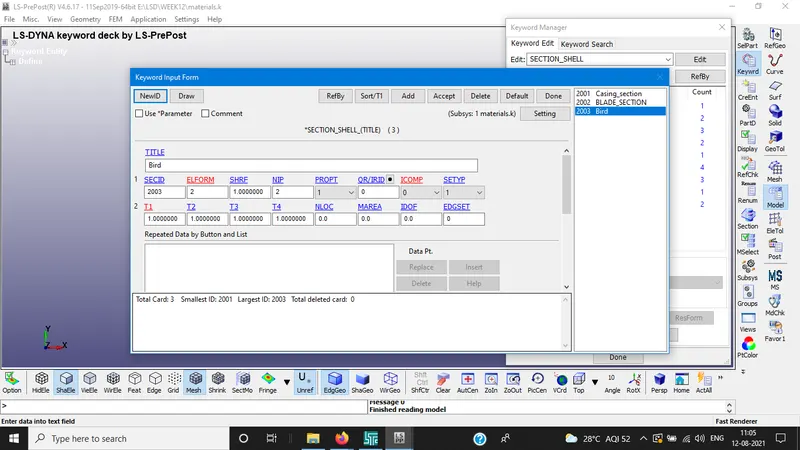
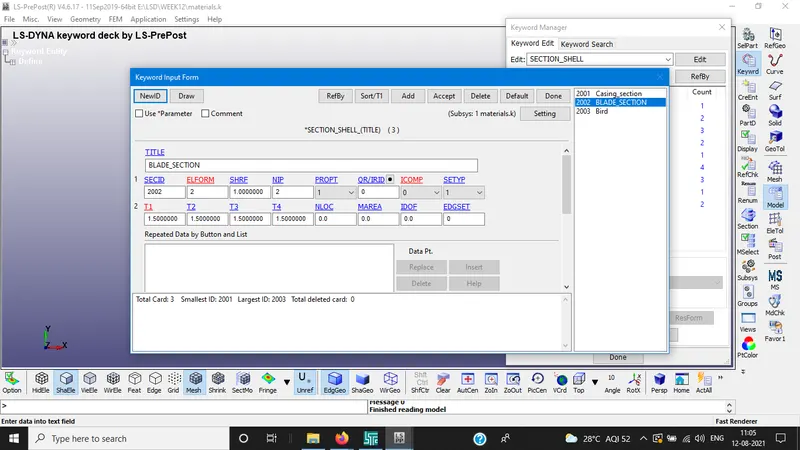
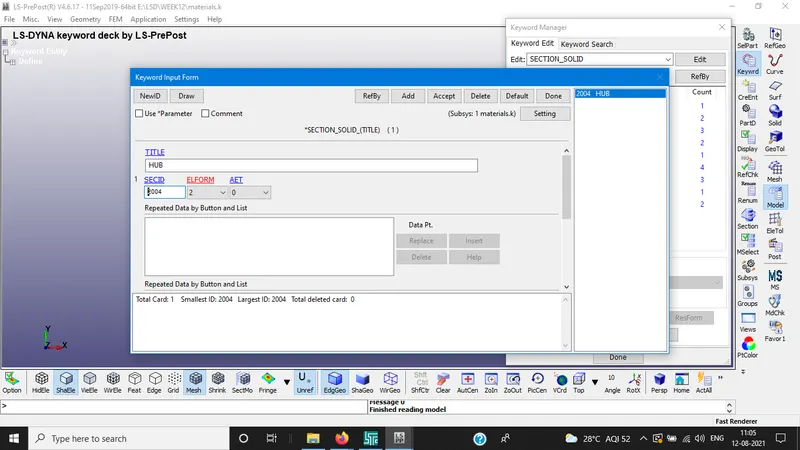
The blades, casing and bird made up of shell elements are defined with shell section properties with 1.5mm thickness. whereas, the hub is made up of solid elements and defined with solid section properties.
The shell thickness of 1mm is considered for bird and blade geomertry. The shell thickness of 3mm is assigned for casing geometry.
CONTACT CARDS:
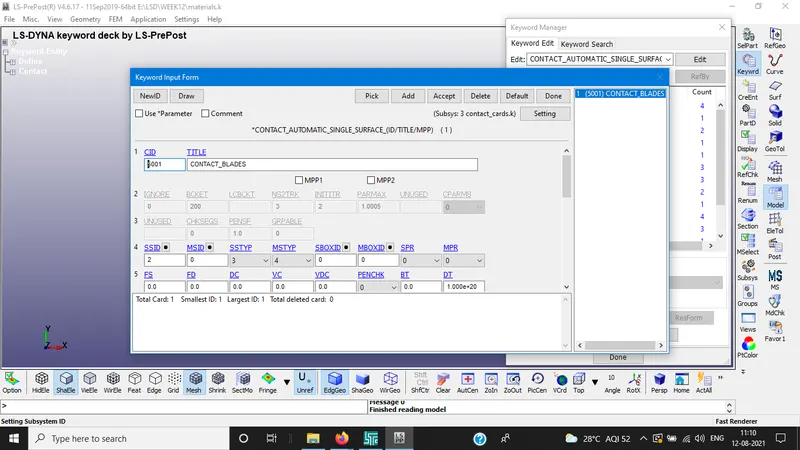
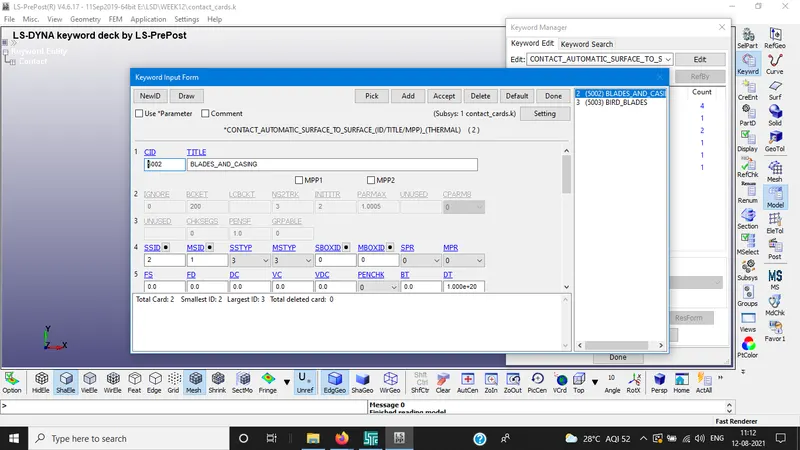
The Automatic_single_surface, here are included for single surface contact.
AUTOMATIC_SURFACE_TO_SURFACE
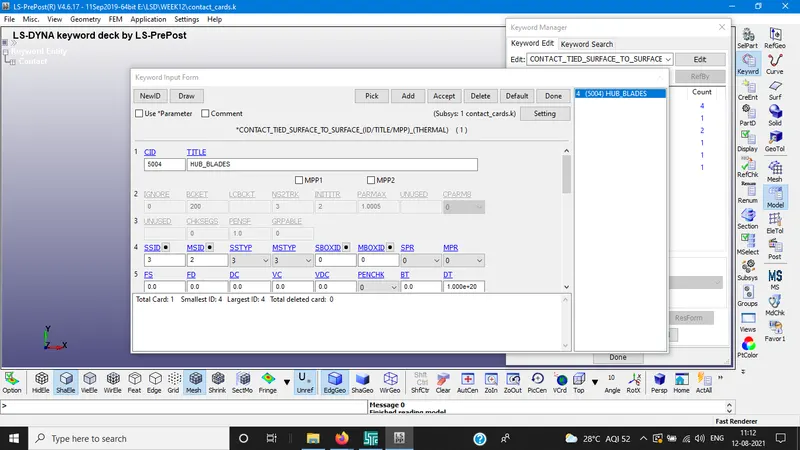
TIED_SURFACE:
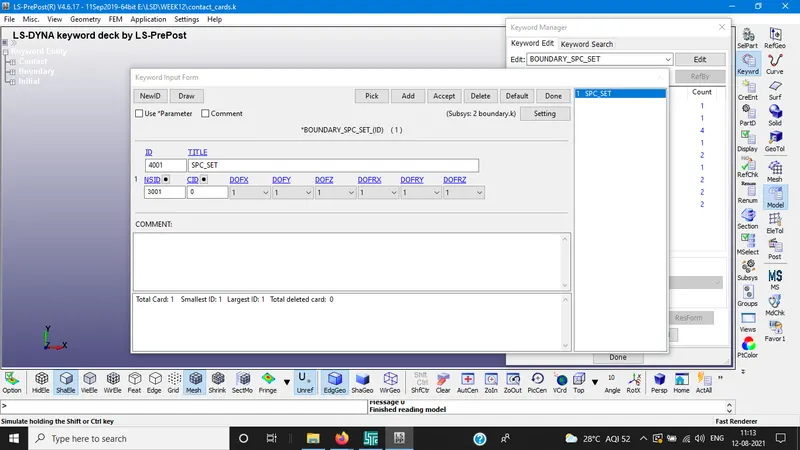
BOUNDARY SPC SET:
INTIAL VELOCITY GENERATION:
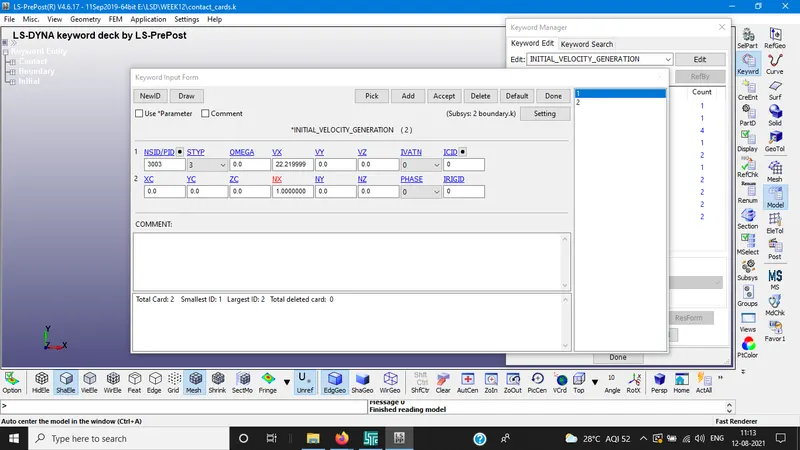
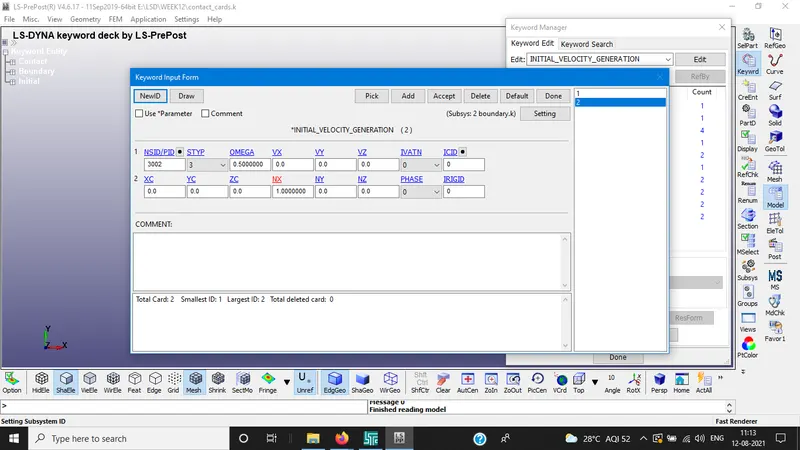
The initial velocity for the blades and the bird has given by *initial_velocity_generation. Above cards depicts rotational and translational velocity assigned to blades and bird respectively.
CONTROL CARDS:
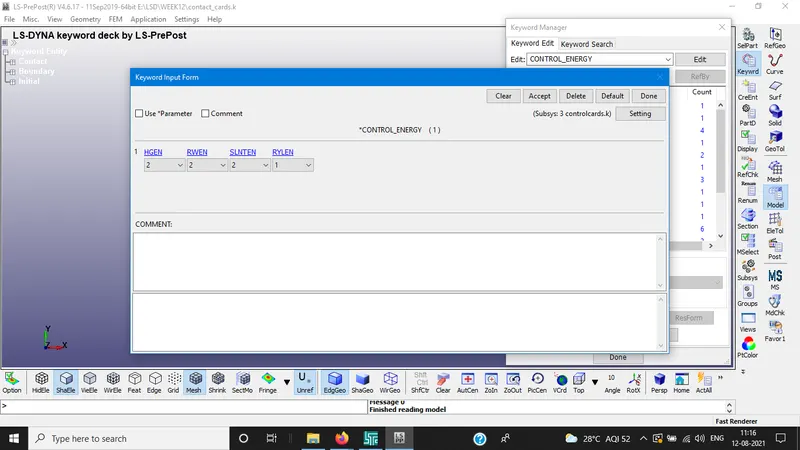
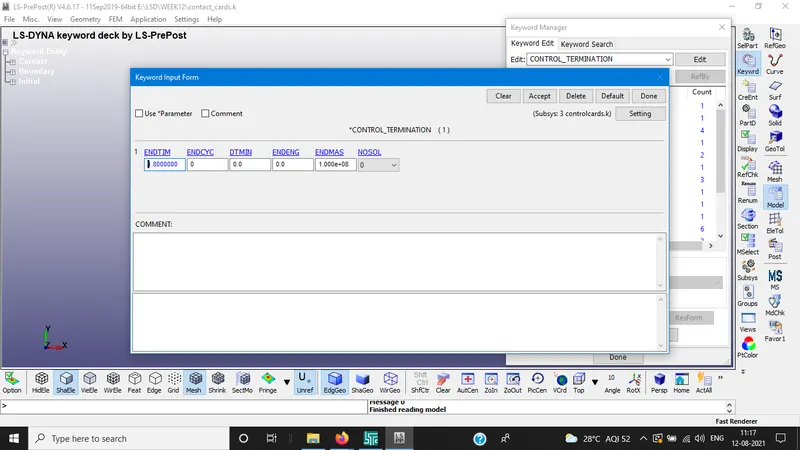
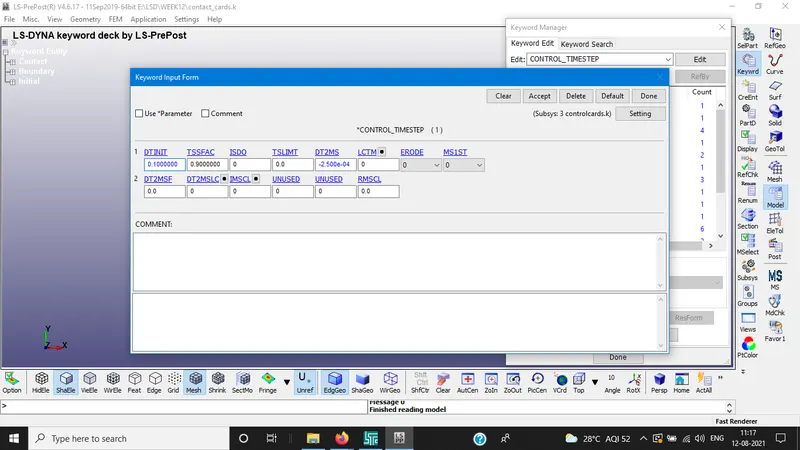
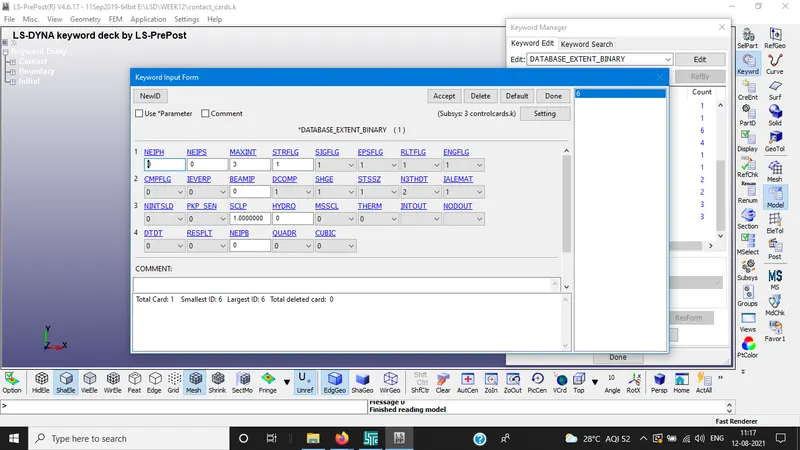
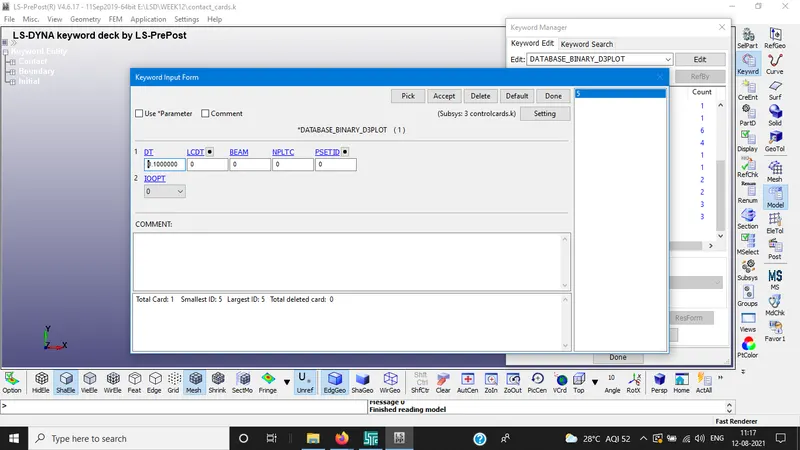
ASCII OPTIONS ARE GLSTAT, MATSUM, SLEOUT AND RCFORC.
For the above cards the Node sets ID's are created in individual models and assigned in respecticve cards.
All the parts bird, hub, casing and blades are made as different input files. All velocity and contact boundary conditions are assigned separate input files. The material and control cards are assigned with separate input files.
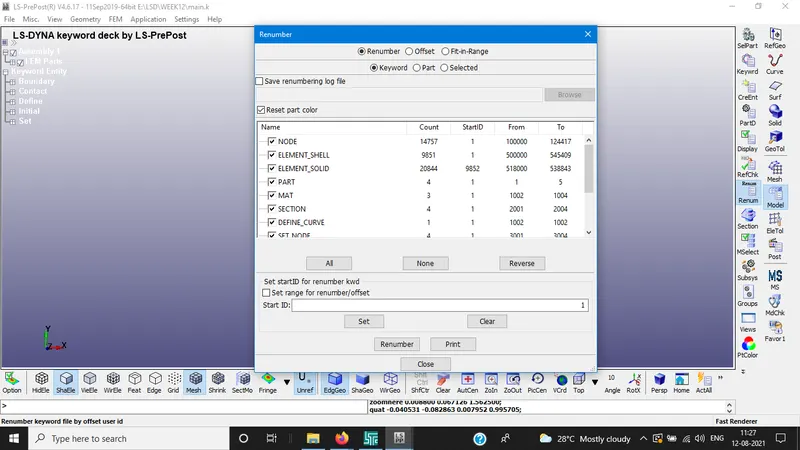
The specific node, element, section, part, material numbering approach is followed in this analysis. All nodes are numbered above 100000, elements are numbered above 500000, material section , shell sections, spc set and velocities are mentions 1000's. This numbering is done in the individual model files and attached in main.k file.
MAIN.K
RESULTS:
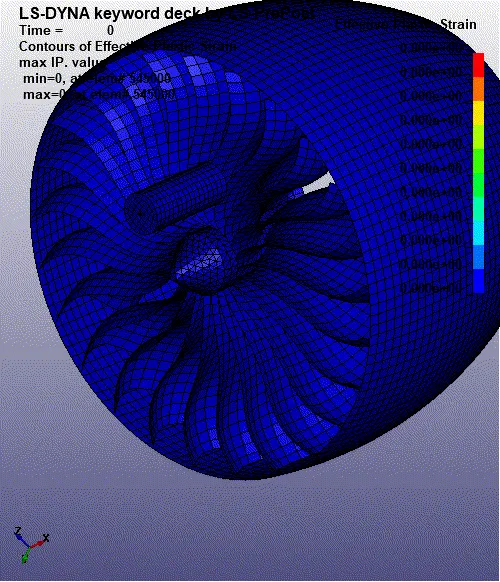
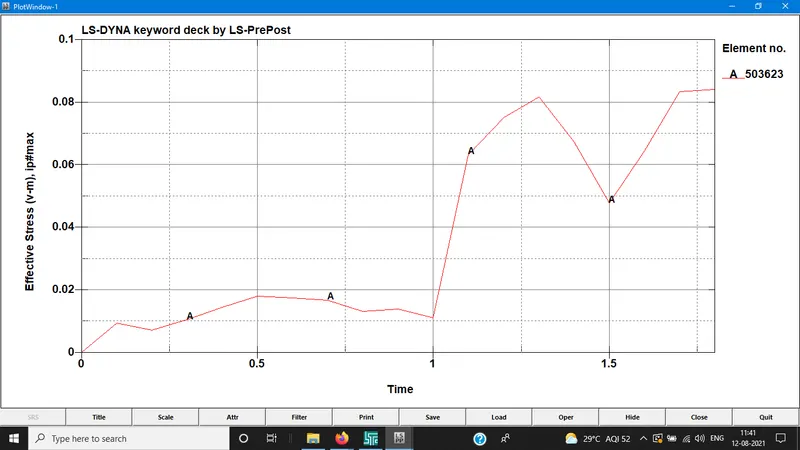
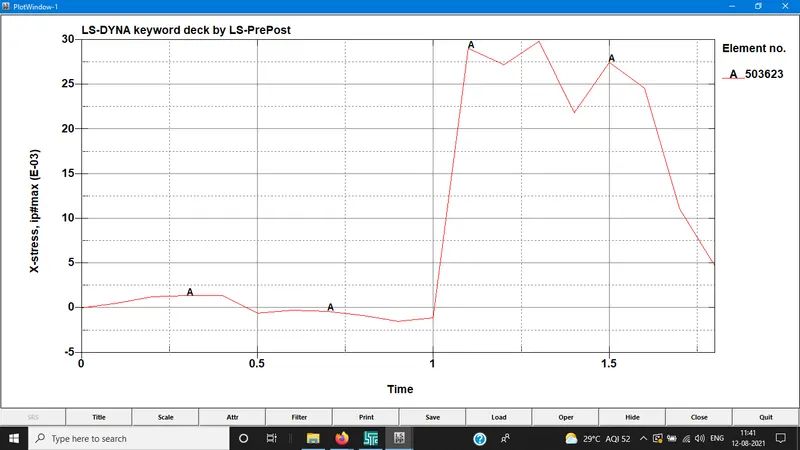
Effective stress contour globally. Higher stress values can be seen on the blade which impacts the upcoming bird. The stress value passes the yield stress of the blade and hence there would be yielding in the blade material. The stress values peaks for short duration during the impact but fluctuates afterwards due to shock waves.
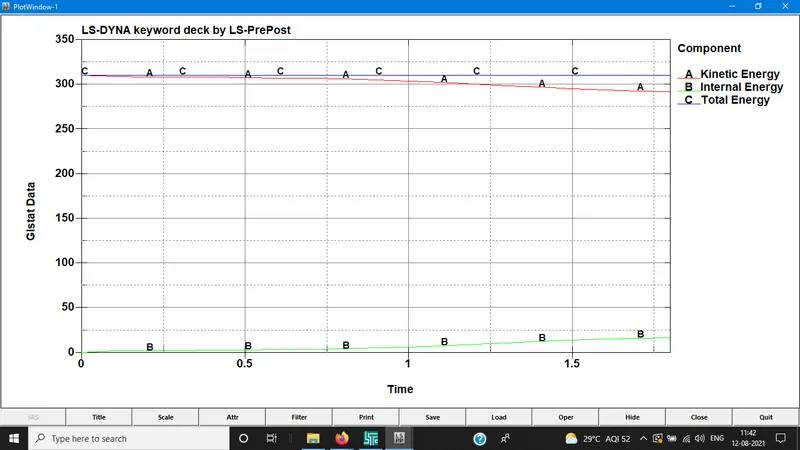
GLOBAL ENERGIES:
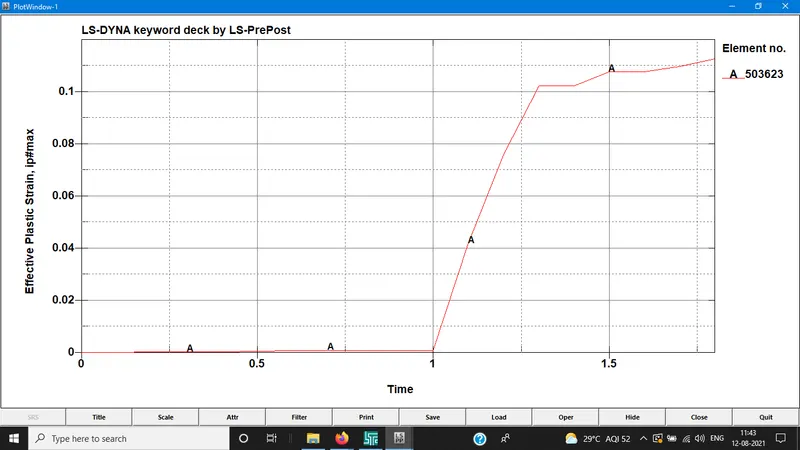
EFFECTIVE PLASTIC STRAIN:
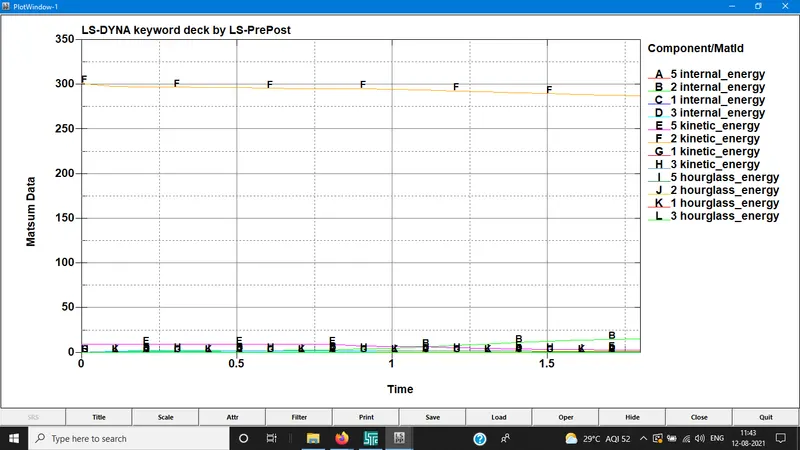
CONCLUSION:
The bird impact analysis is performed in LS-DYNA. From post-processing, the severity of the bird impact on the blades is analyzed. There is some permanent deformation in the blade which is impacted with the bird. There is no significant change in global energy.