Bird Strike - Project - 2
Aim: To simulate a non linear transient bird strike simulation on engine using Ls-Dyna.
Setup:
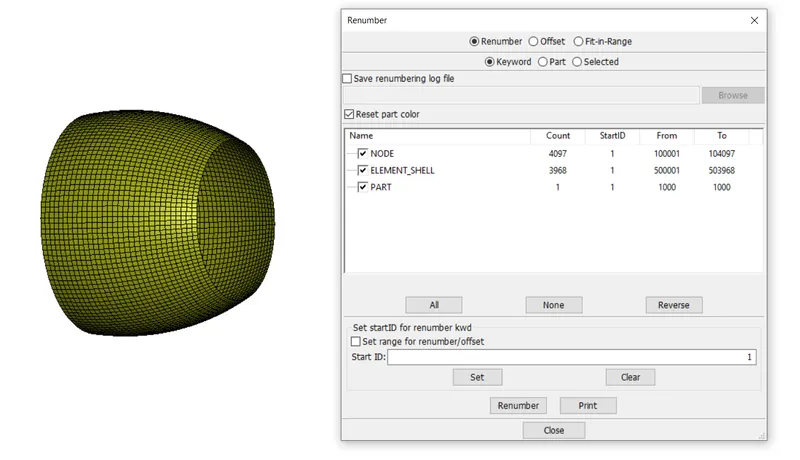
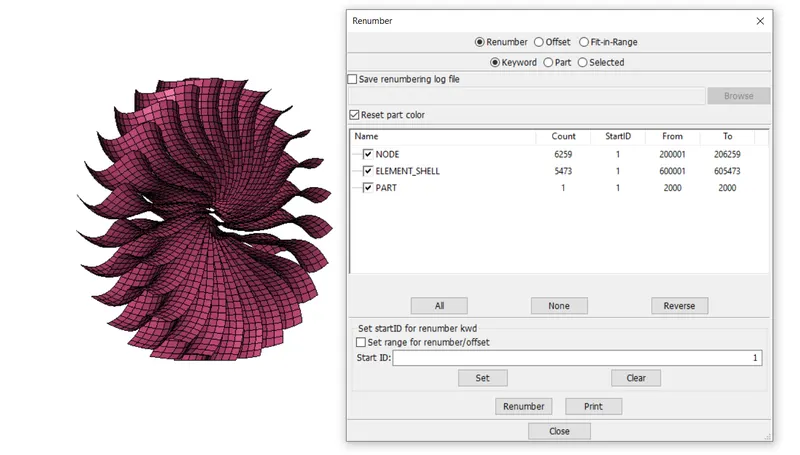
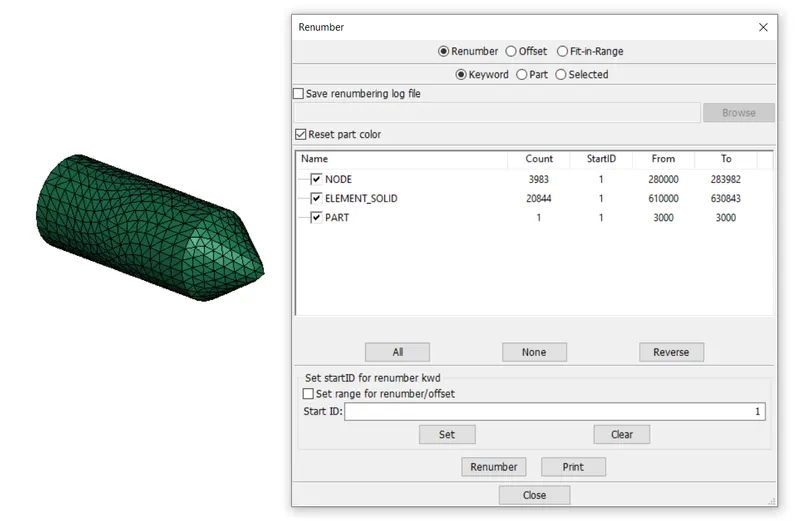
- Follow a consistent numbering approach 100000+ for nodes, 500000+ for elements, and 1000+ for the parts. All other keywords should be numbered within 10000-19999 while following a range for each one. This guideline that the student is following should be included in the final submission.
- Use elastic material for the bird(2000MPa) and the casing(200GPa). The material model for the blades is attached.
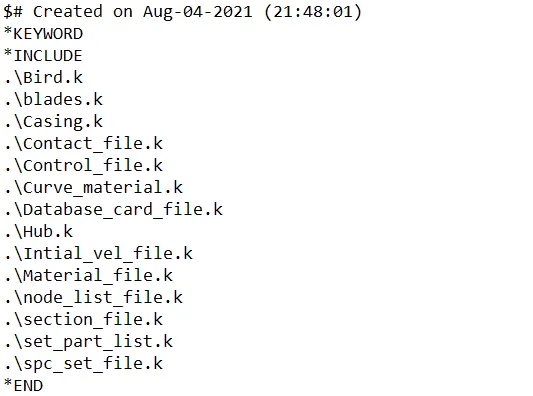
- The bird, casing, and the blades should be in different input files and there should be one main file referencing all the input files. The main file should contain only references. Control cards and boundary conditions should be there in another separate file. The reference include path should be such that the folder can be copied anywhere and it is able to correctly reference all the file and run the simulation.
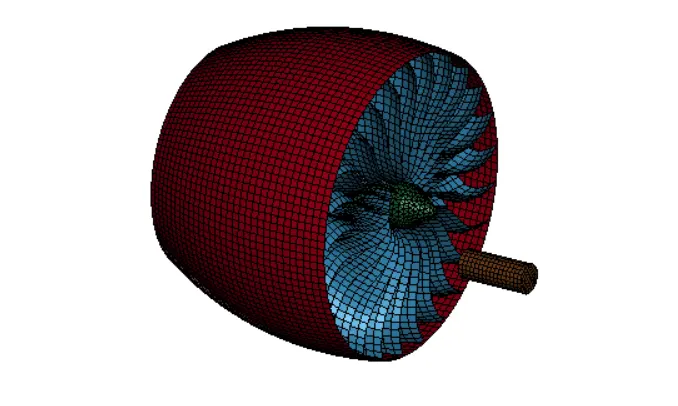
Given model:
Procedure:
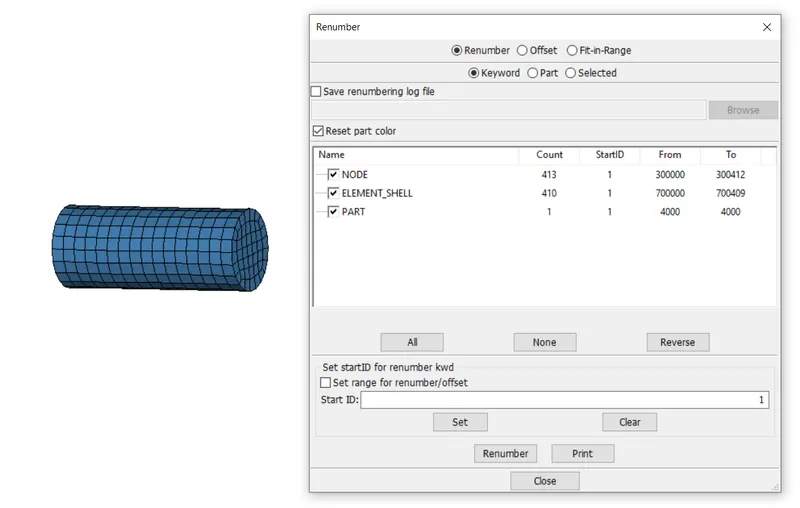
- The keyword file is imported and individual part is selected and renumbering is done for nodes, elements and part.
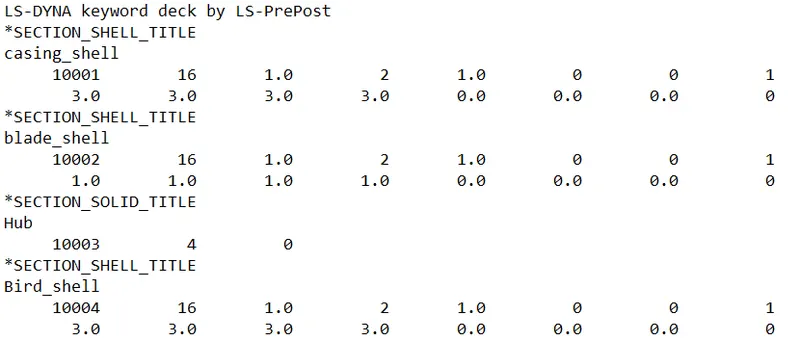
- Creating the section shell cards for casing, blades and bird and section solid for hub.
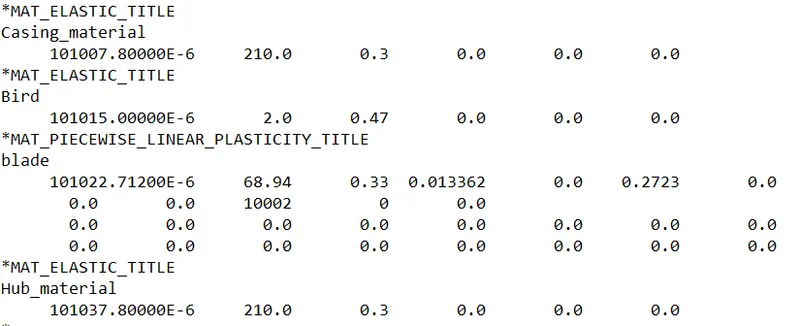
- Creating material card for all the parts.
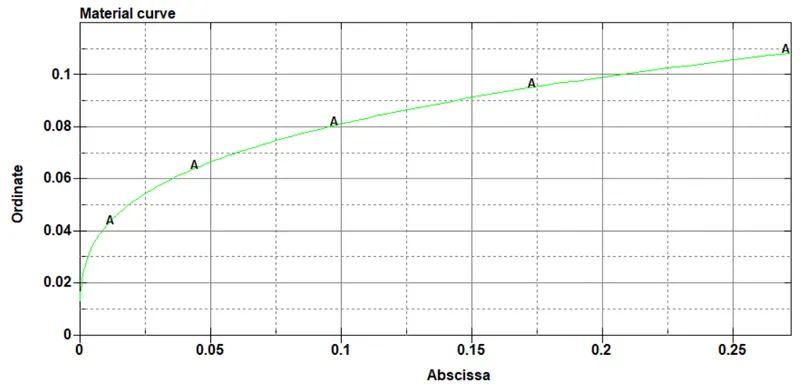
- Defining curve for the material.
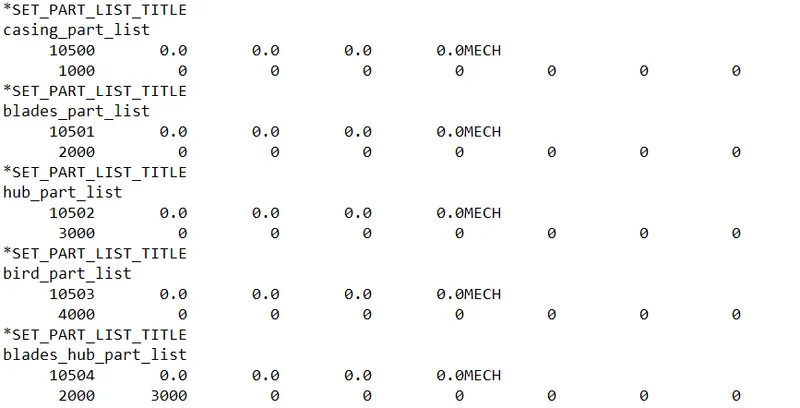
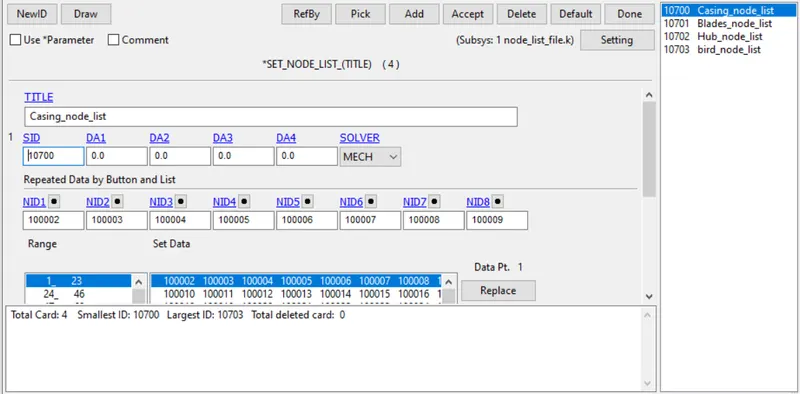
- Creating node list and part list.
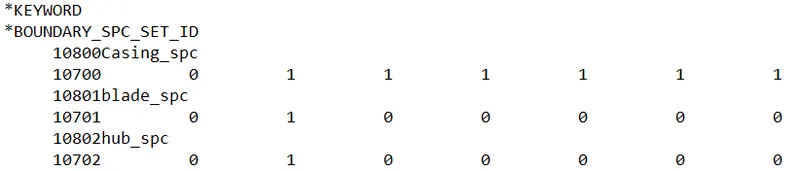
- Creating spc set. Constraining the casing in all dof, hub and blades in x dof.
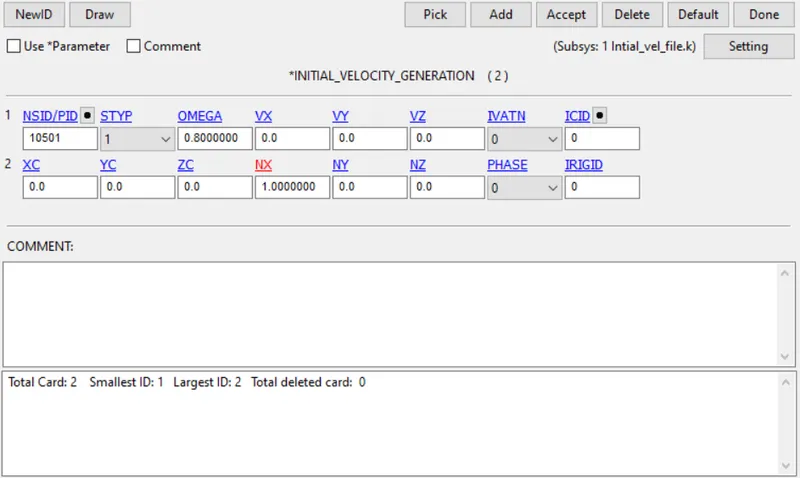
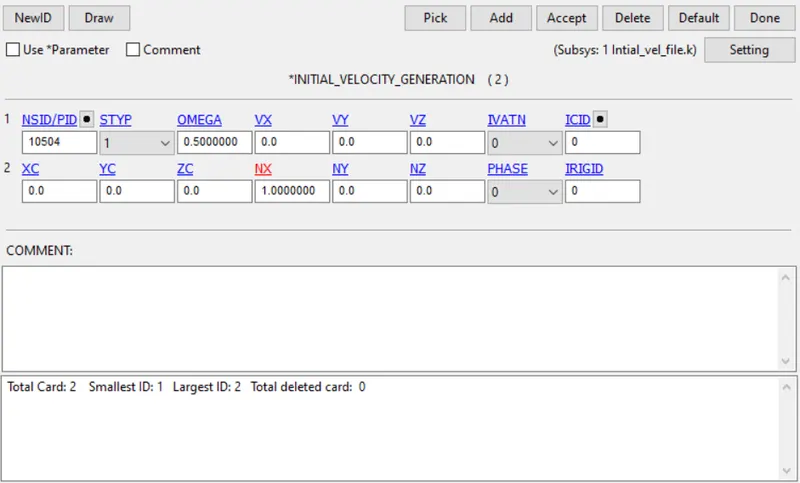
- Creating initial velocity generation card for blades and bird.
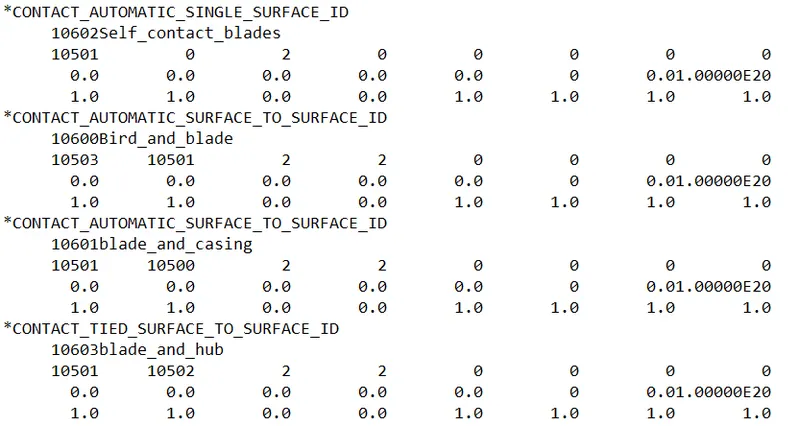
- Creating contact between parts.
- Creating control cards.

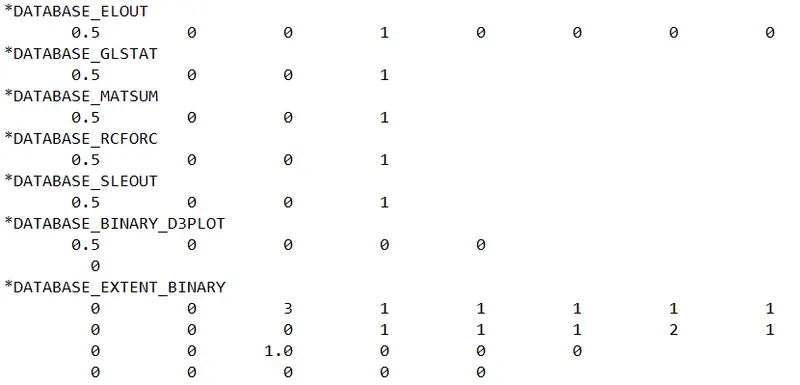
- Creating the database card.
- All the cards are created seperately and one keyword file i.e. main.k file is used to call out all the cards using include option.
- Run the simulation.
Results:
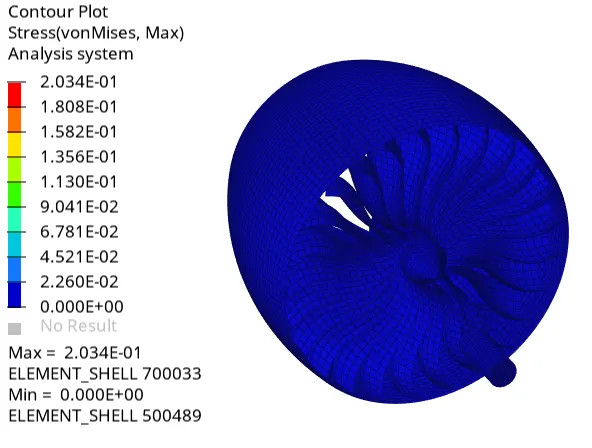
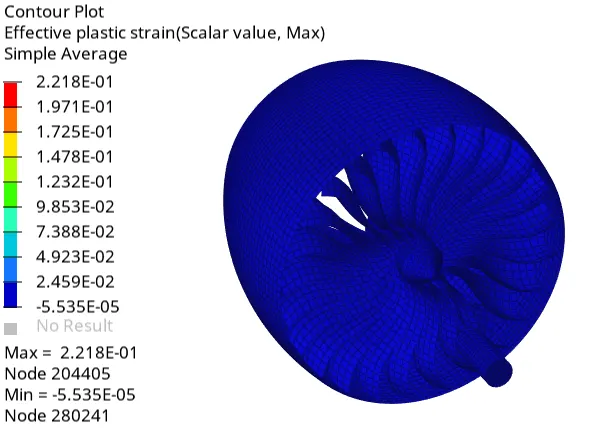
Contour plots:
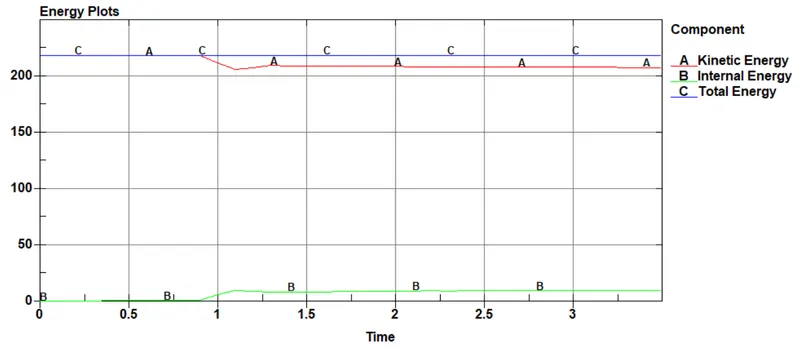
Energy plots:
Mass Scaling:
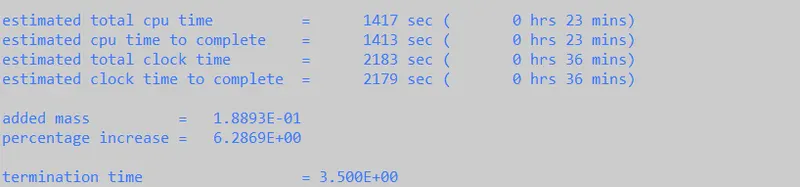
- The time required to complete the simulation is around 2hrs 8 mins.
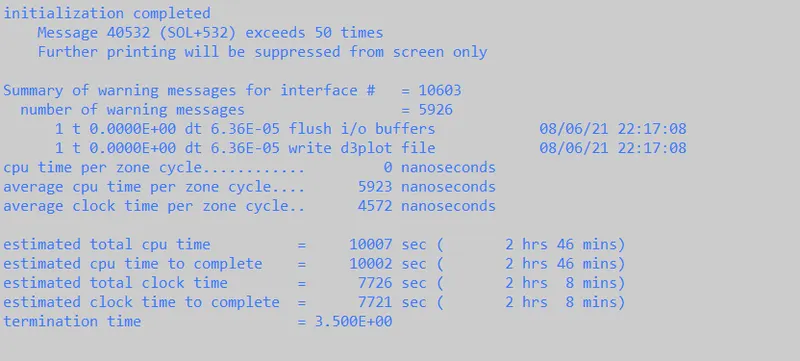
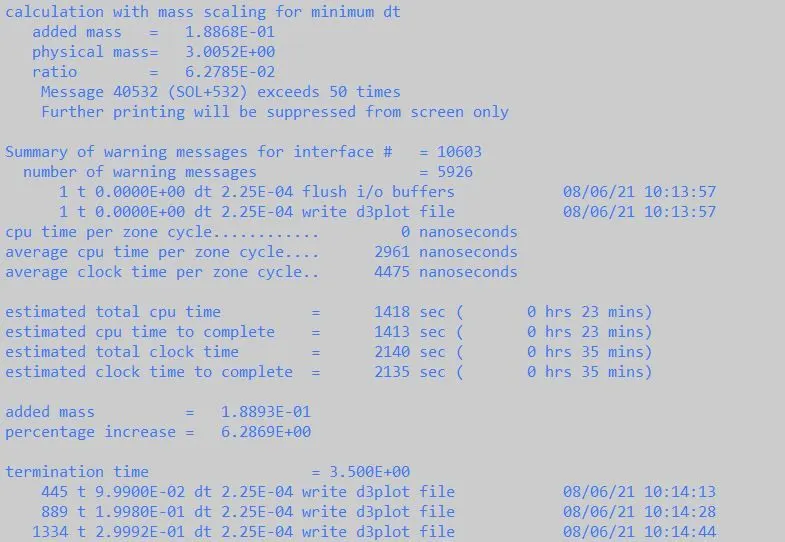
- My changing the dt2ms to -0.00025 in control timestep card the run time can be reduced to 34 mins. But this increases the mass of the model. So avoid any errors the mass is monitored and should not be beyond the prescribed limit.
- The percentage increase in mass is around 6% which is within the prescribed limit.
Debuging:
- In initial simulation the density of bird is around 2e+6 and the initial velocity is not assigned to the hub due this error the elements got deleted because of the stress level.
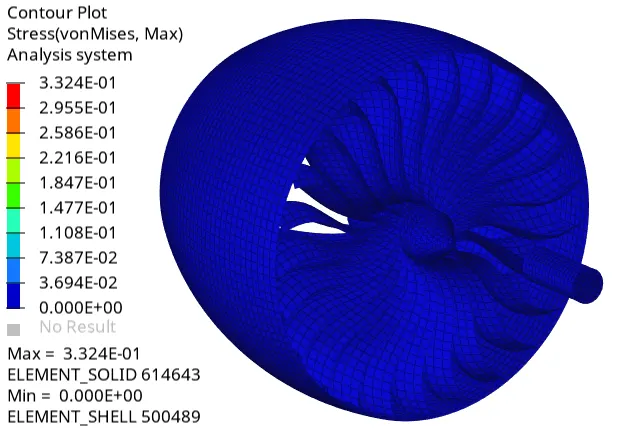
- This is solved by changing the bird density to 5e-6 and assigning initial velocity to the hub.
Conclusion:
- The simualtion is carried out by using consistent numbering approach, and learned to create and organise input files.
- Mass scaling approach is used to decrease the run time without any significant change in the results.
- Learned how to debug the model to get the accurate results.