Benchmarking

BENCH MARKING
santhosh sivan
Benchmarking:
Benchmarking means continuous improvement and continuous growing for the organization. Also, to facing the challenges from the market. Benchmarking is the process of comparing and practices against the competitors, industry peers, or some other companies around the world. Some types of benchmarking are listed below.
- Performance benchmarking
- Internal benchmarking
- External benchmarking
- Practice benchmarking
Performance benchmarking:
Performance benchmarking means to comparing and gathering data for sustain and improve the better performance against the competitors.
For example: A company manufacturing the car. First, they can collect the information’s. what kind of models the competitor have (material, dealers, and some other data). Then compare with their data after that they conclude and established.
Internal benchmarking:
Internal benchmarking means comparison of different units, product lines, departments, programs, etc
For example: The company called as X they organising one program to their employee for given the better result or some other purpose like target, time keeping, etc. A company called Y they collect the details and the purpose of the program then they make some changes and conduct it. So, the employees in that company should give better result and it leads to improve their performance and achieve the target.
Practice benchmarking:
Practice benchmarking means gather and compare the information’s about activity, method, processes and technology.
For example: Same the company called Y they produce all kind of air filter by some formats or different technology. They achieve good result. But company known as X they also produce same filter but they cannot achieve their target. So, they gathering some data from the company Y and discussed themselves and finalised their decision. Implementing that method and doing some changes their production. Now they fulfil their target.
External Benchmarking:
External benchmarking means gathering a information’s like feedback, product, service and some other things. Comparing the gathered information’s and achieve the target.
For example: This example related to customer. Need one or more organization to agree to participate. Third party may also need to facilitate the gathered data. companies called X, Y and Z they give proper service support and also, they give qualitive product (These three companies are competitors against each other). They gathered data from the customer by third party. So, this companies make a benchmarking form their competitors for better result and also for improvement.
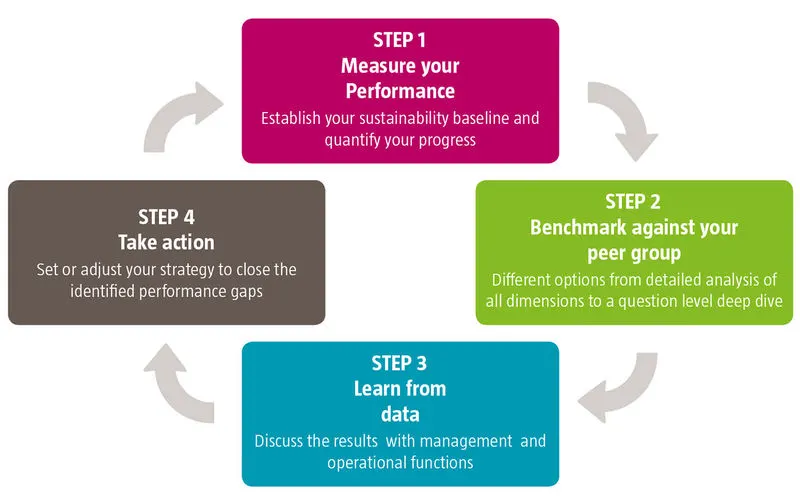
In this report we benchmark the cars for Mr.D.S. Pughazhyendhii to fulfil their needs. They are four types of cars we benchmark as listed below.
- Honda Amaze S
- Tata Tigon XZ
- Maruti Dzire VXI AT
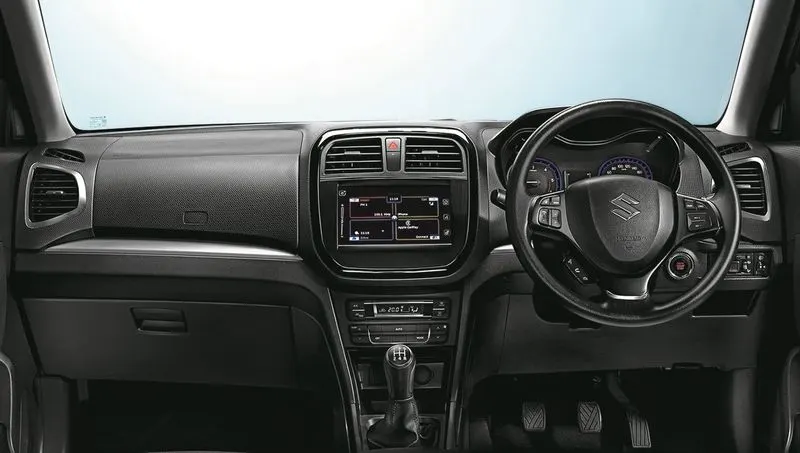
- Vitara Brezza LXI
Honda Amaze s: Star rating: 4
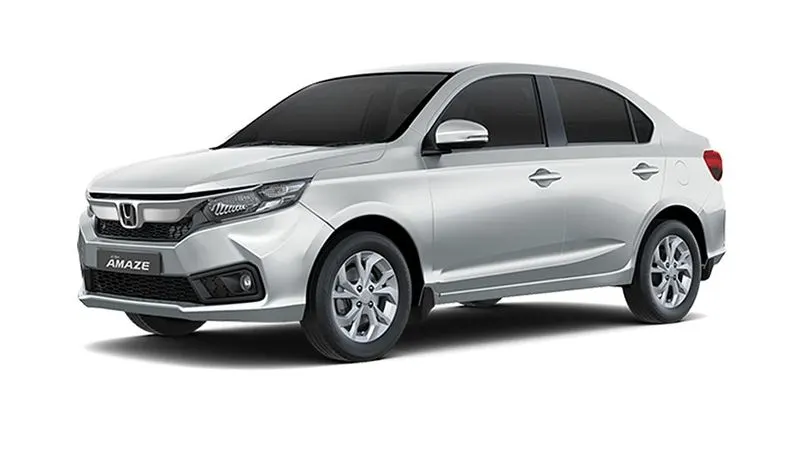
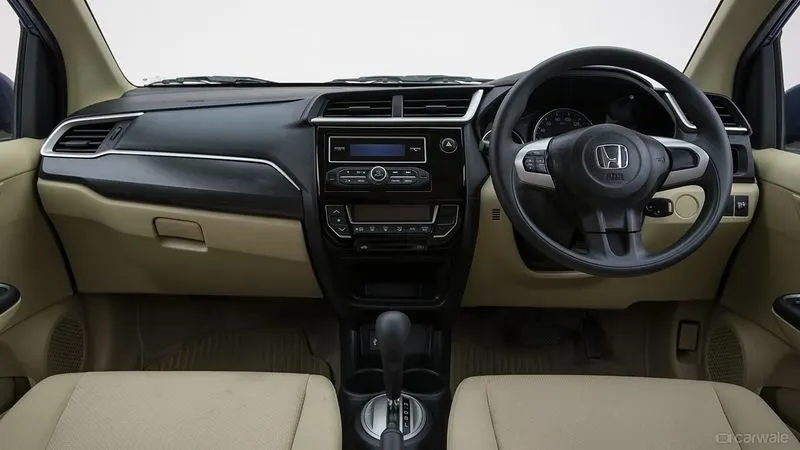
Amaze is being manufactured at the company's facility in Great Noida. Amaze is honda’s first diesel offering in India in April 2013 with four trim levels: E, EX, S and VX. In January 2014, an additional trim known as the "SX" variant was launched and positioned in between the "S" and "VX" trims. It has long boot space and excellent interior design. It has 4.7 tuning radius as well as 88.5 bhp power. This car available as both manual and automatic gear box. 934 kg kerb weight of this car and the on-road price is Rs- 8,65,634/-. Also, it available in petrol as well as diesel engine and it score 4-star rating in crash test done by Global NCAP.
Advantage:
- One of the better-looking sedans in the segments
- Punch diesel engine
- Automatic option with both engines
- Comfortable ride quality
- Rear seat experience
- 4-star rating for crash test
Dis-advantage:
- Not good in petrol engine
- Missing some features like auto-dimming IRVM, parking sensors and some other things
Tata Tigor XZ: Star rating: 4
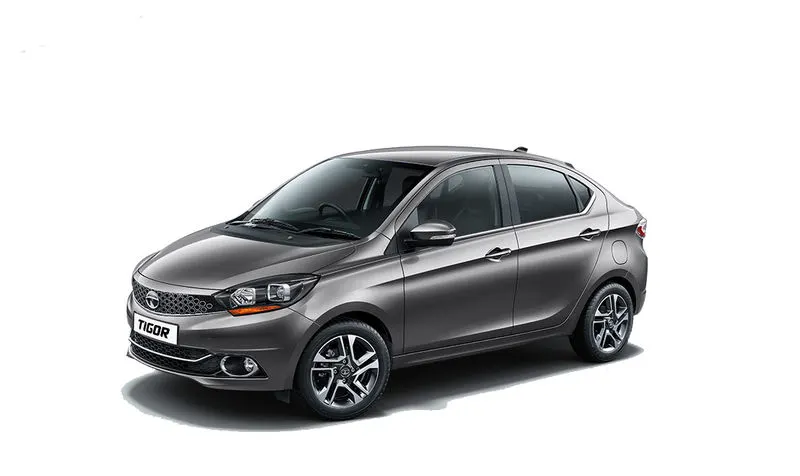
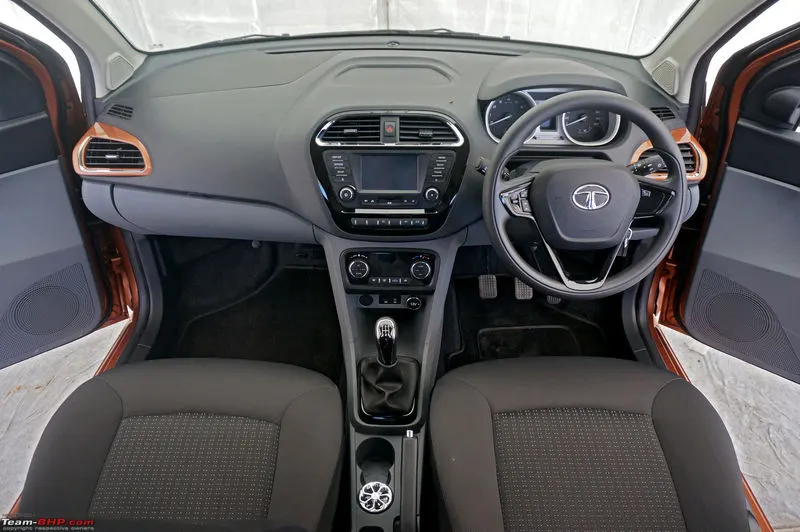
The Tata Tigor was born directly from the same project that originated the Tata Tiago (internally called Kite 5) as it represents the four-door sedan version with a third rear volume The Kite project was born in 2013 with the aim of developing two new compact cars, modern and inexpensive to offer on the Indian market in place of the Tata Zest and Bolt models that did not have the desired success as they were nothing but the profound restyling of the previous Indica Vesta and Indica Manza. In particular, Tigor replaces the Tata Zest. It scores 4-star rating for crash test in Global NCAP. It has 5.1m turning radius and also 84-bhp. But this available only in petrol engine and less cabin space. Then the overall weight of this car is 992-1024kg kerb weight and on road price of this car is Rs- 8,29,402/-.
Advantage:
- One of the best looking sub-4m sedan
- Well loaded with features
- 4-star rating from Global NCAP
Dis-advantage:
- Engine refinement and performance not on par with rivals
- Less cabin space as compare to rivals
- No diesel engine option
Maruti Dzire VXI AT: Star rating:4.2
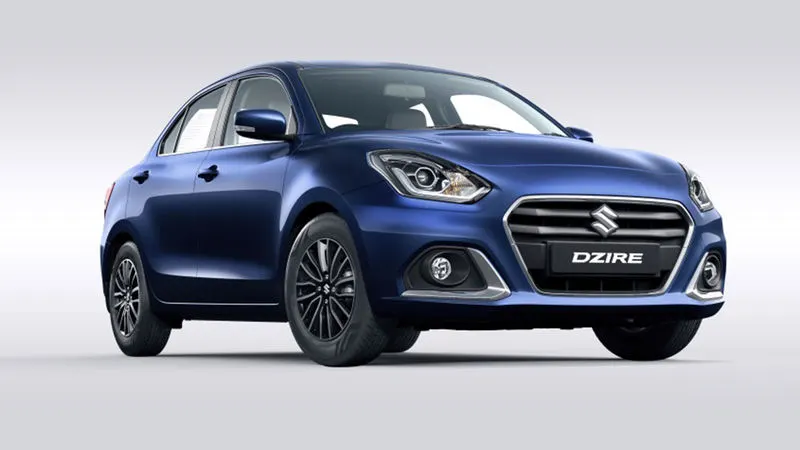
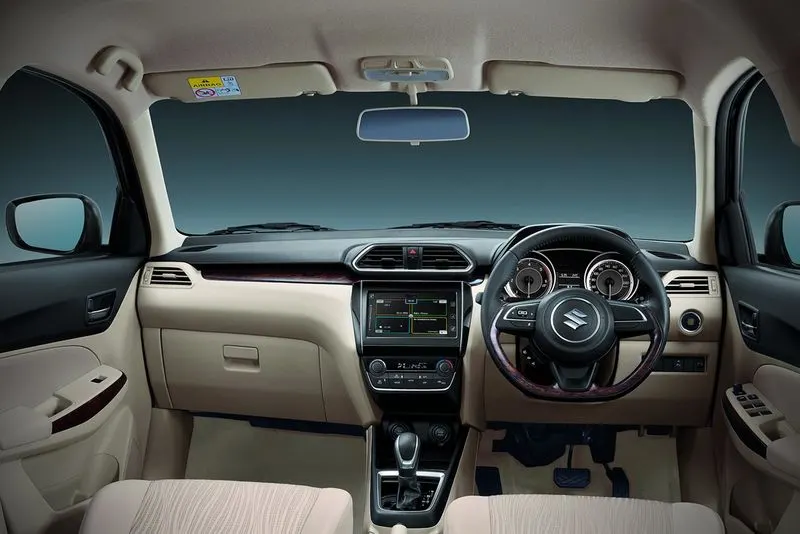
The Suzuki Dzire (stylized as the Suzuki Dzire, previously known as Suzuki Swift Dzire but still sold as Suzuki Swift sedan in Colombia) is a subcompact sedan made by Suzuki for the Indian market since 2008 (first generation). Introduced as a subcompact sedan for the Indian market in smaller size. Second generation was introduced in 2012 with1.3 L DDis turbo diesel engine and 82 hp. Third generation was introduced in 2017 1.2LK12M motor producing 82bhp and regarding milage, in petrol model is rated as 22km/l but diesel model rated as 28.40km/l. The turning radius for this vehicle is 4.8m. According to the price of this vehicle Rs-8,62,593. Then the rating for crash test done by Global NCAP is 2-star.
Advantage:
- Refined Petrol engine
- High claimed efficiency
- Comfortable ride quality
- Loaded with features
Dis-advantage:
- Interior quality could have been better
- No diesel engine option
- Less cabin spaces
- 2-star rating for crash test
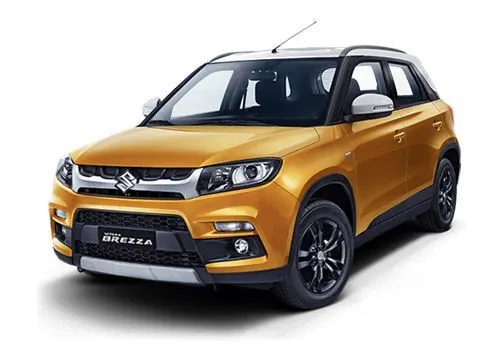
Vitara Brezza LXI: Star rating: 3.8
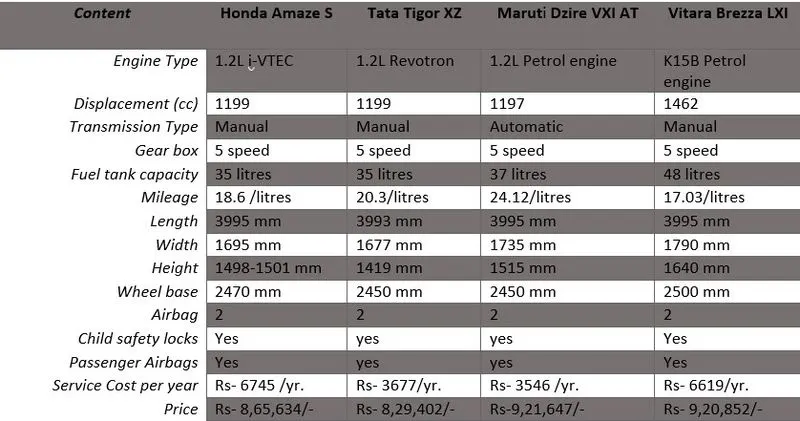
Comparison of four cars and their features, specification:
Under body coating:
What is meant by coating?
coatings to change the surface properties of the substrate, such as adhesion, wettability, corrosion resistance, or wear resistance. A major consideration for most coating processes is that the coating is to be applied at a controlled thickness, and a number of different processes are in use to achieve this control, ranging from a simple brush for painting a wall, to some very expensive machinery applying coatings in the electronics industry. Coatings may be applied as liquids, gases or solids. Coating are classified into some types they are.
- Vapor deposition
- Chemical vapour deposition
- Physical vapour deposition
- Chemical and electrochemical techniques
- spraying
- Roll to roll coating process
- Physical coating process
Under body coating:
Underbody coating is usually a dense cladding (often based on rubber) applied uniformly to the undercarriage of the automobile. It is normally sprayed or painted on when the car is just out of the dealership and is clean. But even if you are getting the undercoating applied after a couple of years, it’s fine too. This is because it can prevent further damage to the undercarriage. For automobile they are some kinds of under body coating as below.
- Rubber under body coating
- Wax based under body coating
- Asphalt based automotive undercoating
- Polyurethane under body coating
1.Rubber under body coating:
This is generally thought of as the best underbody coating for your car. It preserves the underbody well, protecting it from scratches. Applying this to the undercarriage is not much of a hassle either.
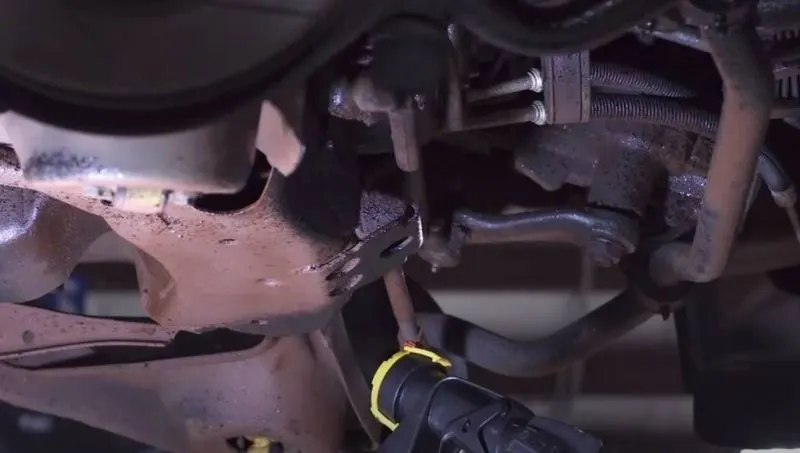
2.Wax based under body coating:
This – more or less – ephemeral undercoating will wear away in a few months’ time. On the upside, wax-based undercoating puts up a big fight against moisture. It is also the most affordable option out there.
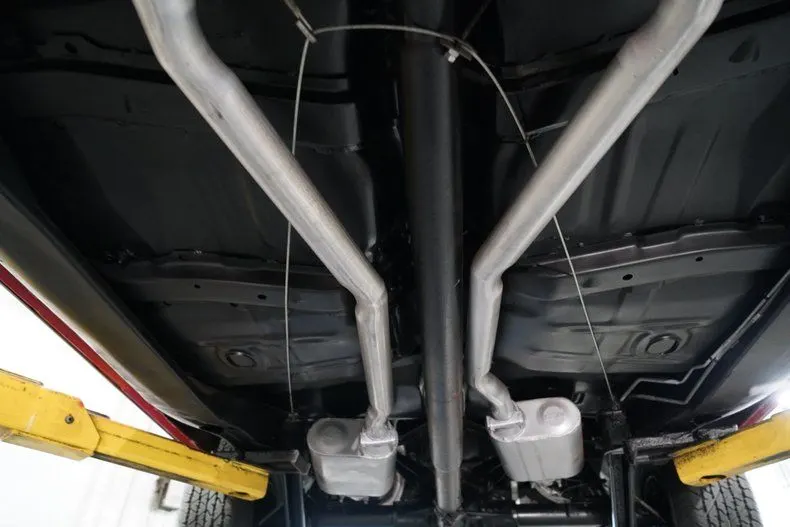
3.Asphalt based automotive undercoating:
Best suited for lorries, trucks and large vehicles this provides a greater degree of protection compared to rubber-based coatings. However, asphalt-based coatings contain little amounts of rubber for sound-insulation purposes. The process of applying this coating is a bit time-consuming though.
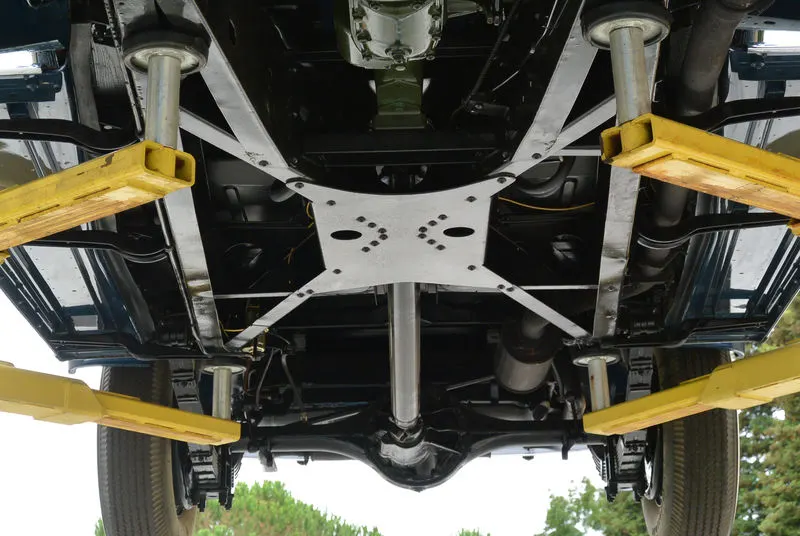
4.Polyurethane under body coating:
This coating closes up splits and fractures on the underbody of the vehicle. It offers up good protection against corrosion and also bonds with the metal. Unlike in the case of asphalt-based coating, you can paint over the polyurethane coating.
Advantages for under body coating:
- Fight rust-It plays an important role in keeping corrosion at bay
- Absorb Noise- very thick undercoating can soften the noises that reach the cabin. Since the undercoating is often made up of rubber it absorbs some of the rackets.
- Reinforcement- If your car comes with stock underbody coating, using another coating on top of it, is not going to hurt. It will offer additional reinforcement, protecting the underbody from water, road debris, gravel and small pebbles.
- Prolong car’s life- good undercoating not only defends the underbody from corrosion but also protects the engine and transmission as well! Less rusting coupled with slower wear and tear can surely add years to the lifespan of your vehicle.
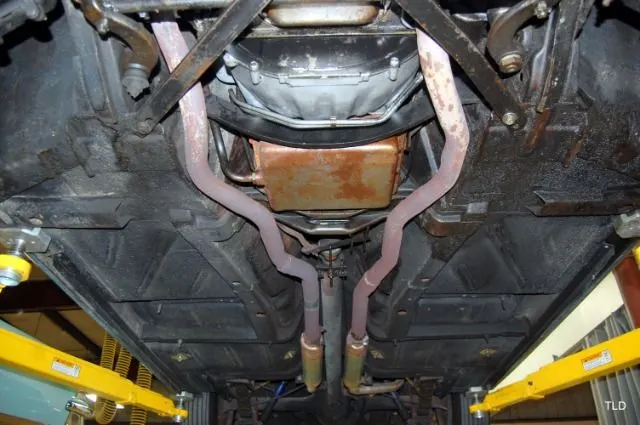
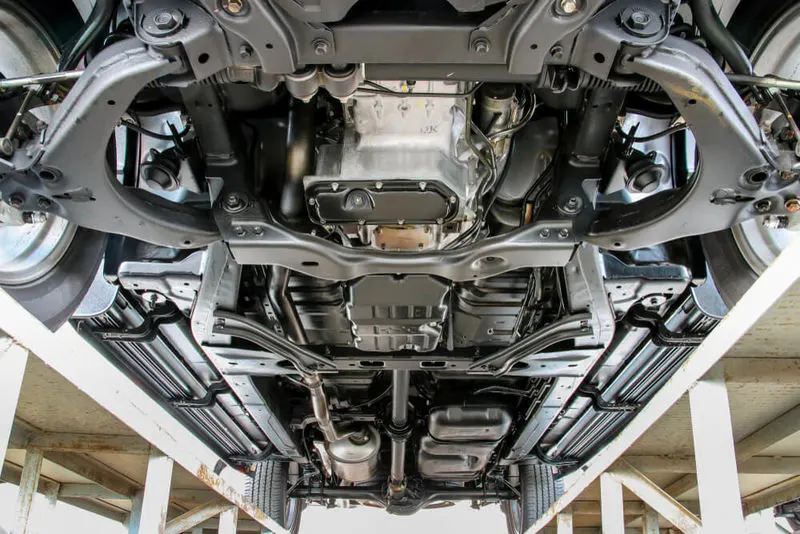
Images for Before and After under body coating:
Before underbody coating:
After under body coating:
Conclusion:
After the benchmarking of 4 different types of cars for Mr.D.S.Pughazhyendhii. According to the milage, safety, comfort, fuel price and maintenance cost Honda amaze s is suitable for his family because compare to Tata Tigor, Maruti Dzire and Vitara brezza the cabin space is more and also the safety rating is 4 from Global NCAP. Not only that but this vehicle gets both petrol and diesel engine. Also get both automatic and manual gear box (According the price of the fuel). Amazing interior and passenger feel a smooth ride on this vehicle.