Benchmarking
BENCHMARKING:
- Benchmarking is defined as the process of measuring products, services, and processes against those of organizations known to be leaders in one or more aspects of their operations.
- Benchmarking provides necessary insights to help you understand how your organization compares with similar organizations, even if they are in a different business or have a different group of customers.
- Benchmarking can also help organizations identify areas, systems, or processes for improvements—either incremental (continuous) improvements or dramatic (business process re-engineering) improvements.
Benchmarking has been classified into two distinct categories:
- Technical and
- competitive.
The House of quality matrix and Gantt charts are often used to plot the benchmarking evaluation.
Benchmarking procedure:
Considerations:
- Before an organization can achieve the full benefits of benchmarking, its own processes must be clearly understood and under control.
- Benchmarking studies require significant investments of manpower and time, so management must champion the process all the way through, including being ready and willing to make changes based on what is learned.
- Too broad a scope dooms the project to failure. A subject that is not critical to the organization’s success won’t return enough benefits to make the study worthwhile.
- Inadequate resources can also doom a benchmarking study by underestimating the effort involved or inadequate planning. The better you prepare, the more efficient your study will be.
Plan:
- Define a tightly focused subject of the benchmarking study. Choose an issue critical to the organization’s success.
- Form a cross-functional team. During Step 1 and 2, management’s goals and support for the study must be firmly established.
- Study your own process. Know how the work is done and measurements of the output.
- Identify partner organizations that may have best practices.
Collect:
- Collect information directly from partner organizations. Collect both process descriptions and numeric data, using questionnaires, telephone interviews, and/or site visits.
Analyze:
- Compare the collected data, both numeric and descriptive.
- Determine gaps between your performance measurements and those of your partners.
- Determine the differences in practices that cause the gaps.
Adapt:
- Develop goals for your organization’s process.
- Develop action plans to achieve those goals.
- Implement and monitor plans.
For example:
Mr. D.S. Pughazhyendhii is a married man who lives in Bangalore which is a highly crowded city. His Family comprises five members including his wife, five-year-old boy, his father, and his mother. He visits his native place Madurai which is 500kms away from Bangalore once in a month. Also, he will be using his car to commute to his office. His budget falls between 8 to 10 lakhs on road. Please suggest to him with options so that he will buy a good car for his family. Note: Pughazhyendhii is fond of big cars.
Basic needs of Mr. D.S. Pughazhyendhi's car:
- The car has to be compact so that getting struck in crowded area can be reduced.
- It must be a 5 seater with optimum safety standards.
- Since he uses the car for daily purpose as well as long travelling, the mileage should be good.
- He needs big car at the range of 8 to 10 lakhs.
Some of the suitable cars are:
- Tata Nexon - 8.47 lakhs onwards
- Mahindra XUV 300 - 9.24 lakhs onwards
- Hyundai Venue - 8.14 lakhs onwards
- Maruti Suzuki Vitara Brezza - 8.84 lakhs onwards
- Ford Eco Sport - 9.53 lakhs onwards
1. Tata Nexon
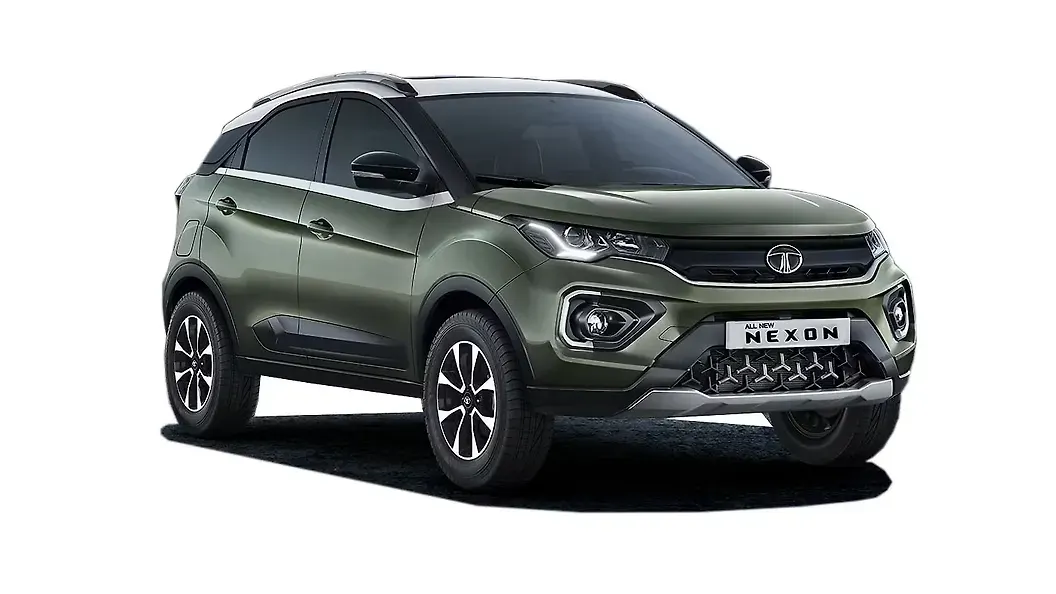
Tata Nexon XE Diesel
- ARAI Mileage : 22.4 kmpl
- City mileage : 16.8 kmpl
- Engine displacement: 1497 cc
- Transmission : Manual & AMT
- Fuel type : Diesel
- Max Power : 118 bhp@5500rpm
- Body : SUV
- Emission standard : BS6
- Seating capacity : 5
- Price : 9.98 lakhs
- Safety rating(NCAP) : 5/5
Pros:
- Aesthetic look with many variants available.
- 5 Star NCAP Safety rating.
- Good Mileage
Cons:
- Uninspiring bottom-end engine performance
- Mediocre fuel efficiency due to average performance of the engine while high throttling.
2. Mahindra XUV 300
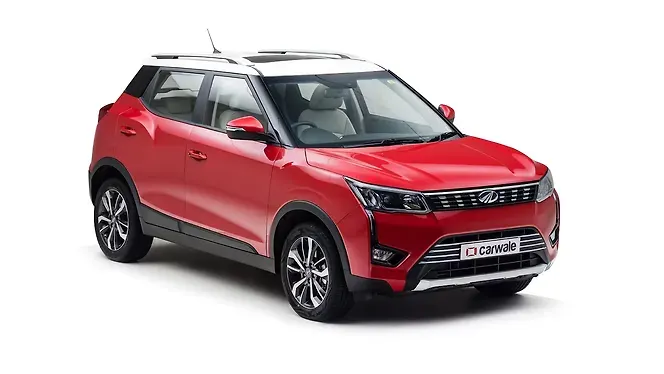
Mahindra XUV 300 1.5 W4
- ARAI Mileage : 20.0 kmpl
- City mileage : 16.8 kmpl
- Engine displacement: 1497 cc
- Transmission : Manual & AMT
- Fuel type : Diesel
- Max Power : 115 Bhp@3750rpm
- Body : SUV
- Emission standard : BS6
- Seating capacity : 5
- Price : 10.46 lakhs
- Safety rating(NCAP) : 5/5 (Africa NCAP)
Pros:
- Powerful diesel engine
- AMT is among the best in its class
- Comfortable ride quality
Cons:
- Top-end variant is pricey
- Interior fit and finish not the best
- Looks disproportionate in profile
3. Hyundai Venue
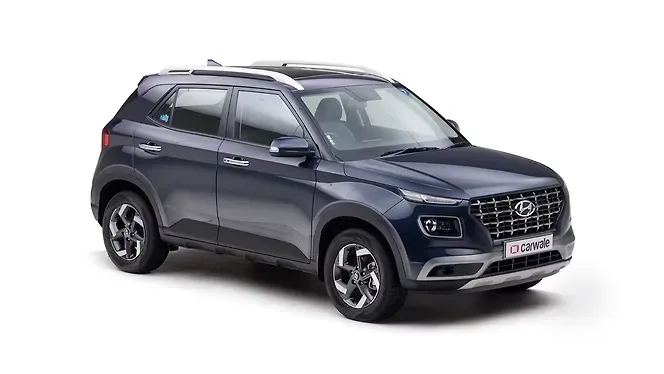
Hyundai Venue S 1.2 Petrol
- ARAI Mileage : 17.52 kmpl
- City mileage : 12.43 kmpl
- Engine displacement: 1197 cc
- Transmission : Manual
- Fuel type : Petrol
- Max Power : 81.86 Bhp@6000rpm
- Body : SUV
- Emission standard : BS6
- Seating capacity : 5
- Price : 9.02 lakhs
- Safety rating(NCAP) : 4/5 (Australian NCAP)
Pros:
- First-in-class connectivity features.
- Quality interiors coupled with long features list.
- It is the only DCT automatic in the segment.
Cons:
- Mileage is low average range
- Cabin space isn’t as generous as the competitors.
- 1.2-litre petrol only available in entry-level trims
- Top-spec variants are too expensive.
4. Maruti Suzuki Vitara Brezza
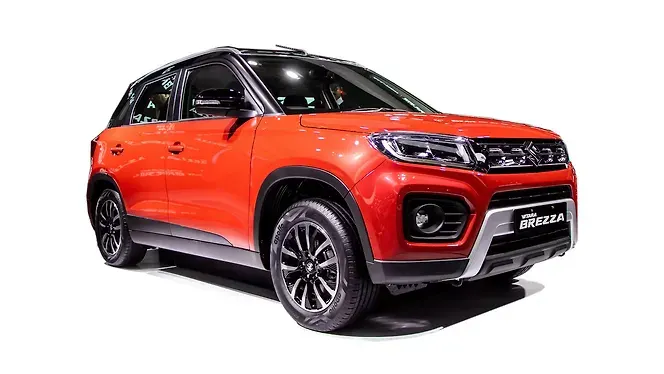
Maruti Suzuki Vitara Brezza LXi
- ARAI Mileage : 17.03 kmpl
- City mileage : 12.10 kmpl
- Engine displacement: 1462 cc
- Transmission : Manual
- Fuel type : Petrol
- Max Power : 103.26 Bhp@6000rpm
- Body : SUV
- Emission standard : BS6
- Seating capacity : 5
- Price : 8.84 lakhs
- Safety rating(NCAP) : 4/5 (Global)
Pros:
- High seating
- Light controls make it easy to drive
- Maruti’s vast service network
Cons:
- Firm slow-speed ride
- Ordinary fit and finish
- Petrol motor gets noisy post 2,500rpm
5. Ford Eco Sport
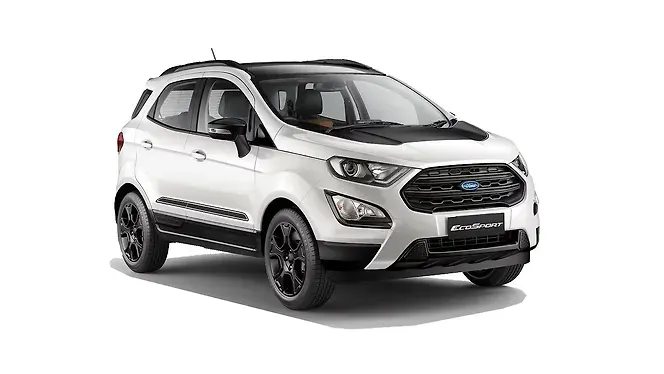
Ford Eco Sport Ambiente 1.5L TDCi
- ARAI Mileage : 21.7 kmpl
- City mileage : 16.9 kmpl
- Engine displacement: 1498 cc
- Transmission : Manual
- Fuel type : Diesel
- Max Power : 99.23 bhp@3750rpm
- Body : SUV
- Emission standard : BS6
- Seating capacity : 5
- Price : 10.32 lakhs
- Safety rating(NCAP) : 4/5
Pros:
- Striking looks especially in the S guise
- Feature-rich cabin with decent ergonomics
- Sporty drivability in terms of steering and body control
Cons:
- Narrow cabin lack of shoulder room on the rear bench
- Inconsistent cabin plastics and dated instrument console
- More expensive than its rivals
Comparison of all the cars:
| Specifications | Tata Nexon XE Diesel | Mahindra XUV 300 1.5 W4 | Hyundai Venue S 1.2 | Maruti Suzuki Vitara Brezza LXi | Ford Eco Sport Ambiente 1.5L TDCi |
| ARAI Mileage | 22.4 kmpl | 20.0 kmpl | 17.52 kmpl | 17.03 kmpl | 21.7 kmpl |
| City mileage | 16.8 kmpl | 16.8 kmpl | 12.43 kmpl | 12.10 kmpl | 16.9 kmpl |
| Engine displacement | 1497 cc | 1497 cc | 1197 cc | 1462 cc | 1498 cc |
| Transmission | Manual & AMT | Manual & AMT | Manual | Manual | Manual |
| Fuel type | Diesel | Diesel | Petrol | Petrol | Diesel |
| Max Power | 118 bhp@5500rpm | 115 Bhp@3750rpm | 81.86 Bhp@6000rpm | 103.26 Bhp@6000rpm | 99.23 bhp@3750rpm |
| Emission standard | BS6 | BS6 | BS6 | BS6 | BS6 |
| Seating capacity | 5 | 5 | 5 | 5 | 5 |
| Price | 9.98 lakhs | 10.46 lakhs | 9.02 lakhs | 8.84 lakhs | 10.32 lakhs |
| Safety rating(NCAP) | 5/5 | 5/5 (Africa NCAP) | 4/5 (Australian NCAP) | 4/5 (Global) | 4/5 |
Conclusion:
- As I went through the above data and analysed them with Mr. D.S. Pughazhyendhi's requirements, I would suggest Tata Nexon XE Diesel. Since he ought to ride the car in the city as well as Highways, Nexon would be a great choice which comes under his budget and worth of money spend.
- Since, he likes big cars I have compared only the SUVs rather than Sedan/Hatchbacks.
- Nexon is a 5 seater SUV with 5 star rating from NCAP which ensures the safety of his family and child. In addition, Nexon provides a good mileage to travel in busy roads.
- Since, he has been going for long travel from Bangalore to Madurai once a month, Nexon will give a pleasant journey with all the features in it.