Benchmarking
BENCHMARKING
Benchmarking is a process of measuring the performance of a company’s products, services, or processes against those of another business considered to be the best in the industry, “best in class.” The point of benchmarking is to identify internal opportunities for improvement. By studying companies with superior performance, breaking down what makes such superior performance possible, and then comparing those processes to how your business operates, you can implement changes that will yield significant improvements.
In automobile industry, benchmarking involves a structured comparison between similar products service or process on some dimensions of performance. That might mean tweaking a product’s features to more closely match a competitor’s offering, or changing the scope of services you offer, or installing a new customer relationship management (CRM) system to enable more personalized communications with customers.
There are two basic kinds of improvement opportunities: continuous and dramatic. Continuous improvement is incremental, involving only small adjustments to reap sizeable advances. Dramatic improvement can only come about through reengineering the whole internal work process
For example, bench marking is used to compare the availability and delivery of features in a product and in the form often provides the basics of consumer test and reviews. These look at products and service and provide recommendations based on which is best. Or some from of rankings among the competitors. It is particularly used when comparing not only practice but also in practice. In other words what do the different organization do to enable that performance to be delivered. And applied in this way as a powerful tool in process innovation on how the best achieve their performance can provide powerful clues for changing the way process and operate.
GENERAL PROCEDURE FOR MENCHMARKING:
Benchmarking is a simple, and explained in five-step process:
- Choose a product, service, or internal department to benchmark
- Determine which best-in-class companies you should benchmark against – which organizations you’ll compare your business to
- Gather information on their internal performance, or metrics
- Compare the data from both organizations to identify gaps in your company’s performance
- Adopt the processes and policies in place within the best-in-class performers
Benchmarking will point out what changes will make the most difference, but it’s up to you to actually put them in place. In order to benchmark anything, you need to have quantitative data available to study. That means breaking down internal processes to calculate performance metrics. Quantify everything, because only quantifiable information can be accurately compared.
TYPES OF BENCH MARKING:
Bench marking can compare performance between different groups/teams within the organization or compare its performance with the companies in a specific industry or across industries externally.
Especially there are 3 types of benchmarking. They are
- Process benchmarking
- Performance benchmarking
- Strategic benchmarking
Process bench marking:
Many organizations have started working with Process Benchmarking since the framework fits nicely into an operational approach to improving performance. Process Benchmarking focuses on selected production processes in the business rather than on the business as a whole. The goal of process benchmarking is to improve different stages of the production process and to increase efficiency by “learning from others”. Sharing experiences is crucial for the success of the technique. Process benchmarking consists of a mechanism for identifying specific work procedures that could be improved by imitating external examples of excellence that can be set as the best standard in the industry. In that sense, Process Benchmarking involves the comparison of one’s own utility with other similar utilities, with the purpose of self-improvement through adopting structures or methods that happen to be successful elsewhere. Summarizing, it allows a firm to find out how others do business, whether they are more efficient or not and, if so, whether the firm can understand and use those methods to its own advantage. Benchmarking includes comparisons of engineering practices, data collection procedures, office routines and performance indicators for each of the processes under study. Flow diagrams can capture key relationships and assist managers in identifying areas for improvement.
Process bench marking of this kind can operate at several levels
- Between similar process in the same factory/ service branch
- Between different factories/ service branches
- Between different competing organization.
- Between different sectors using the same process.
PERFORMANCE BENCHMARKING:
Performance benchmarking allows the initiator firm to assess their competitive position by comparing products and services with those of target firms
STRATEGIC BENCHMARKING:
Strategic benchmarking involves observing how others compete. This type is usually not industry specific, meaning it is best to look at other industries, i.e. Strategic Benchmarking with the help of PIMS (Profit impact of marketing strategy)
OTHER TYPES OF BENCHMARKING:
Financial benchmarking - performing a financial analysis and comparing the results in an effort to assess your overall competitiveness and productivity.
Benchmarking from an investor perspective- extending the benchmarking universe to also compare to peer companies that can be considered alternative investment opportunities from the perspective of an investor.
Benchmarking in the public sector - functions as a tool for improvement and innovation in public administration, where state organizations invest efforts and resources to achieve quality, efficiency and effectiveness of the services they provide
Product benchmarking - the process of designing new products or upgrades to current ones. This process can sometimes involve reverse engineering which is taking apart competitors products to find strengths and weaknesses.
Functional benchmarking - a company will focus its benchmarking on a single function to improve the operation of that particular function. Complex functions such as Human Resources, Finance and Accounting and Information and Communication Technology are unlikely to be directly comparable in cost and efficiency terms and may need to be disaggregated into processes to make valid comparison.
Best-in-class benchmarking - involves studying the leading competitor or the company that best carries out a specific function.
Operational benchmarking embraces everything from staffing and productivity to office flow and analysis of procedures performed.
Energy benchmarking - process of collecting, analysing and relating energy performance data of comparable activities with the purpose of evaluating and comparing performance between or within entities. Entities can include processes, buildings or companies. Benchmarking may be internal between entities within a single organization, or - subject to confidentiality restrictions - external between competing entities.
Advantages of Benchmarking:
There are several advantages of benchmarking. Most of the common benefits of benchmarking help to improve the productivity of the company. Moreover, these advantages can provide a clear picture of the key factors of benchmarking in the company. And increased productivity elements, display the successful features of the company.
1. Implements creative ideas:
One of the common type of benchmarking where in which all the beneficial aspects of the company are creatively implemented for the overall development of the company.
The benchmarking process helps the company find out their key features and after finding out the key features of their company, that company compares it with another company to complete the picture. And if there are any filling to be needed, then the company starts implementing creative ideas for the company.
2. Increased competitions:
Most of the time while doing business and while running a successful company, that company faces some strong competition from the rest of the companies. And that competition helps the current company to maintain their position even better in terms of their success rate of the company.
Therefore, as per the statement of the benchmarking process, it definitely increases healthy competition among different companies.
3. Developing improvement:
It is clear about benchmarking that it deals with those findings of the company and another company which helps them find their position in the business market.
And if there are any chance or space available for improvement in the company activities, then the company needs to develop those improvements in the company for the growth of the company in its own terms.
4. Identifies essential activities:
One of the best possible advantages of benchmarking is that it can help all the companies to identify their own essential activities that can improve the profits of the company.
Therefore, after benchmarking it is very much important for all the companies to be identified in the list of companies, which is in a run and where it can deliver the victory of their company effectively.
5. Quality of work:
Because of benchmarking once the company identifies their strengths and weakness compared with the rest of the company, then it is quite clear that all the aspects of the company need to be improved at a time to time basis.
And finally, the company can deliver some sort of ways which can deliver quality in their working order. Therefore, benchmarking makes things clear and creates some sort of awareness among the company’s working environment.
6. Increased performance:
As it is explained earlier that the benchmarking process, identifies all the features and elements of the company which can lead them towards its success. And eventually, it also provides essential signals regarding the need and wants of the company.
Once the company finds out about the actual requirements of the company, then it can increase its work performance as per the comparison aspects.
Disadvantages of Benchmarking:
As the company can receive some sort of benefits from these benchmarking processes, then it is quite obvious that the company can be covered with some of the disadvantages as well. And those disadvantages are as follows.
1. Stabilized standards:
Most of the company compares their working environment with another company which is earning quite well in a similar field of work. After finding out the reason for the improved success rates, the company can incorporate those ideas of that company to improve their productivity. And eventually, they stabilize their standard to that one aspect, without its course of action.
2. Insufficient information:
Sometimes it happens that while comparing the aspects of different companies, the information acquiring company can be left behind with their information-gathering techniques. And that is why it can face tremendous loss in their business because of insufficient information about the company.
Therefore, it is very essential for all the companies that they need to be sure of their information about that another company.
3. Decreased results:
Most of the time when a company sets its standard and try to improve that standard by implementing some new and creative ideas, then at that time the company need to look at those companies which are doing quite good in their similar type of business. And analyze the actual problem in their company.
Once the company finds out the actual reason, then they need to research well about the element that whether it is feasible for the company or not.
4. Lack of customer satisfaction:
Most probably during the benchmarking process, the company finds out those outputs which can need to be improved and developed for the sake of the overall growth of the company. Hence, for that, the company needs to look into matters which can increase their productivity along with their customer satisfaction.
Therefore, instead of incorporating the ideas that another company used in their company, it can check for its feasibility in their own company.
5. Lack of understanding:
As most of the companies keep an eye on their competition instead of their own growth, it is quite clear for all the company that such type of obsession with another company can not lead the company anywhere.
Therefore, it is advisable for all the companies that they need to understand the need for benchmarking in their company instead of spying on another company.
6. Increased dependency:
Most of the companies think that benchmarking helps them improve their company position as it helped those successful companies to be in the top. But most of the companies forget that those companies which made themselves to that top position have earned their hard work.
Therefore, instead of depending on the ideas which made that company successful, they can build theit own network to make them independent for a better future
Conclusion:
Benchmarking and their process can provide essential information about the actual activities of the company. And those activities of the company create a marginal line between successful and aspiring companies. Most of the company looks forward to those companies which made quite a great effort in their business. Therefore, this information about benchmarking can provide skill knowledge about the advantages and disadvantages of the benchmarking for their own company understanding.
COMPARING VEHICLES:
OBJECTIVE OF THE TASK:
Mr. D. S. Pughazhyendhii is living in Bangalore with his family. He is going to buy a new car with his budget 8-10 lakhs of on road price. So we have to suggest a new and better car in Indian market and road conditions.
points to be noted to suggest a new car:
- Including Mr. D. S. Pughazhyendhii his family consist of 5 members. So that 5 seater car is most suitable for him.
- D. S. Pughazhyendhii is fond of big cars. So that Hatchback model and SUV model is more suitable under his budget.
- Bangalore is crowded city and he needs to travel Madurai which is 500kms away from Bangalore, a complete highway road. so that fuel efficient cars is better for him and 4 wheel drive type vehicle is not mandatory.
- Budget should be in between 8- 10 lakhs on road price.
Let us compare few cars in between 8-10 lakhs on road price
- Tata Altrozz
- Maruti Brezza
- Hundai Venue
- Kia sonet
TATA ALTROZ:
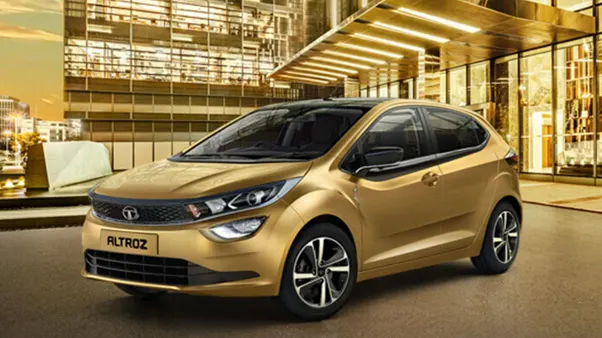
The Tata Altroz is a premium (subcompact) hatchback manufactured by Tata Motors. The Altroz was revealed at the 89th Geneva International Motor Show alongside the new Buzzard, Buzzard Sport, and H2X Compact SUV concept. It was launched to the Indian market on 22 January 2020. The name "Altroz" was inspired by name of bird species, Albatrosses, a type of large seabird.
At present, the Altroz has three engines on offer- a 1.2L 3 cylinder NA petrol, 1.5L diesel and a 1.2L three cylinder turbo-charged petrol.[4] There is just a 5 speed manual transmission on offer for now, but Tata is said to be readying a Punch Powertrain sourced wet clutch DCT as well. An electric version of the Altroz is expected to launch on sale around late 2021 or 2022
Tata Altroz is currently available in Petrol and Diesel engines. The 1199 cc Petrol engine generates a power of 108.49bhp@5500rpm and a torque of 140Nm@1500-5500rpm. The 1497 cc Diesel engine generates a power of 88.77bhp@4000rpm and a torque of 200Nm@1250-3000rpm. Tata Altroz is available in Manual transmission only. Tata Altroz has a boot space of 345 Litres.
Tata Altroz consist of petrol engine variant and diesel engine variant. So let compare these individual feature
Petrol engine:
Engine type: 1.2L Reveton Engine displacement: 1199CC
Fuel used : Petrol Emission norm compliance: BS-VI
Max. Power: 84.88BHP@6000 RPM Max. Torque: 113N-M@3000 RPM
No of cylinders : 3 Drive type: front wheel drive
Gear box: 5 speed (manual) Kerb weight: 1036KGS
Type of vehicle: SUV Milage: 19.05KMPL
Diesel engine variant:
Engine type: 1.5L Revetroq Engine displacement: 1497CC
Fuel used : Diesel Emission norm compliance: BS-VI
Max. Power: 88.77BHP@4000 RPM Max. Torque: 200N-M@1250-3000 RPM
No of cylinders : 4 Drive type: front wheel drive
Gear box: 5 speed (manual) Kerb weight: 1036KGS
Type of vehicle: SUV Milage: 25.11 KMPL
MARUTHI BREZZA:

The Brezza is the first Suzuki-branded car which was fully designed in India. the Vitara Brezza is powered by a 1.3 L D13A four-cylinder turbodiesel engine which produces 66 kW (89 hp; 90 PS) and 200 N⋅m (150 lb⋅ft) of torque. The engine is mated to a 5-speed manual or 5-speed automated manual transmission. Since 2020, the turbodiesel engine option has been replaced by a 1.5 L K15B four-cylinder petrol engine option which produces 77 kW (103 hp; 105 PS) and 138 N⋅m (102 lb⋅ft) of torque. The petrol engine is mated to a 5-speed manual or 4-speed automatic transmission, both is equipped with SHVS mild hybrid system. Maruti Vitara Brezza is currently available in Petrol engine. The 1462 cc Petrol engine generates a power of 103.26bhp@6000rpm and a torque of 138nm@4400rpm. Maruti Vitara Brezza is available in both Manual & Automatic transmission. The kerb weight of Vitara Brezza is 1110-1130 Kg and boot space is 328 liters. Maruti brezza available in manual and automatic transmission variants.
Manual gear box variant:
Engine type: K15B petrol engine Engine displacement: 1462CC
Fuel used : petrol Emission norm compliance: BS-VI
Max. Power: 103.26BHP@6000 RPM Max. Torque: 138N-M@4400 RPM
No of cylinders: 4 Drive type: front wheel drive
Gear box: 5 speed Type of vehicle: smallest SUV
Milage: 17.03 KMPL Transmission: manual
Automatic gear box variant:
Engine type: K15B ISG petrol engine Engine displacement: 1462CC
Fuel used : petrol Emission norm compliance: BS-VI
Max. Power: 103.26BHP@6000 RPM Max. Torque: 138N-M@4400 RPM
HYUNDAI VENUE:

Hyundai venue is a subcompact crossover SUV manufactured by south Korean manufacture Hyundai company. It is derived from the platform of accent. Hyundai venue is the smallest crossover globally. In the Indian market, the Venue occupies the sub-4 metre SUV category, benefitting from the Indian tax benefits for cars shorter than 4 metres. The length is reduced 45 mm to achieve the sub-4 metre mark by fitting a less protruding rear bumper. The Venue is powered by a 1.2-litre 4-cylinder naturally aspirated petrol engine that produces 83 PS (61 kW; 82 hp) and 115 N⋅m of torque, paired with a 5-speed manual transmission, and a 1.0-litre 3-cylinder turbocharged GDI petrol engine that offers 120 PS (88 kW; 118 hp) and 172 N⋅m of torque. The turbo petrol exclusively gets an option of a 7-speed dual-clutch automatic transmission and a 6-speed manual as well.
The 1.4-litre diesel engine which the Venue was originally launched with, was replaced by a 1.5-litre Bharat Stage 6-compliant diesel engine in March 2020. The larger engine produces 100 PS (74 kW; 99 hp) and 240 N⋅m (24.5 kg⋅m; 177 lb⋅ft) of torque, which is 10 hp and 20 Nm more than the 1.4-litre engine's output. The 1.5-litre diesel engine is paired with a 6-speed manual transmission.
Hyundai venue is available in both petrol variant and diesel engine variant. Lets compare best out of these variants.
Petrol AT-999cc:
Engine type: Kappa 1.0L-turbo GDi Engine displacement: 998CC
Fuel used : petrol Emission norm compliance: BS-VI
Max. Power: 118.35BHP@6000 RPM Max. Torque: 171.6N-M@1500-4000 RPM
No of cylinders : 4 Drive type: front wheel drive
Gear box: 7 Speed DTC Type of vehicle: SUV
Milage: 18.15 KMPL Transmission: Automatic
diesel 1498cc
Engine type: U2 CRDi diesel Engine displacement: 998CC
Fuel used : diesel Emission norm compliance: BS-VI
Max. Power: 98.6BHP@4000 RPM Max. Torque: 240.26N-M@1500-2750 RPM
No of cylinders : 4 Drive type: front wheel drive
Gear box: 6 speed Type of vehicle: smallest SUV
Milage: 23.7 KMPL Transmission: manual
(NOTE: Kappa is the first Hyundai engine to be fitted with an accessory drive belt which does not require a mechanical auto-tensioning adjustment device, reducing the hardware and further lowering weight and cost.)
KIA SONET:

Kia sonet is a subcompact crossover SUV manufactured by Kia from 2020. Sonet is closely related to Hundai venue. It is developed for Indian market and manufacture India.
In the Indian market, the Sonet occupies the sub-4-metre SUV category with its 3,995 mm (157.3 in) length dimension, benefitting from the Indian tax benefits for cars shorter than 4 meters. However, the Sonet is equipped with different front and rear bumpers for export markets, increasing its length to 4,120 mm (162.2 in).
Kia claimed that the Sonet uses high strength steel structure that helps in reducing the impact of severe accidents. Some of its safety features for its top trims include six airbags, electronic stability control, anti-lock braking system, hill start assistance control, vehicle stability management system, speed alert system, electronic traction control, braking assistance, driver’s seat belts given with pre-tensioners and parking sensors.
Kia sonnet version has so many variants out of these there are 5 types of engines. 3 of them are petrol and remaining were diesel.
Let us compare the best out of all variants by diesel engine and petrol engine.
Diesel AT-1493cc:
Engine type: 1.5L CRDI-VGT Engine displacement: 1493CC
Fuel used : Diesel Emission norm compliance: BS-VI
Max. Power: 113.42BHP@4000 RPM Max. Torque: 250N-M@1500-2750 RPM
No of cylinders : 4 Drive type: front wheel drive
Gear box: 6 speed (semi automatic) Type of vehicle: SUV
Milage: 25.11 KMPL Transmission: Automatic with paddle shifter
Boot space: 392 liters
Diesel AT-1493cc:
Engine type: Smart stream G1.0 T-GDi Engine displacement: 998CC
Fuel used : petrol Emission norm compliance: BS-VI
Max. Power: 118.36BHP@4000 RPM Max. Torque: 172N-M@1500-4000 RPM
No of cylinders : 3 Drive type: front wheel drive
Gear box: 7 Speed DTC Type of vehicle: SUV
Milage: 18.2 KMPL Transmission: Automatic with paddle shifter
CONCLUSION TO PREFER BEST CAR:
I have compared Tata Altroz, Maruti brezza, Hyundai venue and kia sonnet. Out of these vehicles kia sonnet is the best and comfortable car. Because under the cost of 10 lakhs.
Reasons to prefer Kia Sonet:
- Milage
- Complete Indian design
- Extra safety for passenger by steel structures
- Horse power
- Acceleration
- Torque
- Because of SUV model
- Automatic transmission
- All other features like power steering, power windows etc.
So, finally I prefer KIA SONET DIESEL AT 1493 CC WITH 1.5L CRDI-VGT variant.