Benchmarking
Benchmarking.
What is a Benchmarking?
Benchmarking describes as an analysis method for comparisons of companies, business areas, processes, products, methods, services, or designs either internally in an organization or externally with a competitor in systematic and goal-oriented.
The aim of benchmarking is to use to find out the performance gaps internal or external with the competitors. Usually, the benchmarking study is followed by learning, adapting, adjustment processes to close the identified performance gaps and increase your company's performance and gain competitive advantages.
The study of Benchmarking can be divided into four elementary phases:
- Definition of the goals
- Acquisition of the data
- Evaluation of the raw data and identification of performance and cost gaps
- Analysis and derivation of measures
 |
Workflow of benchmarking.
The steps in Benchmarking process:
Planning:
The first stage of benchmarking is the most important in the process. Planning involves highlighting required fields to improve or specification the product, finding the best in the market, and competitors, and how to envision success. Only when this step is complete the benchmarking process can go ahead to the next step, as the planning results focus on the information that needs to be collected and what success will look like.
Collection of information:
After planning, benchmarking is about gathering information about the processes and how competitors are performing them. For example, to improve your service experience, you should understand the processes in the department, how calls and communications are handled, and how it differs from your competition. Perhaps you can speak to someone at another call center or call the center directly to get first-hand knowledge of their processes. At this point, it is important to gather as much information as possible.
Analysis of the data:
Once all the required data was collected, the data analysis step in the benchmarking process starts. This data will help to understand the advantages in the competitor's planning and shortcomings in our product or services. It is important to remember at this point in the process that no business is perfect, and you need an open mind to analyze information objectively. Once the results are known, the best compatible practices will be moved to the next steps of the benchmarking process (Action).
Action:
Presenting the result to a department is never an easy task, especially when you are proposing changes. Gathering and analyzing information is only worthwhile if you can implement change and improve the company in the process. If you let a department buy you in, it can come with concessions. Therefore, make sure that the MVP you present will be accepted and likely to match the success highlighted in the planning phase.
Monitoring:
No plan is ever complete without the results of monitoring to figure out how successful the plan has been. The implementation phase will have revealed metrics and targets for success within a period, so checking these metrics is the only way to know the effectiveness of the changes. Monitoring can be done over a short or extended period depending on the desired results.
The different types in the Benchmarking Analysis.
Benchmarking is classified as:
- Internal Benchmarking.
- External Benchmarking.
1. Internal Benchmarking:
As the name suggests, internal benchmarking takes place within your own company. Here, on the one hand, different departments can be compared with one another or, on a smaller level, the same departments.
The advantages of internal benchmarking are the simple and inexpensive data acquisition and, on the other hand, the greater comparability of the data. Furthermore, internal benchmarking helps in finding the efficient processes and best methods of practice followed in the organization.
2. External Benchmarking:
Exactly the opposite of internal benchmarking is of course provided by external benchmarking: Here your own company is compared with other companies. Usually, companies from the same industry are used for this. Of course, comparisons with direct competitors are fascinating here.
Competitive/competitive benchmarking
Competitive or competition-related benchmarking focuses on the comparison with other market participants. It is about analyzing and comparing the strengths and weaknesses of the competition. The latter can be done either between the individual competitors or between them and your own company. The key figures used for this can be very similar to those of internal benchmarking, such as: “Who produces what and how quickly?”
However, the search for reliable sources is much more difficult. Because the key figures from your own company are no longer sufficient, which you can of course access at any time, you are now dependent on figures from other companies. Of course, they do not exactly have a great interest in internal data being passed on to the competition.
As a solution to this, external consultants are often consulted, which in turn have an overview and knowledge of the industry. In addition, at least a few key figures can be found out via common portals.
One of the advantages of competitive benchmarking is certainly the analysis of data from your own company and that of the competition. From this, important insights can be gained about one's own weaknesses, which helps to improve internal processes. In addition, the strengths can also supply information about the advantages one enjoys in the market. This can be enormously helpful in aligning your own strategy.
Case Study:
Mr. D.S. Pughazhyendhii is a married man who lives in Bangalore which is a highly crowded city. His Family comprises five members including his wife, a five-year-old boy, his father, and his mother. He visits his native place Madurai which is 500 km away from Bangalore once a month. Also, he will be using his car to commute to his office. His budget falls between 8 to 10 lakhs on road. Please suggest to him options so that he will buy a good car for his family.
Note: Pughazhyendhii is fond of big cars
- Prepare a report explaining what Benchmarking is
- Compare at least 4 vehicles.
- Provide a proper conclusion for the report, suggesting a single suitable vehicle among the comparison made with images.
Goals for the Benchmarking:
- Needs a car for 4 adults and 1 kid.
- Suitable for both daily use in highly crowded city use and frequent long traveling.
- He is fond of big cars.
- Needs a car with good performance and the best fuel efficiency.
- Larger boot space and larger rear leg room.
- Good ground clearance for different terrains in India.
- Preferably automatic gear transmission over manual transmission, for comfortable riding in the city and for long-distance riding. But the automatic gear transmission is expensive and crosses the budget limits.
- Good road safety rating.
- Additional features like cruise control, Anti-Lock Braking System (ABS), Electronic Stability Program (ESP), Electronic Brake-force Distribution (EBD), Parking Assist, GPS, an armrest, a smart connective, etc.
- Within the budget of 8-10 lakhs on the road and low average service cost (Avg. of initial 5 years).
Critical comparison section for Benchmarking:
- Seating capacity (min 5 persons)
- Good mileage
- Price.
- Safety rating
- Dimensions
- Range
- Boot space.
- Average maintenance cost.
- safety features.
- comfort and smart features.
After considering the requirements of Mr. D.S. Pughazhyendhii the suitable class of the car is the compact SUV type. There are many models of cars that fall into his requirements in the market. For this benchmarking case study, consider the below list of 7 different models of cars from the top five manufacturers in Compact SUVs.
Note: Bangalore city is located at an average altitude of 3000ft. they will be a loss of 3% of the engine performance for every 1000ft elevation. So, consider some models with turbocharged variants, both petrol, and diesel.
List of cars under consideration:
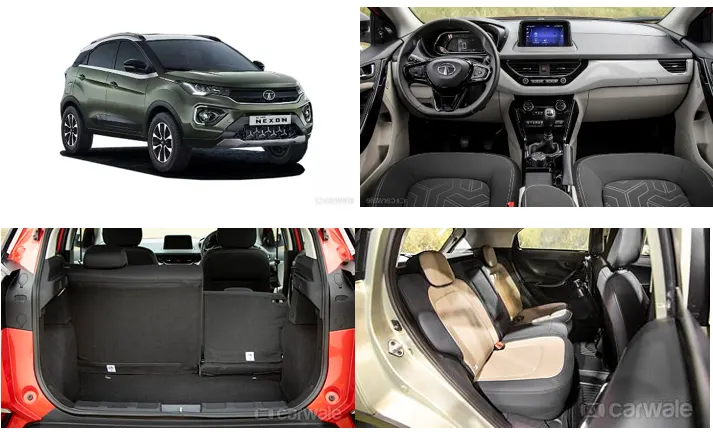
- TATA Nexon (XMS)
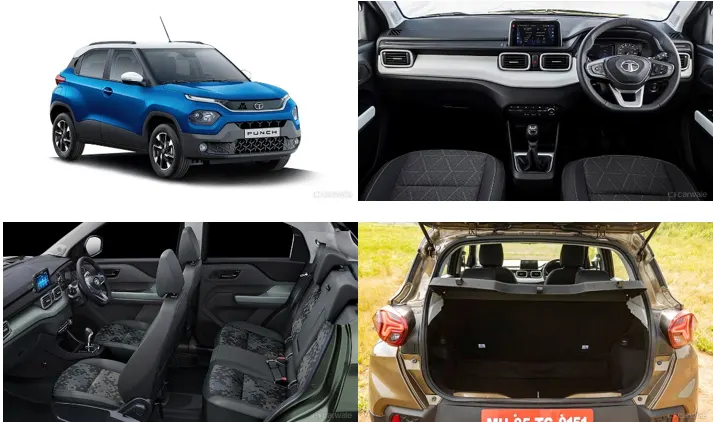
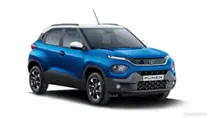
- TATA Punch (Creative IRA AMT Dual Tone)
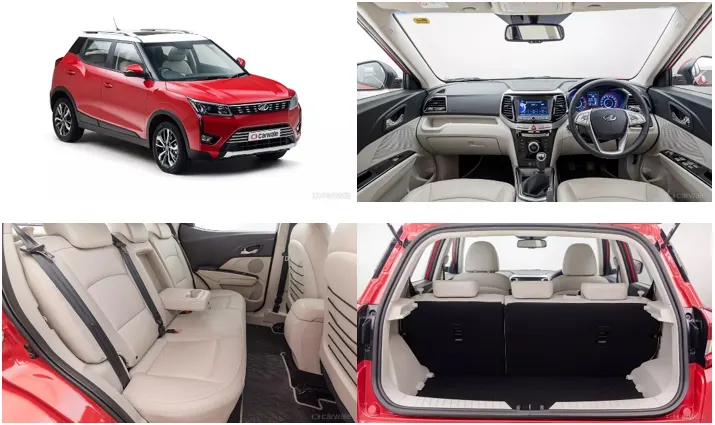
- Mahindra XUV 300 (W4 1.5 Diesel)
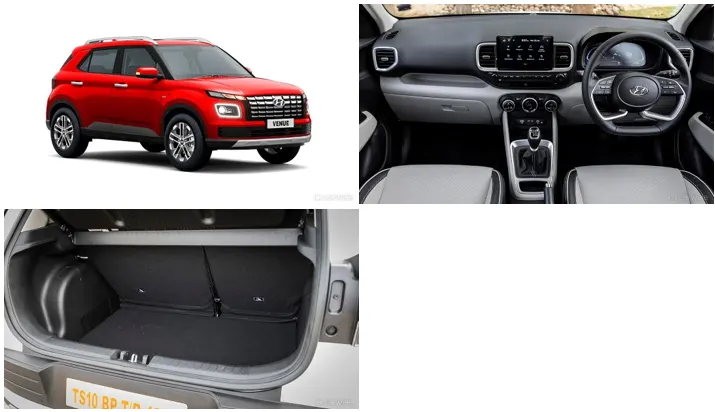
- Hyundai Venue (S(O) 1.2 Petrol)
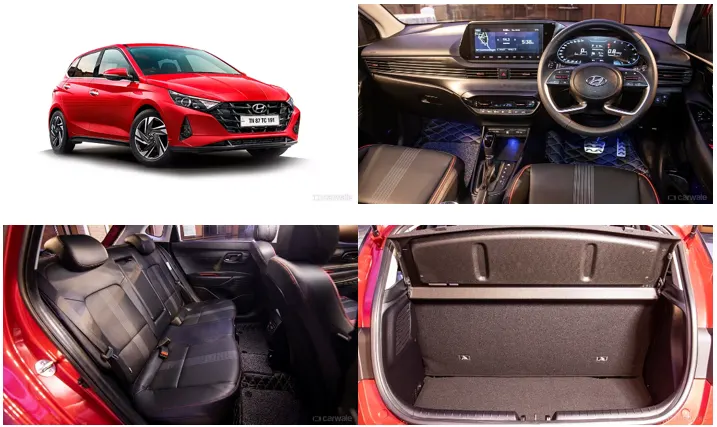
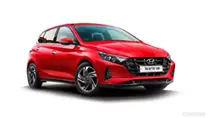
- Hyundai i20 Sportz (1.5 MT Diesel)
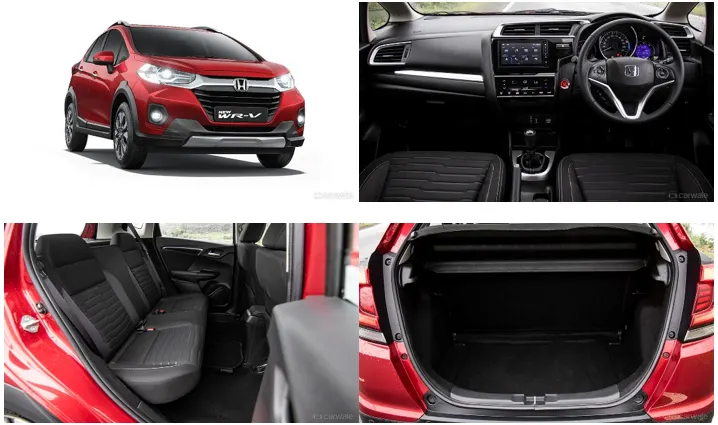
- Honda WR-V (VX Petrol)
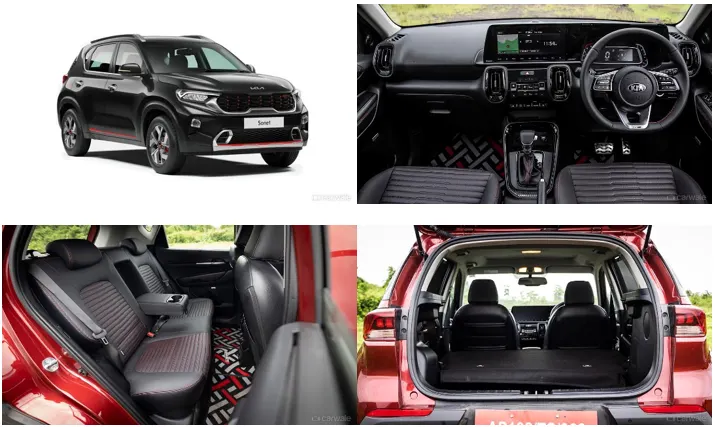
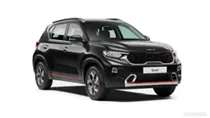
- Kia Sonet (1.5 THE diesel)
Note: Below Data and Pictures are referenced from www.carwale.com and Tata motors.com.
- TATA Nexon (XMS):
- TATA Punch (Creative IRA AMT Dual Tone):
- Mahindra XUV 300 (W4 1.5 Diesel):
4. Hyundai Venue (1.2 L petrol):
5. Hyundai i20 Sportz (1.5 L MT diesel):
6. Honda WR-V (VX petrol):
7. Kia Sonet (1.2L HTE Petrol):
 |
 |
 |
 |
 |
 |
 |
|
|
Model |
TATA Nexon (XMS) |
TATA Punch (Creative IRA) |
Mahindra XUV300 W4 |
Hyundai Venue S 1.2 |
Hyundai i20 Sportz 1.5 |
Honda WR-V VX |
Kia Sonet HTE 1.2 |
|
Fuel type |
Petrol |
Petrol |
Diesel |
Petrol |
Diesel |
Petrol |
Petrol |
|
Engine size (cc) |
1199 |
1199 |
1497 |
1197 |
1493 |
1199 |
1197 |
|
Engine |
1.2l Turbocharged Revotron Engine |
1.2l Turbocharged Revotron Engine |
1.5L Turbo Diesel with CRDi |
1.2 L Kappa |
1.5 L U2 |
1.2 L i-VTEC |
Smartstream G 1.2 |
|
Power (bhp)/ RPM |
118.36bhp@5500rpm |
84.48bhp@6000rpm |
115.05bhp@3750rpm |
82 bhp @ 6000 rpm |
99 bhp @ 4000 rpm |
89 bhp @ 6000 rpm |
82 bhp @ 6000 rpm |
|
Fuel tank capacity (l) |
44 |
37 |
42 |
45 |
37 |
40 |
45 |
|
City/ARAI Mileage (kmpl) |
13/17.6 |
14.5/19 |
17/ 20 |
-/17.5 |
-/25.2 |
-/16.5 |
-/18.4 |
|
Drive Range (Km) |
773 |
696 |
840 |
789 |
932 |
660 |
828 |
|
Transmission type and No. of gears. |
6-speed manual |
5-speed Manual |
6-speed Manual |
5-speed Manual |
6-speed Manual |
5-speed Manual |
5-speed Manual |
|
Safety rating |
5-star |
5-star |
5-star |
Not Tested |
3-star |
4-star (ASEAN NCAP) |
Not Tested |
|
Ground Clearance (mm) |
209 |
187 |
180 |
195 |
170 |
188 |
No data |
|
Dimensions (L x W x H) (mm) |
3993 x1811 x1606 |
3827 x 1742 x 1615 |
3995 x 1821 x 1627 |
3995 x 1770 x1617 |
3995 x 1775 x 1505 |
3999 x 1734 x 1601 |
3995 x 1790 x 1610 |
|
Boot capacity (liters) |
350 |
366 |
257 |
350 |
311 |
363 |
392 |
|
Average service cost (per year) |
Rs. 4819 |
Rs. 4712 |
- |
- |
Rs. 3883 |
Rs. 4326 |
- |
|
Cruise Control |
yes |
Yes |
No |
No |
Yes |
Yes |
No |
Conclusion:
After a close evaluation of the data from the top 7 car models available in the market within the budget.
The TATA Nexon XMS is with best category ground clearance, high power output, best-in-the-class safety rating, Cruise control, and Turbocharge. After a keen comparison between the cars.
TATA Nexon XMS comes with an exceptionally rich package that caters to everything from style to performance. It comes with Connected Car Technology powered by the latest evolution of iRA technology like What3Words for smart voice control GPS selection, Live Diagnostic report, Find my car, remote vehicle control, crash Alert, Intrusion alert, and voice control with Indian accents all this feature making it the smartest of all SUV’s.
Nexon is with 6-speed hyperdrive, Multi-drive modes (ECO, City, and Sport) to optimize the performance and efficiency of the surroundings, a sunroof, Next gen auto climate control, and a cooled glovebox.
The TATA Nexon also comes with next-level safety features of an Electronic stability program (ESP), Electronic Traction control (ETC), Roll-over Mitigation, Emergency Brake Assist, Anti-lock Brake system (ABS), Hill Hold Control, Electronic Brake Pre-fill, Brake Disc Wiping, and Nexon is with a maximum safety rating of 5-star (NCAP).
TATA Nexon offers a max power output with turbocharge, wider width among all cars which provides more comfortable space for three people in the rear seat, a good boot space of 350 liters, a good drive range, highest ground clearance of 209mm. It has a good head height and leg space.
Pros:
- Upmarket looks - Exciting and impactful design, proper no-nonsense SUV stance.
- G-NCAP safety - A five-star NCAP safety rating ensure buyers get a very safe car.
- Performance - The powertrains offer a satisfying mid/top-end grunt for most situations.
- Spacious cabin - Despite the compact footprint, it is roomier than segment rivals.
- Sorted ride/handling - Nicely tuned suspension offers apt damping at most speeds.
cons:
- smaller boot space and slightly low mileage than KIA SONET.
- Interior quality, fit/finish - Scratchy hard plastics, rough edges, panel gaps.