Benchmarking
Benchmarking
Benchmarking, is a tool of strategic management, that allows the organization to set goals and measure productivity, on the basis of the best industry practices. It is a practice in which quality level is used as a point of reference to evaluate things by making a comparison.
The process helps in comparing and gauging the processes, programs, strategies and performance metrics with the standard measurements or to other similar companies. It is concerned with the analysis of three major dimensions:
- Quality
- Time
- Cost
It is a useful technique for enhancing the organisation’s performance by identifying and implementing the finest process and practices, for achieving them.The process involves repeatedly evaluating the aspects of performance with the similar measurements of its peers, identifying the gaps, discovering new methods for filling gaps and also for excelling the condition, so that the gaps might prove positive for the organisation.
Types of Benchmarking
There are two types of Benchmarking,
- Internal Benchmarking: When measurement and comparison of key operations between teams, groups and individuals are made within the organization, the benchmarking is said to be internal.
- External Benchmarking: When measurement and comparison of key operations are made with the competitors, then, it is called as external benchmarking.
Further, the process is sub-classified as:
- Process benchmarking: This is all about better understanding your processes, comparing performance against internal and external benchmarks, and finding ways to optimise and improve your processes. The idea is that, by understanding how top performers complete a process, you can find ways to make your own processes more efficient, faster and more effective.
- Strategic benchmarking: This compares strategies, business approaches and business models in order to strengthen your own strategic planning and determine your strategic priorities. The idea is to understand what strategies underpin successful companies and then compare these strategies with your own to identify ways you can be more competitive.
- Performance benchmarking: This involves collecting information on how well you’re doing in terms of outcomes (which could mean anything from revenue growth to customer satisfaction) and comparing these outcomes internally or externally. This can also refer to functional performance benchmarking, such as benchmarking the performance of the HR team or the marketing team.
Application of Benchmarking
The process entails looking outside the organization to study what others do to achieve their performance level and also the processes they use. So, the approach helps in determining the processes behind the exceptional performance. It can be applied in the following areas:
- Human Resource Management
- Product Development
- Product Distribution
- Maintenance Operations
- Plant utilisation levels
- Customer Services
Process of Benchmarking
- Identifying the need for Benchmarking
- Understanding the existing process and practices
- Obtaining support and approval from the top management.
- Identifying best practices.
- Making a comparison between the firm’s processes and performance with those of rivals.
- Preparation of report, regarding the differences in standard and actual results.
- Implementing steps necessary for filling gaps in performance.
- Evaluation and review
Benchmark with presently available cars in the market for Mr. D.S. Pughazhyendhii
1.Tata Nexon
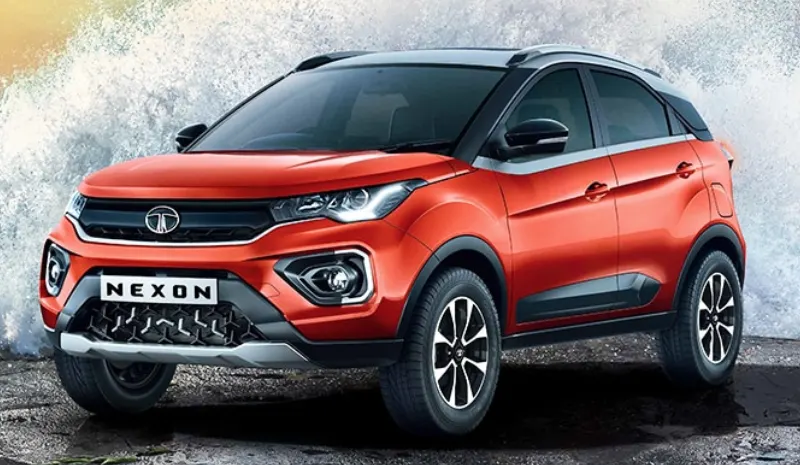
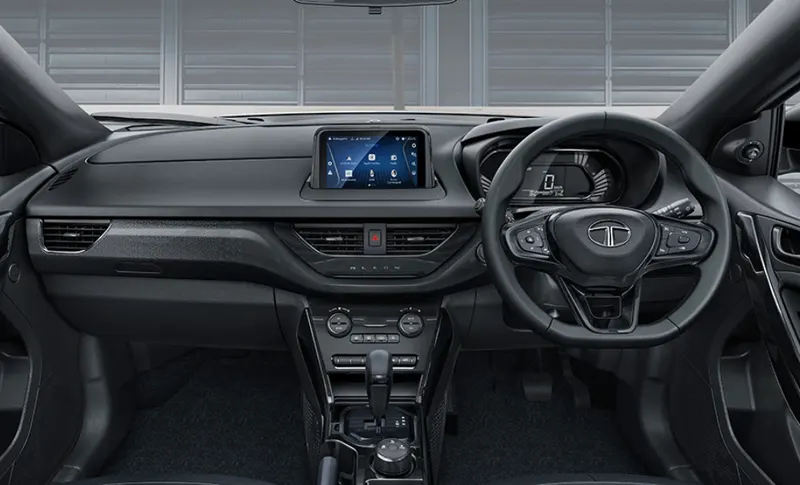
Tata Motors launched the facelifted Nexon with feature additions and Bharat stage 6-compliant engines in January 2020. The Nexon received major changes on the exterior, now based on the Impact 2.0 design language. The new vehicle is equipped with a Bharat Stage 6-compliant 1.5-litre turbocharged Revotorq diesel engine producing 81 kW (109 hp; 110 PS) and a 1.2-litre turbocharged Revotron petrol engine with 88 kW (118 hp; 120 PS). Nexon became the first ever car model sold in India to achieve the maximum five star rating for adult protection in the tests. The price of Tata Nexon starts at Rs. 7.55 Lakh and goes upto Rs. 13.90 Lakh.
Specification
ARAI Mileage 22.07 kmpl
City Mileage 18.5 kmpl
Fuel Type Diesel
Engine Displacement (cc) 1497
No. of cylinder 4
Max Power (bhp@rpm) 108.49bhp@4000rpm
Max Torque (nm@rpm) 260nm@1500-2750rpm
Seating Capacity 5
TransmissionType Automatic
Boot Space (Litres) 350
Fuel Tank Capacity 44.0
Body Type SUV
Ground Clearance Unladen 209
Service Cost (Avg. of 5 years) Rs.4,447
Good Things
- 5-star NCAP safety rating
- Spacious cabin with comfortable rear seats
- Comfortable ride quality
- Looks attractive and modern
Could be Better
- Engine refinement is lacking
- Infotainment system feels dated
2.Kia Sonet
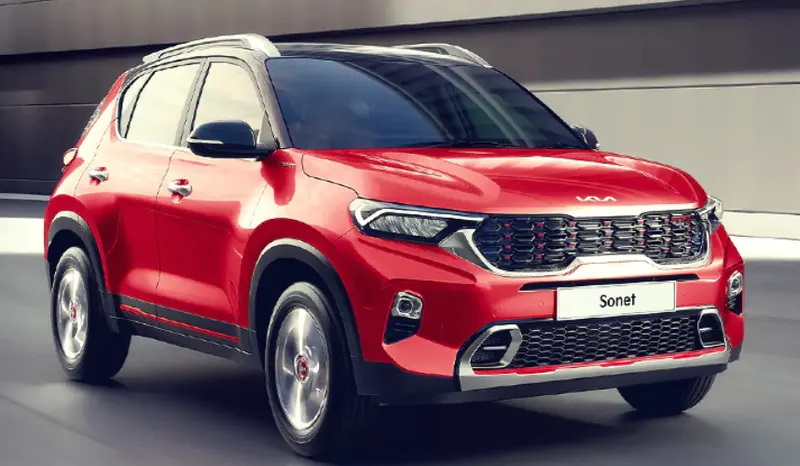
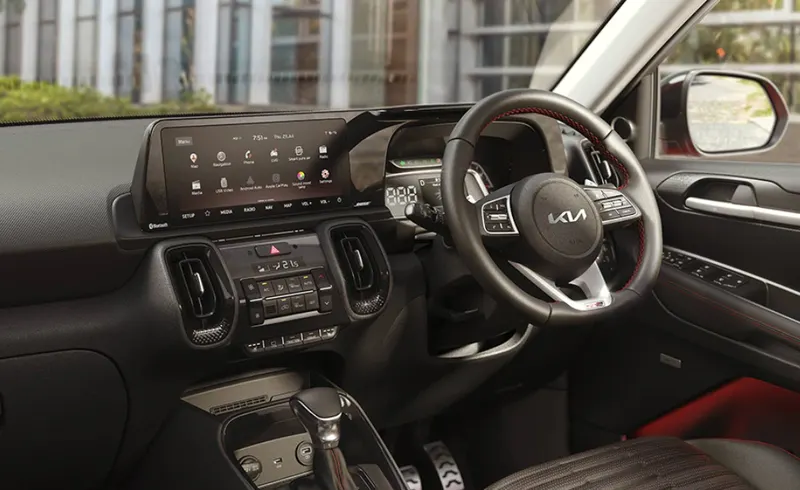
The Kia Sonet is a subcompact crossover SUV manufactured by Kia since 2020. Developed mainly for the Indian market, the Sonet is positioned below the Seltos and is closely related to the similarly-sized sibling Hyundai Venue. Kia claimed that the Sonet uses high strength steel structure that helps in reducing the impact of severe accidents. Some of its safety features for its top trims include six airbags, electronic stability control, anti-lock braking system, hill start assistance control, vehicle stability management system, speed alert system, electronic traction control, parking sensors, braking assistance and driver’s seat belts given with pre-tensioners. The price of Kia Sonet starts at Rs. 7.15 Lakh and goes upto Rs. 13.69 Lakh.
Specification
ARAI Mileage 20.00 kmpl
City Mileage 18.4 kmpl
Fuel Type Diesel
Engine Displacement (cc) 1493
No. of cylinder 4
Max Power (bhp@rpm) 113.43bhp@4000rpm
Max Torque (nm@rpm) 250nm@1500-2750rpm
Seating Capacity 5
TransmissionType Automatic
Boot Space (Litres) 392
Fuel Tank Capacity 45.0
Body Type SUV
Ground Clearance Unladen 250
Service Cost (Avg. of 5 years) Rs.3,980
Good Things
- Tall height and bonnet gives the Sonet a strong stance.
- Feature packed: ventilated seats, wireless charging, ambient lighting, Bose sound system and lots more.
- Proper automatic options: 7-speed DCT for the turbo-petrol, 6-speed AT for the diesel.
- Comfortable ride quality: equally adept at tackling bad roads and high-speed cruising.
Could be Better
- Limited rear-seat width limits usability as a 5-seater.
- Silly cost-cutting measures: backlight only for driver’s power window, missing chilled glovebox, adjustable front armrest.
- Automatic transmissions limited to mid-spec HTK+ and top-spec GTX+ variants only.
3.Hyundai Venue
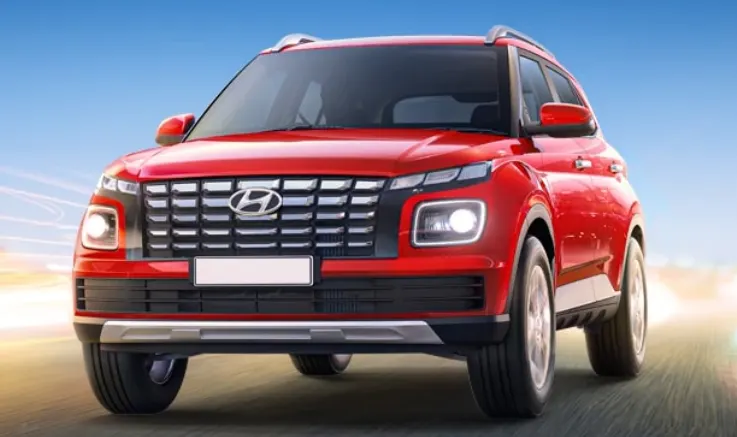
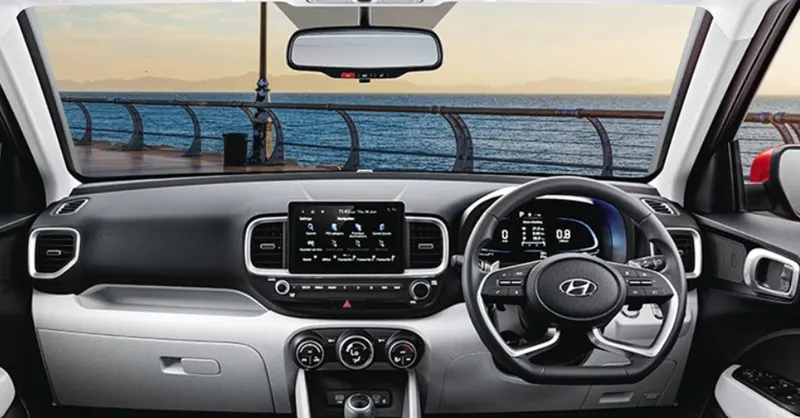
The Hyundai Venue is a subcompact crossover SUV manufactured by the South Korean manufacturer Hyundai. Derived from the platform of the Accent, it was Hyundai's smallest crossover globally prior to the introduction of the Casper. The 1.4-litre diesel engine which the Venue was originally launched with, was replaced by a 1.5-litre Bharat Stage 6-compliant diesel engine in March 2020. The larger engine produces 100 PS and 240 Nm of torque, which is 10 hp and 20 Nm more than the 1.4-litre engine's output. The 1.5-litre diesel engine is paired with a 6-speed manual transmission. In 2021, the IIHS awarded the Hyundai Venue a Top Safety Pick Key award, and NHTSA has rated it with four stars for safety. Those safety features include six airbags, electronic stability control system, vehicle stability management system, forward collision warning alarm, pedestrian detection warning alarm, blind-spot detection, and rear cross-traffic assistance. The price of Hyundai Venue starts at Rs. 7.53 Lakh and goes upto Rs. 12.72 Lakh.
Specification
City Mileage 16.0 kmpl
Fuel Type Petrol
Engine Displacement (cc) 998
No. of cylinder 4
Max Power (bhp@rpm) 118.41bhp@6000rpm
Max Torque (nm@rpm) 172Nm@1500-4000rpm
Seating Capacity 5
TransmissionType Automatic
Fuel Tank Capacity 45.0
Body Type SUV
Ground Clearance Unladen 250
Good Things
- Updated styling makes the Venue look more butch and upmarket.
- Dual-tone interior is classy, good quality of materials in the cabin too.
- Powered driver's seat, Alexa/Google Home connectivity, Digital driver’s display added to an already expansive feature list.
- 2 Petrol, 1.5 Diesel, 1.0 Turbo - plenty of engine options to choose from.
Could be Better
- No diesel automatic or CNG powertrain on offer.
- Narrow cabin means the Venue is still best suited for four.
- Silly feature omissions like auto day/night IRVM and powered seat height adjustment
4.Maruti Brezza
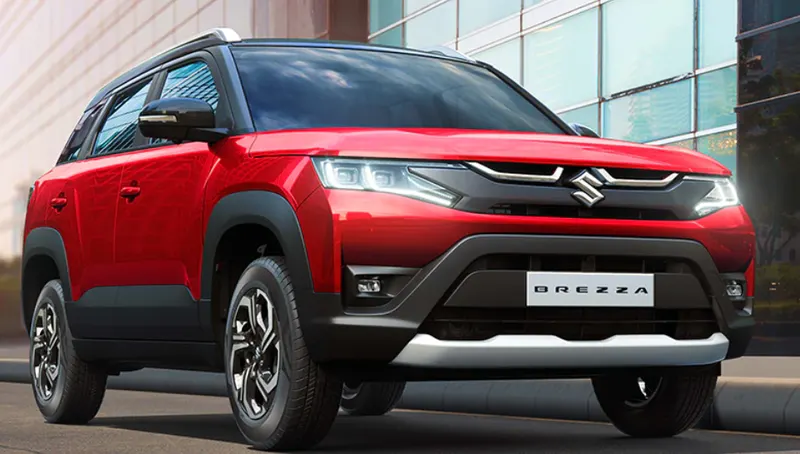
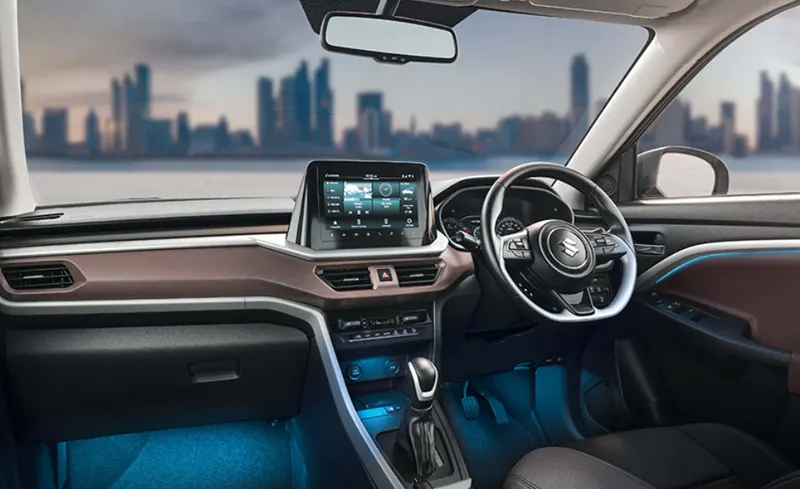
The Maruti Brezza is a subcompact crossover SUV from Suzuki and manufactured by Maruti Suzuki in India. The Brezza is the first Suzuki-branded car which was fully developed in India. The first-generation model was also marketed by Toyota as the Toyota Urban Cruiser since 2020. The vehicle retained the body shell platform of previous generation with major revisions. It came with revised front and rear fascia, redesigned C-pillar, thicker body claddings, redesigned 16-inch alloy wheels, shark fin-type antenna and electric sunroof. The dimensions are also nearly identical to the outgoing model, except for the 45 mm height increase due to the shark fin antenna. On the interior, the dashboard received a layered design with floating car audio display, along with redesigned steering wheel and instrument cluster, wider rear bench seat, and addition of wireless charging dock, interior ambient lighting and rear AC vents. Electronic Stability Program (ESP) and Hill-Start Assist (HSA) are standard across the lineup, with six airbags also standard for the flagship ZXi+ grade. The price of Maruti Brezza starts at Rs. 7.84 Lakh and goes upto Rs. 11.49 Lakh.
Specification
ARAI Mileage 17.03 kmpl
City Mileage 17.3 kmpl
Fuel Type Petrol
Engine Displacement (cc) 1462
No. of cylinder 4
Max Power (bhp@rpm) 103.26bhp@6000rpm
Max Torque (nm@rpm) 138nm@4400rpm
Seating Capacity 5
TransmissionType Manual
Boot Space (Litres) 328
Fuel Tank Capacity 48.0
Body Type SUV
Good Things
- Smooth petrol engine is relaxing and fun!
- Comfortable ride quality. Tackles bumps, potholes much better.
- Spacious cabin for a family of five. Ample boot space too.
Could be Better
- Old-school 4-speed automatic feels slow on inclines and highways.
- Missing features: sunroof, rear-AC vents, side and curtain airbags.
- No option of a diesel engine.
5.Mahindra XUV300
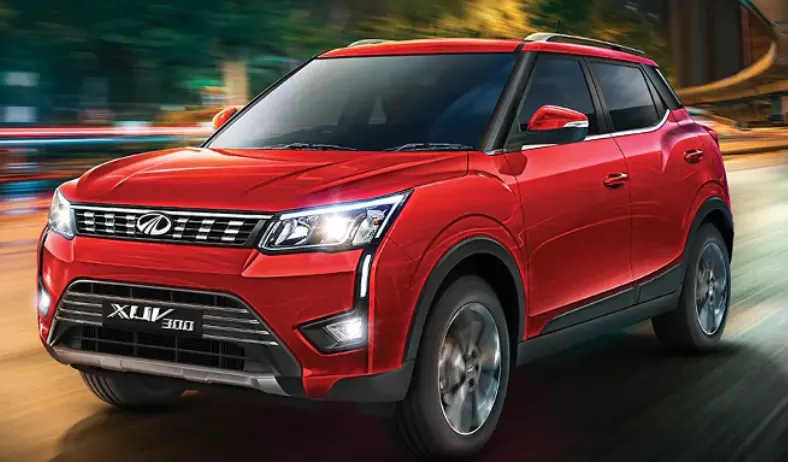
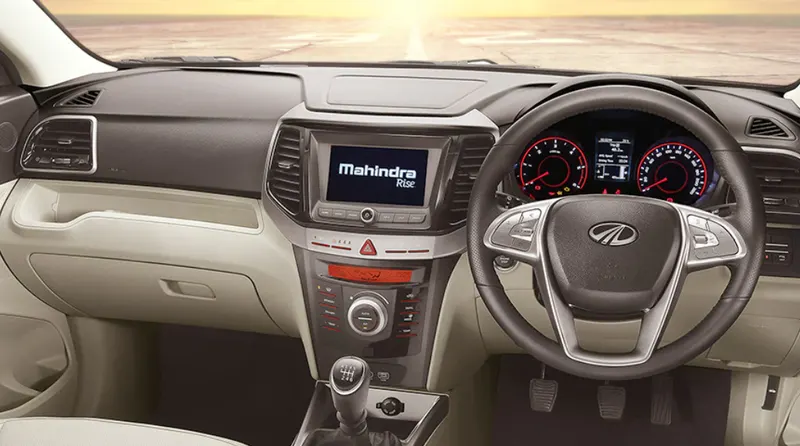
The Mahindra XUV300 is a subcompact crossover SUV produced by the Indian automaker Mahindra & Mahindra. The XUV300 is powered by a 1.2-litre 3-cylinder petrol engine and a 1.5-litre 4-cylinder diesel engine with 6-speed manual transmission. A 6-speed automatic variant is also now available. The Mahindra XUV300 was tested in its most basic safety specification of 2 airbags and standard ISOFIX anchorages. It scored 5 stars for adult occupant protection and 4 stars for child occupant protection, scoring the highest combined rating for any Indian car tested yet and the first four-star child safety rating. Its structure was deemed to be capable of higher loading. It is also the first five-star rated car to offer side and curtain airbags as an option. It offers side, curtain and knee airbags only as an option on all variants. The price of Mahindra XUV300 starts at Rs. 8.41 Lakh and goes upto Rs. 14.07 Lakh.
Specification
ARAI Mileage 20.0 kmpl
City Mileage 20.0 kmpl
Fuel Type Diesel
Engine Displacement (cc) 1497
No. of cylinder 4
Max Power (bhp@rpm) 115bhp@3750rpm
Max Torque (nm@rpm) 300Nm@1500-2500rpm
Seating Capacity 5
TransmissionType Automatic
Boot Space (Litres) 259
Fuel Tank Capacity 42.0
Body Type SUV
Ground Clearance Unladen 180
Good Things
- Comfortable even over bad roads.
- Feels premium because of class-leading safety and convenience features.
- Stable and fun to drive because of steering and good grip.
- Overtaking on highways easy, thanks to punchy diesel engine.
Could be Better
- Premium experience let down by quality issues like poorly fitting panels, mushy switches and flimsy stalks.
- Small boot will be a hassle if it’s the only car in the family.
- Cramped footwell, no space for dead pedal for driver
- Not the most spacious or comfortable backseat in the class
CONCLUSION
Based On the requirement, that is Passenger Capacity being 5. The monthly travel to Madurai is 500kms. All the above-Compared cars are considered for long-distance travel and for 5 seat capacity. For regular Office use and family-friendly(In terms of Safety), Tata Nexon and XUV 300 are very good in Safety and hold the record of 5 stars in terms of Safety by NCAP. But Mahindra XUV300 has less boot space, less ground clearance, less mileage, higher in price.
In that, Tata Nexon XE is satisfying all the requirements.TATA Nexon has Good engine performance, good mileage of 22.4 kmpl, great ground clerance for off road driving, good boot space to carry luggage, good rating in NCAP crash test and awarded as Indias safest car within this Suv segment and it's within the clients budget.