Assignment 7-Side Pole Crash Simulation Challenge
Question:
Neon side crash -BIW
- Check unit system and either follow [Mg mm s] or [Kg mm ms].
- Create appropriate interface ,friction 0.2 and recommended parameters.
- Make sure of no penetration and intersections.
- Create rigid wall with friction 0.1 as per referance model.
- Compare the model weight with the referance model and use added masses to reach target weight 700kg while getting CG about the required range.
- Initial velocity as shown in picture.
- Use model checker to ensure good quality.
- Timestep :0.5 to 0.1 microseconds.
- Run 80ms.
Output requests:
- Sectional force in the cross member.
- Intrusion at B pillar,hinge pillar and fuel tank region.Provide recommendation on what can help to reduce Fuel tank intrusion.
- Peak velocity of inner node of the door.
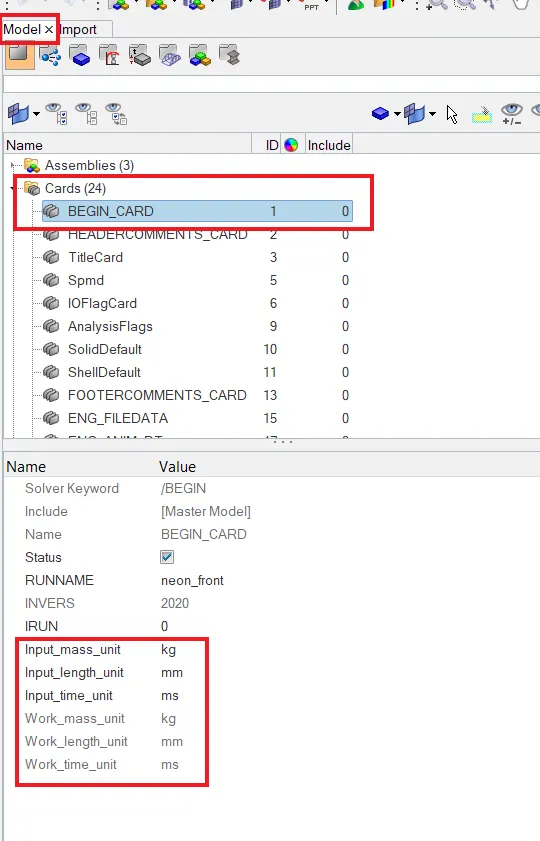
Objective 1: Check unit system and either follow[Mg mm s] or [Kg mm ms].
Checking Unit system of model:
Model Browser >> Cards >> Begin_Card
Objective 2: Create appropriate interface ,friction 0.2 and recommended parameters.
Model Browser >> Groups >> Create group >> (name)
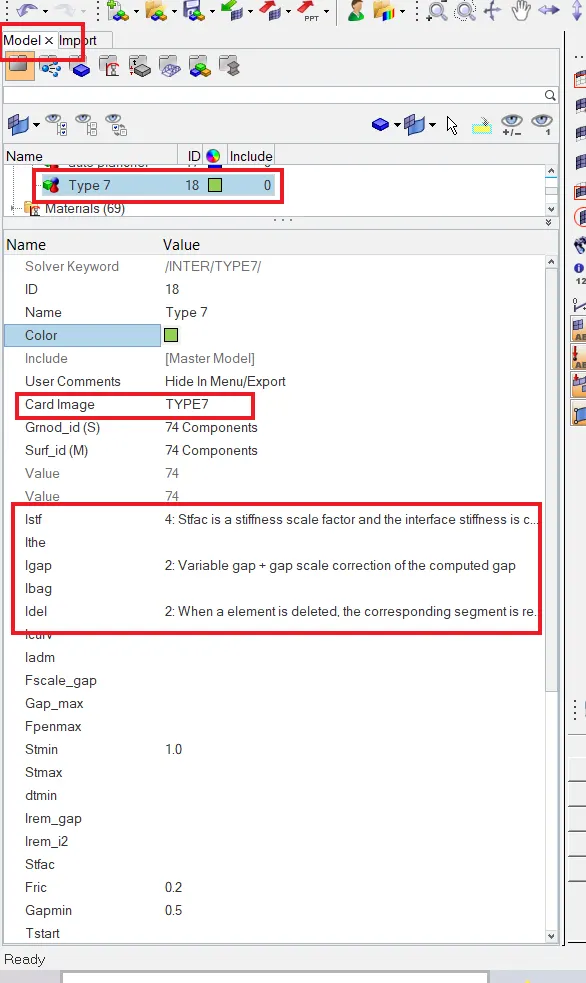
- The friction(Fric) is set to 0.2 as given.
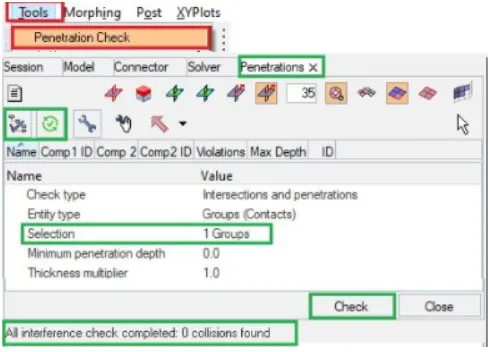
Objective 3: Make sure of no penetrations and intersection.
Menu >> Tools >> Penetration Check
Objective 4: Create rigid wall with friction 0.1.
Menu >> Tools >> Create Card >> RWALL >> PLANE
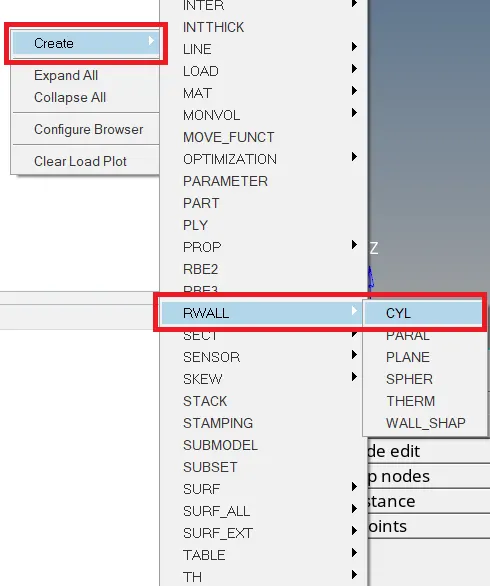
>> Place the RWALL at required location.
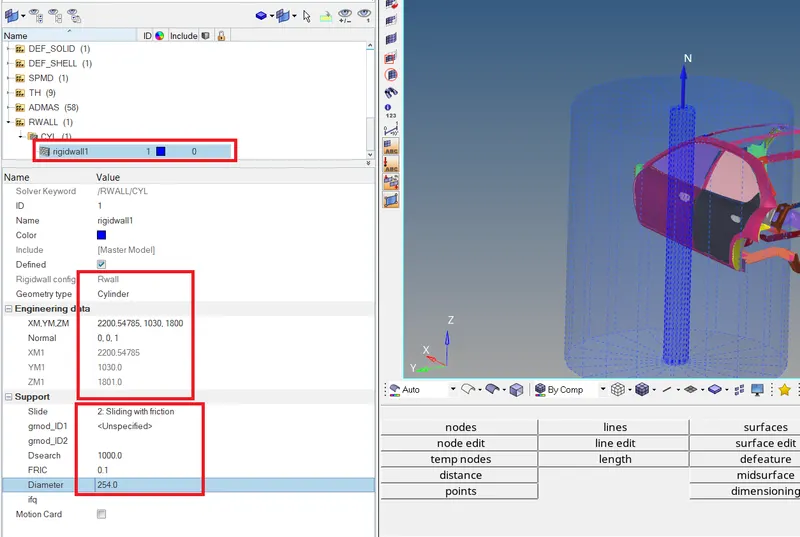
- Location is set and friction is also set to 0.1 as required.
Objective 5: Adding masses to reach target weight 700kg while getting CG about the required range.
>> Check Mass summary to see mass, COG.
Menu >> Tools >> Mass Details >> Mass, Cog and inertia
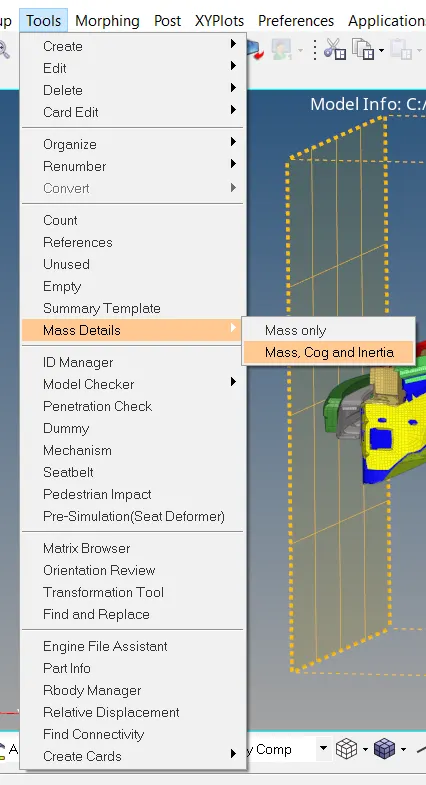
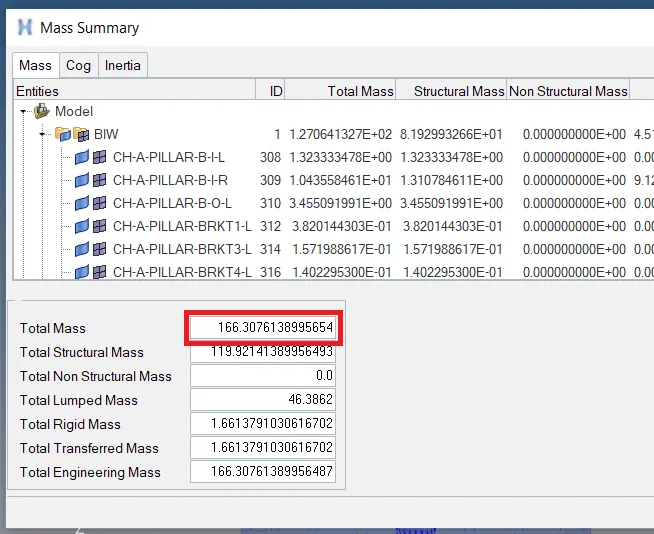
- We see that the mass is less than 700 kg.
>> GRNODE is created to add mass
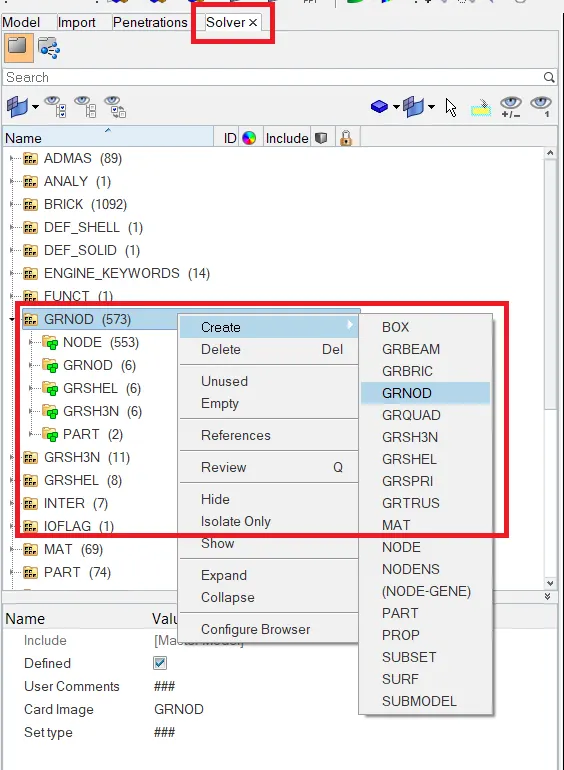
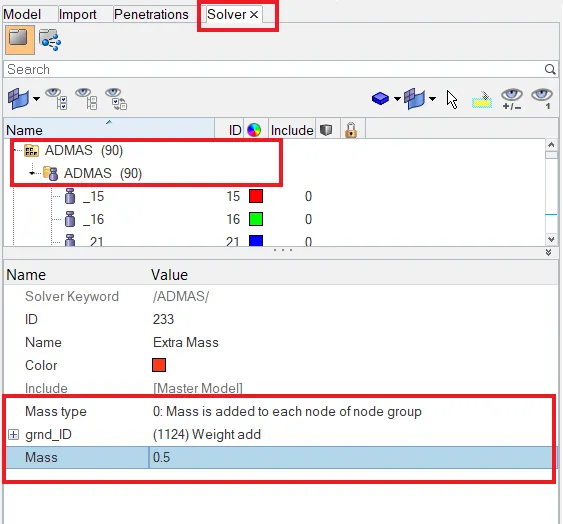
- On the selected nodes point mass of 0.5 is added for all the nodes.
Final Mass and COG check:
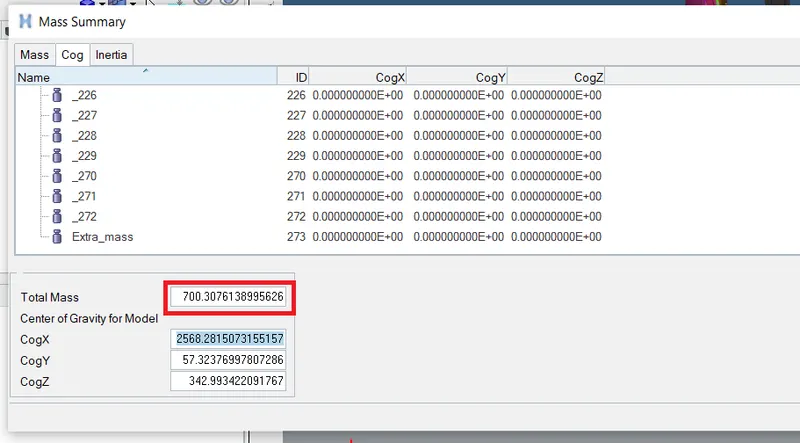
- As required the mass and cog is brought to necessary requirements.
Objective 6: Adding Initial velocity 35 mph.
Solver >> Create >> Boundary Condition >> IMIVEL
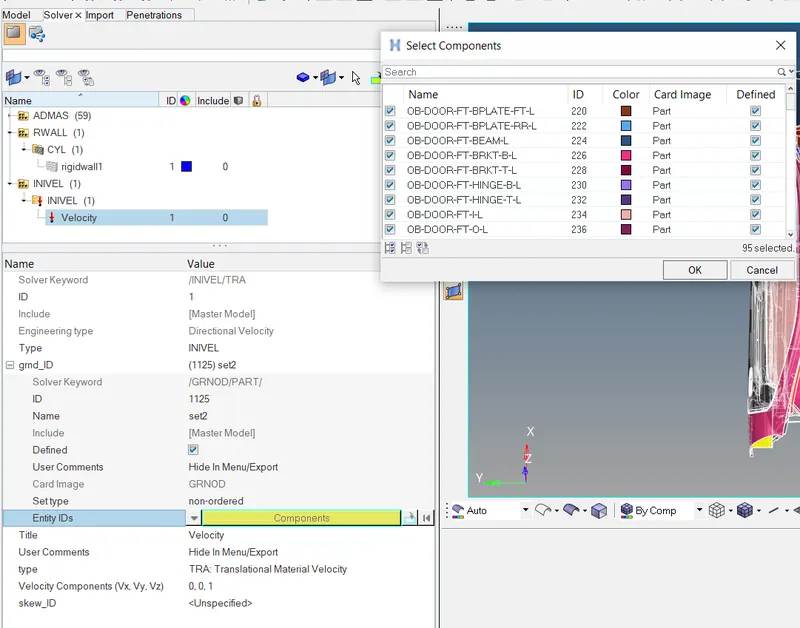
- IMIVEL is created.
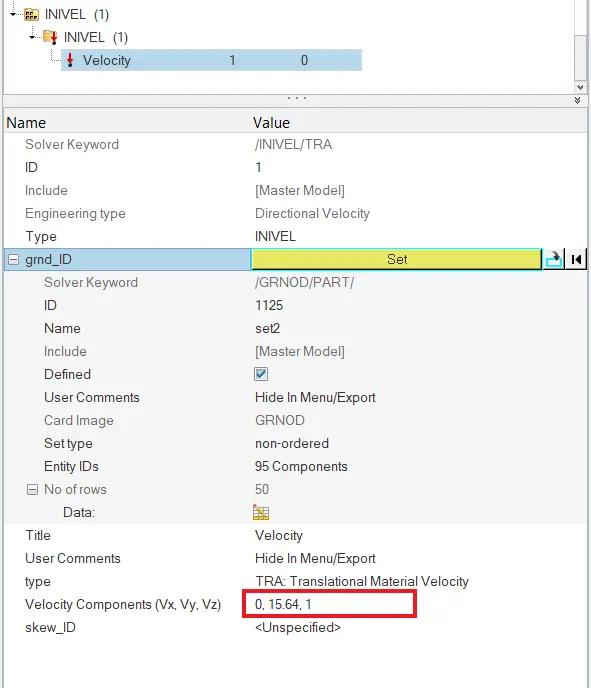
- 30 Mph is converted to mm/ms and assigned.
Objective 7: Time-step :0.5 to 0.1 microseconds.
Model >> Cards >> ENG_ANIM_DT
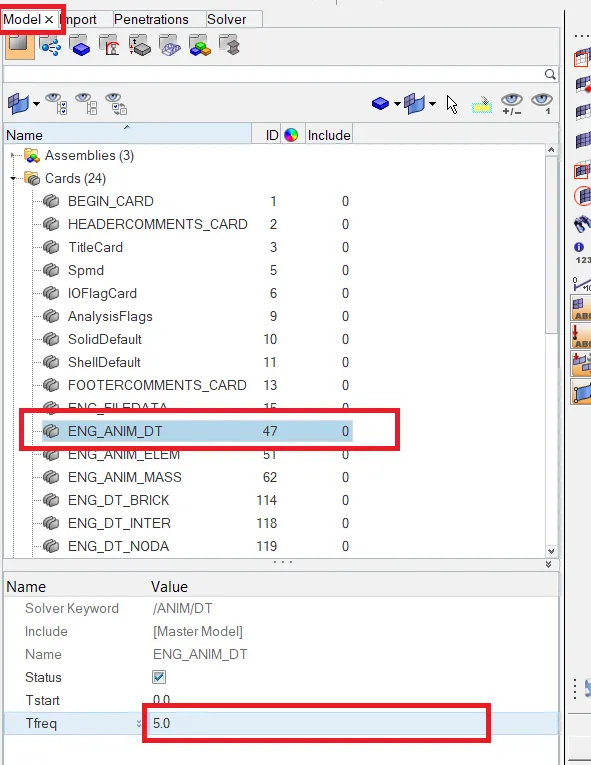
- Time step set to 0.5.
Objective 8: Run Time to 80 ms.
Model >> ENG_RUN >
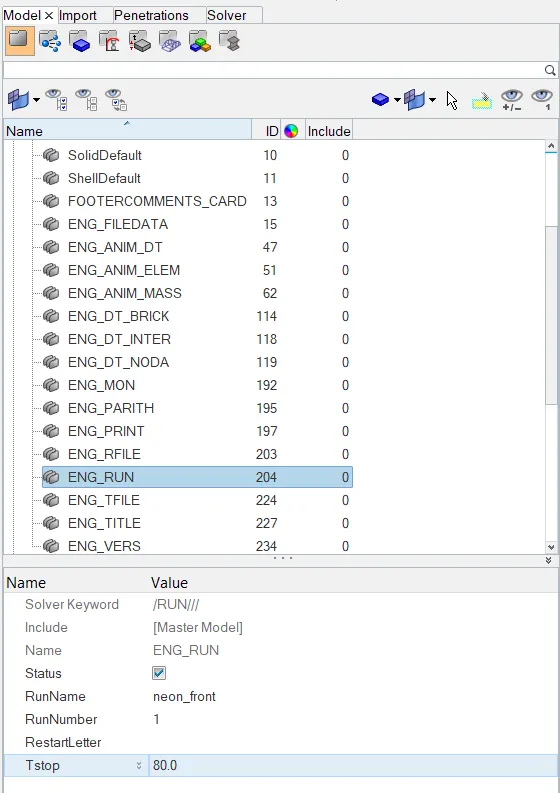
- Run time is set to 80ms.
Output requests:
Request 1: Sectional force in the cross member.
Creating FRAME >> MOV
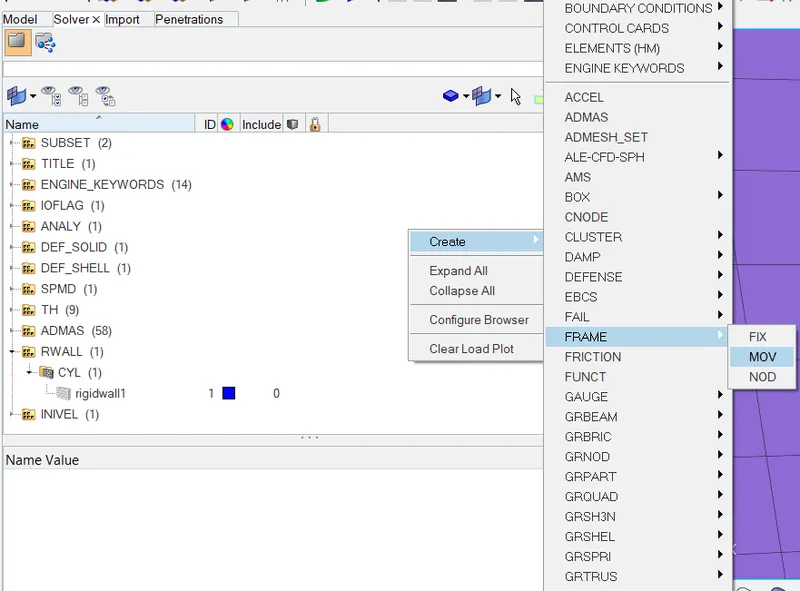
- Create a FRAME.
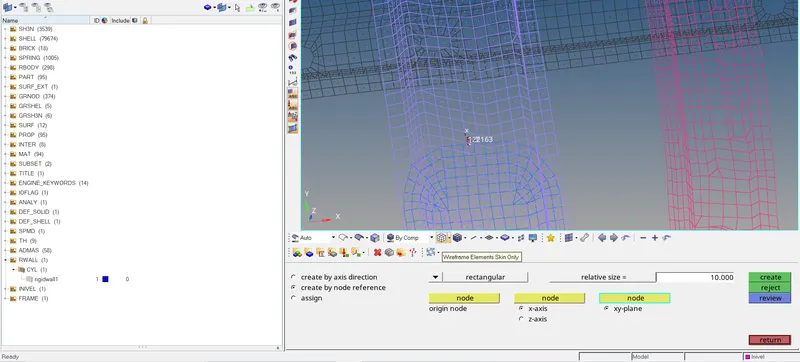
- Selection of nodes is done to create the MOV system
Creating SECT >> SECT
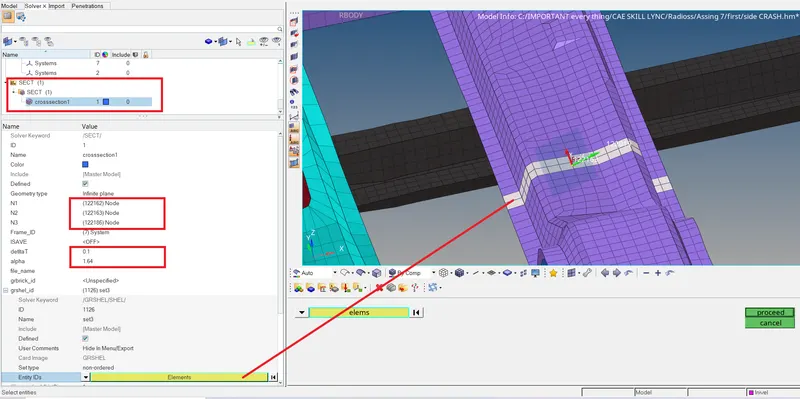
- These elements are selected for the force passing through the section.
Giving Output Request to Model Browser:
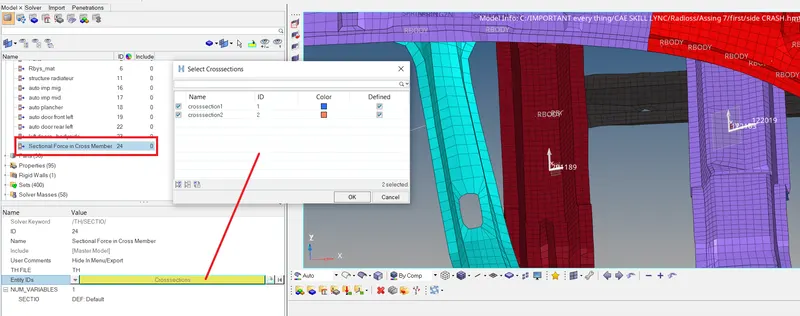
Request 2: Intrusion at B pillar,hinge pillar and fuel tank region.Provide recommendation on what can help to reduce Fuel tank intrusion.
Creation of Skew at Fuel Tank:
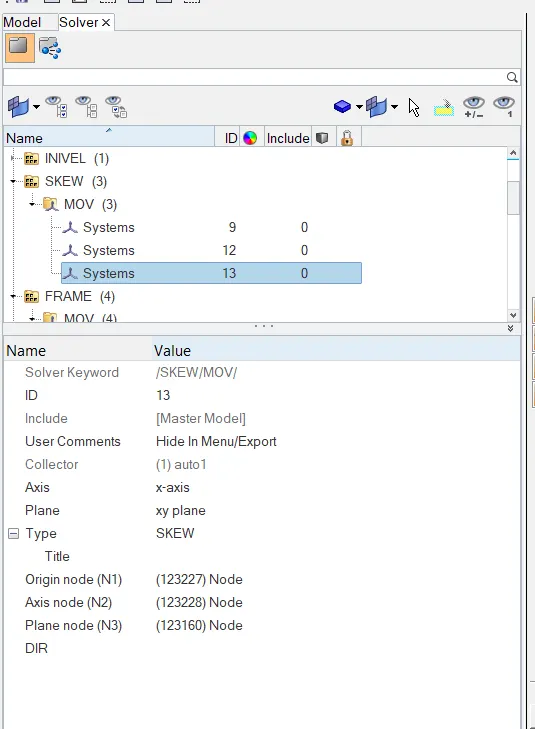
- Creating new MOV collector in SKEW card
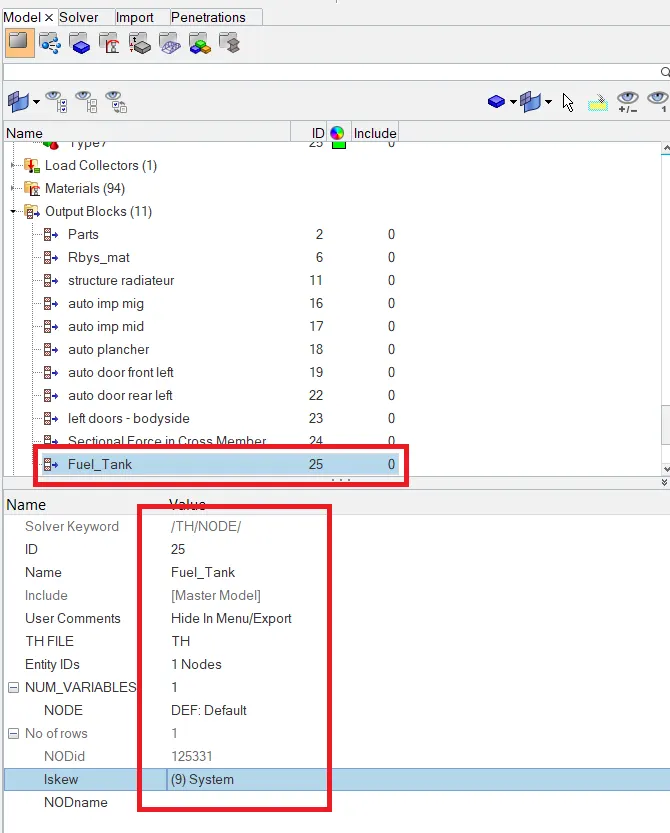
- Giving Output request for the Fuel Tank.
Creation of Skew at B-Pillar:
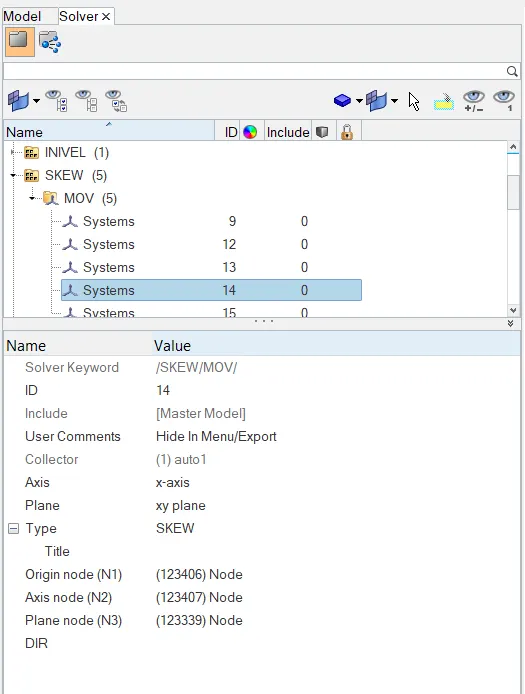
- Creating new MOV collector in SKEW card
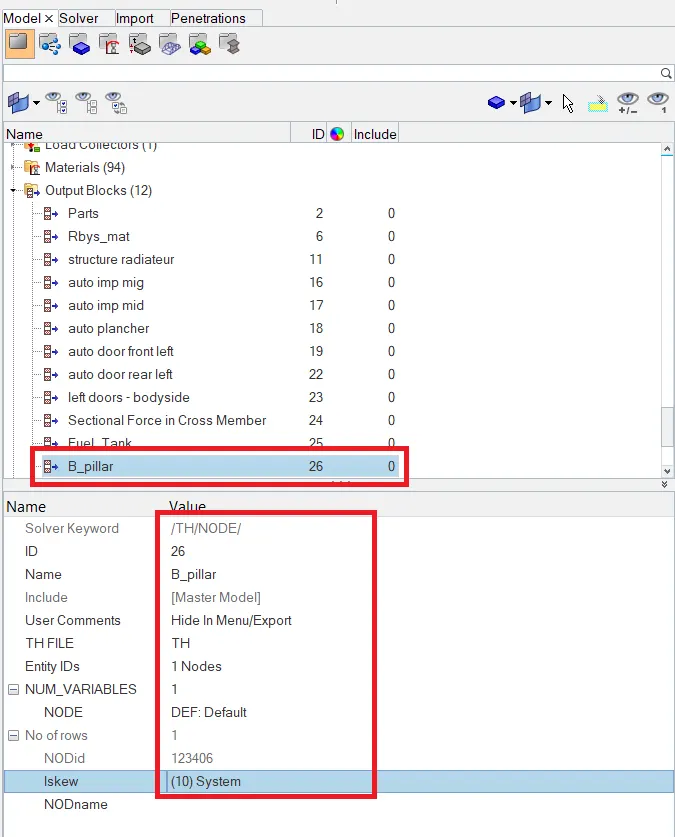
- Giving Output request for the B-Pillar.
Creation of Skew at Hinge pillar:
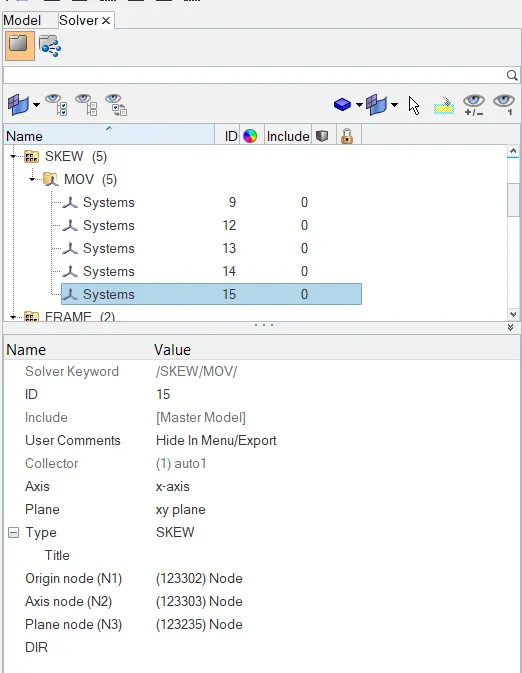
- Creating new MOV collector in SKEW card
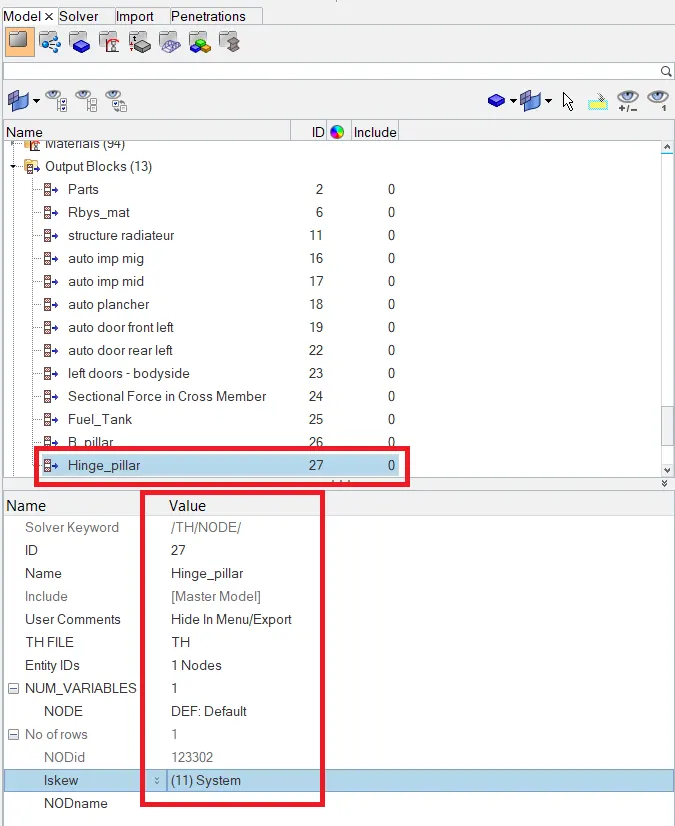
- Giving Output request for the Hinge Pillar.
Request 3: Peak velocity of inner node of the door.
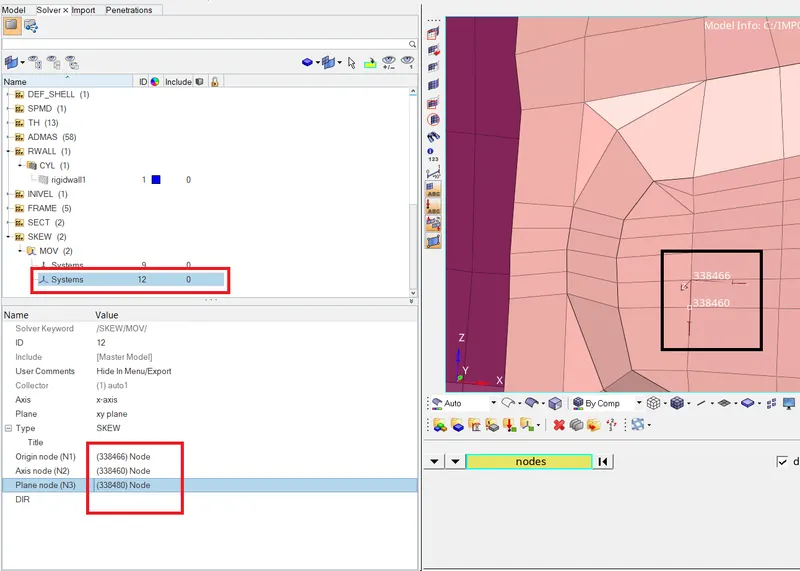
- Creating a new local coordinate in SKEW for velocity.
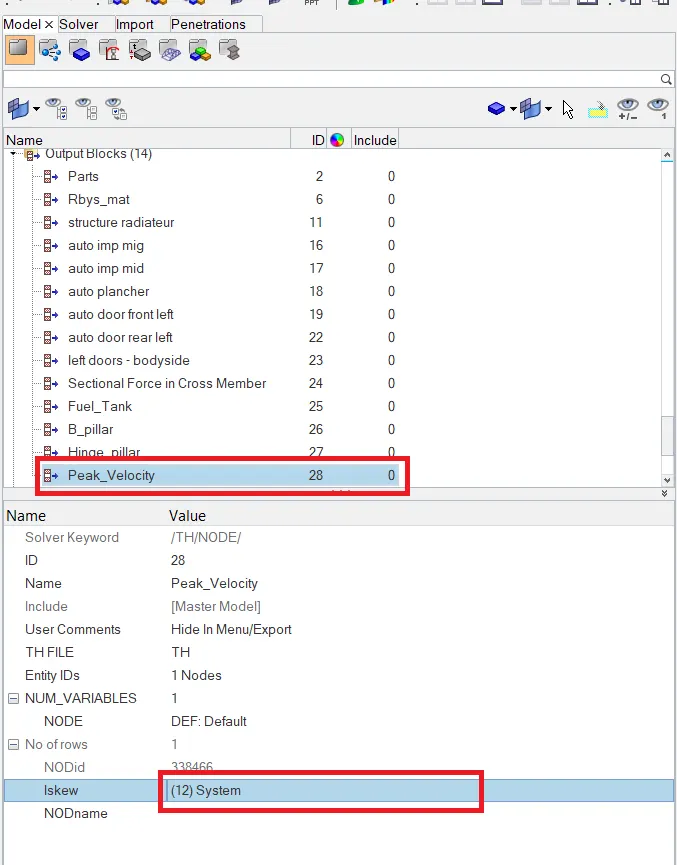
- Giving Output required for Peak Velocity.
SIMULATION OH THE FRONTAL CRASH:
Step 1: Open Hypermesh Radioss Solver
Step 2: Analysis >> Radioss >> Enter required file location and set up and click Radioss for the simulation to precess.
Step 3: Open new tab to Hyper view.
Step 4: Select the .h3d file created by the simulation for results.
RESULTS:
Hypergraph 2D >> select _T01 type file to plot graphs.
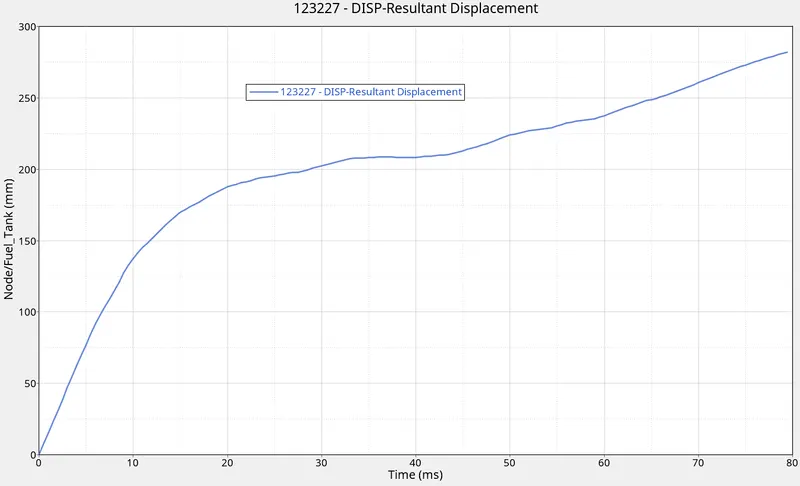
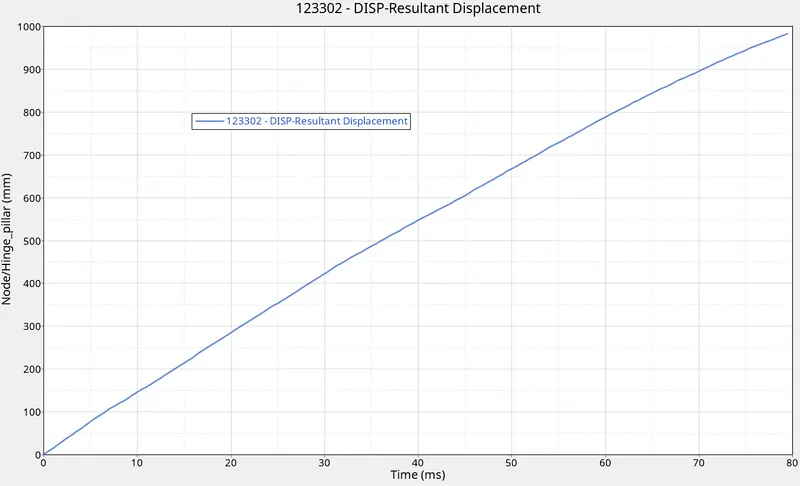
Fuel Tank
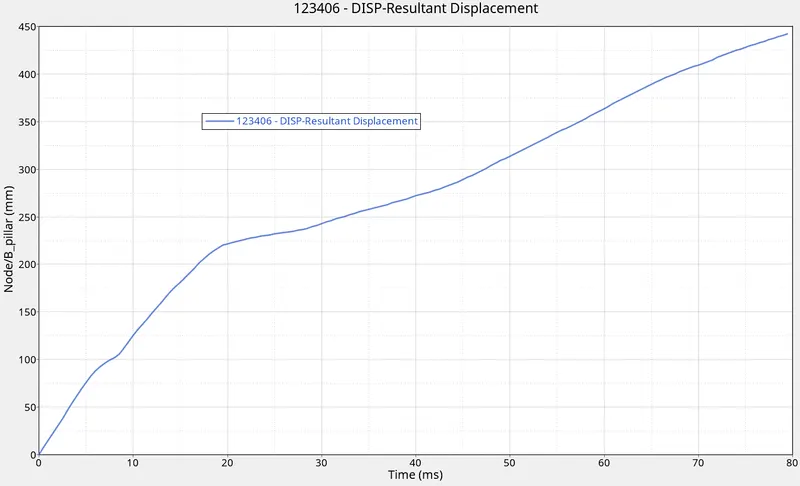
B Pillar
Hinge Pillar
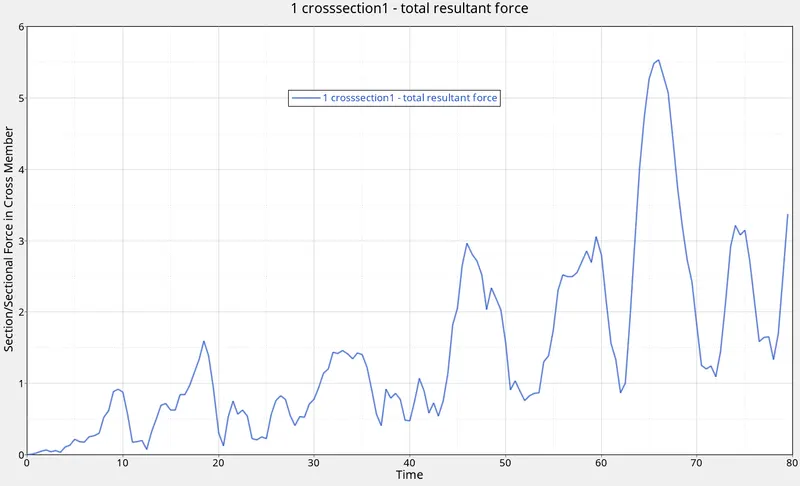
Cross Section 1
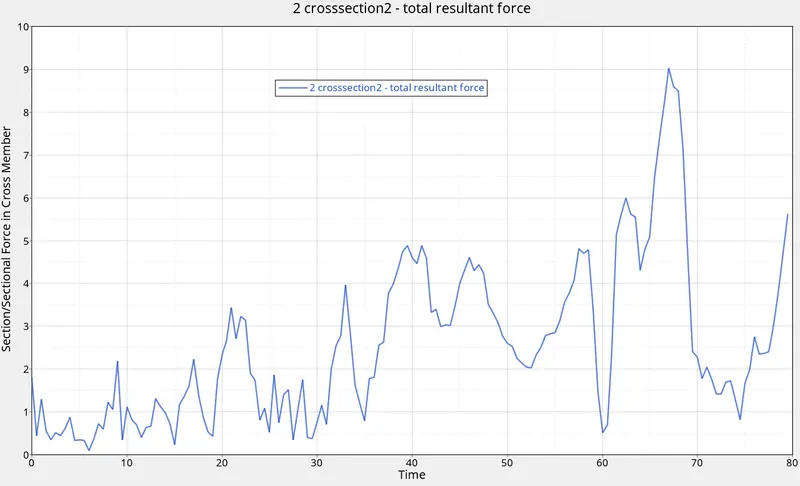
Cross Section 2
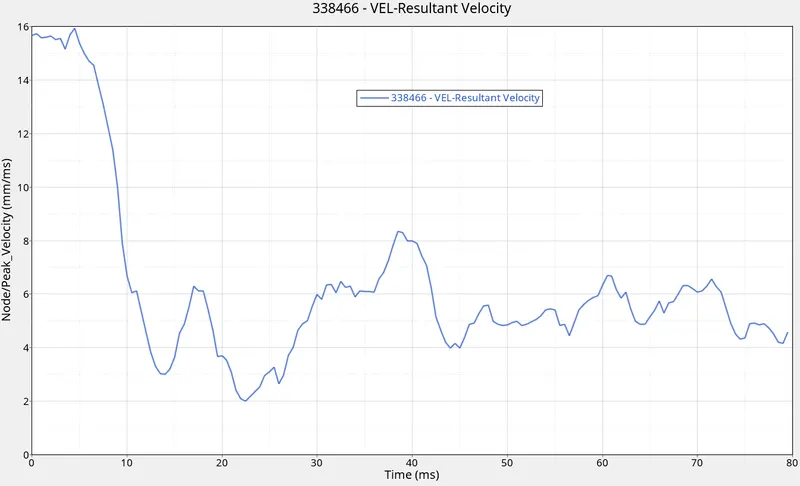
Peak Velocity in the inner of the Door:
Energy Graph:
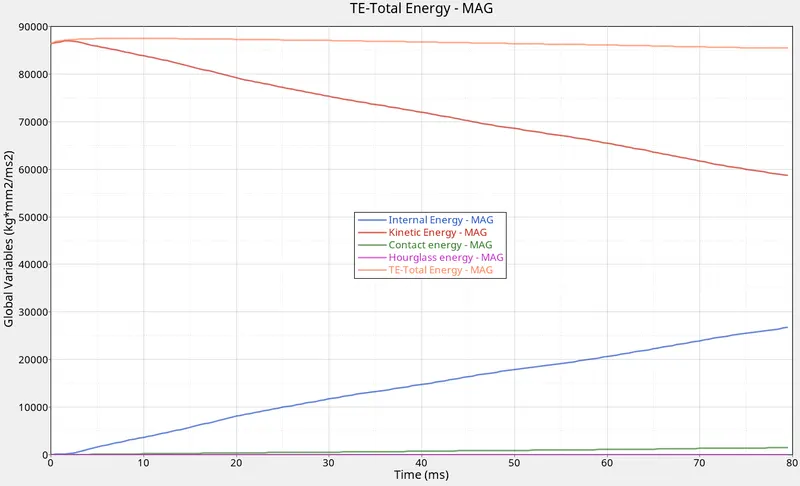
The Output file shows us the number of cycle, Energy error and Mass error
Number of Cycles: 80001
Energy Error: -3.2%
Mass Error: 1.08%
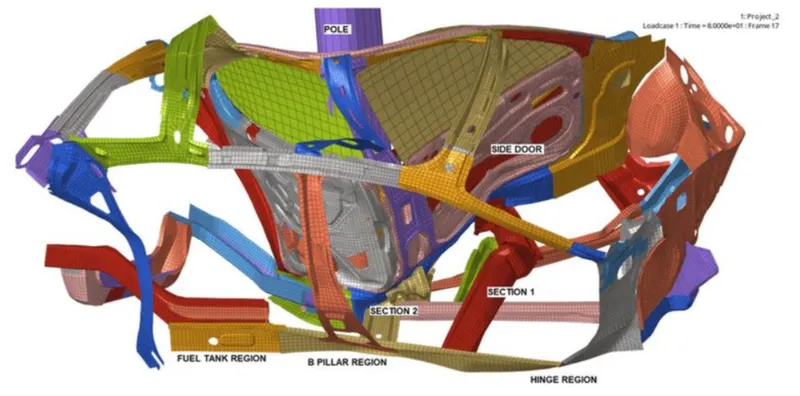
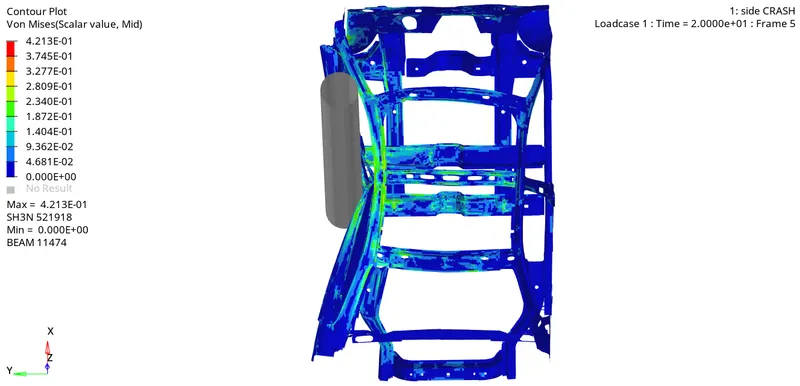
We saw that the most deformation took in the place in the middle pillar area and the stress is then passed to the components attached to it.
We can observe that the impact of the crash is mostly middle pillar of side door which is the seating area of the driver and passenger behind the driver will be the most impacted which can cause major injury to them.
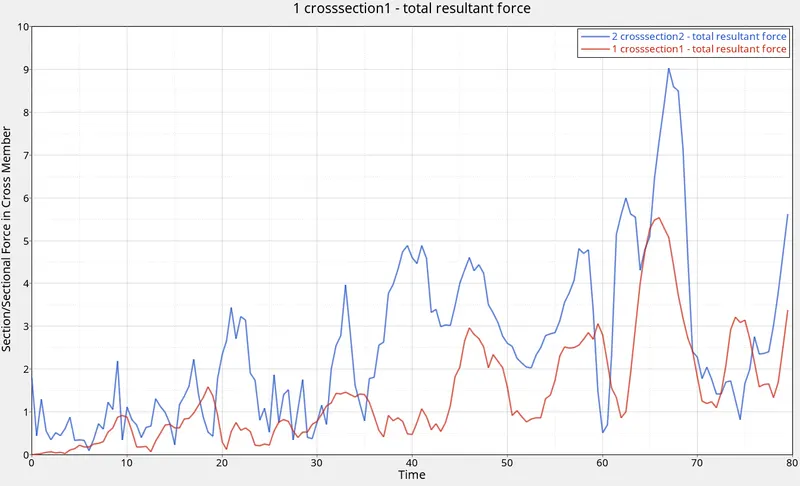
- The resultant force in the section which was right below the B-pillar Cross section 2 has gone into more deformation value near to 9 after the side body get hit with pole whereas Cross section 1 has gone less deformation as compare to section 2 value near to 6.
- The peak velocity of the impact peaked at 16 mm/ms and decreased as the car hit the pole.
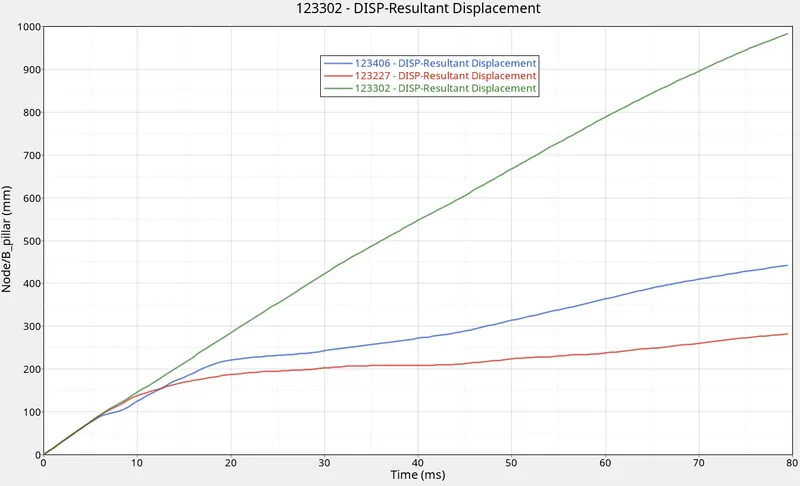
- From the graph that hinge region has more deformation as compared to both B-pillar and fuel tank region.
- The hinge has gone up to 1000mm deformation, whereas B-pillar deformed abut 400mm and Fuel tank region took about 300mm deformation.
What Learned?
Type 7: Type 7 card is used to simulate all types of impact between a set of nodes and master surface. Main advantage of type 7 is stiffness is not constant and increases with the penetration preventing the node from going through the shell midsurface.
Istf 4: Stfac and stiffness is computed from both master and slave characteristics.
Igap 2: variable gap gap scale correction of the computed gap.
Idel 2: When a 4-node shell, a 3-node shell or a solid element is deleted, the corresponding segment is removed from the master side of the interface. It is also removed in case of explicit deletion using Radioss Engine keyword /DEL in the Engine file.
Additionally, non connected nodes are removed from the slave side of the interface:
Stmin 1: minimum stiffness (N/M):
GAPmin: Minimum gap for impact activation.
Inacti 6: Gap is variable with time but initial penetration is computed.
Iform 2: Stiffness (incremental) formulation.
Center of Gravity: The center of gravity (COG) of an object is the point at which weight is evenly dispersed and all sides in balance.
Rigid Cylinder: Rigid cylinder is created in the HyperMesh where the car is going to make collisions. Penetration: There should not be any penetration because nodes get penetrated in the element and cause failure in
Peak Velocity: It is the highest velocity attained during the impact of the side body (object) at a particular time.