COMPARISON OF DIFFERENT MATERIAL MODELS BY CONSIDERING THE RESULT OF THE SIMULATIONS
COMPARISON OF DIFFERENT MATERIAL MODELS BY CONSIDERING THE RESULT OF THE SIMULATIONS
AIM:
To assign the different material models for the given geometry depending on the cases mentioned and to compare the corresponding result of the model with respect to the following parameters.

PROCEDURE AND RESULT:
CASE-1 (LAW 2 JOHNSON COOK MATERIAL WITH FAILURE MODEL)
Run the simulation for the given model without changing any parameters. Simulate for Von mises stress, Displacement and Plastic strain along thickness.
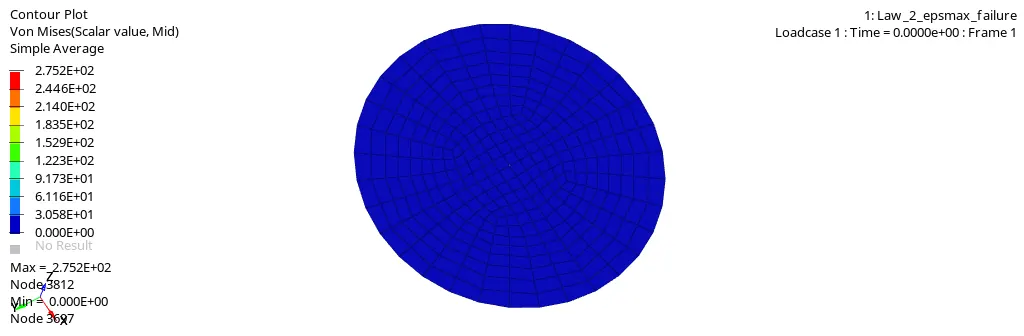
Simulation: Von Misese stress
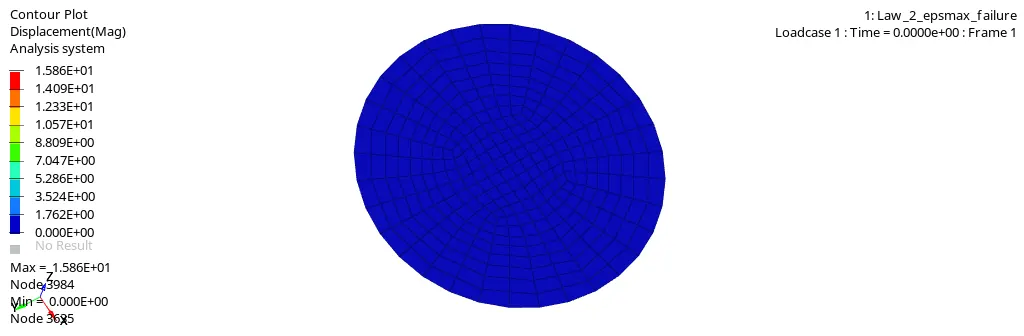
Simulation: Displacement
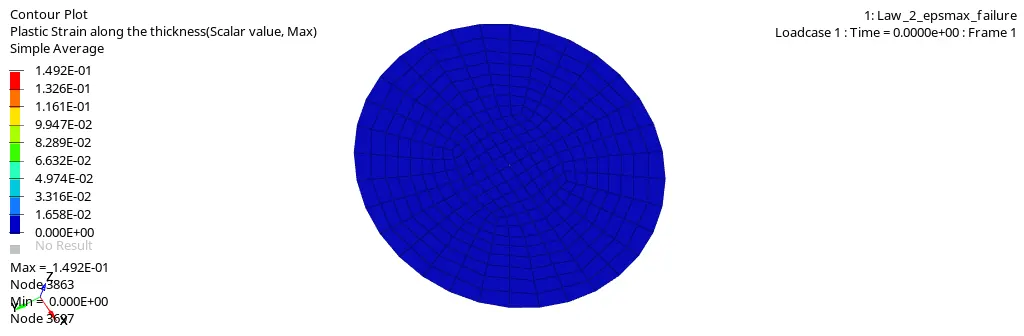
Simulation: Plastic strain along Thickness
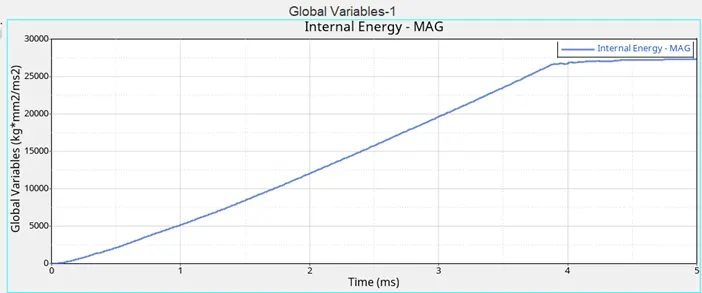
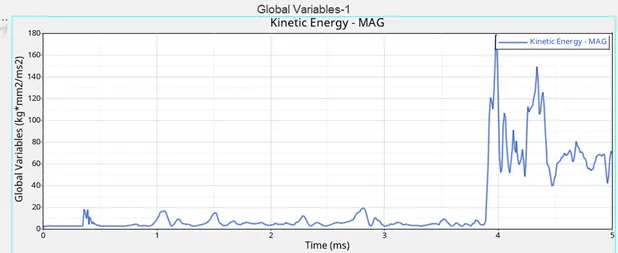
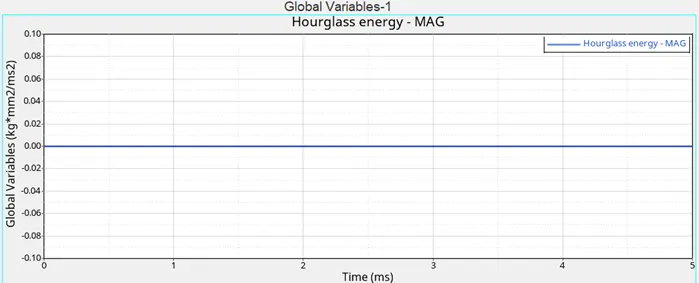
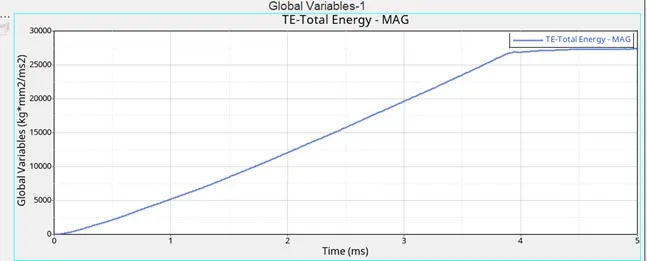
Graphs: Internal energy, Kinetic energy, Hourglass energy and Total energy.
By the simulation results for Law-2 Johnon cook material with failure model the following results were obtained.
Maximum von mises stress - 275.2 kg/mm^2
Maximum displacement - 15.86mm
Plastci strain along thickness - 0.1492.
No. of cycle - 49379
Energy error - -0.6% min to 1.3% max.
Mass error - 0.00
By comparing the graph the internal energy goes on increaing as the force increses and kinetic enegy increses linearly till one of the elements reaches its maximum value and becomes constant. The total enegy is similar to the internal energy and no Hourglass energy is generated since the errors are in the acceptable limit.
In the simulation the elements got deleted since ixfem value is kept at 0 and the strain values are at lower rate since the eps P max is set to 15.1% (0.151) and when the strain reaches the 15% and above the elements will be deleted and failure occurs.
CASE -2 (LAW 2 JOHNSON COOK WITH MODIFIED FAILURE PARAMETRS)
Change the Failure parameters like Ifail_sh = 1, Dadv = 1 & Ixfem = 1 and run the model.
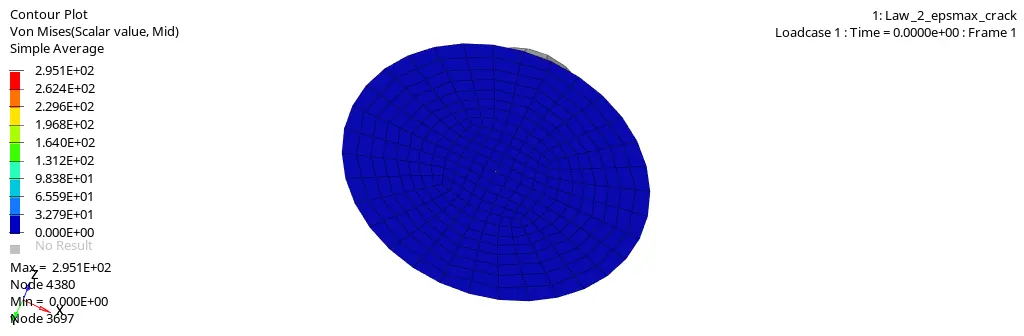
Simulation: Von Misese stress
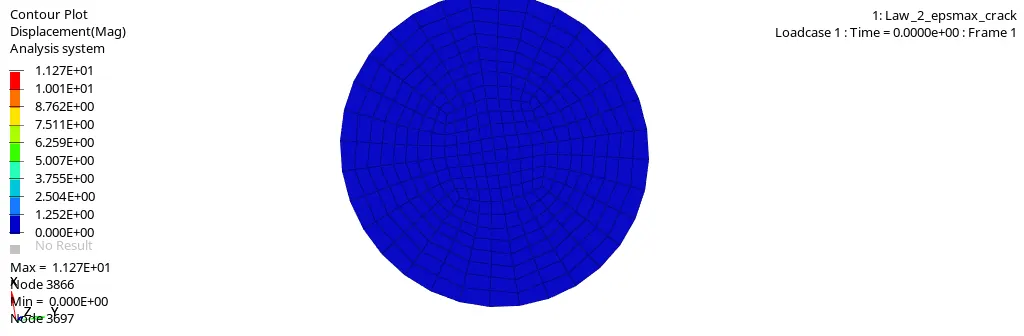
Simulation: Displacement
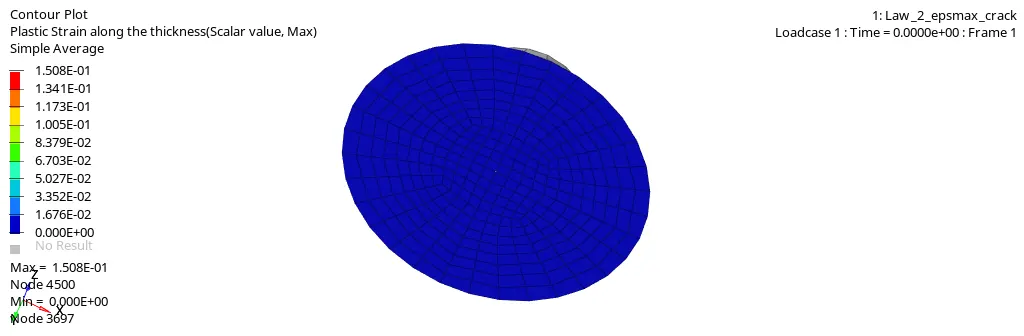
Simulation: Plastic strain along Thickness
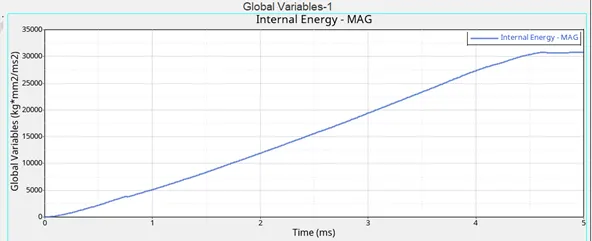
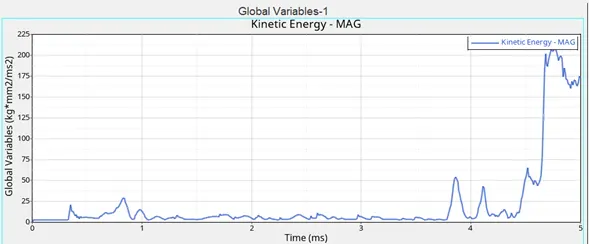
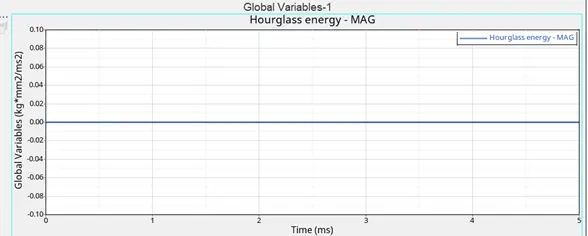
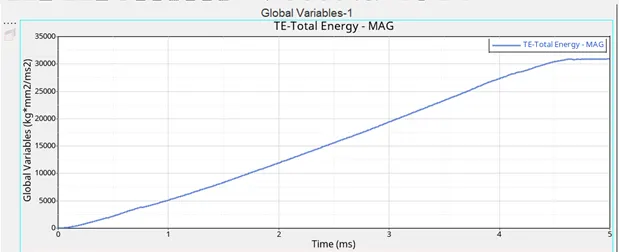
Graphs: Internal energy, Kinetic energy, Hourglass energy and Total energy.
The results for Law 2 Johnson cook material with modified failure parameters were found to be as follows.
Max. Von mises stress - 295.1 kg/ mm^2
Max. displacement - 11.27mm
Max. Plastic strain along thickness - 0.1508
No. of cycles - 49216
Energy error - -1.1% min to 5.3% max.
Mass error - 0.00
The failed elements got deleted but also the crack propagation and directions can be visible from the simulation since ixfem changed to 1 and the Eps_pmax is set to 15.1% above which the element is going to fail.
There is a similarities in Total energy and, Internal energy and Hourglass energy remained 0 even though maximum error is 5.3% but the errors were fluctuating and falls between acceptable value. Kinetic energy increses as the stress increses and will be maximum when theres a tear and seperation of material from the geometry.
CASE – 3 (LAW 2 JOHNSON COOK MATERIAL WITHOUT FAILURE MODEL)
Delete the failure model and run the simulation for the geometry with Law27 material without failure model.
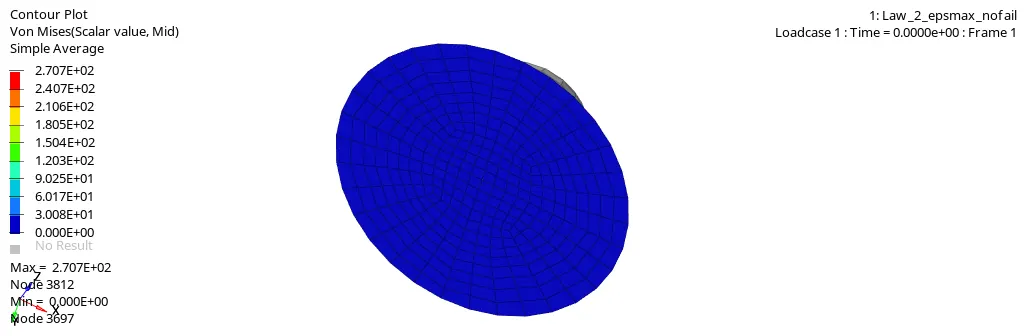
Simulation: Von Misese stress
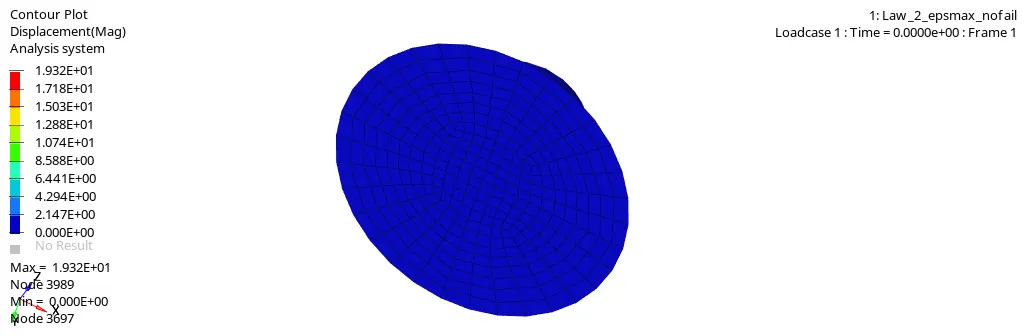
Simulation: Displacement
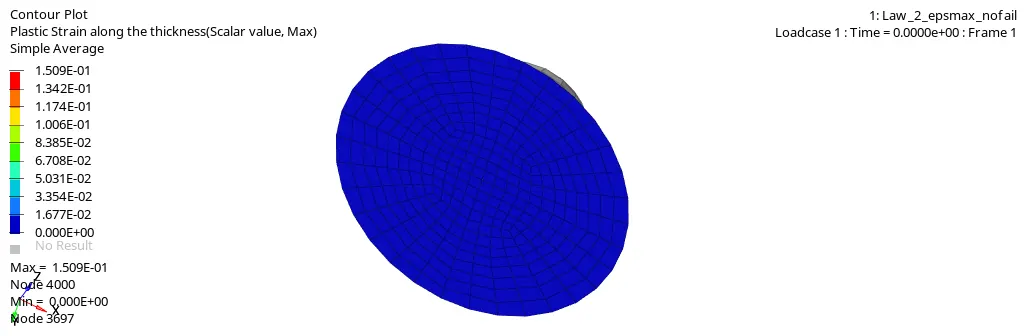
Simulation: Plastic strain along Thickness
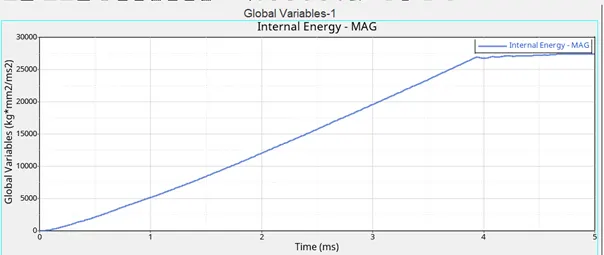
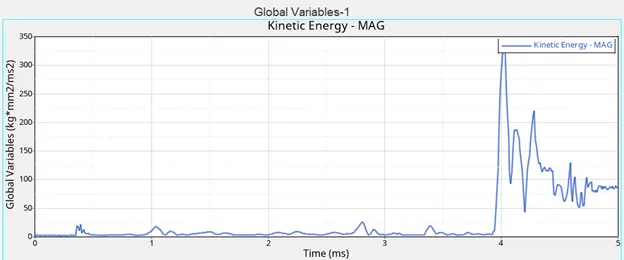
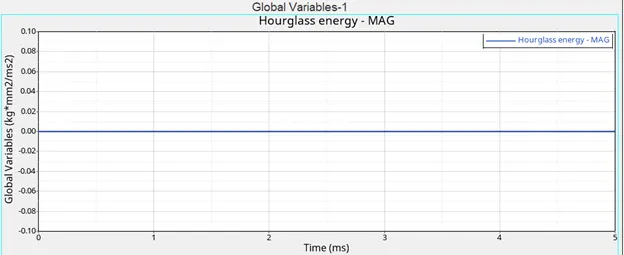
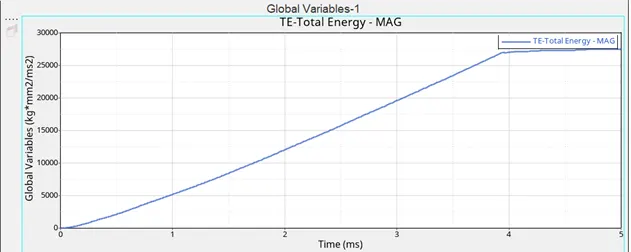
Graphs: Internal energy, Kinetic energy, Hourglass energy and Total energy.
Max. Von mises stress - 270.7 kg/ mm^2
Max. displacement - 19.32mm
Max. Plastic strain along thickness - 0.1509
No. of cycles - 49407
Energy error - -0.6% min to 1.2% max.
Mass error - 0.00
Since there is no failure model the elemennt failure is directly dependent on Eps_pmax value due to which the displacement value is bit higher than the previous cases. The energy errors were within the acceptable limit. The kinetic energy is bit higher than the previous cases since the failure of the material is entirely dependent on Eps_pmax value.
CASE 4 (LAW 2 JOHNSON COOK MATERIAL WITHOUT EPS_PMAX)
Delete the Epas_Pmax value and set to zero and run the model.
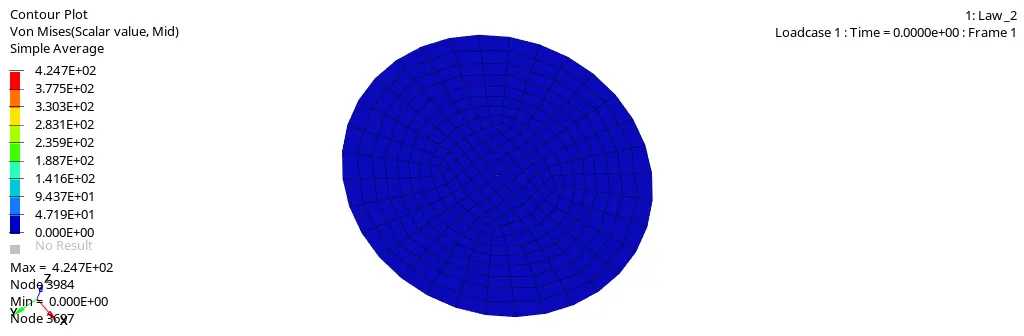
Simulation: Von Misese stress
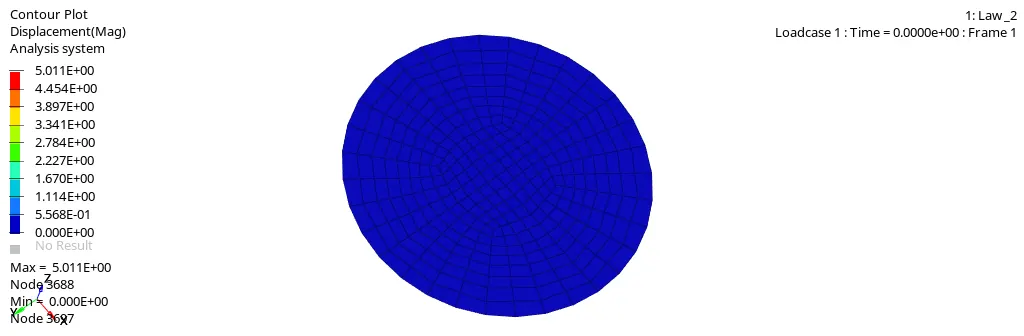
Simulation: Displacement
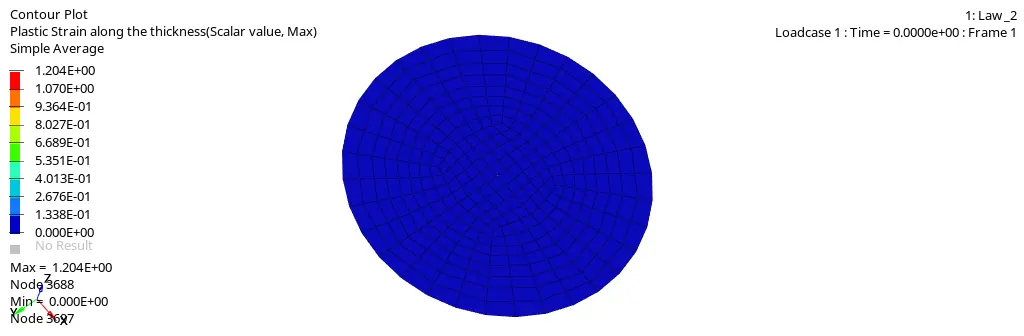
Simulation: Plastic strain along Thickness
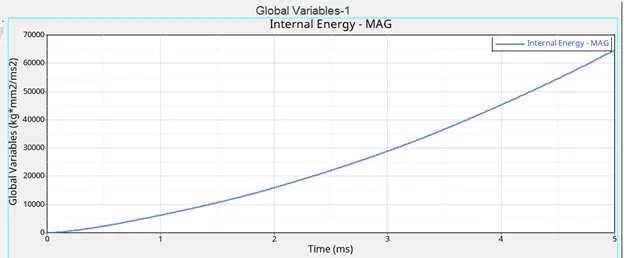
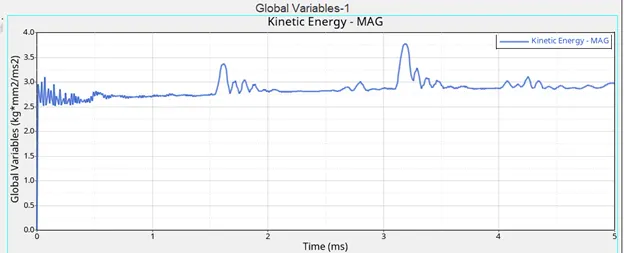
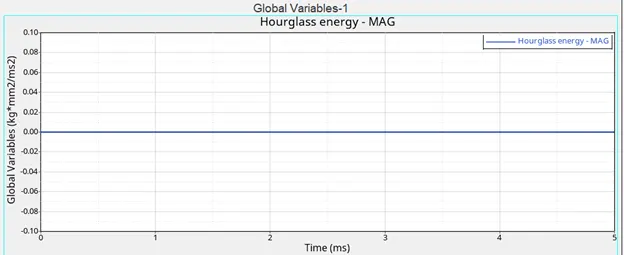
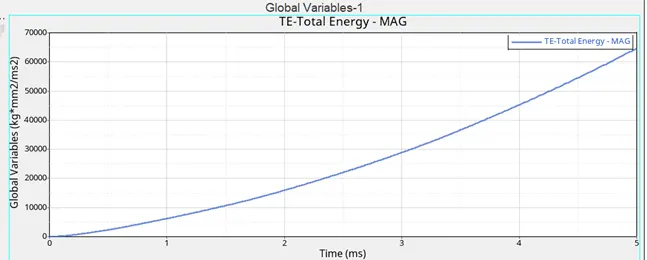
Graphs: Internal energy, Kinetic energy, Hourglass energy and Total energy.
Max. Von mises stress - 424.7 kg/ mm^2
Max. displacement - 5.011mm
Max. Plastic strain along thickness - 1.204
No. of cycles - 48736
Energy error - -0.6% min to 3.0% max.
Mass error - 0.00
Since the material does not have any failure values like Eps_pmax (default value 10^30) and Failure model so none of the element will crack or fail. Since the material has taken lot more stress than previous cases and the strain values got increased and because of these the displacement of the geometry decresed. The internal and total energy increses linearaly as shown in graph. The kinetic energy is very low compared to the other cases.
CASE 5 (ELASTIC MATERIAL)
Convert the material to elastic with same density and Nu values.
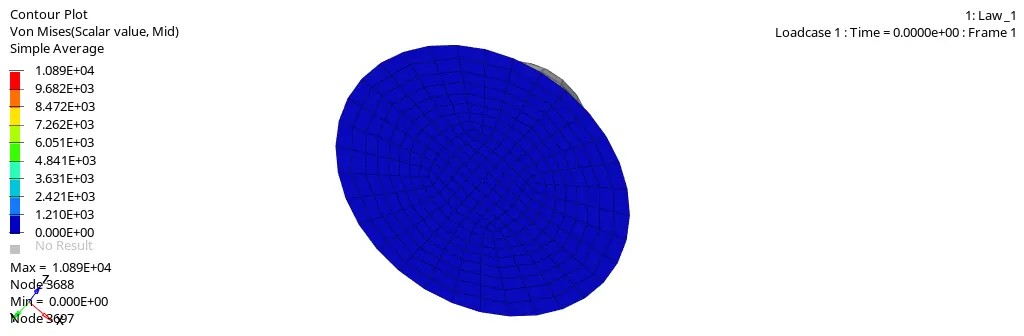
Simulation: Von Misese stress
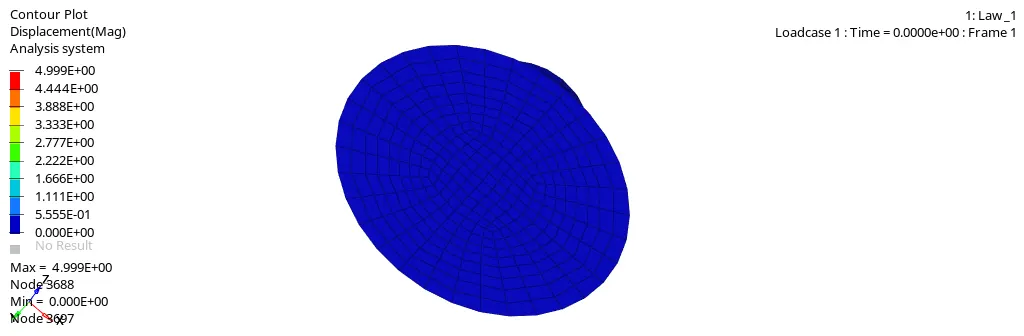
Simulation: Displacement
Simulation: Plastic strain along Thickness
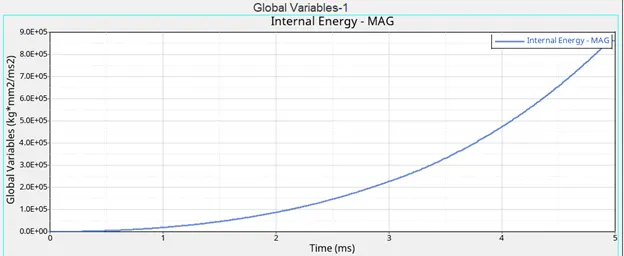
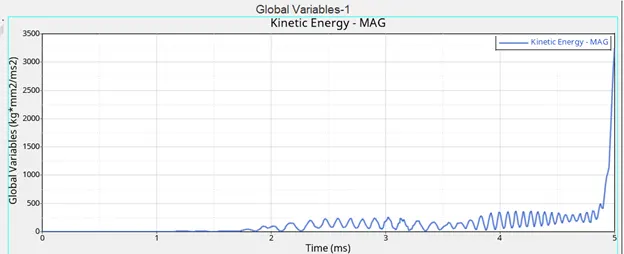
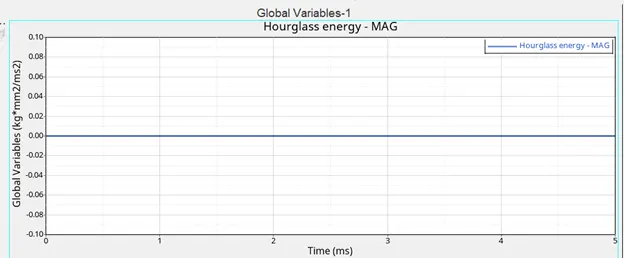
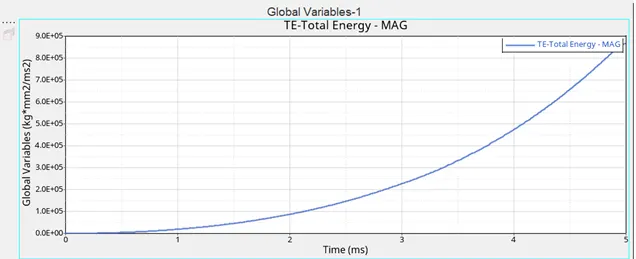
Graphs: Internal energy, Kinetic energy, Hourglass energy and Total energy.
Max. Von mises stress - 10890 kg/ mm^2
Max. displacement - 4.99mm
Max. Plastic strain along thickness - 0
No. of cycles - 49216
Energy error - -0.6% min to 4.5% max.
Mass error - 0.00
Since the material is elastic no elements got deleted or failed and the stress values are very high compared to all the previous cases because of material and strain is 0 because of elastic nature of material. The elestic mateial absorbs energy because of which the kinetic energy is very high, which will be less at the initial conditions and increses when the material reaches its ecxtreme elestic limit. when compared with the previous case very less energy is dissipated in elesic material. The internal energy is very high because it absorbs more energy when the load is applied on it.
CASE -6 (LAW 27PLAS_BRIT MATERIAL)
Run the given model by changing the recommended element properties.
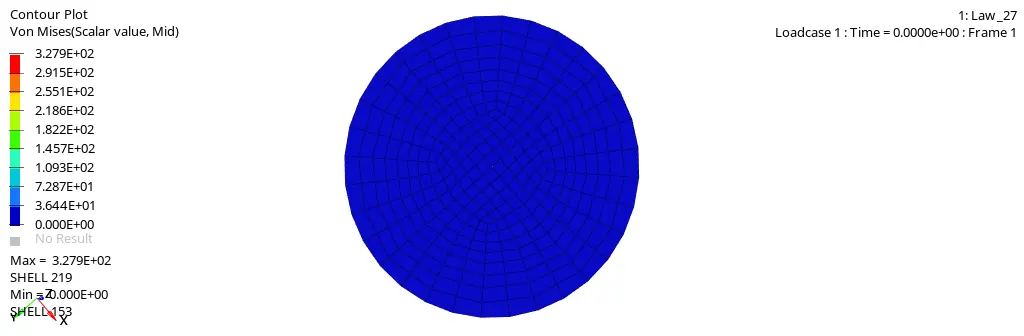
Simulation: Von Misese stress
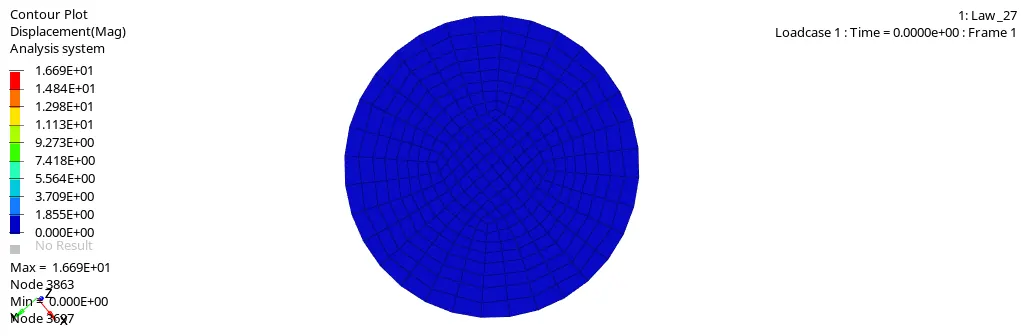
Simulation: Displacement
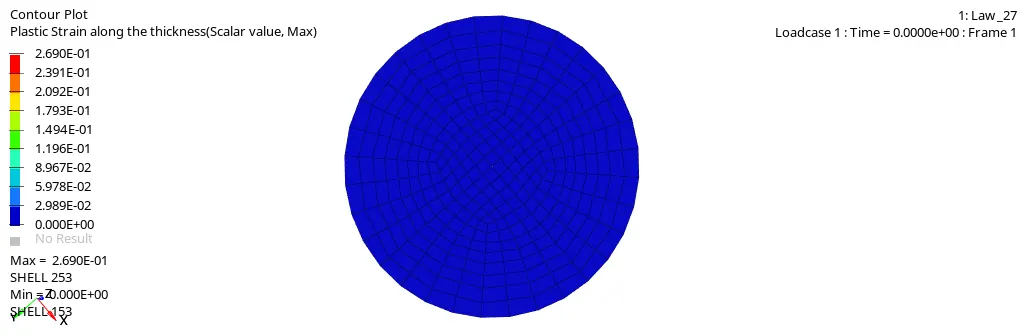
Simulation: Plastic strain along Thickness
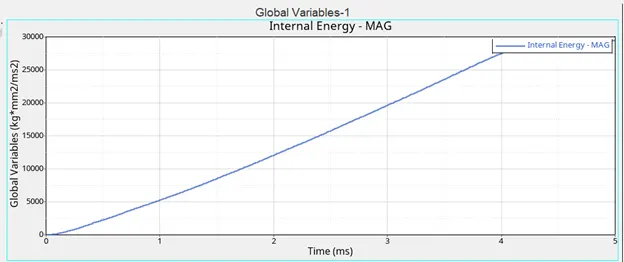
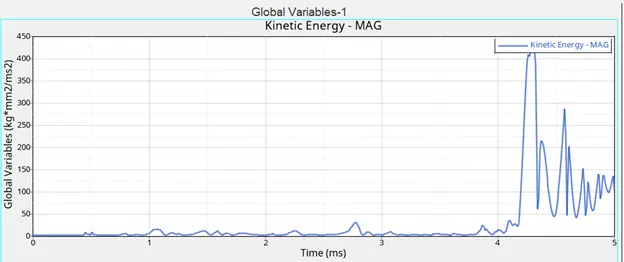
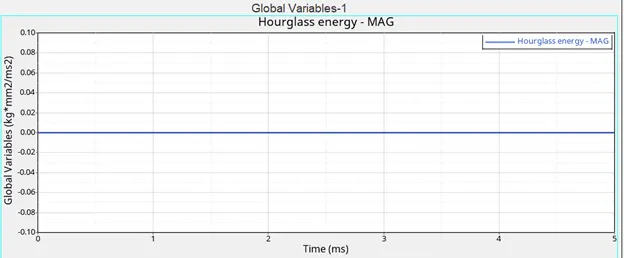
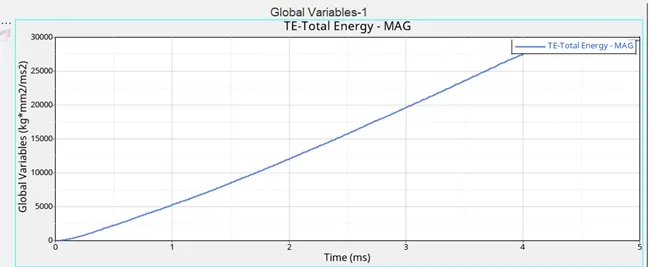
Graphs: Internal energy, Kinetic energy, Hourglass energy and Total energy.
Max. Von mises stress - 327.9 kg/ mm^2
Max. displacement - 16.69mm
Max. Plastic strain along thickness -0.2690
No. of cycles - 53153
Energy error - -1.3% min to 0.7% max.
Mass error - 0.00
The material is law 27 Brittle material in which the simulation looks realistic compared to other cases because of clear identification of crack propagation in the direction of the mesh. The simulation took more number of cycles compared to other cases and because of brittle property of the material the kinetic energy reaches maximum of 450 magnitude.
CASE – 7 (LAW 36 ELASTIC PLASTIC MATERIAL)
Create a material card and curve using provided data and run the simulation.
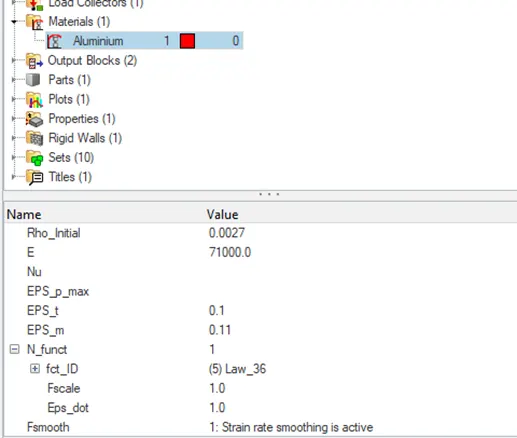
Fig: Material card creation.
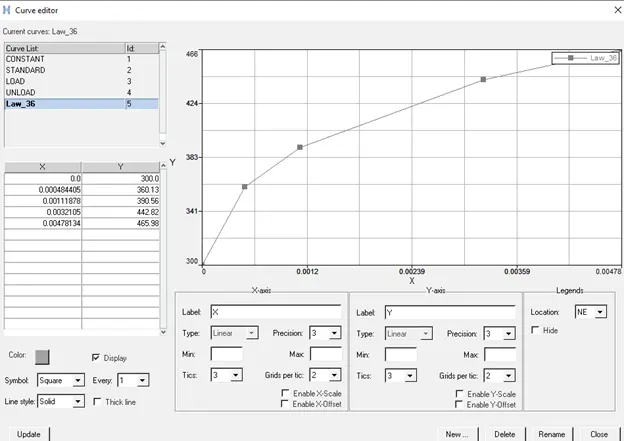
Fig: Creation of curve.
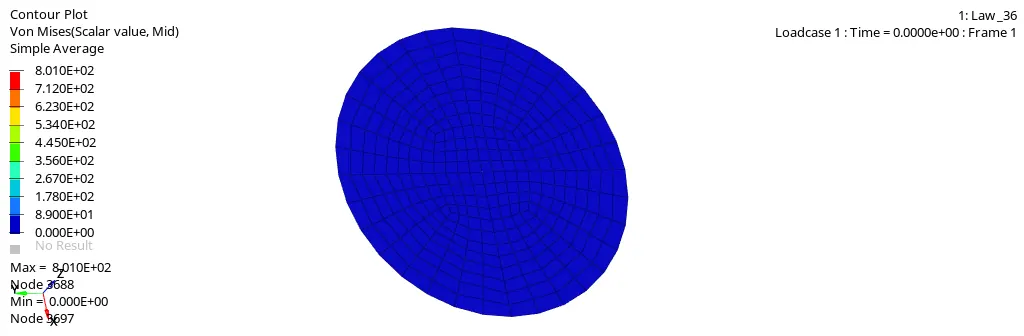
Simulation: Von Misese stress
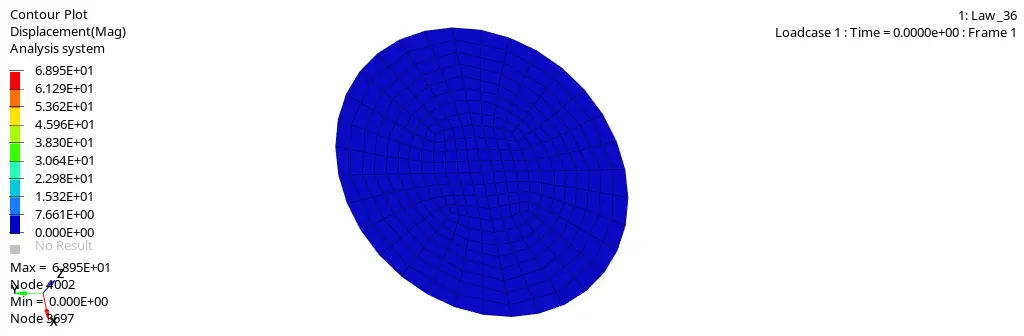
Simulation: Displacement
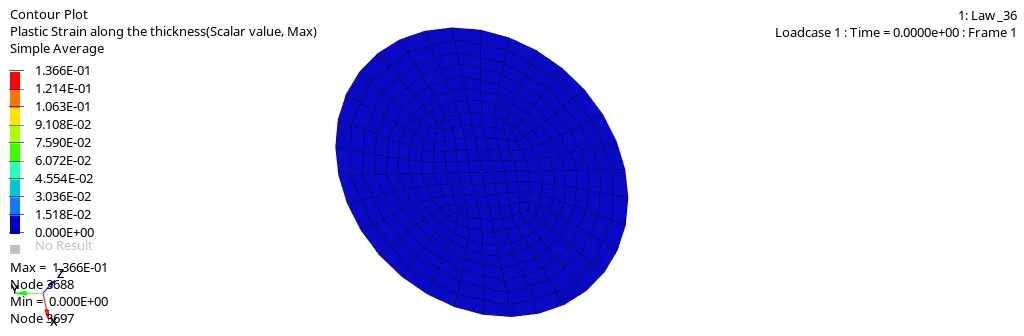
Simulation: Plastic strain along Thickness
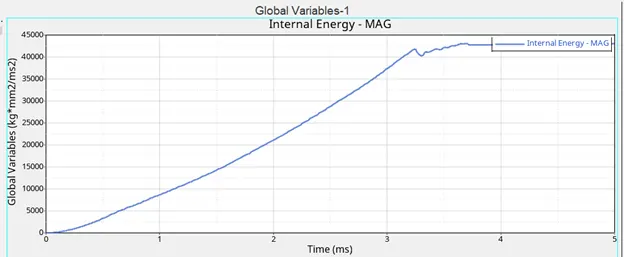
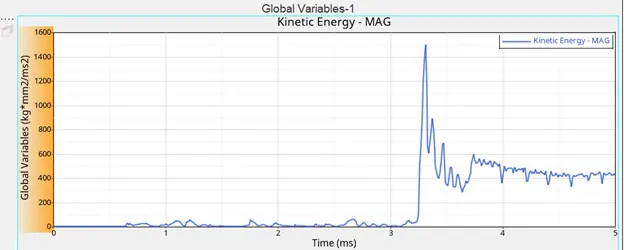
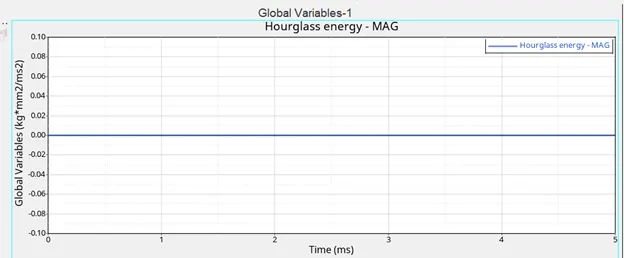
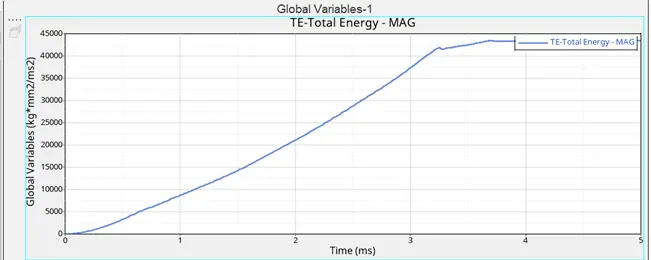
Graphs: Internal energy, Kinetic energy, Hourglass energy and Total energy.
Max. Von mises stress - 801 kg/ mm^2
Max. displacement - 68.95mm
Max. Plastic strain along thickness - 0.1366
No. of cycles - 49506
Energy error - -0.6% min to 1.1% max.
Mass error - 0.00
Since the material is elastic plastic tabulated material exhibhits both properties of elastic and plastic which acts like a realistic actual material due to which most widely used in the industry.
the elemental failues are realistic in nature and the crack propogation is predictable after plastic deformation. The displacement is vey high and the failure of the matrial id depended on the curves defined in the mateial which makes the simulation accurate.
CONCLUSION:
By considering all the cases the Law 27 gives the realistic simulation for the brittle materials where as Law 36 material is accurete because it well defined lab curves can be adopted in to the material card. every case has its own significance depending on their applications. The failure models can be introduced for simulations where safety is the utmost parameter to consider.