Assignment 4-RADIOSS Material Laws Challenge
Aim: To perform a comparative study on rupture plates by assigning different material properties to the same component and noticing the difference in fracture mechanics.
Procedure:
The results are discussed based on the 5 parameters given in the question above :
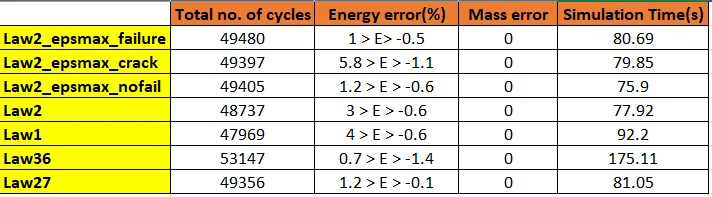
1. The Total number of cycles, Energy error, mass error ,and simulation time :
2. The 7 cases are discussed on the basis of the animation below:
1. Law2_epsmax_failure :
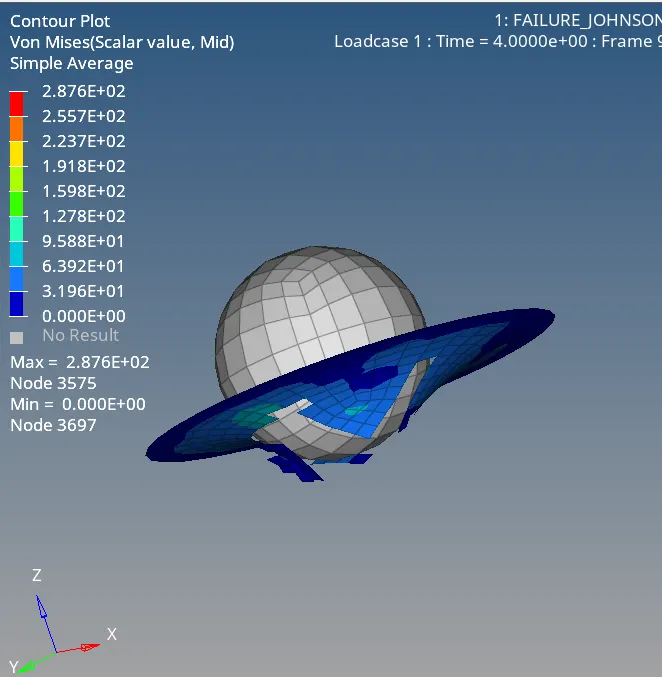
For this simulation, the elements deform quite a bit plastically after the Yield stress value (290 GPa) is crossed before failing which occurs when the strain crosses the eps_p_max value of 0.151. In this particular case, the elements get deleted after they fail and the stress acting on those elements becomes zero as shown in the picture.
2. Law2_epsmax_crack :
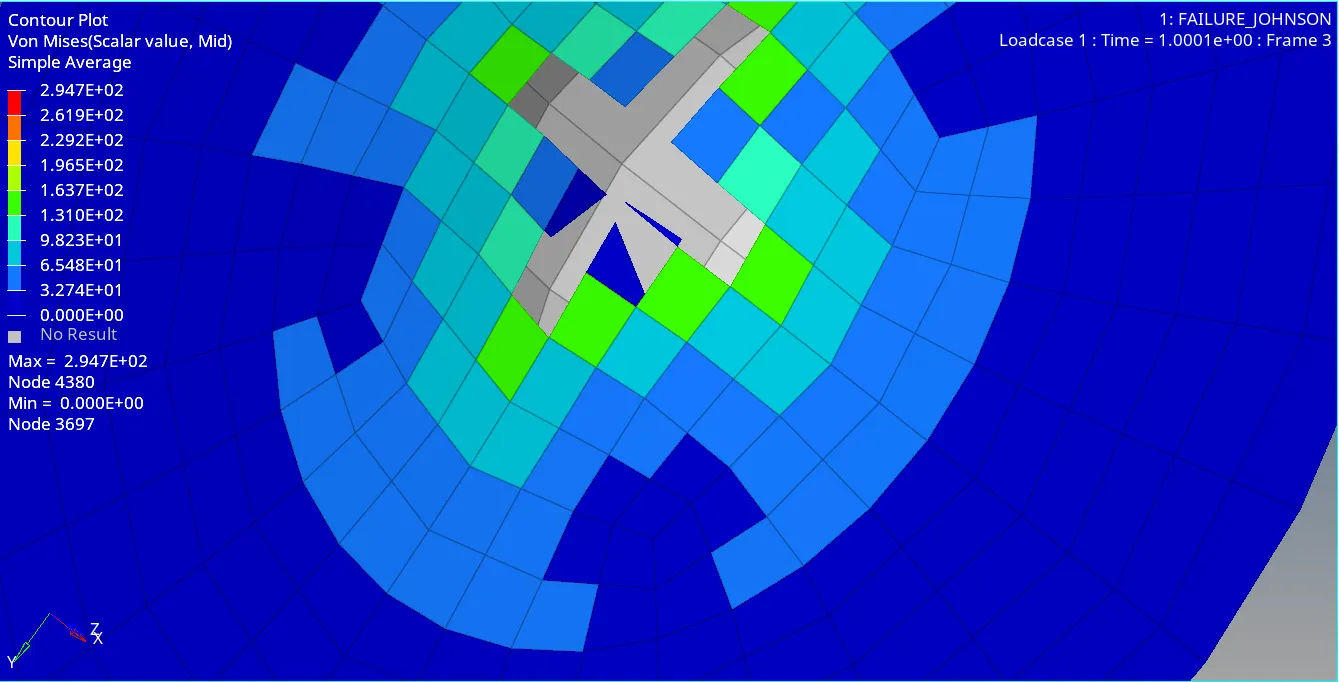
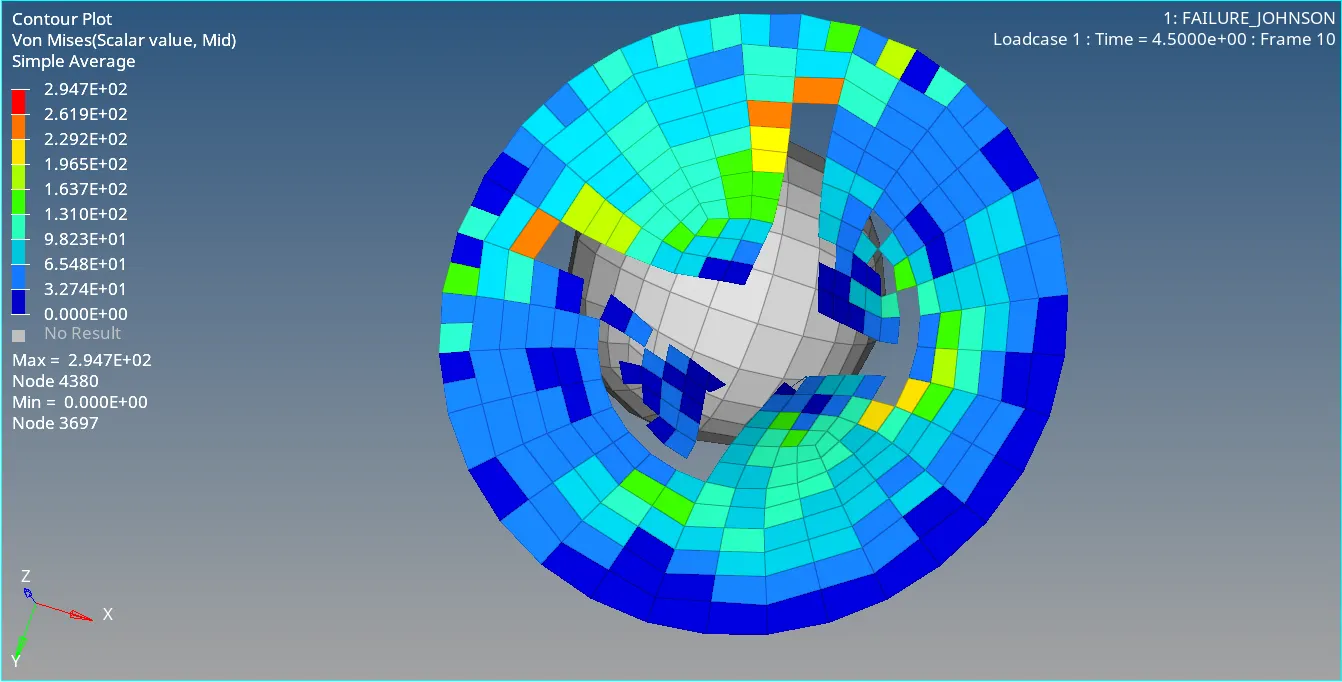
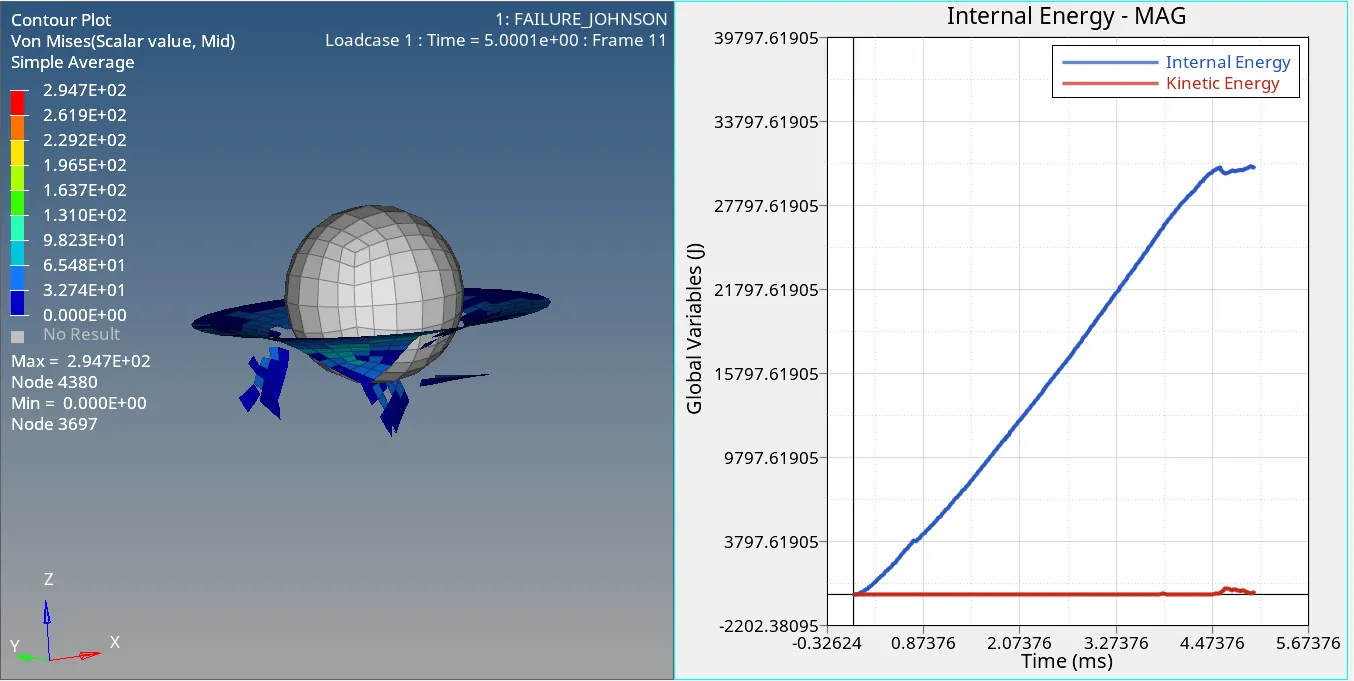
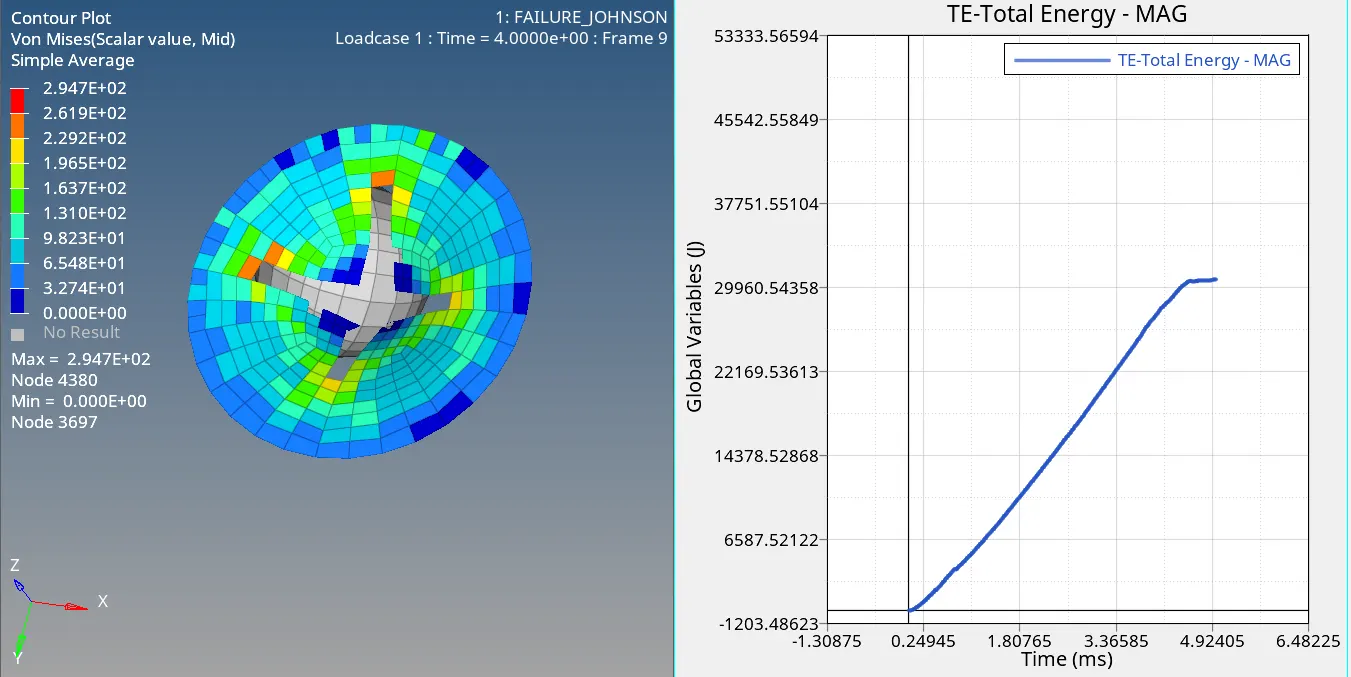
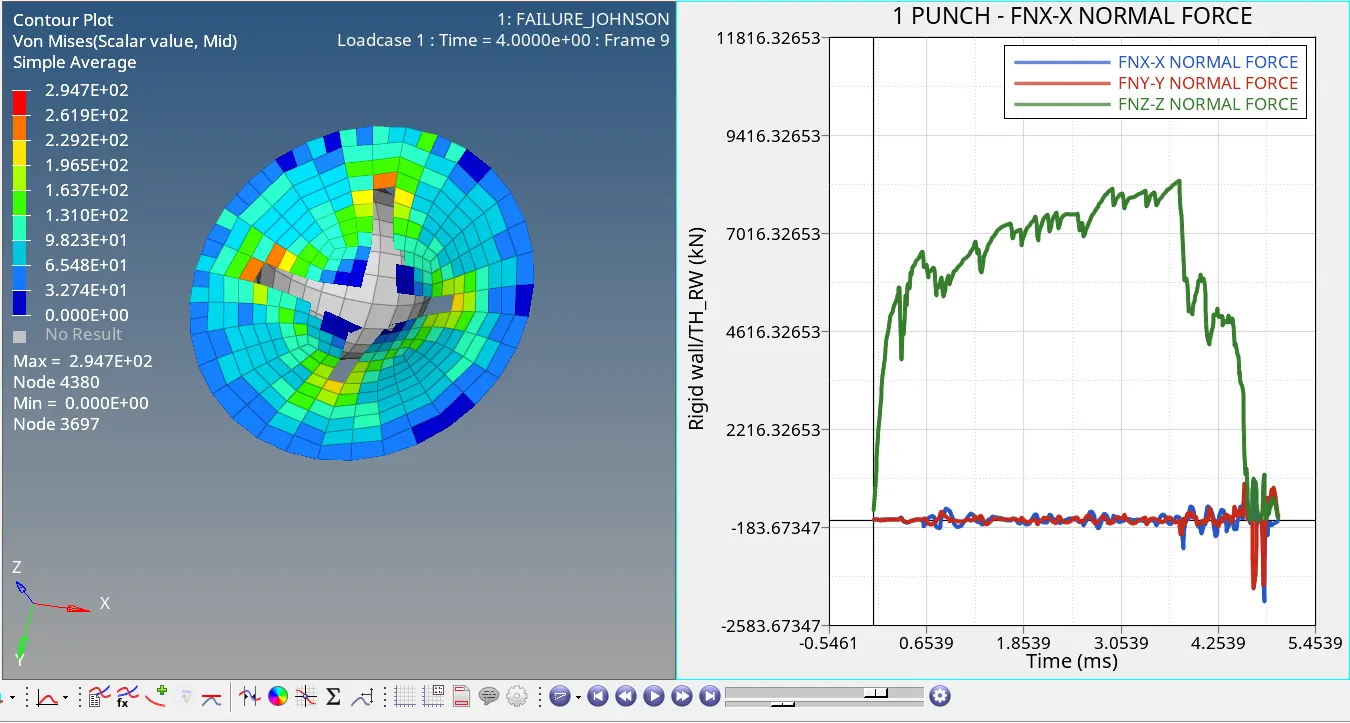
For this simulation, the elements deform quite a bit plastically after the Yield stress value (290 GPa) is crossed before failing which occurs when the strain crosses the eps_p_max value of 0.151. In this particular case, the elements get cracked instead of getting deleted after they fail and the stress acting on those elements become zero as shown in the picture. This is because we have activated Dadv and ixfem in the failure card which allows elements to get cracked.
3. Law2_epsmax_nofail :
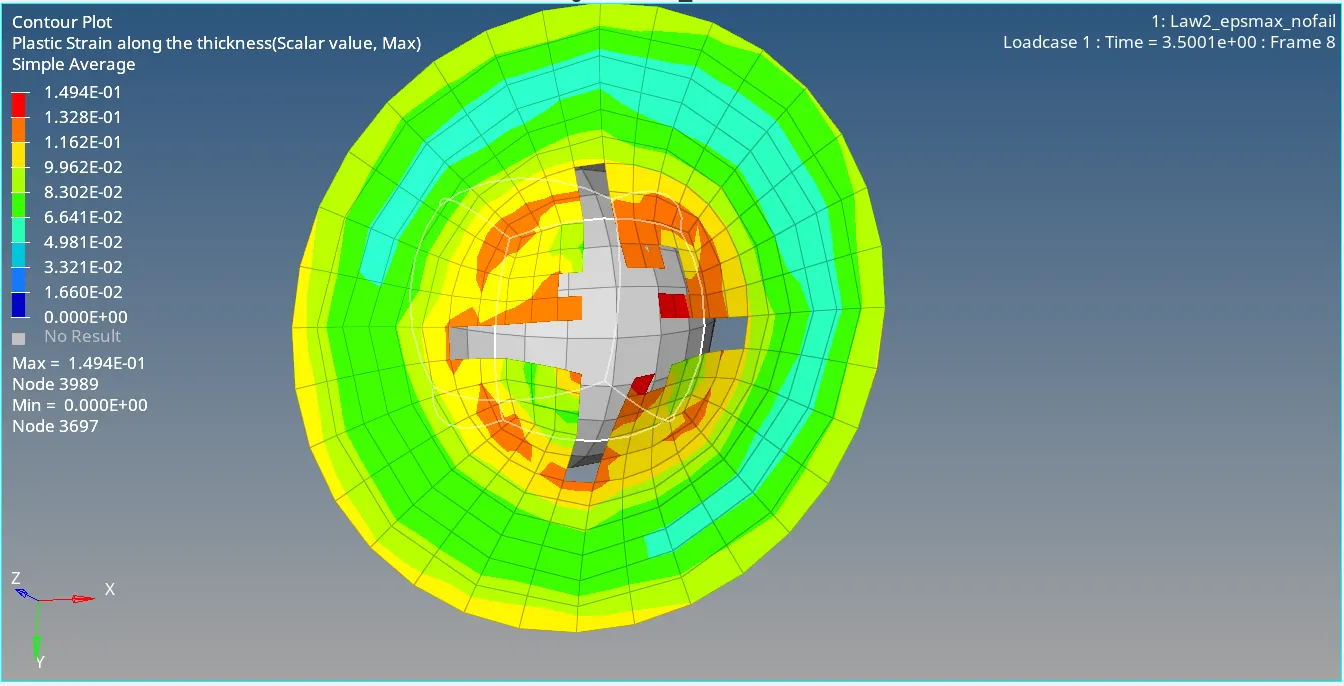
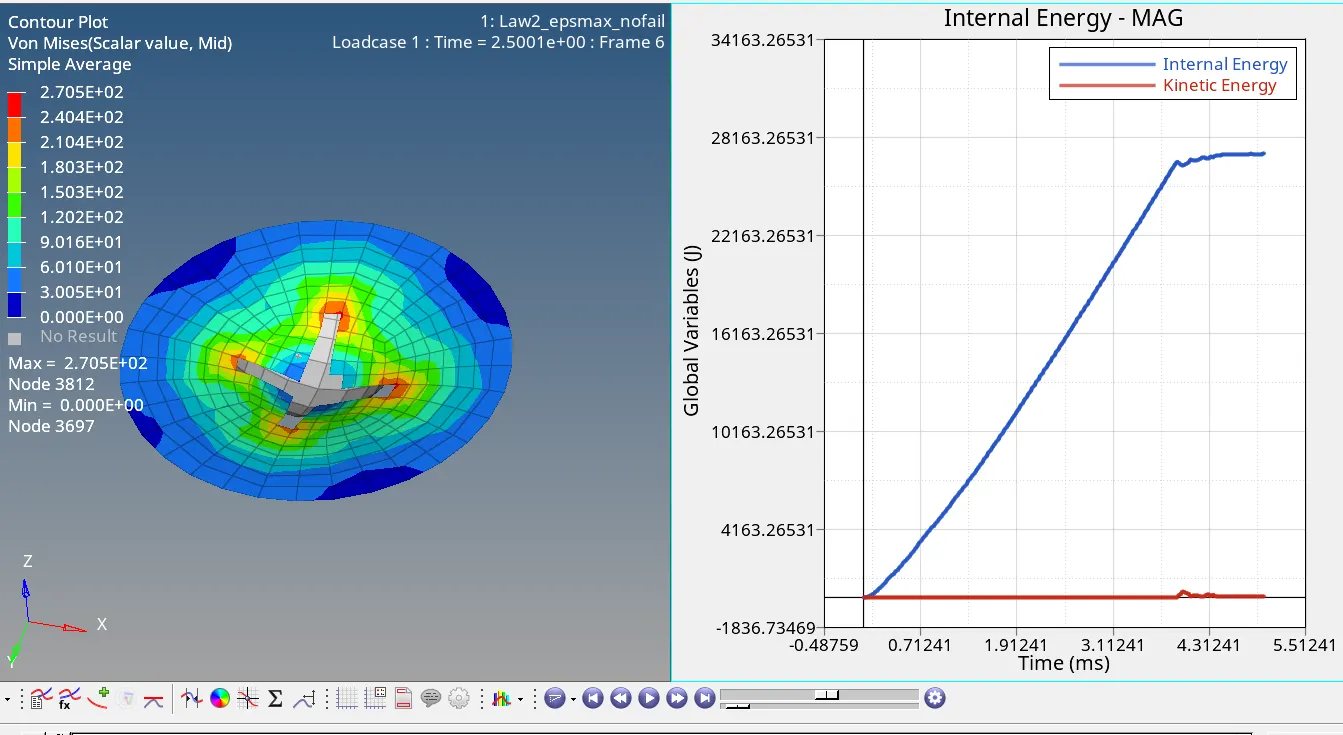
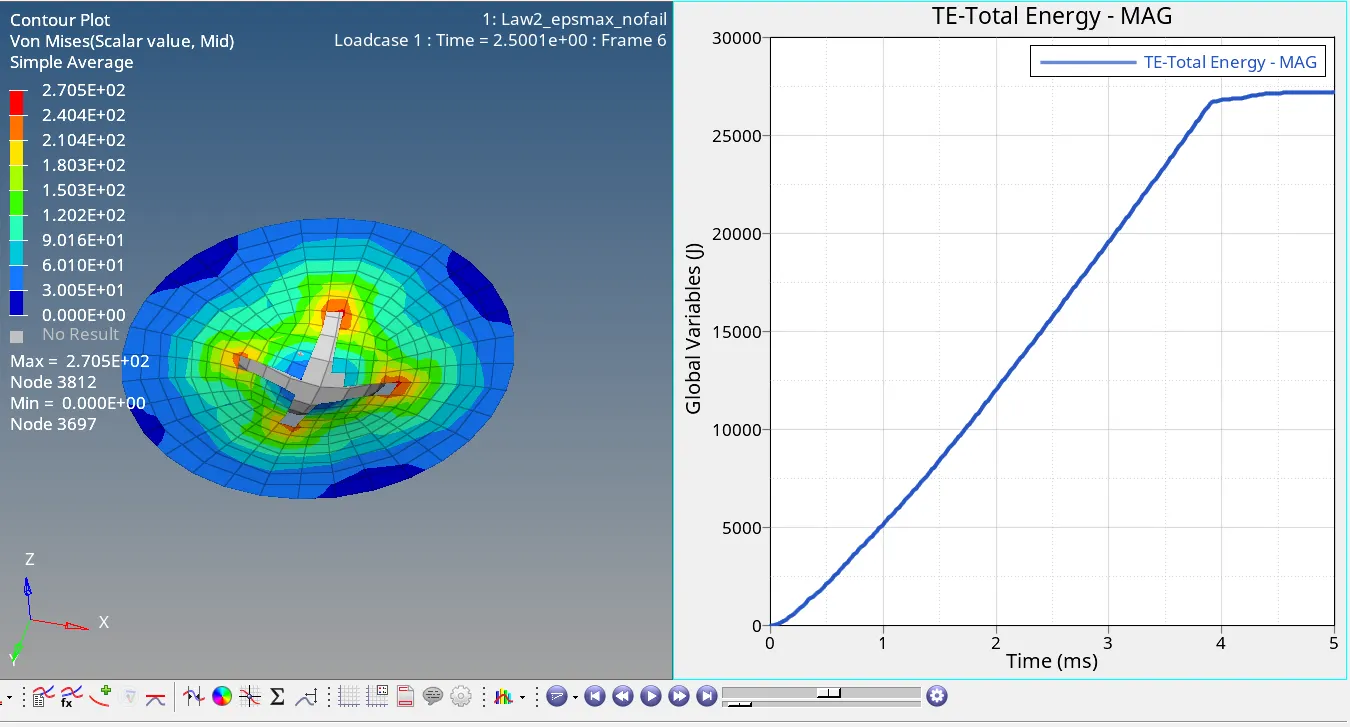
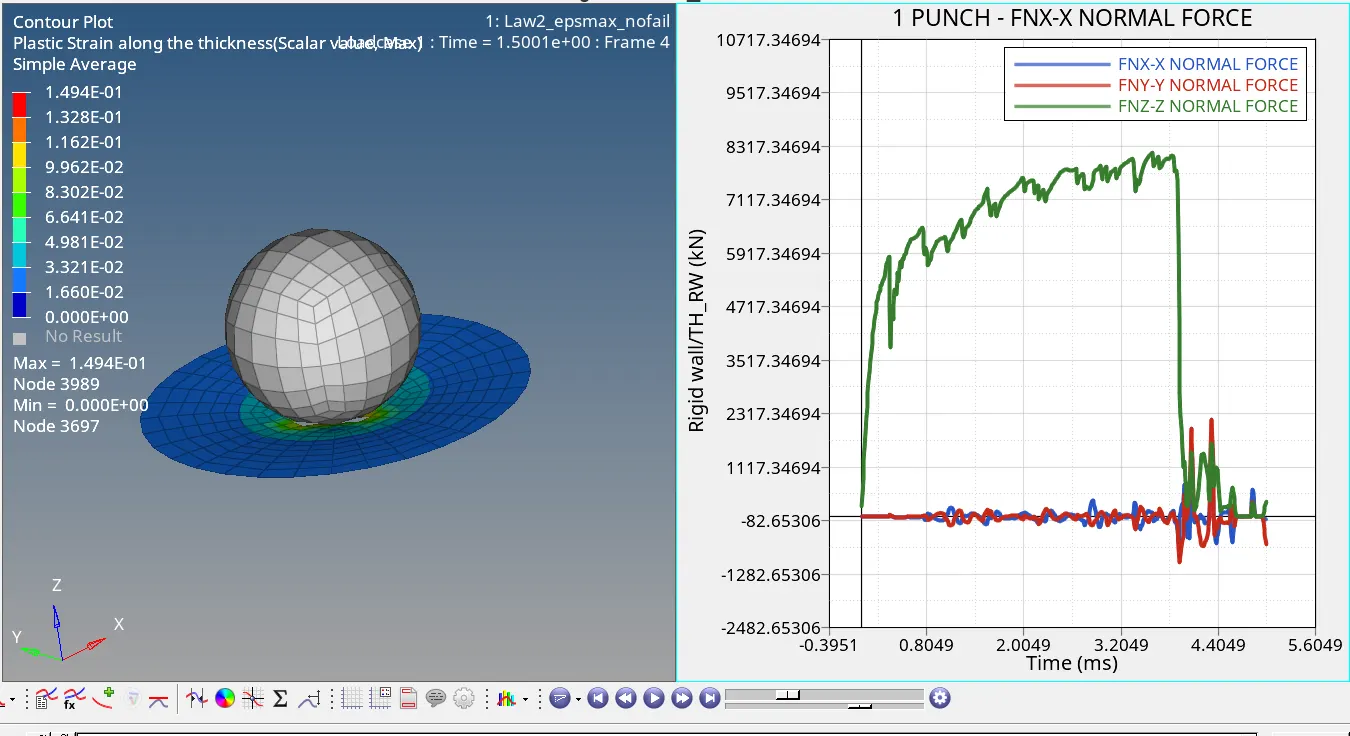
For this simulation, the elements deform quite a bit plastically after the Yield stress value (290 GPa) is crossed before failing which occurs when the strain crosses the eps_p_max value of 0.151. In this particular case, the elements get deleted after they fail and the stress acting on those elements becomes zero as shown in the picture. This behavior is similar to the first case Law2_epsmax_failure
4. Law2 :
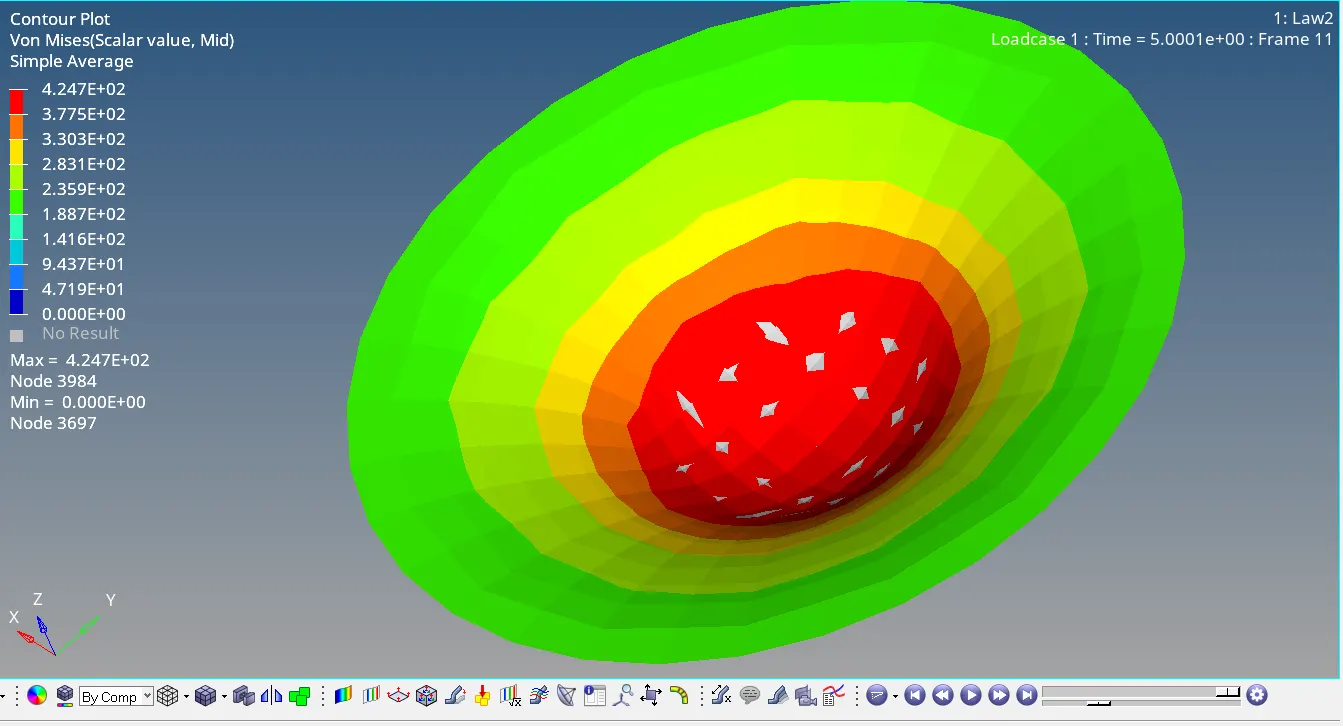
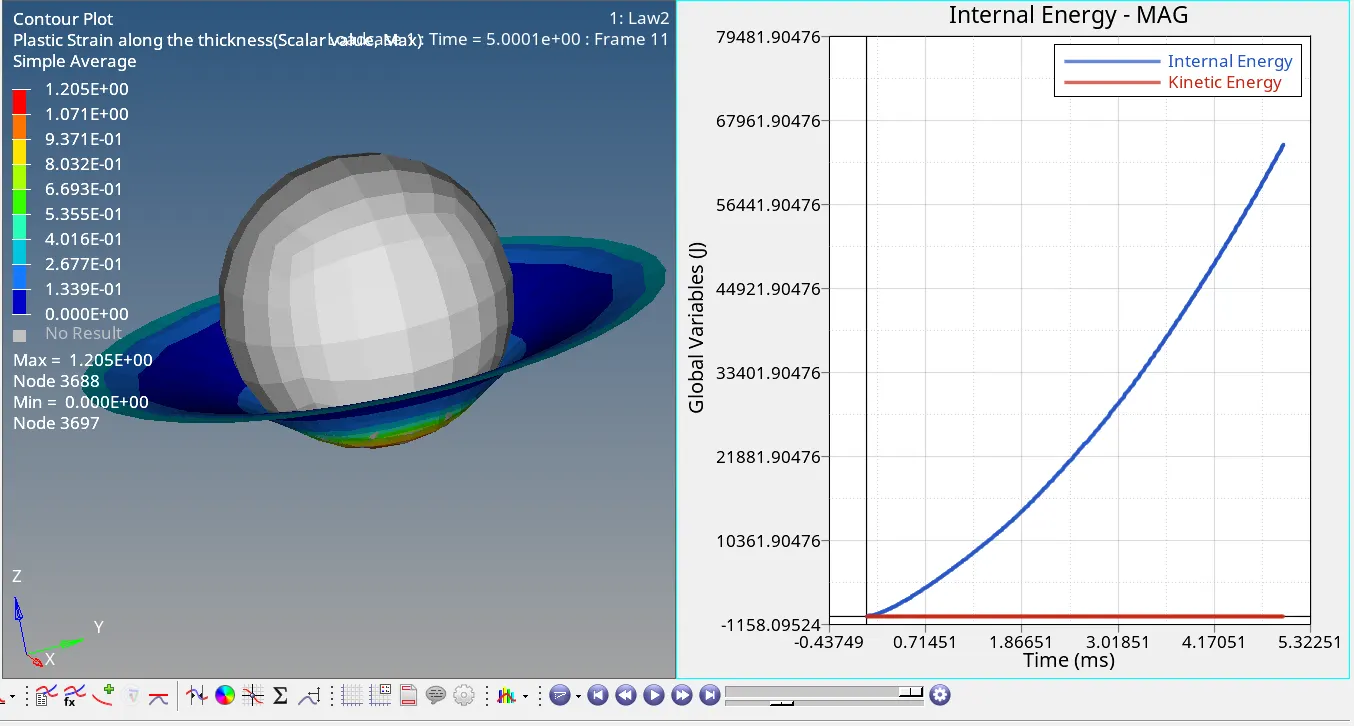
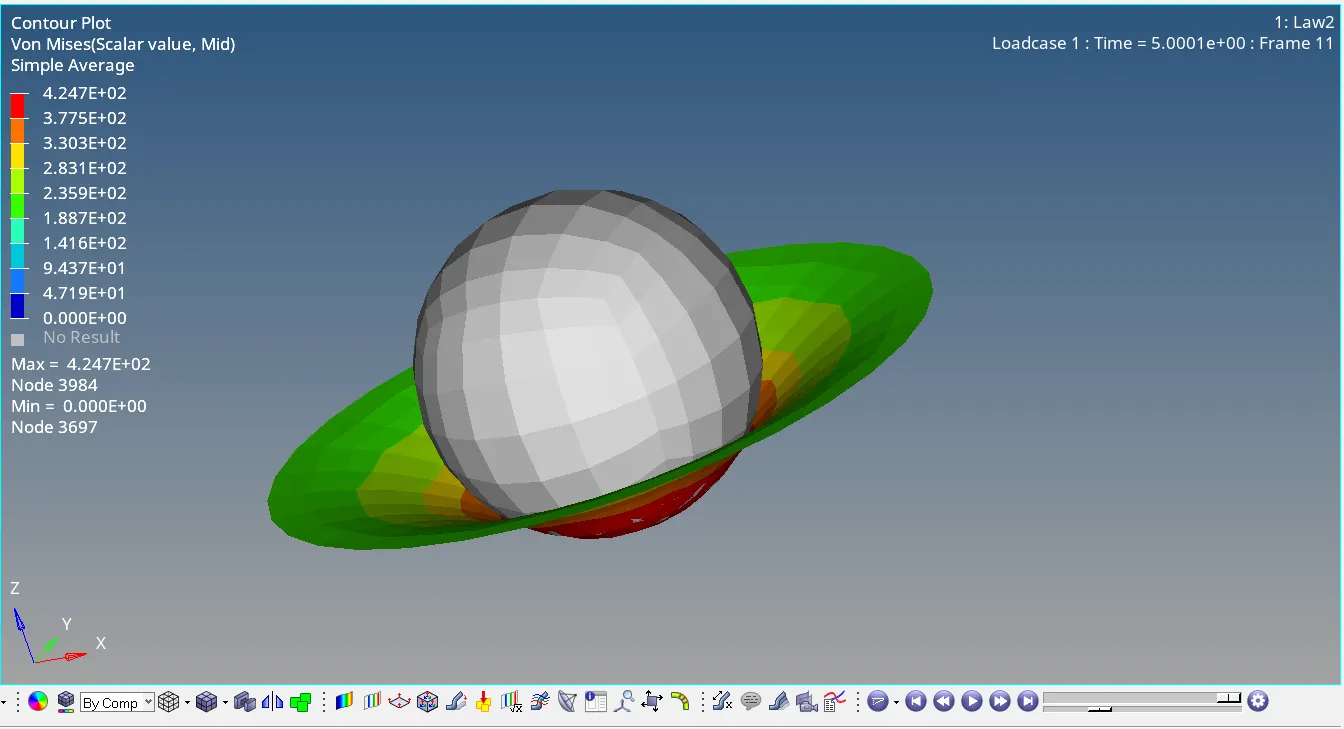
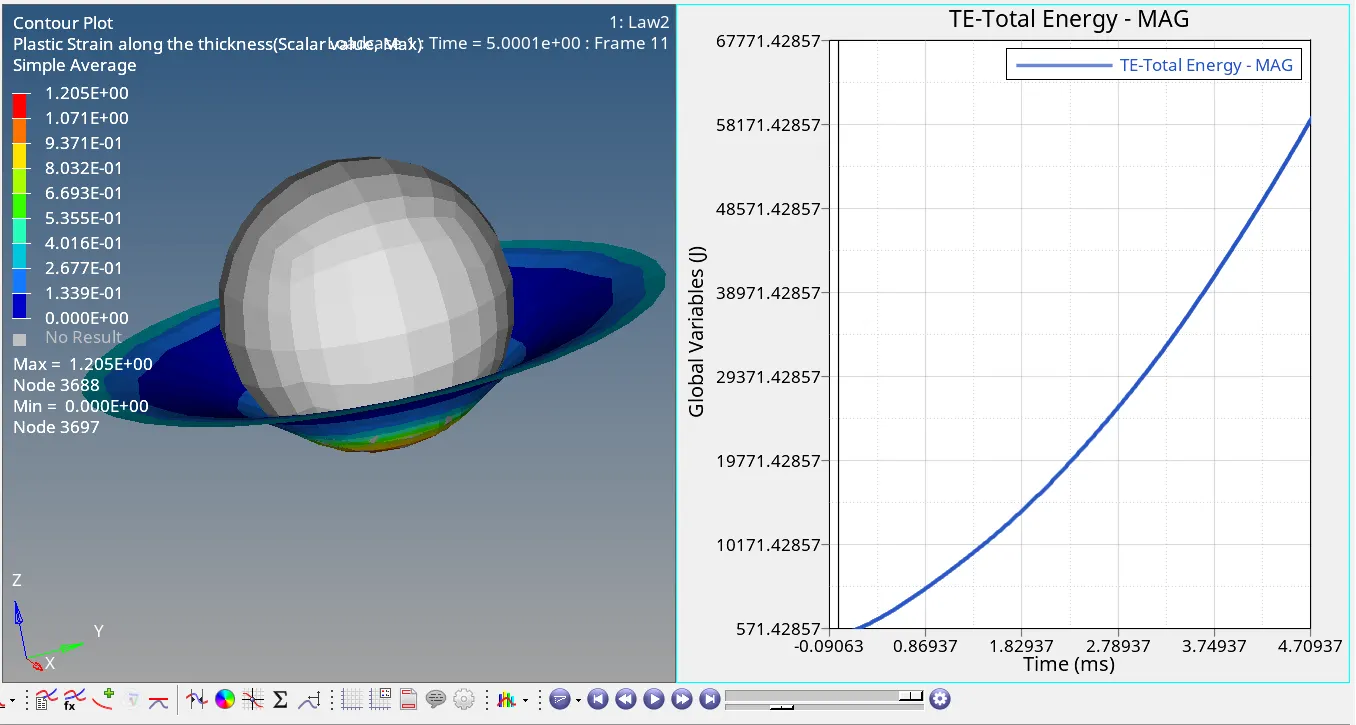
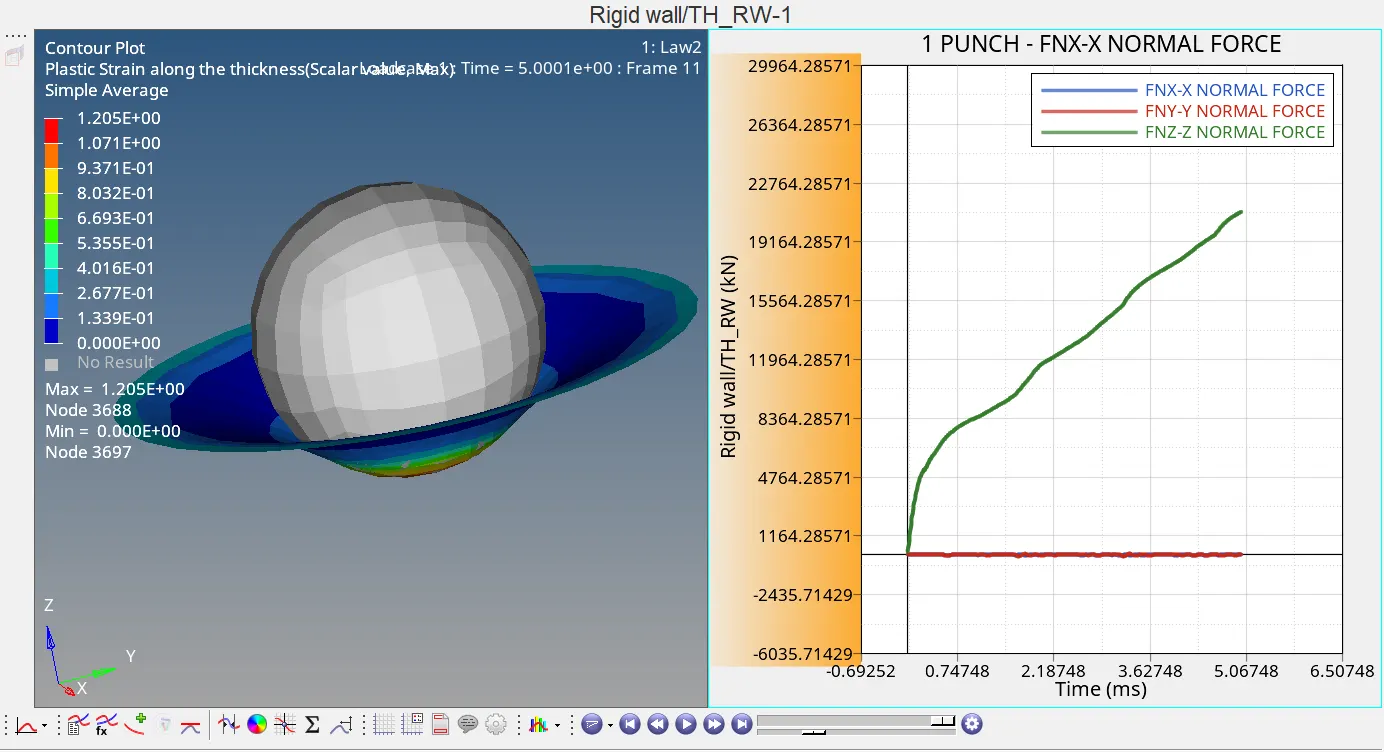
For this simulation, the elements deform quite a bit plastically after the Yield stress value (290 GPa) is crossed. They however continue to deform until the maximum stress is being applied but do not fail. This is because we have deleted the value of parameter eps_p_max which is the criteria to fail elements. Hence the elements behave as though they have infinite elasticity.
5. Law1 :
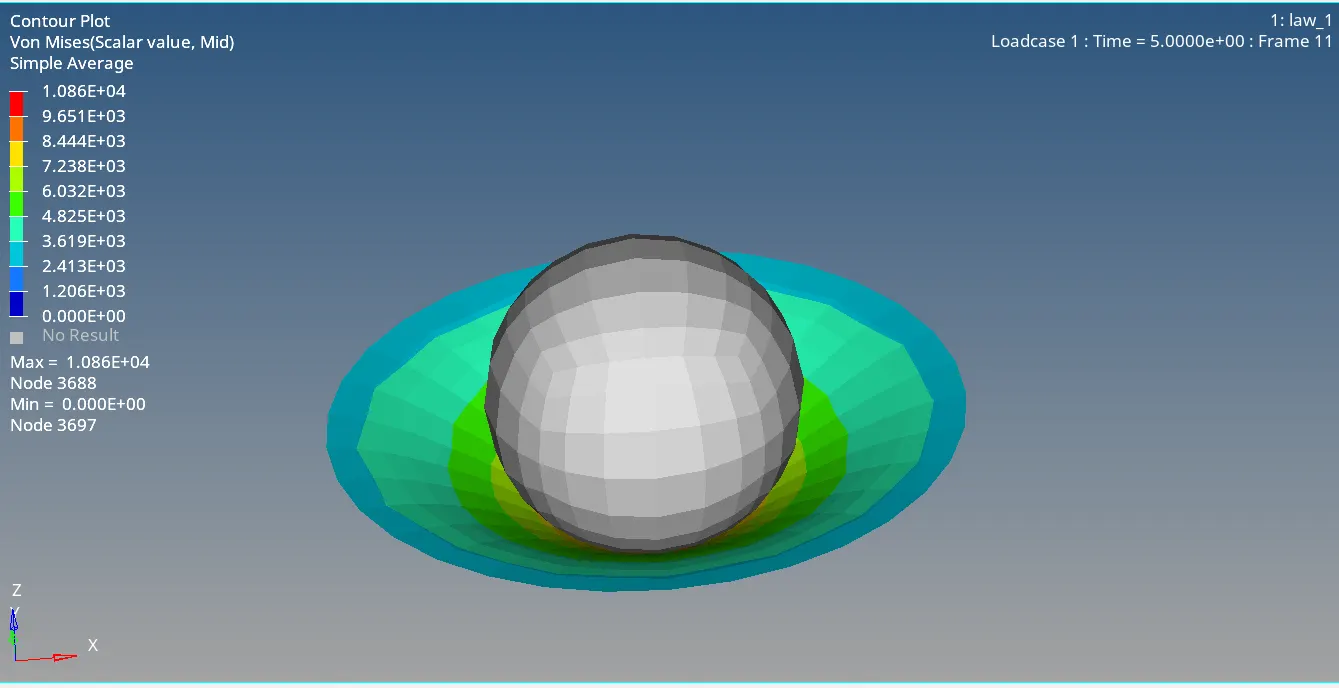
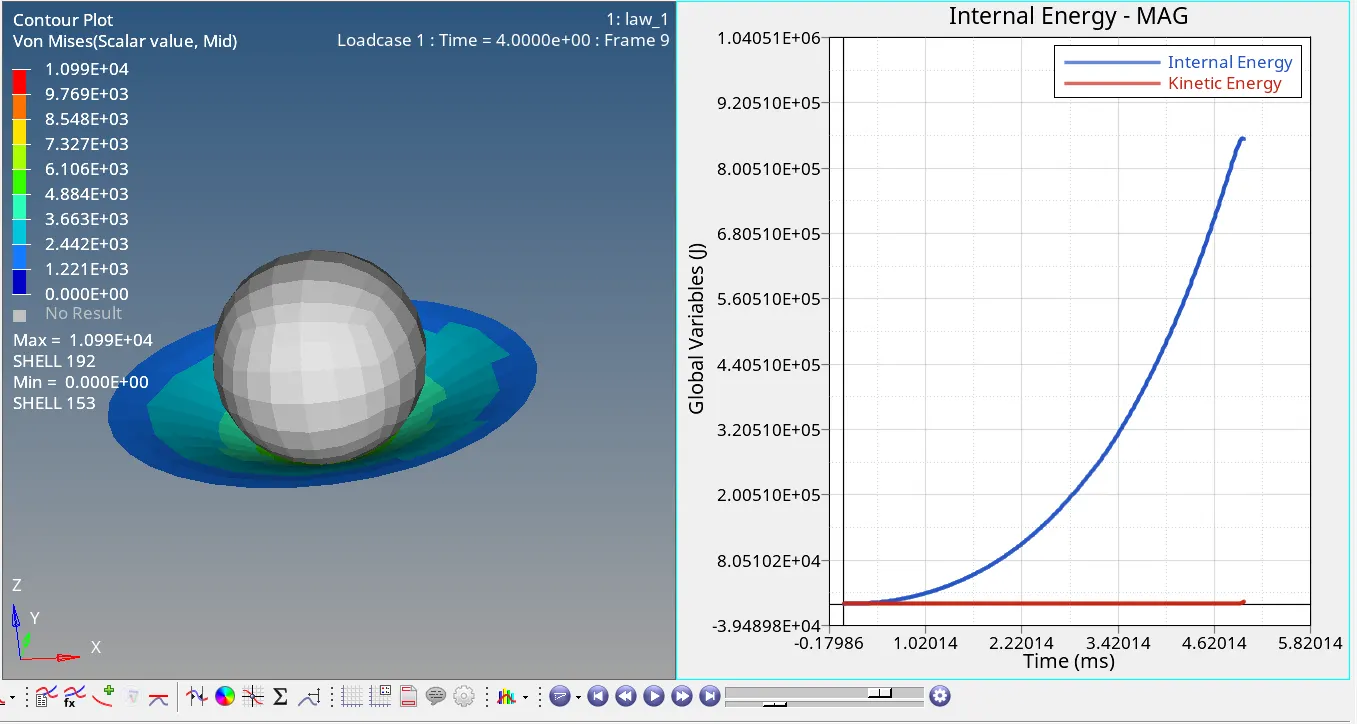
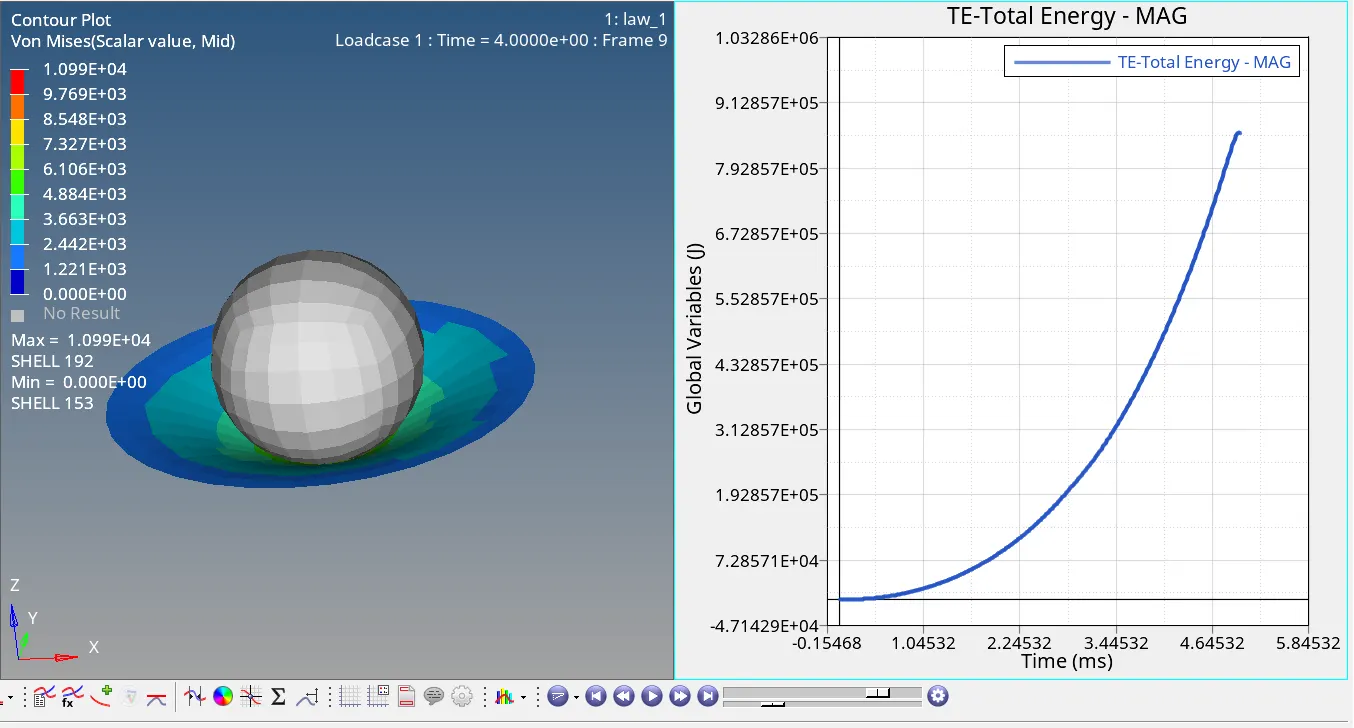
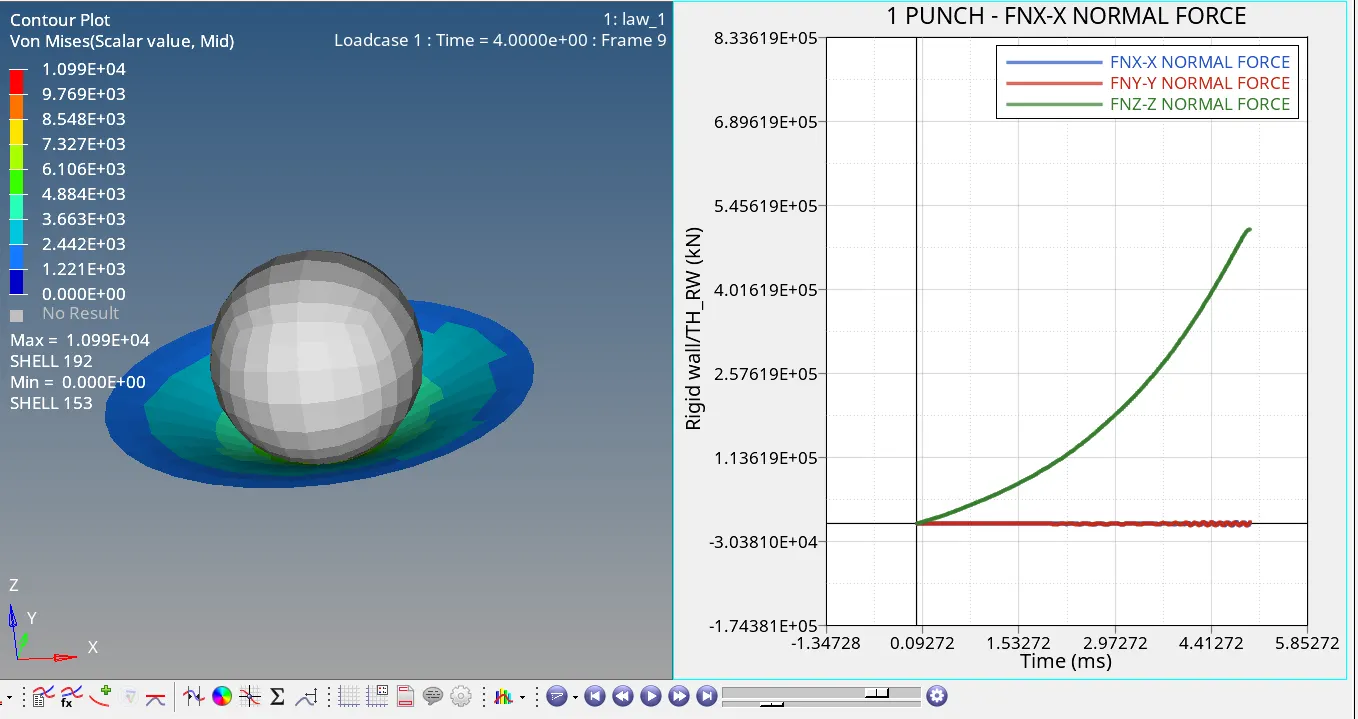
For this simulation, the elements have the law1 card activated in material properties. Due to this, they have as though they have infinite elasticity as if the material is in the linear elastic range of Hooke's law. This behavior is quite similar to Law2 behavior.
6. Law36 :
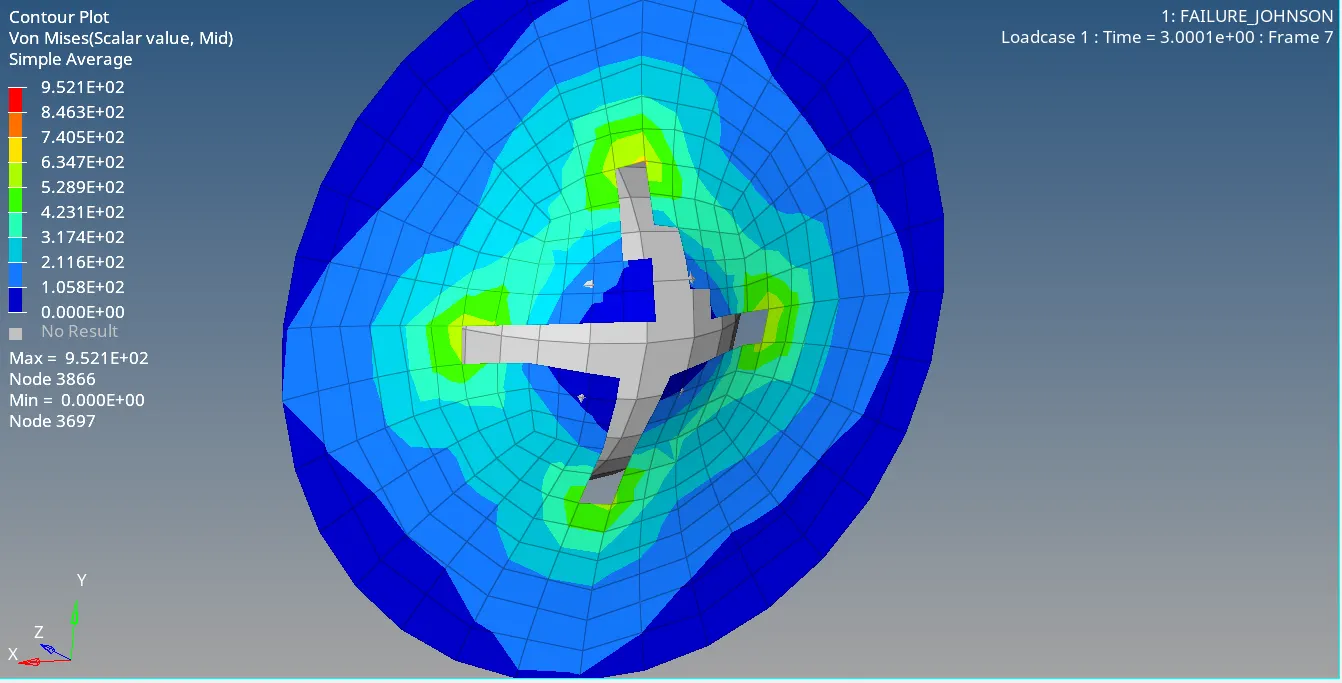
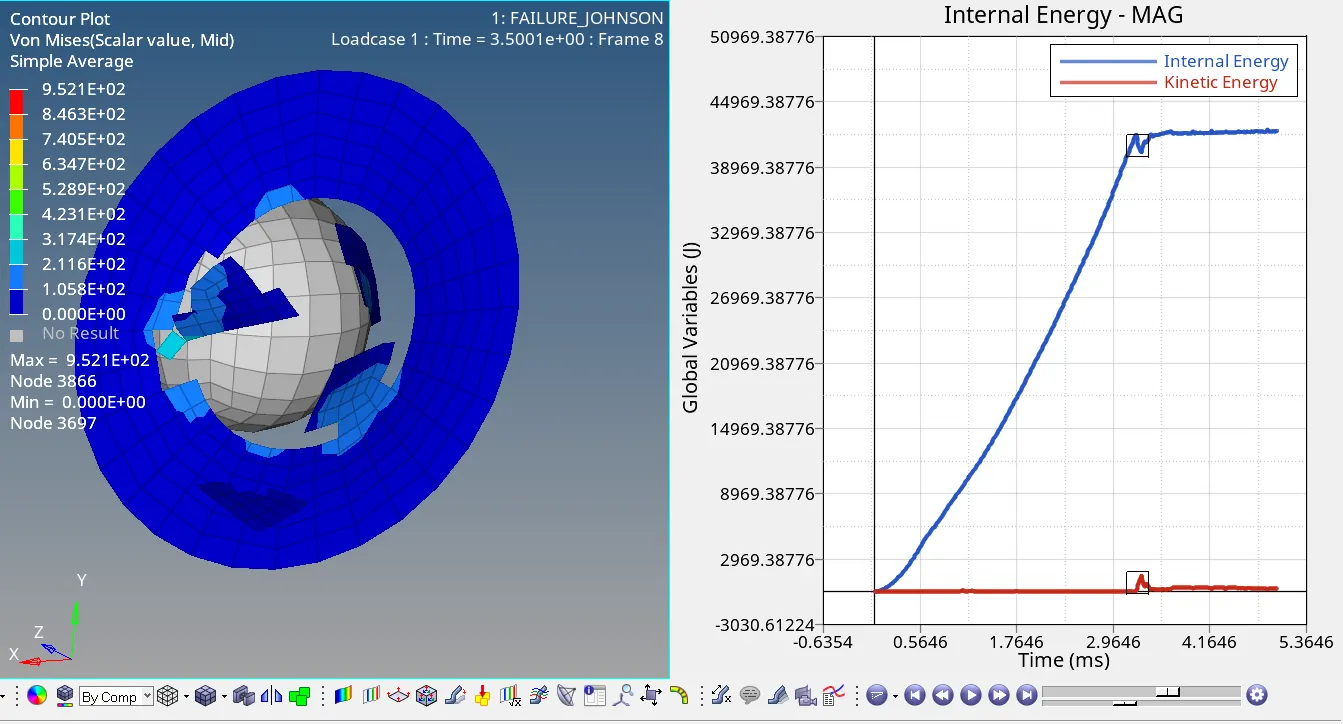
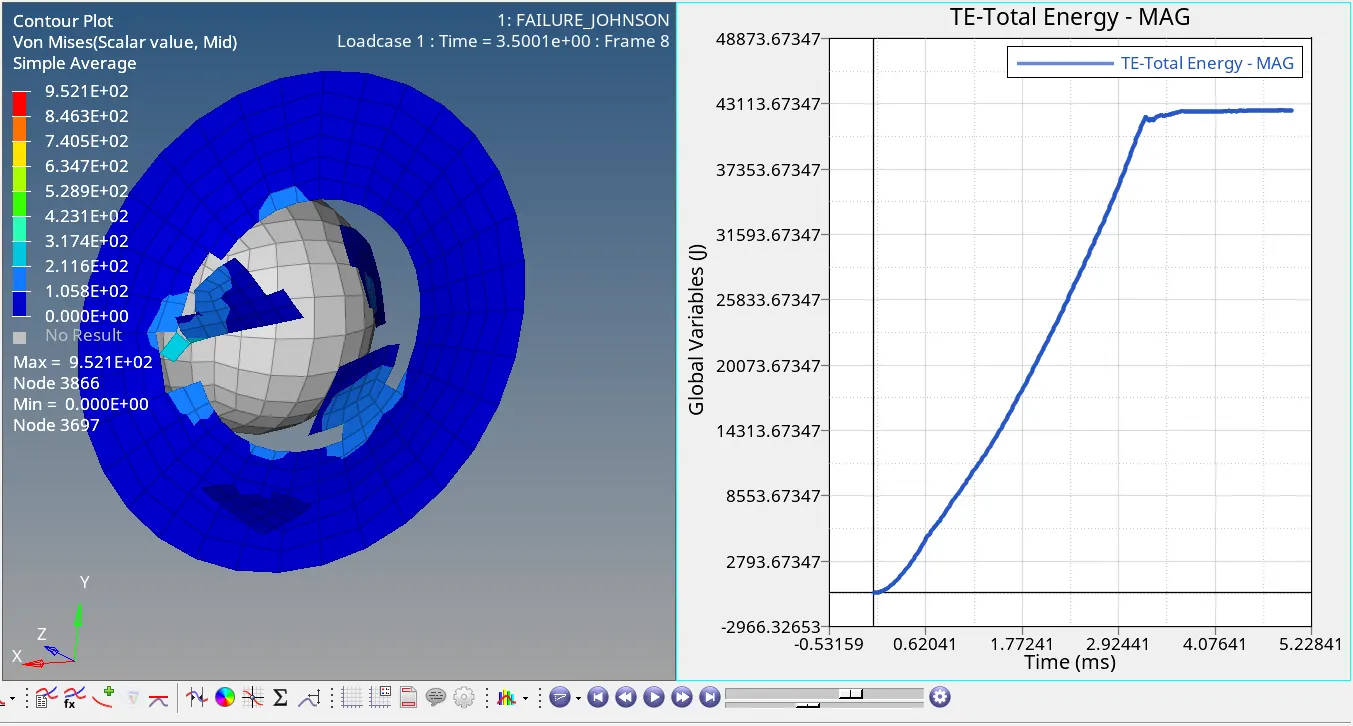
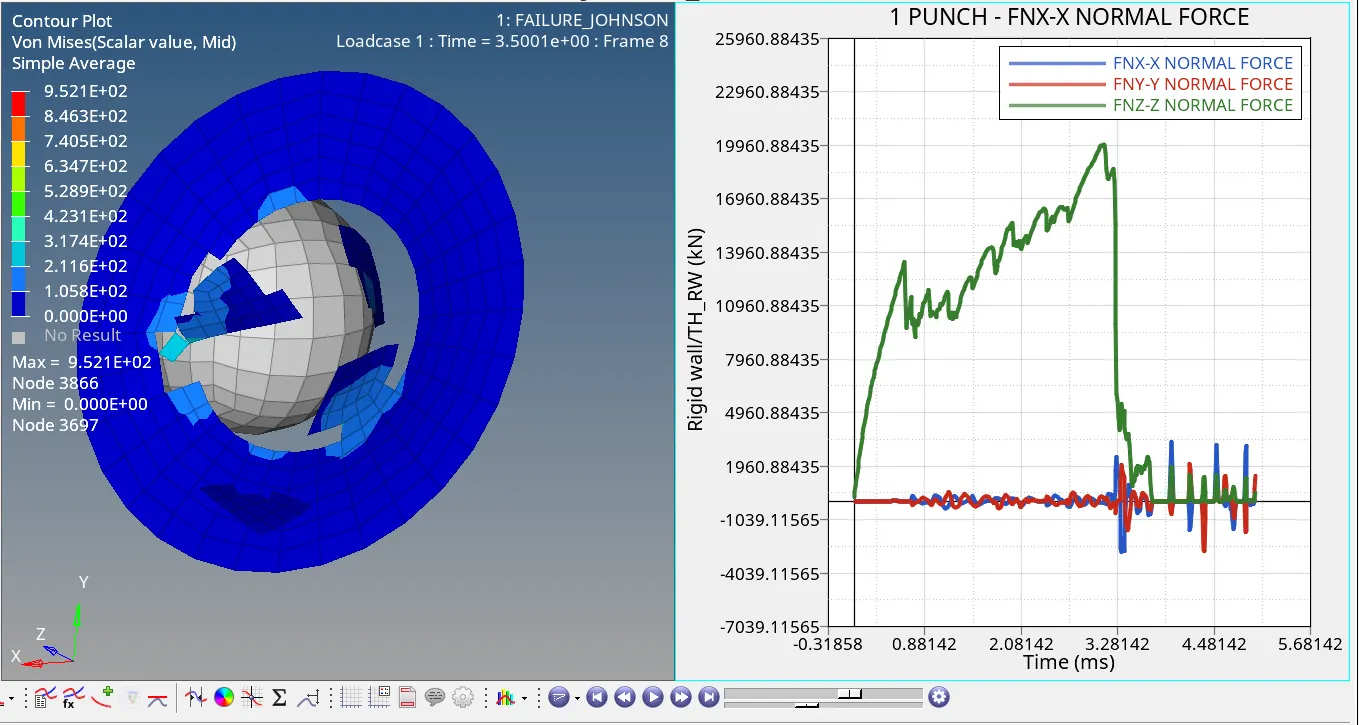
For this simulation, the elements deform quite a bit plastically according to the custom function which we have created in the N_func card before failing which occurs when the strain crosses the eps_p_max value of 0.16. In this particular case, the elements get deleted after they fail and the stress acting on those elements becomes zero as shown in the picture.
7. Law27 :
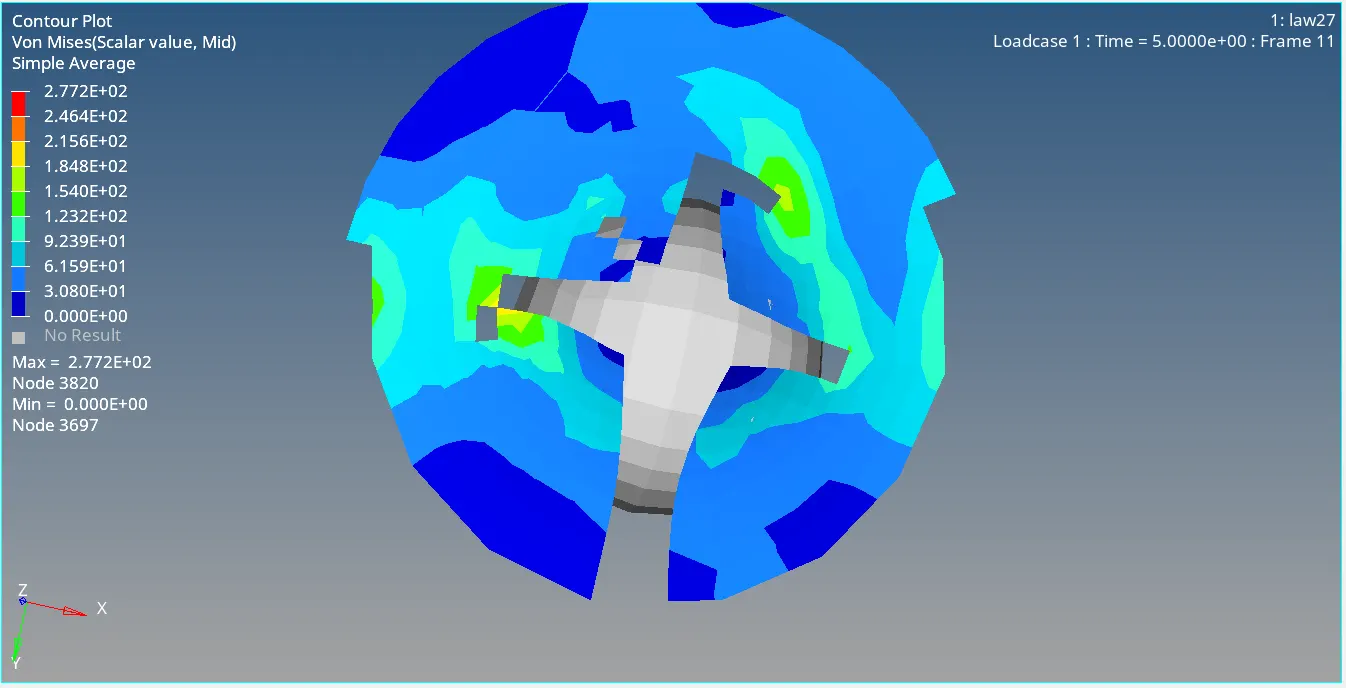
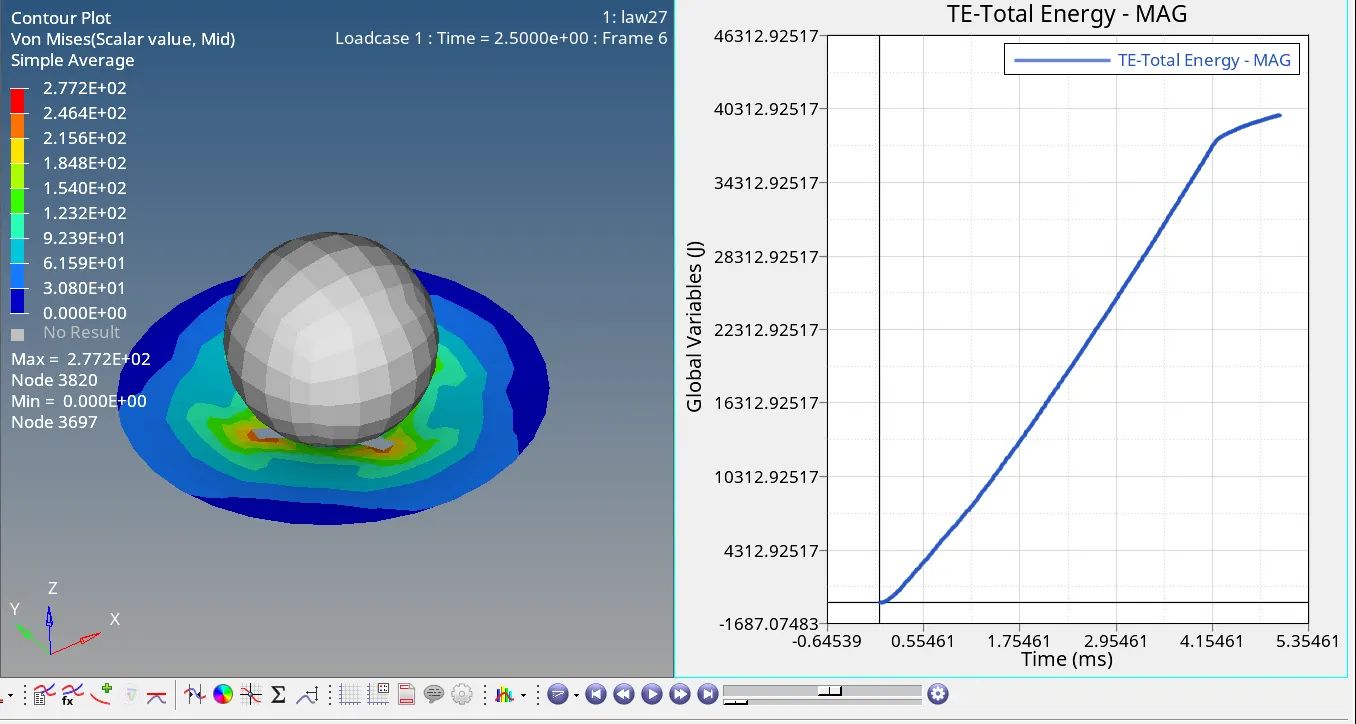
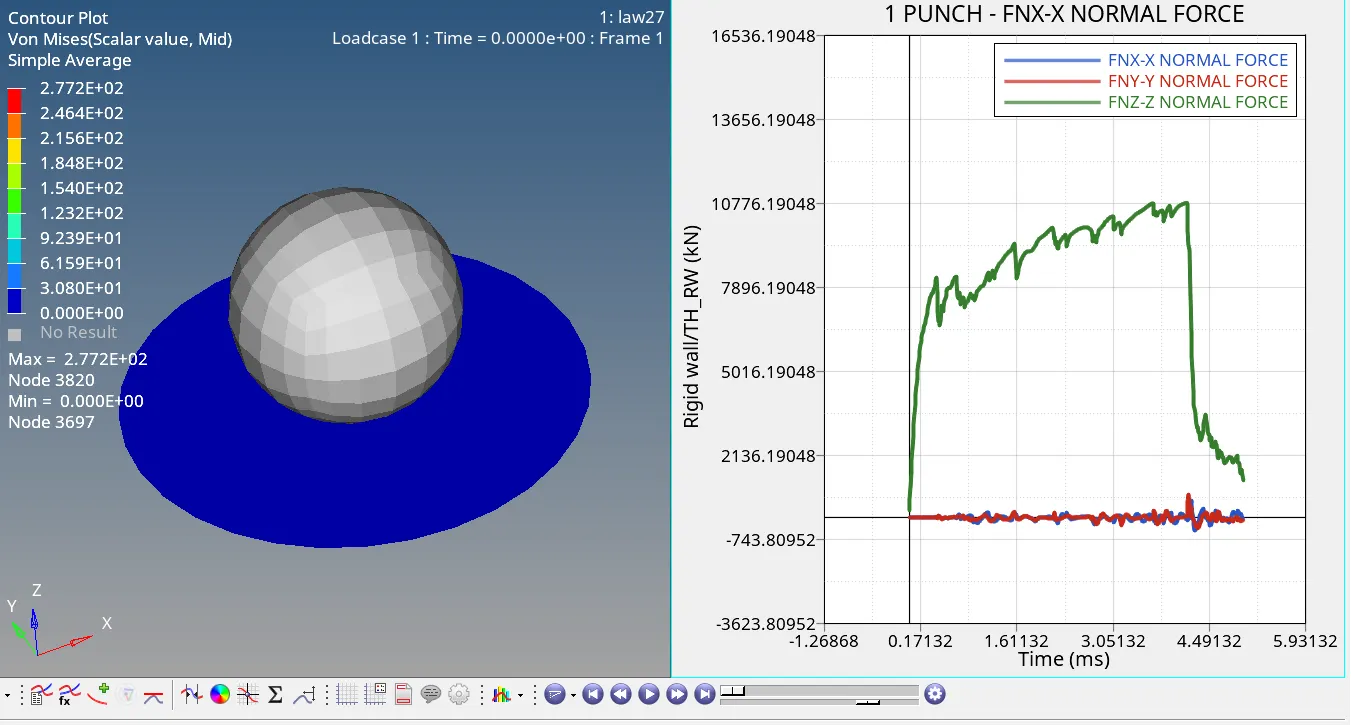
For this simulation, the elements deform very less plastically after the Yield stress value (290 GPa) is crossed before failing which occurs when the strain crosses the eps_t1 value of 0.14. They further follow the path of zero stress at eps_m1 at 0.15 following which they get deleted at eps_f1 of 0.151. As we can see above it behaves as a brittle material forming a very large crack that extends to the circumference of the plate and also breaks further along the circumference due to strain crossing the maximum threshold. This type of behavior is different from the rest which has varying amounts of elasticity while this type has almost negligible elasticity.
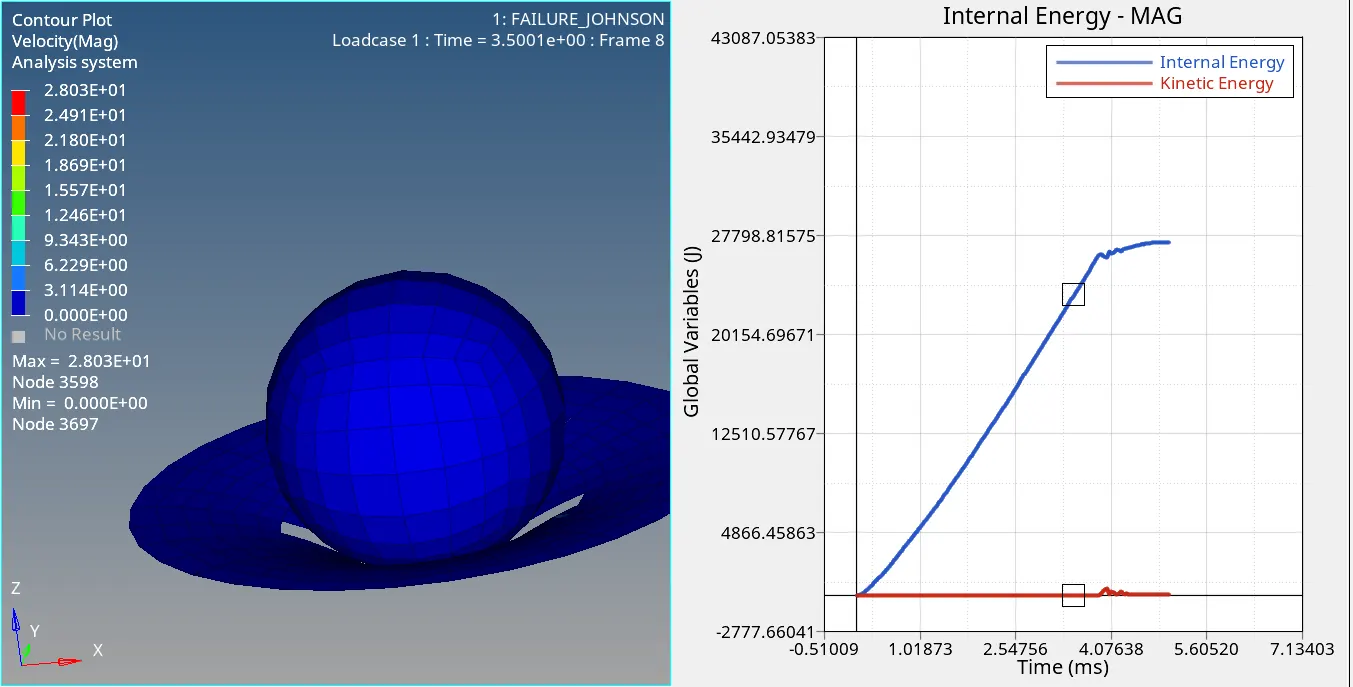
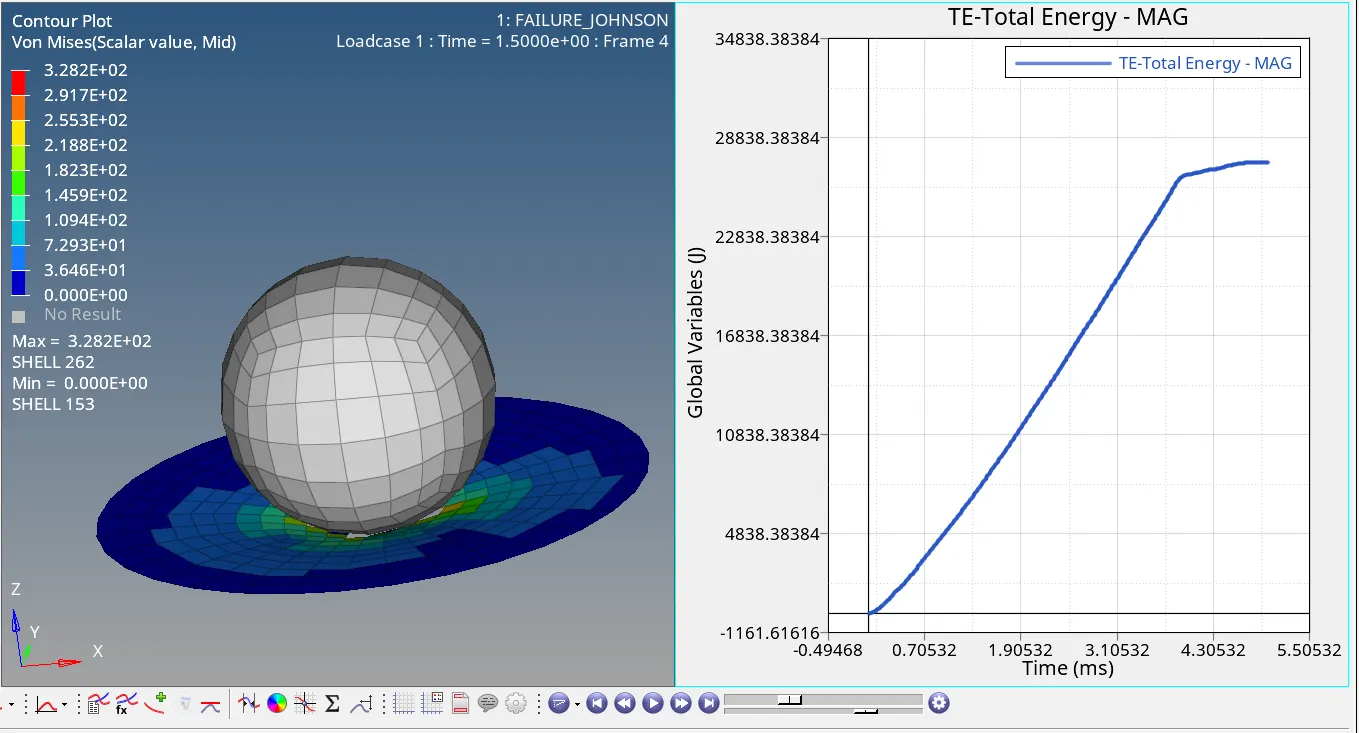
3. Plot of Energies: The total energy. kinetic energy and internal energies are plotted below for each case :
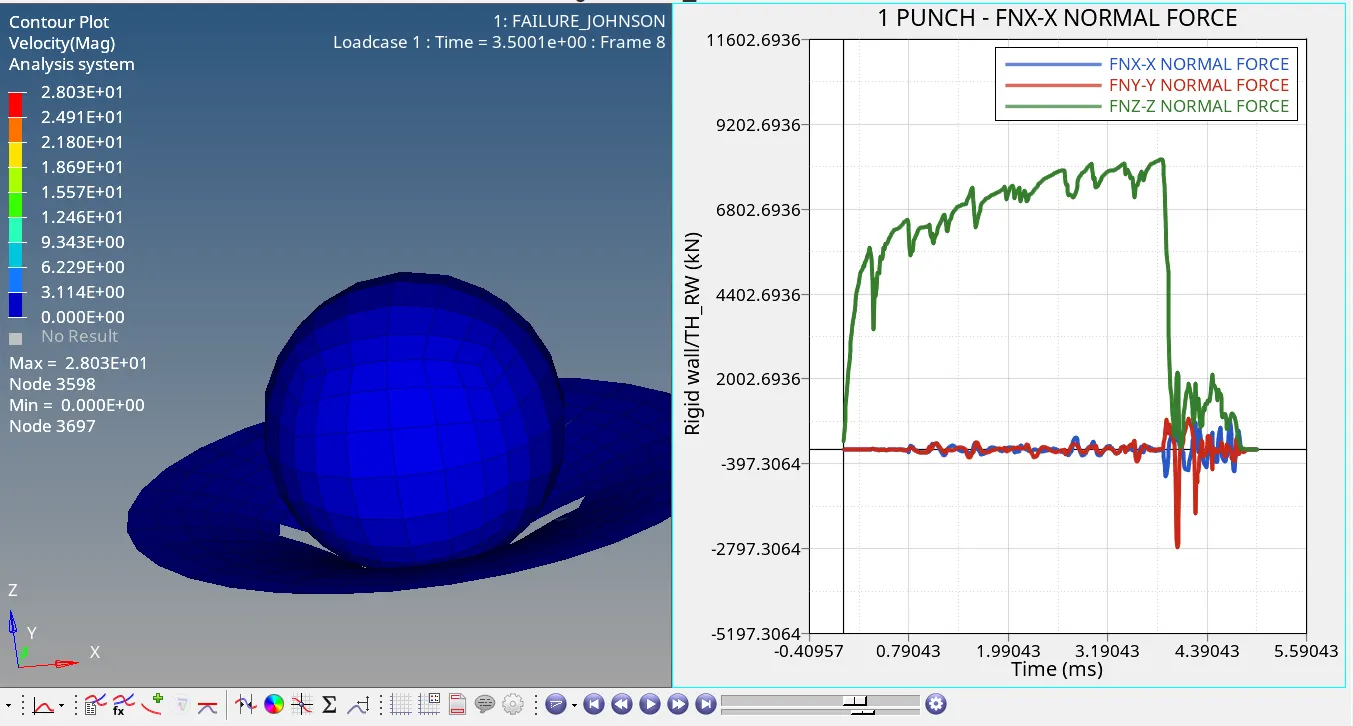
1. Law2_epsmax_failure :
Energy
Stress/Energy
Force
2. Law2_epsmax_crack :
Energy
Energy/Stress
Stress/force
3. Law2_epsmax_nofail :
Energy/Stress
Energy/Stress
Force
4. Law2 :
Energy
Stress
Energy
Force
5. Law1 :
Stress/Energy
Stress/Energy
Force
6. Law36 :
Stress/Energy
Stress/Energy
Force
7. Law27 :
Stress/Energy
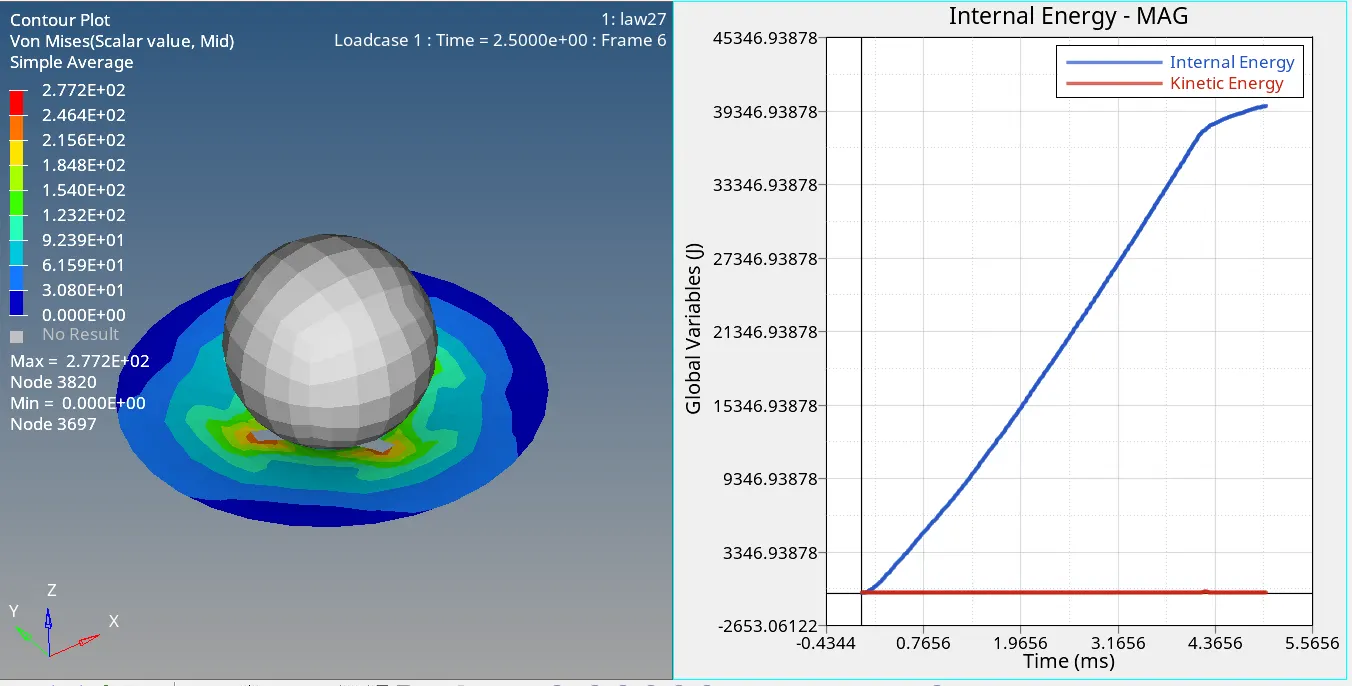
Stress/Energy
Force
Observations: For all the above cases the results have been given in table format.
| Max stress | Force | Total Energy | |
| Law2_epsmax_failure | 328.2 Gpa | Increases in a zig-zag manner until failure and then drops rapidly followed by some deviation until becoming zero. |
Around 28000 Joules |
| Law2_epsmax_crack | 294.7 Gpa | Increases in a zig-zag manner until failure and then drops irregularly followed by some deviation until becoming zero |
Around 30000 Joules |
| Law2_epsmax_nofail | 270.5 Gpa | Increases in a zig-zag manner until failure and then drops rapidly followed by some deviation until becoming zero. |
Around 27500 Joules |
| Law2 | 424.7 Gpa | Increases linearly until the end of simulation with no drop. | Around 62000 Joules |
| Law1 | 1099 Gpa | Increases very linearly until the end of the simulation with no drop. | Around 850000 Joules |
| Law36 | 952.1 Gpa | Increases in a zig-zag manner until failure and then drops rapidly followed by some deviation until becoming zero. |
Around 42000 Joules |
| Law27 | 277.2 Gpa | Increases in a zig-zag manner until failure and then drops rapidly followed by some deviation until becoming zero. |
Around 41000 Joules |
4. Based on the above simulations, the case that would best represent the on-field scenario would be Law36. Due to the fact that the material behavior, in this case, is most accurately represented in the simulation as we have entered the engineering stress-strain curve for the material using lab found results and hence the material would behave exactly as how we have observed, having the realistic balance of elastic and plastic behavior. Also, upon observing the simulation we find that the method of failing of elements is most realistic looking at the animations for this simulation.
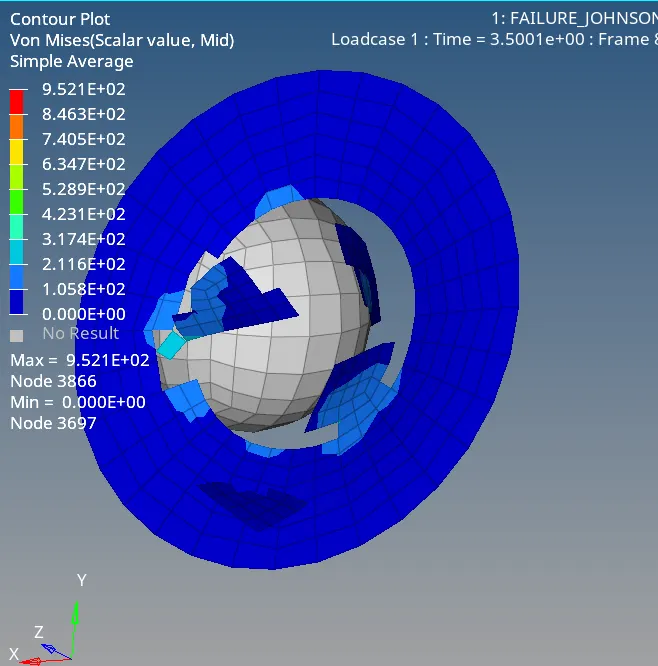
Also, the stress generated in this simulation is quite high and the forces reach a high value before dropping off due to the destruction of elements. Hence this result is the most accurate among the rest.
5. A case-by-case study has been formulated above on the basis of internal energy, kinetic energy, total energy, normal forces, and stresses and given in a descriptive manner.
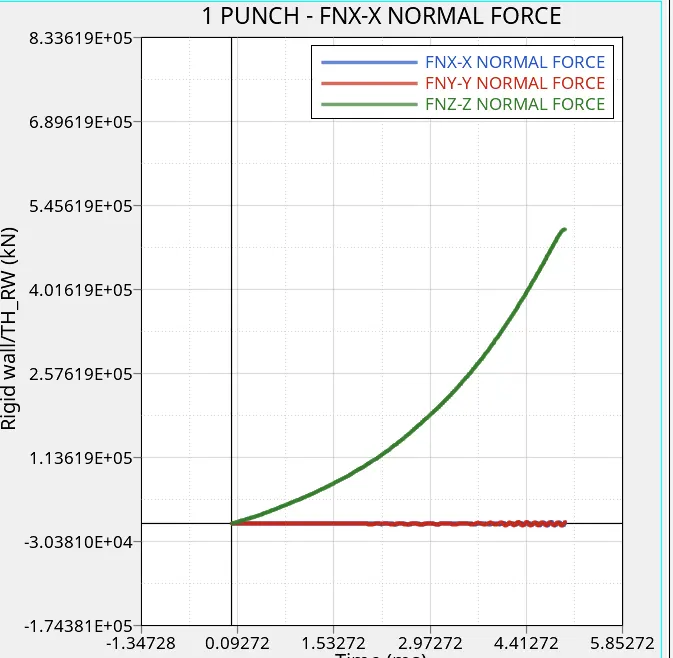
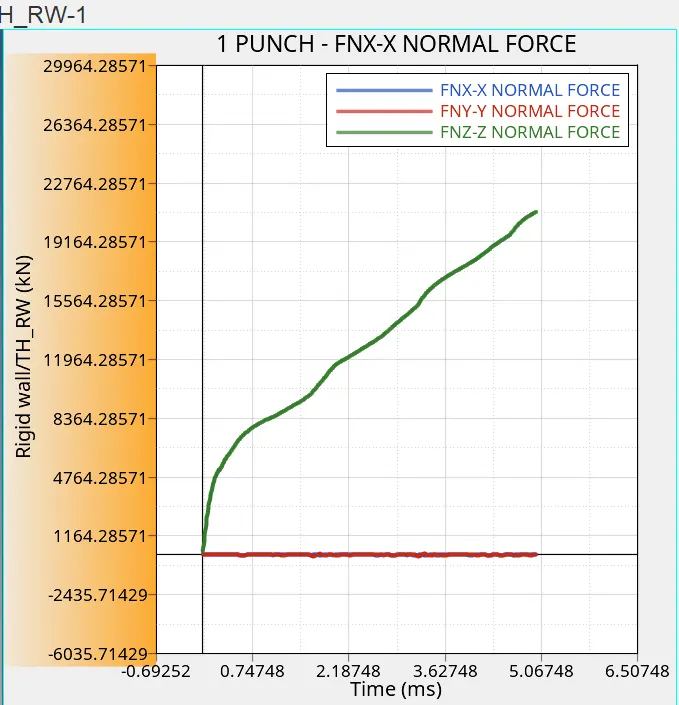
Observations: In all the cases except Law2 & Law1 we notice that the forces drop by the end of the simulation due to the failure of elements and the energy being dissipated by these elements failing. However, in Law1 & Law2 the simulation behaves as though the material has infinite elasticity and as a result, the elements do not fail and the forces and stresses have no outlet to dissipate.
This is especially apparent in Law1 as the material behaves fully elastically giving rise to very high stresses of the order of 1099 Gpa, and the force curve does not drop off until the end of the simulation.
In Law2 however even though the material card allows elastic-plastic behavior, as we have not mentioned the parameter that defines element failure, the element is not allowed to fail and this causes a kind of pseudo-elasticity giving rise to very high stresses of the order of 424.7 Gpa, and the force curve not dropping off until the end of the simulation.
Conclusion: In this way, we have studied all the material cards and found out their behaviors for the same simulation in detail.