Assignment 4
q1) Compare SI vs CI and list down differences:
The model comparison was compared b/w a 4 Cylinder Naturally aspirated SI engine and 6 Cylinder CI engine which was turbocharged. As the name suggests in the SI engine we use Petrol/ Gasoline (fuel with high octane number or low cetane number) as fuel and for CI engines we use diesel as fuel( Fuels with a high cetane number or fast-burning fuel).
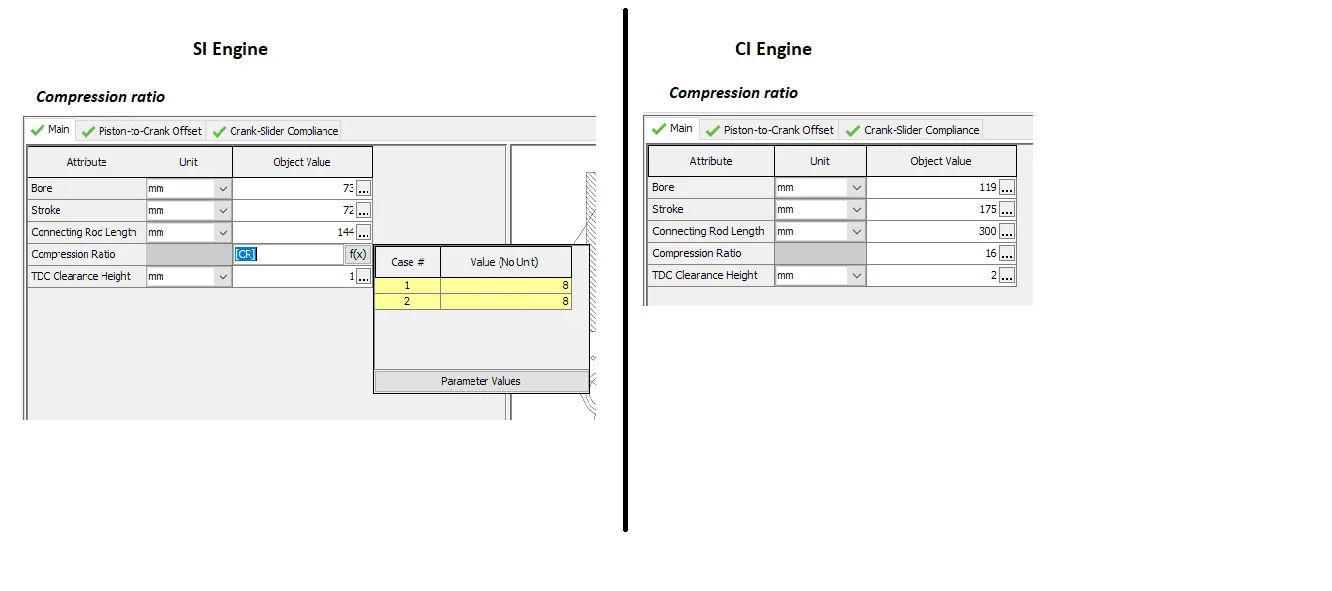
- The 1st difference we can see is in the Compression ratios of the two engines, were the CI engines are having higher CR ratios in order of 15 and above compared to the SI engine having a max limit of 12.
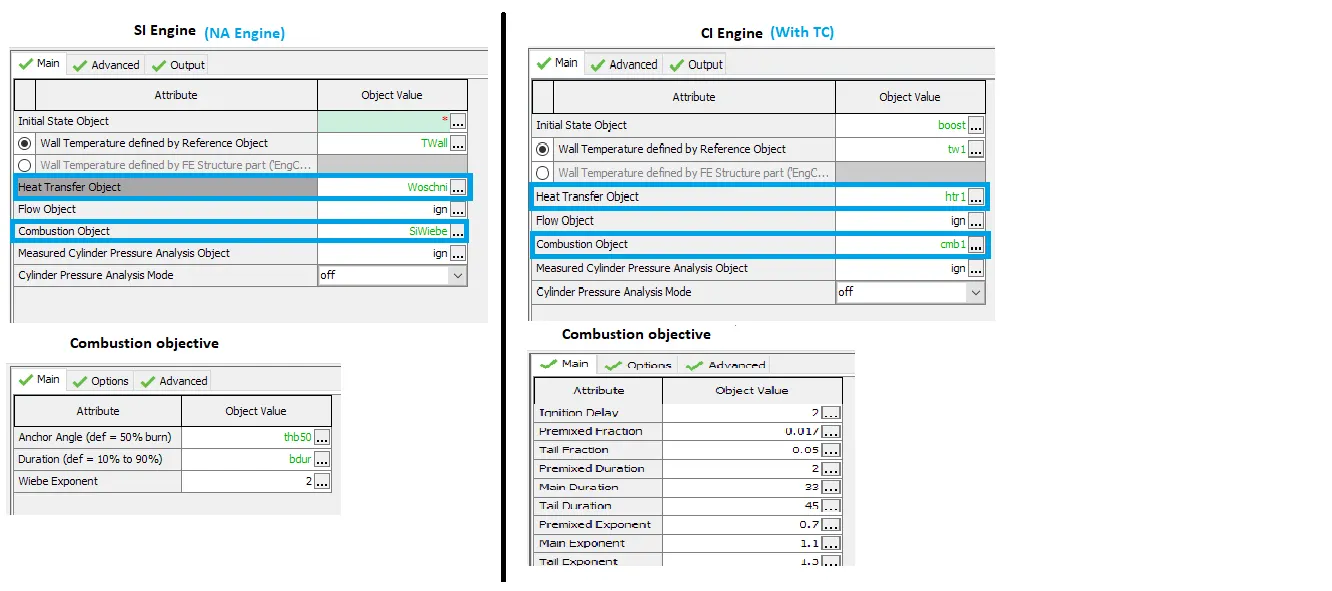
- The heat transfer objective used in both the engine models is Woschni GT models with the Combustion object different for SI and CI engines.
- In the SI engine, we use the SI-Wiebe combustion model where we can control the Anchor angle, Burn duration, and Wiebe exponent. Whereas in CI engines, we use the DI-Wiebe model, which helps us accurately model the burn rate of fuel. Here we control parameters like ignition delay, premix duration, main duration, etc to model the burn rate of fuel.
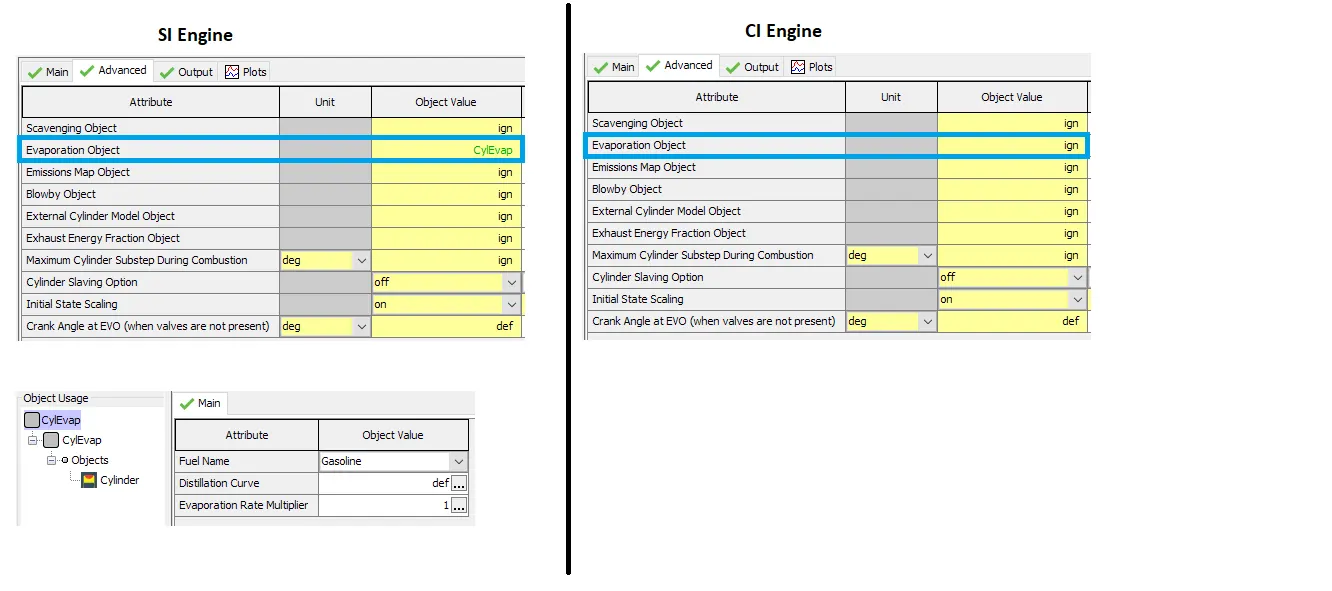
- Another difference we can observe is the evaporation object, which describes how the evaporation of fuel inside the cylinder takes place. For the SI engine model, we should define the fuel properties at which it will evaporate. But for the CI engine model, it is ign. by default as its properties will be taken care of by the CI-Weibe model.
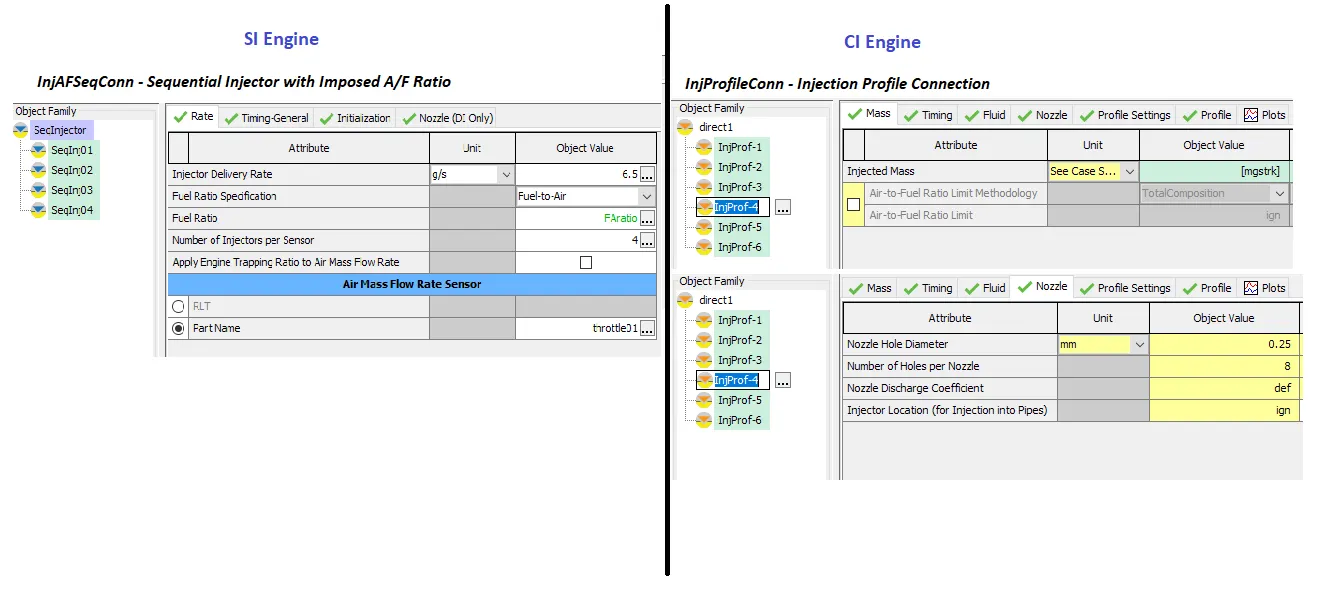
- For the SI Engine model, we use a sequential injector, where the user imposes the fuel-to-air ratio, and the resultant injection pulse width is calculated for each injection event. Here fuel rate to the engine is calculated based on the provided data of the A/F ratio.
- In CI engines we use a fuel injector with well-defined hole diameter and number holes. The pressurized diesel will be sprayed through these holes under high pressures so that these can be atomized. Usually, in order to keep a check on soot level/unburned carbon, we keep a min limit of the A/F ratio to 19.
- Combustion is initiated in the SI engine with the help of a spark plug and in CI engines through self-ignition.
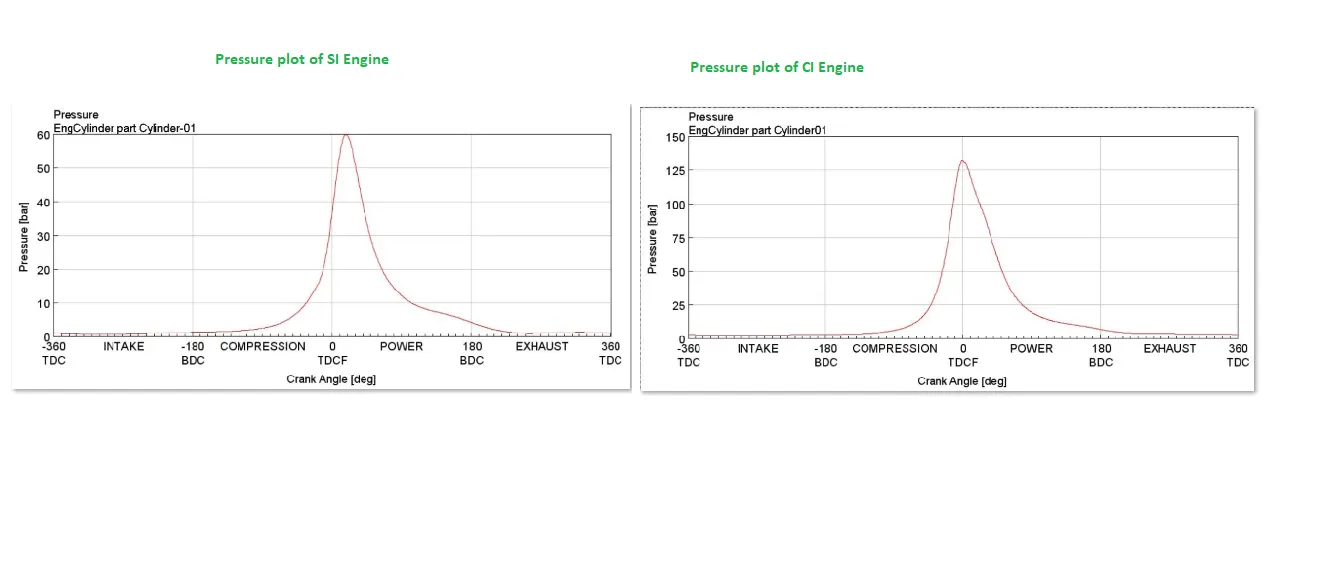
- The In-cylinder pressures of CI engines are on the higher side compared with that of gasoline. This is due to higher CR ratios in the CI engine.
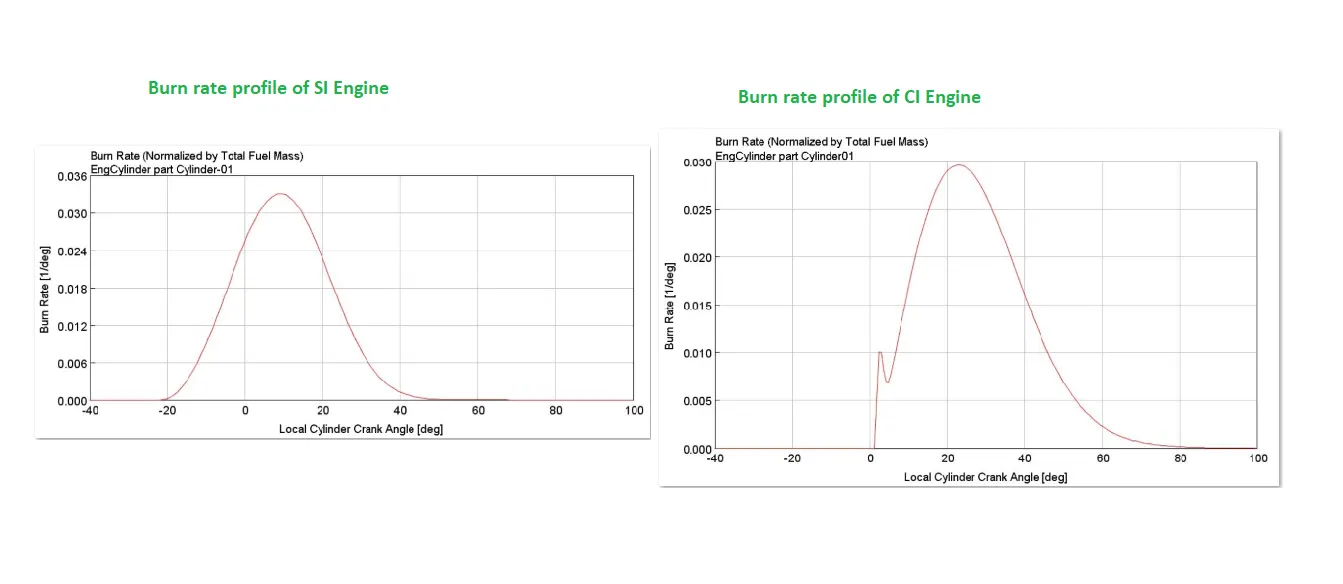
- The burn rate profile of both the engine is different because in the SI engine we provide the air-fuel mixture directly giving us much better control over the combustion. In the case of the CI engine due to compression ignition and supply of fuel through the injector, the control over the combustion is less. Also, we need to input a lot of parameters like the injection delay, fuel rate, etc which leads us to this profile provided.
2.Comments on the following parameters
- BSFC
- Exhaust Temperature
- A/F ratios
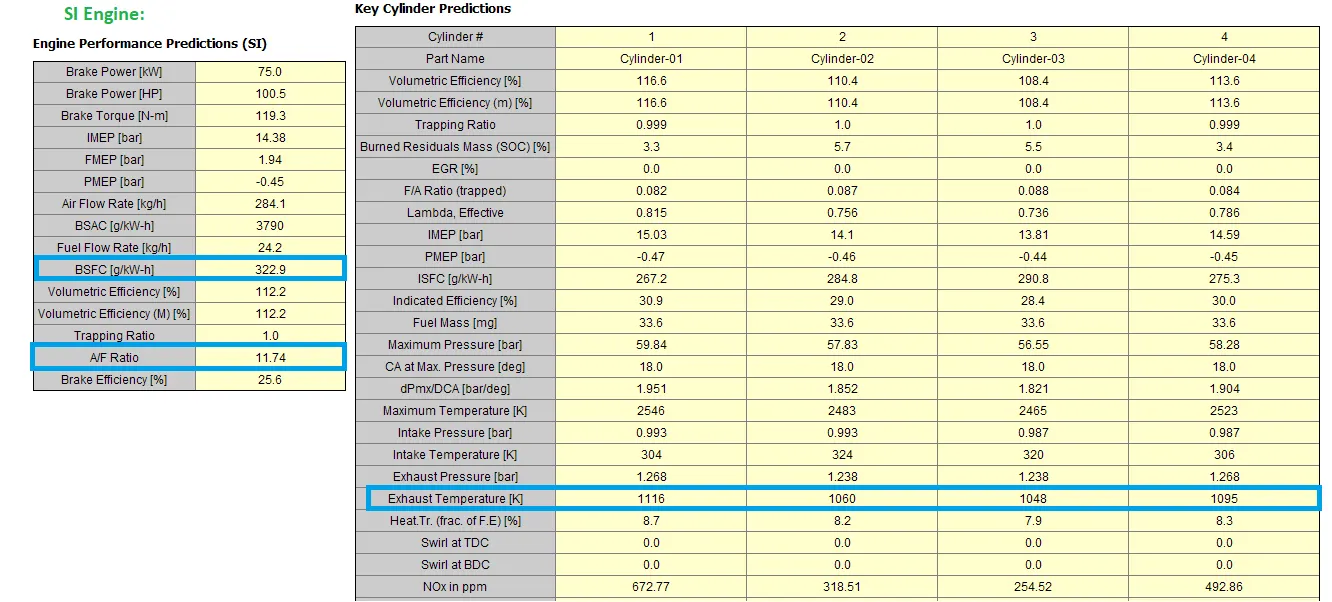
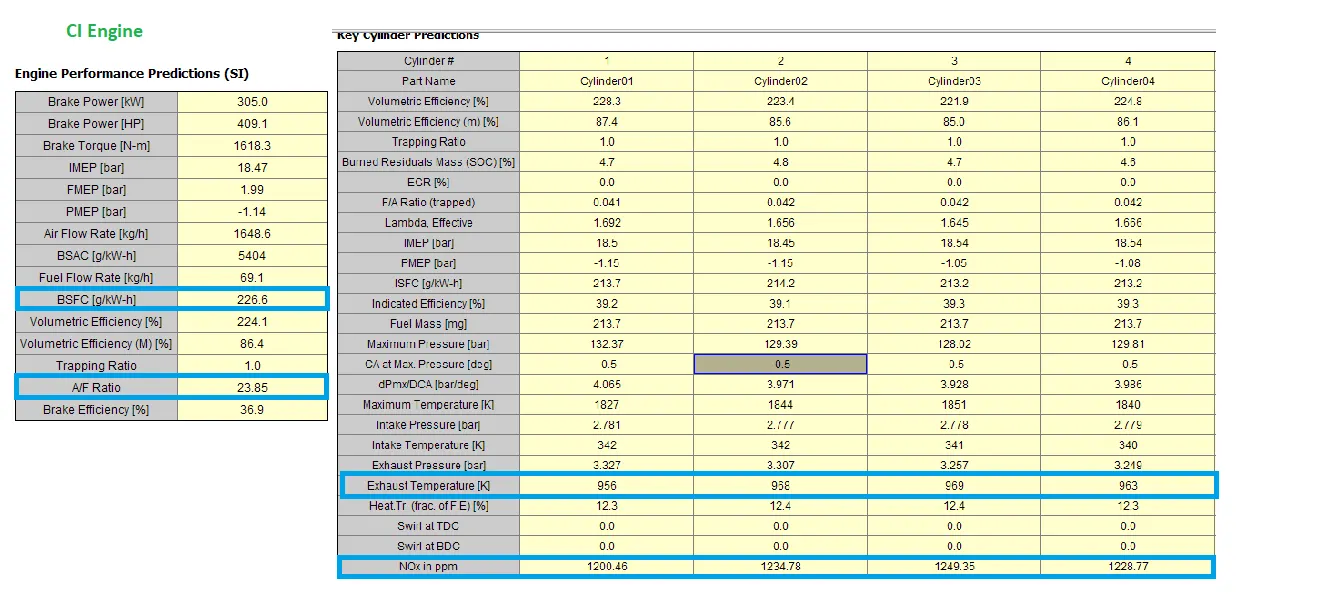
- The BSFC of the CI engine is more at 226.6 compared with that of the SI engine at 322.9. The BSFC is defined as the amount of fuel consumed for producing 1kW of power. This value can be related to the energy-carrying capacity of each of the fuel. Even though both the fuels have comparable calorific values, due to density difference, were diesel is denser than gasoline, the diesel has more energy by volume value ie. around 15% more. Thus diesel requires less amount of fuel to produce the same amount of work done by diesel.
- Air fuel ratio: A/F ratio of Diesel is high to around 19-23 and that of gasoline is 14.5. The reason for this lies in the working principle of gasoline and diesel. In a gasoline engine, the air-fuel mixture can be metered and made to the stoichiometric value at 14.5 exactly. Whereas in the diesel engine the fuel is injected directly to burn with the compressed gas. So metering is an issue. Thus in order to burn the entier fuel provided, we supply excess air making the A/F ratio on the higher side. This also helps in reducing the carbon and HC content in the exhaust but with an increase in NOx value.
- Exhaust Temperature: The exhaust temperatures of diesel engines in all the cylinders are less compared with that of Gasoline. This is due to the spark plug initiation of combustion, where we supply an external spark to burn the fuel compared to self-ignition in diesel.
Q3) Change MFB 50 and observe the impact on performance
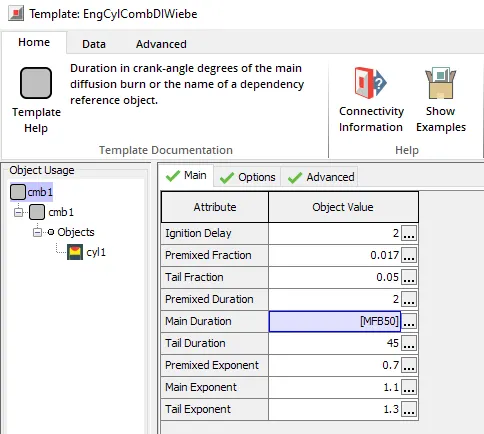
Five cases were selected to see the variation of burn duration on engine performance. The MFB50 parameter was changed from 27 to 39, in steps of 3.
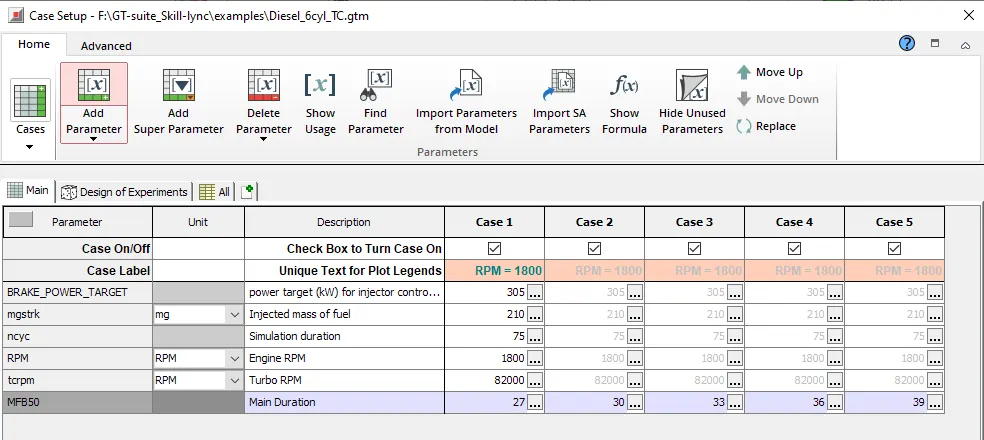
Results:
- Variations in Burn-rate
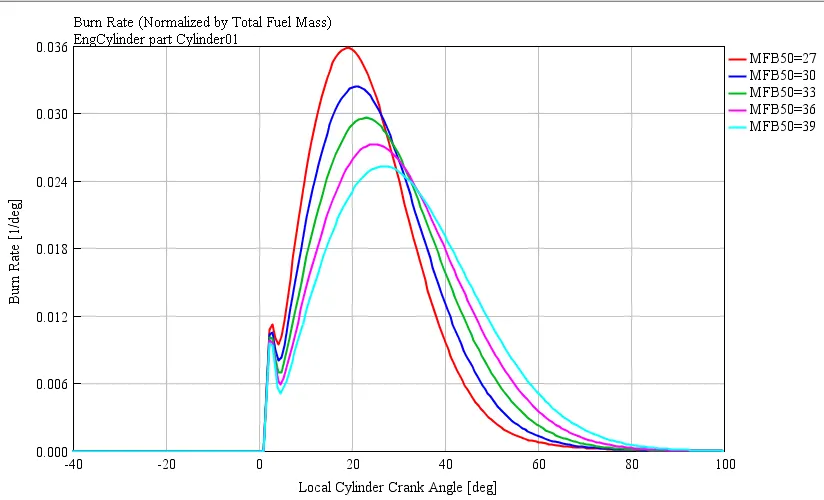
- The graph tends to move towards the right side with the increase in the value of burn duration, with more time available to release the heat energy.
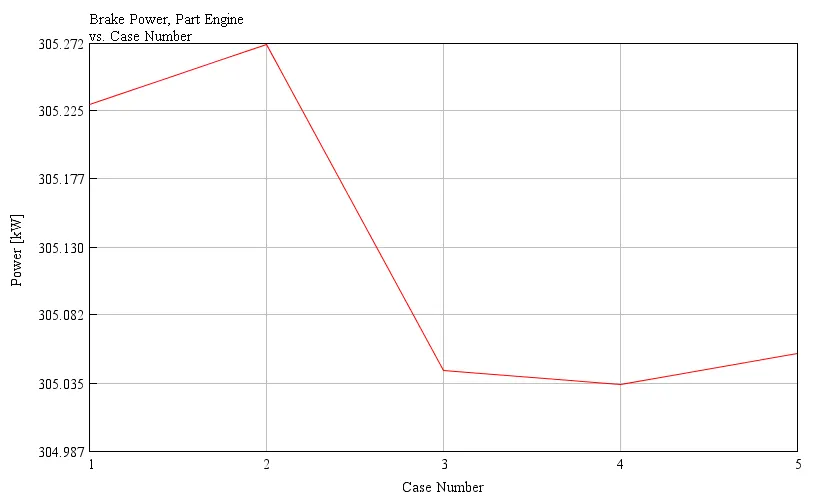
- Effect on Brake Power:
- Effect on BSFC:
- Effect of NOx:
- Effect of CO2:
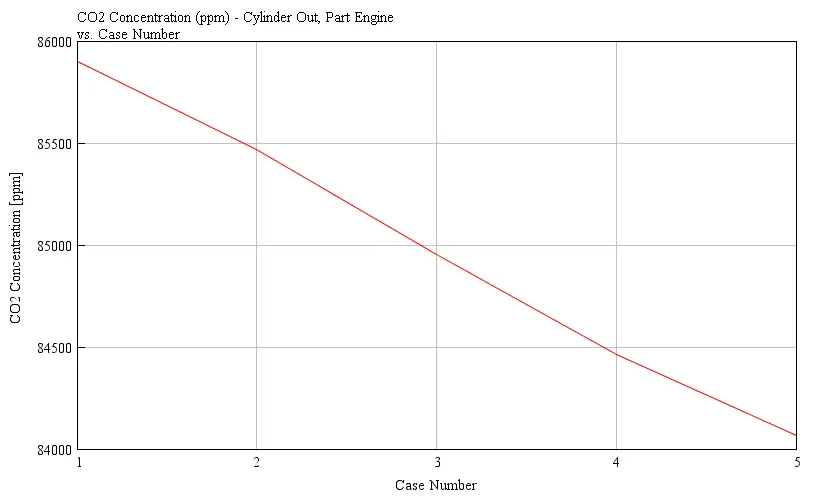
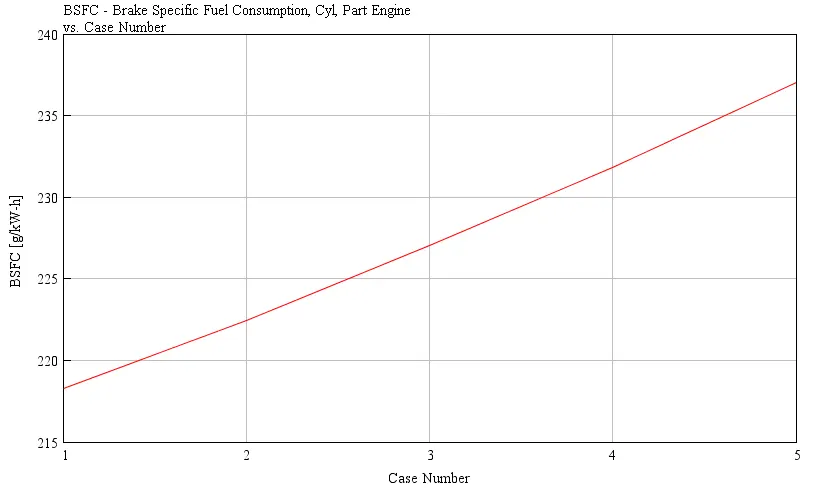
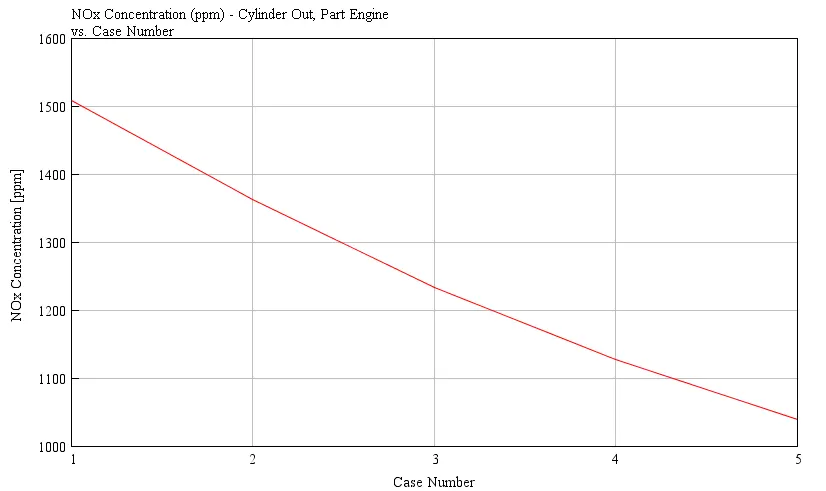
We observe a huge impact of burn duration on BSFC Value with its varying from 240-218 as we increase the MFB50 value from 33 to 39. This is due to the fact that more time is available for the fuel to burn and release the entire amount of heat. This is the reason we are seeing a reduction in NOx and CO2 concentration value, due to the complete combustion of the fuel.
The influence of burn duration on power output is more or less the same varying between 305 kW and 304kW.