Assignment 3-2D Element Formulation Challenge
OBJECTIVE
In this challenge, with the beam shell elements to start a crash simulation with and without property formulations and plotting the energy of the results.
CASE 1
This case, the model itself after importing the .rad(starter)file, set the Tstop value to 55ms and the frequency of animation file is 35 frames. The frequency is set to 1.579.
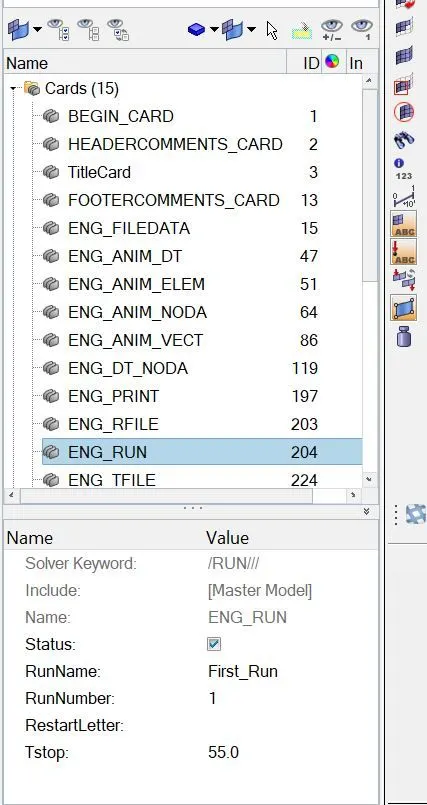
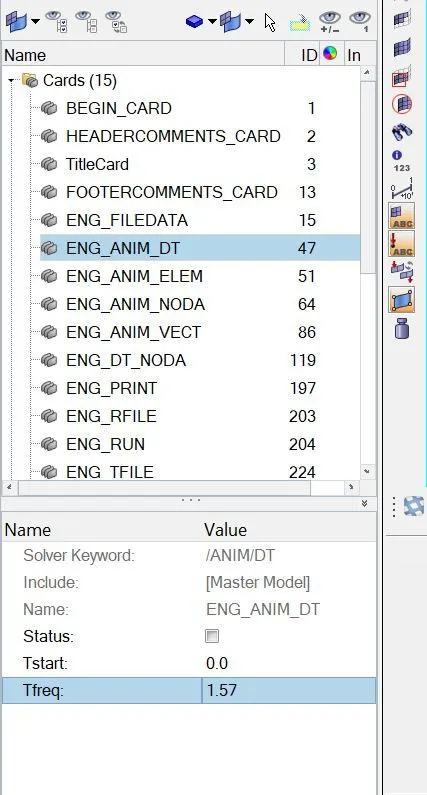
These values are used for both cases. After setting the frequency start the radioss simulation with -nt 4(4 CPU’s). Now it will display the run time and cycles completed. Now check the errors and energy in the 0001.out file.
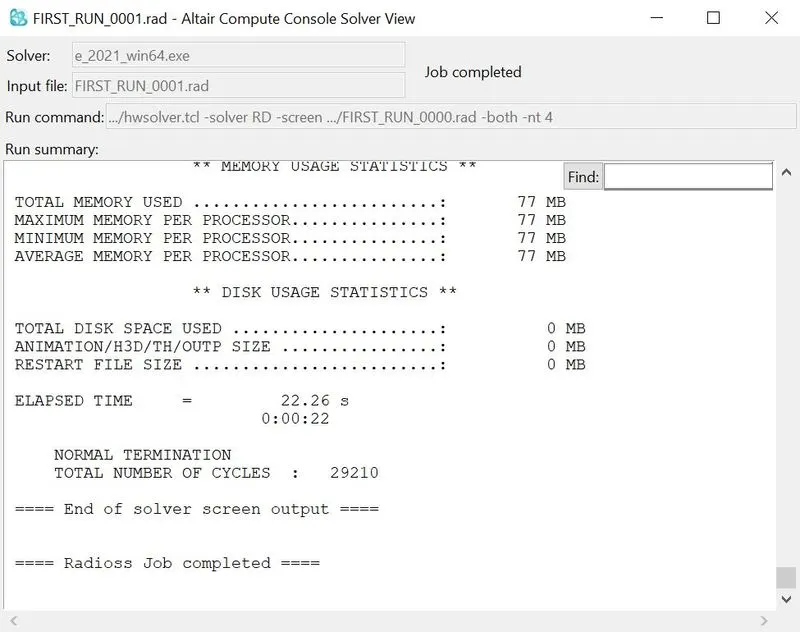
After the simulation completes save the files in certain folder to view HyperView. Switching to hyper view, now import the h3d file in the format of H3D file. We can visualize the animation of the crash model.
After the HyperView switch to hypergraph 2D, start a plot window import the T-history file, it contains history of the simulations with the results. Then plot the internal energy, hourglass energy, kinetic, contact, total energy of the simulations.
CASE 2
For this case, use same import and engine file values as the same. And give prop formulation cards that given in the question. Change the Ishell= 24, Ismstr=2, and the Ish3n(2), N(5), Ithick(1), Iplas(1) remains default in the radioss.
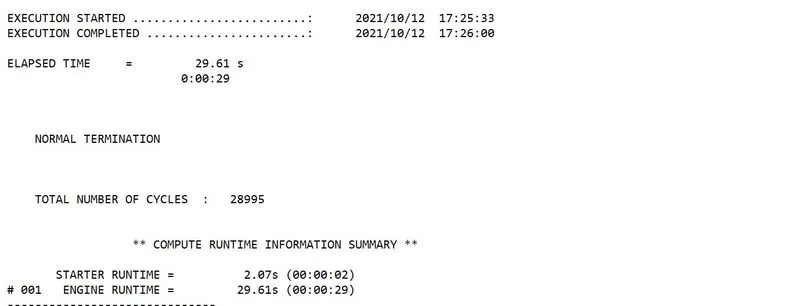
Now run the simulation, target to separate folder. Then the cycles and the energy error can be noted in the 0001.out file. After opening the hyperview the we can see the crash visualisation and contour of the models by importing the h3d file. Then also plot the graph by importing the t-file in the hypergraph.
COMPARISON
In the 1st simulation the cycles completed is greater than the 2nd cycle. this may not make any differences.
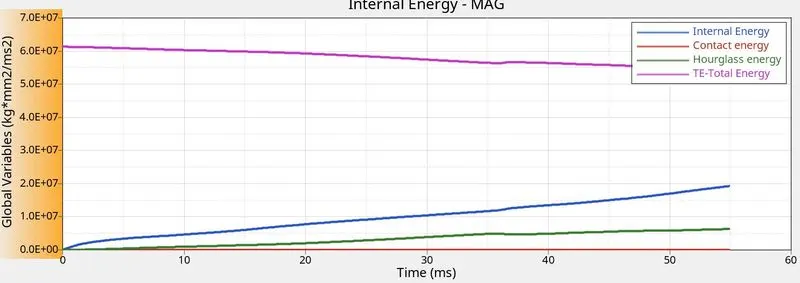
the energy of the output shouldnt higher than 5%, in the 1sr case the error and hourglass energy and total energy in the model are very high as shown in the below image.
case 1

case 2
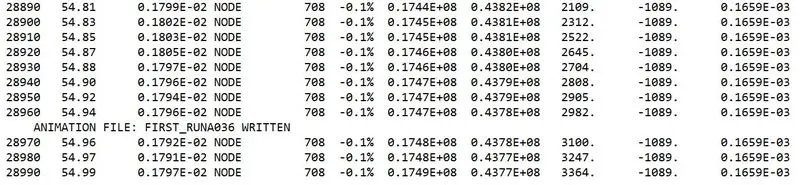
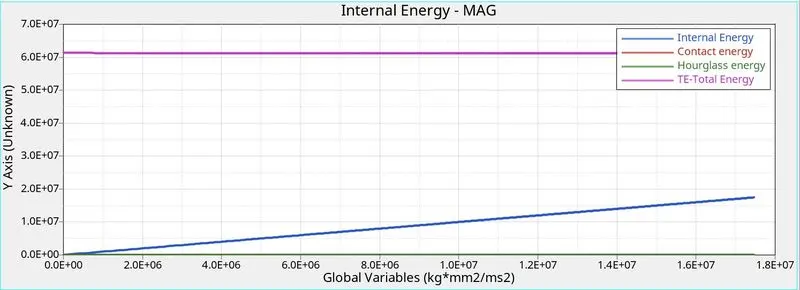
then the hourglass energy becomes zero because of the Ishell=24 formulation.
this includes hourglass stabilization, improved integrated 4 noded element and best in cost and quality.
CASE 1
CASE 2
CASE 1
CASE 2
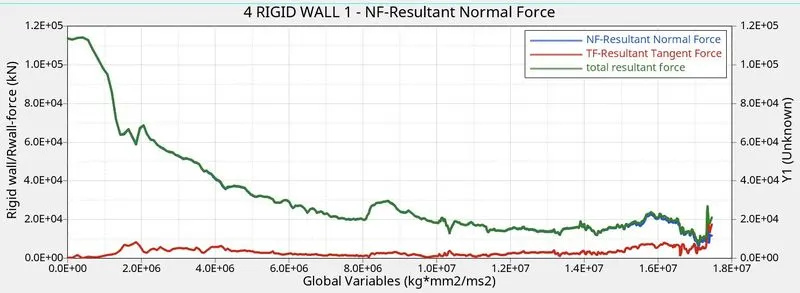
RESULTS
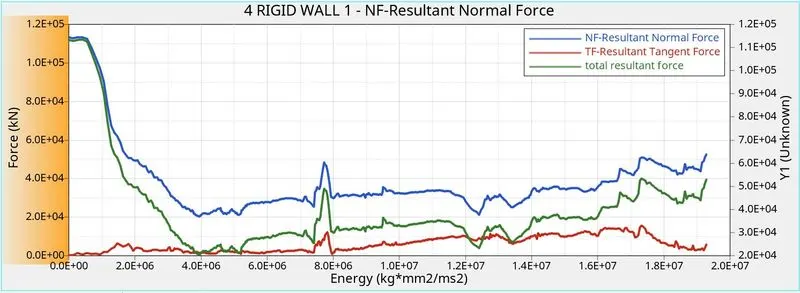
To eliminate the hourglass error in the simulation the QHEP is usedd here for better stabilization. contact energy is very less and total energy is very stable in element formulation. and hourglass energy becomes zero. due to the QHEP and Ish3n, Ismstr, Ish3n also can stop the hourglass deformation.