Assignment 3-2D Element Formulation Challenge
AIM: To run the simulation for the given component with and without changing the recommended element parameters using radioss solver.
OBJECTIVE:
- To change the run time to 55 ms and to change the number of animation steps to 60.
- To run the base simulation with default element parameters.
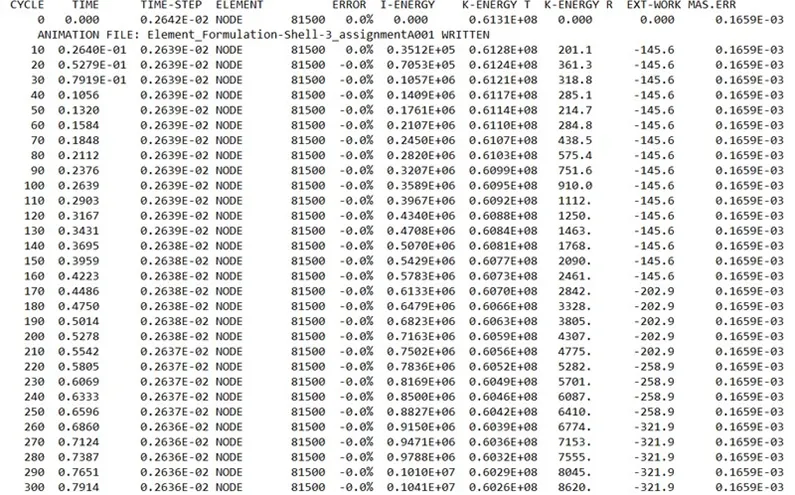
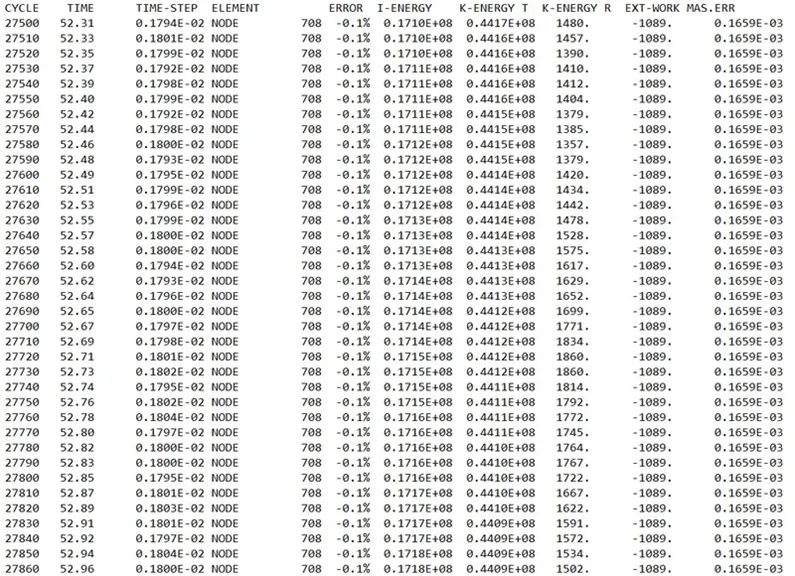
- To check the energy error and mass error for the base simulation.
- To plot the graphs for kinetic energy, internal energy, hourglass energy, total energy, contact energy, and rigid wall forces.
- To run the new simulation with recommended element parameters and to plot the graphs again.
INTRODUCTION:
ELEMENT FORMULATION:
1. Discretization is the process of dividing a model body into an equivalent system of many smaller bodies (finite elements) interconnected at points (nodes or nodal points) common to two elements.
2. Radios element library contains elements for one, two or three-dimensional problems and can be classified into the following categories of elements:
1) 3D Elements-Tetra,Penta,Pyramid,Hexa.
2) 2D Elements-Trias, Quads.
3) 1D Elements-Springs,Beams,Trusses.
1D ELEMENTS:
- 1D Elements are modeled by connecting two nodes together linearly and then assigning constant cross-sectional properties to that element to define the element’s behavior.
- There are three general types of 1D Elements available-Truss Elements, Beam Elements, and Spring Elements.
2D ELEMENTS:
- Shell elements are 3 or 4 node 2D planar elements with constant thickness, and have either a triangular or quadrilateral shape, that can be oriented in the space.
- They are typically used to model structures such as pressure vessels, automobile bodies, ship hulls,aircraft fuselage etc.
- Shell elements support all translational degrees of freedom as well as all rotational degrees of freedom, that is shell elements have 6 degrees of freedom. RADIOSS shells are based on Mindlin-Reissner theory that includes transverse shear deformation valid for moderately thick and thin shells.
- RADIOSS provides both reduced and fully integrated 4-noded shell elements.
HOURGLASS:
- Hourglass deformation happens to a element due to a applied load.
- It is excessive deformation in finite element mesh.
- Element having zig-zag or hourglass like shapes.
- Hourglass deformation occurs due to an under integrated nodes.I have explained above,what is under integrated node,reduced integrated node and fully integrated node.
- Under intergrated node is nothing but reduced integrated node.
- Hourglass can occur in 2D or 3D element(reduced integration scheme) when subjected to bending load.
Q4 ELEMENT:
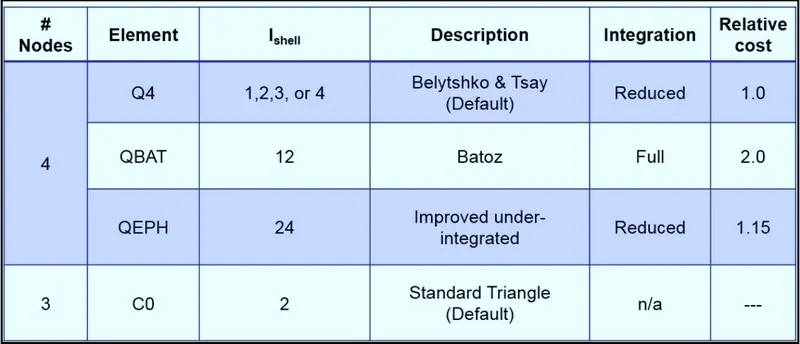
- It is an under(or) reduced-integrated element. Because it has only 1 integration point for an element.
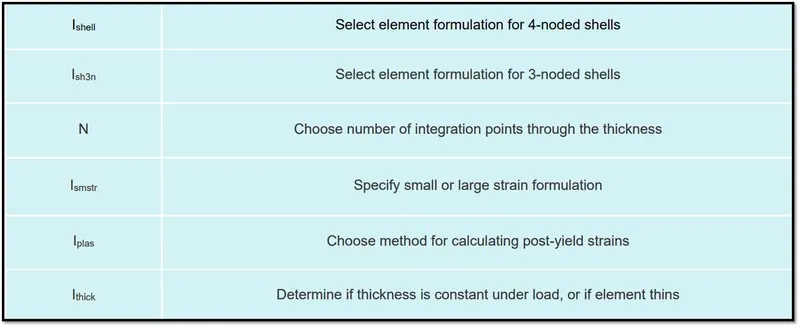
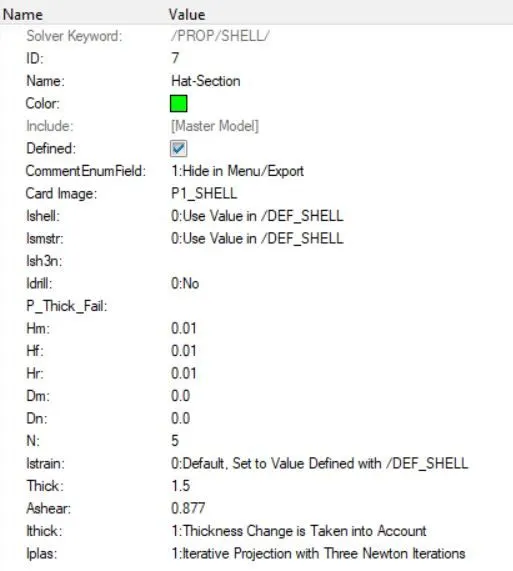
- It is represented in the radioss solver by an entity named "Ishell(1,2,3,4)".
- Usually Ishell:1, Ishell:4 elements are used, when no more velocities are to be found.
- By default, the solver takes as Ishell:1.
- As it has only 1 integration point, the time required to solve the problem with this type of element is relatively less.
- The cost required to solve this type of element is relatively low.
- But there will be no accuracy in the results.
QBAT ELEMENT:
- It is a fully integrated element, Which means it comprises 4 integrated points. Each point is near to each node.
- It is represented in the radioss solver by an entity named "Ishell: 12".
- Because of these 4 Gaussian integration points, there will be no Hourglass deformation.
- Using this element is not economical. But the achieved results are more accurate than the remaining Ishell elements of quads.
QEPH ELEMENT:
- It is an improved under-integrated element with physical hourglass stabilization within itself.
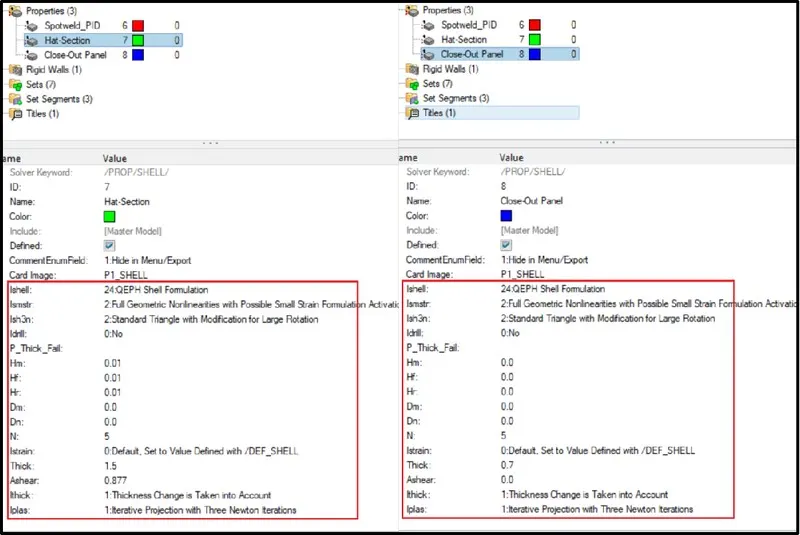
- It is represented in the radioss solver by an entity named "Ishell:24".
- This type of element is mostly used recently. Because of its best compromise between the cost, quality& accuracy in results.
CO ELEMENT:
- It is a standard co-rotational triangle, with modification for large rotations.
- Usually, it helps in representing the tria elements with the entity named "Ish3n:2".
- It consists of 1 integration point.
- No hourglass deformation.
- Low CPU cost.
- Results may not be accurate.
PROCEDURE:
CASE 1:-- WITHOUT ASSIGNING THE RECOMMENDED PARAMETER IN THE PROPERTY.
1. Import the model in RADIOSS user interface.
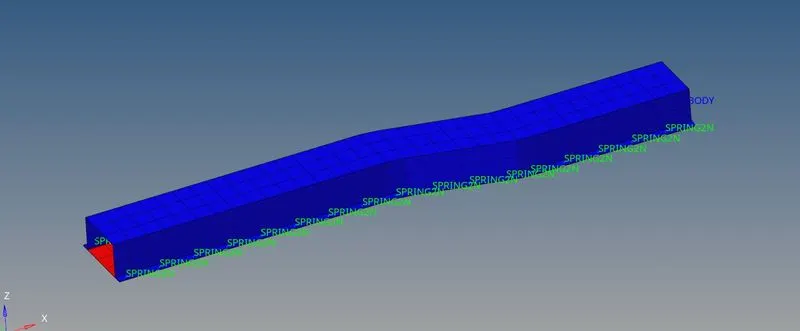
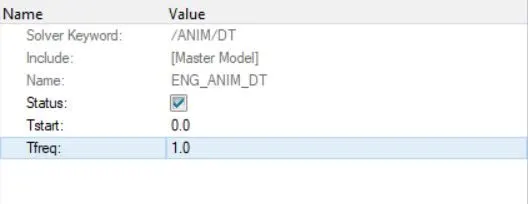
2. As per our requirement,we need to change the Tstop Value and Tfrequency Value.
3. To change the values,Go to Model Browser >> Control Cards >> Edit the Values by Selecting the Appropriate Control Card.
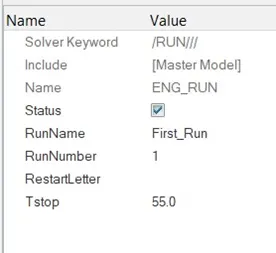
4. As per our requirement,Engine file have to generate between 25 -60 animation files.
Here im taking maximum value 55,the solver will create 60 animation files within the termination time.
Tfrequency =55/55
Tfrequency =1
5. Go to Analysis Panel >> Radioss >> Select the Input File >> Save it in Different Folder and Rename it as Case-1 >> Run.
6. Check the Include Connectors,If there are any connectors in the model,The connectors will also be taken into account.
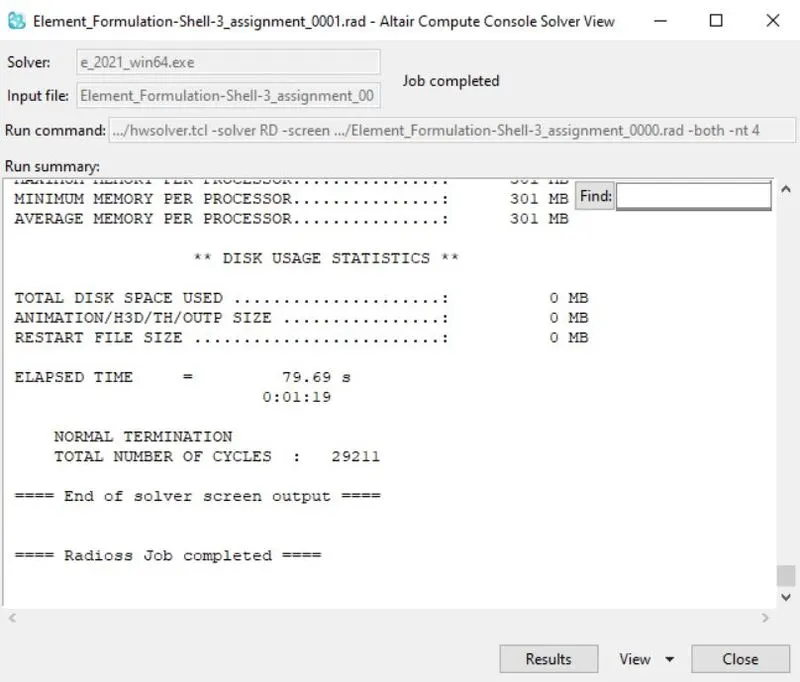
7. Type -NT 4 in options tab,This will make the simulation faster.
8. Where NT indicates No of threads,4 indicates assigning the task to 4 cores in the system.
9. Now run the solver by hitting on radioss.
Case 1 - Without Assigning the Recommended Parameters in the Property:
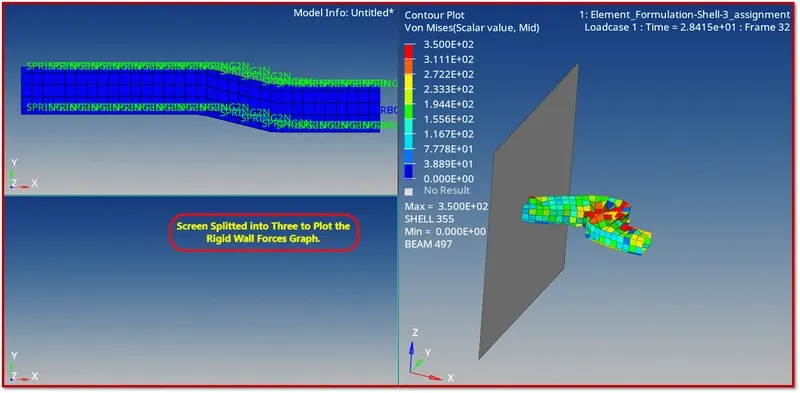
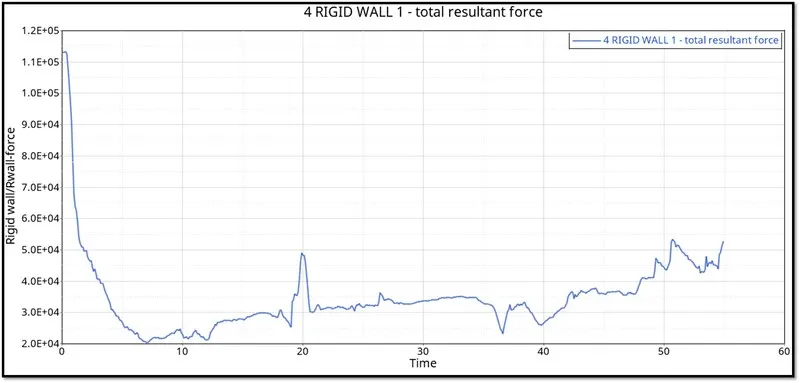
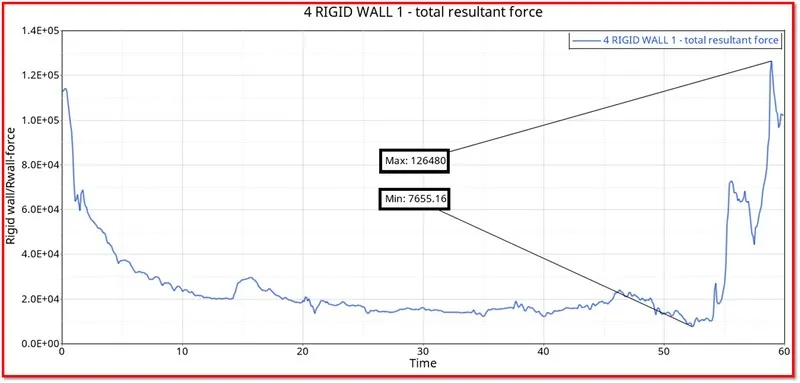
Rigid Wall Forces :
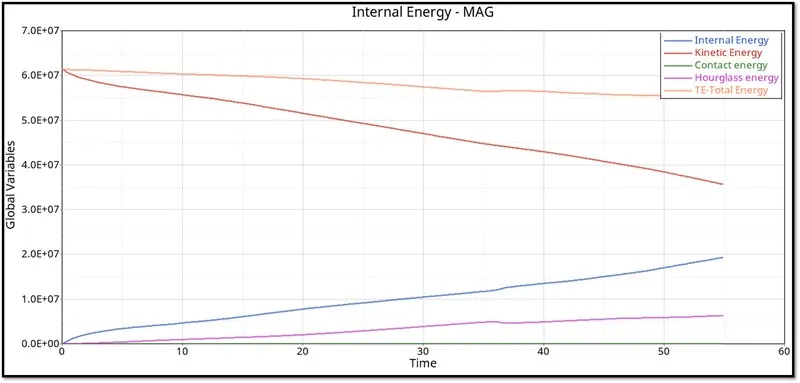
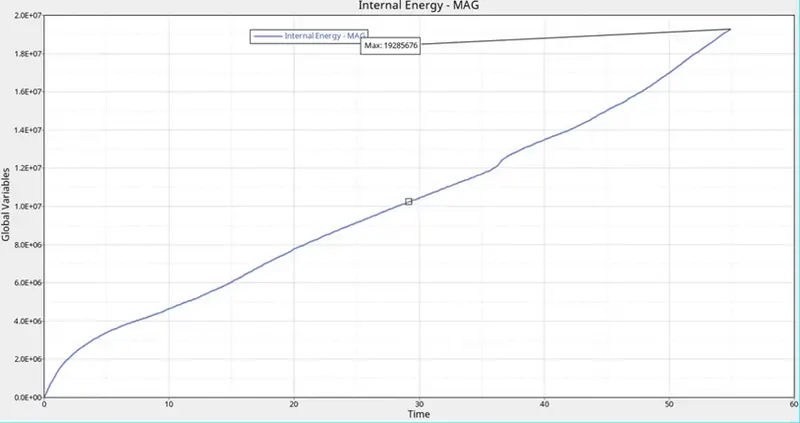
Internal energy:
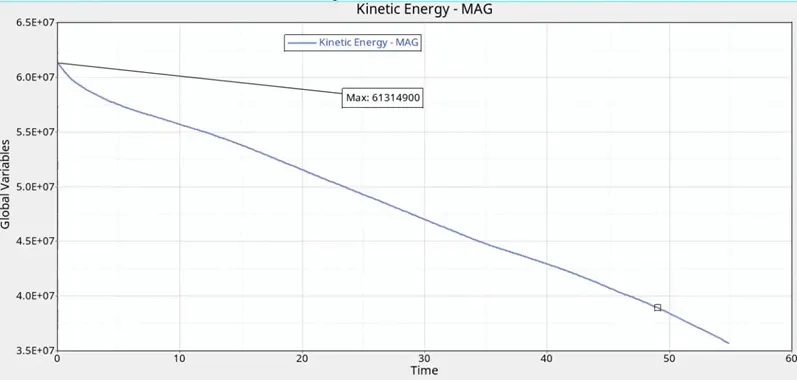
Kinetic Energy :
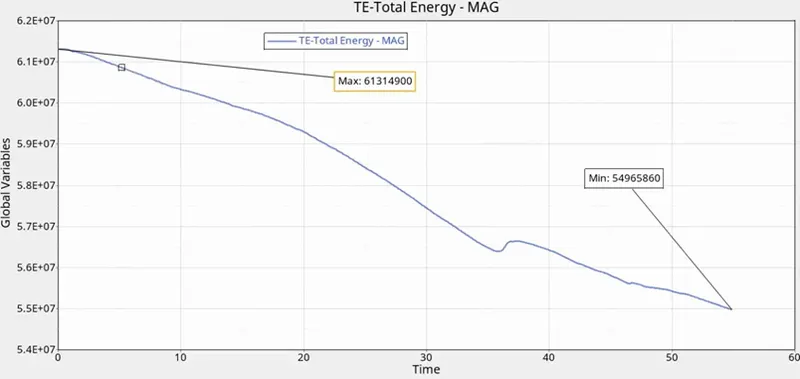
Total energy:
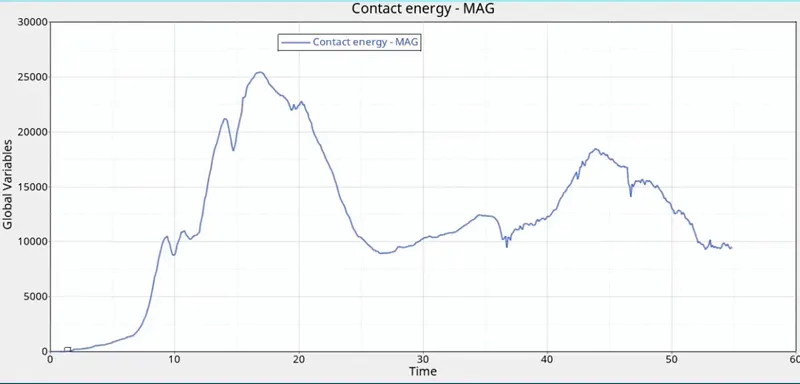
Contact energy:
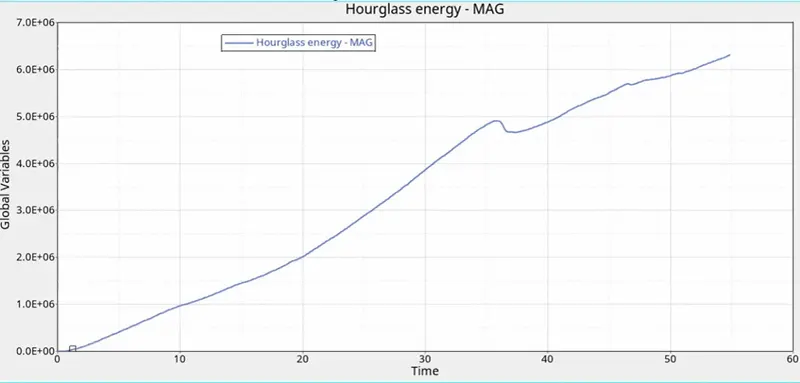
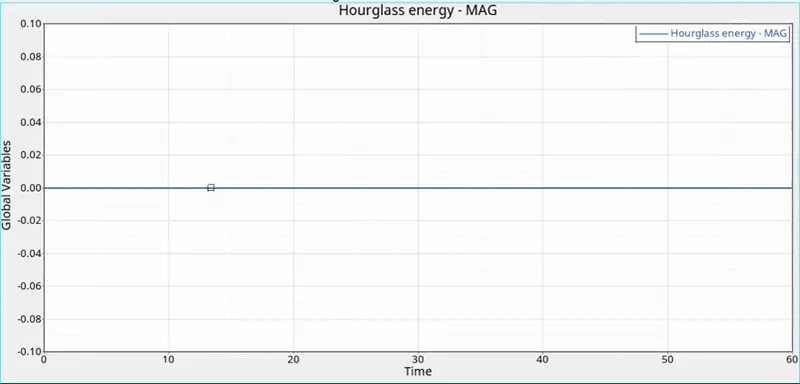
Hourglass energy:
Case 2-With Assigning the Recommended Parameters in the Property:
Assigning required parameters:
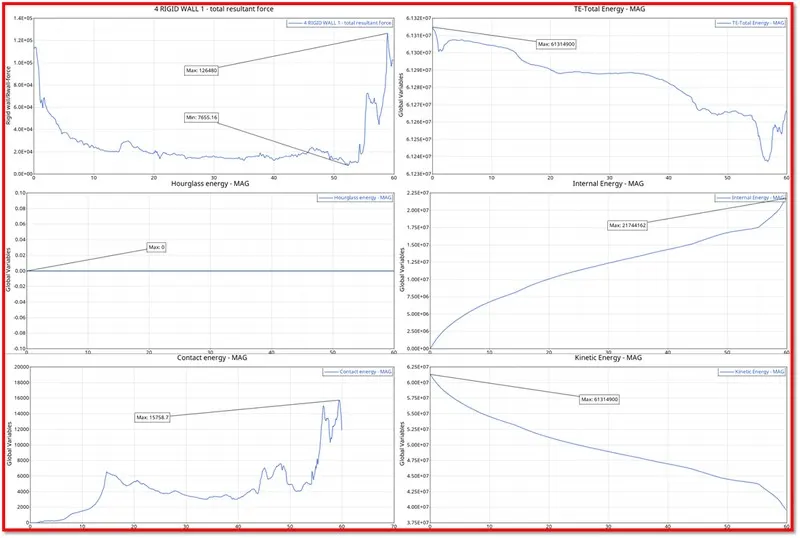
Comparing case1 and case 2:
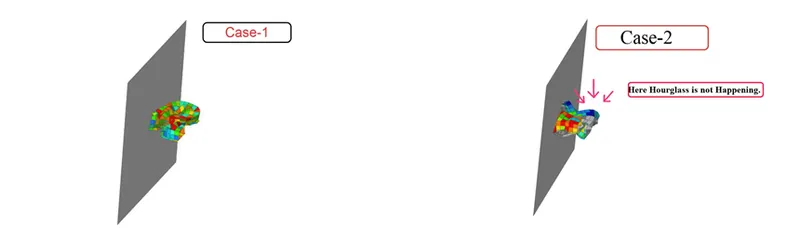
CONCLUSION:
- While comparing Case-1 and Case-2,Case-2 is effective,Cause there is no hourglass deformation.
- Mesh Refining is a solution. Hourglassing is more prone in coarse mesh.
- Providing a small arbitrary stiffness in the mode in which hourglass deforms. This is only a FEA point of view and in actual physical system, there is no such stiffness. This is what is called as Built in hourglass controls.
- Viscous damping and Fully Integrated elements are better though computational time increases vastly and fully integrated elements are prone to shear locking.