DussehraFestive scholarship on Skill-Lync courses, this week onlyFestive scholarship is openOffer ends Wed, 21 Oct, 11:59 pm IST.

Dussehra 2026

Start your next chapter this Dussehra

Tell us where you want to work. A counsellor will match you to the right course and confirm the festive scholarship you qualify for.

  • Festive scholarship on course fees, confirmed on your call
  • Free 20-minute call to map the right course to your goal
  • Real industry projects and placement support with every course

Offer ends Wed, 21 Oct, 11:59 pm IST

3,905 engineers placed since 2019 · 1,277 hiring companies

By submitting you agree to our Terms and Privacy Policy.

You're on the list

Browse courses
Electrical · Course

Applying CV for Autonomous Vehicles using Python

This 3 month program from Skill-Lync teaches the student everything there is to know about computer vision. MATLAB will be used as a tool.

Duration
12 weeks
Content
21 hours
Projects
2
Mode
Online
Overview

What you'll
be able to do.

  • The program is designed to provide an introductory /Intermediate level explanation of the various concepts in Computer Vision
  • The course is essentially for a sequential approach towards learning computer vision.
  • The course covers the basics of computer vision, understanding the perception of an image/Image sequence (video), working of a camera and applications of computer vision in Industry.
  • The course provides hands-on experience with coding challenges and projects that are relevant in the autonomous vehicle industry.
  • This course is designed to provide an overview and a platform for students to learn the concepts of computer vision and work on collaborative projects.
Tools you'll use
MATLABPythonTensorFlowOpenCVKeras TensorFlow 2
Curriculum

12 modules,
built with industry.

  1. 01Applying CV for Autonomous Vehicles using Python12 modules
    1. Week - 01 Introduction to Computer VisionW01
      • In this session, we will learn about
        • Introduction to Autonomous Vehicles
        • Introduction to Computer Vision
        • Applications of Computer Vision
        • Course Content - Introduction
        • Understanding Images
    2. Week - 02 Image Processing Techniques – IW02
      • In this session, we will learn about
        • Image Filters
        • Correlation
        • Convolution
        • Noise in Images
        • Types of Noise
        • Filters for Noise
        • Image Gradients
        • Edge Detection Techniques
    3. Week - 03 Image Processing using Edge and Line DetectionW03
      • In this session, we will learn about:
        • Canny Edge Detector
        • Hough Transformation - Lines
        • Hough Transformation - Circles
        • Domain Transformation
        • Understanding Frequency Domain
        • Spatial to Frequency Domain transformations
    4. Week - 04 Projective and Stereo GeometryW04
      • In this session, we will learn about
        • Image coordinate systems
        • Projective Geometry
        • Perspective Projections
        • Multiview Geometry
        • Stereography and Depth Imaging
        • Stereo Correspondence
    5. Week - 05 3D Computer VisionW05
      • In this session, we will learn about:
        • Projective Geometry for 3D
        • Camera calibration methods
        • Epipolar Geometry
        • Stereovision
    6. Week - 06 Feature Extraction , Neural Networks and Image ClassificationW06
      • In this session, we will learn about:
        • Image Classification
        • Dimensionality Reduction
        • Principal Component Analysis
        • Convolutional Neural Networks
        • Datasets
        • Mobile Net Architecture
        • Image Classification - Performance Metrics
    7. Week - 07 Feature Detectors and DescriptorsW07
      • In this session, we will learn about:
        • Feature Detectors
          • Moravec’s Detector
          • Harris Corner Detector
        • Feature Descriptors
          • SIFT
          • ORB
        • Feature matching methods
    8. Week - 08 Optical FlowW08
      • In this session, we will learn about:
        • Optical Flow
        • Horn-Shunck method
        • Lucas Kanade sparse optical flow
        • Gunnar-Farneback Optical flow
        • Deep learning based optical flow models
    9. Week - 09 Object TrackingW09
      • In this session, we will learn about:
        • Introduction to Object Tracking
        • Deep SORT
        • Lucas-Kanade-Tomasi(KLT) Tracker
        • Minimum Of Sum Squared Error (MOSSE) Tracker
        • Mean Shift Tracker
    10. Week - 10 Image SegmentationW10
      • In this session, we will learn about:
        • Introduction to Image Segmentation
        • Methods of Segmentation
        • Applications of Segmentation
        • Thresholding based segmentation
        • Otsu’s Thresholding
        • Morphological Operations
        • Connected Components
        • Datasets for image segmentation
        • Deep learning architectures for image segmentation
    11. Week - 11 Object DetectionW11
      • In this session, we will learn about:
        • Introduction to Object Detection
        • Region Proposals
        • Graph cut segmentation
        • Selective search
        • Object Detection Datasets
        • Object Detection Models
        • Tensorflow model zoo
        • Evaluation metrics for object detection models
    12. Week - 12 3D Object DetectionW12
      • In this session, we will learn about:
        • Introduction to 3D Object Detection
        • Types of 3D Object Detection
        • Stereo Image based Detection
        • Monocular 3D Object Detection
Industry projects

2 projects
you'll ship.

Our projects are designed by experts in the industry to reflect industry standards. By working through our projects, Learners will gain a practical understanding of what they will take on at a larger-scale in the industry. In total, there are 2 Projects that are available in this program.

Implementation of an image classification model using MobileNet architecture

Implementation of an image classification model using MobileNet architecture

Image Classification is a very important task in deep learning employed in vast areas and has a very high usability and scope. Student will have to understand and implement an imag…
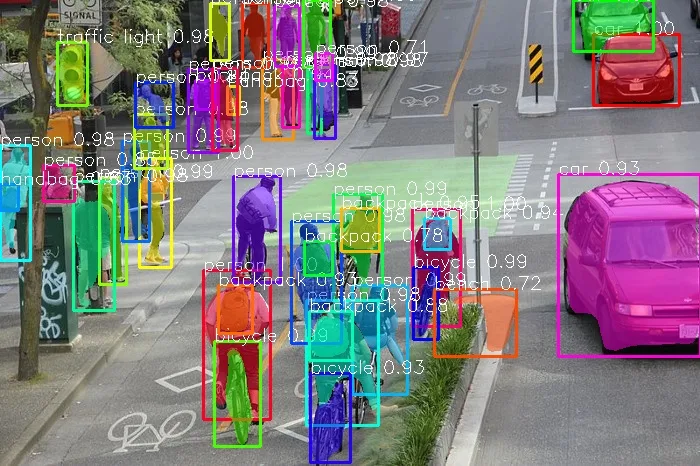
2D Object Detection with tensorFlow

2D Object Detection with tensorFlow

The TensorFlow Object Detection API is an open source framework built on top of TensorFlow that makes it easy to construct, train and deploy object detection models. Student will h…

Fee

One fee.
Everything included.

Become job ready with our comprehensive industry focused curriculum for freshers & early career professionals

Premium
₹40,000
Inclusive of all charges
  • 1 Year Access
  • Personalized Page
  • Live Individual & Group Sessions
  • Personalized & Hands-On
  • Job-Oriented Industry Relevant Curriculum
Check eligibility →
FAQ

Questions,
answered.

Does the course come with a live project?


Yes, the course comes with weekly projects, and there are 12 projects in total. Also, there is a mini project post 6th week of the course.

Can I find a job after this course?

This course will make you ready for the industry, and you can easily find a job after its completion.

Will I get a merit certificate once the course is completed?

The merit certificate will be awarded to the top 5% of the class. However, everyone will be given a certificate of completion.

Is MobileNet architecture a part of the course?

Yes, you will be taught about MobileNet architecture, and the mini-project will be based on its fundamentals.

Can a commerce graduate enrol for this course?

No, the course is designed for people who have some experience in programming and have come from an engineering background.

Can the course fee be paid in instalments?

Yes, we have a 0% EMI plan for paying the course fee in instalments.

Can I get a scholarship for this course?

Yes, you can take a scholarship test and get a 10% scholarship on the course fee.

Will Computer Vision help me in other industries too?

Computer Vision is finding its application in fields like law, agriculture, etc. Therefore, you should opt-in for this course for some exposure.

Next step

Not sure it's
the right fit?

A counsellor will walk you through the syllabus, projects and fee options — and tell you honestly if another course suits you better.

Get the syllabus + a call back

We'll email the full syllabus and call within one working day.

By submitting you agree to our Terms and Privacy Policy.

Call usEnquire

Talk to a career counsellor

Free 20-minute call. We'll map the right course to where you want to work.

By submitting you agree to our Terms and Privacy Policy.