Why do we Need GD & T ?
Learn why Geometric Dimensioning and Tolerancing (GD&T) is essential for precision engineering, improving manufacturing quality, flexibility, and communication. Discover how GD&T enhances part reliability and reduces costs by enabling precise design specifications and tolerances.
 Skill-Lync·29 Oct 2024·3 min read
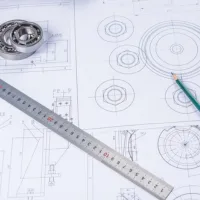
GD&T, short for Geometric Dimensioning and Tolerancing, is a system for defining and communicating the design intent that helps designers to communicate to the manufacturer how much geometrical imperfection is tolerable without compromising the intent of the component.
Geometric tolerances and tolerancing is a language of symbols used to describe a part nominal geometry and the allowable tolerance. When applied properly the design engineer can define size , shape, feature location and orientation on the part. GD&T is introduced as an addition to the coordinate dimensioning system not as a replacement. The GD&T methodology takes into consideration of the function of the part and how it functions at assembly level. Therefore for the proper application of GD&T the designer engineer should have a clear understanding about the function of the part.
GD&T concept was founded by a Scotland engineer Stanley Parker from the Royal Torpedo factory working on naval weapons during world war II .He came up with true position or position tolerance in 1938.GD&T standard is defined by American society of Mechanical Engineers(ASME Y 14.5 - 2018 ) for the USA and ISO 1101-2017 for the rest of the world.
The Drawback of using traditional dimensioning and tolerancing is that they denote individual part and part feature information. It does not guarantee how well the part fits and functions at the assembly level. Most part are not useful by themselves. It is important that parts mate well each other. This is why we need to be 100% certain ensure that the part will fit and function at assembly level. The Precise relationship between the geometrical feature of parts are achieved by the application of following geometric characteristics :
Flatness, Straightness, Circularity, Cylindricity, Angularity, Perpendicularity, Parallelism, Position, Symmetry, Concentricity, Profile of surface, Profile of Line , circulr runout and total runout.
Key benefit that GD&T offers are as follows :
- Enhanced communication - The use of single and standardized GD&T language ensures cross functional teams to communicate clearly and accurately with each other.This helps to reduce confusion and misunderstanding which can lead to delay and rework.
- Improves reliability and Quality -By using GD&T ,manufacturers can ensure that parts are manufactured to precise specifications and that they meet the requirement of the end user.This helps to ensure that products are of high quality and that they will function properly.
- Increased Flexibility - General rule of thumb, designers should keep the tolerance as large as possible while maintaining the design intent.Small or tight tolerances can increase cost in manufacturing ,inspection and tooling for manufacturing parts.
- Saving Money : By the application of GD&T the designers are able to provide appropriate tolerance that maximizes the production and also helps manufacturers to make the most efficient use of materials and resources. This reduces waste and increases productivity, leading to lower costs and improved efficiency.
In conclusion ,GD&T is an essential tool for ensuring that the parts and assemblies are manufactured and assembled to the correct specifications and tolerances. It allows for Clear communication Between engineers, designers and manufacturers, allows for the greater flexibility in the manufacturing process, improves the overall quality of the final product and helps to reduce costs and improve efficiency in the manufacturing process. Without GD&T ,the manufacturing and assembly process would be much difficult and prone to errors, leading to increased costs and decreased efficiency.