How Heat Exchangers Protect Machines from Overheating?
Learn how heat exchangers work to protect machines from overheating by transferring heat across various mediums. Explore types like shell and tube, plate, and helical coil exchangers, and understand their roles in automotive, aerospace, and industrial applications for efficient temperature control.
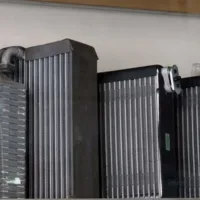
Heat exchangers are everywhere—from the radiator in your car to cooling systems in space shuttles. At its core, a heat exchanger is a device that allows heat transfer between two different mediums, often without mixing them. But why are there so many types of heat exchangers, and how do they actually work?
In this article, we’ll explore the basics of heat exchangers, different types, and how they’re engineered to maximize efficiency in various applications.
What is a Heat Exchanger?
A heat exchanger’s primary function is to transfer heat from one medium to another, aiding in the cooling or heating of different systems. Heat exchangers are found in various fields, including automotive, aerospace, electronics, and industrial processes.
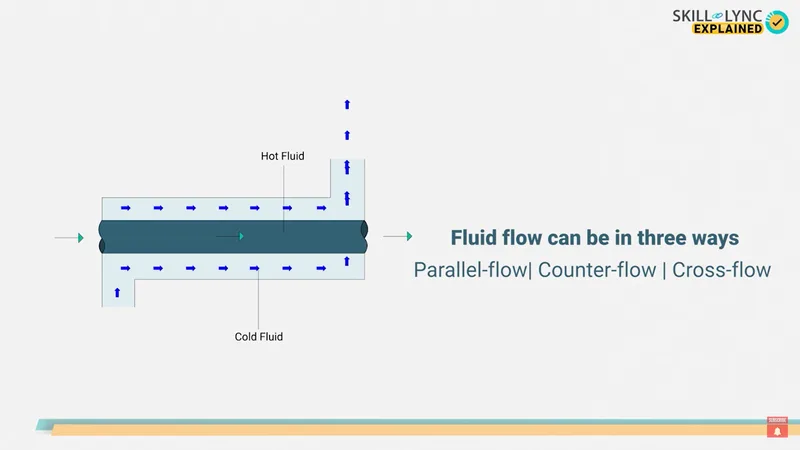
The simplest type, the double-pipe heat exchanger, involves two concentric pipes, one carrying a hot fluid and the other carrying a cold fluid. These fluids can flow in different ways within the pipes, leading to different types of heat exchanger configurations.
Types of Heat Exchangers
1. Double-Pipe Heat Exchanger
This is the simplest heat exchanger design, featuring two concentric tubes where the hot fluid flows through the inner pipe, and the cold fluid flows through the outer pipe. The fluid flow can vary:
- Parallel Flow: Both fluids enter from the same end and move in the same direction.
- Counter Flow: Fluids enter from opposite ends, flowing in opposite directions. This setup provides a more efficient heat transfer than parallel flow.
- Cross Flow: One fluid flows in a perpendicular direction to the other. Often seen in designs where one fluid flows through tubes, and the other flows over them, such as in automotive radiators.
While double-pipe heat exchangers are straightforward in construction and easy to maintain, they are limited by their low efficiency and larger space requirements.
2. Shell and Tube Heat Exchanger
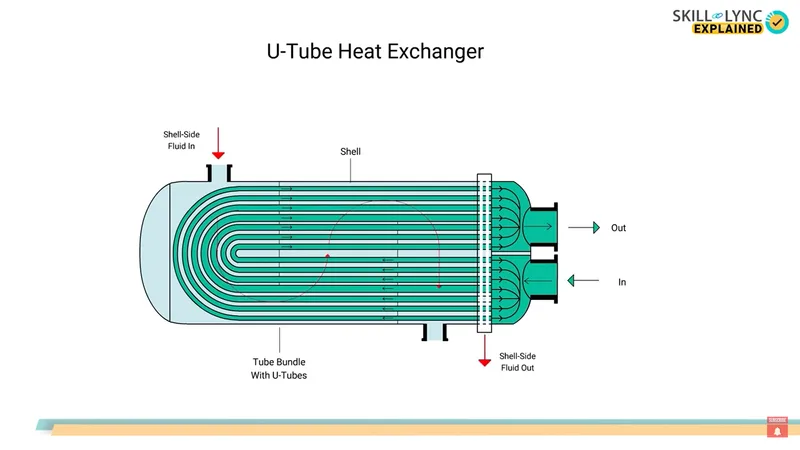
Widely used in industrial applications, the shell and tube heat exchanger has a series of tubes (a tube bundle) inside a larger shell. One fluid flows through the tubes, while another flows around them in the shell. The tubes can be either straight or U-shaped, leading to straight-tube and U-tube configurations, respectively.
These exchangers are highly efficient for high-pressure applications like steam generators in nuclear power plants and oil refineries, thanks to their large surface area for heat transfer.
3. Plate Heat Exchanger
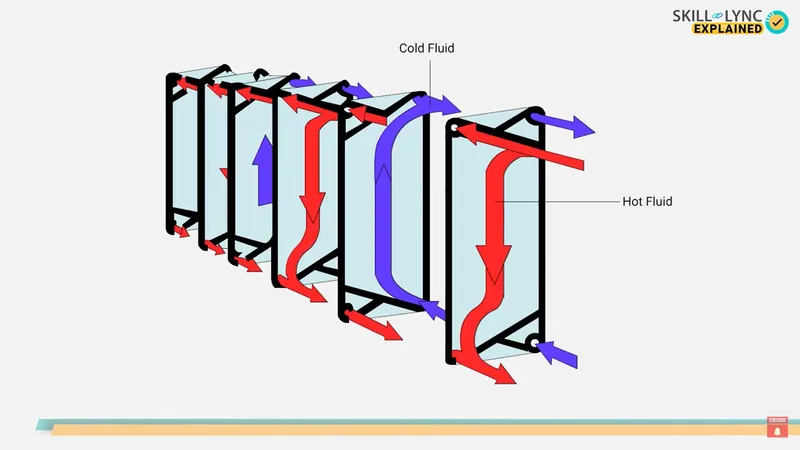
As the name implies, this type consists of thin plates that alternate between hot and cold fluids. The large surface area of the plates enables rapid and efficient heat transfer, making plate heat exchangers suitable for low- and medium-pressure applications, like heating and cooling in HVAC systems.
Welded plate heat exchangers are also available for high-pressure applications, which seal the plates for increased durability.
4. Helical Coil Heat Exchanger
Inspired by the efficient use of space in DNA’s double-helix structure, helical coil heat exchangers feature coiled tubes arranged inside a shell. This coiled design optimizes space and is especially effective when the flow rate is low.
While cleaning helical coil exchangers can be more challenging, they require maintenance less frequently, making them a popular choice in nuclear reactors, particularly liquid metal fast breeder reactors.
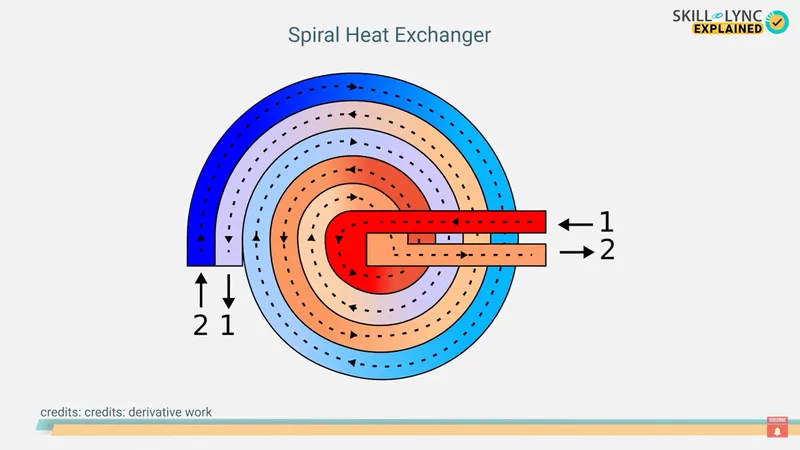
5. Spiral Heat Exchanger
In a spiral heat exchanger, two fluids flow through curved channels in parallel paths, making highly efficient use of space. These compact and efficient exchangers are commonly used in applications requiring preheating and pasteurization.
6. Other Specialized Heat Exchangers
- Plate-Fin Heat Exchangers: With fins added to increase surface area, these heat exchangers handle high temperatures and pressures and are commonly used in aircraft engines.
- Pillow Plate Heat Exchangers: Featuring two thin metal sheets welded at intervals to form channels, these heat exchangers are often used for cooling applications in the food industry, such as milk cooling.
How Do Heat Exchangers Work?
Heat exchangers operate on a simple principle: transfer heat from a hotter fluid to a cooler one. This process can occur in parallel, counter, or cross flow, depending on the desired efficiency.
For example:
- In a counter-flow double-pipe exchanger, as the hot fluid flows in one direction, the cold fluid flows in the opposite direction. This opposite movement allows for a higher average temperature difference between the fluids, maximizing heat transfer efficiency.
- In shell and tube systems, the large surface area of the tubes allows for significant heat exchange, suitable for high-pressure environments.
The Role of Surface Area in Heat Exchangers
One critical factor in a heat exchanger’s efficiency is its surface area. The larger the contact area between hot and cold fluids, the better the heat transfer rate. Designs such as plate heat exchangers capitalize on this by maximizing surface area, ensuring faster and more efficient temperature control.
Benefits of Different Heat Exchanger Types
- Double-Pipe Heat Exchanger: Simple design, easy to maintain.
- Shell and Tube Heat Exchanger: High pressure tolerance, suitable for industrial applications.
- Plate Heat Exchanger: High heat transfer efficiency, ideal for low- and medium-pressure applications.
- Helical Coil Heat Exchanger: Space-efficient and effective at low flow rates.
- Spiral Heat Exchanger: Compact design and efficient for applications like pasteurization.
Common Applications of Heat Exchangers
Heat exchangers are used in various industries and applications:
- Automotive: Radiators in vehicles rely on cross-flow heat exchangers.
- Aerospace: Plate-fin heat exchangers are used in aircraft engines.
- Industrial Processes: Shell and tube exchangers are crucial in refineries and power plants.
- Food and Beverage: Pillow plate heat exchangers cool products such as milk in food processing.
Conclusion
Heat exchangers, although based on a straightforward concept, play an essential role in maintaining temperature control across many industries. With types ranging from simple double-pipe designs to advanced helical coil and plate-fin configurations, each serves a unique purpose based on the needs of its application. Whether cooling a car engine, powering a jet, or chilling a beverage, heat exchangers are integral to our daily lives.
For engineers, understanding these different types and their applications can open doors to innovative design solutions. If you’re interested in diving deeper into heat exchanger design or exploring computational methods for simulating fluid flow and heat transfer, check out our FEA and CFD courses for a comprehensive learning experience.
Skill-Lync offers a wide range of industry-relevant upskilling programs to get you career-ready. Click here to sign up for a FREE course demo right away, and let's launch your career together!