Learn How to Build a Career in Hybrid Electric Vehicles
With the massive electric vehicle boom, it is safe to say that EVs and HEVs will dominate the automobile industry in the upcoming days. As such, freshers likely have a train of questions regarding the scope of Hybrid Electric Vehicles in the industry.
 Navin Baskar·26 May 2023·5 min read
How to Build a Career in Hybrid Electric Vehicles
With the massive boom in the electric vehicles market, it is safe to say that EVs and HEVs will dominate the automobile industry in the upcoming days. As such, freshers likely have a train of questions regarding the scope of Hybrid Electric Vehicles in the industry.
The article serves the purpose of giving an insight into the domain of Hybrid Electric vehicles and their job market. It will help you understand how to take the right approach in a domain that integrates various aspects of engineering under one roof.
We will also clarify what recruiters are currently looking for in applicants. The article will touch upon how a fresher needs to learn about Electric Vehicles and the different mechanical and electrical or electronic aspects.
Mechanical and Electrical Engineering Opportunities and the Right Approach
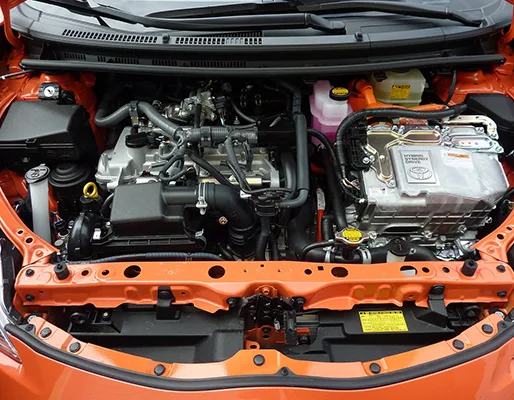
Mechanical Aspects
Mechanical engineers can find opportunities in the following aspects:
- Incorporation of transmission systems that provide the maximum power output
- Incorporate friction braking and electric braking in the best possible way
- Working on suspension and weight distribution
- Accommodation of the necessary parts like motor, suspension, transmission system, and battery in the vehicle of the EV
- The mechanical design of the battery pack
- Thermal design and the adequate type of cooling system design for the different heating parts like motor, battery pack, and power transmission
- Safety precautions for the vehicle
Electrical and Electronic Aspects
There are many electrical and electronics components in an EV which provides a promising opportunity for Electrical and electronics engineers. They have to deal with the following aspects mostly:
- Design for motor, power converters, and battery pack
- Select the right voltage for the battery
- Efficiency depreciation over different stages
- Analyze and build a heavy-duty motor following the power requirement
- The topology of the inverter design
You need to realize that the domain integrates mechanical, electrical, and electronic aspects into one subset. Since it is not a field that solely focuses on one discipline, it is necessary for someone in the industry to have minimum communicative knowledge in the other field.
For example, a mechanical engineer will need to understand the basics of the circuit diagram to provide the proper architecture of the vehicle with appropriate mass distribution. The same is also true if you are an electrical engineer. For example, you need to understand the torque conversion and gear reduction ratio for a proper motor design.
The jobs are not just in the design and engineering in EV, but also in numerous other fields. For example, EV batteries can be used to power homes. There are also requirements for EV charging stations as more vehicles are gradually turning to electricity.
How to Begin in the EV Domain
Most students often rush to learn different software, neglecting the fundamentals of the topic. However, to truly understand the subject, one needs to follow the following steps in the given order:
- Pick a problem from the domain and understand the underlying concept and the fundamental formulae for solving the problem.
- Solve the problem using pen and paper for simple issues, relying on the calculator for more complicated matters.
- Once you have mastered the EV basics, you can now start learning software for the same. In doing so, you can understand the benefits of the software and where you need to apply it.
- Check your results using pen and paper and find out where the software can be helpful.
Master one software completely, and then you will be able to work on any related software. It would be best to work your way around the GUI. For example, you can use MATLAB or Python to solve a problem. They may have different coding but yield similar results.
What Recruiters Look for in Applicants
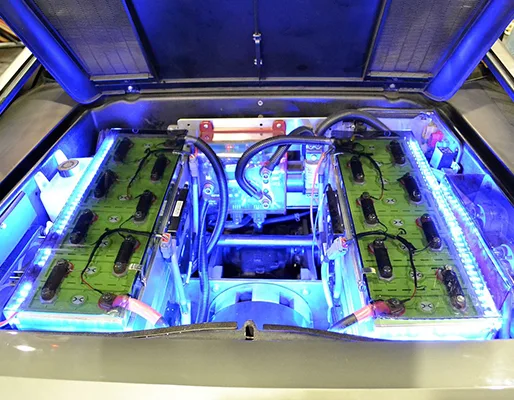
Recruiters from the industry want professionals who know the fundamentals of the electric vehicle domain. Instead of hiring a fresher into the industry with limited knowledge, they want people who know the field.
The mentality has shifted from recruiting and training to recruiting trained individuals. Hence, the recruiters look at your portfolio that displays your skills and knowledge through your projects.
The most significant disadvantage of the Indian education system is that you may not often get the chance to work with people from other branches. As mentioned earlier, for the EV industry, you need to work in coordination with other electrical, mechanical, and automotive engineers. This is where an industry-relevant course comes in.
How Can Skill-Lync Courses Help You Launch a Career in the EV Industry
The courses from Skill-Lync focus on industry-related projects with a firm adherence to understanding the concepts and fundamentals behind the domain. Here's a general overview of their master's program for EV:
- The first semester teaches the students all the common core mechanical and electrical components of an EV.
- The second semester is specialized, and you can choose the HEV path, which is much easier and more suitable for mechanical engineers. Meanwhile, electrical students can learn about EVs.
Additional Courses
Students who have undertaken the CAE course can specialize in crash management. Unlike a traditional IC engine, where you need to take care of the passengers, in electric vehicles, you also need to take care of the battery and prevent it from burning.
Students who have undertaken CFD can work on designing the cooling system for the parts in the electric vehicle, whereas BIW engineers can work on the vehicular design. These master courses from Skill-Lync will serve as a boost to the electric vehicle course.
Robust Portfolio
Recruiters want portfolios of people who have undertaken multiple projects and showcase their knowledge and skill to assess and work on the project with a clear understanding of the fundamentals. Skill-Lync focuses heavily on providing the right knowledge and tools that enable you to handle real-world scenarios in industry-related problems.
Job Assistance
Skill-Lync also provides placement assistance to students through its portal and portfolio creation. It has already helped students in securing jobs in leading companies like General Motors and Ford to over 250 students in one year.
Conclusion
The article on hybrid electric vehicles and their job market tells us about the future of electric vehicles and how it combines various branches of engineering. To properly showcase your knowledge, you need to clear your fundamentals and work on more projects.
You can learn all the information related to EV, which includes electrical and mechanical components along with coding, from a comprehensive master's program by Skill-Lync. Register today!