3D Printing and Prefabrication in Construction
Remember the time when you played with Lego blocks? Building houses, cars and everything in between by simply stalking one Lego block on top of another and then dismantling them when finished.
 Navin Baskar·6 Apr 2023·5 min read
3D Printing and Prefabrication in Construction
Remember the time when you played with lego blocks? Building houses, cars and everything in between by simply stalking one lego block on top of another and then dismantling them when finished. Easy, fast, and fun, wasn’t it? Well, real houses can be built in much the same way. Houses and structures of any shape and size can be constructed, limited only by your creativity. If you can dream it, you can build it. This is the promise that technologies like 3D Printing and Prefabrication bring to the construction industry.
So put your hard hats on as we explore how Prefabrication and 3D Printing are used in construction.
What is 3D Printing in Construction?
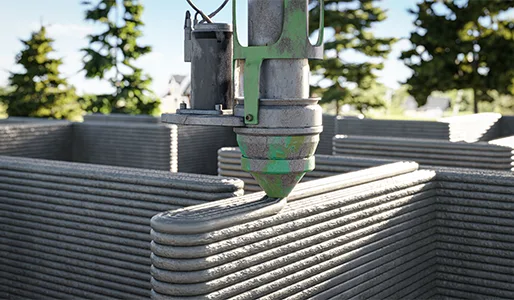
In the construction industry, 3D printers print concrete, polymer, metal, or other materials, layer by layer, to create construction components or complete buildings.
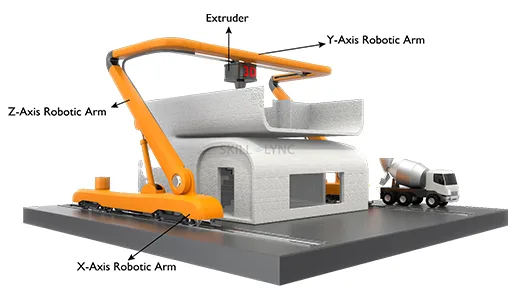
The most popular printers are built on robotic arms that extrude concrete while moving back and forth. Powder bond and additive welding are other 3D printing techniques used in construction.
What is Prefabrication in Construction?
Prefabrication in construction is the process of manufacturing building components offsite, in a controlled environment, and then assembling them onsite. This construction method has become increasingly popular in recent years due to its many benefits, such as cost savings, improved safety, and reduced construction time.
Major Components of 3D Printing in Construction
Robotic Arm Extruders
The robotic arms have specialised extruders that allow them to quickly and accurately fabricate components for buildings and other structures. They can fabricate components with complex geometries, which can be difficult to achieve with traditional methods. The robotic arm extruder technique uses a crane-like arm that swings back and forth to extrude layers of substance. Construction companies install rails around building spaces to allow the arm to adjust its position and height as required. This technique might be used for more modest 3D printing projects. Depending on the materials, extra work might be required for projects using this technique. For example
- To keep concrete from setting up too quickly, mixed concrete with additives should be used in the printer.
Sand Layering
Sand is released in stages by the 3D printer to create structures. The machine releases droplets that harden and bind the sand once the layers have reached the required thickness. This method is suitable for smaller structures.
Combination of Technology
3D printing technology can be combined with traditional construction techniques like woodworking and welding to create structures. The components can then be solidified through welding as the machine prints them. This technique can be used to build bridges and other buildings without foundations.
Benefits of 3D Printing in Construction
Improved Efficiency
- 3D printing can significantly reduce the time and labour required to construct a building.
- This can result in significant cost savings for construction projects.
Increased Accuracy
- 3D printing allows for greater structure construction accuracy.
- By producing components with precise measurements and specifications, construction teams can ensure that their projects are built to exacting standards.
- This can help to reduce the risk of errors and delays in construction.
Reduced Waste
- Zero waste is produced by producing components that exactly fit the construction requirements.
- 3D printing can use recycled materials in their projects.
Increased Flexibility
- 3D printing can provide construction teams with greater flexibility in terms of design and planning.
- It is more economical for construction workers to buy the precise quantity of materials they will need in 3D printing.
- 3D printers can build homes or other structures in a matter of days.
Challenges of 3D Printing in Construction
High Cost
- 3D printing is a relatively new technology, and the cost of the equipment and materials needed to produce 3D-printed components is still quite high.
- This makes it difficult for small and medium-sized businesses to invest in 3D printing technology.
- The labour cost for 3D printing is also quite high, as the process requires highly skilled technicians to operate the machines.
Limited Resources
- Most 3D printing materials are limited to plastics, metals, and certain specialised types of concrete.
- This is not suitable for all types of construction projects.
Reduction in Manufacturing Jobs
- It could reduce the human labour for construction since most of the automation is done by printers.
- Since this technology eliminates the need for manufacturing in other countries, it may threaten the low-skill employment vital to many developing nations' economies.
Prefabrication in Construction
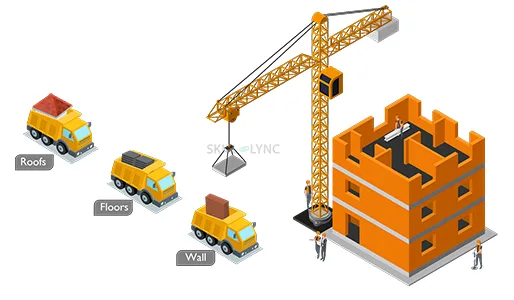
Prefabrication has allowed for the production of complex components with high accuracy. Prefabrication technology can be used to create components for a variety of applications, such as,
- Walls
- Floors
- Roofs
- Entire structures
Prefabrication with 3D printing enables the production of customised components, which can be tailored to meet specific design requirements.
Benefits of Prefabrication in Construction
- Cost Saving
- Prefabrication is more cost-effective since the components are constructed in a factory setting, and there are fewer labour costs associated with the process.
- The components are produced in bulk, allowing economies of scale to reduce costs further.
- Improved Safety
- Since the components are constructed in a factory setting, workers are not exposed to the same risks as on a construction site.
- The components are designed to exact specifications, which reduces the risk of errors and accidents.
- Faster Construction Times
- As the components are already created in a factory, transportation and assembly are the only time-consuming activities.
- Low Risk of Injuries
- Prefabrication eliminates the need for onsite construction, reducing the risk of accidents and injuries.
- It also reduces the required labour, as components are produced offsite and assembled onsite.
- High Accuracy
- Prefabrication allows for producing components with a high degree of accuracy and detail.
- This can benefit complex components, such as curved walls or intricate designs.
Challenges of Prefabrication in Construction
- Complexity
- Prefabricated components must be designed and manufactured to exact specifications, and there is no room for error.
- The assembly process can be quite complex and require specialised skills and knowledge.
- Lesser Lifespan
- Prefabricated buildings only last 20 to 25 years, much less than traditionally constructed buildings that last for around 60 years.
- Prefabricated buildings are less water resistant and can form leaks at the joints of components.
- Fractures may develop at the joints where the precast in-place concrete was made due to shrinkage and temperature pressures.
- Growing at a Slower Pace
- Prefabrication is expanding more slowly than traditional construction.
- Transportation is one of the biggest challenges, as it can be challenging to transport structures of varying shapes, sizes, and weights.
Conclusion
3D printing and prefabrication are two of the construction industry's most exciting and innovative technologies. As these technologies become more widely adopted, the construction industry will continue to benefit from their advantages. To learn more about similar topics, check out the Skill-Lync website. We offer various courses, including PG Program in a high-rise building, precast building design, etc., for engineering graduates to upskill their careers in the relevant fields. Do talk with our experts to book your free demo sessions!