Mastering the Product Development Process: From Planning to Execution
Learn the product design and development process with a step-by-step approach. Master product design fundamentals, product development strategies, and prototyping techniques to create market-ready products.
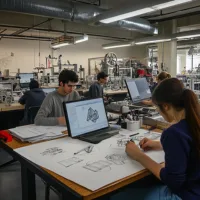
Every successful product, whether a simple pencil or a complex automobile, follows a well-structured product design and development process. If you're new to this field and exploring product design for beginners or looking to gain expertise through a product development course, understanding the various stages of development is crucial. This blog will take you through the step-by-step process of transforming an idea into a fully functional product ready for market launch.
Defining Product Performance and Manufacturing Strategy
When developing a product, one of the first considerations is performance expectations. Should the product last for five years, ten years, or indefinitely? Performance also varies based on customer handling, requiring designers to consider different use cases.
Another crucial aspect is manufacturing strategy. Are you producing the product in-house, or will you outsource parts from suppliers? Identifying the best and most reliable product development methods helps streamline production and ensure quality. Managing all these aspects efficiently is essential for maintaining quality, cost control, and time management—the three pillars of successful product design and development.
For simple products like a pencil, assembly may seem straightforward—just integrating wood and lead. However, for complex products like automobiles or aircraft, thousands of parts must be assembled systematically. This makes the product development process even more intricate, requiring well-planned product design strategies and product development techniques.
Sequencing Ideas: The Six-Step Product Development Process
Once all ideas are gathered, the best approach to product design and development is to organize them into a structured sequence. While terms may vary across industries, the overall product development principles can be broadly classified into six stages:
1. Planning
Planning involves idea generation, market research, and feasibility analysis. This stage defines the customer’s needs and the product’s unique value proposition. For example, real estate companies build a model flat before actual construction—this is their way of planning and showcasing the concept to potential buyers.
2. Concept Development
In this phase, the product's basic framework is developed. The goal is to visualize how the final product will look and function. For instance, a company designing a pencil decides its shape, thickness, color, and lead quality. This phase ensures the feasibility of the idea before moving to actual development.
3. System-Level Design
Here, the product is broken down into different systems and subsystems. In the case of a pencil:
- The lead is one component.
- The wood covering the lead is another.
- The outer paint on the pencil is a separate component.
A key decision at this stage is whether to manufacture all parts in-house or source them externally.
4. Detailed Design
This phase involves creating detailed specifications for each component. Engineers refine product design tools and product development software to finalize materials, dimensions, and manufacturing techniques. The goal is to create a prototype that matches the initial concept.
5. Testing and Validation
Before launching, the product must be tested to ensure it meets product design fundamentals and customer expectations. Just like a chef tasting food before serving, manufacturers conduct product validation tests to ensure quality, durability, and functionality. If issues arise, refinements are made before mass production.
6. Production and Market Launch
Once testing is successful, large-scale production begins. However, every stage undergoes review processes to detect deviations early. If a problem is identified, the process loops back for correction before moving to the next step. This ensures an optimized product development process with minimal errors.
Final Thoughts
The entire product design and development process is an intricate balance of creativity, planning, testing, and execution. Whether you’re learning through a product design online course, aiming for a product development certification, or applying product development strategies in real-world projects, mastering these six steps is key to building successful products.
Looking to develop your expertise in product design and development? Stay tuned for more in-depth insights in our upcoming blogs!
This blog is part of our ongoing Introduction to Product Design and Development blog series. If you missed the previous posts, check them out here.
Would you like to have a more interactive experience in Product Design?
Skill-Lync has released a FREE comprehensive course covering Product Design and Development! Check it out here.
Check out our hands-on course today and add it to your list of skills!
Let’s get #IndustryReady together, one skill at a time!


