How Magnetism Works
Explore the fascinating world of magnetism, from the behavior of magnetic materials to the principles of diamagnetism, paramagnetism, and ferromagnetism that power modern technology.

Magnetism is a fascinating force that we encounter in everyday life, whether it’s through the simple magnets we played with as children or the more complex magnetic materials used in various devices like motors, generators, and transformers. But have you ever wondered why only certain materials are magnetic? What makes materials like iron, cobalt, and nickel respond to magnetic fields, while others remain unaffected?
In this blog, we will delve into the intriguing world of magnetism, exploring the underlying principles that govern it. We’ll look at the different types of magnetic phenomena, including diamagnetism, Para magnetism, and ferromagnetism, and break down concepts such as domain theory, hysteresis, and the unique properties of magnetic materials. By the end, you’ll have a deeper understanding of how magnetism works and why it plays such a crucial role in many modern technologies.
Let’s begin this exciting journey into the science of magnetism!
What is Magnetism?
Almost all materials are affected by a magnetic field to some extent. Magnetism is the property by which materials are either attracted or repelled by magnets. This principle is fundamental to many devices we use today, such as electric motors, generators, transformers, radios, and televisions.
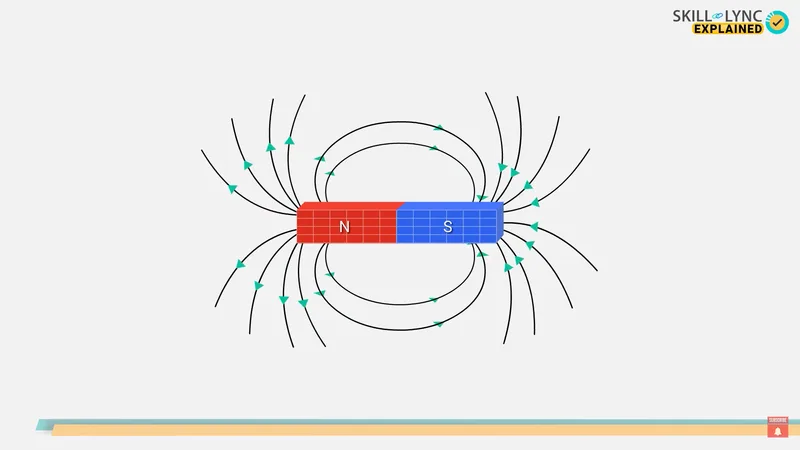
Before diving into more details, let’s cover some basics. Just like a battery has positive and negative terminals, a magnet has a north pole and a south pole, collectively known as a magnetic dipole. The force exerted by a magnetic material is called magnetic force, and the area within which this force exists is known as the magnetic field.
Magnetic Moment and Electron Motion
Just like an electric current-carrying wire can act as a magnet, the motion of electrons in atoms creates magnetism. Electrons, which are electrically charged, exhibit a magnetic dipole moment. This dipole moment arises from two types of electron motion: the electron’s orbital rotation around the nucleus and its spin on its own axis.
The direction of the orbital rotation and spin can be either clockwise or counterclockwise. The total magnetic moment of an atom is the sum of the individual moments from the electron's orbital and spin motions.
Role of Electronic Configuration
The electronic configuration of atoms is a crucial factor in determining the magnetic properties of a material. In atoms where all electrons are paired, the magnetic moments cancel each other out because the paired electrons rotate in opposite directions. However, in atoms with unpaired electrons, there is a resultant magnetic moment, which contributes to the material’s magnetism.
Types of Magnetism
The magnetic behavior of materials can be classified into three main types: diamagnetism, paramagnetism, and ferromagnetism.
1. Diamagnetism
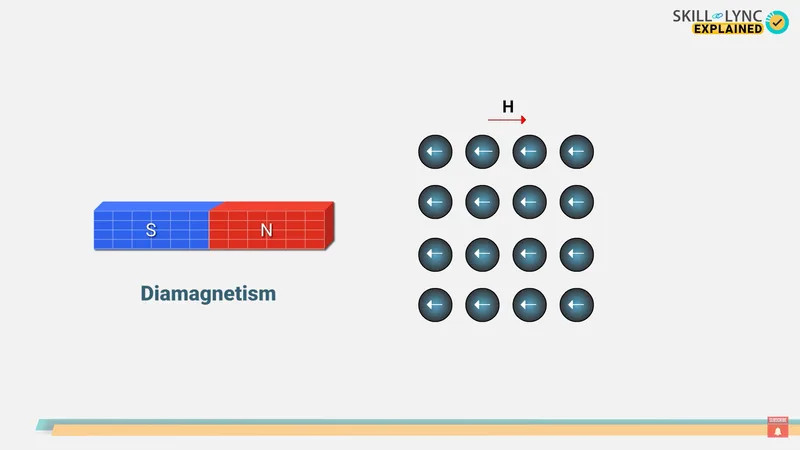
In diamagnetic materials, all the electrons are paired, and there are no permanent magnetic dipoles under normal conditions. When a magnetic field is applied, the orbital rotation of the electrons changes direction, causing them to repel the magnetic field. This type of magnetism is weak and only exists as long as the external magnetic field is applied.
2. Paramagnetism
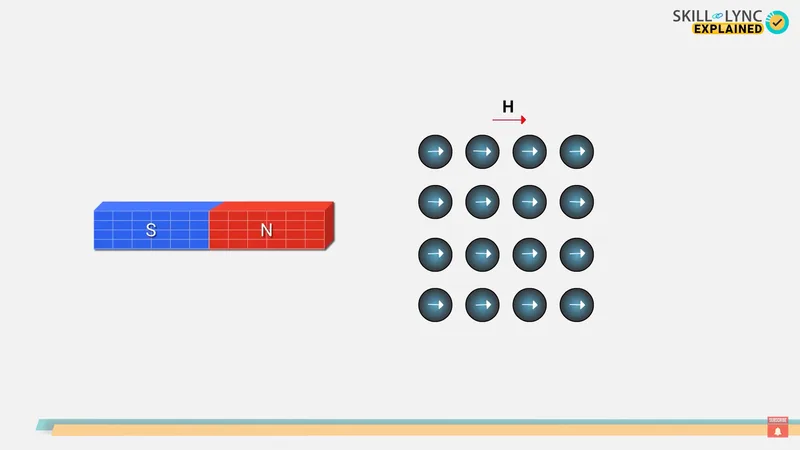
In paramagnetic materials, some electrons are unpaired, creating permanent magnetic dipoles. Although these dipoles are randomly oriented without an external field, they align with the direction of the applied field, creating a weak magnetic effect. However, this magnetism disappears once the external field is removed.
3. Ferromagnetism
Ferromagnetic materials have permanent magnetic dipoles that are much stronger than paramagnetic materials. Even after the external field is removed, ferromagnetic materials maintain their magnetic properties. This phenomenon is known as ferromagnetism. Iron, cobalt, and nickel are prime examples of ferromagnetic materials.
The Domain Theory of Magnetism
In ferromagnetic materials, regions called domains exist where the magnetic dipoles are aligned in the same direction. These domains are separated by boundaries known as domain walls. When an external magnetic field is applied, the dipoles in all the domains align with the field, and this alignment remains even after the field is removed. The point at which all dipoles are aligned is known as saturation magnetization.
However, as the temperature increases, the saturation magnetization decreases due to molecular vibrations. At a certain temperature, called the Curie temperature, the magnetization abruptly drops to zero.
Hysteresis and Magnetic Materials
When a magnetic field is applied to a material, it induces magnetism. The strength of the magnetic field is represented by field strength (H), and the induced magnetism is represented by flux density (B). Plotting these two on a graph produces a hysteresis loop.
As the field strength increases, so does the flux density, up to a point of saturation. However, when the field strength is reduced, the flux density does not follow the same path. This lag in magnetization is known as hysteresis.
Based on their hysteresis behavior, ferromagnetic materials are classified into two types:
1. Soft Magnetic Materials
If the hysteresis loop is small, the material is considered soft magnetic. These materials can be easily magnetized and demagnetized and are used in applications where alternating magnetic fields are present, such as transformers.
2. Hard Magnetic Materials
If the hysteresis loop is large, the material is classified as hard magnetic. These materials retain their magnetism even when the external field is removed, making them ideal for permanent magnets.
Conclusion
Magnetism is a fascinating phenomenon that plays a critical role in numerous technologies we rely on daily. From simple toys to complex machinery, understanding the different types of magnetism and the behavior of magnetic materials helps us better design and improve devices. Whether it’s the soft magnetic materials in your transformer or the hard magnetic materials in your refrigerator magnet, magnetism is all around us!
We hope you now have a better understanding of magnetism and magnetic materials. Stay tuned for our next post. Until then, see you next time!
Skill-Lync offers a wide range of industry-relevant upskilling programs to get you career-ready. Click here to sign up for a FREE course demo right away, and let's launch your career together!