Can liquids boil at low temperatures?
Explore the fascinating concept of cavitation and how liquids can boil at low temperatures due to pressure changes in engine systems. Learn its impact on fuel flow and machinery performance.
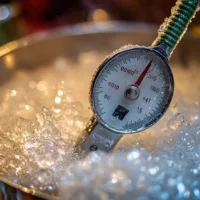
In the world of engineering, certain phenomena play a crucial role in the performance and longevity of machinery, and cavitation is one of them. Whether you're working with engines, turbines, or pumps, understanding cavitation can be key to improving efficiency and avoiding damage. Cavitation, which involves the formation of vapor bubbles in a liquid due to pressure changes, can have significant effects on fuel flow and system performance. In this blog, we’ll dive into the concept of cavitation, how it occurs, and why it's important to consider in engine design and analysis. Whether you're a student or a professional in the automotive industry, this is an essential topic to understand for optimizing equipment performance.
How Cavitation Relates to Pressure and Boiling Point
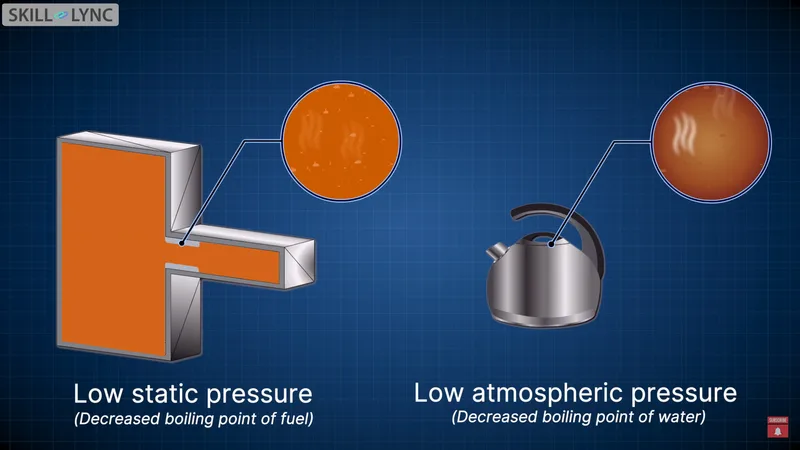
As many of you know, at sea level, the boiling point of water is about 100°C. However, as we move to higher altitudes, such as in Tibet, the boiling point of liquids decreases due to reduced atmospheric pressure. This same principle of pressure-induced boiling can happen in engines when the static pressure in certain regions of the fuel system drops below the vapor pressure of the liquid fuel. This results in localized boiling and vapor formation, known as cavitation.
Understanding Cavitation in Engines
Now, let’s apply this concept to fuel flow in an engine. The path that fuel takes from the tank to the combustion chamber is complex, often involving flow through narrow chambers with varying curvatures. As the fuel flows through areas where the space suddenly contracts, the static pressure can drop significantly. This drop in pressure, if it falls below the fuel’s vapor pressure, causes the fuel to vaporize—similar to how water boils at a lower temperature in Tibet.
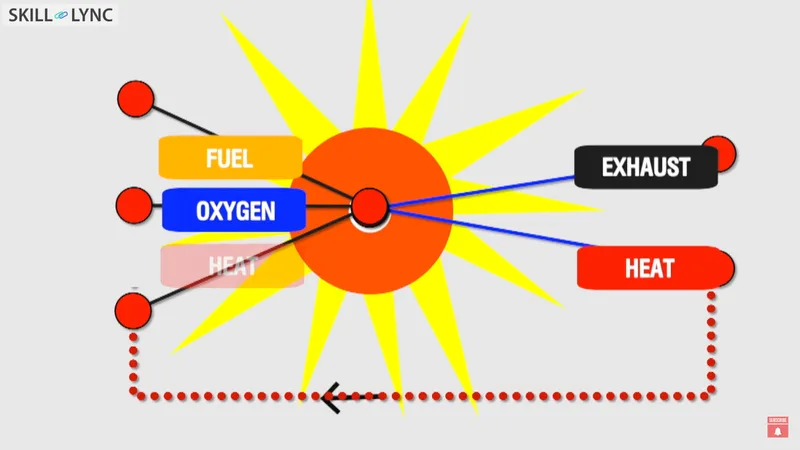
One of the most common tools for studying cavitation in engines is the Winklhofer nozzle. This nozzle is a benchmark model used for computational fluid dynamics (CFD) analysis. It provides an ideal way to observe how fuel behaves when subjected to sharp pressure changes.
The Winklhofer Nozzle: Analyzing Fuel Flow
In a Winklhofer nozzle, fuel moves from a large chamber into a much smaller throat before exiting through the nozzle. The large-to-small area transition causes some fuel to separate from the walls, creating a low-pressure zone. When this static pressure falls below the vapor pressure of the fuel, cavitation begins—fuel starts boiling and vaporizing, forming vapor pockets inside the nozzle.
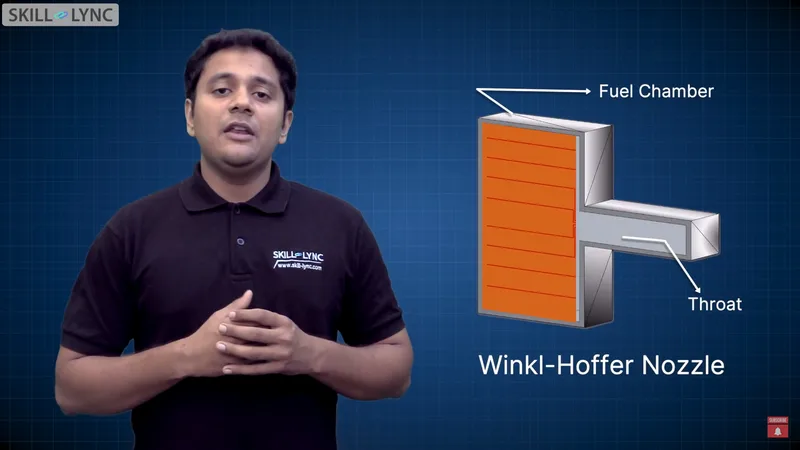
At Skill-Lync, we used Converge CFD software to simulate fuel flow through a Winklhofer nozzle to observe cavitation in action. This is a multi-phase flow problem, meaning it involves both liquid and gas phases, requiring a volume of fluid (VOF) methodology to properly simulate the behavior.
Cavitation Simulation Results
After setting up boundary conditions, selecting a turbulence model, and configuring the volume of fluid solver, we ran the simulation. Here are some of the key insights:
- The simulation produced a velocity contour of fuel flow through the nozzle.
- Maximum velocity occurred at the throat due to the sudden contraction of the nozzle’s area, which caused critical drops in pressure.
- As the static pressure dropped below the fuel’s vapor pressure, cavitation occurred, resulting in vapor pockets within the fuel stream.
The Risks of Cavitation in Engines
Cavitation is not just a phenomenon that affects fluid flow—it can also have significant impacts on equipment performance and longevity. When fuel cavitates in a nozzle, it reduces the fuel mass flow rate, which in turn can negatively affect combustion and emissions.
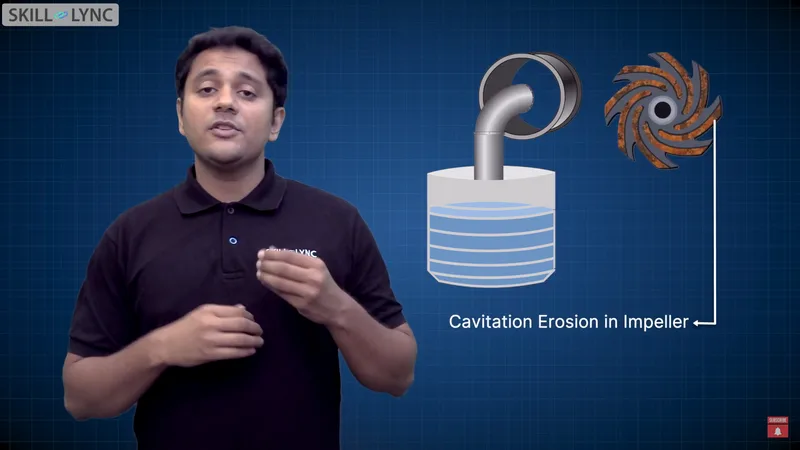
In industries like HVAC or turbomachinery, cavitation can be a major concern in rotating devices such as centrifugal pumps. In these devices, the high-speed rotation of the impeller creates low-pressure zones that can lead to vaporization of the fluid, forming air pockets. These pockets can strike the impeller and walls, causing damage that reduces the lifespan of the components.
Conclusion: Cavitation and Its Importance
For those of you studying or working in automotive engineering or related fields, it’s crucial to understand cavitation and its effects on fuel flow and equipment performance. Learning how to analyze and mitigate cavitation can help improve the reliability and efficiency of engines and other mechanical systems.
Hope you found this blog informative. See you in the next one!
Skill-Lync offers a wide range of industry-relevant upskilling programs to get you career-ready. Click hereto sign up for a FREE course demo right away, and let's launch your career together!