Wiring harness routing & packaging Rules Week 3 Challenge
Aim
- To define P Clamp cad data as Electrical support using Electrical Part Design Workbench with all the necessary properties.
- To define Back Shell cad data as Electrical support using Electrical Part Design Workbench with all the necessary properties.
Tyco 1738312-1 https://www.te.com/usa-en/product-1738312-1.html
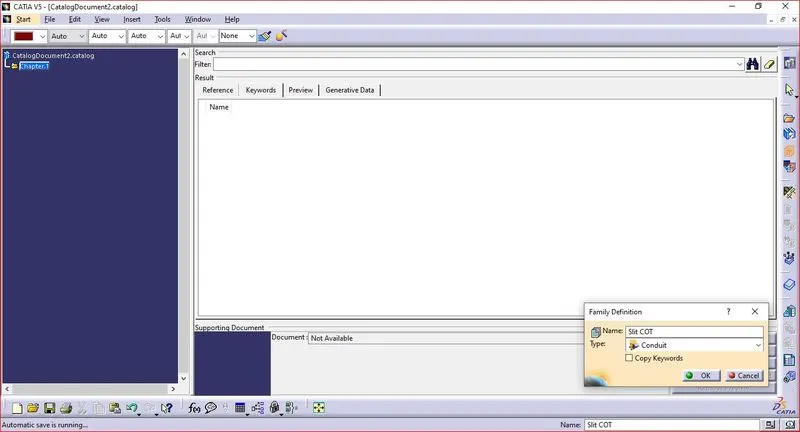
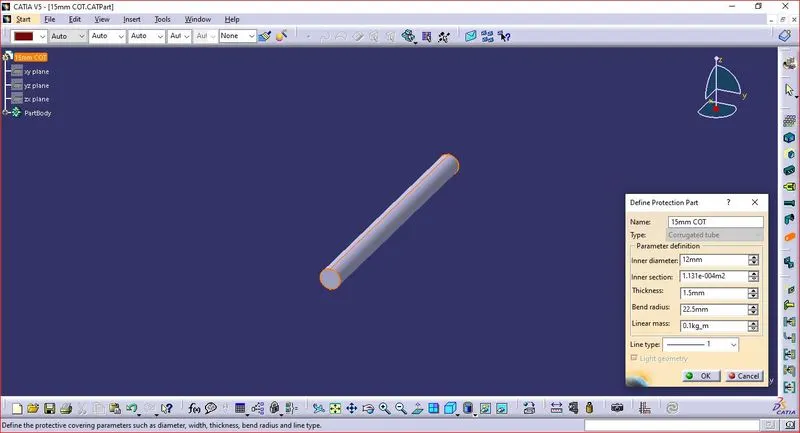
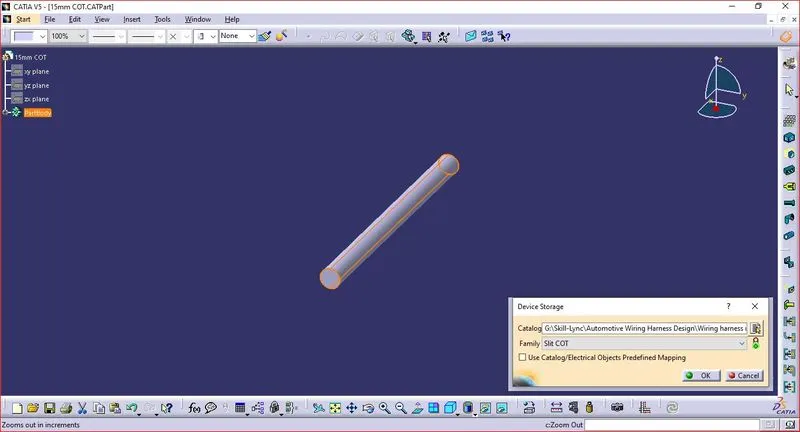
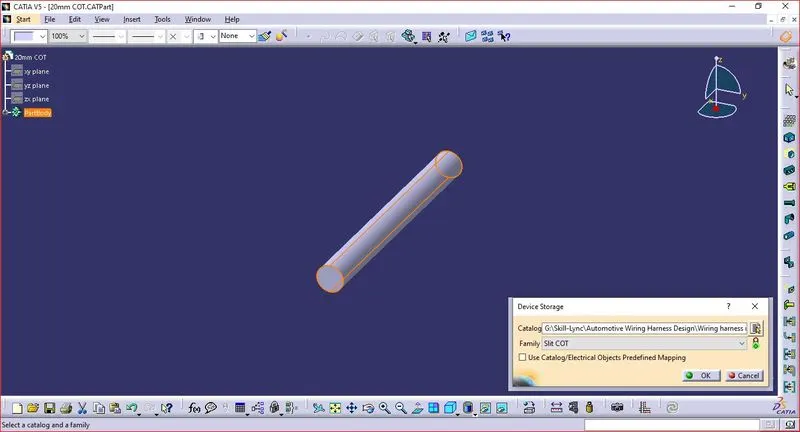
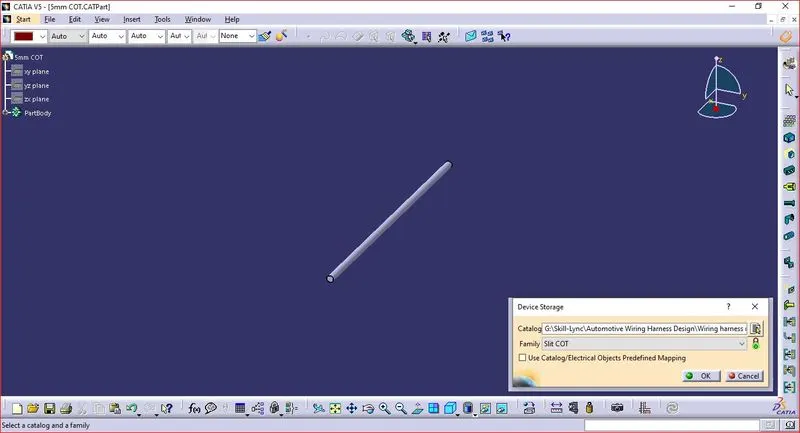
- To create the following corrugated tubes & add them in a Catalogue under “Slit COT” family.
|
Name |
ID (mm) |
OD (mm) |
Thickness (mm) |
|
15mm COT |
12 |
15 |
1.5 |
|
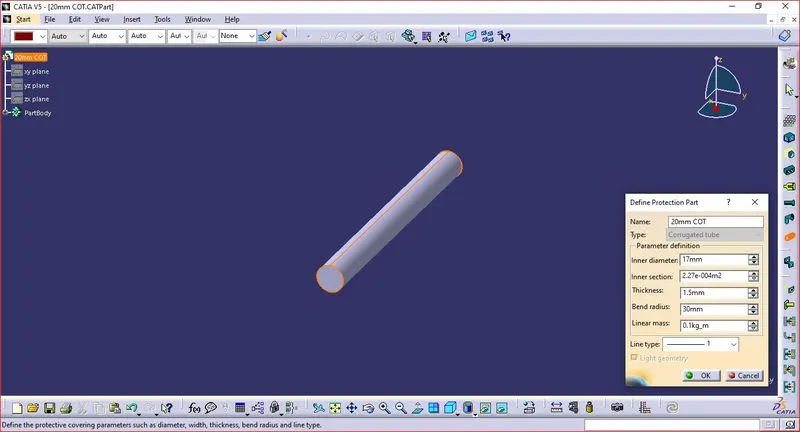
20mm COT |
17 |
20 |
1.5 |
|
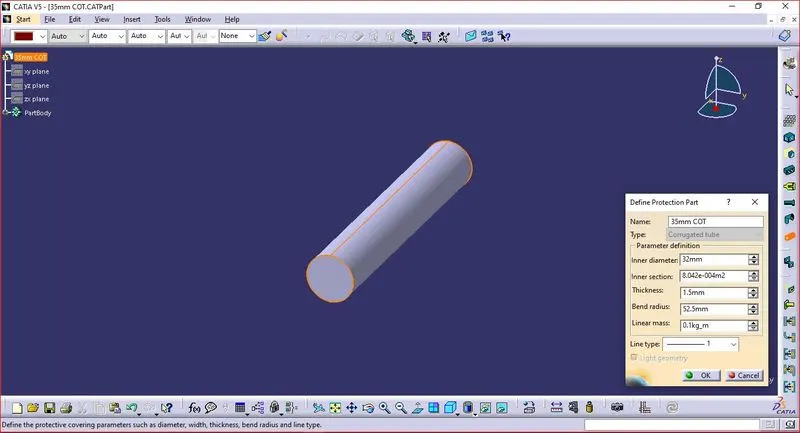
35mm COT |
32 |
35 |
1.5 |
|
10mm COT |
7 |
10 |
1.5 |
|
5mm COT |
3 |
5 |
1 |
Introduction
- Wiring Harness Assembly Structure – Clip Definition.
In a wiring harness assembly, clips are components used to secure and route the wires or cable bundles. Clips provide support, organization, and strain relief to the wiring harness. They are typically made of plastic or metal and are designed to securely hold the wires in place.
The definition of clips in the wiring harness assembly structure involves specifying their locations and attaching them to the appropriate mounting points. Clips are strategically placed along the harness route, often attached to brackets, panels, or other structural components. They ensure that the wires are held securely in position and prevent excessive movement or strain that could lead to damage or interference.
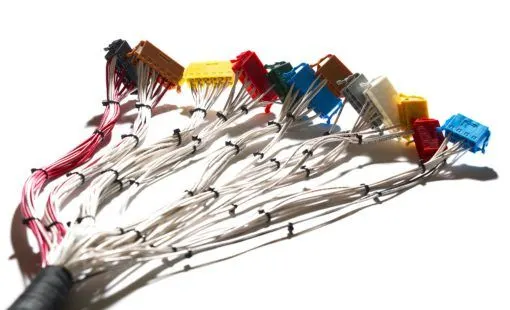
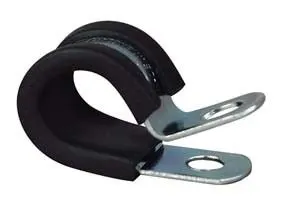
By defining clips within the wiring harness assembly structure, engineers and technicians can accurately plan and document the placement of clips during the manufacturing and installation processes. This helps ensure the proper organization and routing of wires, improving the overall functionality and reliability of the wiring harness assembly.
- Wiring Harness Assembly Structure – Backshell Definition.
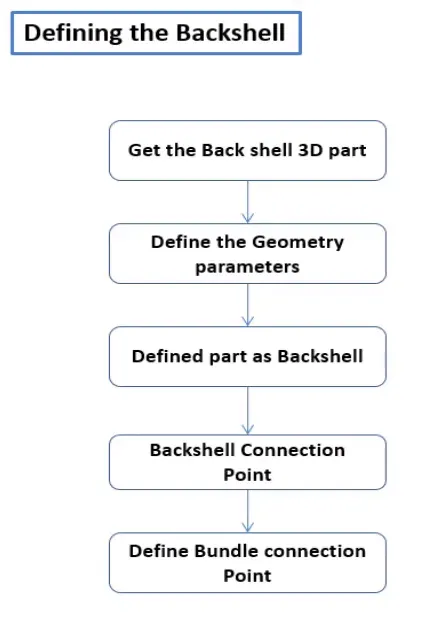
In a wiring harness assembly, a backshell, also known as a connector backshell or connector accessory, is a protective component that is used to cover and secure the connection between a connector and the cable or wire bundle.
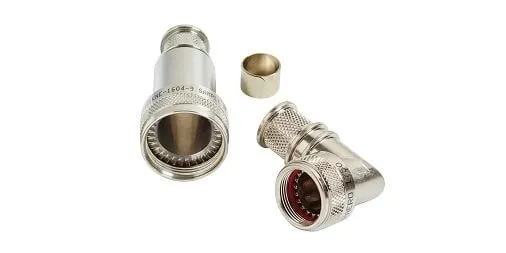
Backshell are plastic molded parts used at wire entry side of connectors either for protection or to improve aesthetics/appearance of harness.
These are not mandatory parts of wiring harness. Are always optional and driven by costs.
- Wiring Harness Assembly Structure – Corrugated Tubes.
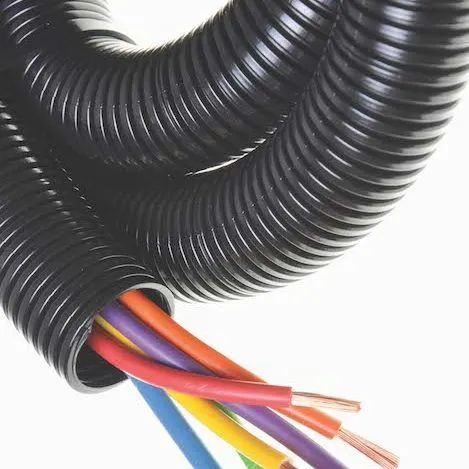
Corrugated tubes, also known as corrugated conduits or wire loom, are protective tubes used in wiring harness assemblies. They are flexible and feature a corrugated or ribbed design, which allows them to expand and contract to accommodate varying wire sizes and bends.
The primary purpose of corrugated tubes is to protect wires and cable bundles from mechanical damage, abrasion, moisture, and other environmental factors. The tubes provide a durable outer layer that shields the wires from impact, friction, and exposure to harsh conditions.
Procedure
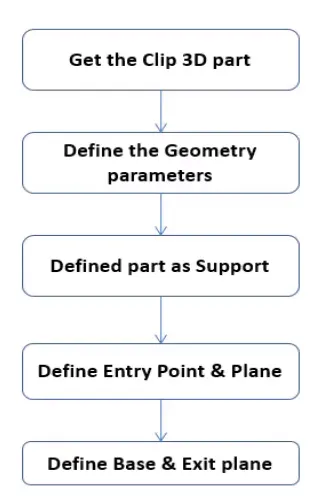
- P Clamp
- Open P Clamp in “Part Design” Workbench.
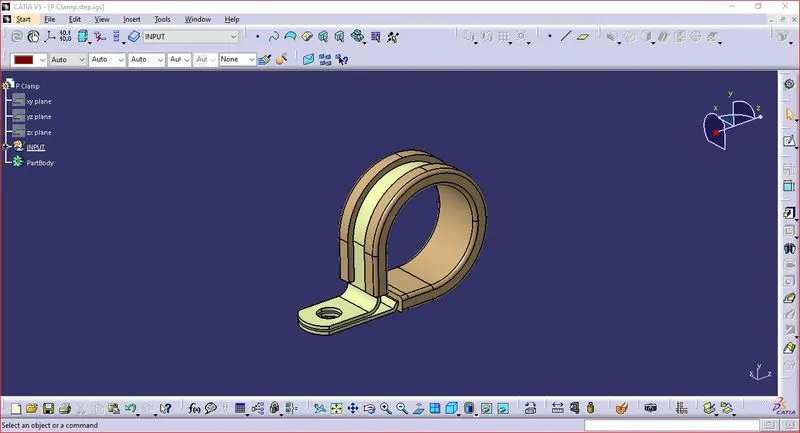
- Create Geometry Parameters.
Create Entry Point and Plane at Center, Exit Point and Plane at Center, Base plane at Bottom.
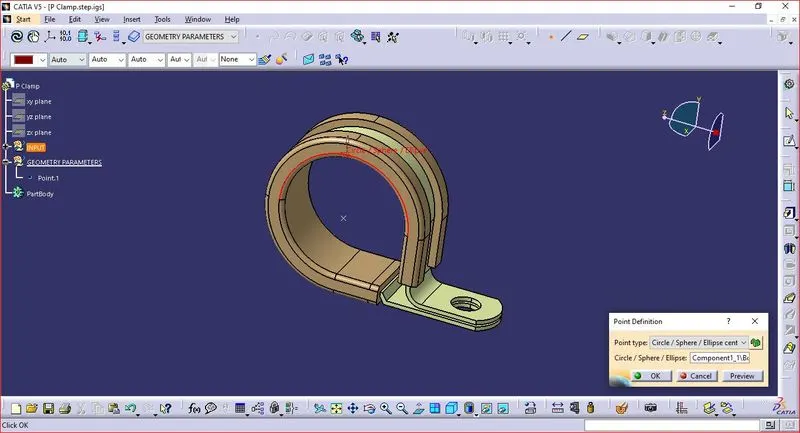
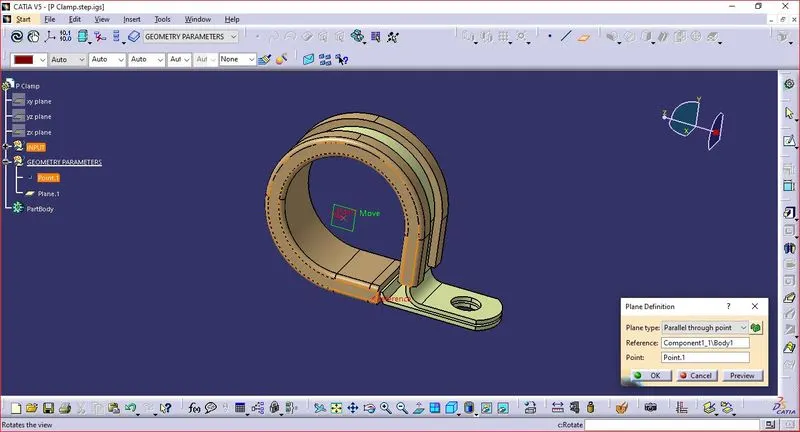
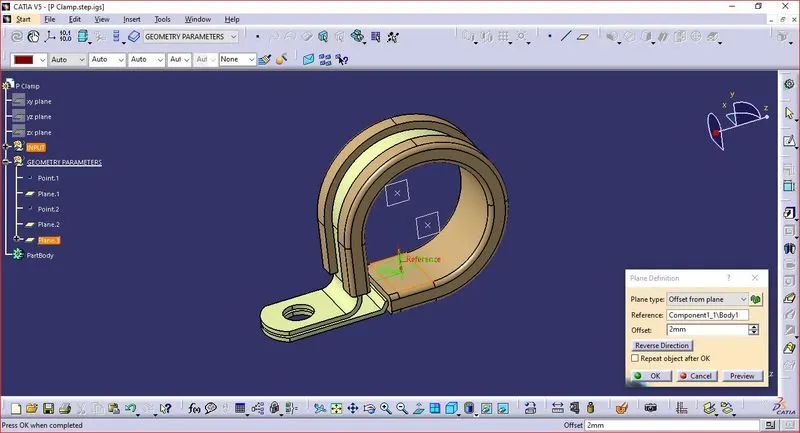
- Switch to “Electrical Part Design” Workbench.
- Define the part as Support.
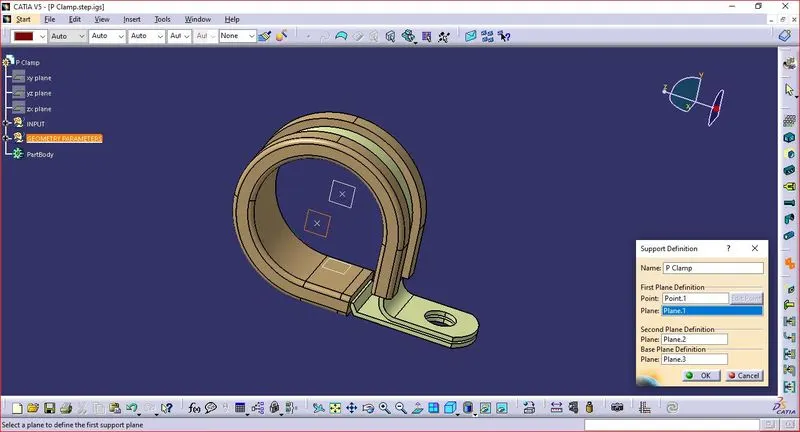
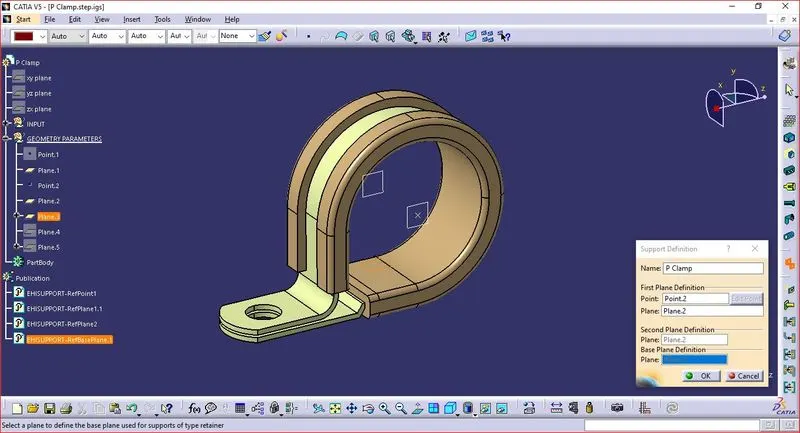
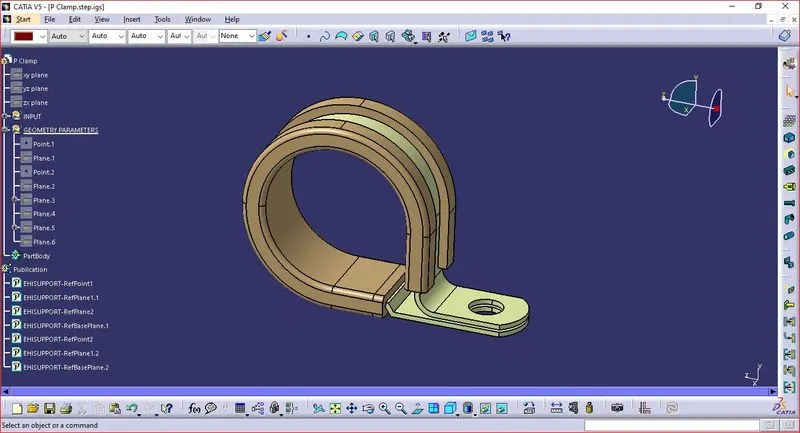
- Creation of Catalogue.
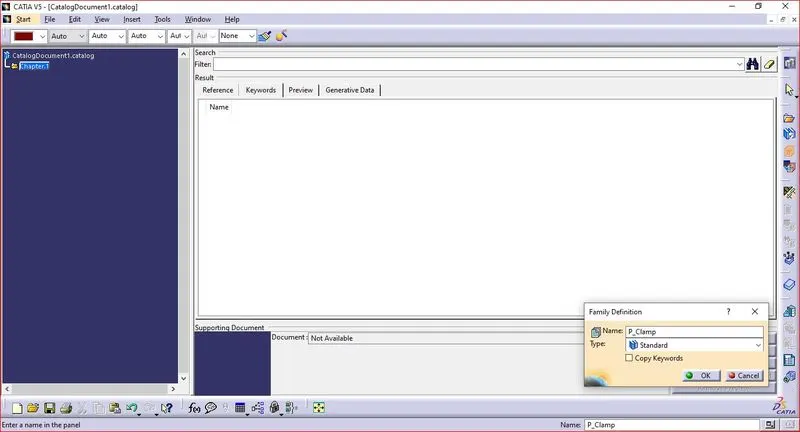
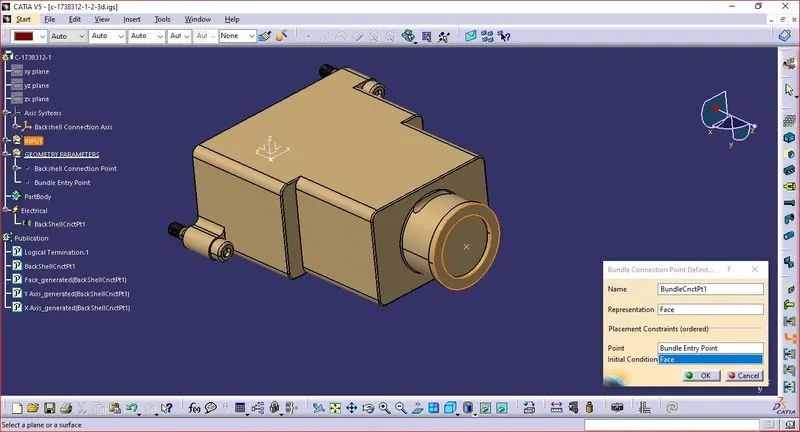
- Backshell
- Open Backshell in “Part Design” Workbench.
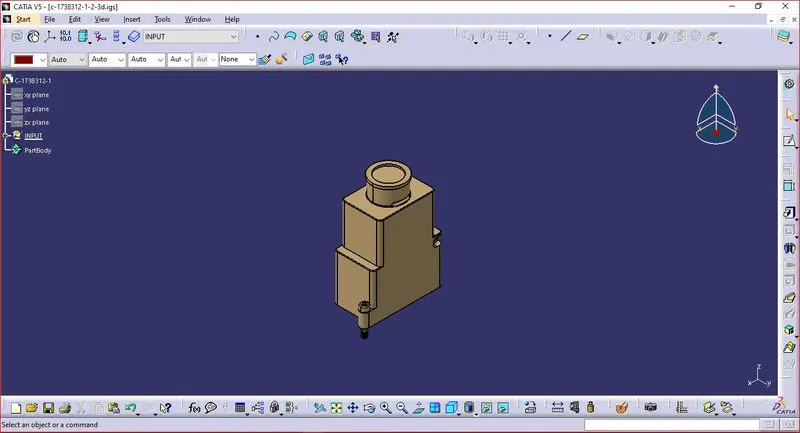
- Create Geometry Parameters.
Create a point and axis system with respect to the matting part.
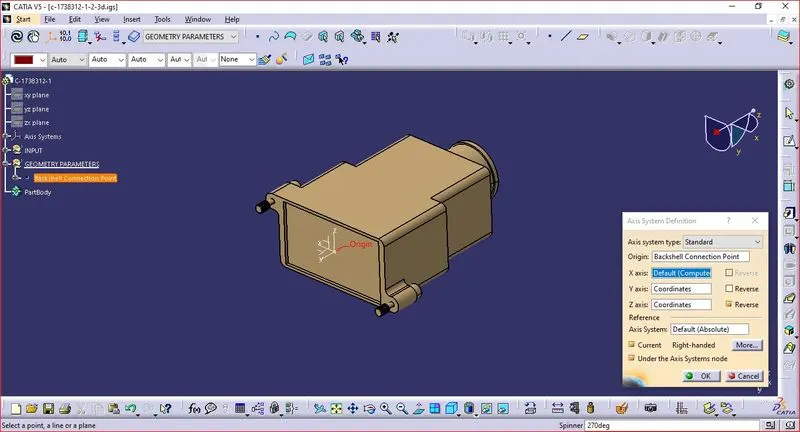
Create a point for bundle entry.
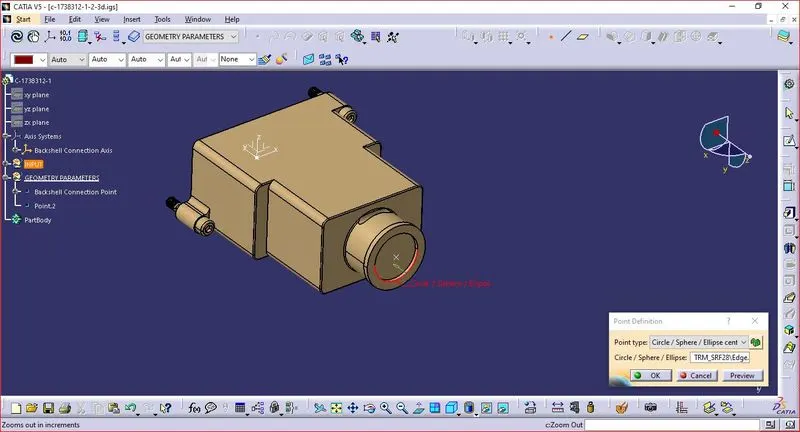
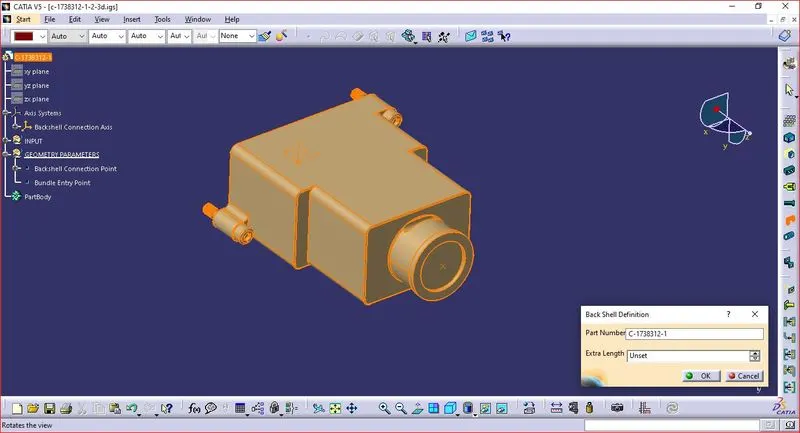
- Switch to “Electrical Part Design” Workbench.
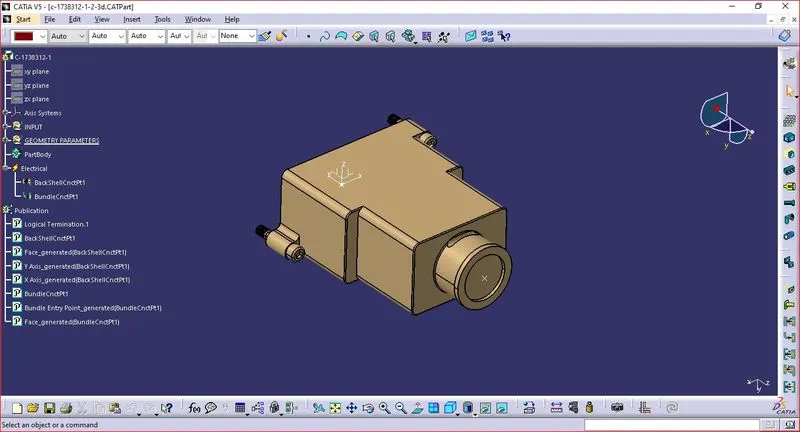
- Define the part as Backshell.
- Define Backshell Connection Point.
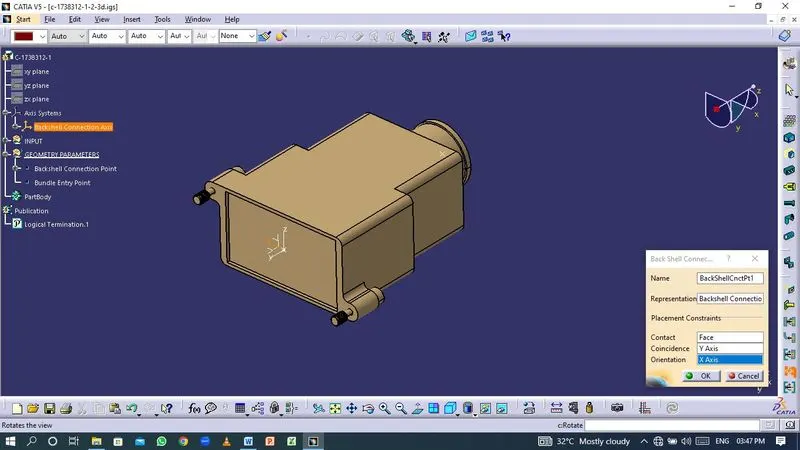
- Define Bundle Entry Point.
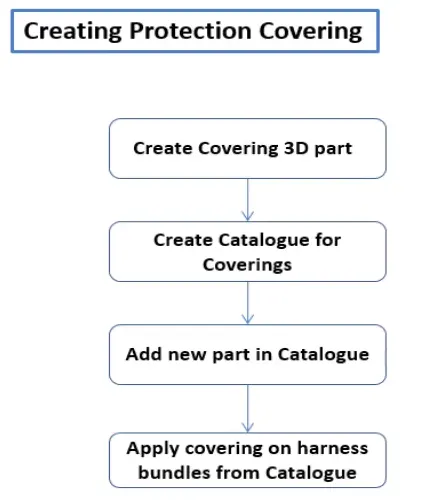
- Corrugated Tubes
- Creation of Catalogue.
- Define Protection Part.
- 15mm COT
- 20mm COT
- 35mm COT
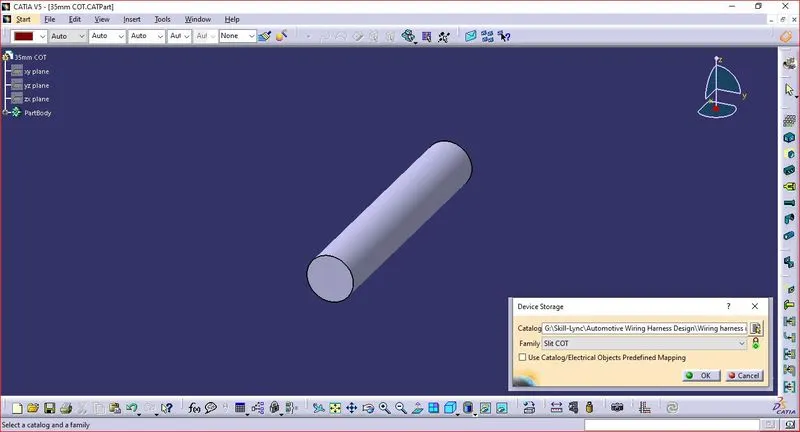
- 10mm COT
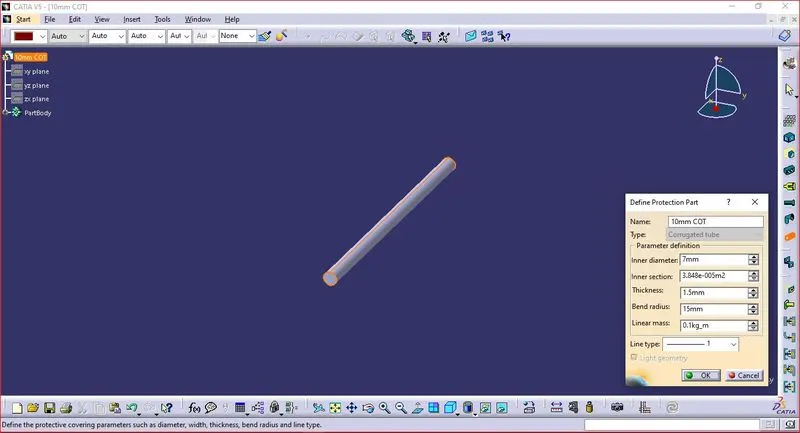
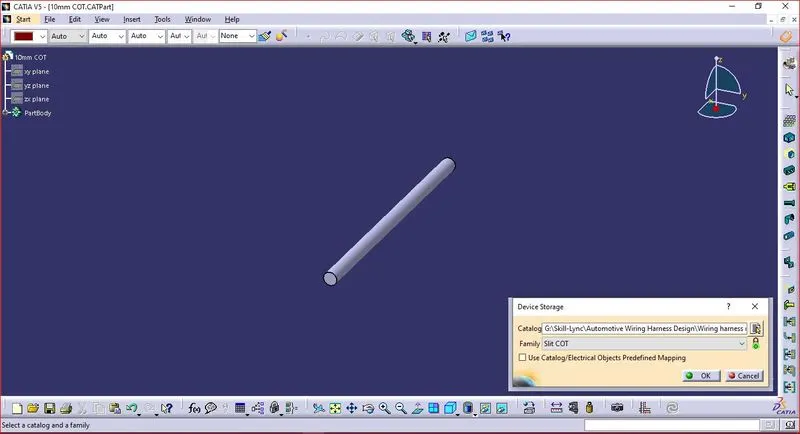
- 5mm COT
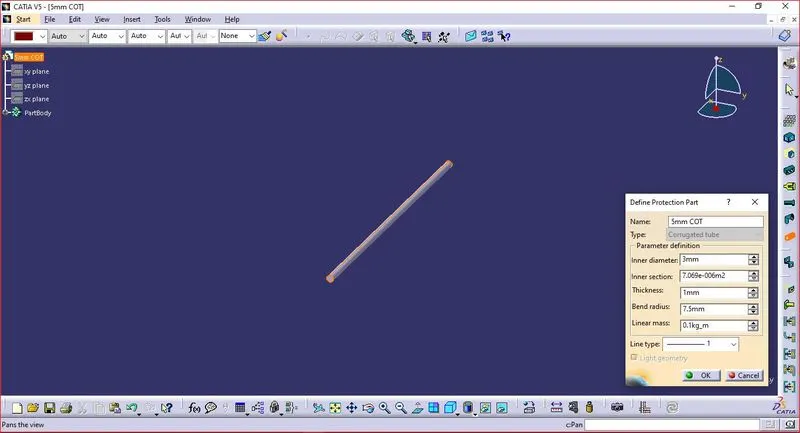
Conclusion
Thus the P Clamps and Backshells are successfully defined as electrical support and corrugated tubes are created using Electrical Part design Workbench in CATIA V5 with all the necessary properties.