Underbody Coating
UNDERBODY COATING
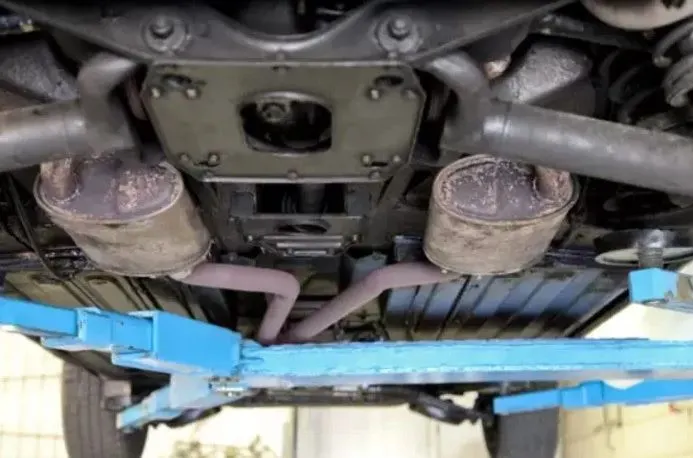
Underbody coating is usually a dense cladding (often based on rubber) applied uniformly to the undercarriage of the automobile. It is normally sprayed or painted on when the car is just out of the dealership and is clean. But even if you are getting the undercoating applied after a couple of years, its's fine too. This is because it can prevent further damage to the undercarriage.
PURPOSE OF UNDERBODY COATING
- Protects against Rust and Corrosion
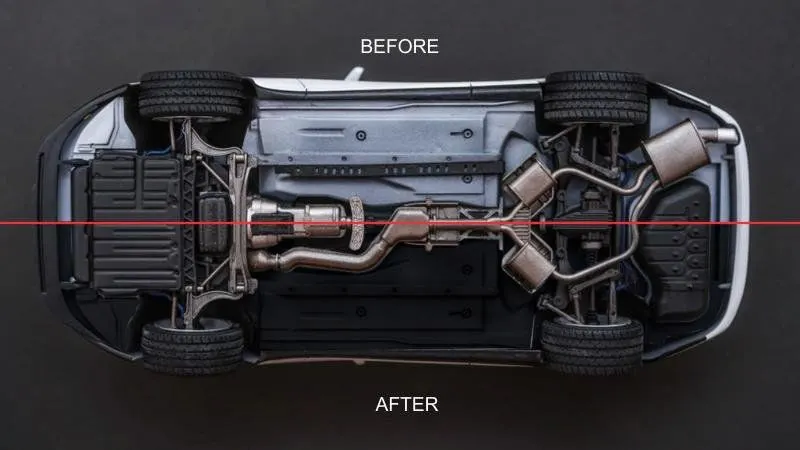
The primary objective of getting underbody coating done is preventing metal components that are exposed on the bottom side of the car to damage from corossion. The effects of corrosion can be prevented by simply applying a rubberised anti-rust coating all over the belly of your car.
- External influence
External environment such as the braking from the hot road in summer, the road's anti-frozen gent in winter, raining water and the salty water in the atmosphere, will attach the underbody of a car. Particular in coast areas, the wind from the sea will bring more salt to the air, which will accelerate the corrosion and reduce the service life of a car. While the underbody is covered by a thick and tight layer, it would act as a strong barrier to prevent these external substances attaching the metal sheet.
- Protects vital components
Underneath a car is somewhere a lot of indispensible parts of a car are leftexposed like the engine, silencer, etc. On simply cant afford to these parts go bad due to rusting and hence in order to save yourself from a hefty repair bill, a considerably less expensive anti-rust coating is a must.
- Minimizes sound
It minimizes the sound from underneath the car resulting a noiseless, smooth driving experience.
- Heat insulation
It insulates the interior of the car from extreme temperature from beneath the vehicle providing a confortable cabin experience.
- Anti-Chipping property
If any stone hits the coating it does not get chipped away hence protects the under body from exposure to water.
PROCESSES OF UNDERBODY COATING
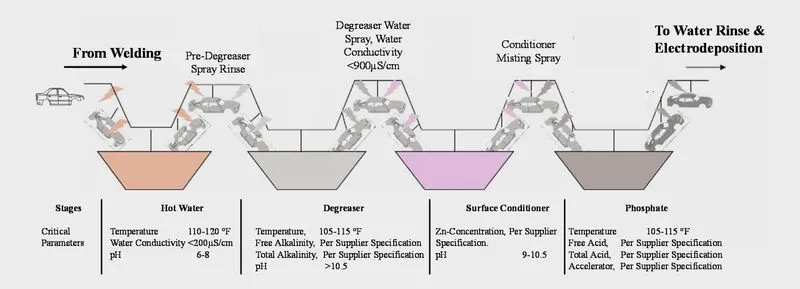
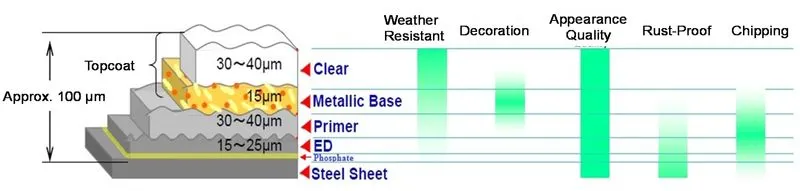
- Pretreatment: removes and cleans excess metal and forms an appropriate surface structure enabling bonding of a corrosion protrction layer.
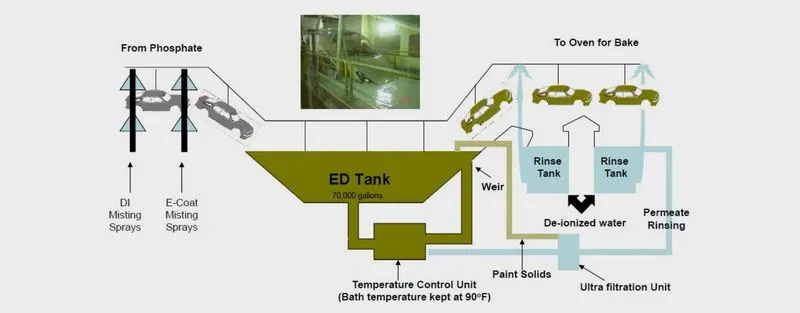
2. The next step is electrodeposition (ED) of the anti-corossion or rust prevention layer.
3. A sealer like Poly Vinyl Choloride (PVC) is applied for anti-corrosion, elimination of water leaks, and minimization of chipping and vibratinal noise.
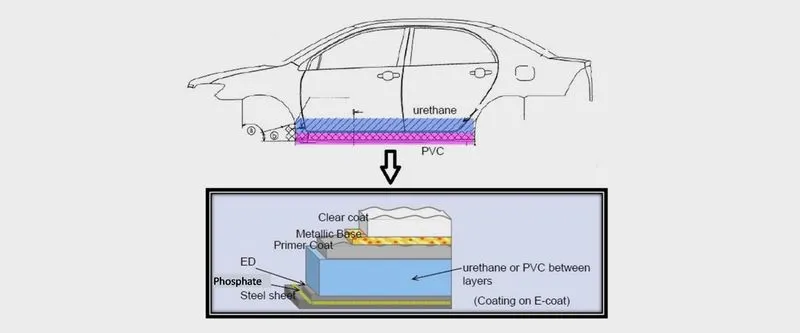
4. A primer is then applied to promote adhesion between the surface and the basecoat; it also imparts a smoother surface for subsequent layers and has anti-chipping properties.
5. Finally, the topcoats that include a base coat and clearcoat are applied; they provide surface properties that are sought after, including colour, appearence, gloss, smoothness, and weather resistance.
TYPES OF UNDERBODY COATING
- Rubberized undercoating
Rubberized vehicle undercoating is easy to apply and offers sound-cushioning as well as protection from dust, moisture, and dings or dents. In addition to your undercarriage, rubberized undercoating is also safe to use on wheels wells and quater panels, and dries to a soft rubbery that prevents further rust, damage, or moisture seeps. The coating can be painted over and, if necessary for body work, can be easily removed with an undercoating removal spray. Overall, rubberized coating is generally the best option for protecting your vehicles undercarriag, as it provides the simplest and best protective measures against rust and moisture.
Advantages
- Undercoat can be painted for a neat finish.
- Provides satisfactory protection.
- Easy to apply.
- Truly dries to a soft rubbery finish that prevents further rust, damage, or moisture seepage.
- Polyurethane Undercoating
The other option for undercoating your vehicle is to use a polyurethane-based sealant. This type of vehicle undercoating is a little bit quicker and easier to apply. Oftentimes, polyurethane undercoating will come in canisters ready to preload into an application gun. This type of sealant works by seeping into all cracks and seams, displacing salt and moisture and oozing around rusty areas to bond with and protect unoxidized metal. It also sands quickly in case you'll need to perform bodywork and can be painted over.
On the flipside, this type of car undercoating generally requires a little bit more surface prep work before applying -- sanding and applying an etching primer to bare metals before using are generally recommended.
Advantages
- It has a long lifespan and is resistant to wear and tear.
- Easily and quickly applicable.
- Quick and simple to remove, as it sands easily.
Disadvantages
- For better adherence, needs undercarriage preparation before application.
- Requires time-consuming etching with primer to bare metals.
- Wax or Paraffin-Based Undercoatings
A paraffin-based undercoating will be the cheapest and quickest option available with which to protect the undercarriage of your vehicle. However, keep in mind that it will wear off quicker than other types of undercoating and will need to be stripped and reapplied at least once every year. Wax-based undercoatings never truly harden. During application, they drip or flow into seams and cracks to provide protective properties. They are usually available in a spray gun canister or in an aerosol can and offer at least a base protection in moderately humid climates.
Advantages
- Readily flows into seams to guarantee any exposed and prone surfaces are protected .
- The most inexpensive undercoating option.
- Conveniently available in spray guy canisters or aerosol cans.
Disadvantages
- Wears off quicker in comparison to other types.
- Unlike the rubberized type, it does not really dry.
- Needs to be stripped and reapplied at least once a year as soon as signs of wear and tear start to show.
- Asphalt-Based Undercoating
For standard vehicles, any of the aforementioned types of undercoating will provide sufficient protection. For large trucks and heavy machinery, asphalt-based undercoating provides a bit of extra durability against rocks, chips, and moisture. Asphalt-based undercoating generally contains a little bit of rubberized material that sets up firmly and also helps soften noise. Generally sold in five gallon containers, this type of undercoating also needs more cure time than the other three, and is NOT paintable, making it best to use only for undercarriages.
Advantages
- Formulated to protect from dirt, rust, and corrosion, it normally has a shelf life of up to two years. Sold in five-gallon containers.
- Provides extra durability as it is the strongest and thickest undercoating available.
Disadvantages
- Provides extra durability as it is the strongest and thickest undercoating available.
- For best used only for the undercarriages of utility vehicles and trucks.
.