Wiring harness design in CATIA V5 - 3D modeling Week 7 Challenge
report on wiring harness fltening
Introduction:
Wiring harnesses are critical components in modern vehicles and aircraft, serving to connect various electrical and electronic components. These harnesses are designed in 3D CAD systems like CATIA V5, but they need to be flattened into 2D layouts for manufacturing and installation purposes.
Purpose of Wiring Harness Flattening:
The primary purpose of wiring harness flattening is to create accurate 2D representations of 3D harness designs. These flattened layouts are used for the manufacturing of harnesses, wire cutting, and installation planning. CATIA V5 provides a set of tools and functionalities to simplify and streamline this process.
Wiring Harness Flattening Process:
The wiring harness flattening process involves several key steps:
Step 1: Import or Create the 3D Wireframe
Begin by importing the 3D wireframe of the wiring harness from your CATIA V5 model or create it within the Electrical Workbench.
Step 2: Define the Flattening Parameters
Specify the flattening parameters, including the desired scale, orientation, and coordinate system. These parameters will determine how the 3D harness is projected onto a 2D plane.
Step 3: Perform the Flattening Operation
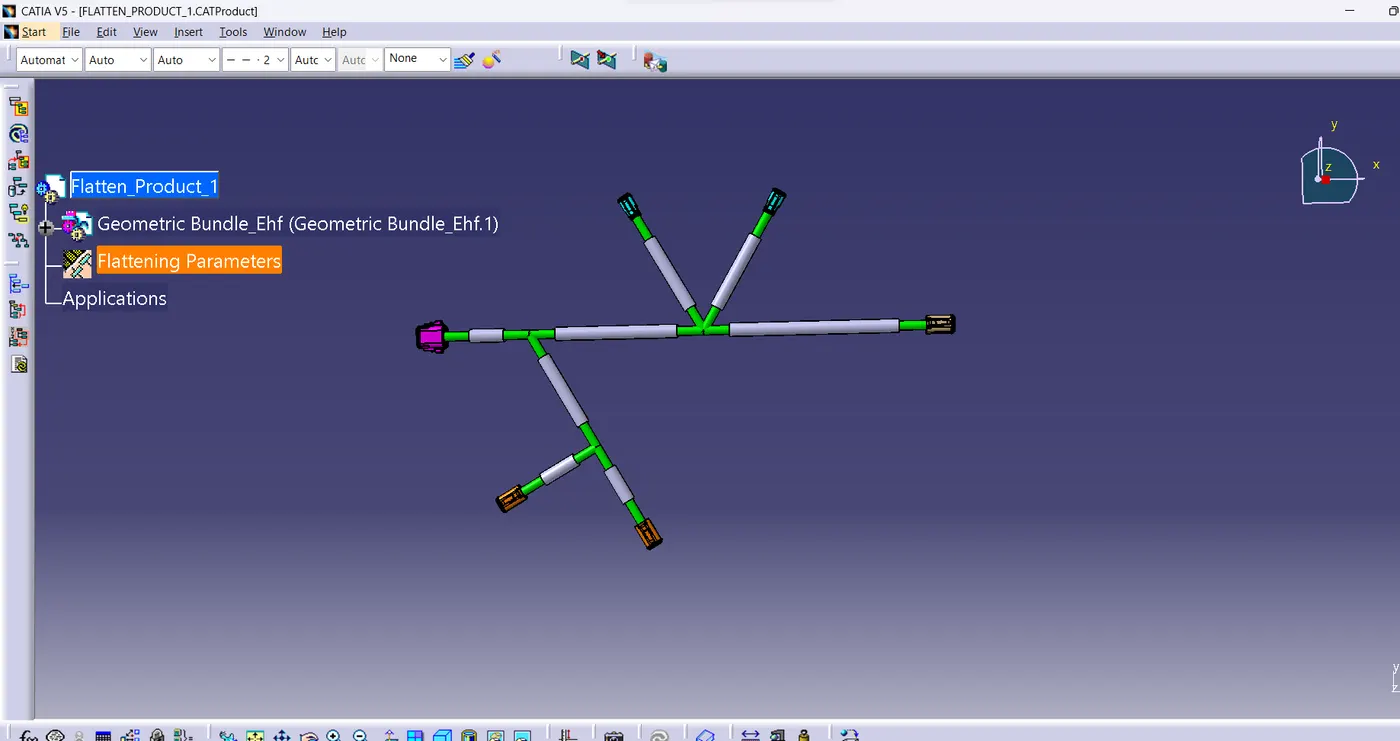
Use CATIA V5's Flatten Harness functionality to project the 3D wireframe onto a 2D plane, generating the flattened layout. Ensure that the flattened harness accurately represents the 3D design.
Step 4: Validate and Review the Flattened Harness
Review the flattened harness layout for accuracy, ensuring that all wires and components are correctly positioned. Use visualization and validation tools to identify any potential issues.
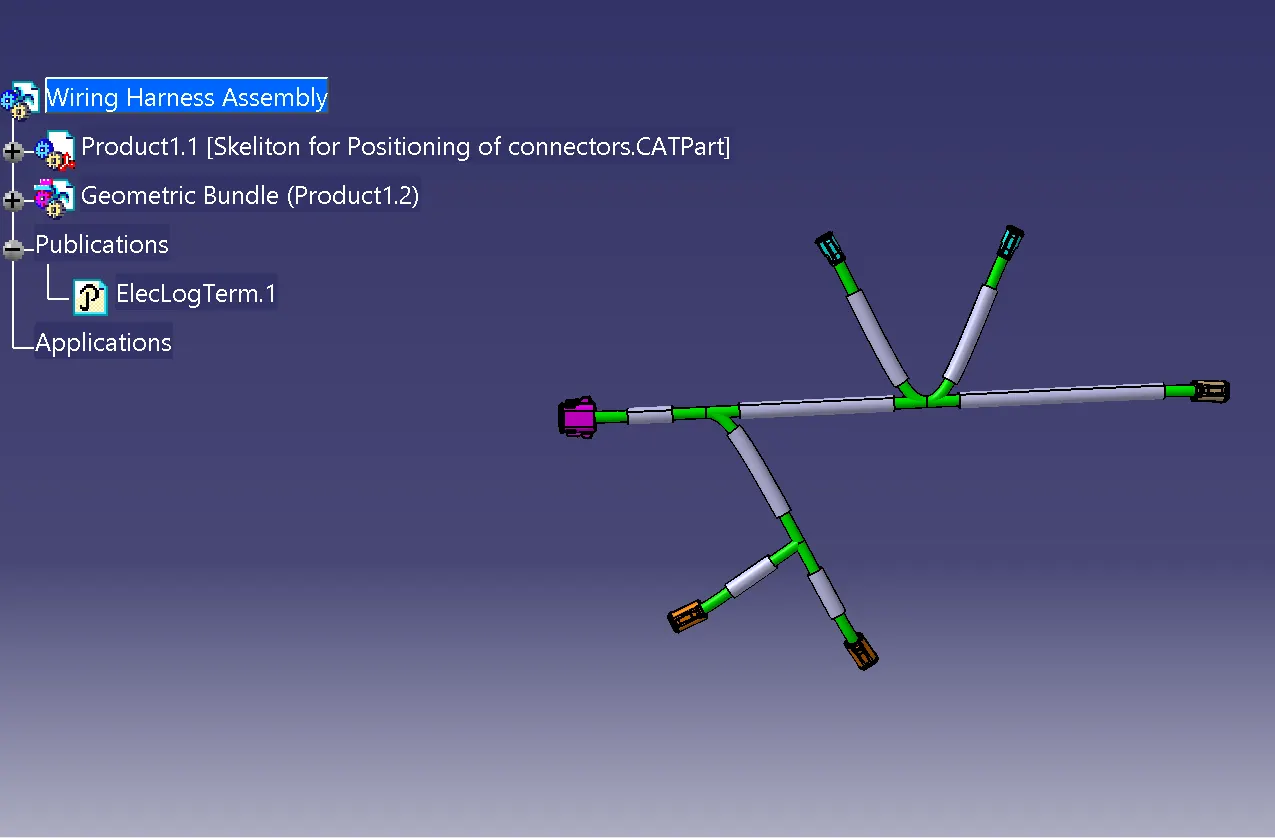
Before Flatening:
After Flatening:
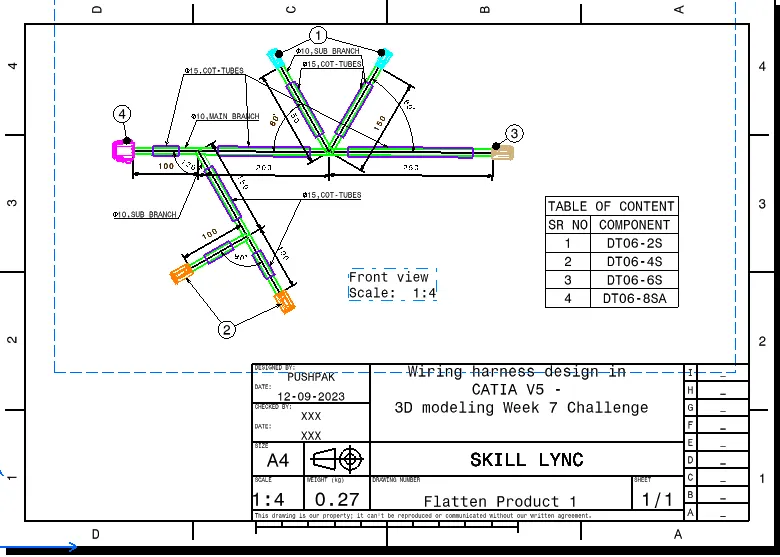
Creating 2D Drawing: For better understanding
Conclusion:
Wiring harness flattening is a critical step in the design and manufacturing of electrical systems in the automotive and aerospace industries. CATIA V5 provides robust tools and functionalities to streamline this process, ensuring the accurate representation of 3D harness designs in 2D layouts. By following best practices and addressing potential challenges, organizations can enhance the efficiency and accuracy of their wiring harness flattening processes, ultimately leading to better-quality products and reduced manufacturing costs.