Wiring harness design in CATIA V5 - 3D modeling Week 2 Challenge
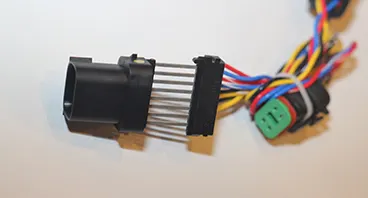
Download following connectors & Connector clip cad data from given link & define it as Electrical Connector using Electrical Part design Workbench. Define all the necessary properties to Connectors & Clip.
- Deutsch DT06 – 08SA ( https://www.te.com/usa-en/product-DT06-08SA.html)
- Tyco 174357-2 (https://www.te.com/usa-en/product-2-174357-2.html?source=header-match)
- Tyco 85229-1 – (https://www.te.com/usa-en/product-85229-1.html?q=85229&source=header)
Wire Harness Basics
A wire harness or cable assembly is an assembly of wires or cables that transmits signals or electrical power.
- The wire or cable is frequently bound together with wire ties, lacing, sleeves, tape conduit or a number of other options including a combination of the above.
- A harness provides advantages over loose wires and cables by offering decreased installation time and allows for standardization.
- Wires often have terminals attached which can then be assembled into keyed housings for error proofing and connection to other parts of the final assembly.
- Harness assembly is typically done manually due to the many different processes involved.
- Refer to Thermtrol wire harness design guidelines for more information.
Wire harness design is often overlooked in the product development.
- This can result in incomplete drawings and obstacles in the manufacturing process.
- Early partnership with Thermtrol can help guide the design by avoiding many last minute changes.
- OEM Tooling and material lead times can be very long – advanced planning is important.
Harnessing can be broken down into several areas:
- Leaded wire
- Frequently used in point to point wiring
- Typically made on automated equipment
- Low complexity
- Minimal labor
- Good quality
- Additional savings opportunities for customer with bundling the leads into a harness
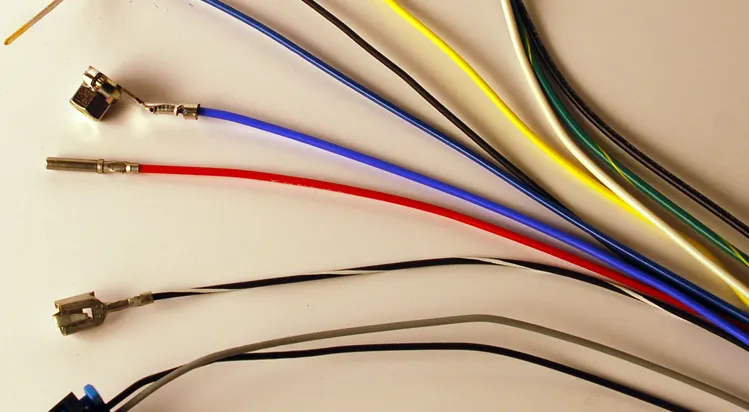
Wire Harness or Cable Assembly
- Usually includes terminals and housings along with other components
- This can be made via a mix of manual and automated operations
- Often this has a higher labor content and need for the higher quality controls developed by Thermtrol which includes 100% testing
- Wire Harnesses are made up of individual wires where as Cable Assemblies are made with a multi conductor jacketed cable
Cutting/ Stripping/ Crimping
- A key aspect of a high quality harness is the terminal crimp
- Crimping is a method of attaching a terminal or contact end to an electrical conductor
- Essential to control for maintaining good electrical and mechanical characteristics
- Use of OEM components and tooling contribute to a high quality consistent connection
- Thermtrol goes well beyond simply checking crimp height, width and pull test by use of a full terminal verification which includes a cross section analysis of the crimp
Wire Harness Design
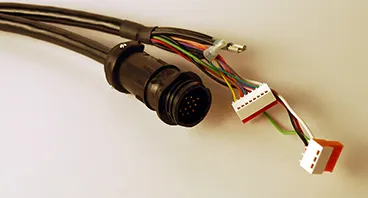
Molding
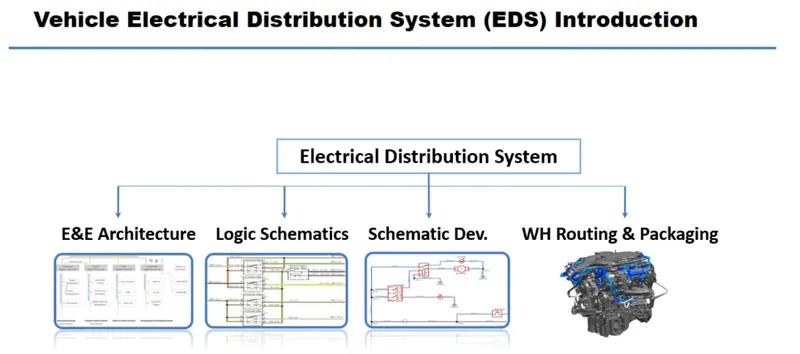
Vehicle Electric Distribution System :-
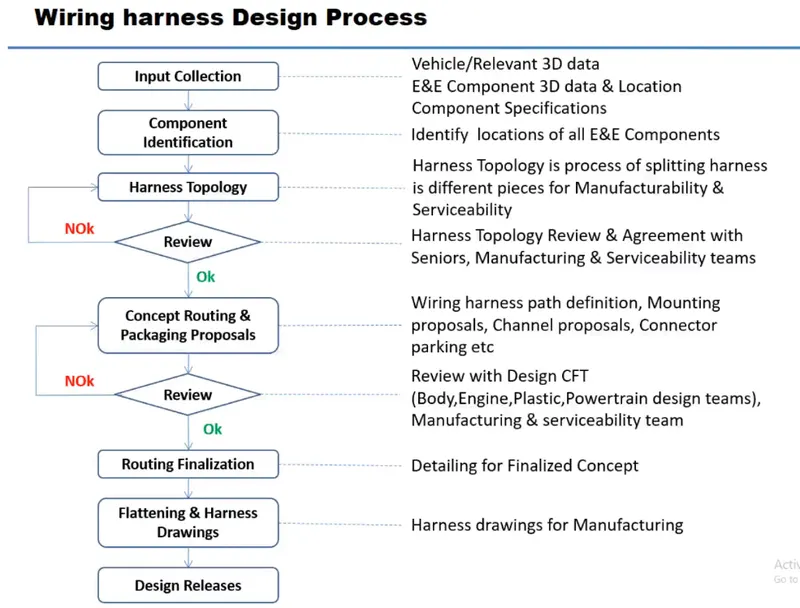
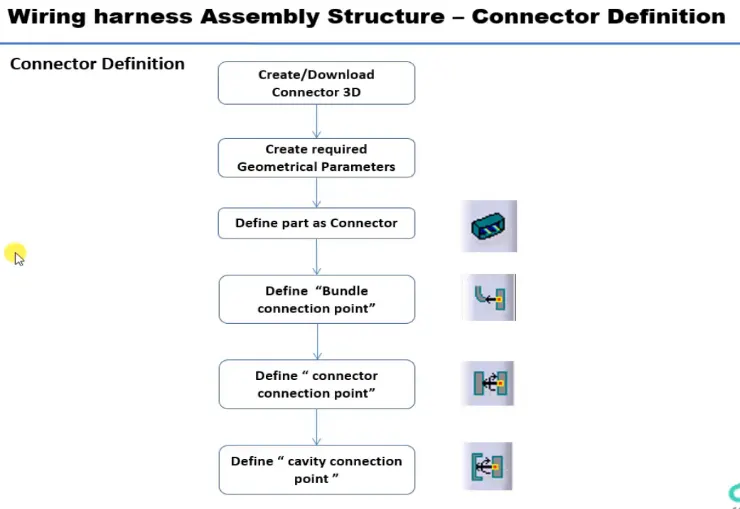
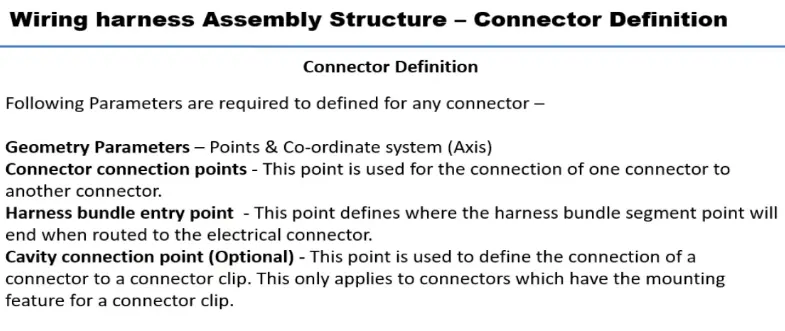
CONNECTOR DEFINATIONS IN CATIA V5
1. Deutsch DT06 – 08SA
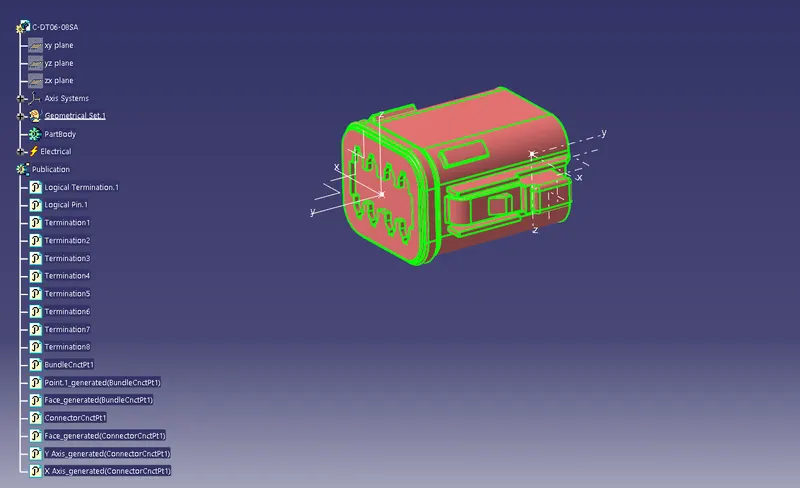
DT06-08SA
- DEUTSCH
- TE Internal #: DT06-08SA
- TE Internal Description: PLG, 8P, GRY, N, A
-
Connector & Housing Type : Housing for Female Terminals
-
Mating Pin Diameter : 1.59 mm [ .063 in ]
-
Connector System : Wire-to-Wire
-
Number of Positions : 8
-
Centerline (Pitch) : 9.12 mm [ .359 in ]
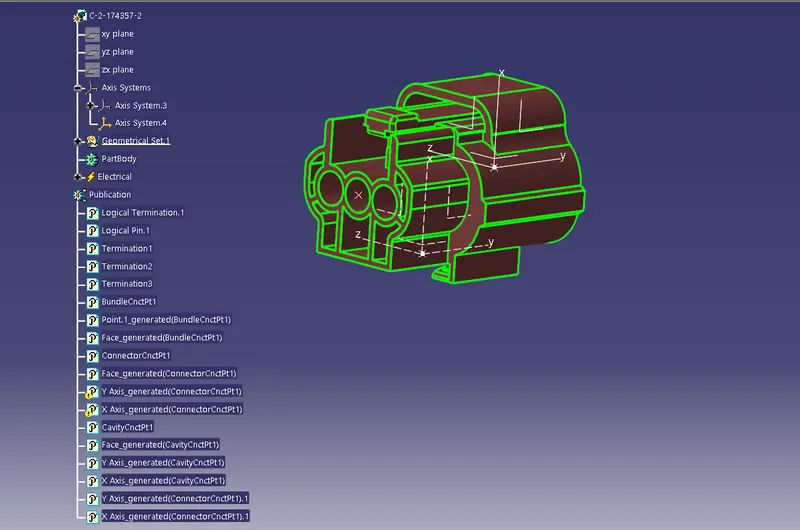
2.Tyco 174357-2
- Create midpoint
- create Connector connection point
- create Connector connection axis system
- create cavity connection point
- create cavity connection axis system
- Switch to Electric part design and define part as connector
- Define Connector connection point and cavity connection point
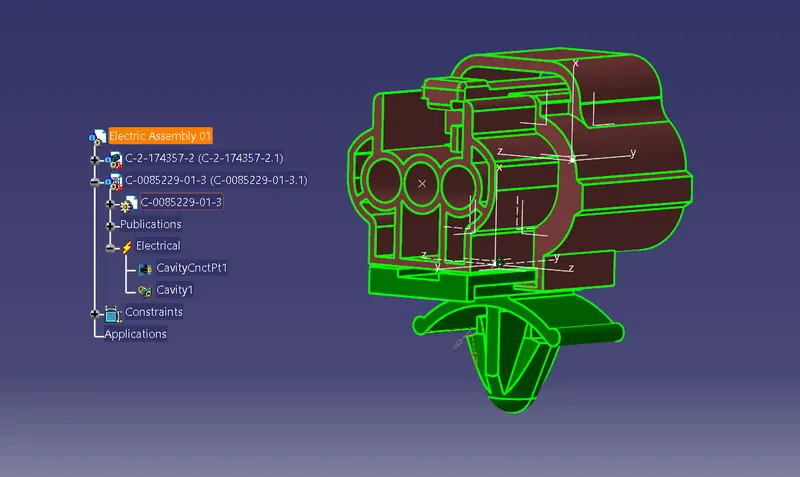
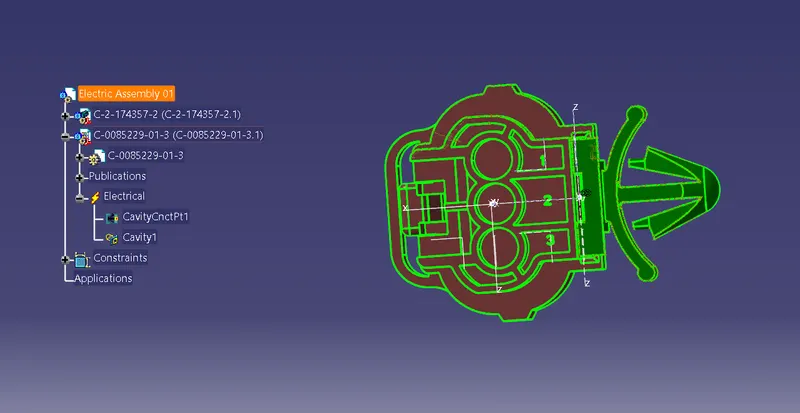
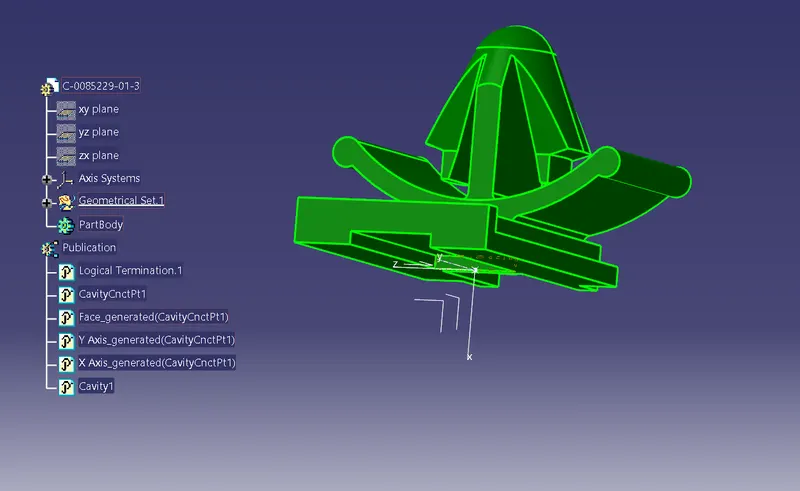
3. Tyco 85229-1 :
- Create midpoint
- create cavity connection point
- create cavity connection axis system and orientation should be same as in connector
- Switch to Electric part design and define part as Mounting Equipment
- Define cavity connection point.
Elctric Assembly Design
- Import Connector and cavity / mounting clip.
- Select Defing Eelectric connection
- select cavity and then connector.