Week 9 Tension and Torsion test challenge
1. Objective
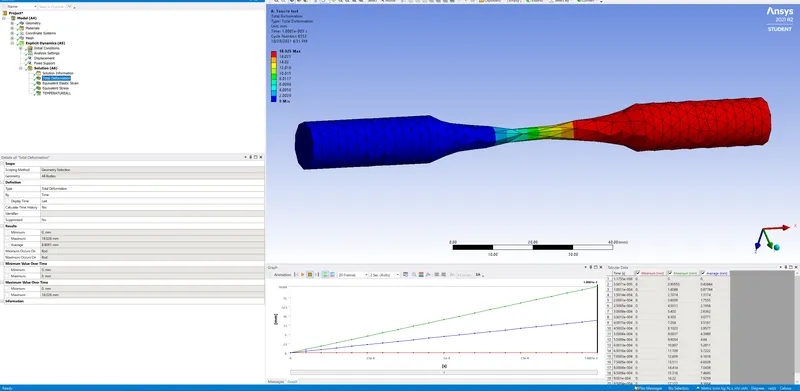
We will have to perform the tension and torsion test on the specimen provided. For the tension test, we have to displace one end of the specimen to 18mm while keeping the other fixed. Also, we need to find out the total deformation, equivalent stress and temperature of the specimen and attach appropriate images to show results. For the torsion test, we will need to displace one end of the specimen to an angle of 1200 degrees. Then we have to find out the total deformation, equivalent stress and temperature of the specimen
2. Tension test
Using Engineering data select STEEL 1006 and structural steel as the material of choice
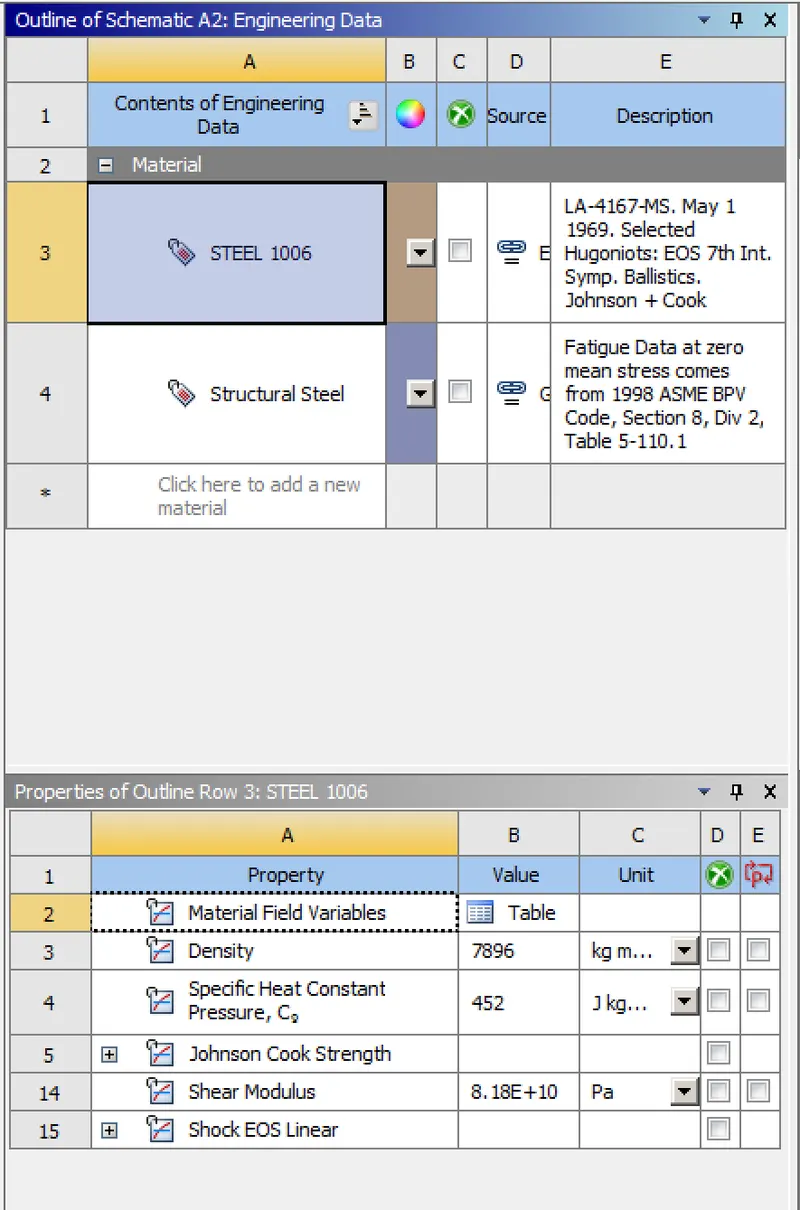
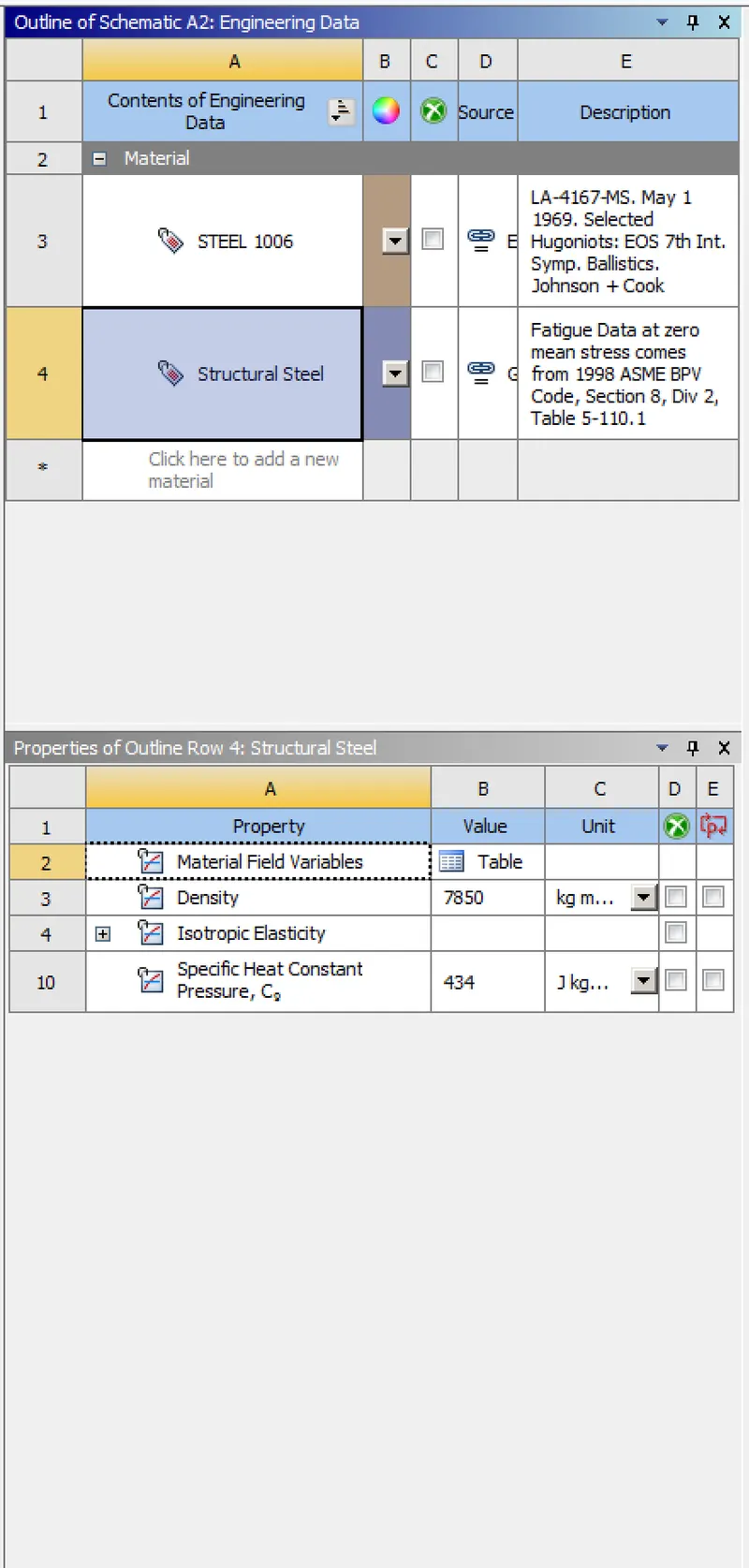
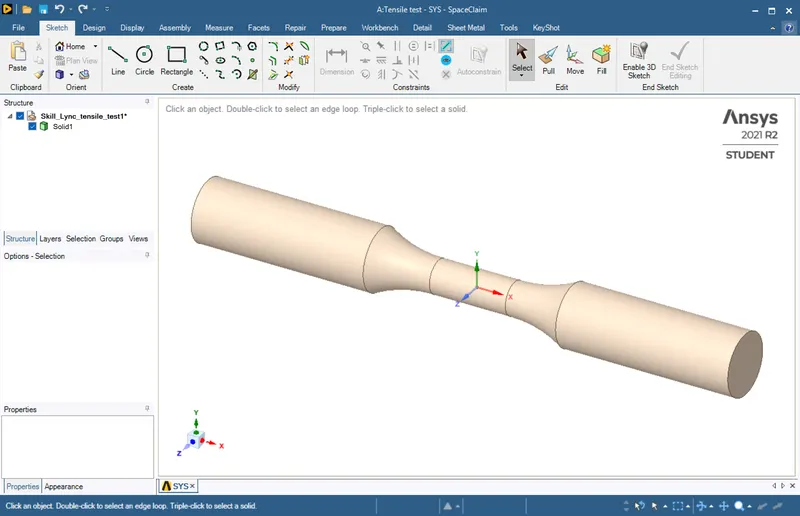
Import geometry file and check for any abnormalities in SpaceClaim
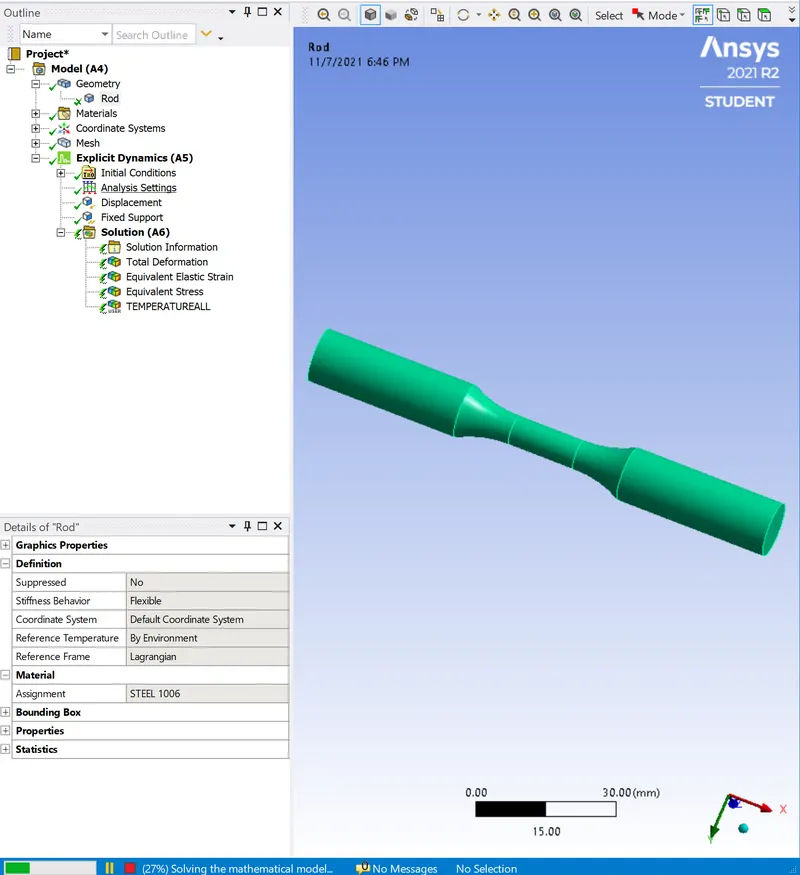
Change the material of the rod to STEEL 1006
Create a local coordinate system on the left cylindrical face of rod
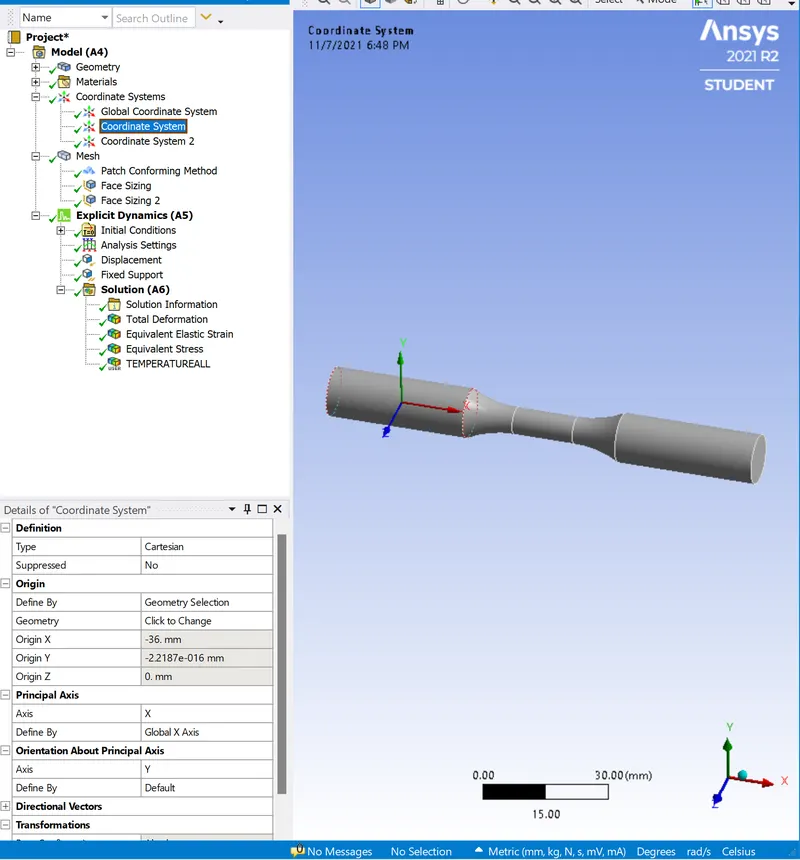
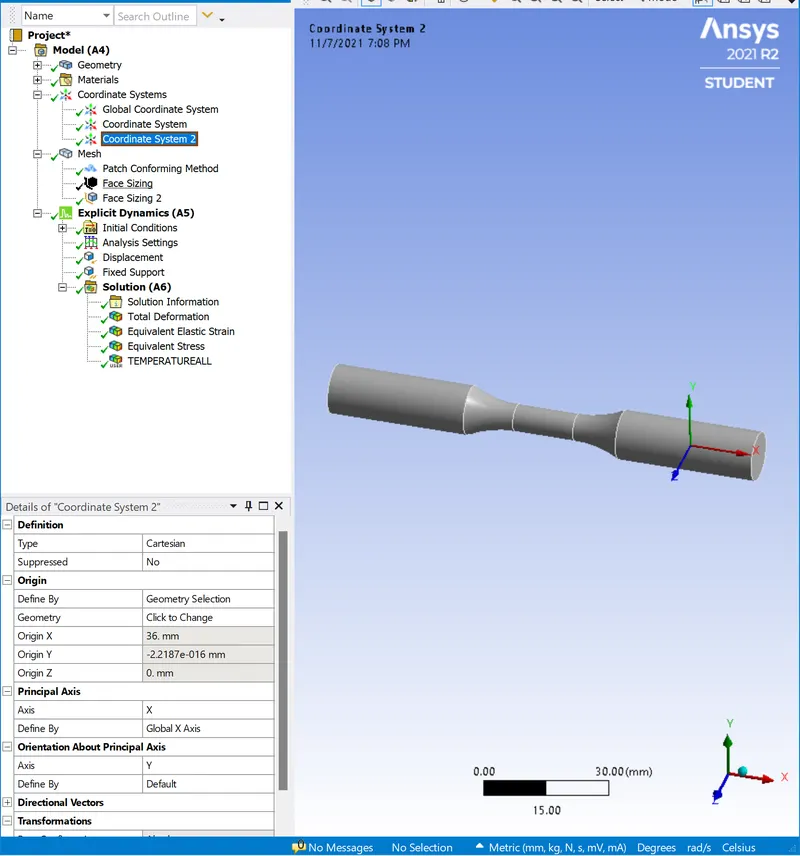
Create another Coordinate system on the right cylindrical face of the rod
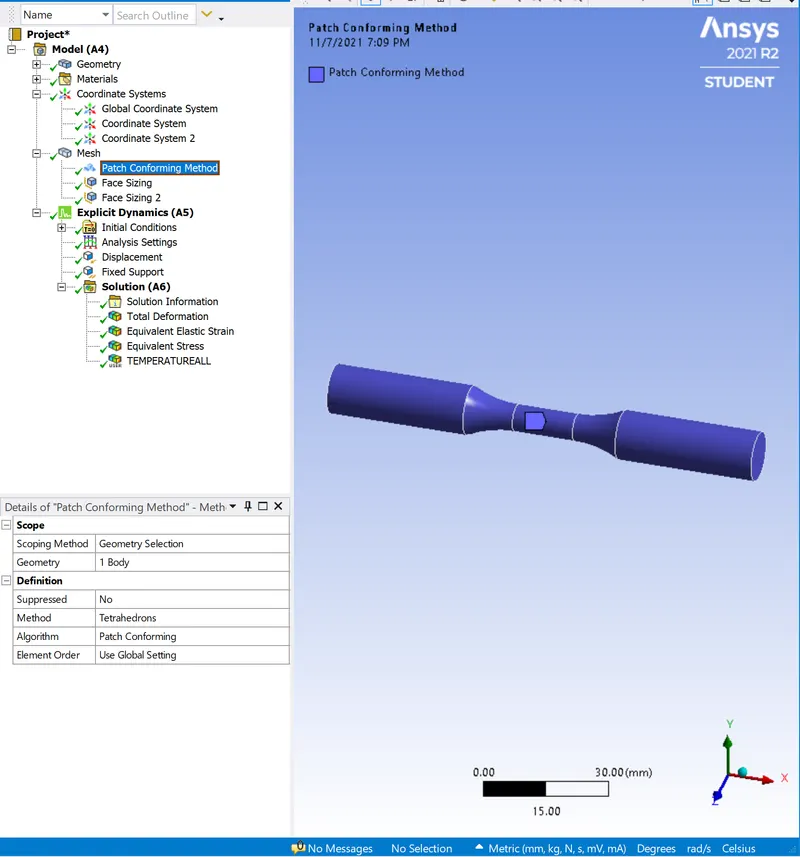
Apply tetrahedral mesh using Patch Confirming algorithm method to the rod
Apply face sizing on the left cylindrical face with a sphere of influence with a radius of 22mm and element size of 3mm.
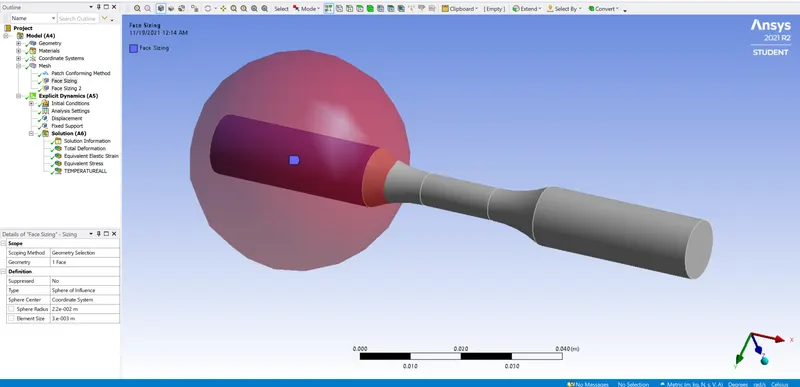
Apply the same face sizing on the right cylindrical face
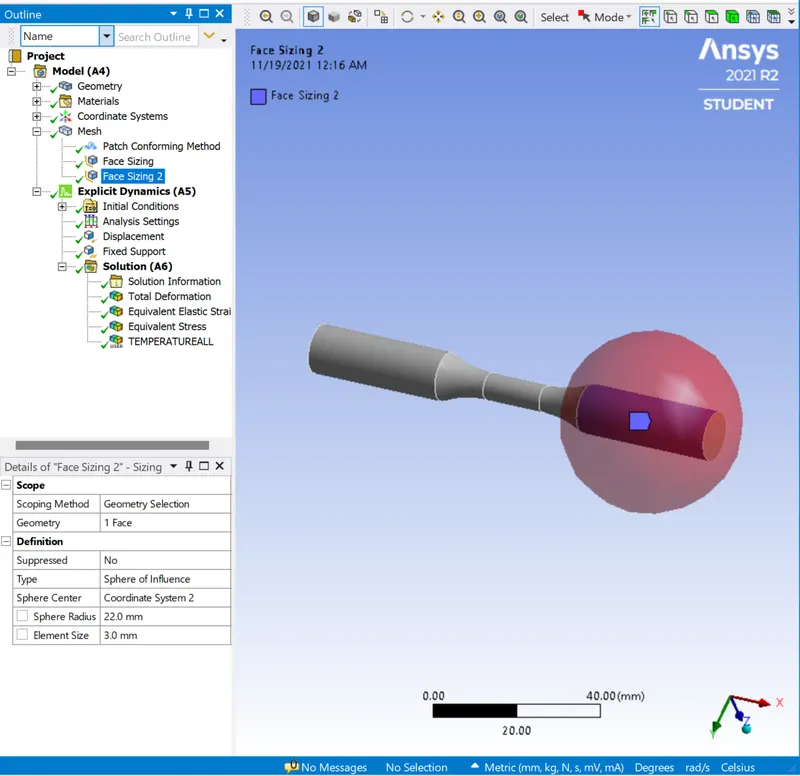
Apply 16mm displacement to right cylindrical face
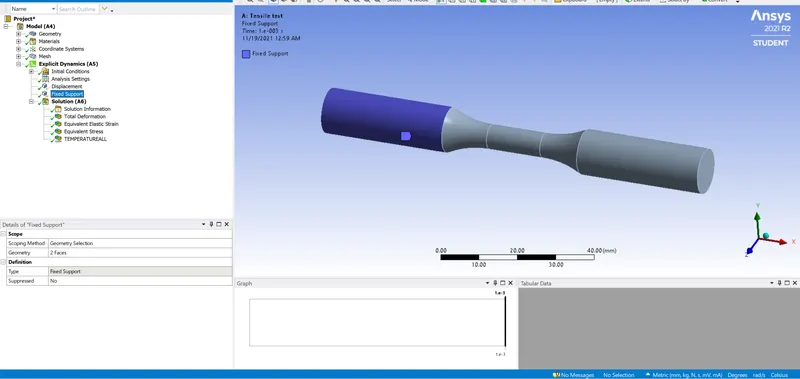
Apply fixed support to right cylindrical face
Apply 18mm displacement to right cylindrical face
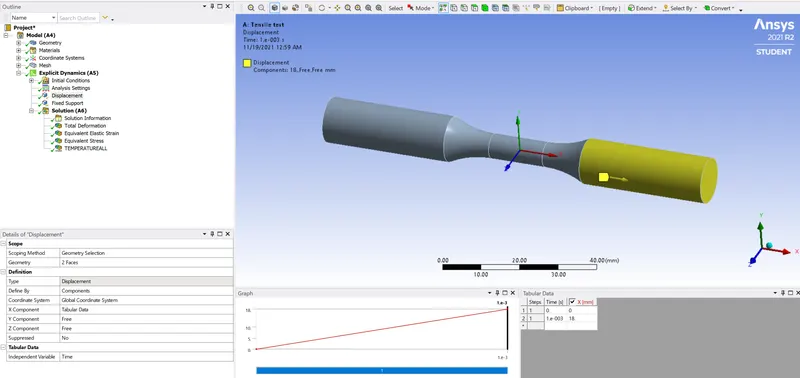
Apply fixed support to the left cylindrical face of the rod
3. Torsion Test
Apart from mesh 2 cylindrical faces, insert a face sizing of 1.5mm size for curved faces
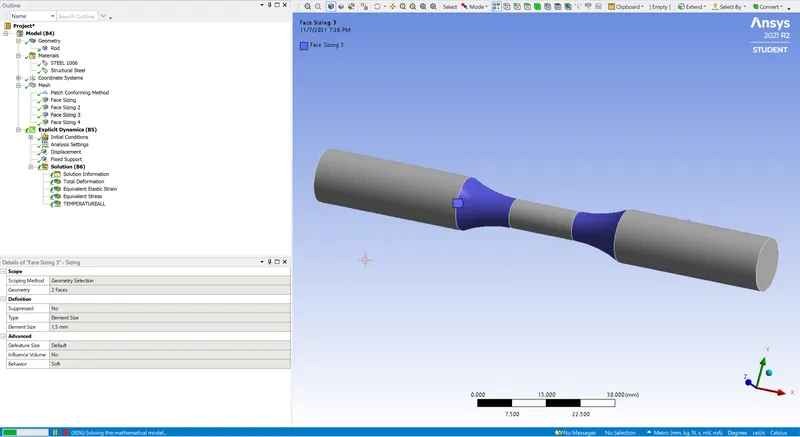
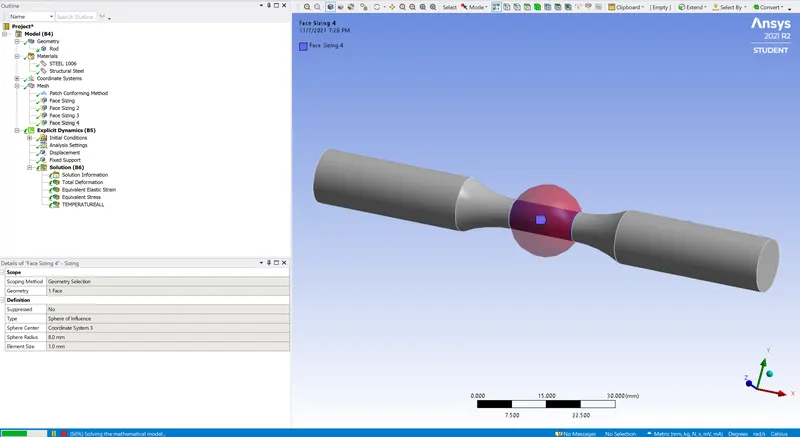
Insert face sizing at the neck portion of the rod with a sphere of influence have a radius of 8mm and element size of 1mm
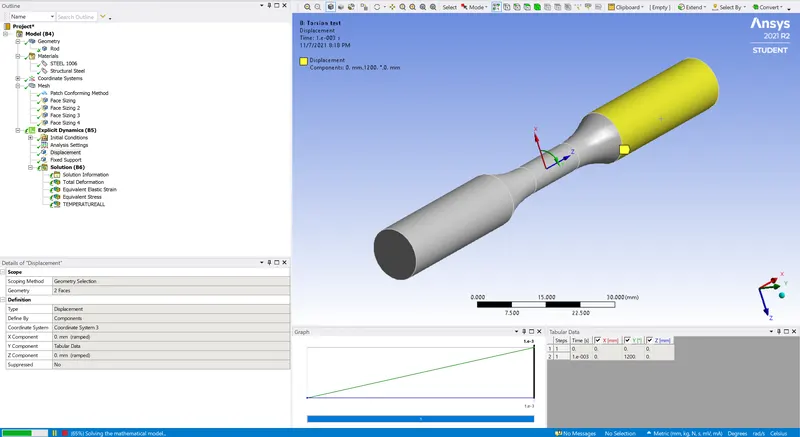
Apply Y displacement of 1200 deg and check the direction of rotation w.r.t global coordinate system.
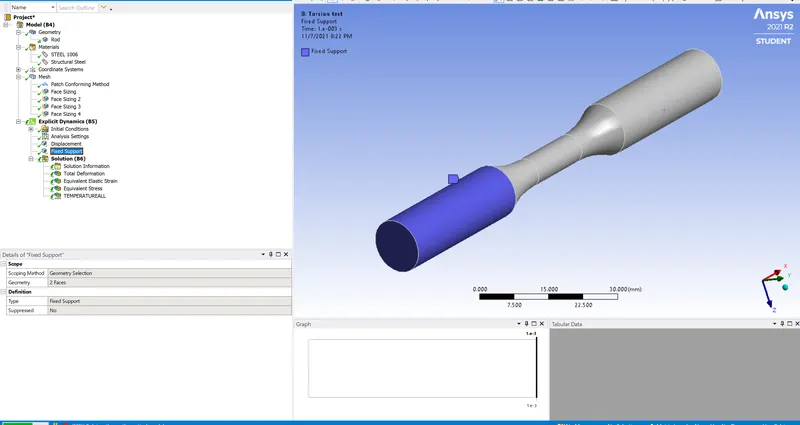
Apply fixed support to one cylindrical face of the rod
4. Results, Conclusion and Report presentation
Tension test results:-
Total deformation (Animation: https://drive.google.com/file/d/16E0cj8V9vnlFGMH77USEppOKZRKavb1v/view?usp=sharing)
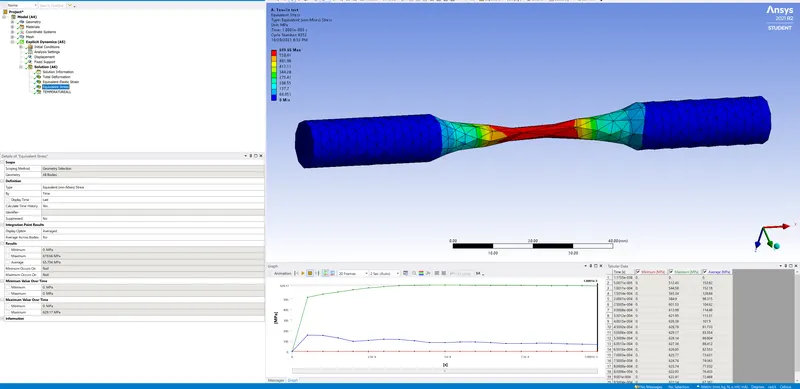
Equivalent stress (Animation: https://drive.google.com/file/d/17Q0GXNxFSMv9Xr_vB95SumuUAohVz_za/view?usp=sharing)
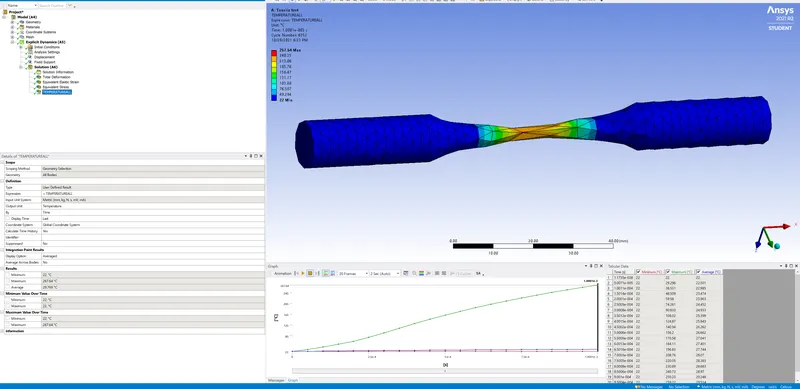
The temperature of the rod (Animation: https://drive.google.com/file/d/1PwpAhZ22oXiPFwmQjZf_NVrMvX-q--AY/view?usp=sharing)
| Total deformation | 18.026 mm |
| Equivalent stress | 619.66 MPa |
| Temperature of specimen | 267.64 deg C |
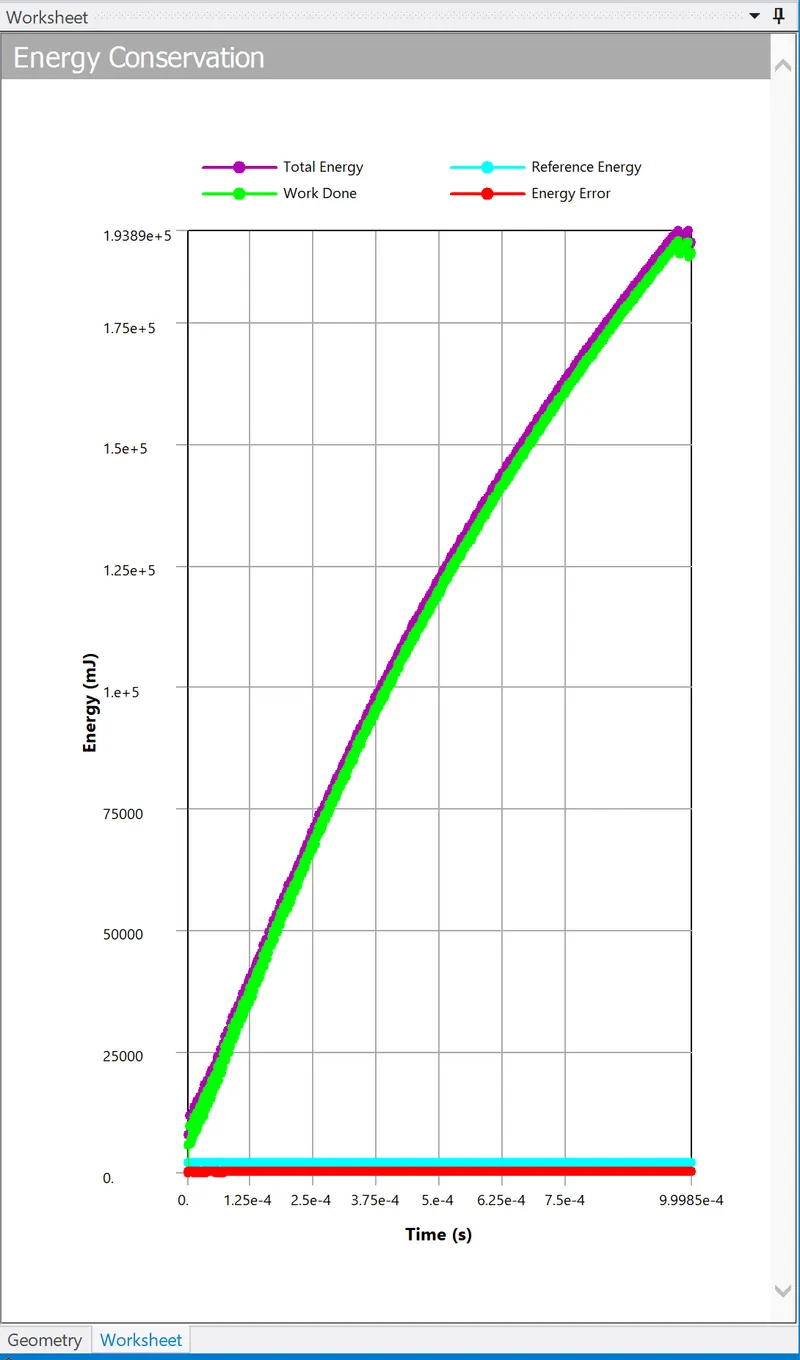
Energy conservation
Torsion test results:-
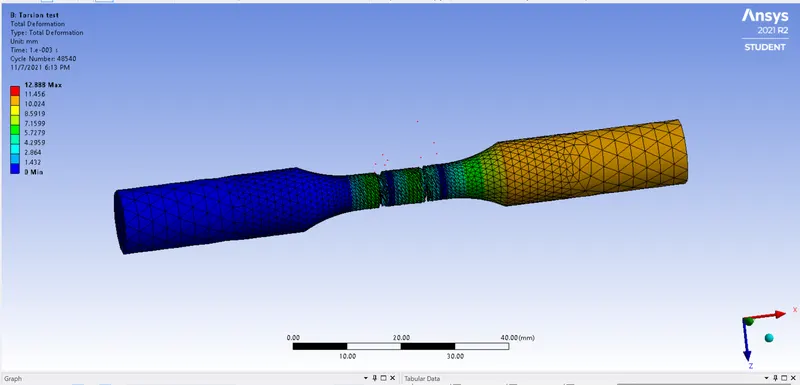
Total deformation (Animation: https://drive.google.com/file/d/1IfFDB5Z0qHWGcV2gzTX0_EXOjH7jiez5/view?usp=sharing)
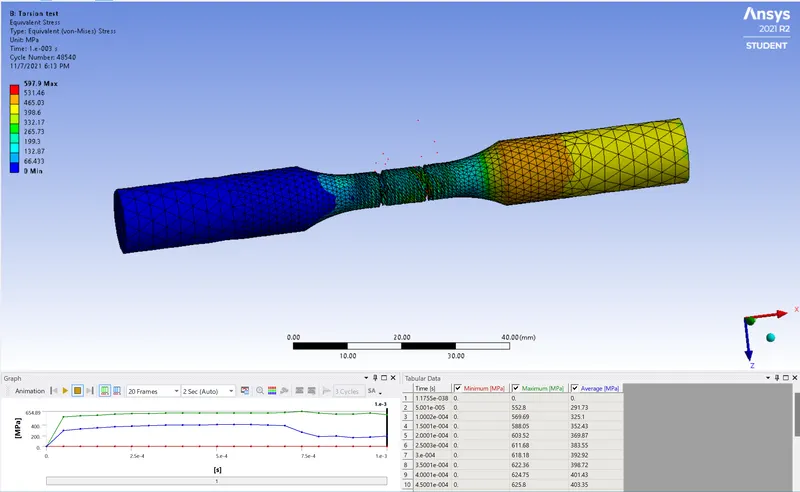
Equivalent stress (Animation: https://drive.google.com/file/d/1frQvT7S6NgO-RoGOlanv1dmLHtPsj_pn/view?usp=sharing)
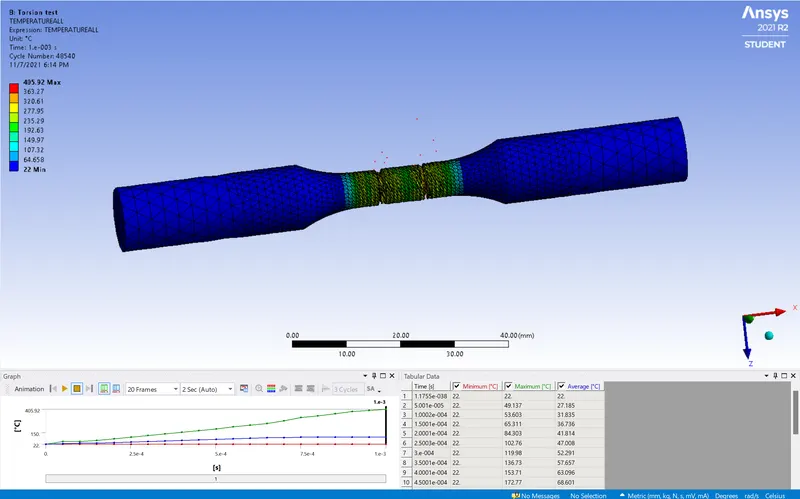
The temperature of a rod (Animation: https://drive.google.com/file/d/15d7-n619g2AnOYoJEy3xKq3re13MbS44/view?usp=sharing)
| Total deformation | 12.888 mm |
| Equivalent stress | 597.9 MPa |
| Temperature of specimen | 405.92 deg C |
As seen from the above values, total deformation(18.026 mm) and Equivalent stress (619.66 MPa) compared to case 2 with a total deformation (12.888 mm) and equivalent stress of 597.9 MPa. However, the temperature of the specimen in case 2 is higher compared to case 1. There is an increase in equivalent stress at the neck section which will eventually break if we increase the displacement by a large factor. The breaking will start once the rod reaches plastic deformation.
5. Simulation files
Files are attached