Week 9 - Project 1 - Door Applique Design with Engineering Features
Heat Staking
Heat staking also known as thermoplastic staking is the process of joining two dissimilar materials together. In heat staking we use local heating and cooling to raise the temperature of plastic components and allow plastic reforming to be carried out. This reforming can be used in a wide variety of applications.
Applications range from staking plastic boss’s for assembly of car door panels to joining PCB’s to plastic housings. Benefits of this technique include; no vibration damage, no particulates, the ability to stake metalized coated applications and the capability to stake in difficult to access or restricted areas.
When an electrical current flows through the heating tip, the electrical resistance creates heating effect. The heat staking tip is brought into contact with the thermoplastic part to be reformed.The heating tip is then heated by direct electrical heating within the tip for a short period of time. The heated tip softens the plastic material and forms the melted plastic into the shape of the tip.
Compressed air is then applied to cool the tip and the formed plastic. Multiple points including multiple polymers can be staked simultaneously. Cycle time is influenced by the volume of polymer to be reformed. Heat staking technology can be implemented in varying levels of sophistication according to customer requirements. From simple time controlled open loop systems to sophisticated closed loop systems with temperature feedback.
TYPES
Flared Stake (high profile)
The high profile flared stake satisfies the requirements of most applications. This stake is recommended for bosses with an OD of 1/16 inch (1.6 mm) or larger and is ideally suited for low-density, nonabrasive amorphous plastics.
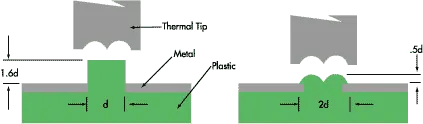
Flared Stake (low profile)
The low profile flared stake satisfies the requirements of most applications. This stake is recommended for bosses with an OD of 1/16 inch (1.6 mm) or larger and is ideally suited for low-density, nonabrasive amorphous plastics.
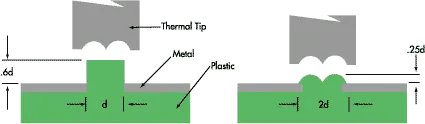
Spherical Stake (high profile)
The high profile spherical stake is preferred for bosses with an OD less than 1/16 inch (1.6 mm) and is recommended for rigid crystalline plastics with sharp, highly defined melting temperatures for plastics with abrasive fillers and for materials that degrade easily.
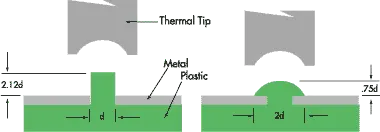
Spherical Stake (low profile)
The low profile spherical stake is preferred for bosses with an OD less than 1/16 inch (1.6 mm) and is recommended for rigid crystalline plastics with sharp, highly defined melting temperatures for plastics with abrasive fillers and for materials that degrade easily.
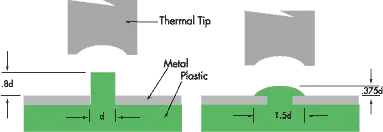
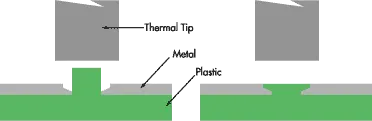
Flush Stake
The flush stake is used for applications requiring a flush surface. The flush stake requires that the retained piece has sufficient thickness for a chamfer or counterbore.
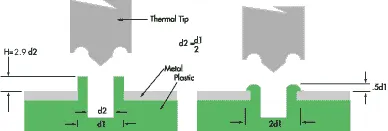
Hollow Stake
Bosses with an OD in excess of 5/32 inch (4 mm) should be made hollow. Staking a hollow boss produces a large, strong head without having to melt a large amount of material. Also, the hollow stake avoids sink marks on the opposite side of the component and enables the parts to be reassembled with self-tapping screws should repair and disassembly become necessary.
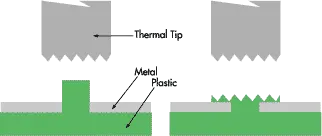
Knurled Stake
The knurled stake is used in applications where appearance and strength are not critical. Since alignment is not an important consideration, the knurled stake is ideally suited for high-volume production. Knurled tips are available in a variety of fine, medium and coarse configurations.
Advantages of Heat Staking over other joining processes:
- Fast
- Economical
- Repeatable
- Consistent
- Join different materials...
- plastic to plastic
- plastic to non-plastic (e.g. metal, glass, PCB’s)
- join two non-plastics
- Eliminates the need for rivets and screws
- Accurate control, small process window
- Simple mechanisms
- Lower cost machinery
- Multiple fastening points
- Higher density welds
- Can handle some difficult to weld plastics
- Integration with other automation technologies
- Many different sizes and shapes including flared, spherical, hollow, knurled, and flush (or countersunk).
- Captive stakes are useful to hold something within a plastic housing.
Applications for heat staking included:
- Polymer to Polymer to other materials
- Flat head tip welding
- Sealing holes
- Embedding parts
- Polymer to mesh
- Breathable membrane
- Rim Swaging
- Bonding
- Polymer to polymer welding
- Polymer to polymer
VIEWS
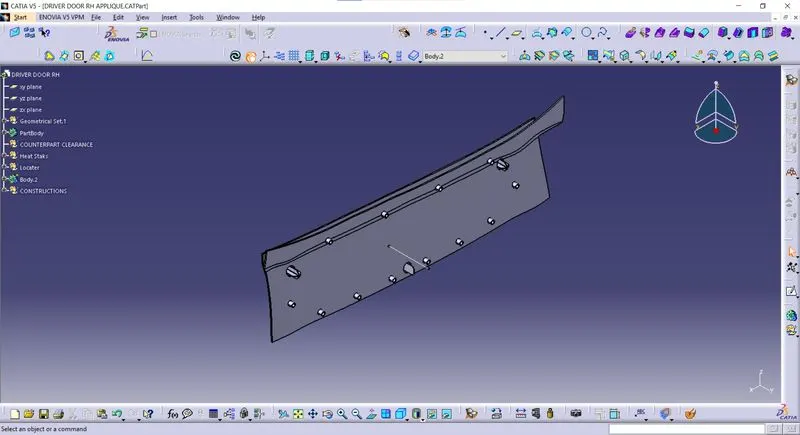
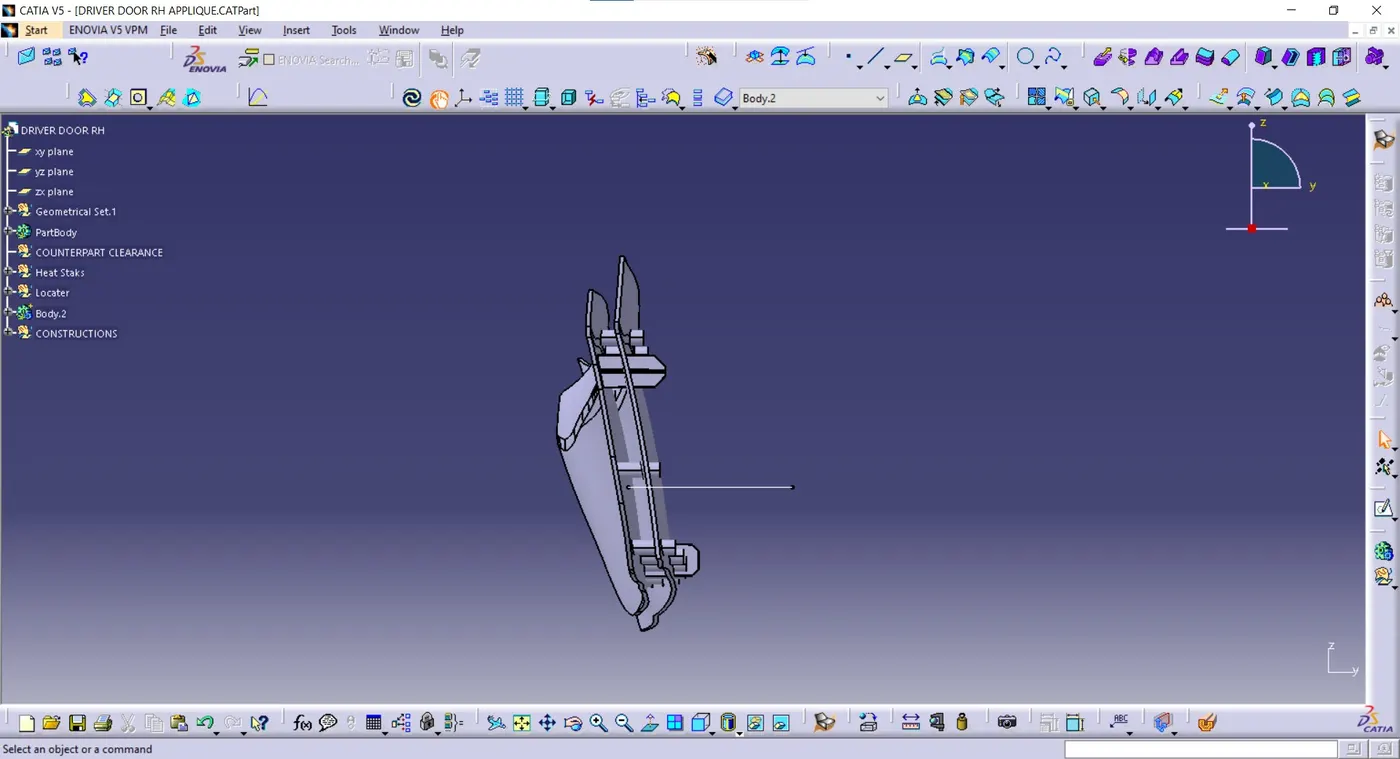
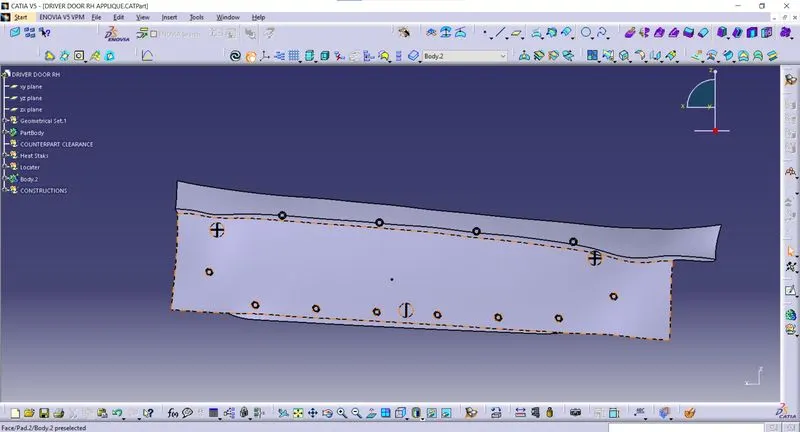
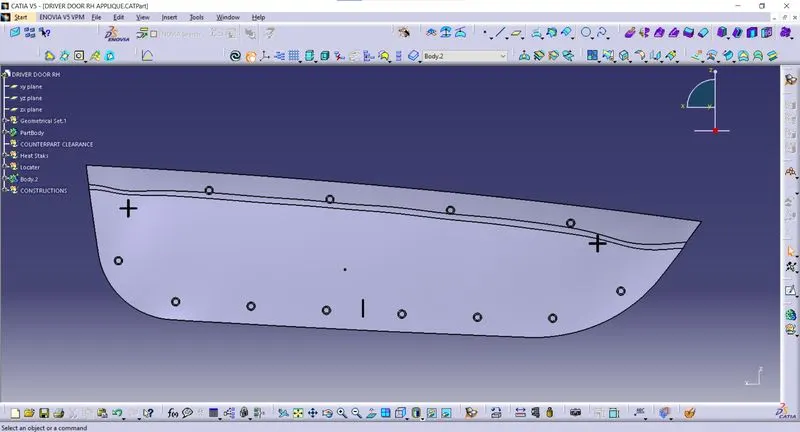
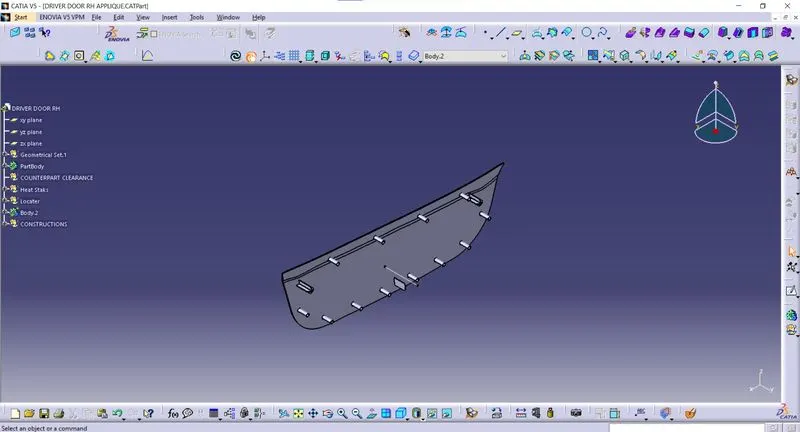
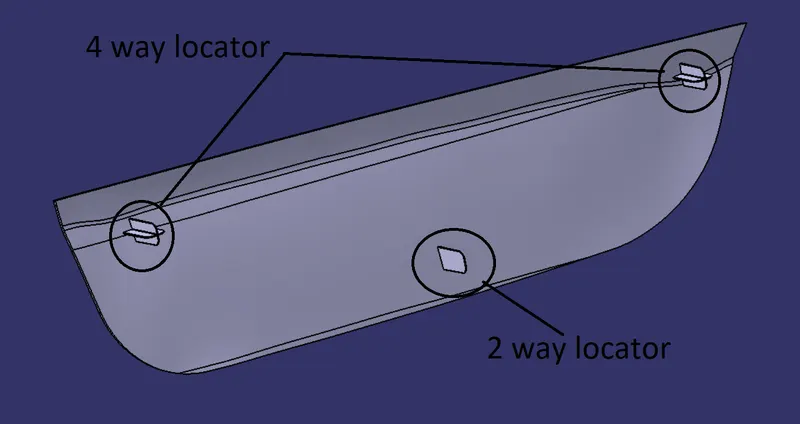
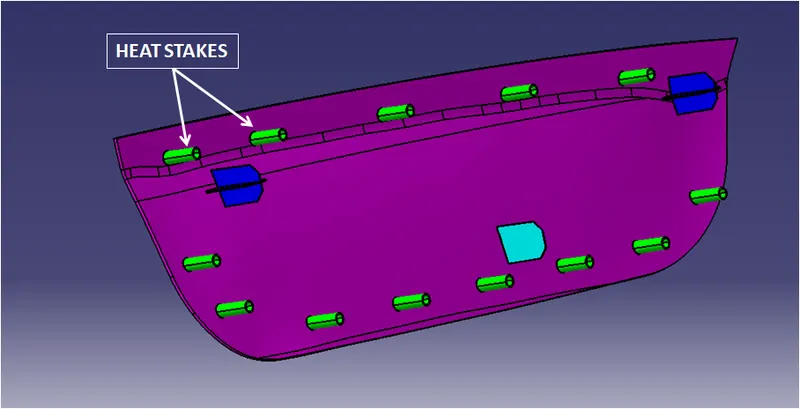
Tooling Axis:-
Tooling direction is the main consideration for plastic parts and mold parts because it defines the movement of the mold part and the possibility of the plastic part coming out from the mold part (Core and Cavity).
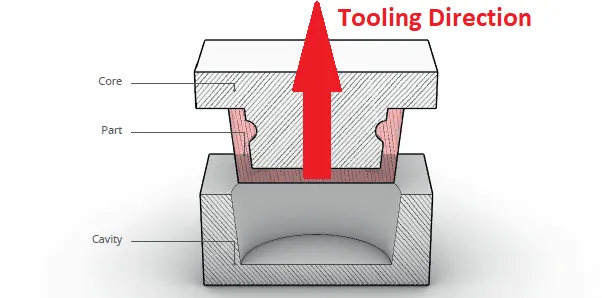
In Molding, machine arrangement is given to open the mold along a direction which is known as Tooling Direction.
In other words. The mold is built from two separate halves (Core and Cavity) and tooling direction defines the direction of mold pulls apart.
Tooling direction is known as primary direction.
Draft Angle and Analysis:-
The core of a mold separates in a direction that is known as the "Tooling Direction".
Draft or taper is the angle of a surface concerning tooling direction.
The main reason of draft is important is because it allows to part to separate easily from mold parts
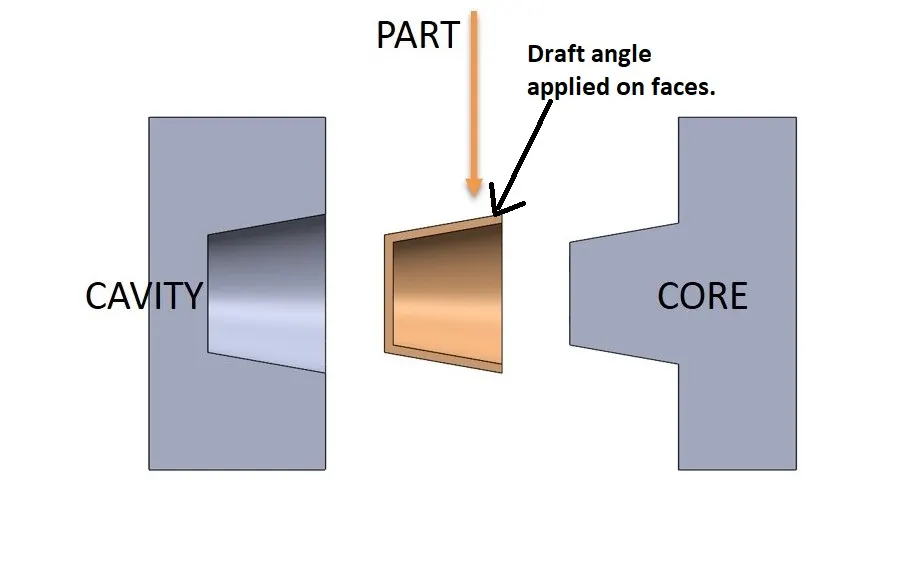
If no draft is applied on the sides of the part then more force is needed to separate parts from core and cavity, which can affect part surface quality and time may need to allow parts to cool down than drafted part and more time will make it expensive.
Draft angle:-
For draft, there is no such thumb rule because for the maximum angle you can go with your requirement but for minimum values, it directly depends on some factors, Like:-
Material type
Part depth or height
Surface texture
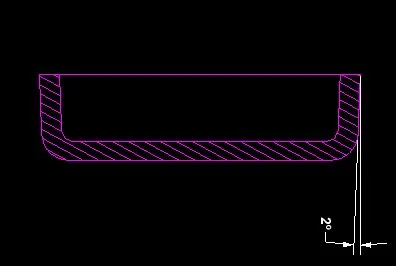
When a part has texture on its surface then texture generates more friction on the surface of the core and cavity which required more draft value to release/Separate parts from mold parts.
Generally, texture value comes in 3 to 5 Degree. So for the textured surface, we required a 3 to 5-degree draft angle.