Week 9 - Project 1 - Door Applique Design with Engineering Features
Door Applique Design with Engineering Features
OBJECTIVE:
To design locators and heat stakes for a door applique to assemble on the door substrate given as reference.
REQUIREMENTS:
- To create a tooling axis and perform draft test for class A of a door applique.
- To create class B & C surface for door applique.
- To create 2/4 way locator and heat stakes on door applique as well as respective clearances on door substrate.
- Draft analysis on the final component.
Door Applique:
It is a part of a door trim which enhances the door's aesthetic.
Locators:
Locators are designed to mount or position the respective product to its mate and also it arrests a few degrees of freedom
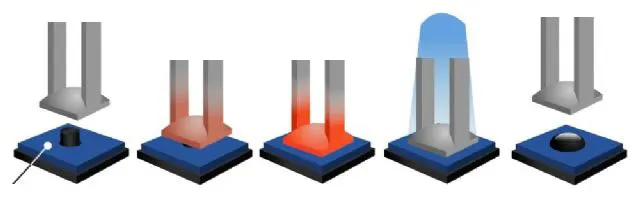
Heat Stakes:
Heat staking is quite simple in concept. Whenever two or more components need to be attached to one another, and at least one is made of a thermoplastic, a combination of heat and pressure can be used to reform the plastic to the many shapes or profiles to retain or join the parts together.This creates a solid, hardware-free bond that uses the plastic’s inherent strength to keep the finished assembly together.The main advantage to heat staking, when compared to fastener-based technologies, is that manufacturers can perform all heat staking in one machine cycle and motion versus individual motions required for each fastener.Heat staking is done to completly arrest the compoenent.
INPUT:
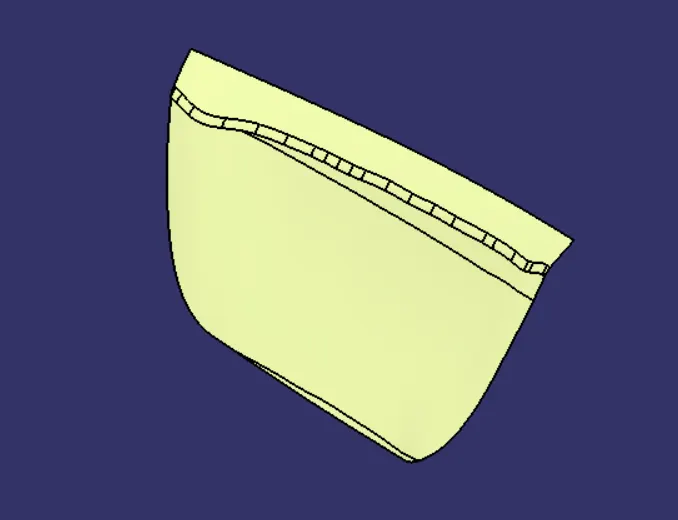
Class A of Door applique:
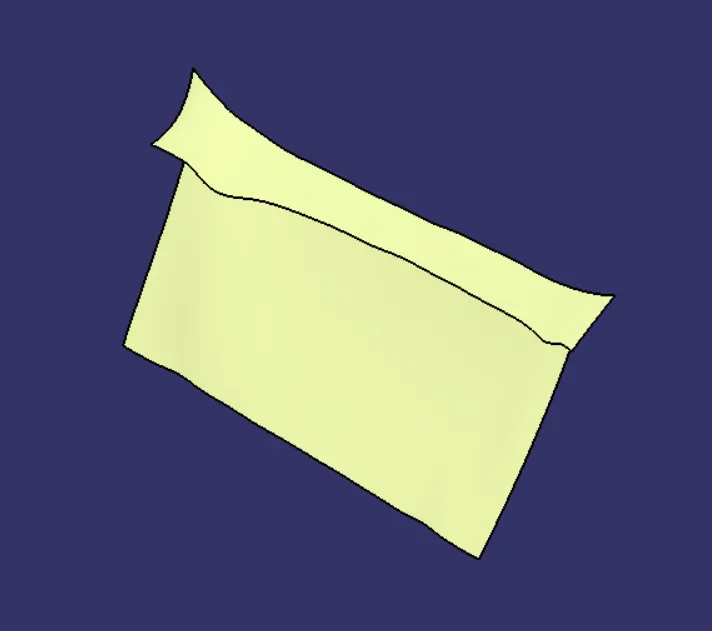
Reference Surface:
PROCEDURE:
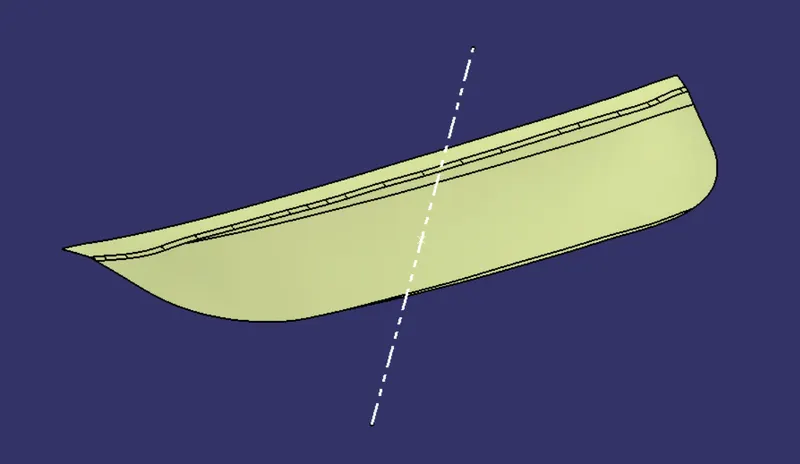
TOOLING AXIS:
After checking the class A of a door applique,the tooling axis is determined.Here a point is placed at the center pf the surface and a line is created normal and it is defined as the tooling direction.
DRAFT ANALYSIS ON CLASS A:
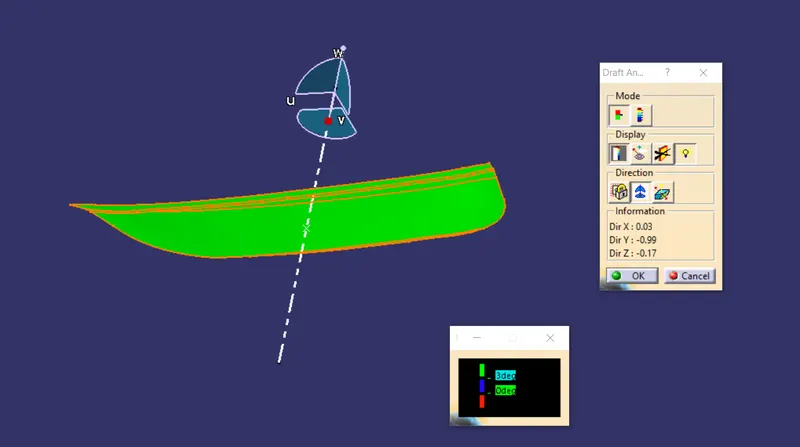
The green colour infers that the surface has a draft over 3 degree
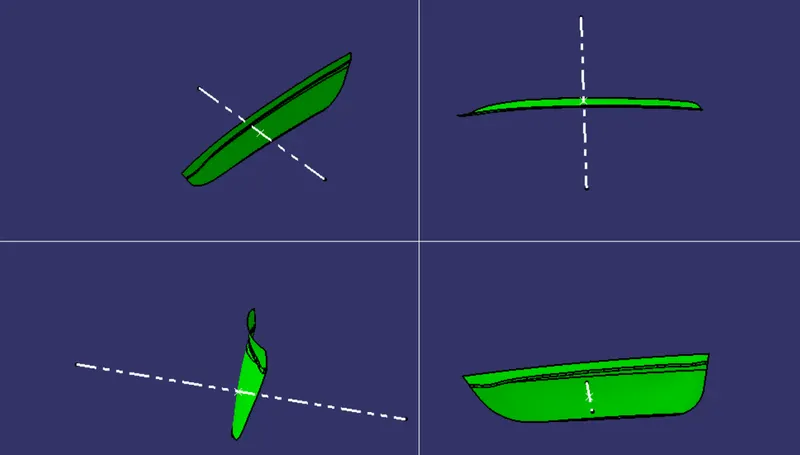
VARIOUS ORIENTATION OF THE DRAFT TEST:
CREATION OF CLASS B:
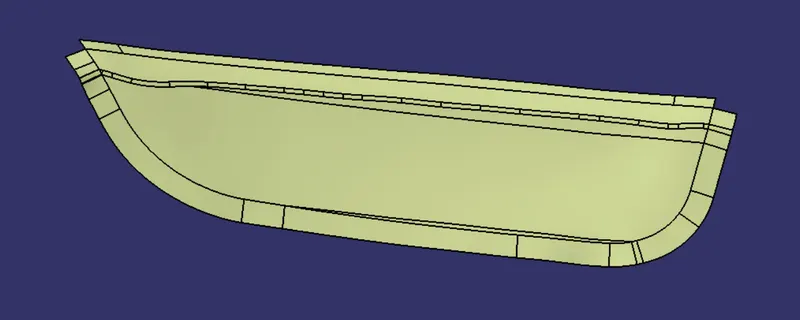
Class B is created by directly offsetting the surface to 2.5 and extrapolating it for the final trim.
CLASS C SURFACE:
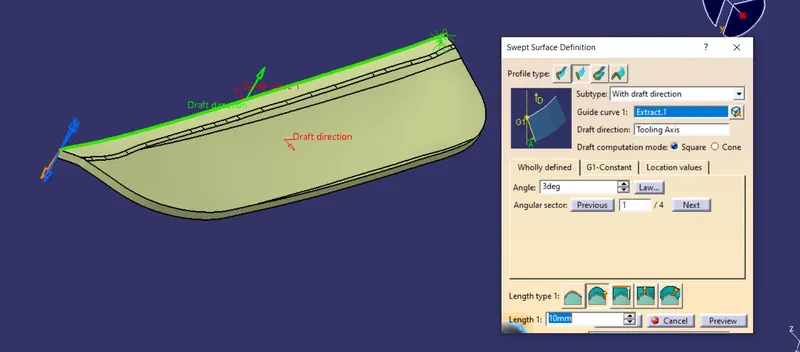
Sweep operation is undergone taking the boundary of the class as guide curve and tooling axis as draft direction.
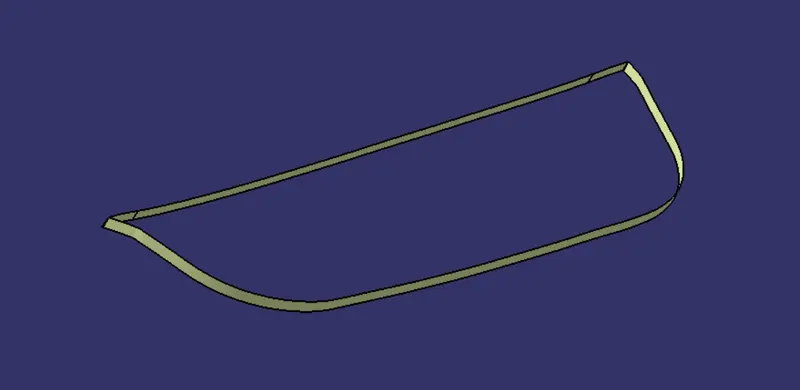
FINISHED SURFACE:
Now class A and C surface is joined and trimmed with B surface.
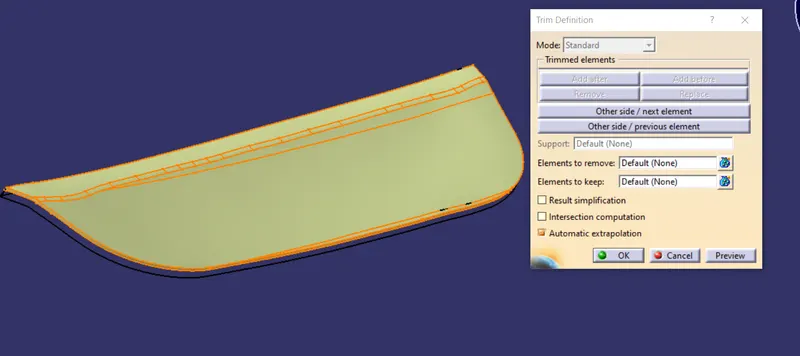
Various orientation of te final door applique surface:
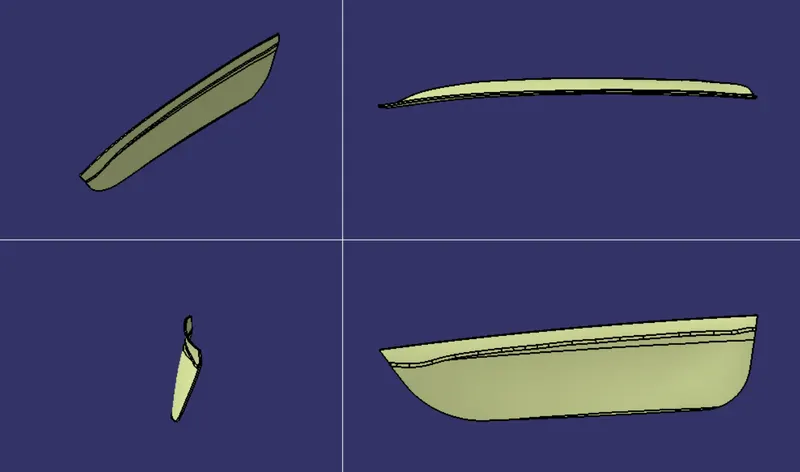
Now a solid body is created using the close surface command
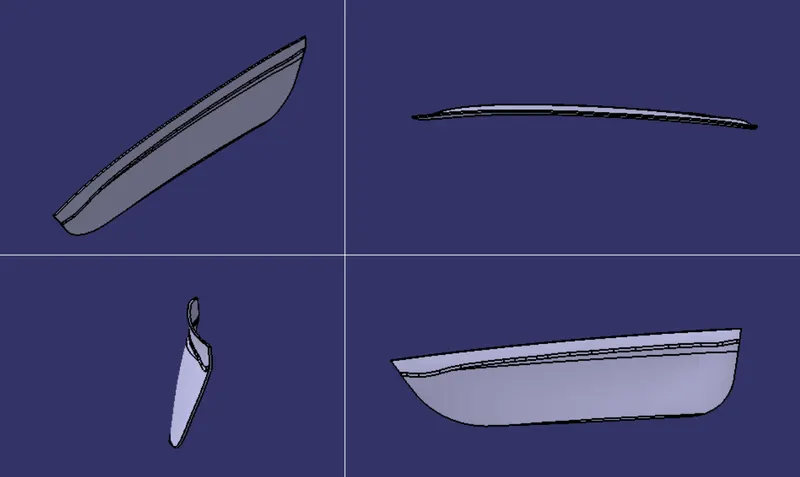
LOCATORS:
Taking the tooling direction point as reference and a plane is created normal to the tooling axis and 4 way locator sketch is defined.
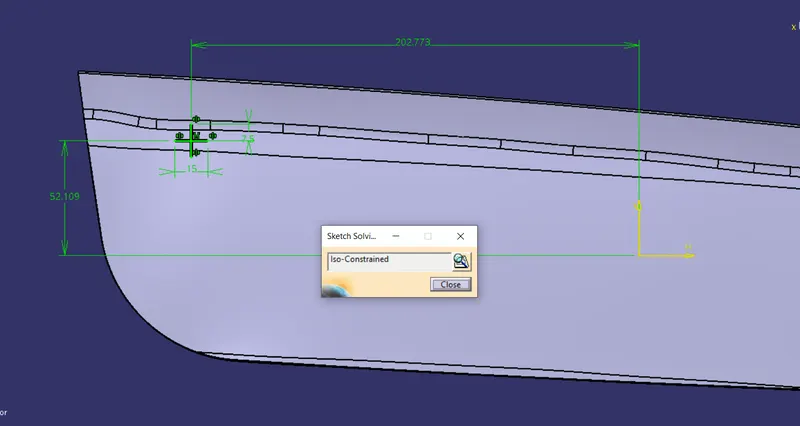
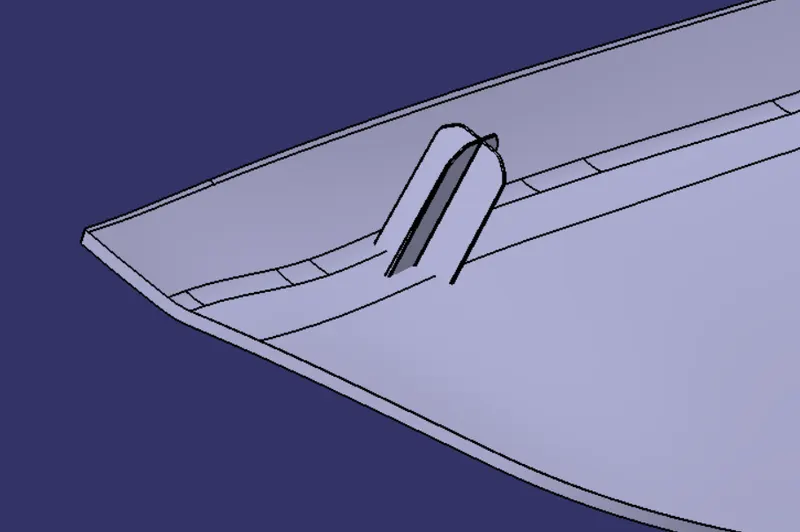
It is then padded protruding the applique surface and respective draft,entry chamfer and fillets are applied following the plastic design guideline.
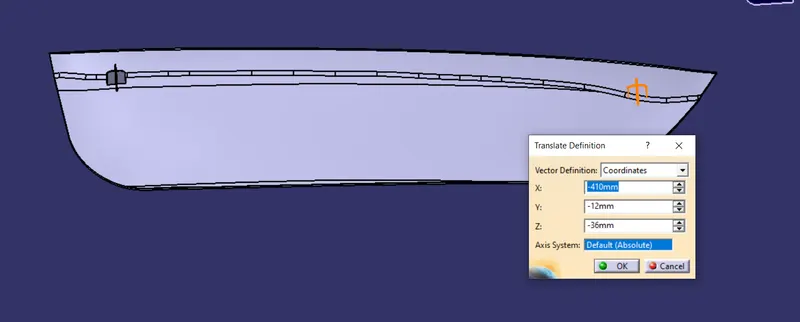
Another 4 way locator is copy pasted and translated using coordinates.
Now 2 way locator is created at the center bottom of the surface .
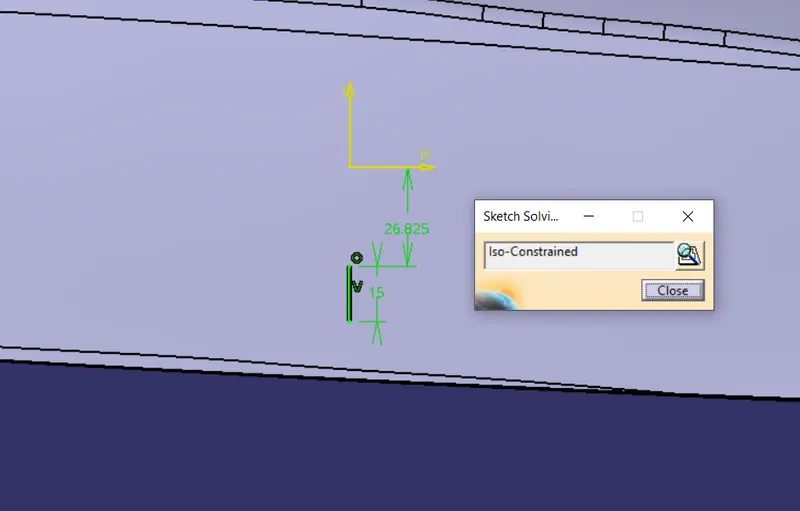
It is then padded protruding the applique surface and respective draft,entry chamfer and fillets are applied.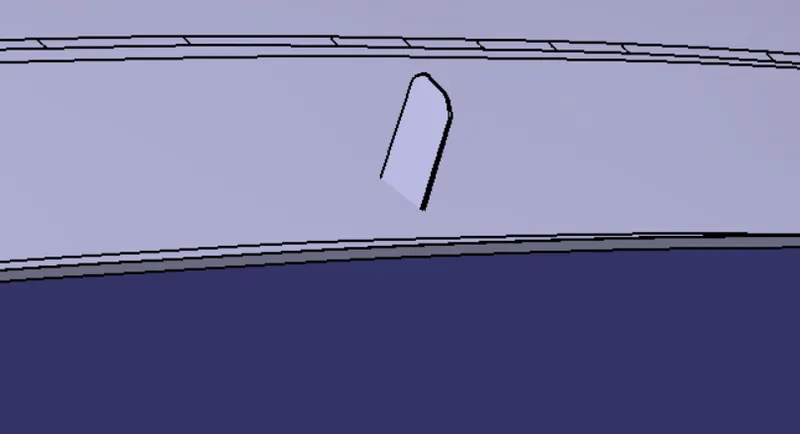
Heat Stakes:
Heat stakes are introduced at random points but uniformly and also it should not impose on other engineering feature.A minimum of 50mm distance should be maintained between them.
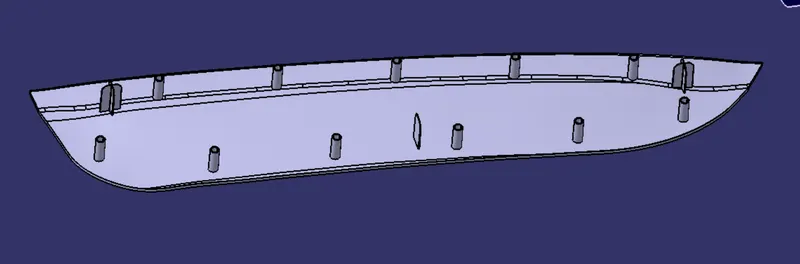
Extracting the outer surface and using the outer boundary as reference parallel curve is executed and using repetitive point command 5 points at the top and 6 points is the bottom is created.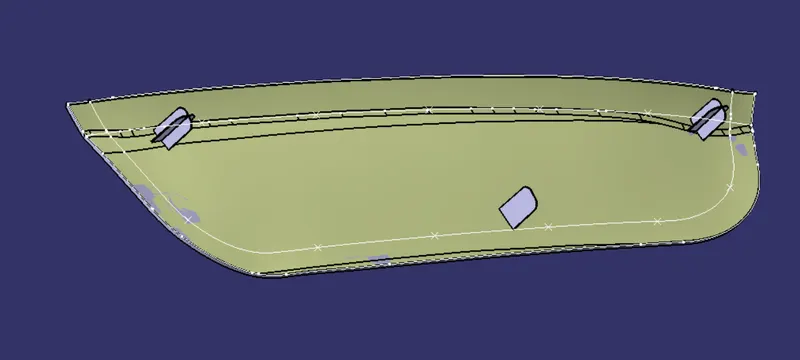
Taking the point as reference heat stake sketch is defined.
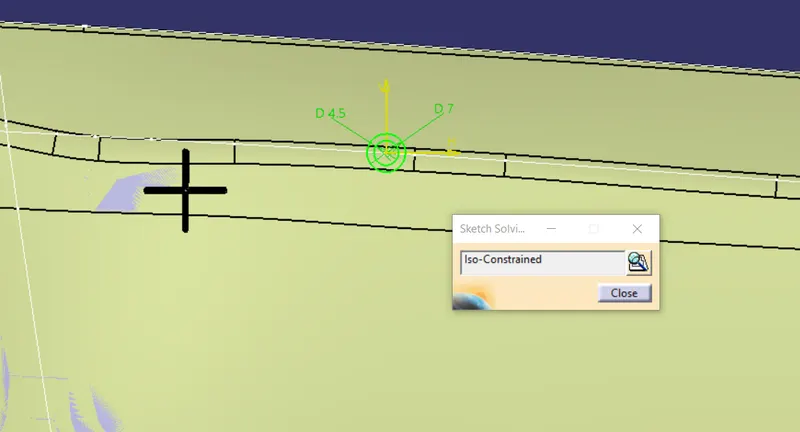
The sketch is padded,drafted and given edge fillets accordingly.
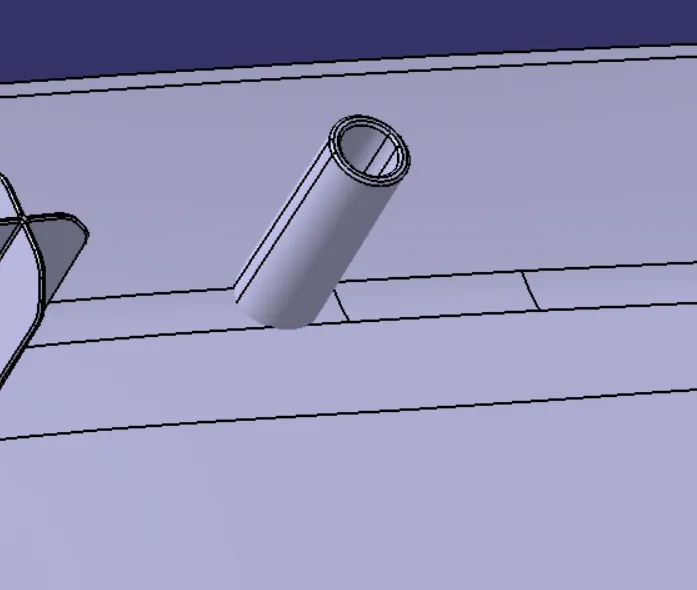
Now creating 10 copies of the heat stake every single one of them is translated using point to point translate.
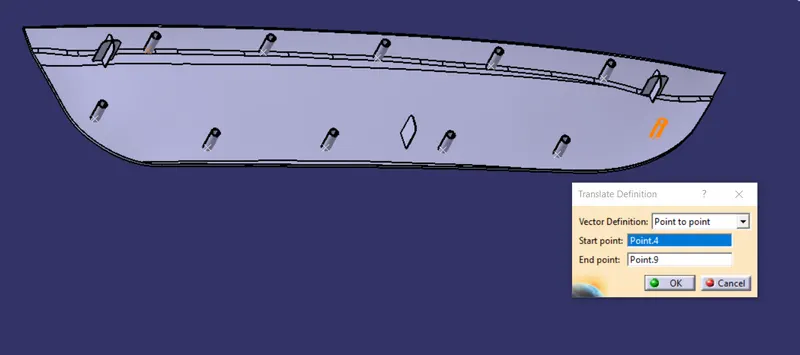
Now the locators and the heat stakes are assembled to the door applique using boolean operation.
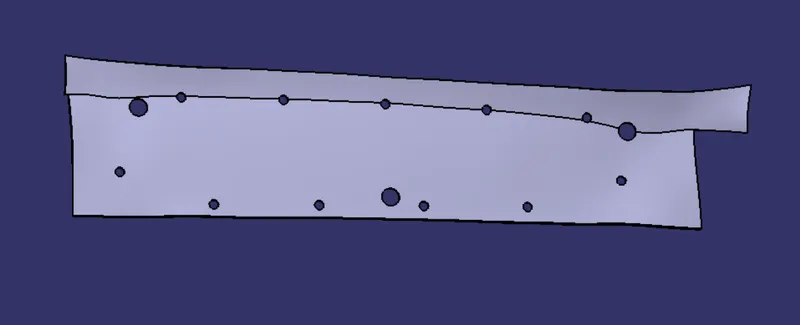
CLEARANCE:
The reference surface is directly thickened and clearances are given using the locator and heat stake sketch as reference.
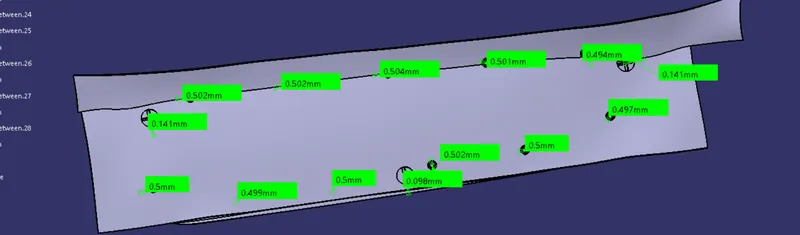
According to a predefined study the clearance between the locator and the clearance edge must be 0.1 per side and 0.5 per side for heat stake.
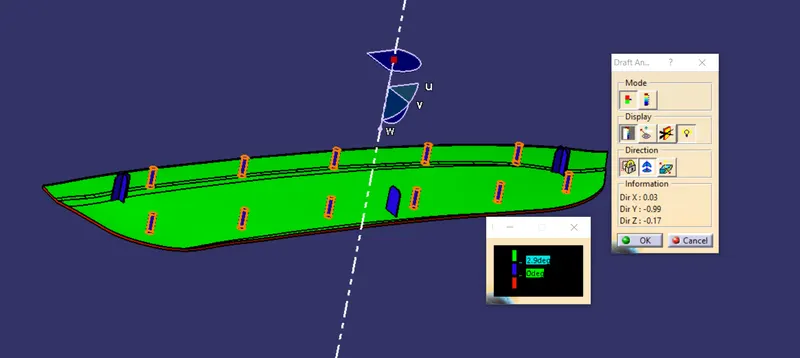
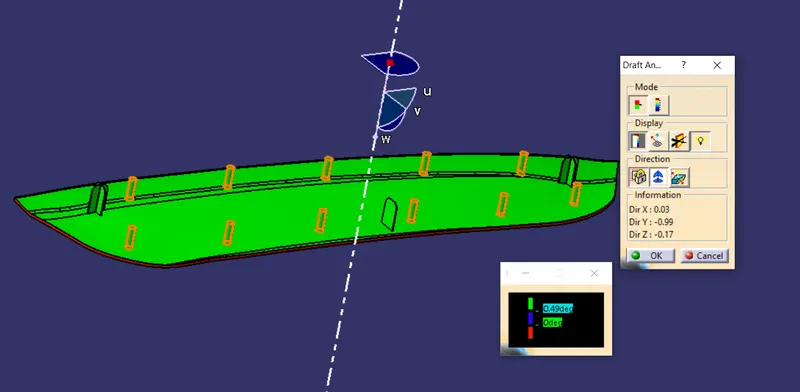
DRAFT ANALYSIS FOR THE DOOR APPLIQUE:
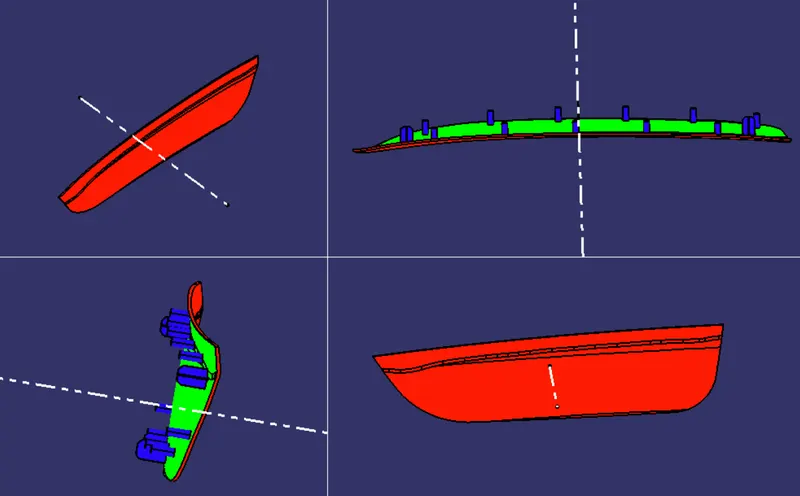
Draft analysis on 3 degree:
Various orientations:
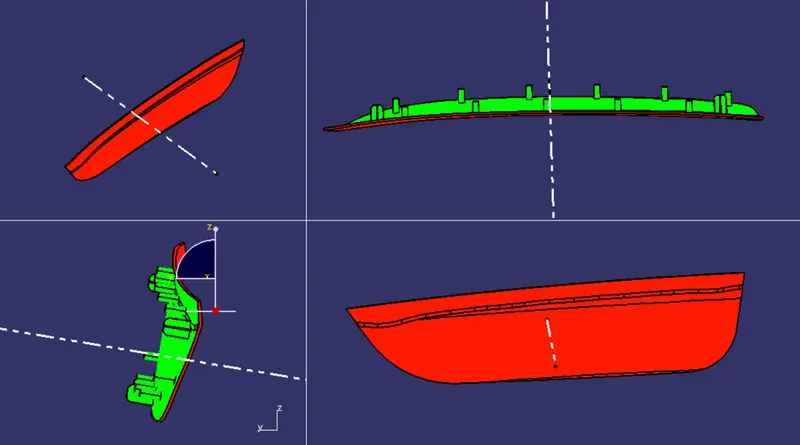
Draft analysis on 0.5 degree:
Various orientations:
FINAL OUTPUT:
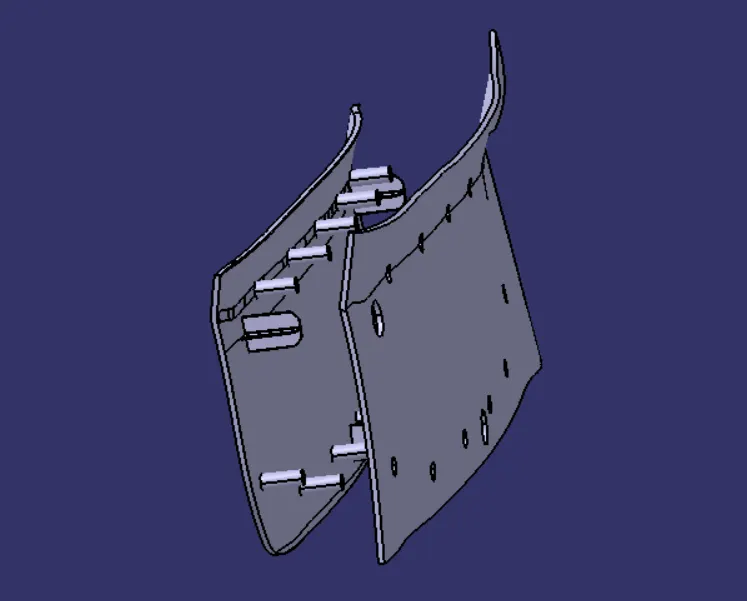
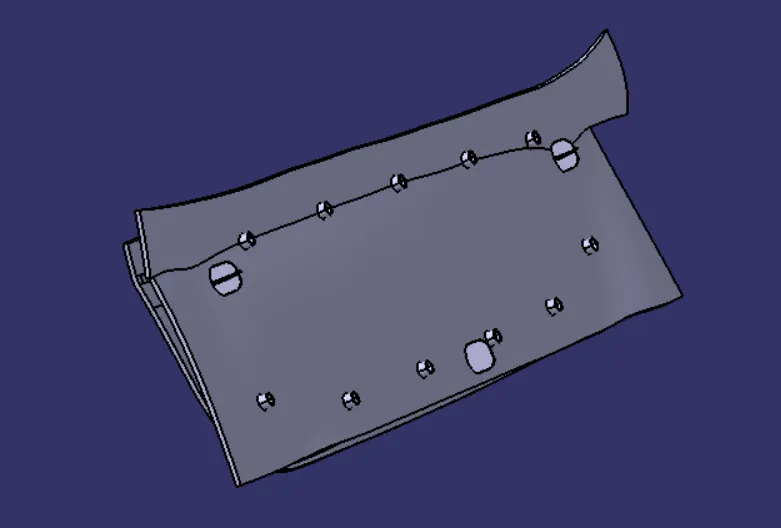
VARIOUS ORIENTATIONS:
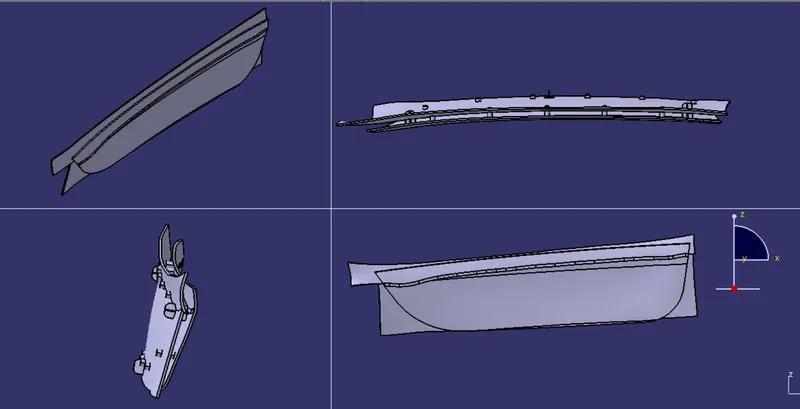
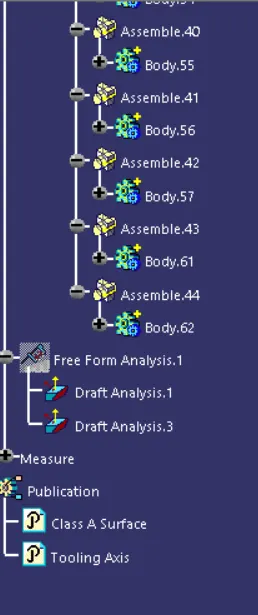
TREE STRUCTURE:
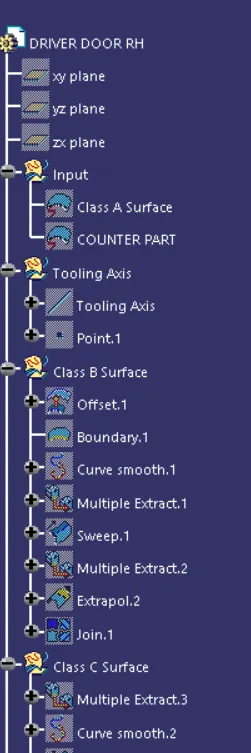
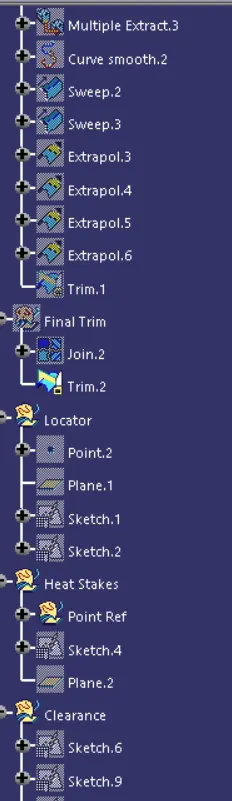
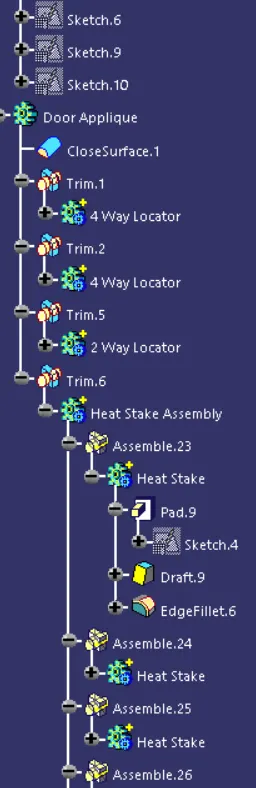
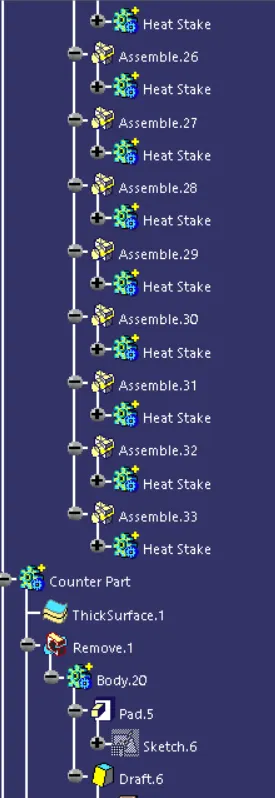
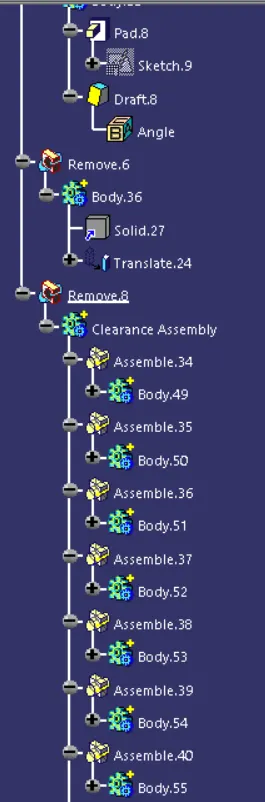
CONCLUSION:
To conclude the door applique is designed with all required engineering features in it following the plastic design rules.
Software Used: CATIA