Week 9 - Project 1 - Door Applique Design with Engineering Features
DOOR APPLIQUE
OBJECTIVE
- To generate tooling axis with the given class A surface.
- To design locators and heat stakes.
- To perform draft analysis.
INTRODUCTION
Applique is an ornamental design basically given for interior of automotive to make the cabin atmosphere pleasant. Applique are not any load bearing component, so we don’t want to introduce fasteners in it. In which Heat stakes were used. Heat stakes are used for joining plastics with metals. It is a pulsed heat process where the heat stakes are partially deformed by applying heat and the join is formed. The locators are useful in controlling the degrees of freedom of the component and aligning them.
CLASS A SURFACE
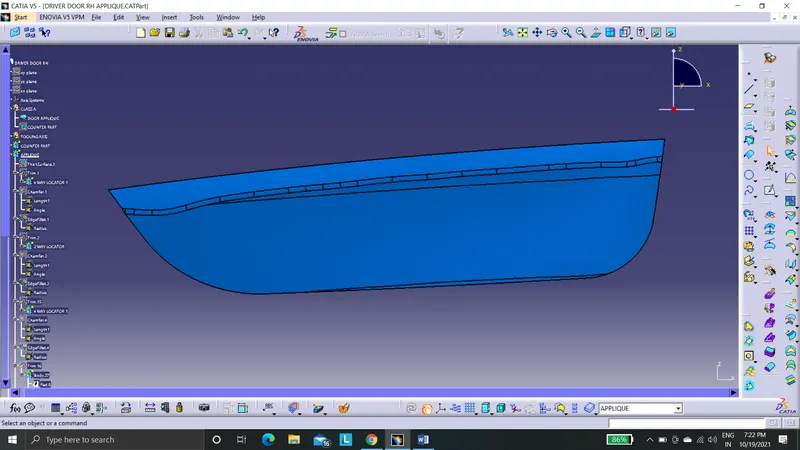
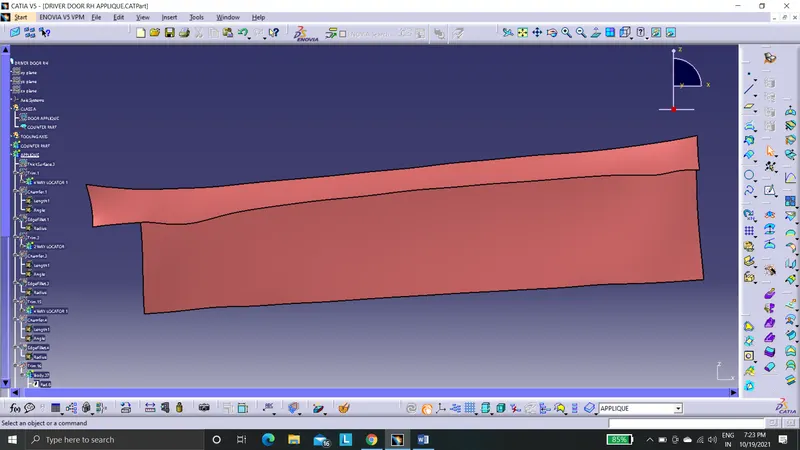
Here we have two surfaces in which one is a BIW component while the other is plastic. The heat stakes will be in the base surface.
TOOLING AXIS
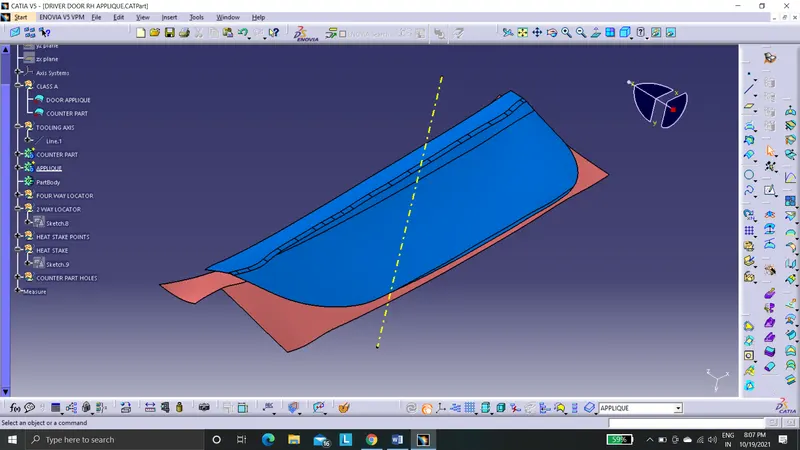
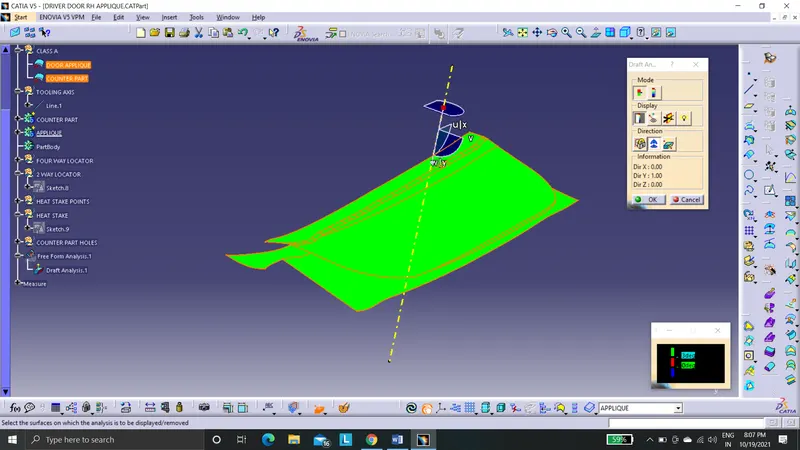
The tooling axis can be found by knowing the plane of maximum area. If we infer in that way the XY plane covers maximum area, therefore the Z direction will be the possible tooling direction. By knowing the centroid of that geometry we can create the tooling axis.
DESIGN PROCEDURE
1. Converting into solid
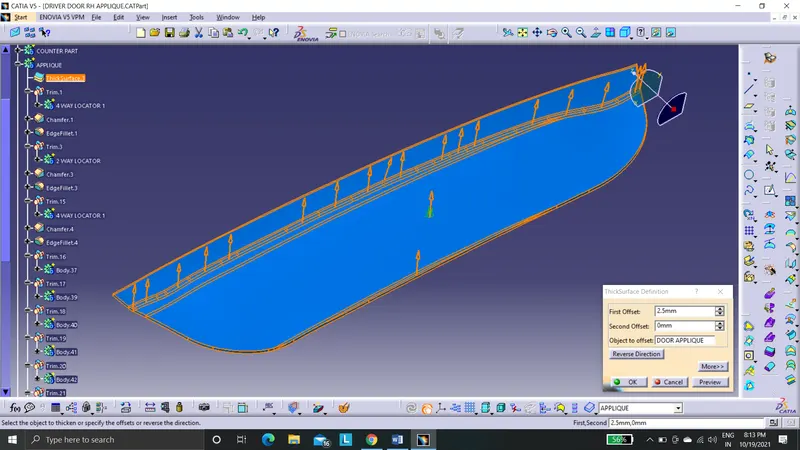
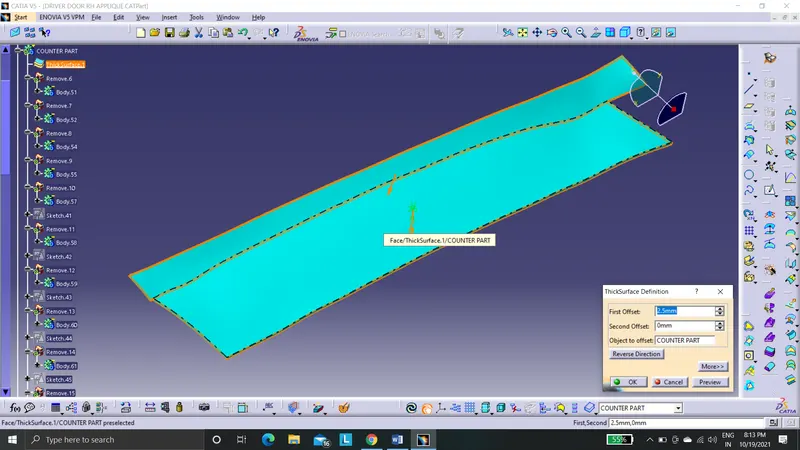
The class A surface is thickened for 2.5mm.
2. Design of locators
The locators are like datum. The 3-2-1 principle is used, in which the first datum which we choose arrest 3 degrees of freedom and the second datum arrest 2 degrees of freedom whereas the third arrest last degrees of freedom. By this way all 6 degrees of freedom arrested.
Datum 1 will be a four way locator.
Datum 2 will be a four way locator.
Datum 3 will be a two way locator.
As per the rib design guidelines the four way locator is designed with thickness of 1.2mm. It is given a draft angle of 0.5 degrees. A 3*45 degrees chamfer is given. It is given with a optimal fillet radius of 0.25mm.
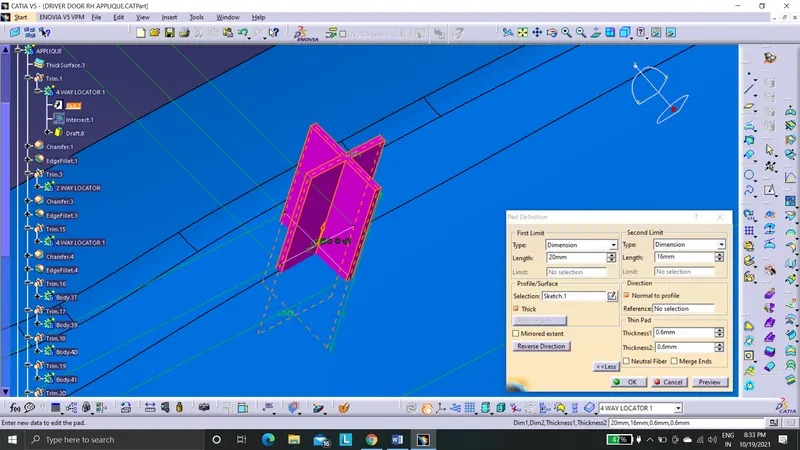
The same four way locator is placed at a bit longer distance from the prior locator. This can be done by copy paste it and translating it to the desired location.
By adding a second four way locator the rotational degree of freedom is arrested.
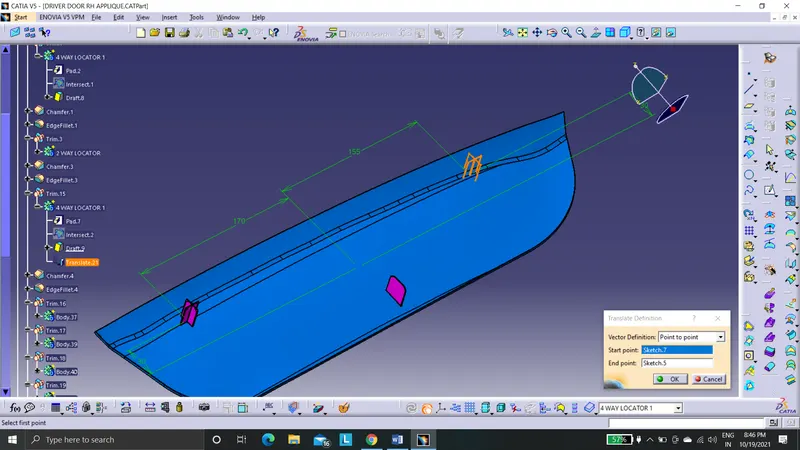
Now we can add a two way locator to limit the part movement in Z direction.
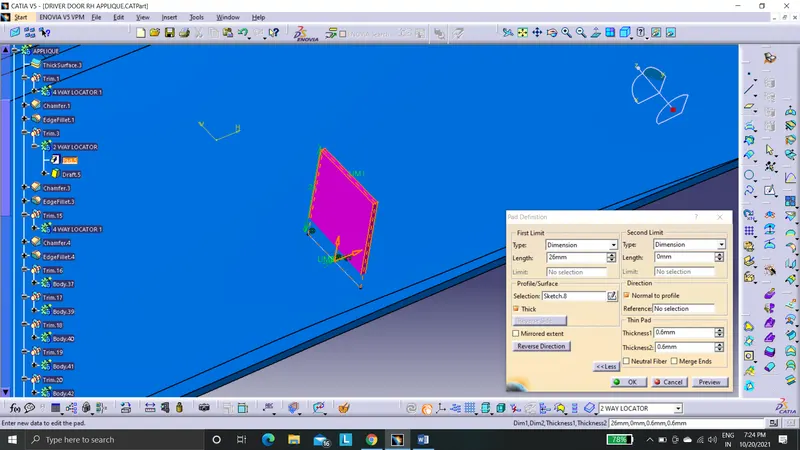
As per the rib design guidelines the four way locator is designed with thickness of 1.2mm. It is given a draft angle of 0.5 degrees. A 3*45 degrees chamfer is given. It is given with a optimal fillet radius of 0.25mm.
3. Design of Heat stakes
Create the boundary lines for the surface.
Offset the boundary curve parallel by 20mm
Create points by having a minimum distance between them.
Ensure the heat stakes contact points are alteast 100mm from locators.
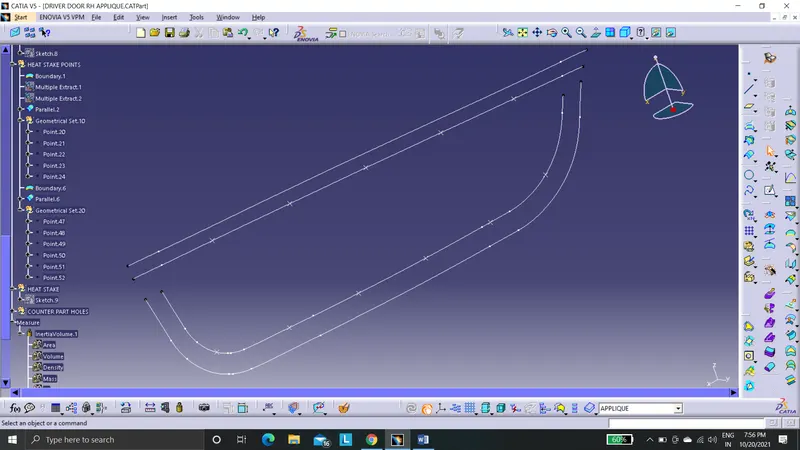
Sketch the profile of heat stake
Pad the profile. The height of the profile has to be less than locators. Extend on negative direction also.
Trim the pad with the thickened surface.
Apply minimum draft angle of 1.5 degrees.
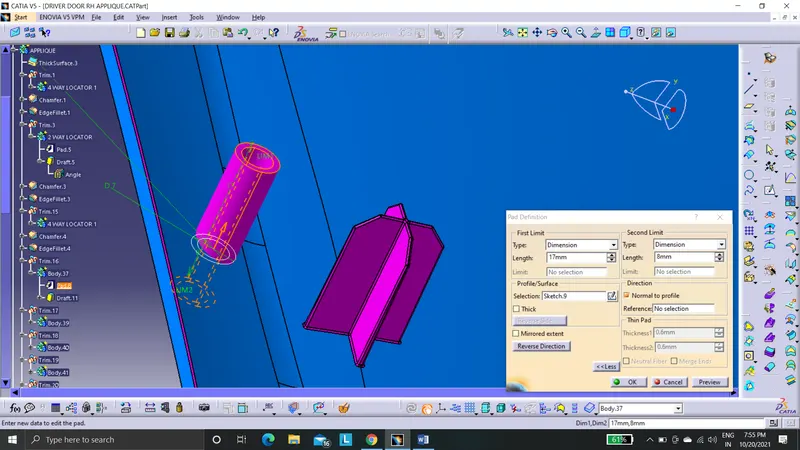
Now copy the heat stake and paste in new body.
Translate the copied link to the next contact point.
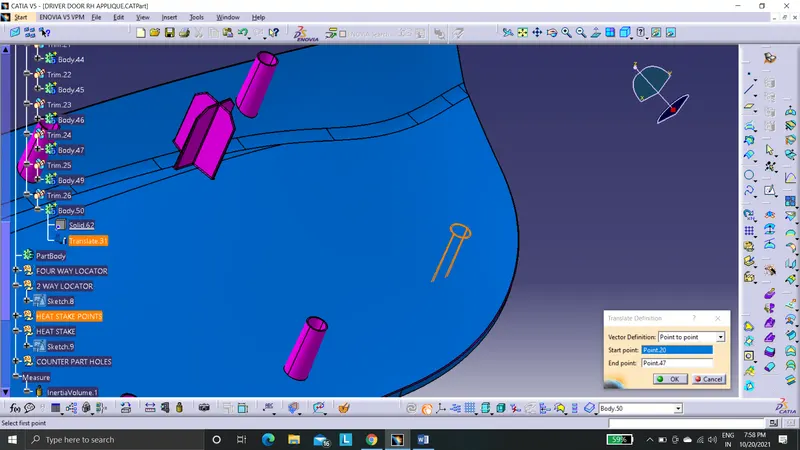
Repeat the above steps to all the contact points.
Assemble all.
Trim it together.
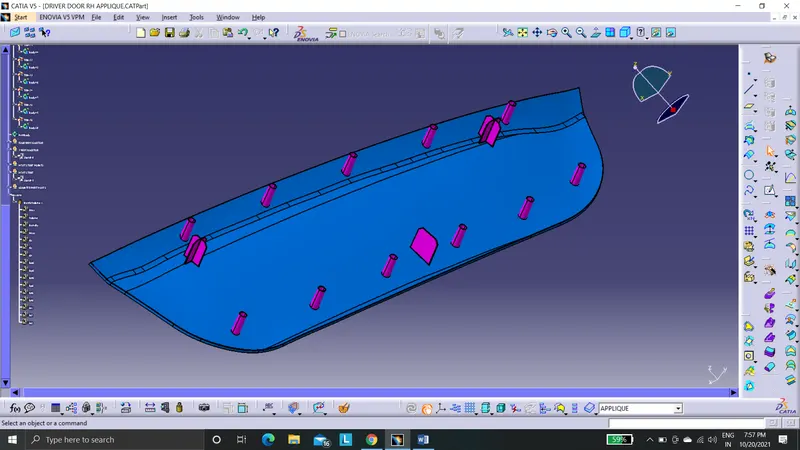
4. Design of Counter holes
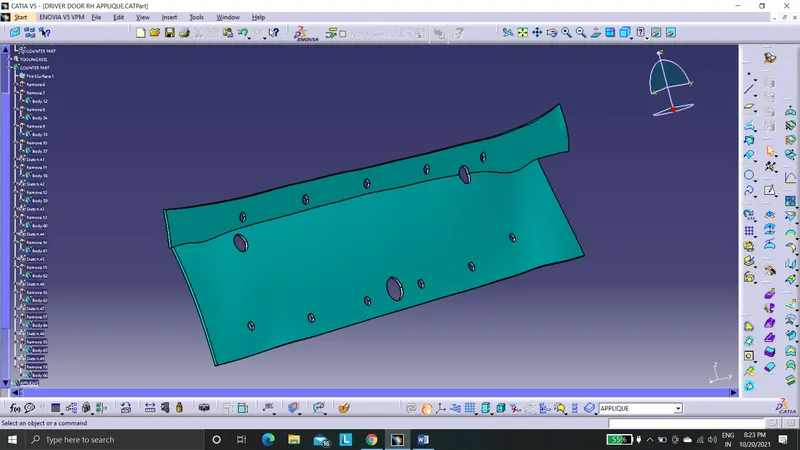
The counter holes allow the projection of heat stakes into it. By which they were plastically deformed by heat and joined together at counter hole interface.
Copy and paste the profile which is already used to create heat stakes.
Enlarge the outer diameter by 0.25 to 0.5mm. The clearance can be less than 0.4mm.
Pocket the profile. The length is just enough to cover the applique surface above and below.
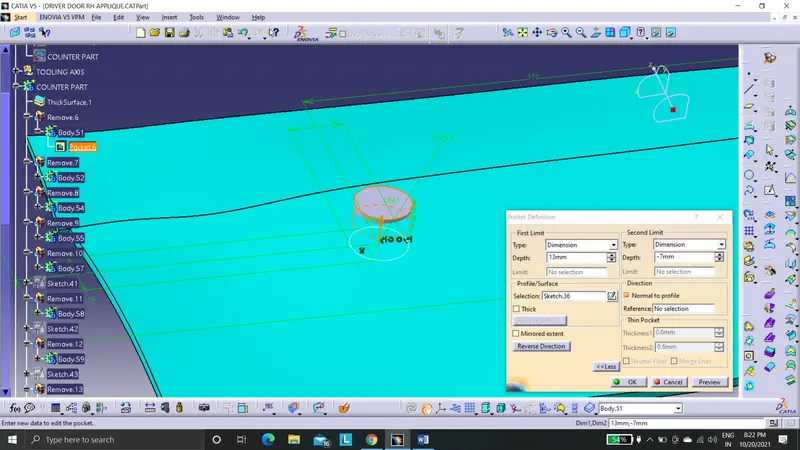
Use remove Boolean operation to subtract the hole from the applique surface.
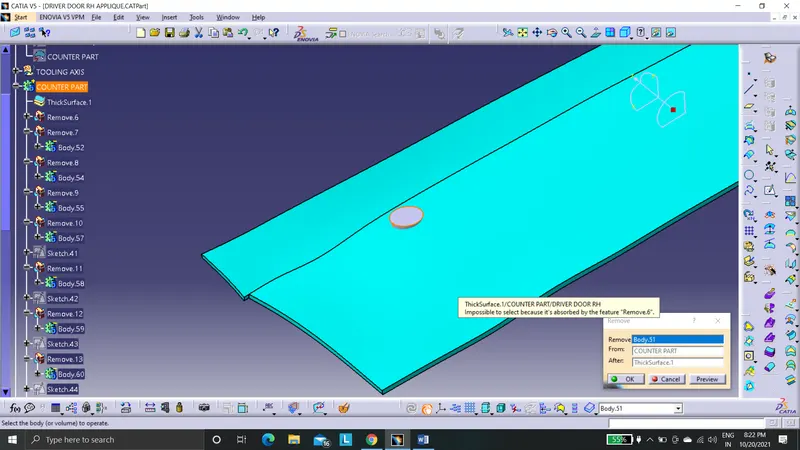
Copy the pocketed profile and translate to all the heat stake contact points already created.
Assemble together. Use Boolean operation to remove.
DRAFT ANALYSIS
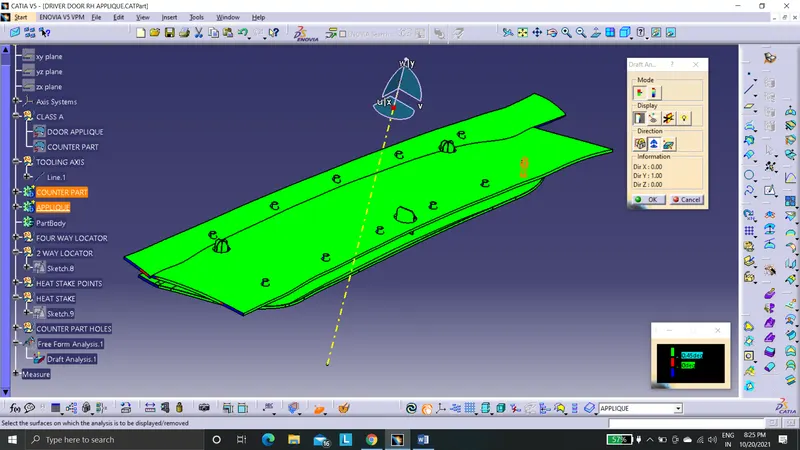
In which the draft analysis is done along Z direction. The given draft angle is 0.5 degrees.