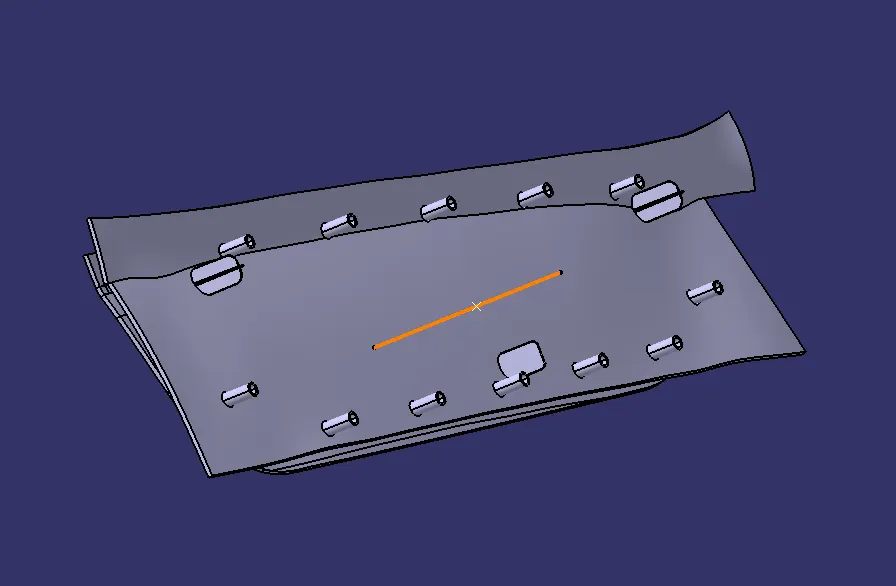
Week 9 - Project 1 - Door Applique Design with Engineering Features
Objective: To Create the Base Bracket Plastic component through the given Class-A surface and create the tooling axis for the given Class-A Surface should be created meeting the requirements of the draft angle and at the end perform the Draft analysis on the model. Finally create the Heat stakes and locators.
Procedure:
i) Tooling Axis Creation:
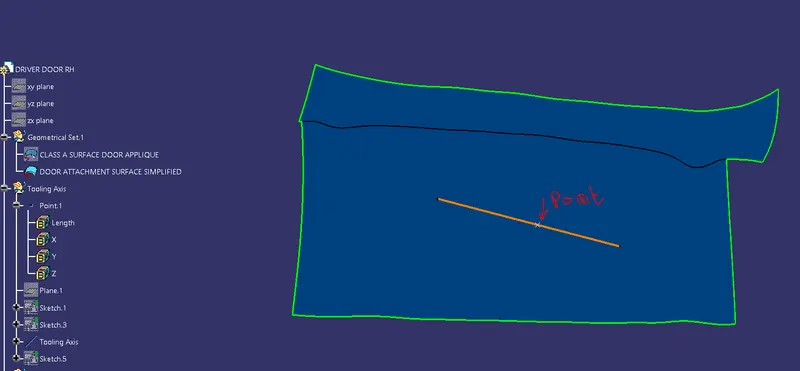
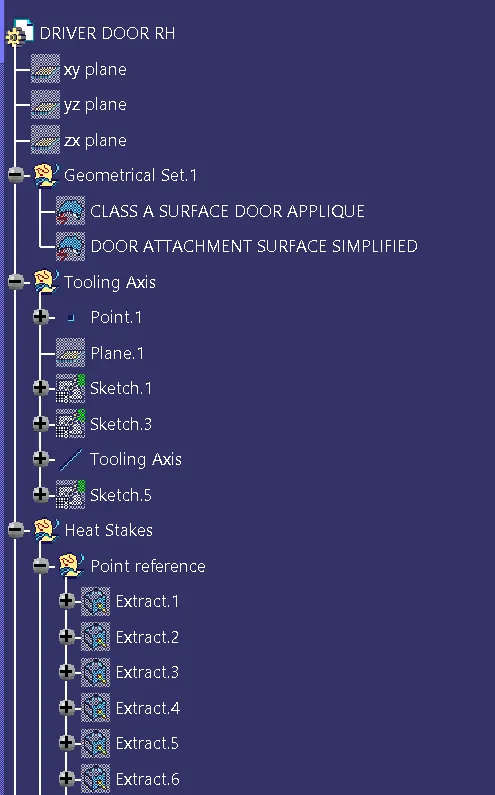
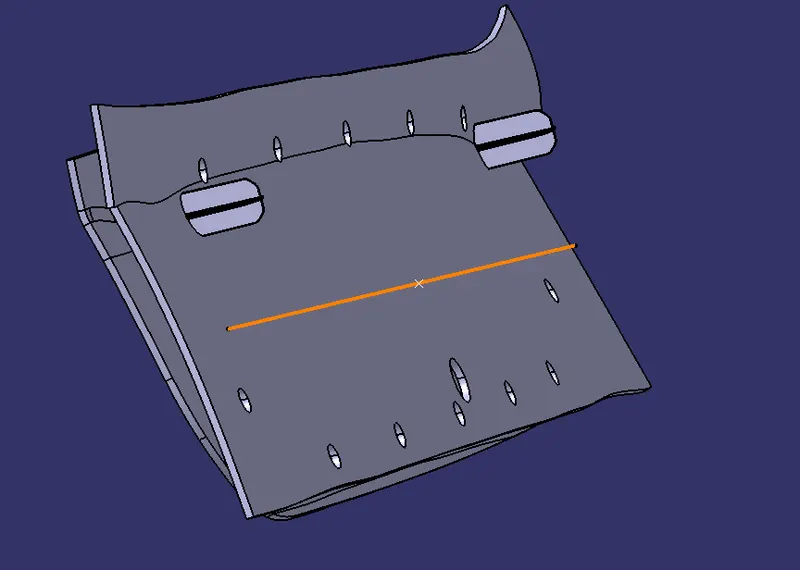
For creating this tooling axis, I created a point by selecting the given "Door attachment surface". From the using the line command I have craeted the Tooling axis.
ii) Solid body creation:
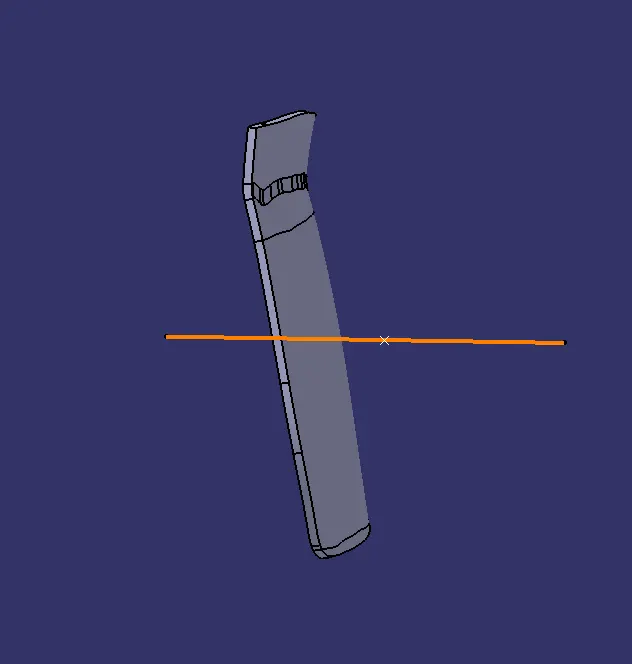
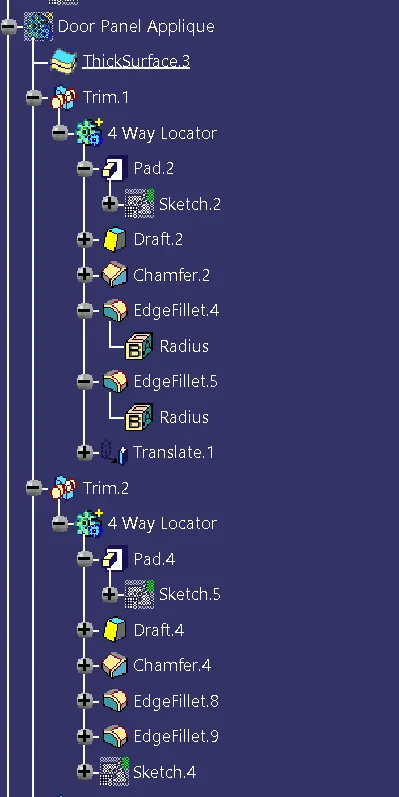
The above solid surface was created by using the "Thick surface" command by surface extracting the given Class A component.
iii) Locator creation:
The need for a locator in an object is very important, every object when left in a free state has the following 12 degrees of freedom
a) Translational movement along the x-axis (both positive and negative)
b) Translational movement along the y-axis (both positive and negative)
c) Translational movement along the z-axis (both positive and negative)
d) Rotational movement along the x-axis (Clockwise and Anticlockwise)
e) Rotational movement along the y-axis (Clockwise and Anticlockwise)
f) Rotational movement along the z-axis (Clockwise and Anticlockwise)
To fix a component on a machine to carryout any mechanical operation or to assemble with a component, the designer should make sure that at least 11 degrees of freedom of that component are arrested.
4 point Locator
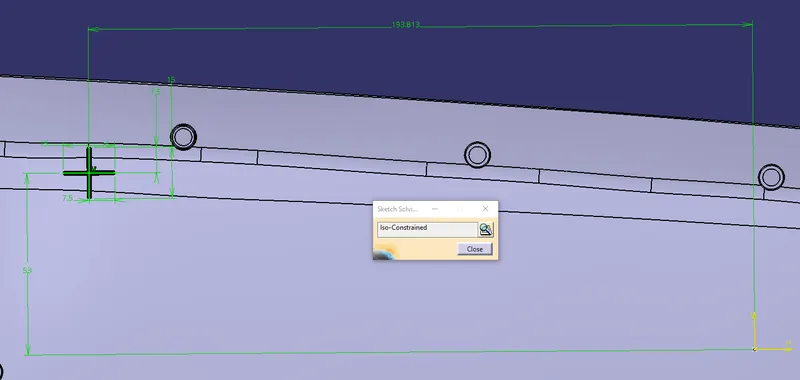
The sketch for the 4 point locator is created. This sketch was then padded in such a way that it intersects with the Door attachment surface as well.
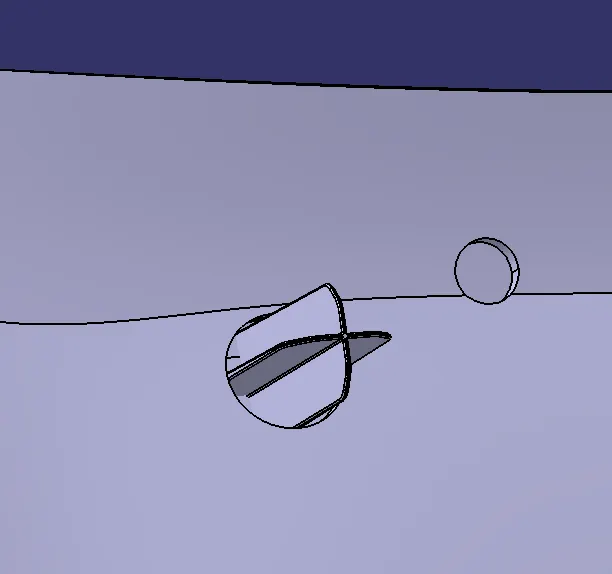
Draft of 0.5mm, Edge fillet of 0.2 mm and chamfer of 1*45 deg were done on all 4 edges of the locator pin.
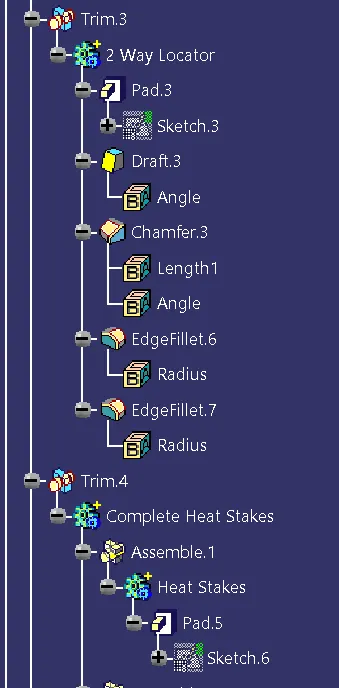
Similarly, a 2 point locator was also created
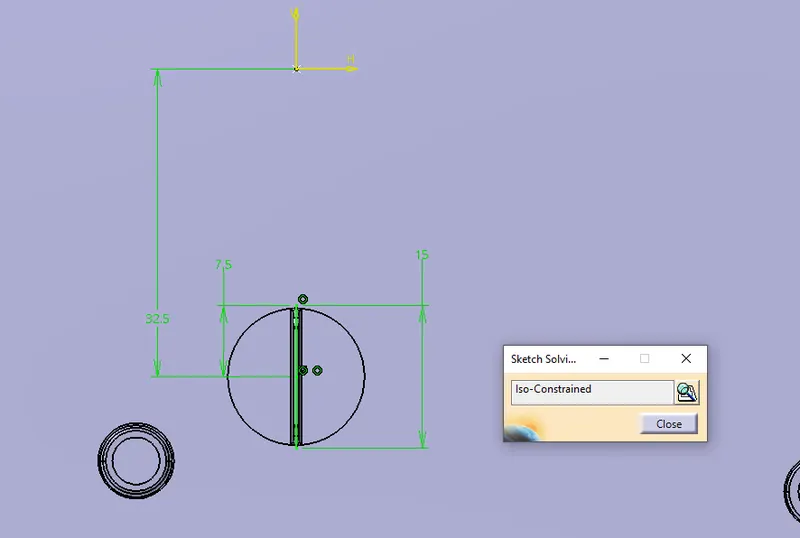
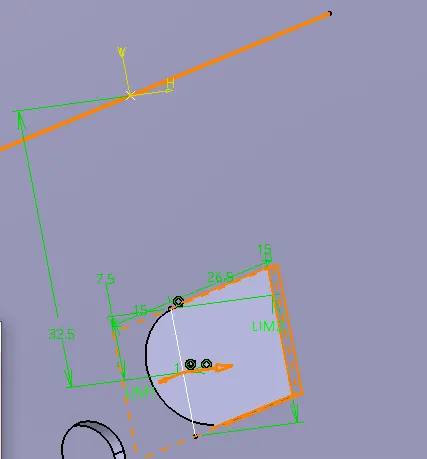
It was also padded, (While padding I made sure the height of the 4 and 2-way locator remains the same from the door part surface since the mentioned part has a curvy base.) along with the same edge fillet, draft and chamfer values.
iv) Heat stake creation:
In manufacturing products with thermoplastics components, it is often necessary to join a thermoplastic part with the part of dissimilar material (can be metal, dissimilar plastic/other materials).
Heat staking is an assembly method (using the right combination of heat and pressure) that uses the controlled melting & reforming plastic stud/boss to capture or lock another plastic or metal component of an assembly place.
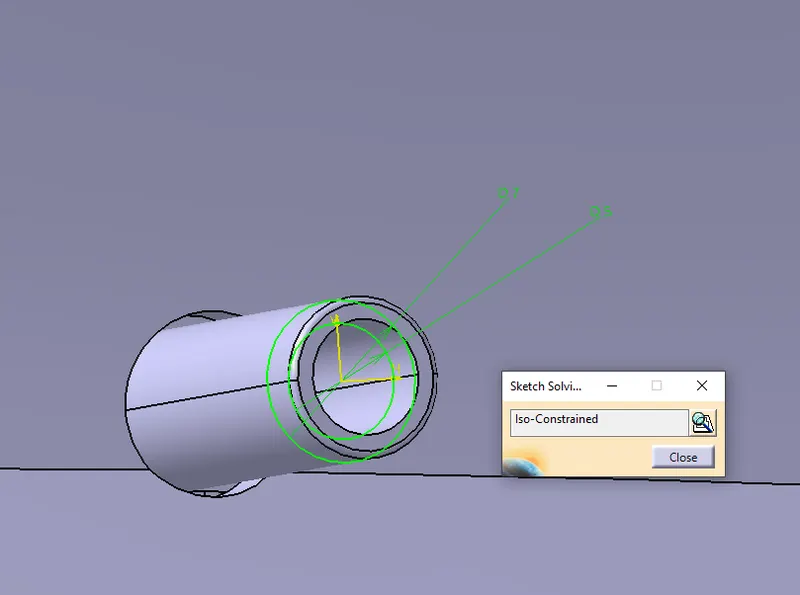
the height of the heat stakes was kept lesser than the locators because the heat stakes are kept to hold the parts together but the locators are the ones that help the door applique part to join with the other part.
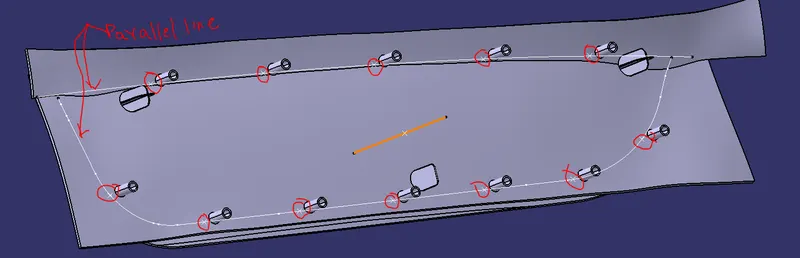
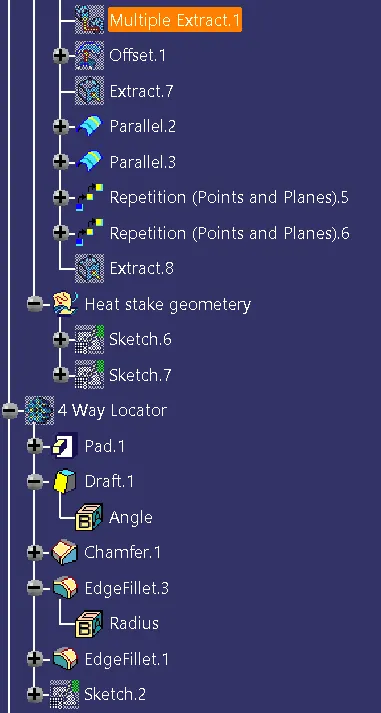
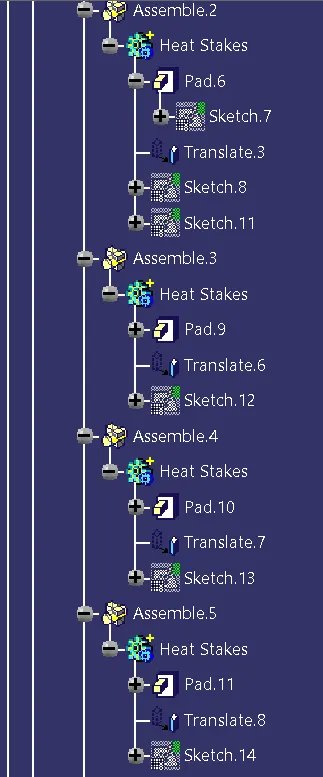
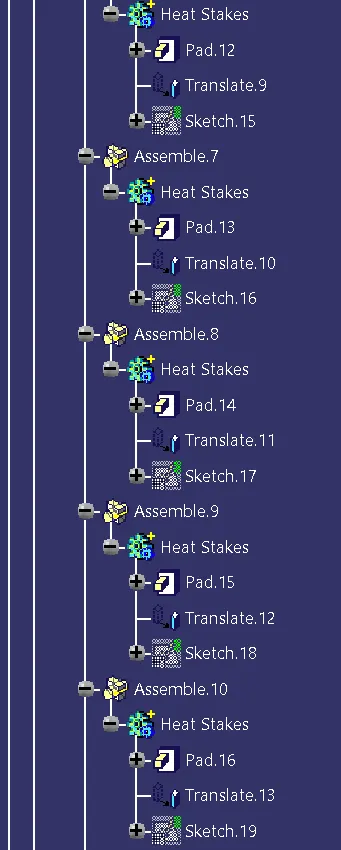
using the command "Parallel Lines" and "multiple point creation" the above-shown heat stake pattern arrived.
v) Locator and Heat stake clearance:
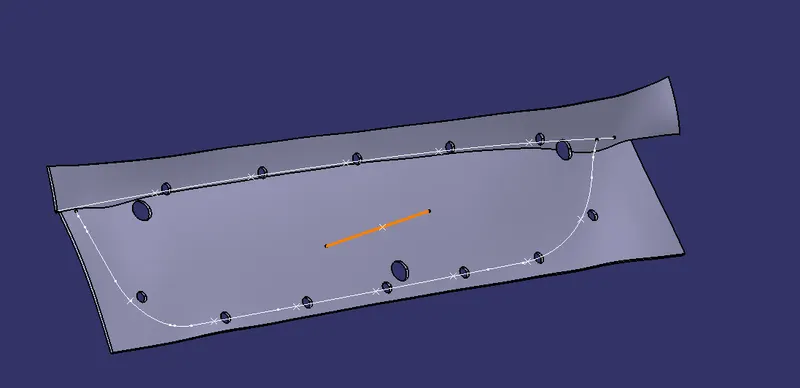
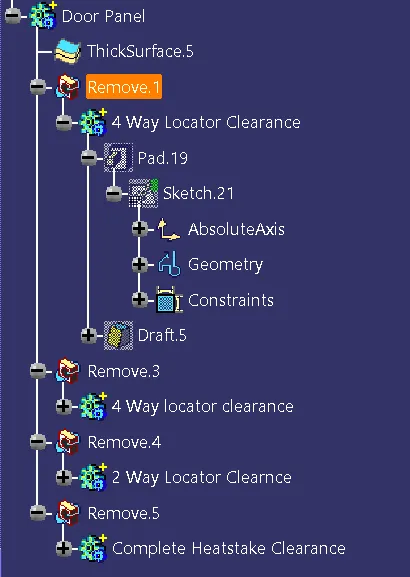
As shown above, a clearance was made for the 2 and 4 point locator for 0.5mm (approx) and 1mm for the heat stakes.
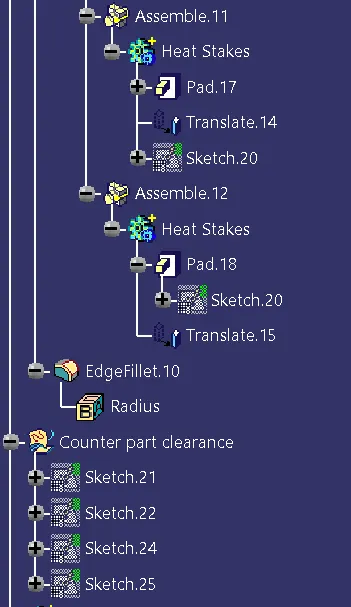
Feature Tree: