Design of Door Trim Applique Attachment Features
DESIGN OF CAR DOOR APPLIQUE ATTACHMENT FEATURES
INTRODUCTION:
A car door applique is used in the door panel to provide an aesthetic look to the door panel. There are various engineering features in the plastic part. As we know most of the plastic parts used in the Automobiles are developed from injection molding, we need to design the plastic parts for injection molding. There are a lot of defects that can occur in plastic part manufacturing and we need to consider the possible defects and design the part.
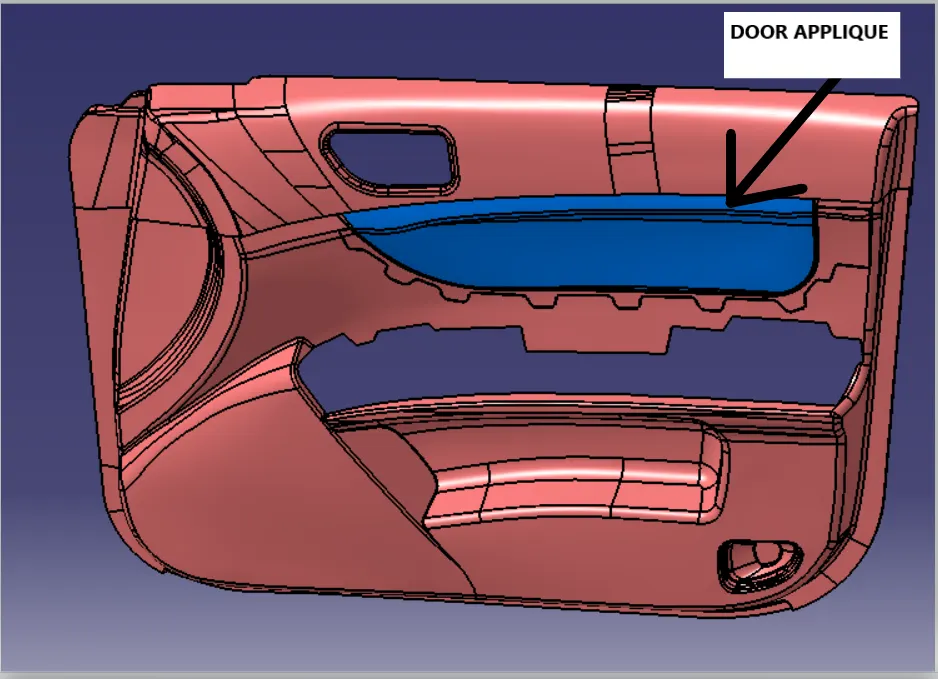
OBJECTIVE: To design the car door applique from the given A-surface and design the attachment features.
SOFTWARE USED: CATIA V5
GIVEN: A-surface of the applique and the reference body.
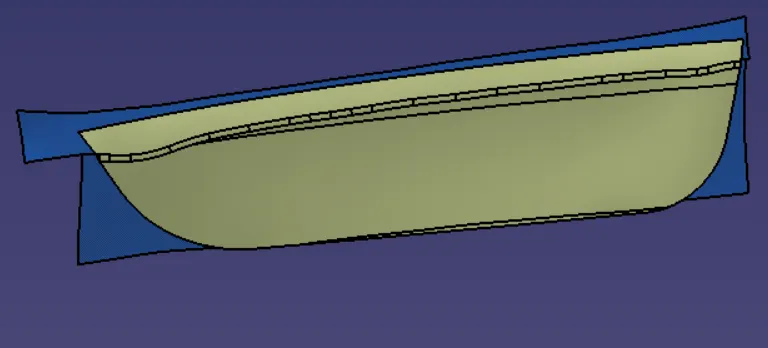
DESIGN METHODOLOGY
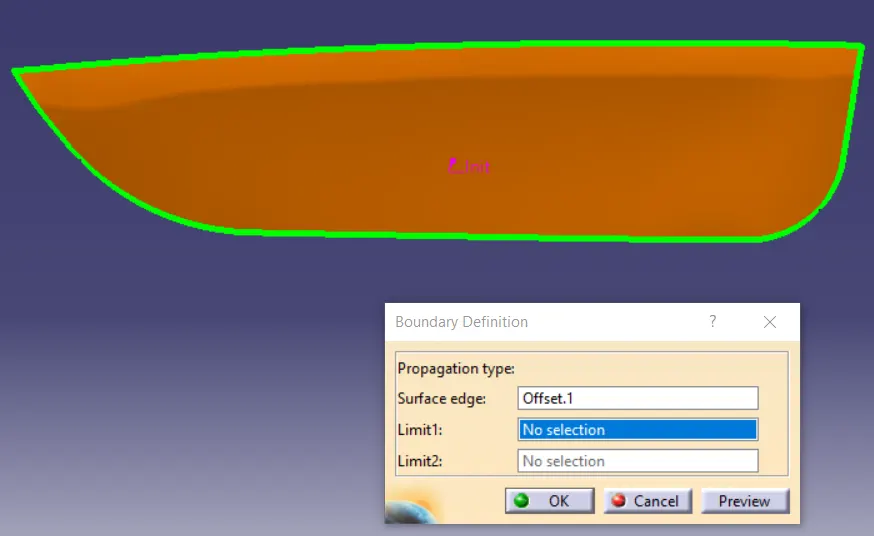
- A_surface cleanup: We need to check the quality of the given A-surface. Since I got the file in IGES format we need to disassemble it and then join it with the merging distance of 0.001 mm. Now we check the file for any error elements. We check the surface with the BOUNDARY command to look for openings on the surface.
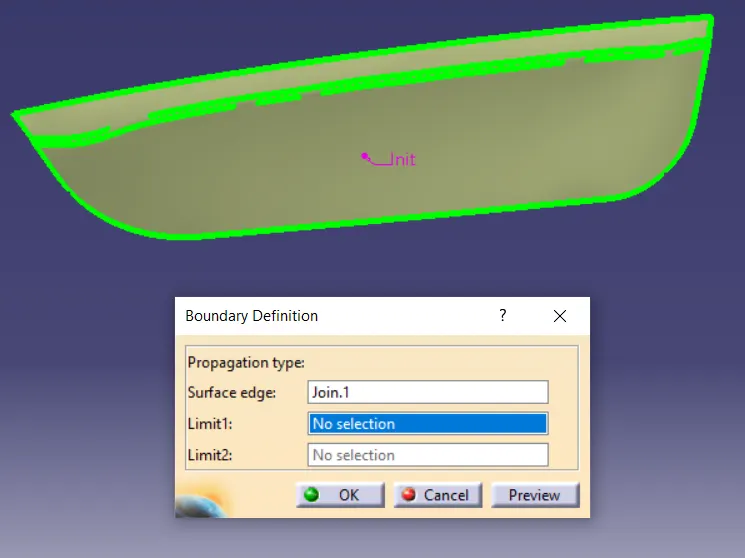
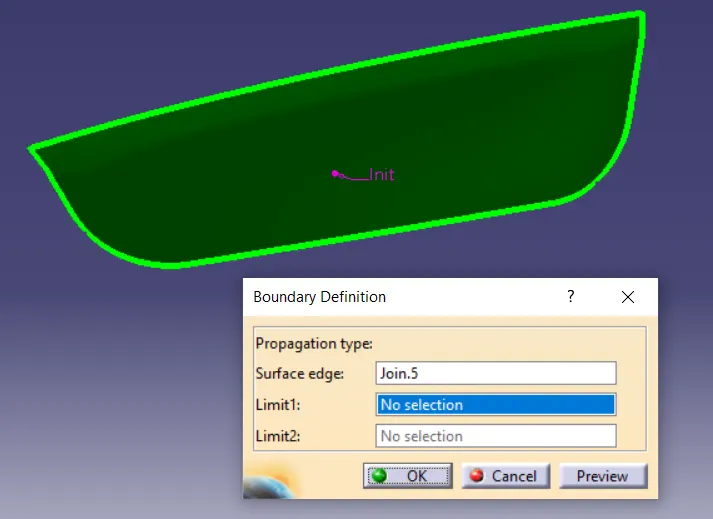
- B-surface creation: B-surface is the inner side of the plastic part
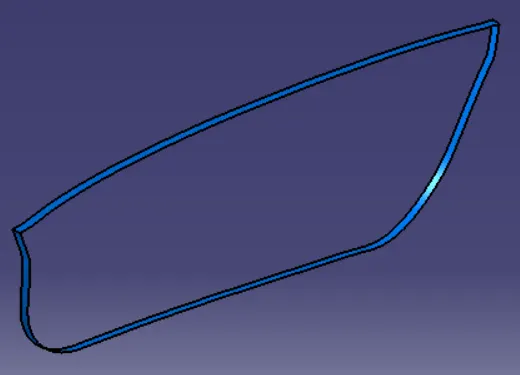
- C-surface creation: C-surface or closing surface is used to join the A-surface and B-surface together.
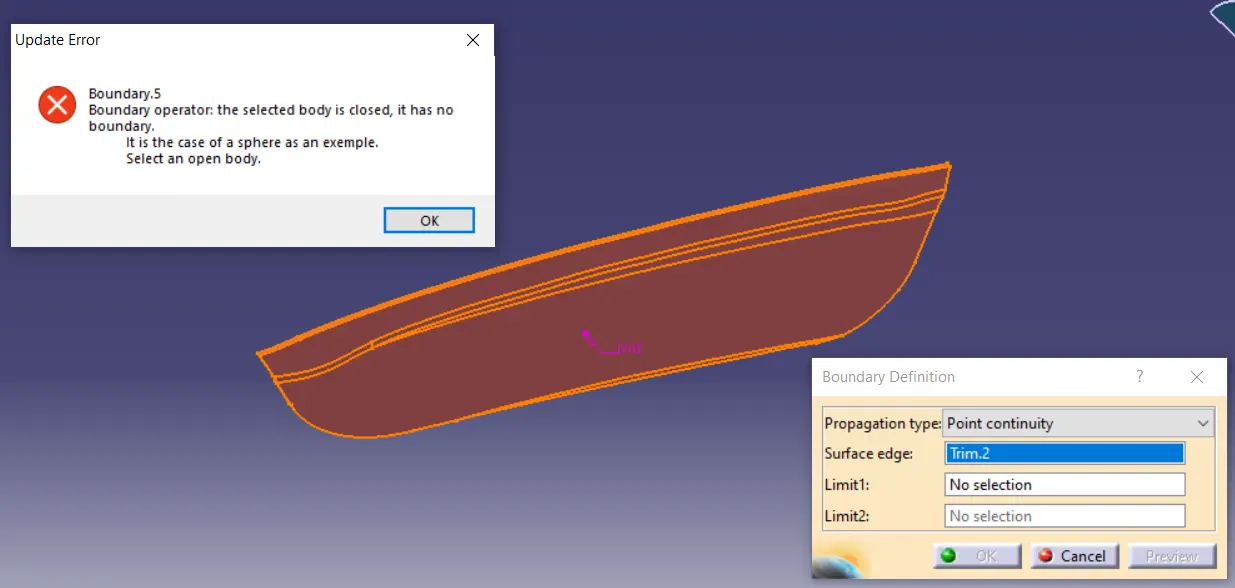
- Closed body
Development of Attachment features
In design engineering whenever we want to fix a part we usually follow the 3-2-1 principle. According to the 3-2-1 principle to fix a component it is necessary for it to have 0 degrees of freedom. A component is said to have 6 degrees of freedom in space. Taking the positive translation as 1 and negative as 1 also clockwise motion as 1 and anti-clockwise as 1, we get in a total of 12 degrees of freedom.
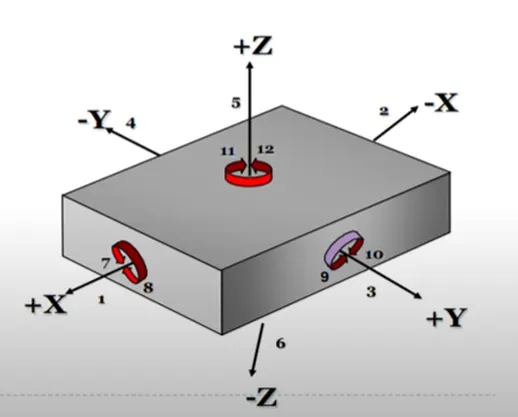
To have 0 degrees of freedom a component should be restricted in all the 12 degrees of freedom.
Translational degree of freedom
- X(1 and 2)
- Y(3 and 4)
- Z(5 and 6)
Rotational degree of freedom
- About X(7 and 8)
- About Y(9 and 10)
- About Z(11 and 12)
DESIGN METHODOLOGY :
To fix the applique on the door panel we need to constrain all the degrees of freedom except one, the direction in which we will fix it on the door panel. We use the four-way locators to constrain the 3 degrees of freedom.
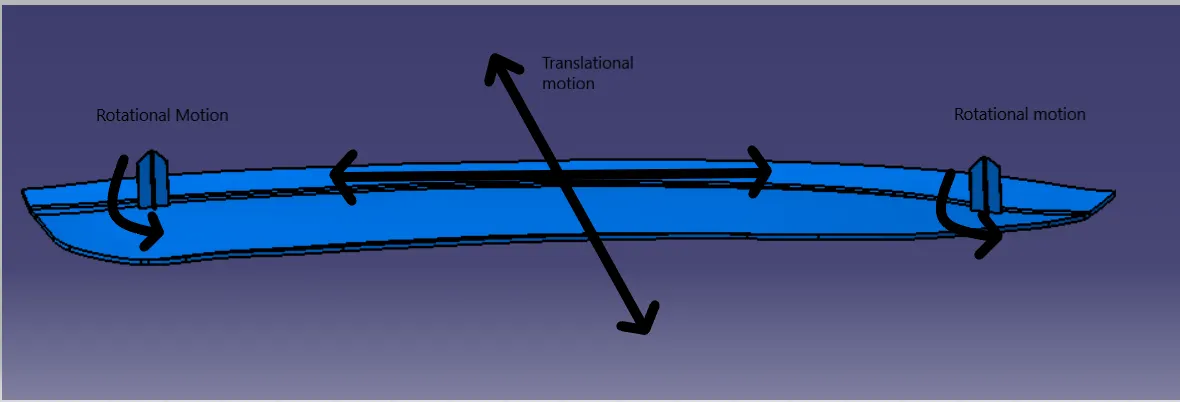
A two-way locator is used to make the attachment process easier
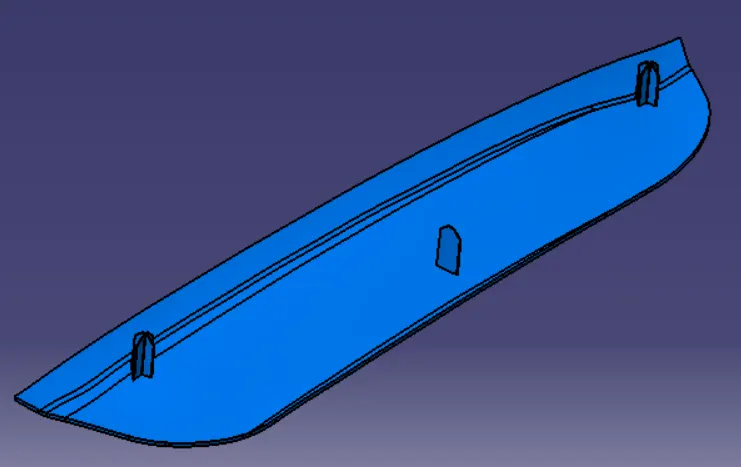
Design of heat stakes for fixing the applique
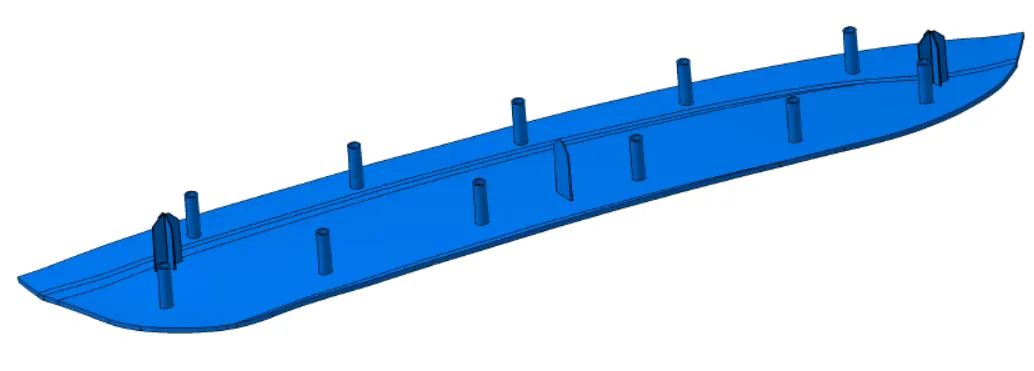
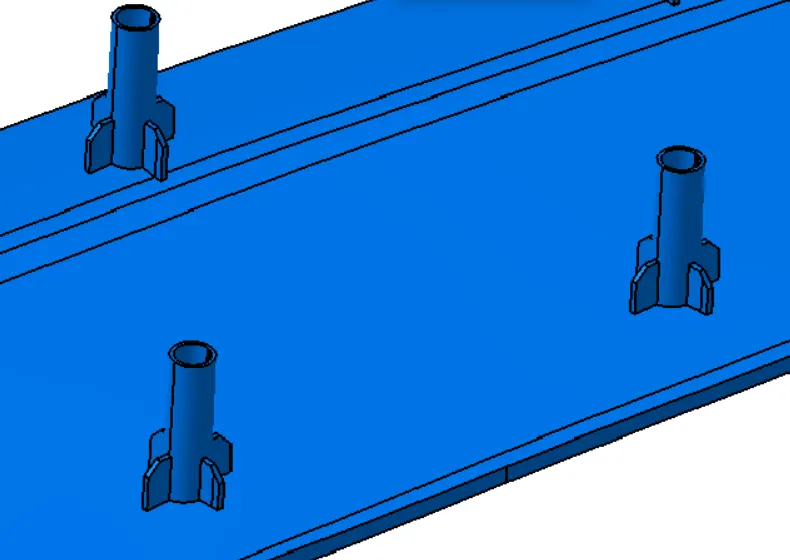
Design of heat stakes with gussets
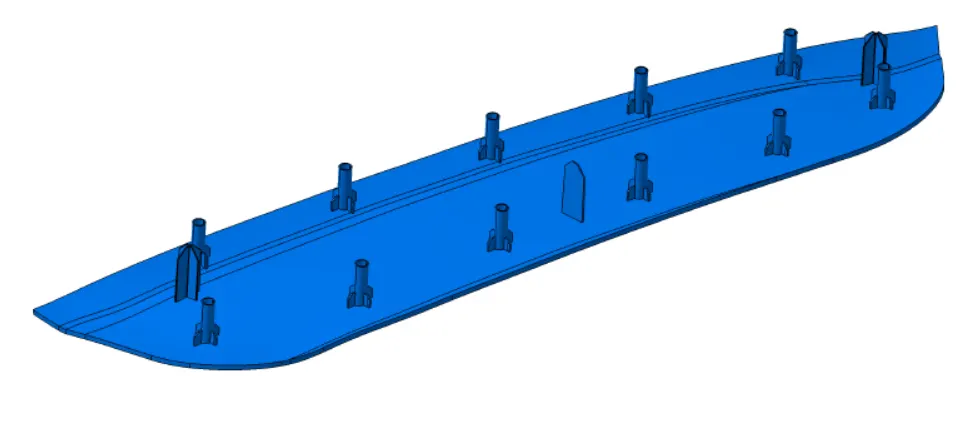
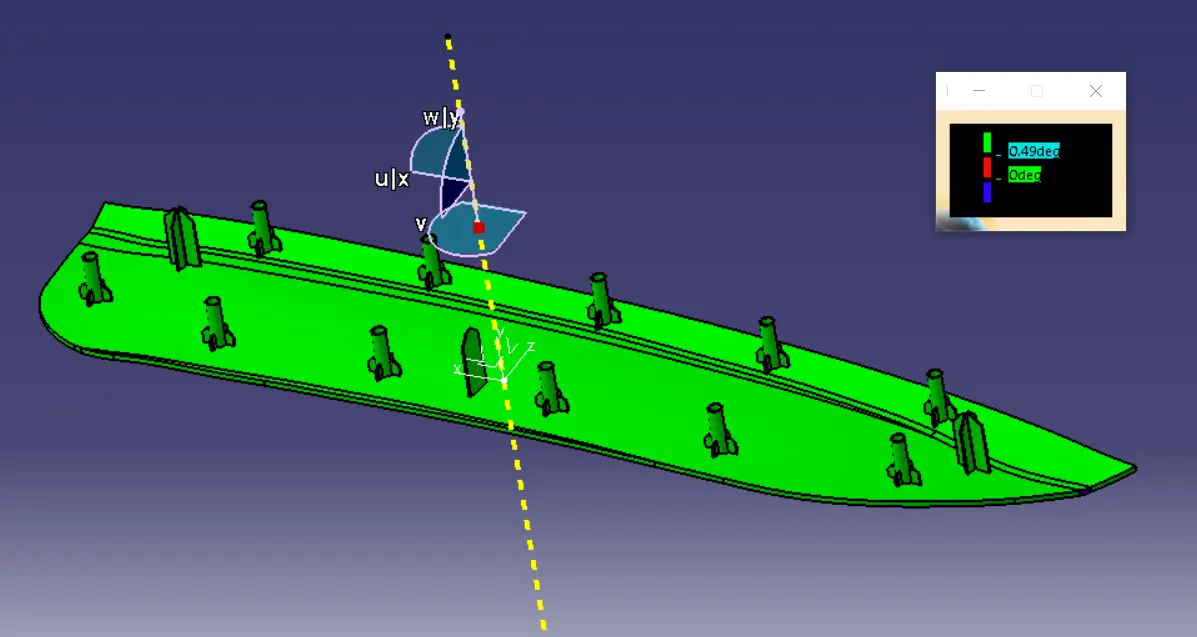
Draft analysis on Applique
We analyze the applique and the attachment features for the 0.5degrees draft angle.
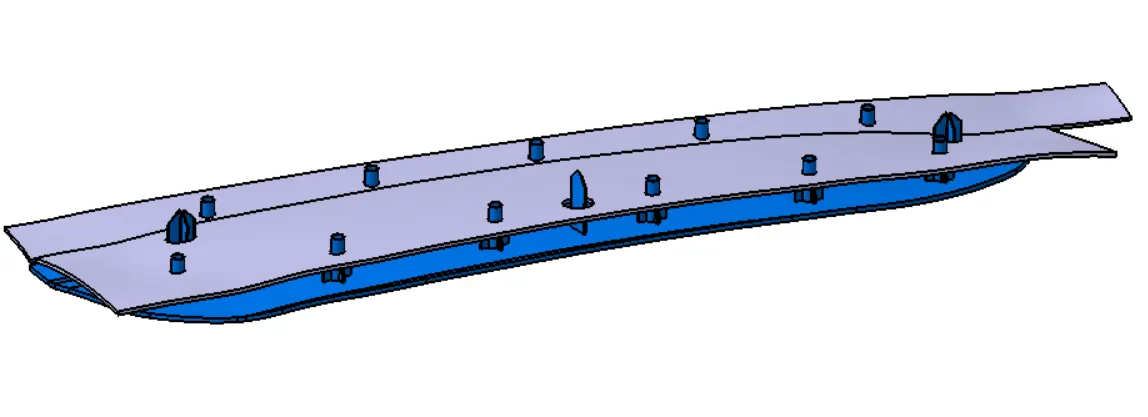
Final Assembly
The fixing body has holes with
- locator clearance of 0.1mm
- the heat stake clearance of o.5mm
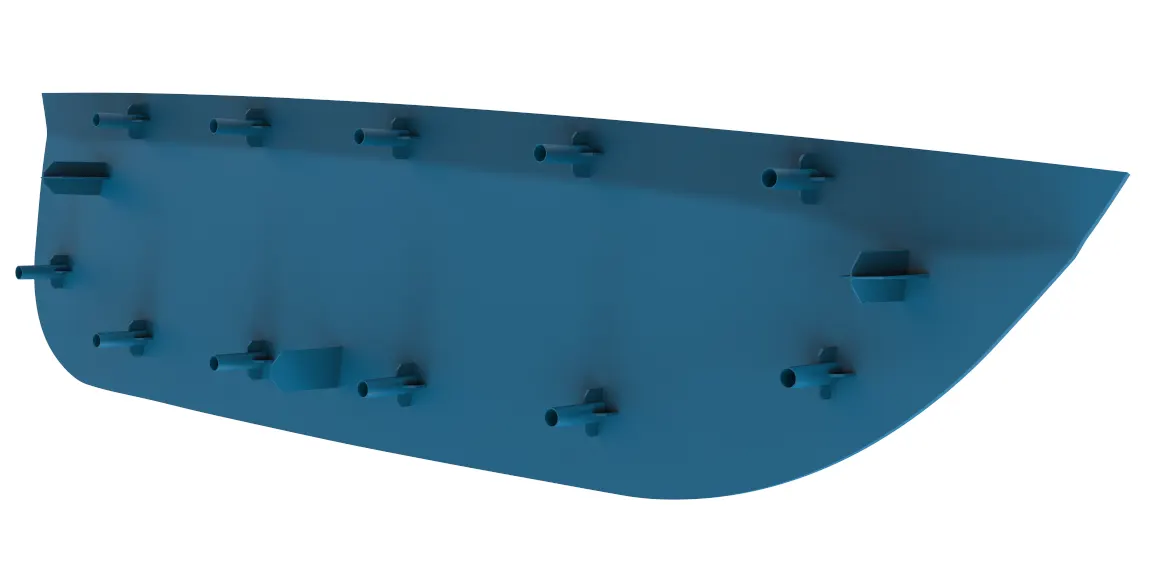
Conclusion: The door applique has been designed with the necessary attachment features according to the 3-2-1 principle.