Week 9 - Parametric study on Gate valve.
Aim: - To perform a parametric study on the gate valve simulation by setting the opening from 10-80 percent.
Objective: -
- To obtain mass flow rate at outlet for each opening setting.
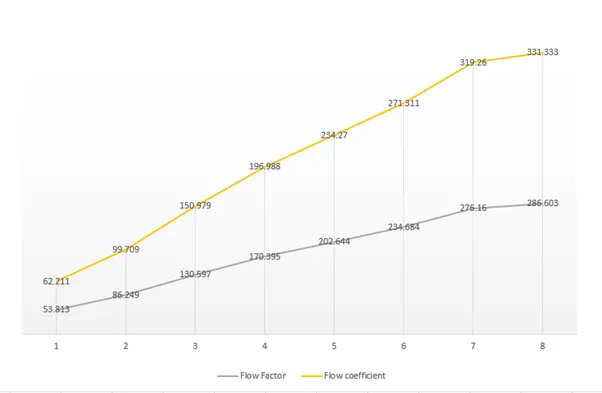
- To calculate the flow coefficient and flow factor for each opening and plot the graph.
- To compare and discuss the results obtained from simulation.
Theory: -
Gate Valve –
A gate valve is a valve that opens by lifting a barrier (gate) out of the path of the fluid. It requires very little space along the pipe axis and hardly restrict the flow of fluid when the gate is fully opened. It is used to shut off the flow of liquids rather than for flow regulation.
Flow Coefficient (CV) –
The flow coefficient of a device is a relative measure of its efficiency at allowing fluid flow. It describes the relationship between the pressure drop across an orifice valve or other assembly and the corresponding flow rate.
Mathematically the flow coefficient Cv (or flow-capacity rating of valve) can be expressed as:
`C_v=Q √((SG)/(∆P))`
where:
Q is the rate of flow (expressed in US gallons per minute),
SG is the specific gravity of the fluid (for water = 1),
ΔP is the pressure drop across the valve (expressed in psi).
It is volume of water (in US gallons) at 60 °F that will flow per minute through a valve with a pressure drop of 1 psi across the valve.
Flow Factor (KV) –
It is metric equivalent to flow Coefficient, commonly used everywhere else in the world with the exception of the United States. It is calculated using metric units:
`K_v=Q √((SG)/(∆P) )`
where:
Q is the flowrate (expressed in cubic meter per hour)
SG is the specific gravity of the fluid (for water = 1),
∆P is the differential pressure across the device (expressed in [bar]).
KV can be calculated from CV using the equation:
`C_v=0.865*K_v`
Case Setup: -
Geometry –
Gate valve Model
Gate Disc with spindle is used as parameter in providing lift simulating different opening positions
Fluid Volume
Different opening Setting mid-section view
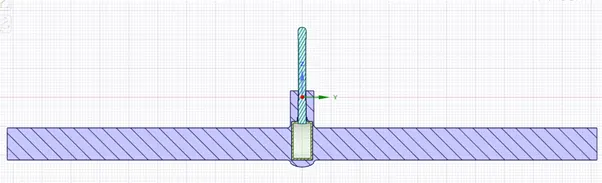
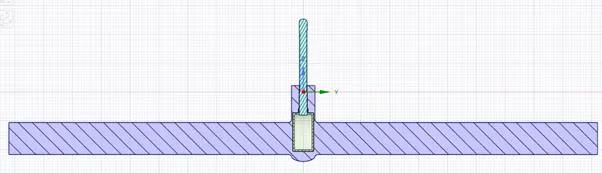
10 % Opened 20 % Opened
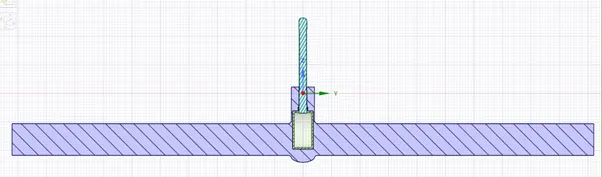

30 % Opened 40 % Opened
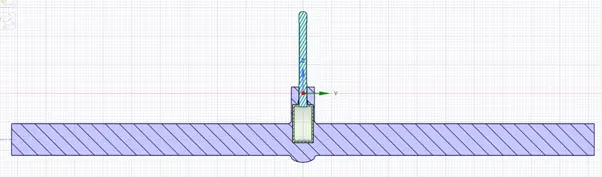
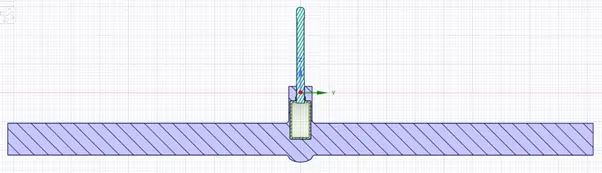
50 % Opened 60 % Opened
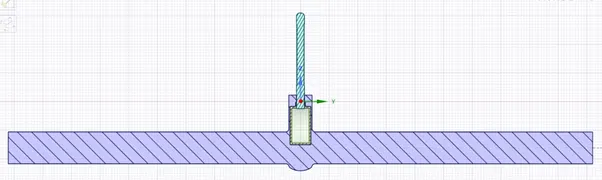
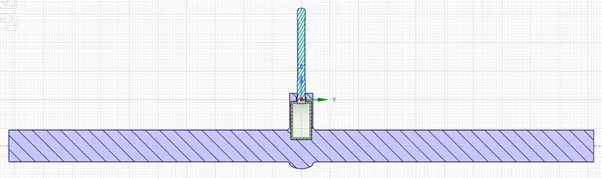
70 % Opened 80 % Opened
Meshing –
Mesh for 10% opening
Mesh size = 6mm, Maximum up to 8mm
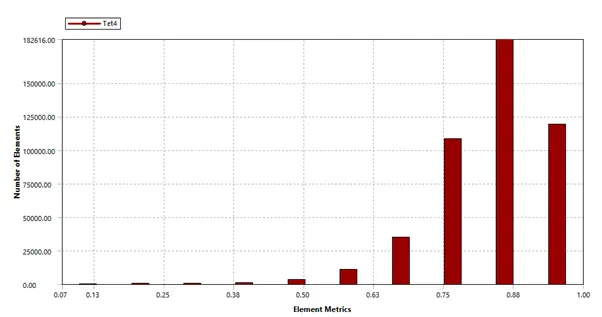
No. of nodes = 91460 No. of elements = 460382
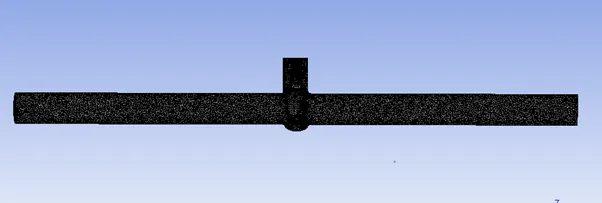
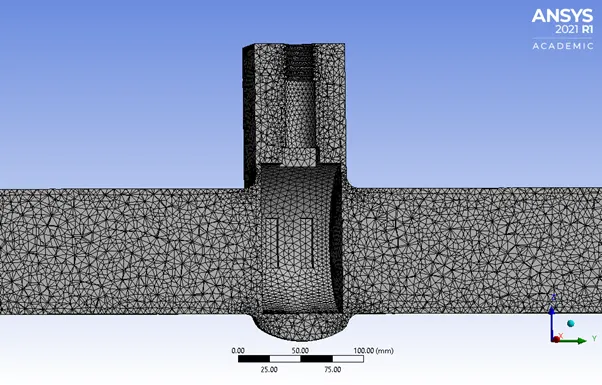
Mesh Quality
Number of elements and nodes for ach opening setting
|
Opening percentage |
Nodes |
elements |
|
10 |
91460 |
460382 |
|
20 |
91054 |
459007 |
|
30 |
90490 |
456546 |
|
40 |
89932 |
454051 |
|
50 |
89595 |
452123 |
|
60 |
89520 |
451725 |
|
70 |
89180 |
449906 |
|
80 |
88955 |
448678 |
Fluent setup –
- Pressure based solver and Absolute velocity is used.
- Steady-state Calculation is performed.
- Gravity is enabled in -ve Z axis
- Realizable K-ɛ turbulence model is used with Scalable wall function.
- Material of fluid used is water from fluent database.
- Pressure-inlet type boundary condition is use for inlet with 10 Pa gauge total pressure.
- Standard initialization is done computed from inlet.
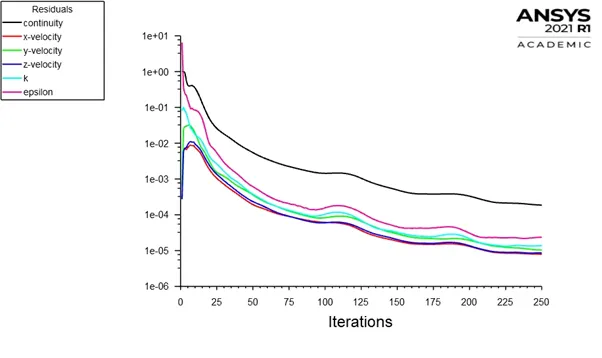
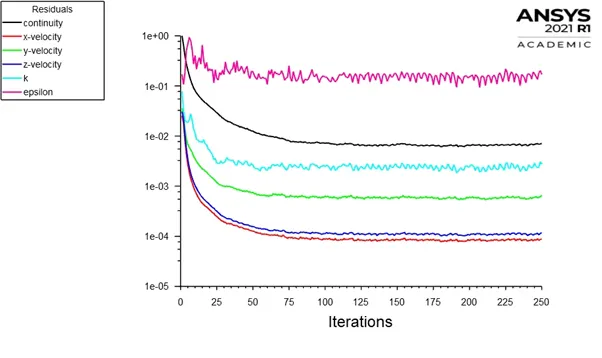
- Number of iterations is 250.
Result: -
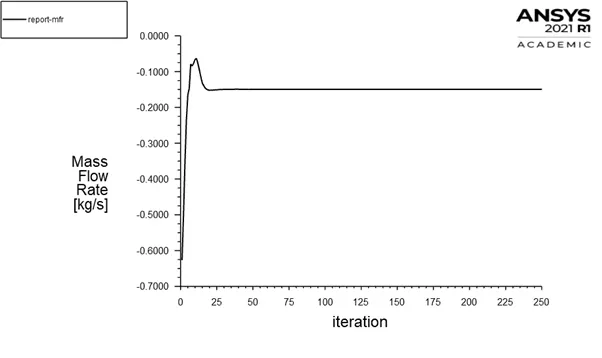
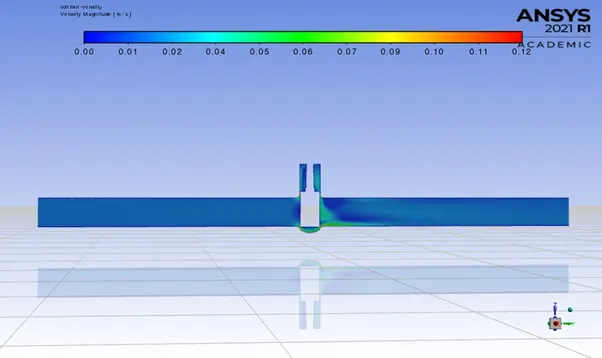
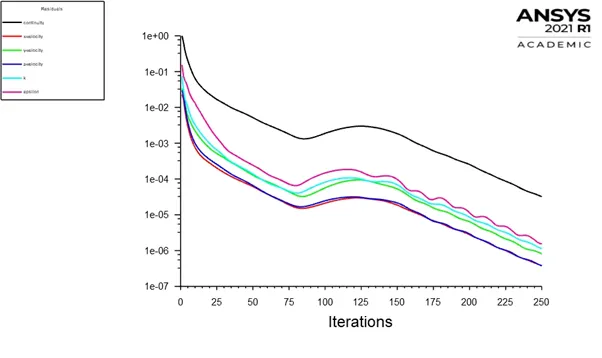
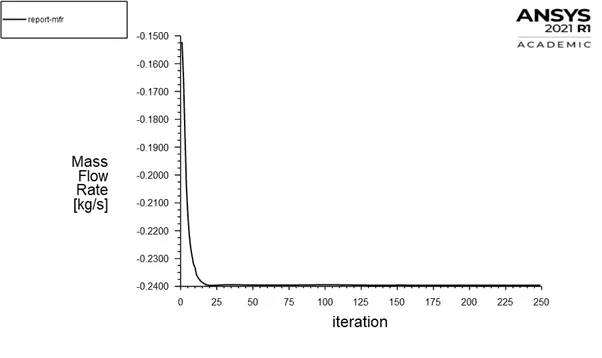
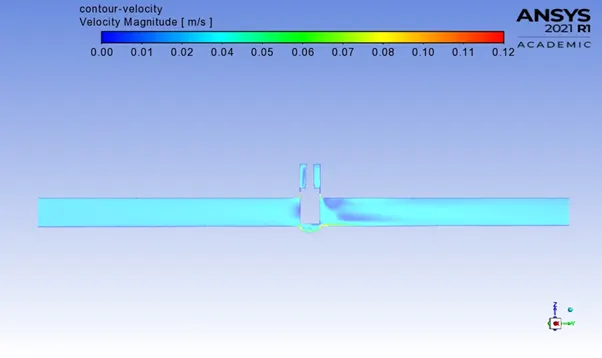
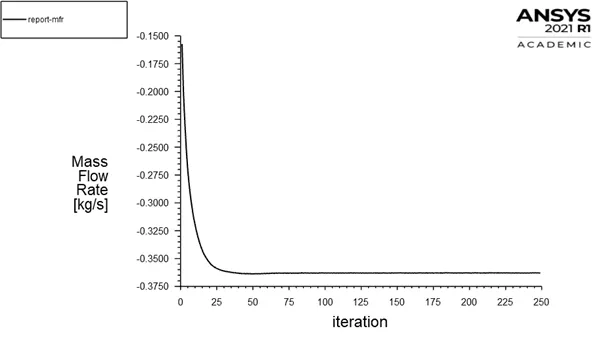
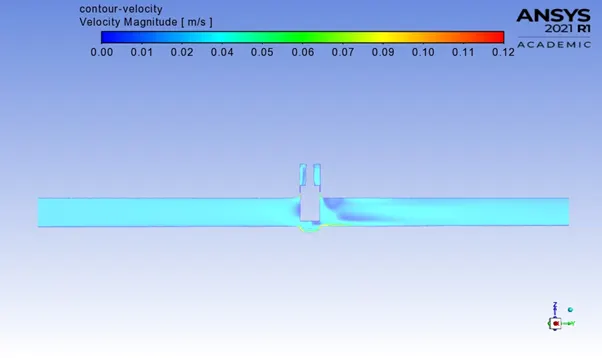
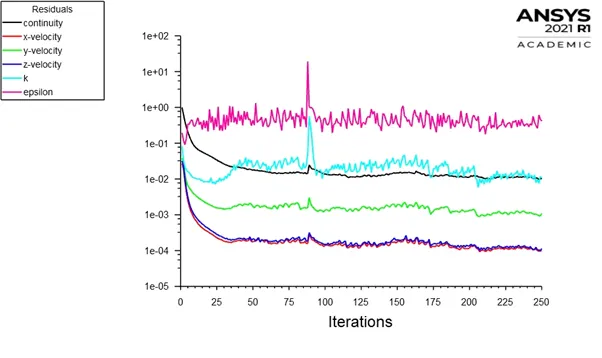
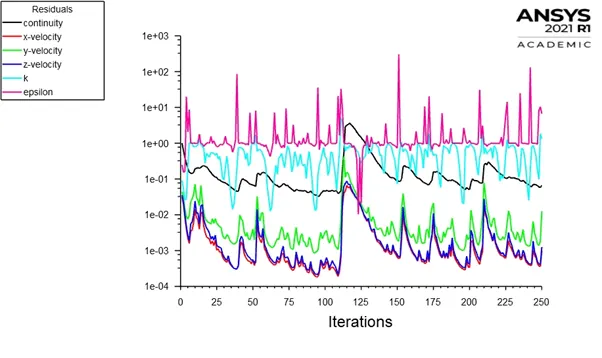
Residual Plot, Mass flow rate and velocity Contour for each opening setting -
10 % Opened
20 % Opened
30 % Opened
40 % Opened
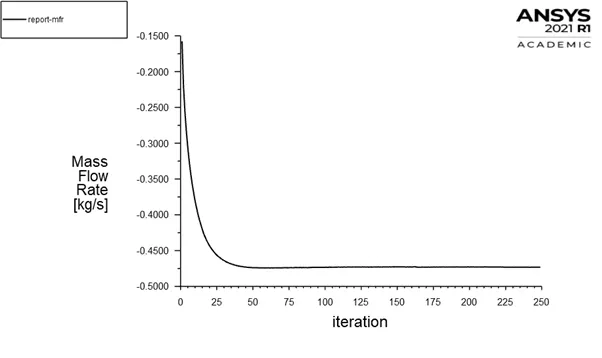
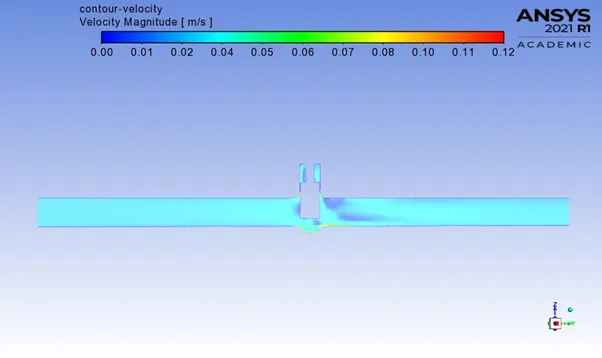
50 % Opened
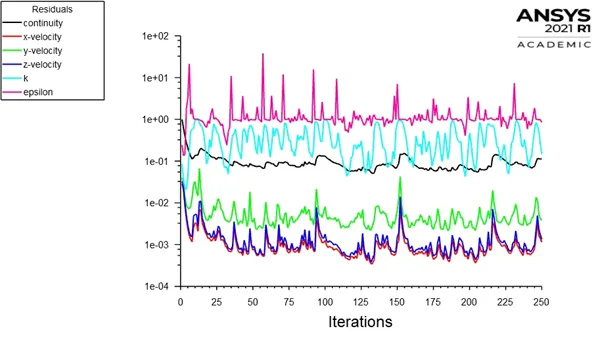
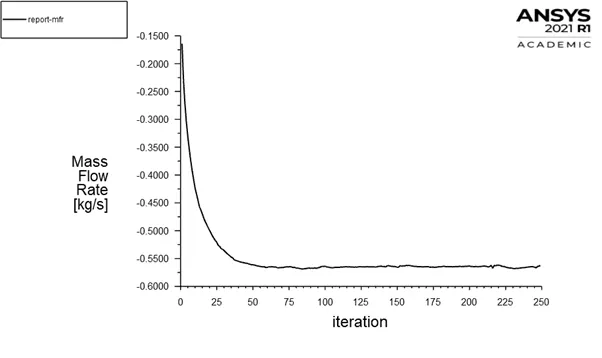
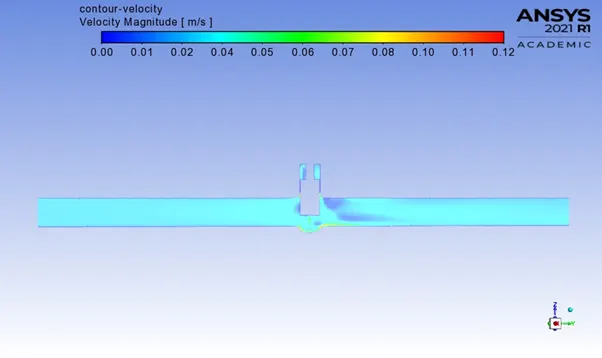
60 % Opened
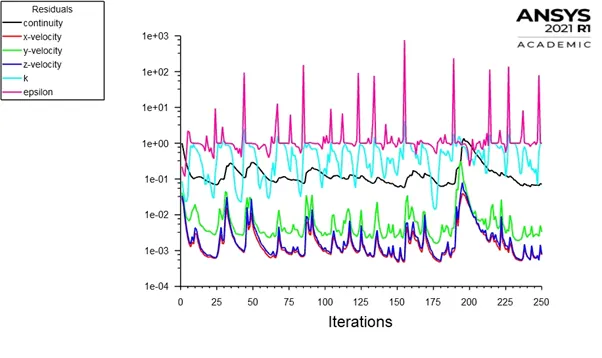
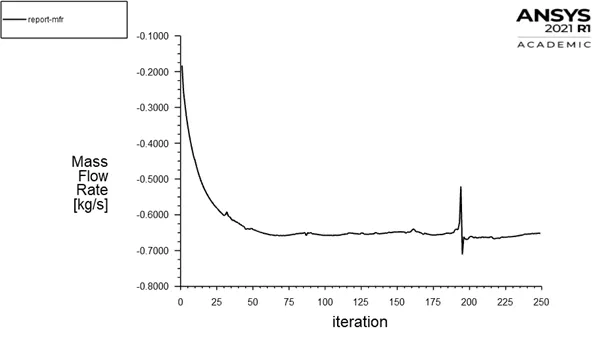
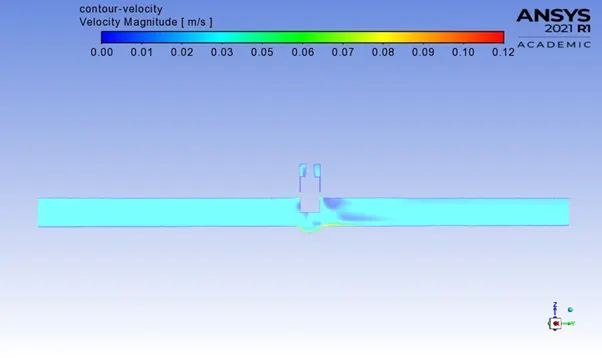
70 % Opened
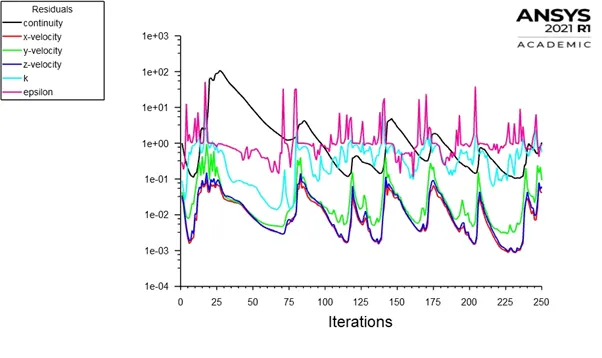
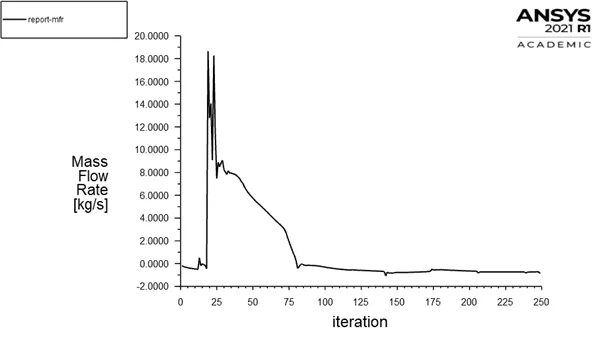
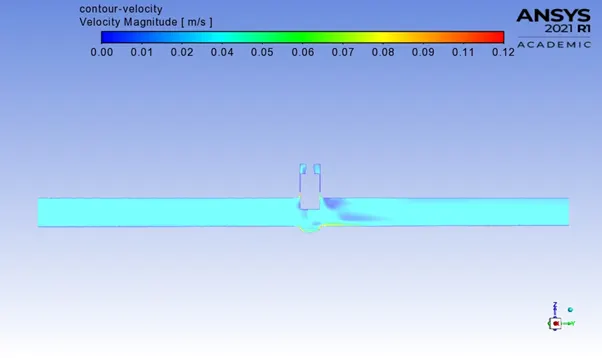
80 % Opened
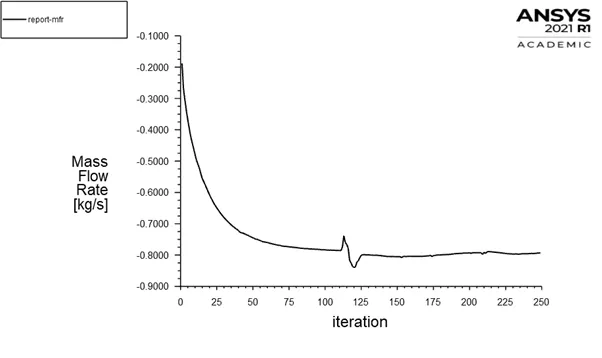
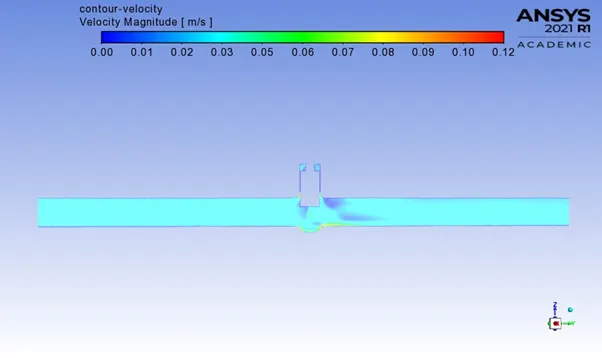
Mass Flow Rate -
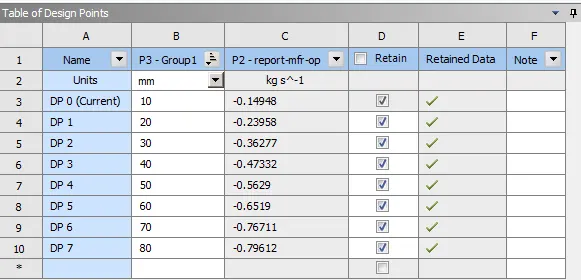
Flow Coefficient and Flow Factor
Conversion factor: 1 Pa = 1e-5 bar 1 kg/sec = 3.60 m3/hr
|
Opening percentage |
Mass flow rate (m3/hour) |
Flow Factor |
Flow coefficient |
|
10 |
0.53813 |
53.813 |
62.211 |
|
20 |
0.86249 |
86.249 |
99.709 |
|
30 |
1.30597 |
130.597 |
150.979 |
|
40 |
1.70395 |
170.395 |
196.988 |
|
50 |
2.02644 |
202.644 |
234.270 |
|
60 |
2.34684 |
234.684 |
271.311 |
|
70 |
2.76160 |
276.160 |
319.260 |
|
80 |
2.86603 |
286.603 |
331.333 |
Plot for Flow Coefficient and Flow Factor Vs Opening percentage
Conclusion: -
- As lift increases Mass flow rate increases.
- As flow coefficient is volume of water (in US gallons) at 60 °F that will flow per minute through a valve with a pressure drop of 1 psi across the valve, hence it is used in selecting the appropriate gate valve depending upon required pressure head and mass flow rate.
- As lift increases Flow factor and flow coefficient increases as well.