Week 9 - Parametric study on Gate valve.
AIM : Conduct simulation on Gate Valve to study the change is mass flow rate by setting the opening from 10% to 80%
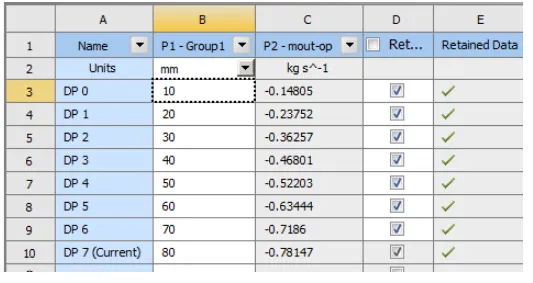
- Obtain the mass flow rates at the outlet for each design point.
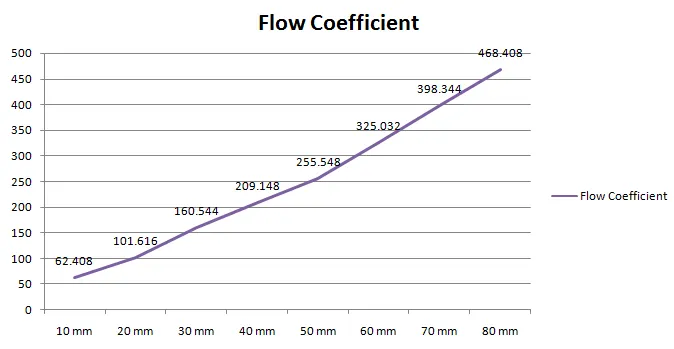
- Calculate the flow coefficient and flow factor for each opening and plot the graph.
- Discuss the results of the mass flow rate and flow coefficient.
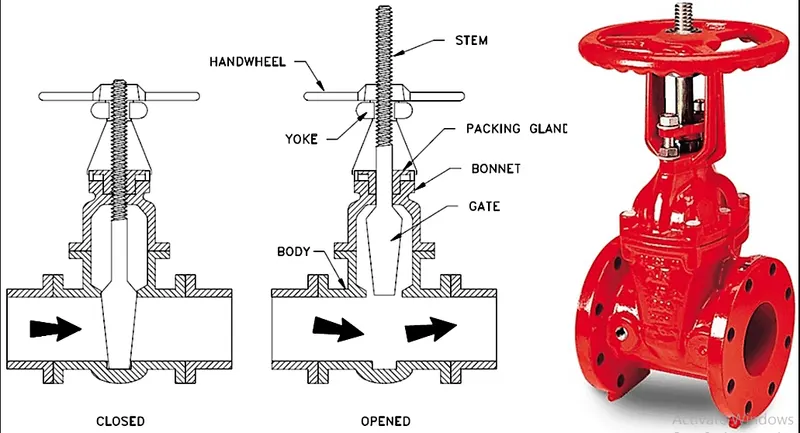
GATE VALVE
In contrast to globe valves, which are typically used for flow regulation, gate valves are used to stop the flow of liquids. The ordinary gate valve has extremely little flow resistance since the flow route is unobstructed when it is fully open. As the gate is moved, the open flow path's size typically varies nonlinearly. when a result, the flow rate does not alter consistently when the stem moves. A partially open gate may shake from the fluid flow depending on the construction. Gate valves are used in many industrial applications including the oil and gas industry, pharmaceuticals, manufacturing, automotive, and marine.
FLOW COEFFICIENT
A device's flow coefficient is a measure of how well it allows fluid to flow. It explains the connection between the corresponding flow rate and the pressure drop via an orifice valve or other component.When flow goes through a valve or any other restricting device it loses some energy. The flow coefficient is a designing factor which relates head drop (Δh) or pressure drop (ΔP) across the valve with the flow rate (Q).
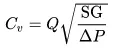
Q stands for flow rate (measured in US gallons per minute), SG for specific gravity (water has a specific gravity of 1), and P for pressure drop over the valve (measured in psi).
FLOW FACTOR
Flow factor has the same formula as flow coefficient but all the values are in metric units.
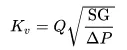
Q is the flowrate, which is in cubic metres per hour (m3/h).
SG stands for the fluid's specific gravity (for water, this equals 1).
P stands for the pressure drop (in psi) through the valve.
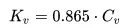
Since, there is only the difference of units in flow factor and flow coeffcient, one can be calculated by using the value of another though a simple relation
GEOMETRY
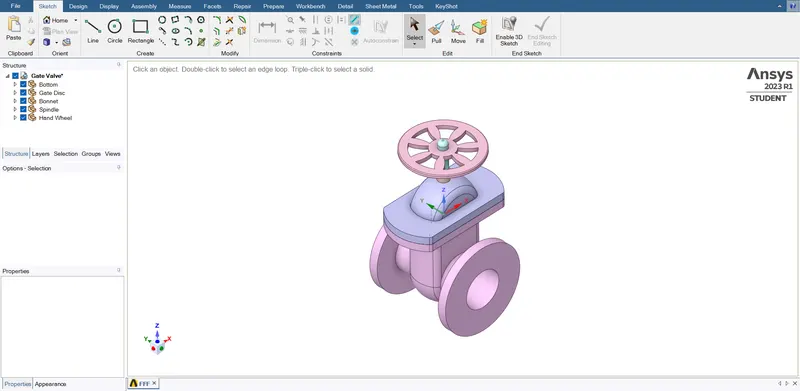
- Import the gate valve geometry into spaceclaim
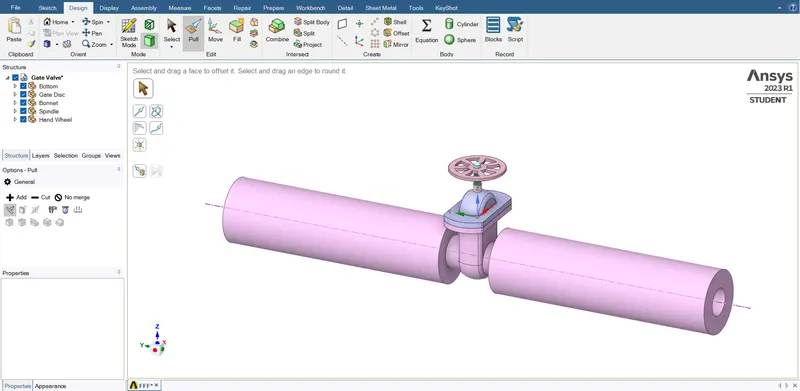
- Extend the inlet and outlet faces of the model
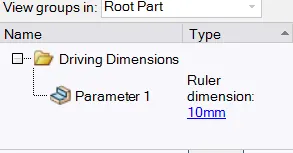
- Hide the bonnet of the body of the gate valve and push the disc by 10 mm and turn on parametric option
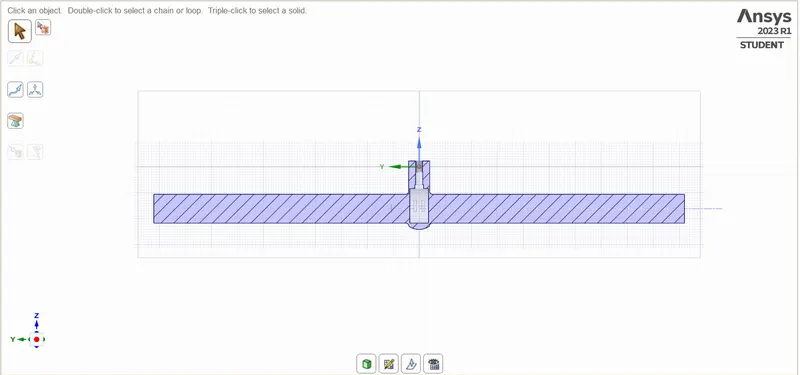
- Unhide all the components except the bonnet and use extract volume option to extract the fluid volume
MESHING
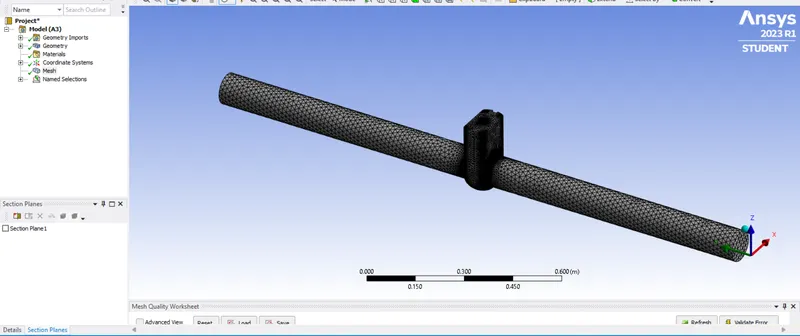
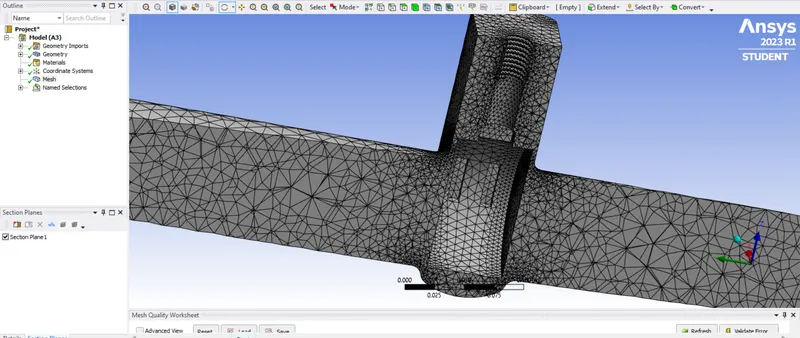
- The model is imported in the mesh window and baseline mesh is generated
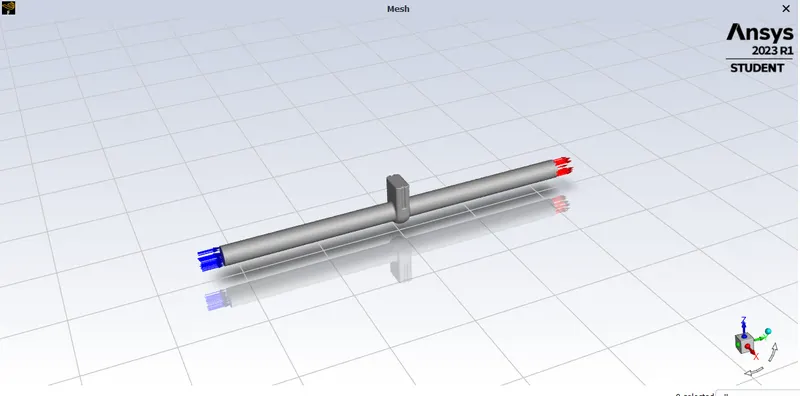
- Named selection of inlet and outlet is given accordingly
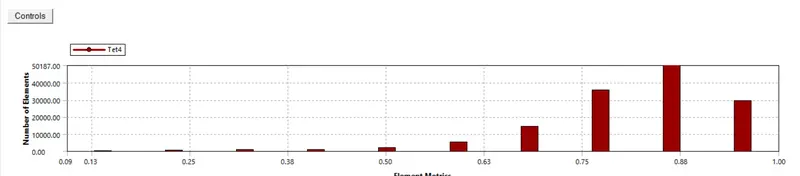
- Element quality is checked to be in the acceptable range
SET-UP
- Material - Water (liquid)
- Solver - Pressure Based
- Gravity - Activated ( 9.81 m/s^2)
- Model - k-epsilon ( Realizable, scalable wall function)
- Inlet Pressure - 10 Pa
- Disc Spacing - Parametrized
- After solving for the first case, the parameter window can be opened up to solve for different values of disc lift.
RESULTS
For 10 mm Disc Lift
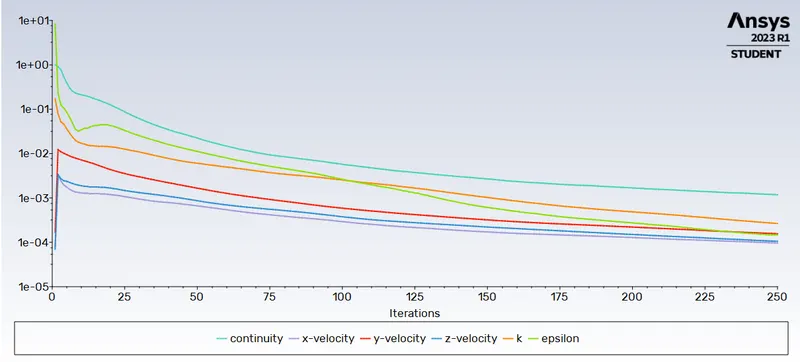
Residuals
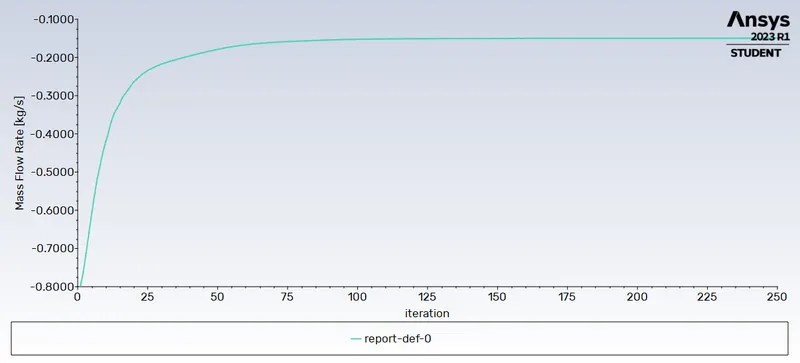
Mass Flow Rate
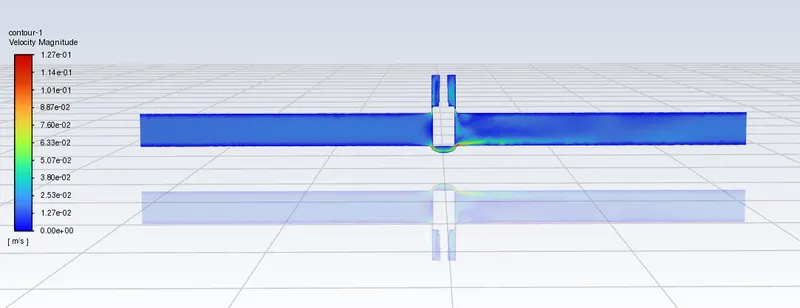
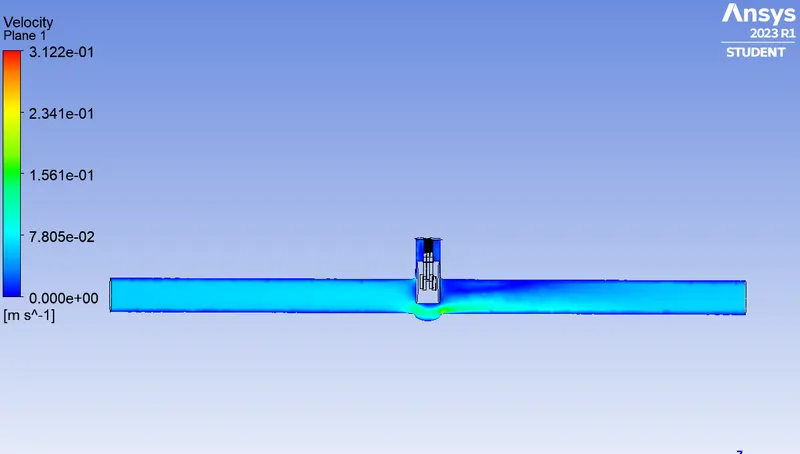
Velocity Contour
For 20 mm Disc Lift
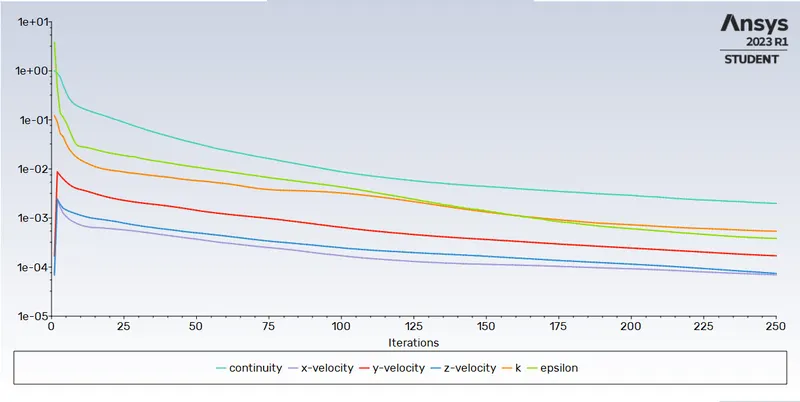
Residuals
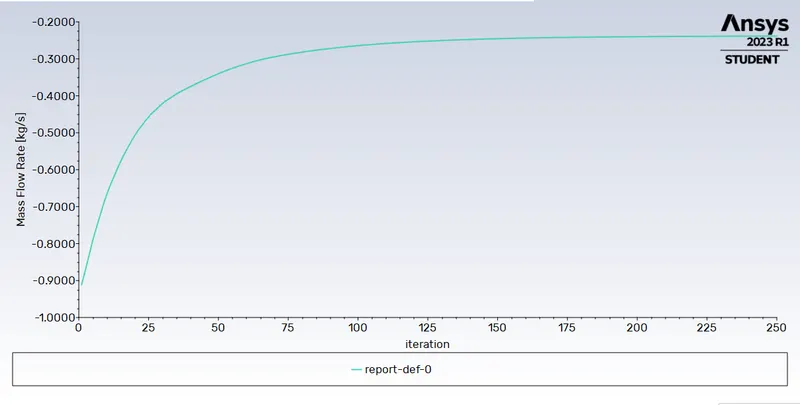
Mass Flow Rate
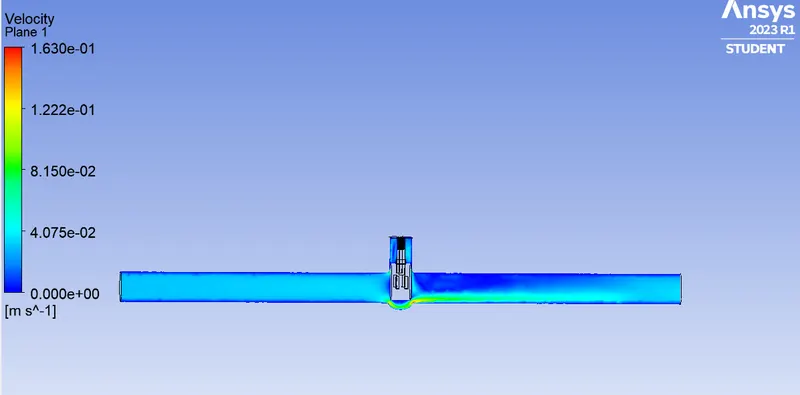
Velocity Contour
For 30 mm Disc Lift
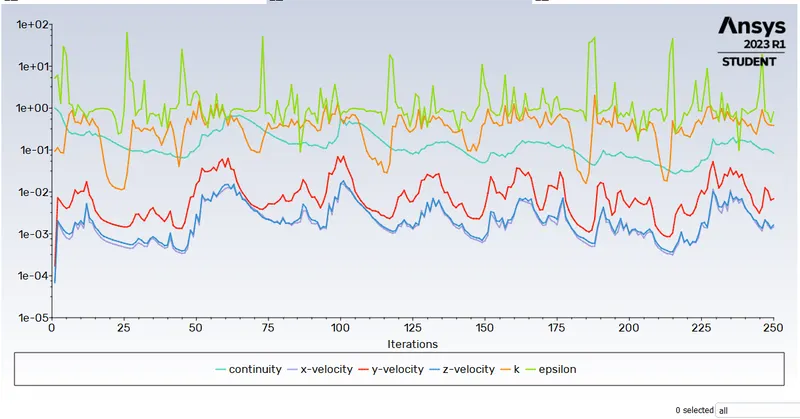
Residuals
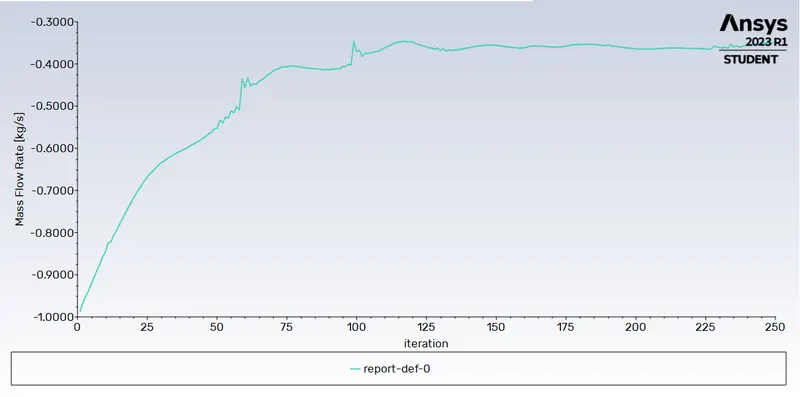
Mass Flow Rate
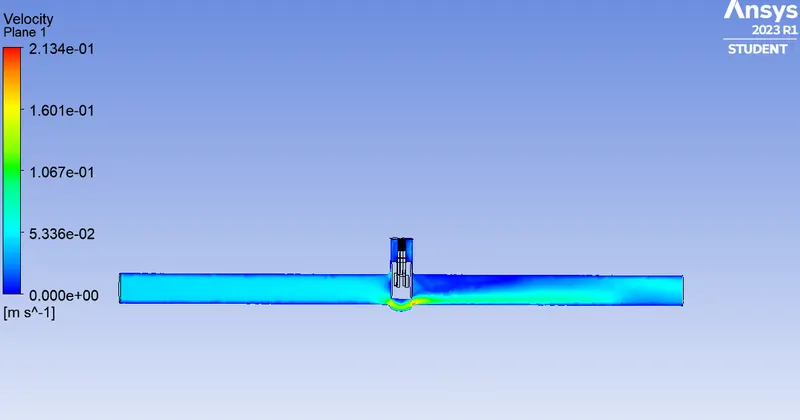
Velocity Contour
For 40 mm Disc Lift
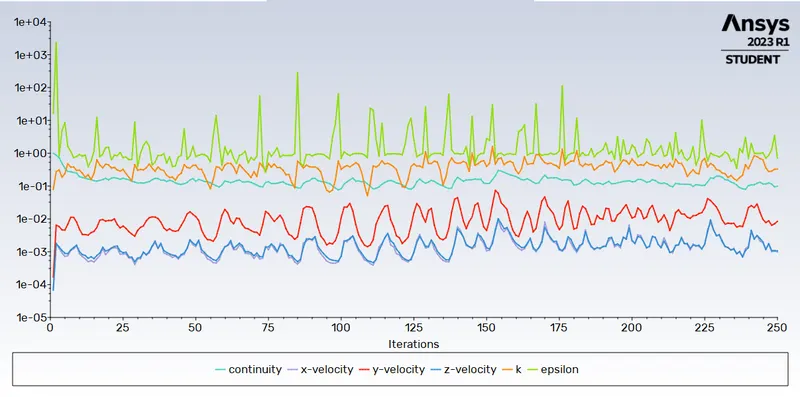
Residuals
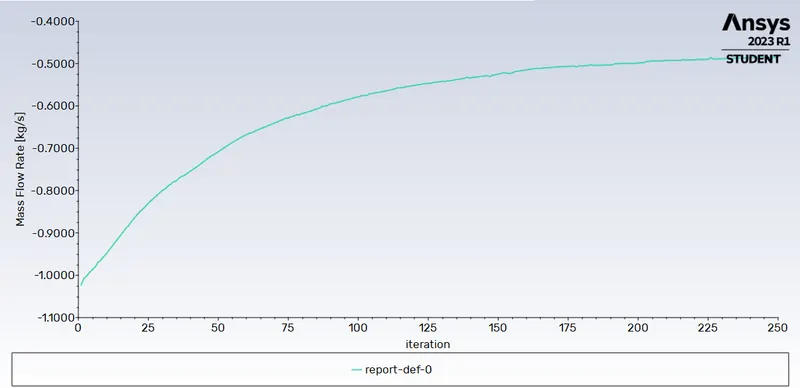
Mass Flow Rate
Velocity Contour
OBSERVATIONS & CONCLUSIONS
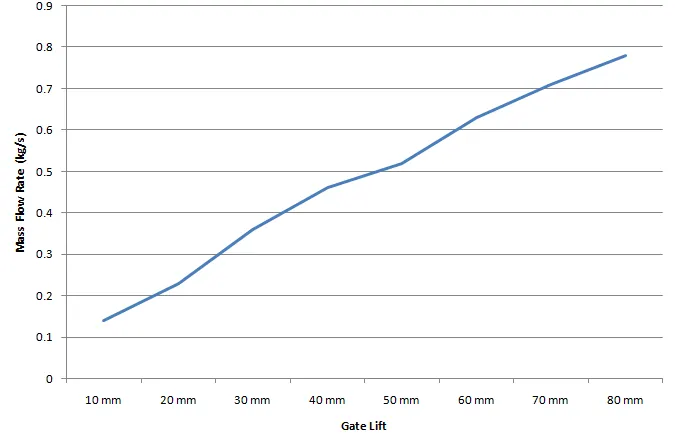
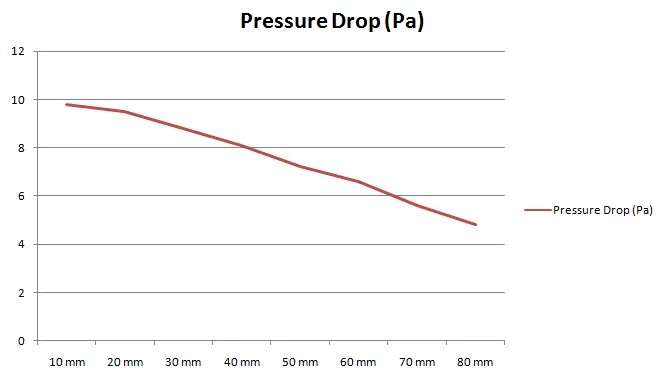
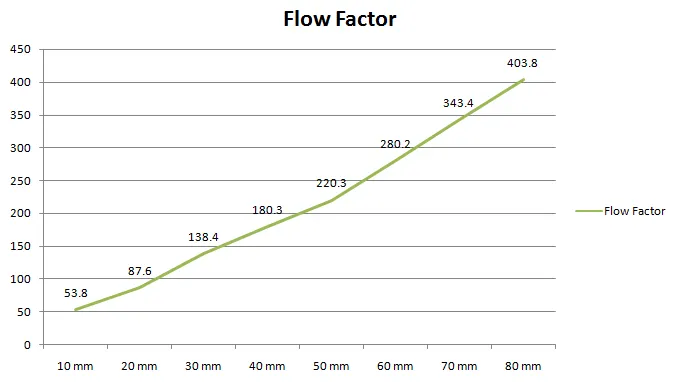
It can be observed that as the gate lift increases, the mass flow rate through the gate valve increases with which the flow factor and flow coefficient increase as well whereas the pressure drop decreases
| Gate Lift | Mass Flow Rate (kg/s) | Pressure Drop (Pa) | Flow Factor | Flow Coefficient |
| 10 mm | 0.14 | 9.8 | 53.8 | 62.408 |
| 20 mm | 0.23 | 9.5 | 87.6 | 101.616 |
| 30 mm | 0.36 | 8.8 | 138.4 | 160.544 |
| 40 mm | 0.46 | 8.1 | 180.3 | 209.148 |
| 50 mm | 0.52 | 7.2 | 220.3 | 255.548 |
| 60 mm | 0.63 | 6.6 | 280.2 | 325.032 |
| 70 mm | 0.71 | 5.6 | 343.4 | 398.344 |
| 80 mm | 0.78 | 4.8 | 403.8 | 468.408 |
LEARNINGS
- Conducting parametric studies when simulation needs to be done for different values of a parameter, it is time saving and creates data in a tabular form which is easy to read and analyze
- Importance of flow factor and flow coefficient in designing of gate valves
- Application of gate valve