Week 9 - Parametric study on Gate valve.
Aim: Parametric study on Gate Valve.
Objectives:
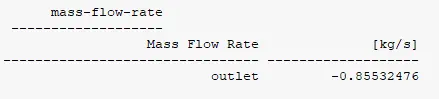
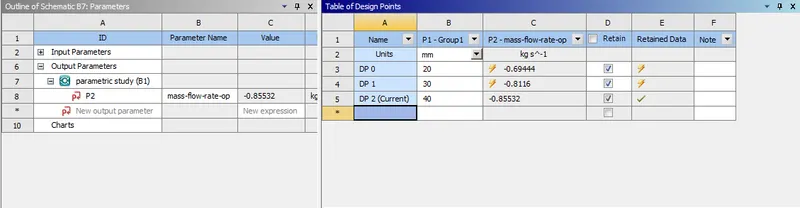
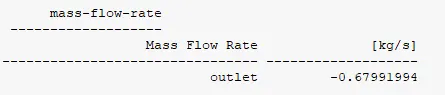
- Obtain the mass flow rates at the outlet for each design point.
- Calculate the flow coefficient and flow factor for each opening and plot the graph
- Discuss the results of the mass flow rate and flow coefficient
Introduction:
it is also known as a sluice valve. it is a valve that opens by lifting the gate (barrier) out of the path of the fluid. Common gate valves are actuated by a threaded stem that connects the handwheel (actuator) to the gate. they are characterised as having either a rising or non-rising stem, depending on which end of the stem is threaded. rising stems are fixed to the gate and rise and lower together as the valve is operated, providing a visual indication of valve position. The actuator is attached to a nut that is rotated around the threaded stem to move it. Non-rising stem valves are fixed to, and rotate with, the actuator, and are threaded into the gate. Non-rising stems are used where vertical space is limited.
Theory:
Flow coefficient:
when fluid flows through a valve or some other restricted device, it loses some energy. flow coefficient is a designing factor that relates the head drop (`Deltah`) or pressure drop (`DeltaP`) across the valve with flow rate (Q).
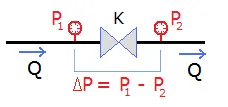
`Q=Ksqrt((DeltaP)/(SG)`
where,
Q= flow rate
`DeltaP`= Pressure drop=`P_1-P_2`
SG=Specific gravity(1 for water)
K= flow coefficient=`K_v` in the metric unit or `C_v` in the imperial unit
Each valve has its own flow coefficient. At the same flow rate, a higher flow coefficient means a low-pressure drop across the valve.
- `K_v` in the metric unit:
It is defined as the flow rate in cubic meters per hour of water at `16^oC` temperature and 1 bar pressure drop across the valve.
- `C_v` in the imperial unit:
It is defined as the flow rate in US gallon per minute (GPM) of water at `60^oF` temperature and 1 psi pressure drop across the valve.
Application:
Gate valves are used to shut off the flow of liquids rather than for flow regulation. When fully open, the typical gate valve has no obstruction in the flow path, resulting in very low flow resistance.
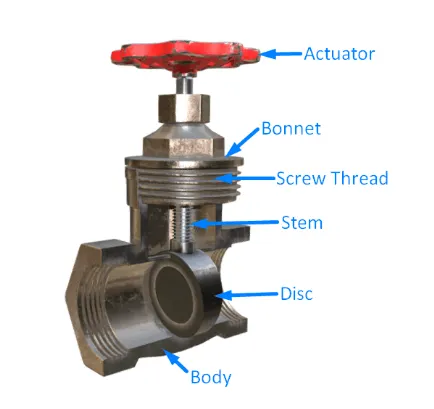
Figure: Gate Valve Components
Simulation steps:
1. Geometry:
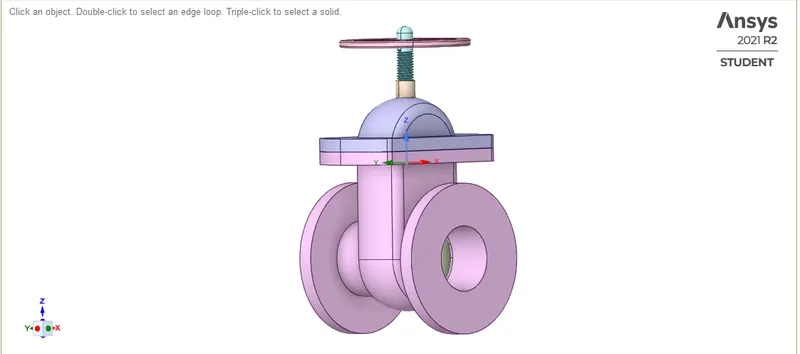
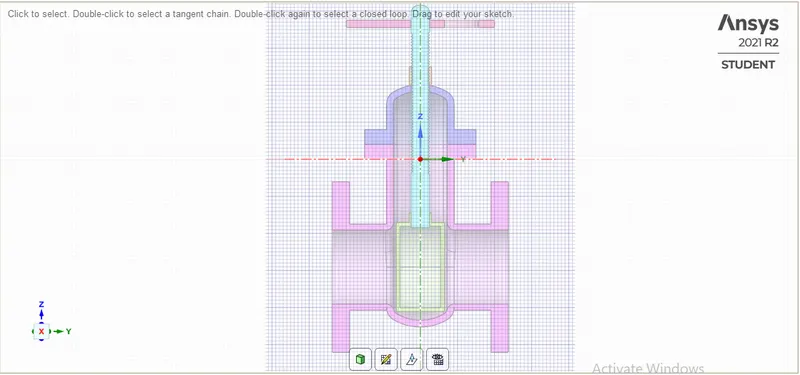
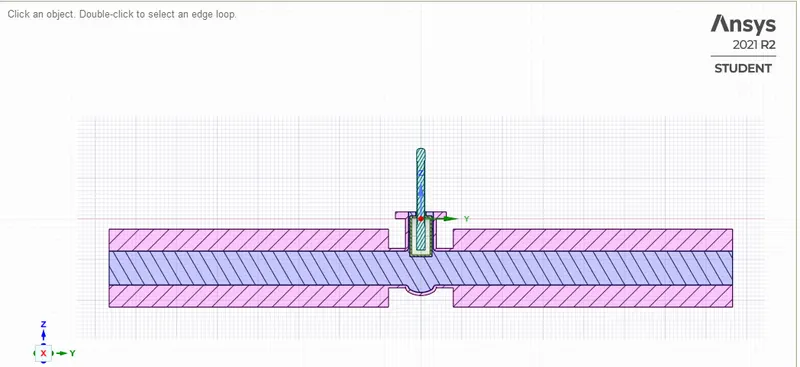
Figure: Cut section view
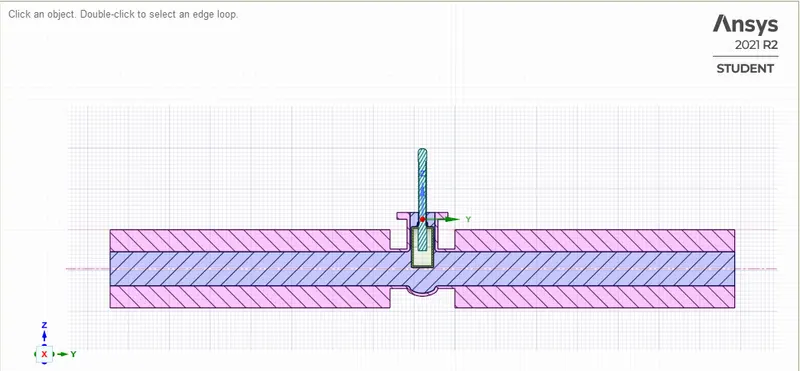
we increase the lift of the gate disc for every design point of the parametric study. we use the parameter option to parametrize the lift of the gate disc. we give the lift by using the "move" command. then use the "pull" command to create the pipe geometry.
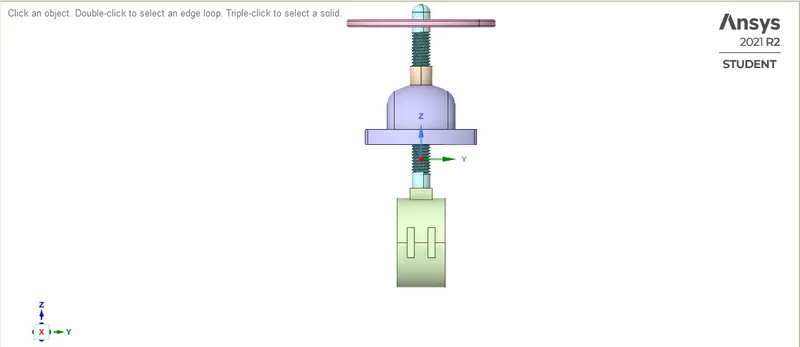
Figure: Gate disc lifted by 10 mm
Now we extract the fluid volume. following the steps:
go to prepare > volume extract > select edge
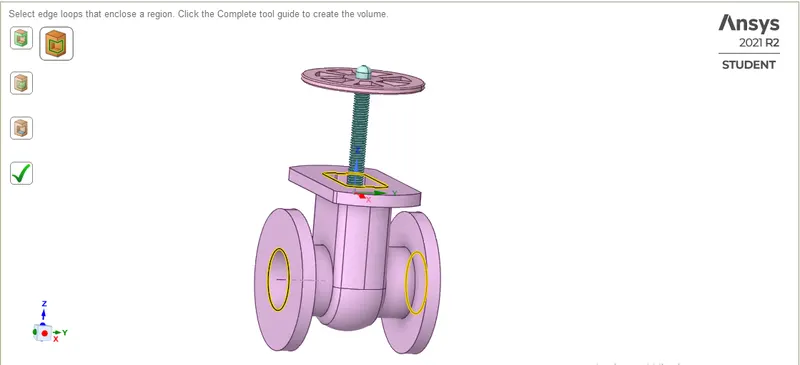
Figure: selected edges to create fluid volume
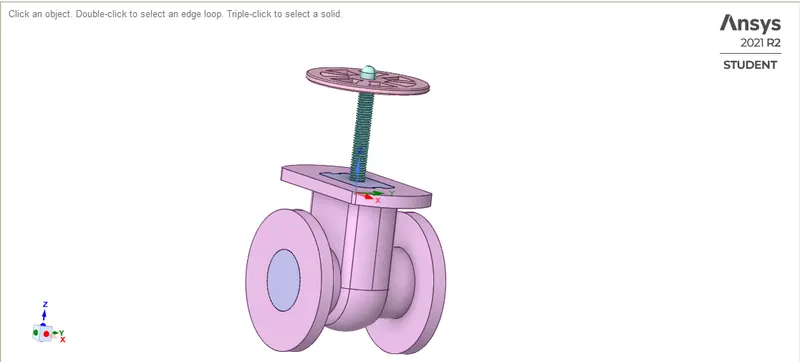
Figure: Extracted fluid volume
Now we extend the fluid flow region for the inlet and outlet. use the "pull" command to extend that. the length of the extended pipe is 800 mm.
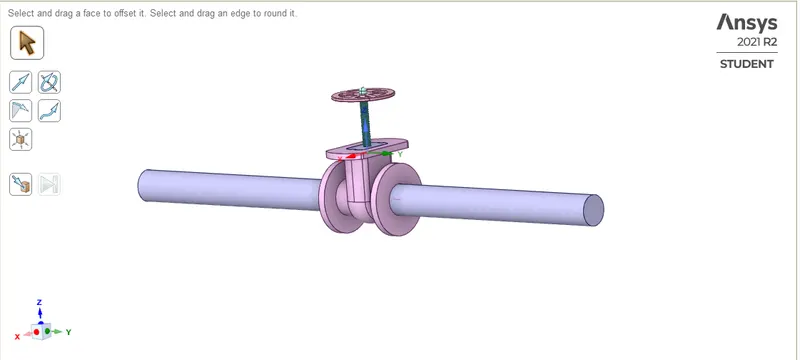
Figure: Extended inlet and outlet pipe
Now we do 'suppress for physics' and hide all components except volume.
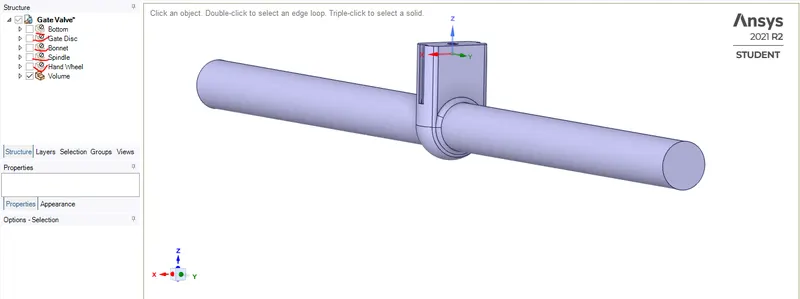
Figure: Complete fluid volume
Step 2: Mesh
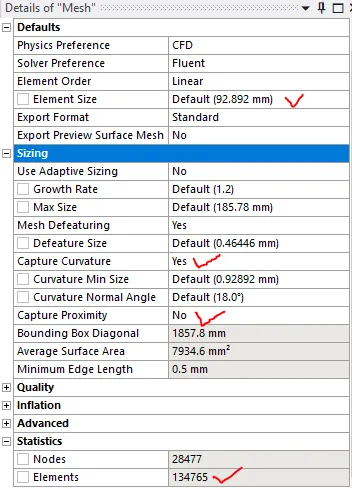
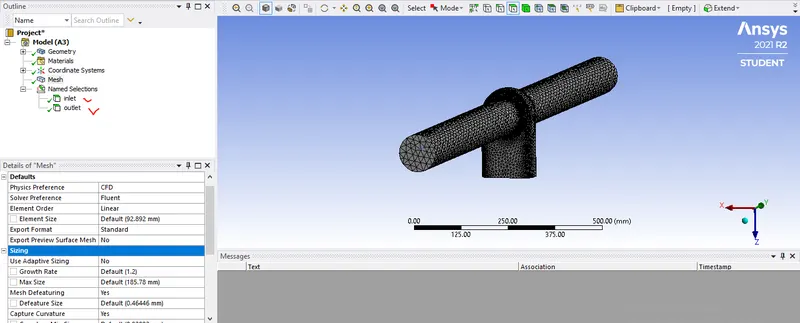
Figure: Mesh details
Step 3: Setup
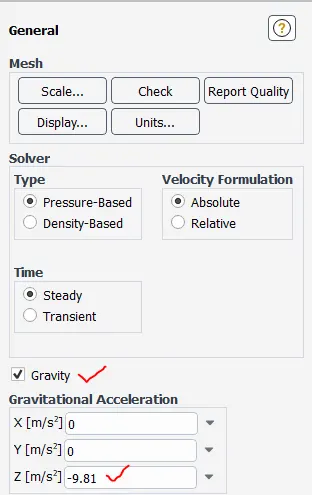
now we define the fluid material that is flowing inside the fluid volume.
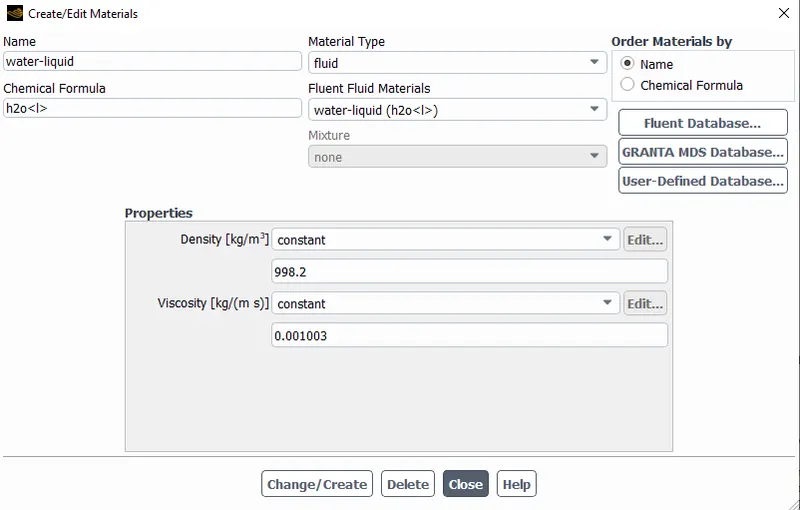
Figure: Material selection
Boundary conditions:
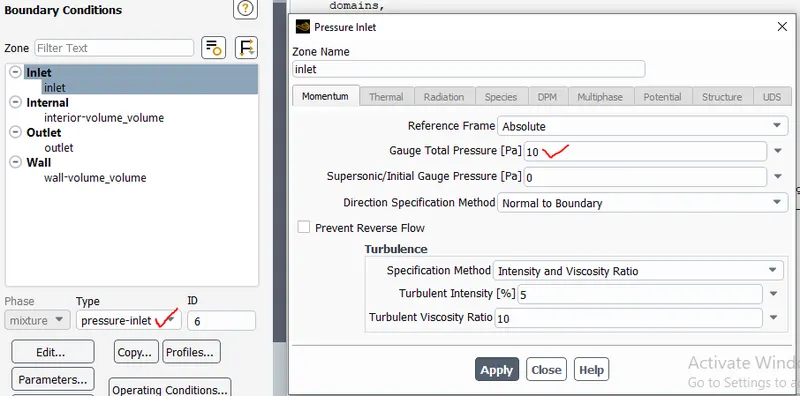
Figure: inlet boundary condition
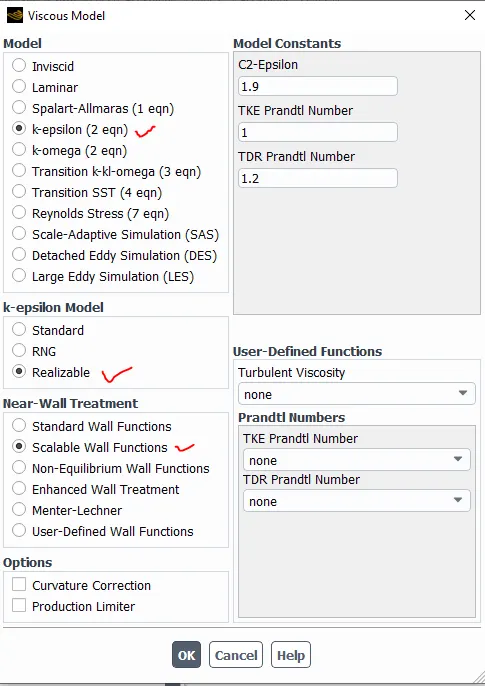
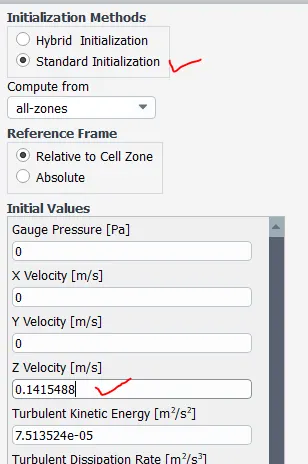
now define the output
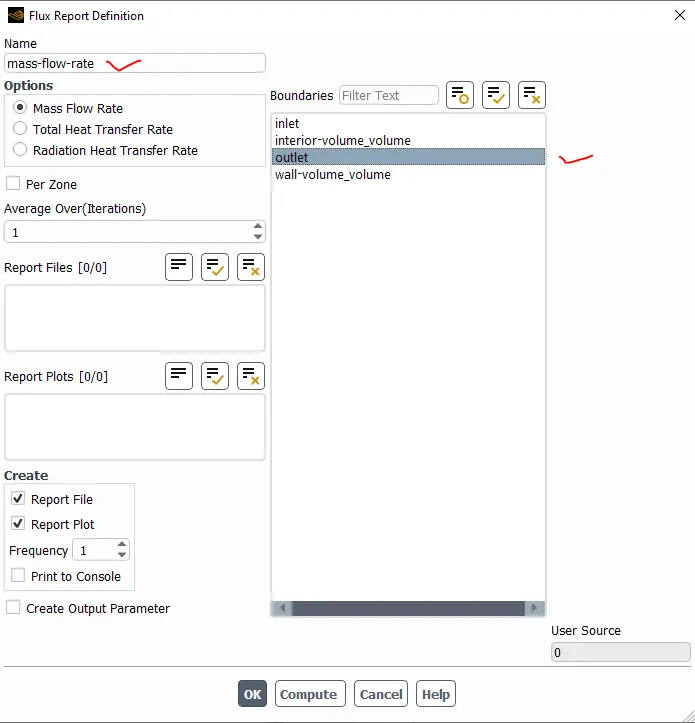
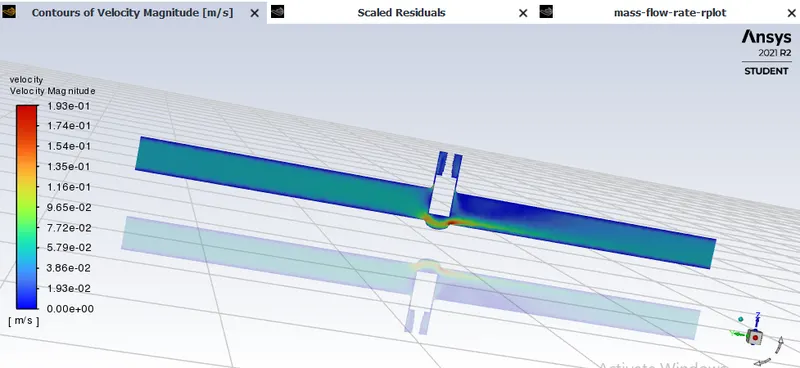
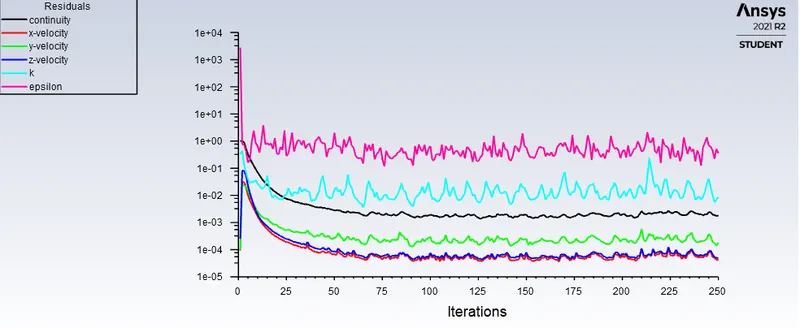
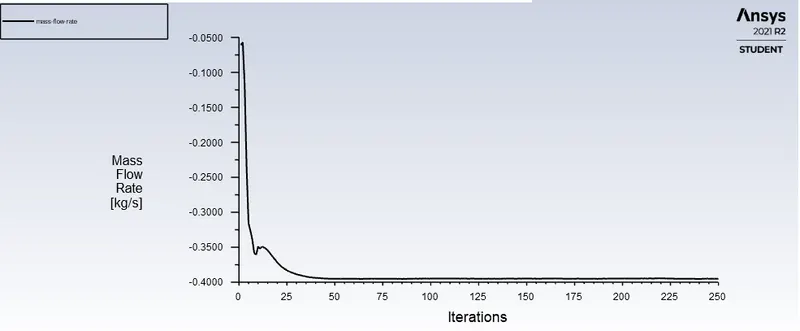
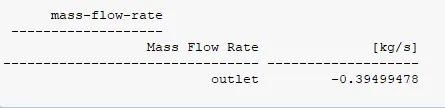
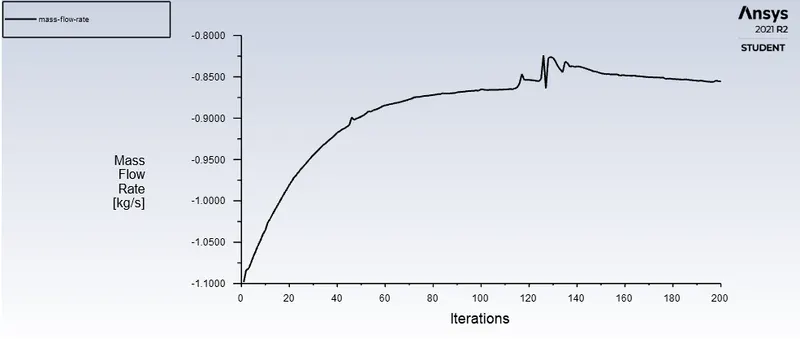
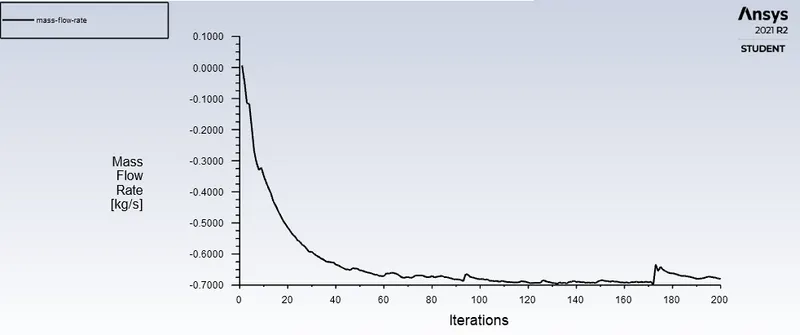
Negative value of mass flow rate indicates that fluid is coming out of pipe.
Results:
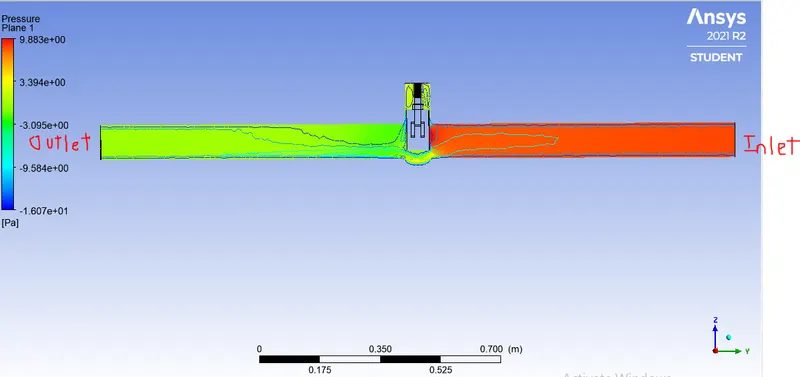
Figure: Pressure contour
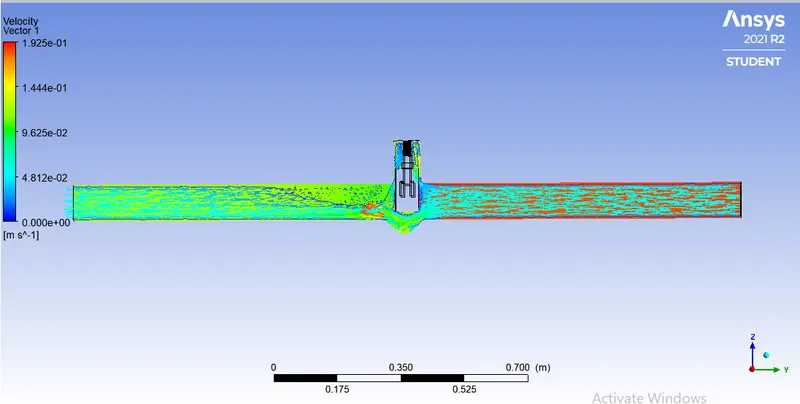
Figure: Velocity Vector contour
Parametric study:
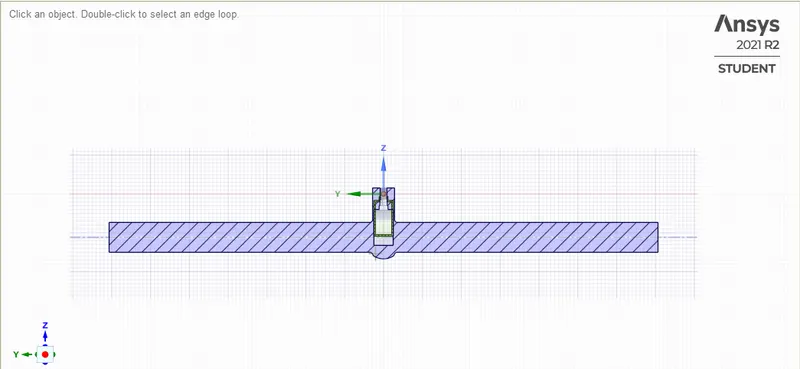
Figure: Section view of gate valve
In the above figure, the fluid volume has not been adopted to the lift of the gate valve. In order to adopt fluid volume, click on "update volume body in context" under the volume option in the structure tree.
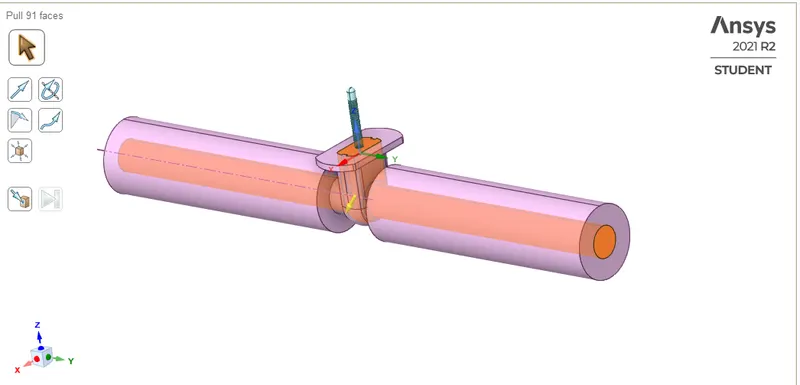
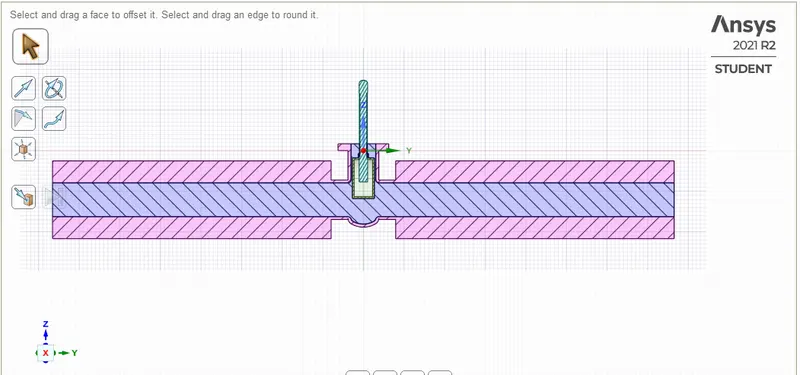
Figure: Section view of gate valve
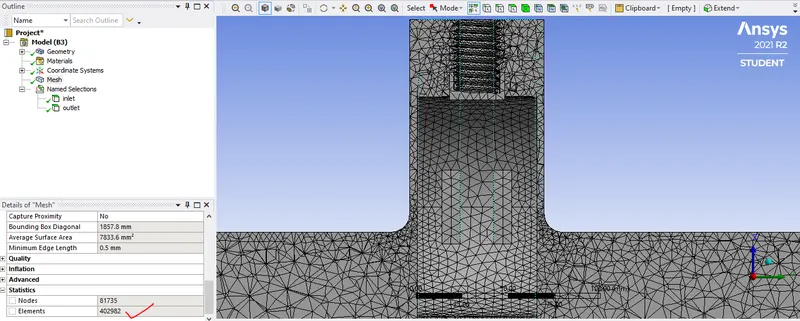
Figure: Refined Mesh
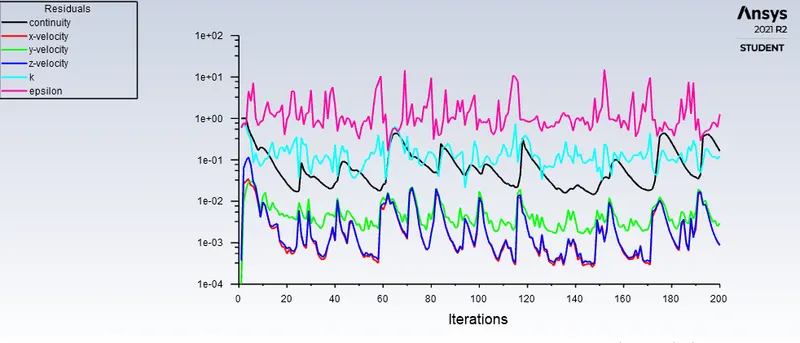
Design point 1 (30 mm lift):
Design point 2 (40 mm):