Week 1- Mixing Tee
Aim:
set up steady-state simulations to compare the mixing effectiveness when hot inlet temperature is 360C & Cold inlet is at 190C.
Introduction:
Use the `k-epsi` and `k-omega` SST model for the first case and based on your judgment use the more suitable model for further cases.
k-epsilon model: k-epsilon is best suited for flow away from the wall for example free surface flow region
k-omega model: k-omega is best suited for near the wall-flow region where the adverse pressure gradient is developed.
SST(Shear stress transport) k-omega model: it is a 2 equation eddy viscosity model. it is a hybrid model combining the Wilcox k-omega and k-epsilon.
Theory:
Given: hot inlet temperature = `36^oC`
Cold inlet temperature = `19^oC`
- Case 1: Short mixing tee
- hot inlet velocity=3m/s.
- Case 1.1: Momentum ratio= 2. means that cold inlet velocity=6 m/s
- Case 1.2: Momentum ratio= 4 means that cold inlet velocity=12 m/s
- Case 2: Long mixing tee
- hot inlet velocity of 3m/s.
- Case 2.1: Momentum ratio = 2. means that cold inlet velocity=6 m/s
- Case 2.2: Momentum ratio=4 means that cold inlet velocity=12 m/s
Momentum ratio = velocity at cold inlet / velocity at hot inlet
`T_(mixture)=(m_(hot).T_(hot)+m_(cold).T_(cold))/(m_(hot)+m_(cold))`
`h_(mixture)=(m_(hot).h_(hot)+m_(cold)h_(cold))/(m_(hot)+m_(cold))`
Find:
In a tabular form compare the following things for the above two cases.
1. Cell count
2. Average outlet temperature
3. Number of iterations for convergence
plot the following results
1. Velocity and temperature contour plots on the cut planes along and across the pipe.
2. Velocity and temperature line plots along and across the length of the pipe.
3. Perform Mesh independent study for any one case.
4. Discuss the effect of length and momentum ratio on results
`k-epsilon` model predicts the flow virtually far from the boundaries of pipe and `k-omega` model predict the flow to an adjacent wall.
model selection depends on the specific problem. no turbulence model does not suit for every case.
Case 1: Short mixing tee (k-epsilon Model)
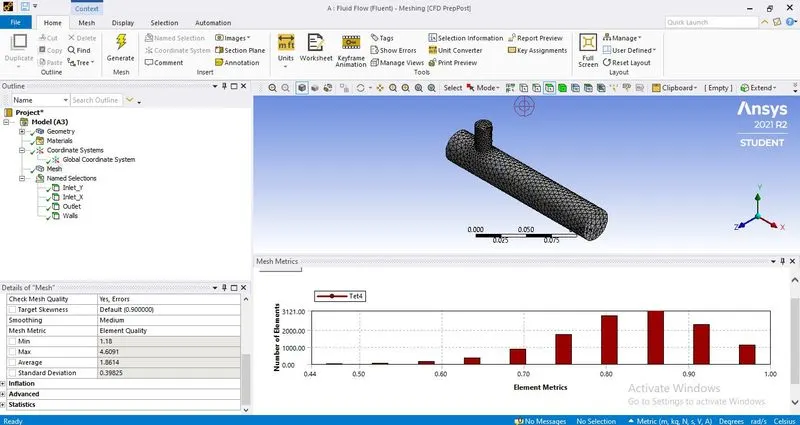
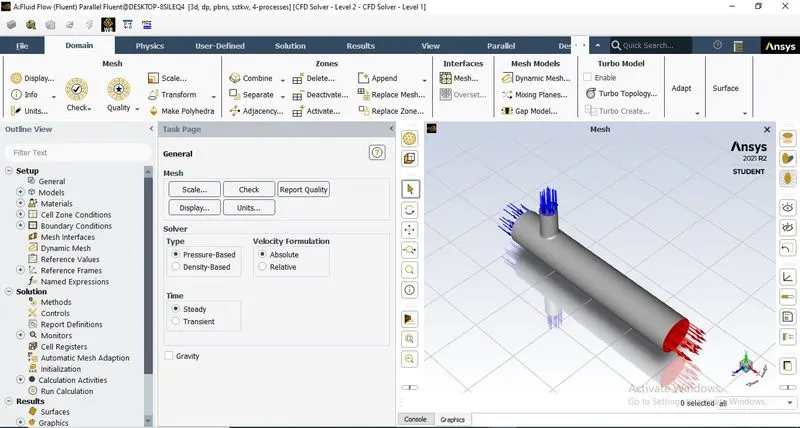
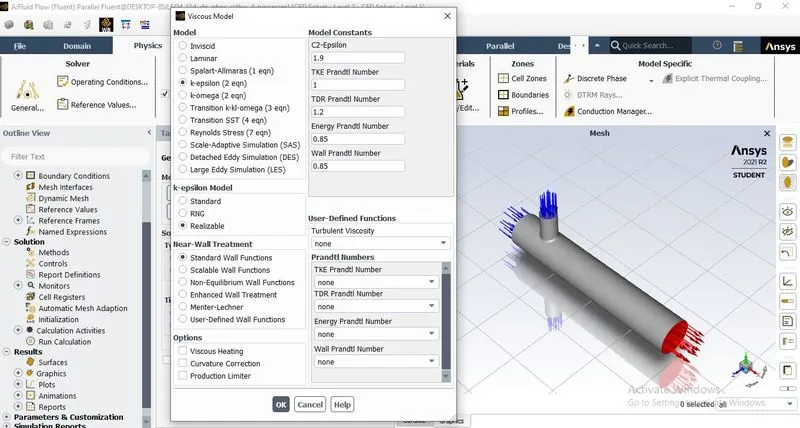
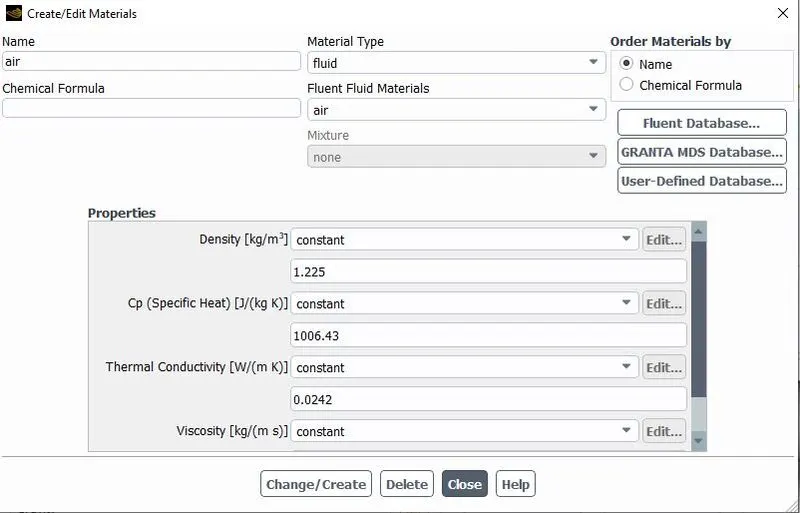
Usual `k-epsilon` models:
- Standard k-epsilon model
- Realizable k-epsilon model
- RNG k-epsilon model
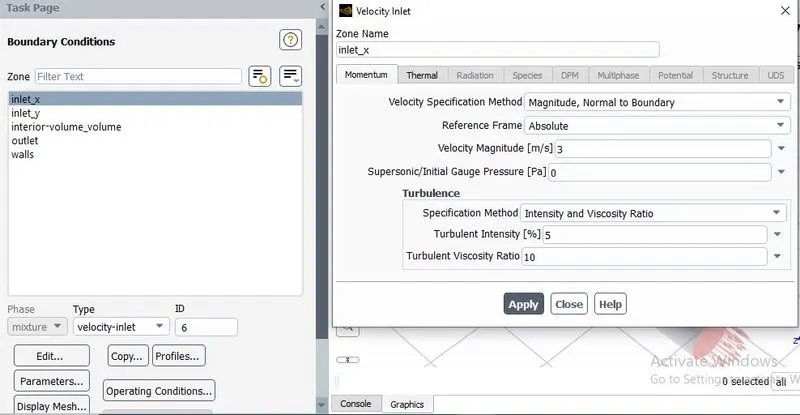
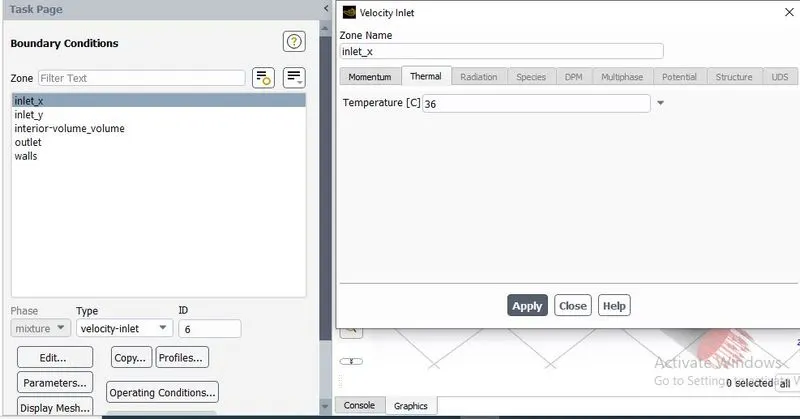
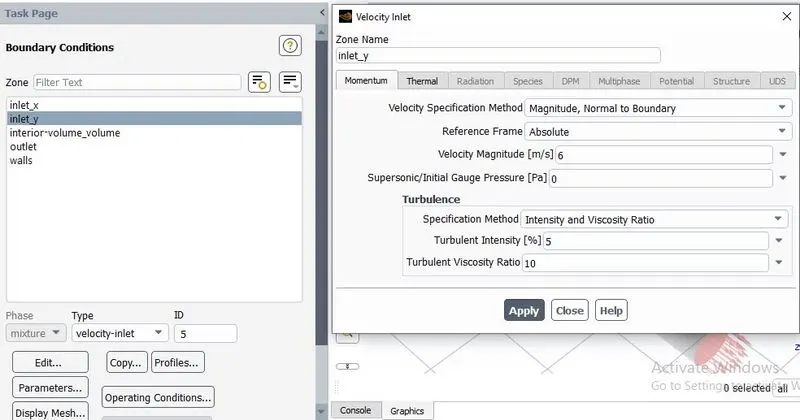
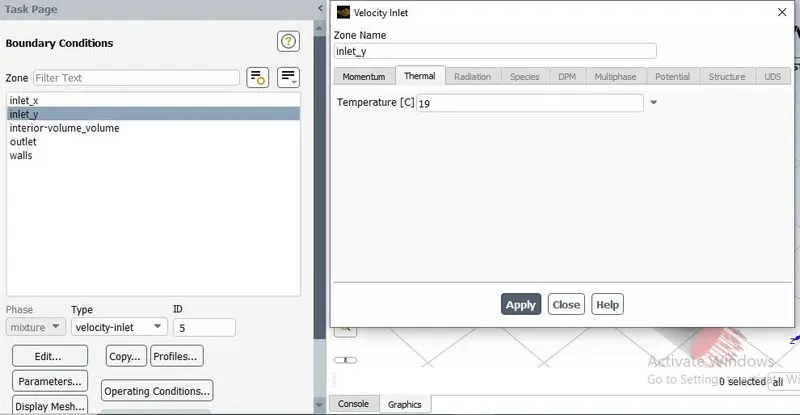
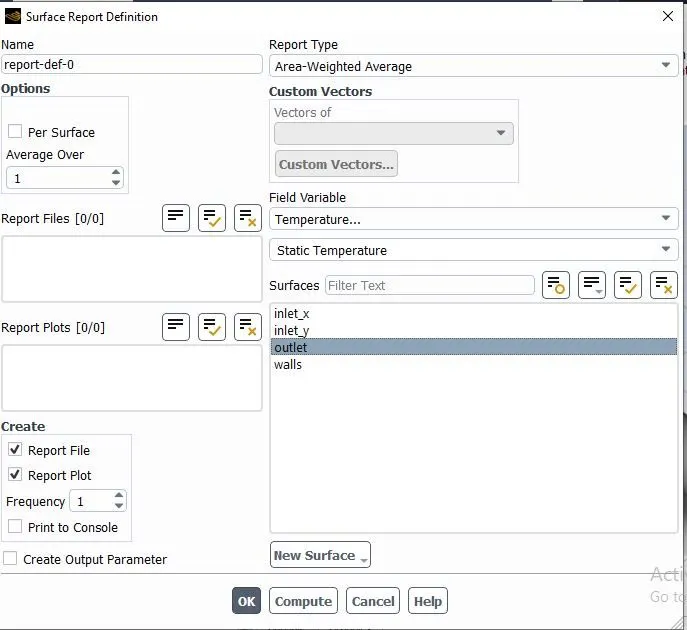

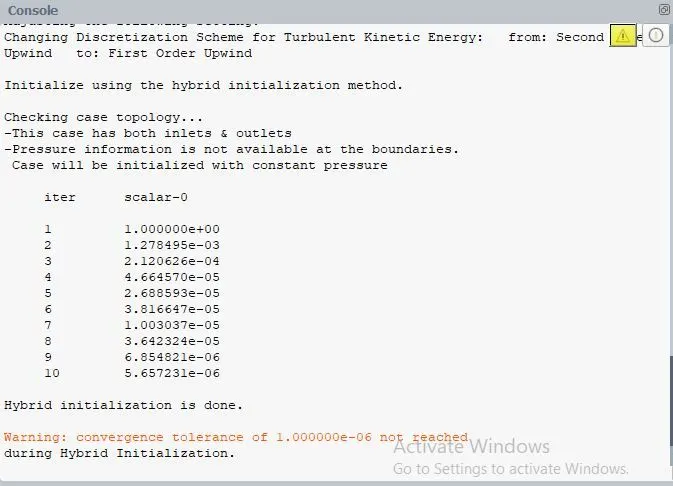
Standard Initialization: it is just filling the filed properties with a constant value.
Hybrid initialization: it solves a number of iterations (10) of a simplified equation system and thereby gets usually a better guess for the flow variable.
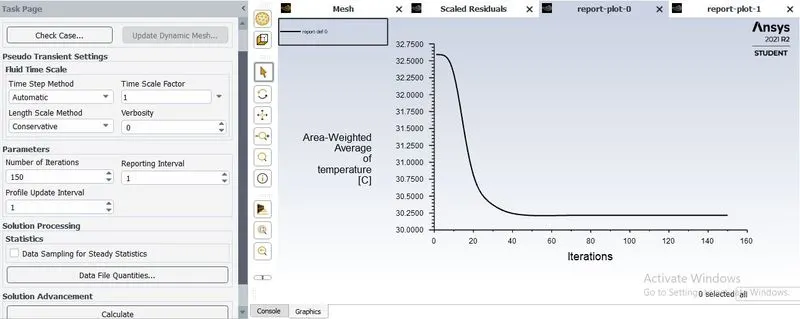
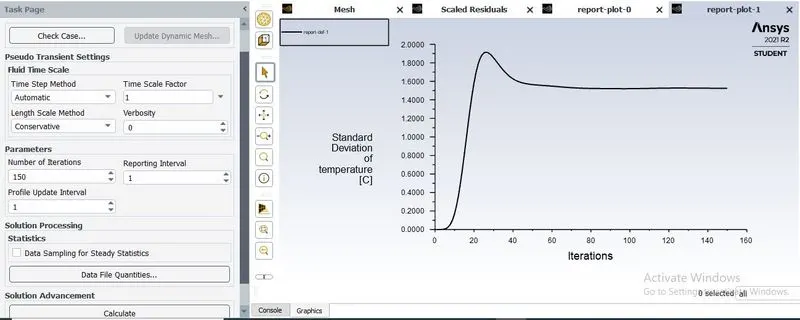
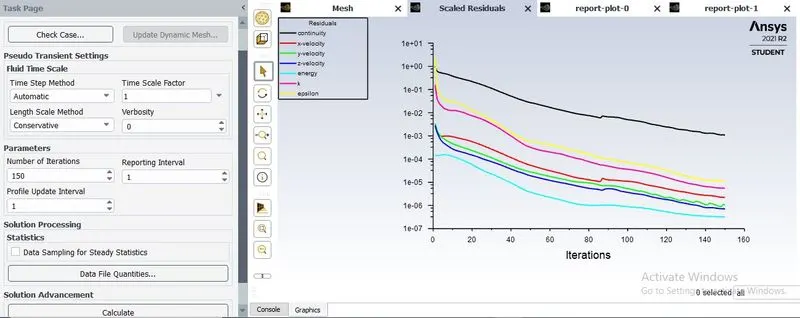
here solution is converged at 153 number of iterations.
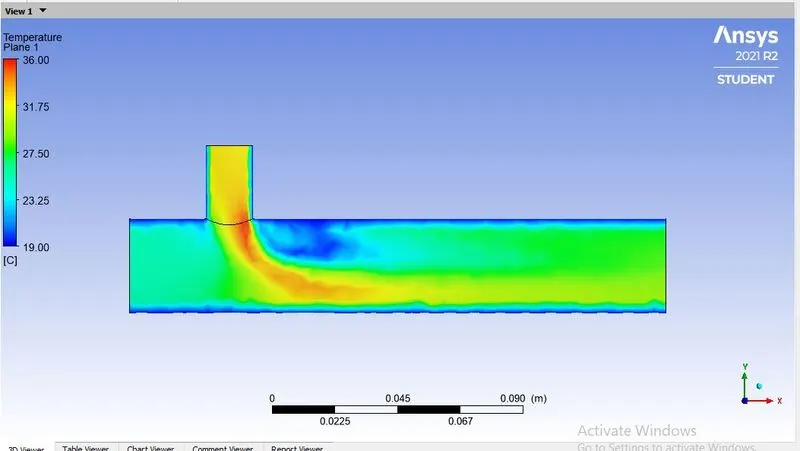
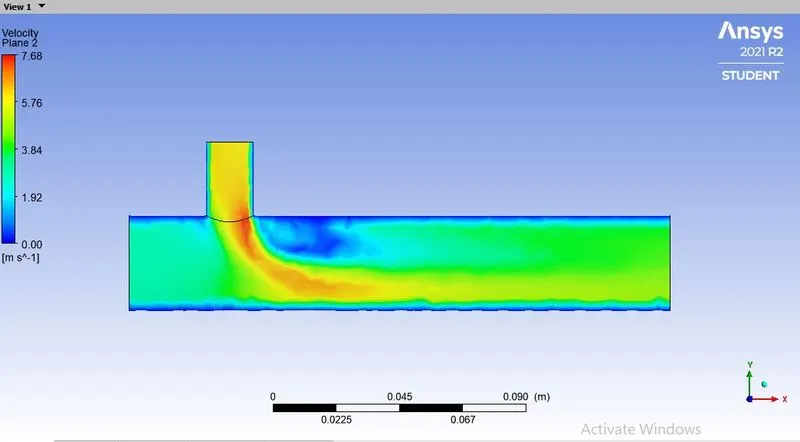
Case1: short mixing tee (k-omega SST Model)
`k-omega` model: it is a two-equation model that means it includes two extra transport equations to represent the turbulent properties of the flow. The first transported variable is turbulent kinetic energy,`k`. the second transported variable is specific dissipation,` omega`.
`omega`determines the scale of turbulence whereas `k` determines the energy in turbulence.
commonly used `k-omega` models:
- Wilcox's k-omega model
- Wilcox's modified k-omega model
- SST k-omega model
SST k-omega model: it is a two-equation eddy viscosity model. The full form of SST is shear stress transport. the use of a k-omega formulation in the inner parts of the boundary layer makes the model directly usable all way down to the wall through the viscous sublayer. hence SST k-omega model can be used as a low-Re turbulence model.
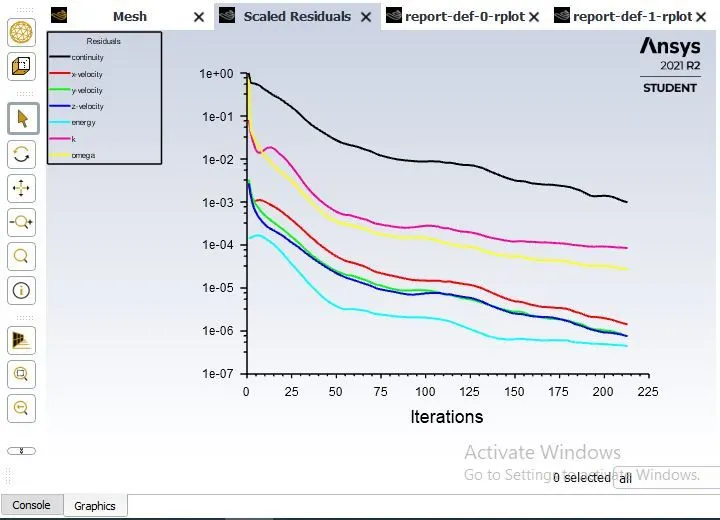
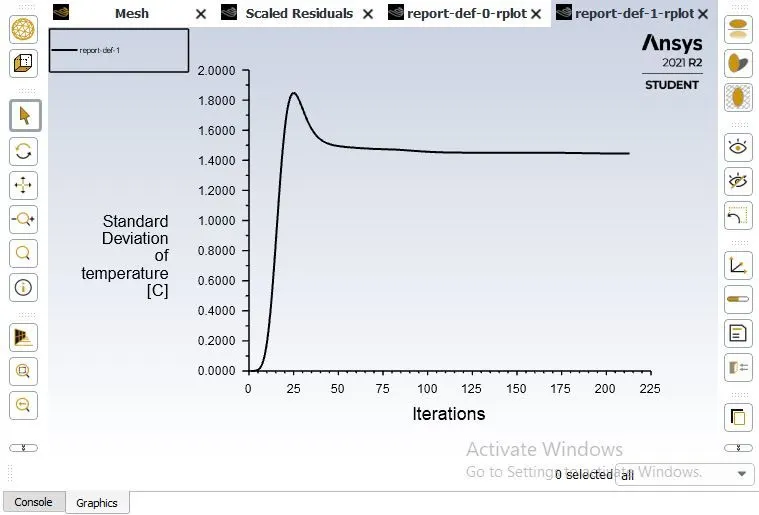
the solution is converged at 213 iterations.
| Short mixing tee | ||
| `k-epsilon` | `k-omega` | |
| Cell count | 12444 | 12444 |
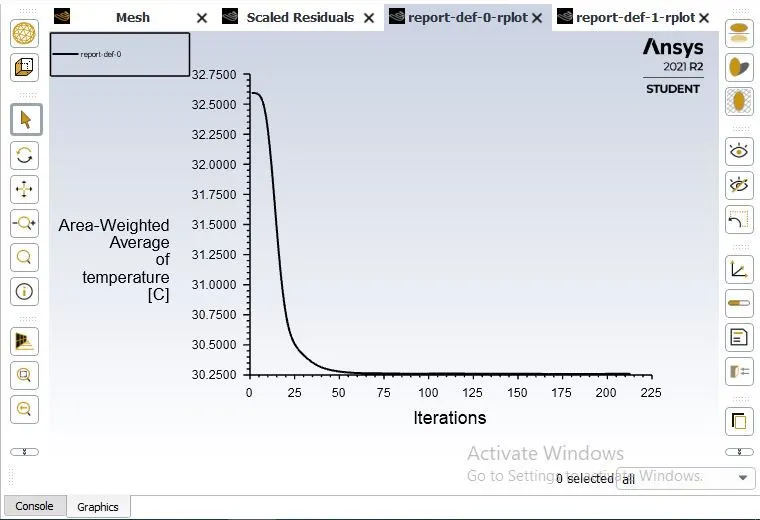
| Average outlet temperature | 30.201 | 30.256417 |
| Number of iterations for convergence | 153 | 213 |