Week 9 Challenge
Complete the energy management strategy model with battery, UC and fuel cell for the positive power and distribute the power demand among these components. Set simulation stop time to 598 sec.
The output of the model should be the power request from UC, fuel cell and battery.
answer:
The energy management strategy model with a battery, UC (Unit Commitment), and fuel cell for positive power distribution can be implemented using the following steps:
-
Power demand forecasting: Forecast the future power demand by analyzing historical data and predicting the future load profile.
-
Unit Commitment (UC): Based on the power demand forecast, determine which power generation units should be turned on or off to meet the demand. This involves optimizing the unit commitment decision based on cost, reliability, and environmental impact.
-
Energy storage management: Manage the energy storage system, such as a battery, to optimize the power distribution. For example, the battery can be charged during periods of low power demand and discharged during periods of high power demand to reduce the dependence on fossil fuels.
-
Fuel cell management: Manage the fuel cell to meet the power demand. The fuel cell can be used to generate power when the demand is high or the battery is depleted.
-
Real-time monitoring: Monitor the power demand in real-time and adjust the energy management strategy as needed to ensure that the power demand is met.
-
Load balancing: Balance the load among the battery, UC, and fuel cell to optimize their utilization and minimize the cost of energy production.
-
Reporting and analysis: Generate reports and analyze the performance of the energy management strategy to identify opportunities for improvement.
By implementing this energy management strategy model, you can effectively distribute the power demand among the battery, UC, and fuel cell to maximize the use of clean and renewable energy sources while ensuring that the power demand is met in a cost-effective and reliable manner.
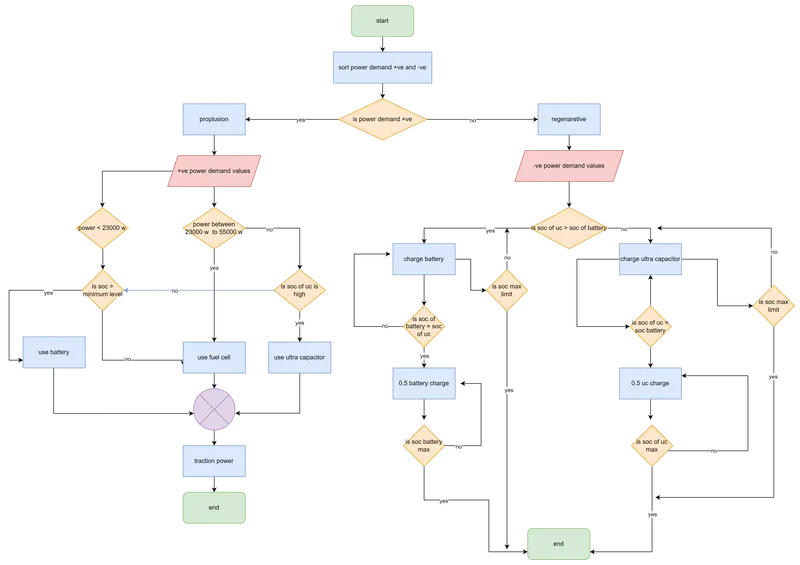
model discussion
to develop a model for an energy management approach that will allocate the positive power demand between fuel cells, ultracapacitors, and batteries.
Vehicles today often have two power sources, such as battery and fuel cell or battery and ultra capacitor. In these cases, energy management technique is essential in determining which power source to use for a given power requirement. It must also keep the power source's state of charge at the appropriate SOC level.
In order to run the car, all power-supplying equipment require input, which this article will explain how to deliver.
Taking into consideration the following factors, energy management techniques are used.
| power demand | condition | source |
| 0 - 9999 | if uc - soc > 35% | ultra capacitor |
| if uc - soc < 35% | fuel cell | |
| 10000 - 22999 | if battery - soc > 35% | battery |
| if battery - soc < 35% | fuel cell | |
| 23000 - 54999 | no condition | fuel cell |
| 55000 and above | if uc - soc > 35% | ultra capacitor |
| if uc - soc < 35% | fuel cell |
figure 1
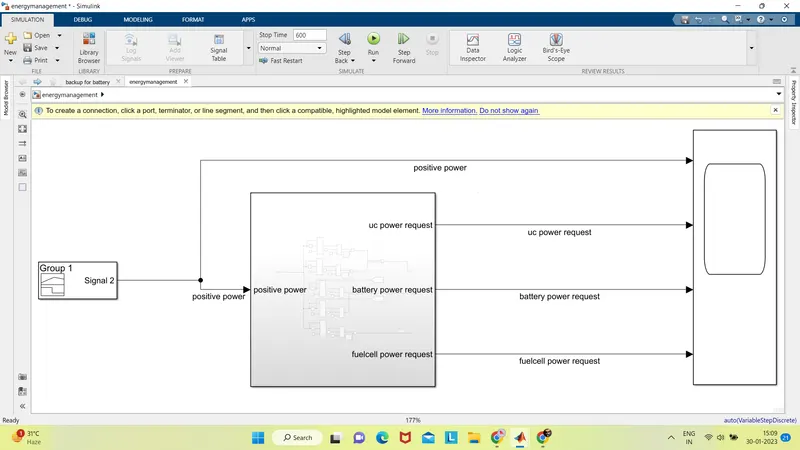
figure 2
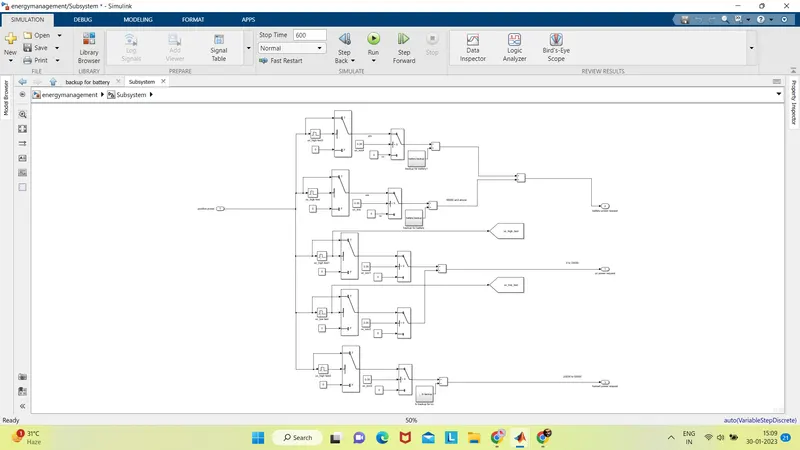
figure 3
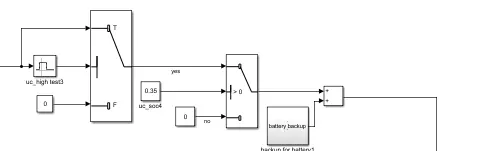
this model represent 10000 to 22999 power demand , here the battery works
figure 3.1
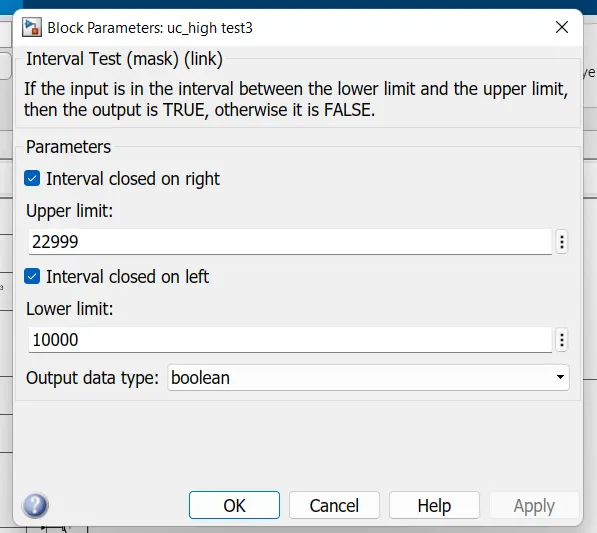
the above figure give the limits for the interval test
figure 4
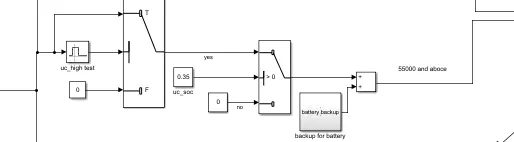
this model represent 22999 to 54999 power demand , here the battery works
figure 4.1
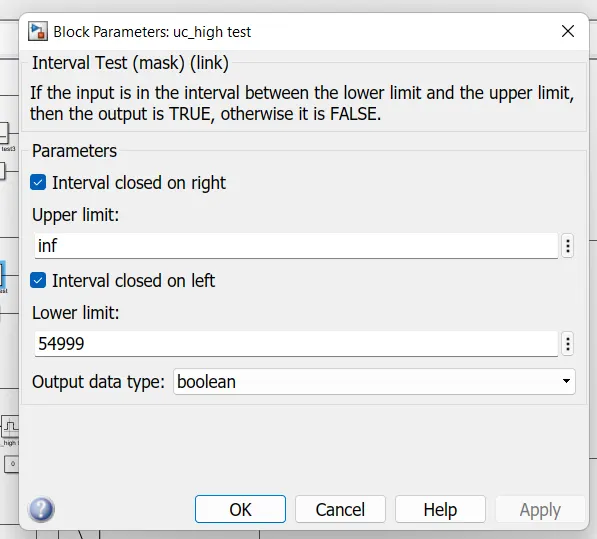
the above figure give the limits for the interval test
figure 5
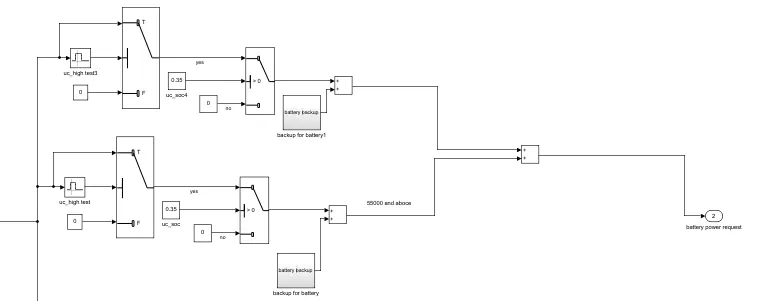
the above figure shows battery power request
figure 6
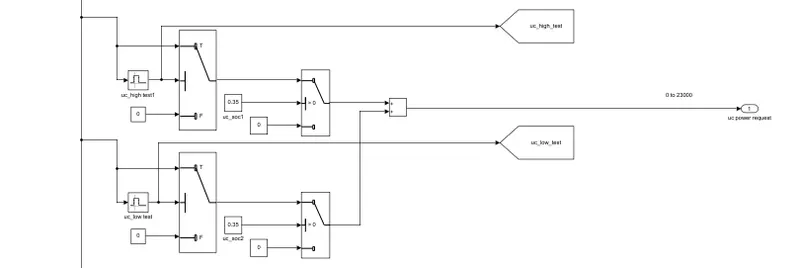
figure 6 shows ultracapacitor power request
figure 7
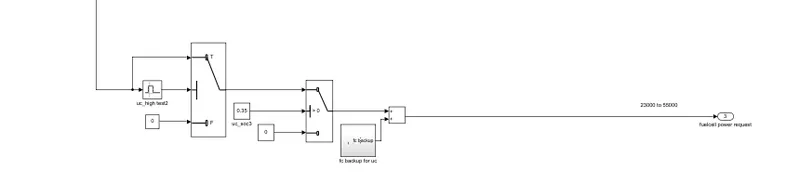
figure 7 shows fuelcell power request
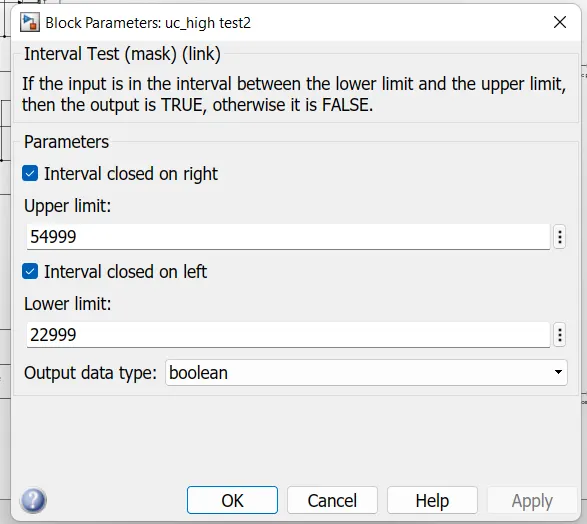
the above figure shows the limits for interval test
working
power demand 0 to 60000
1)
if power demand is in range of 0 to 9999 , ultracapacitor is the source
if the soc of ultracapacitor is below 35% , battery is the source
2)
if power demand is in range of 10000 to 22999, battery is the source
if soc of battery is below 35%, fuelcell is the source
3)
if power demand is in range of 22900 to 54999, fuel cell is source
if soc of ful cell is below 35%, battery is source
4)
if powerdemand is above 54999 , use battery
if soc of battery is below 35%, use fuel cell
results
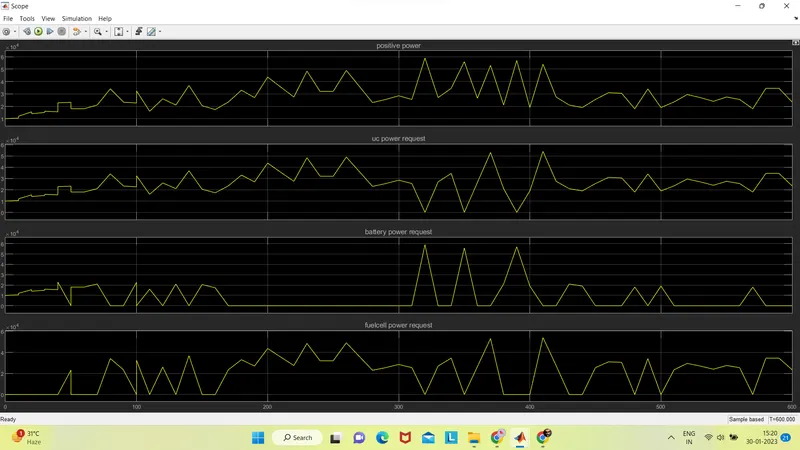
conclusion
the energy management strategy model with battery, UC and fuel cell for the positive power and distribute the power demand among these components. Set simulation stop time to 598 sec and output of the model should be the power request from UC, fuel cell and battery are obtained