Week 9 - Challenge 3 - Bumper
Aim: - Create the Bumper Plastic component through the given Class-A surface. Perform the Draft analysis on the Bumper.
Introduction
Tooling Axis
- The Tooling Axis is to show in what direction the core and cavity move.
- It was also created to give a draft angle for the final solid part.
Draft Analysis
- The draft analysis is done on the basis of the Tooling Axis in order to find whether the final product is done as per the Design rules.
- The Draft angle which is assigned to the Tooling Axis defines the analysis.
- The Nominal Draft angle for the plastic product is 3 degrees.
Class A
- Class A is the aesthetic surface.
- Class A is created on the basis of a concept sketch or by the predefined shape on the basis of the design engineer and customer requirements.
- Class A is given to the Product design engineer in order to get the final solid part.
Class B
- Class B is the surface that is created by the product design engineer in order to get the final product from the class A surface.
- Class B is created based on the thickness of the final solid part.
- In other words, Class B is an Extended version of Class A with some thickness gap between them.
Class C
- Class C is the surface that is designed by the product design Engineer.
- Class C is created between Class A and Class B in order to connect them.
Draft Analysis of Class A Surface:
To perform draft analysis on Class A surface, change the view mode to material mode.
Select the Draft Analysis option from the analysis tools. Coincide the compass on the tooling axis created and click on the lock direction.
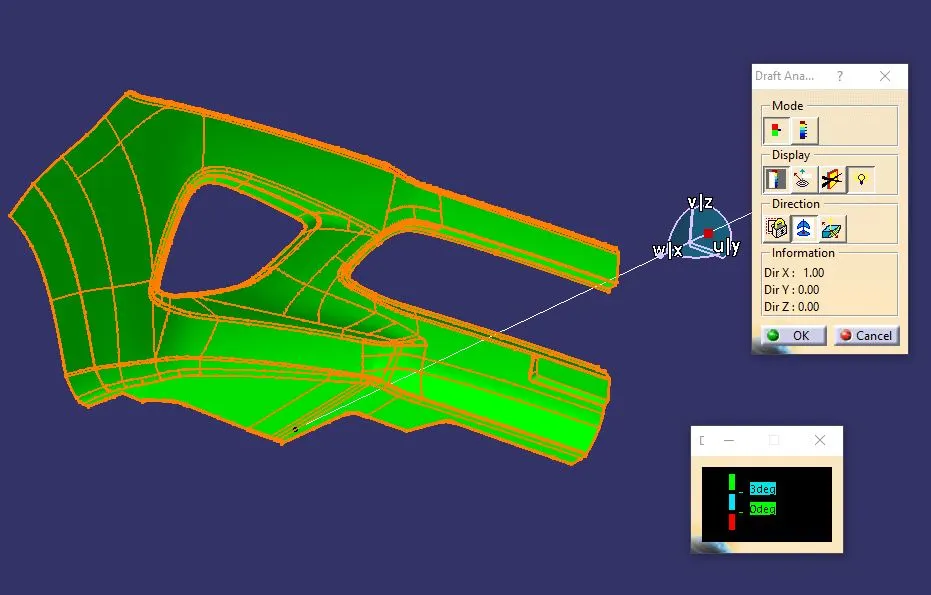
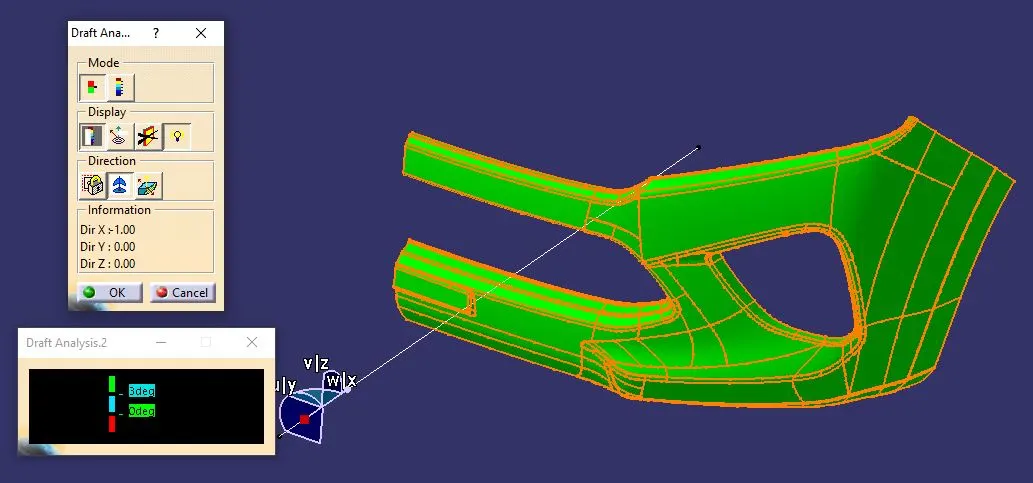
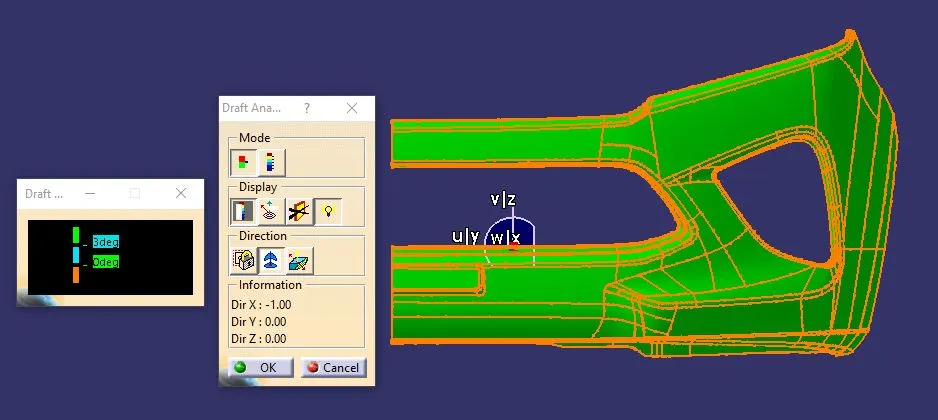
color code for the draft angle i.e. green for above 2.9 degrees, Blue for 0-3 degrees, and red for angle value lesser than 0.
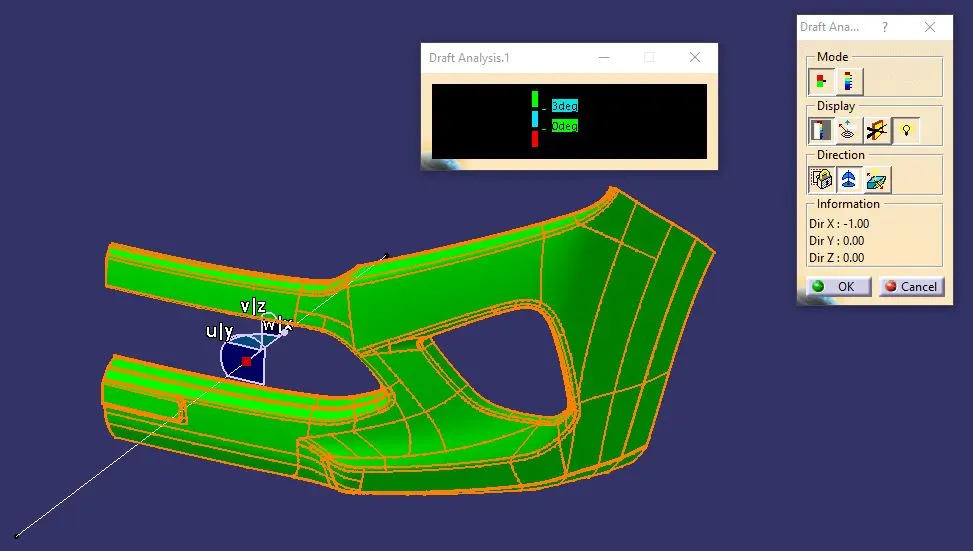
3D Part model in various orientations with Draft Analysis of Bumper
After the creation of the solid model, Draft Analysis is performed on the final model.
Isometric Views
Front View
Side View
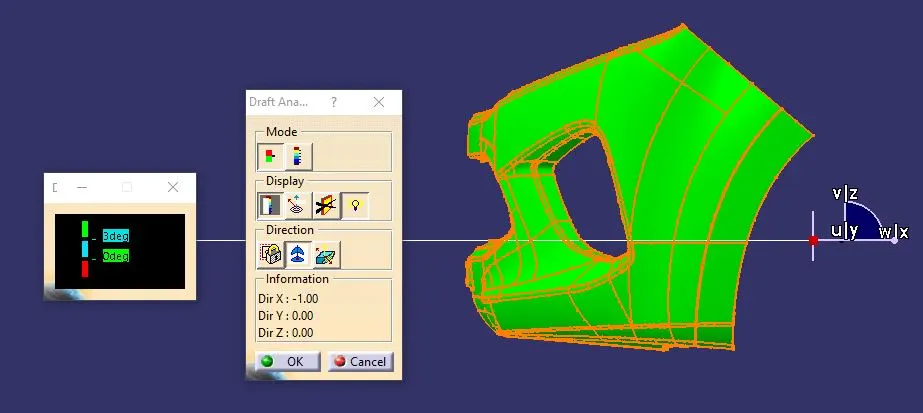
Top View
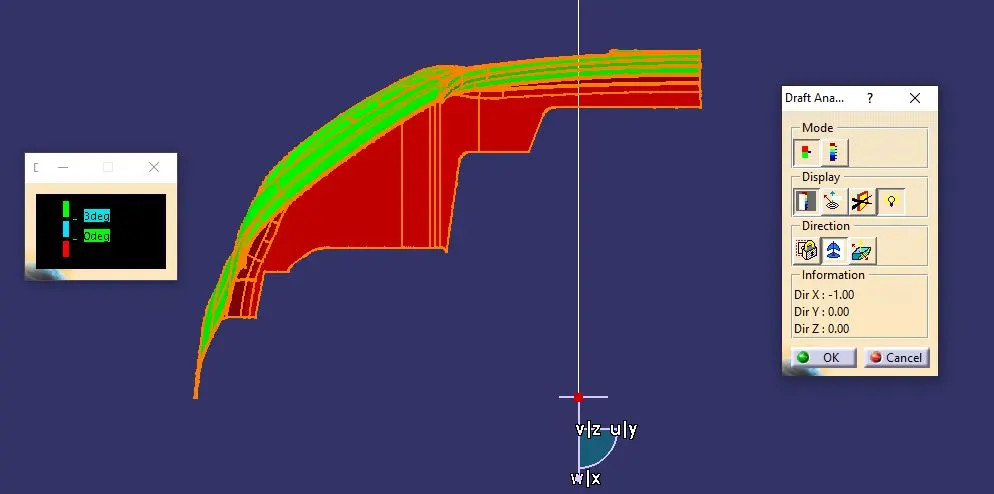
Conclusion:-
After designing parts like this users are able to design Bumper plastic components through the given Class-A surface.