Week 9 - Challenge 1 - Base Bracket Design
Aim: Creating the Base bracket using A surface
Procedure:
1) First checking the Boundary in Surface A
2) Tooling Axis For the A surface
3) Draft Analysis Of A surface
4) Creation Of B surface.
5) Creation of C surface.
6) Creaction of Close Surface
7) Draft analysis of close surface
Concept Required to know before:
1.) What is a Types of surface?
Class A Surface is:
1.Visible surface and aesthetic look
2.Surface with textures
3.Surfaces provided by customer(OEM)
4.Don't have any features like(rib,snap,bosses etc) on class A surface.
5.Class A surface is made from scanned data with different software like allias etc..
Class B surface is:
1.Invisible Surfaces.
2.Surface mostly don't have textures
3.Surface need to be create according to class-A surface.
4.having all features(Rib,boss,snap etc) in B-side surface only.
Class C Surface is
1. Invisible Surface.
2. surface doesn't have texture.
3. The surface that used to combine surface A and B.
2.) What is tooling axis?
Tooling axis: The direction in which the mold or core and cavity opens is the tooling axis.
3.) What is Draft Analysis?
The Draft Analysis allows the user to easily analyze a part for proper draft angle. A Draft Angle describes the amount of taper for molded or cast parts perpendicular to the parting line
Creation of Models:
Basic check of class A surface, it will tell us the no of boundary that are present.
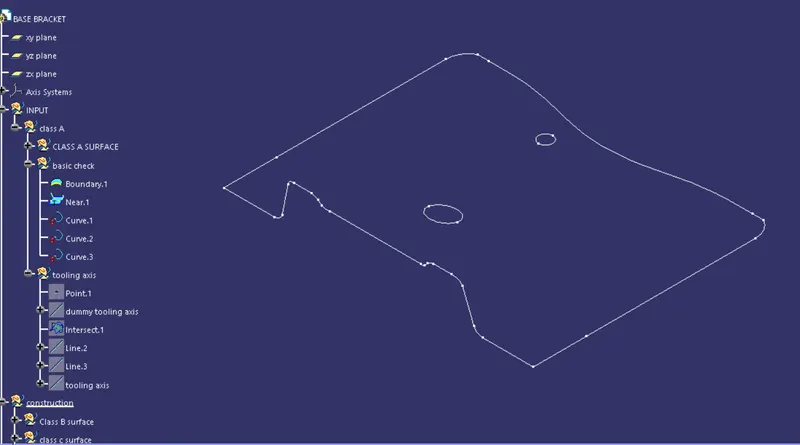
Conclusion from the basic check is that there are two holes which can be used to make the tooling Axis. we will be using the hole on the tillted surface to create the tooling axis.
Creating the tooling axis:
1) first create the point through the center of the Tillted hole. And the line pasing through the center line and it will be the dummy axis
2) Then we will allow extract the intersection of one of the planes with A surface and that will be a construction case.
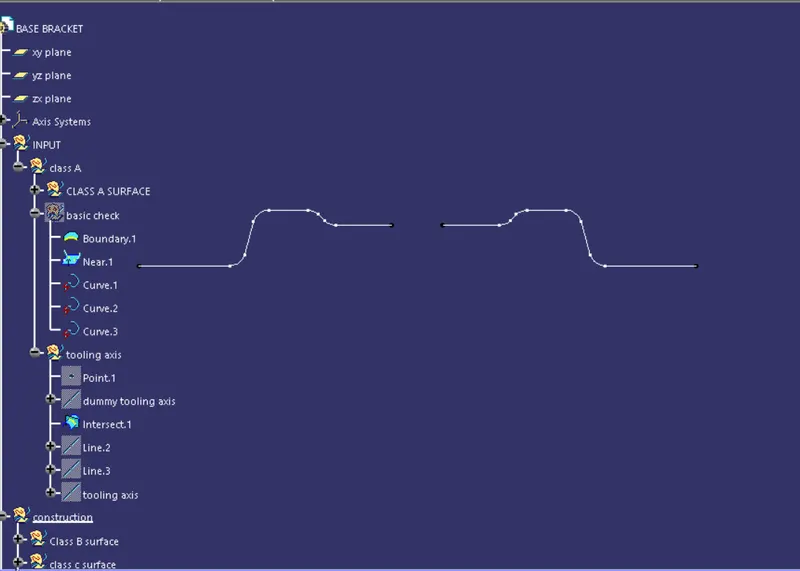
All the which are perpendicular will pass the tooling direction but the inclined lines will have to be verified. we will extend the inclined lines
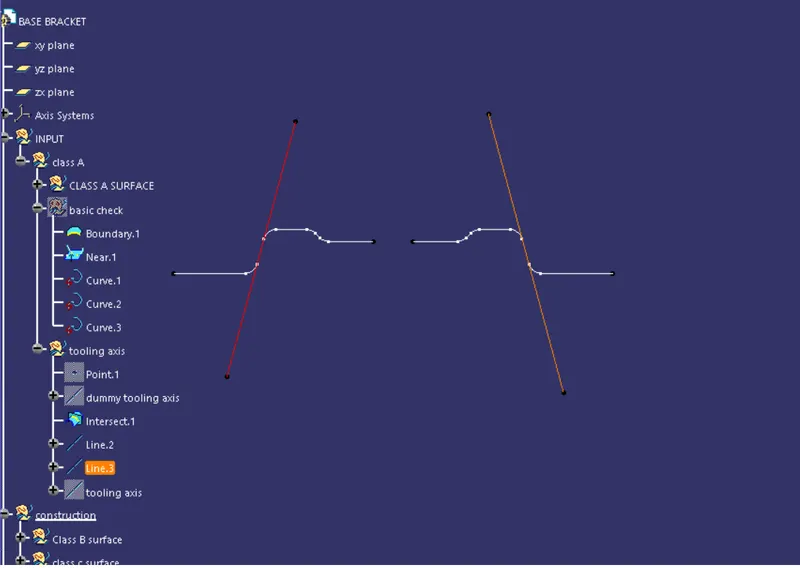
We will draw a bisecting line, which will bisect both the extended lines. That will be our tooling axis.
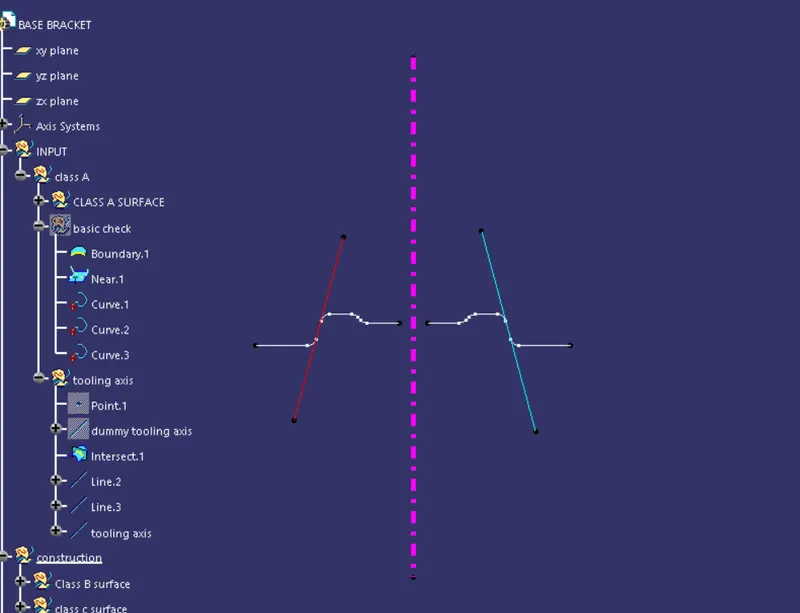
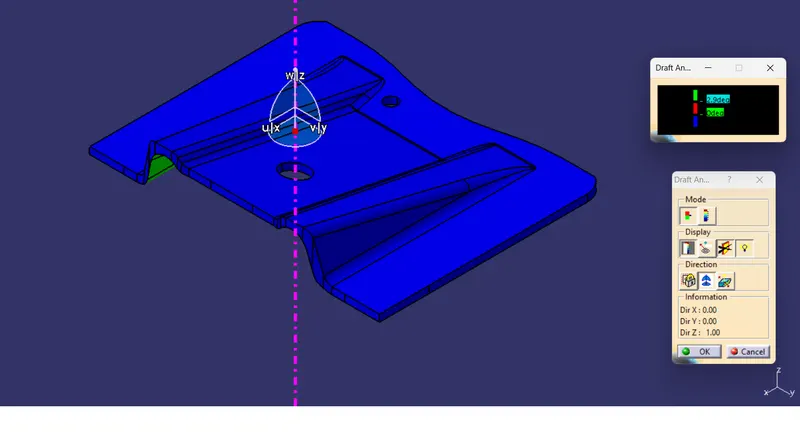
With the help of the Tooling axis we will carry out Draft Analysis of the A Surface:
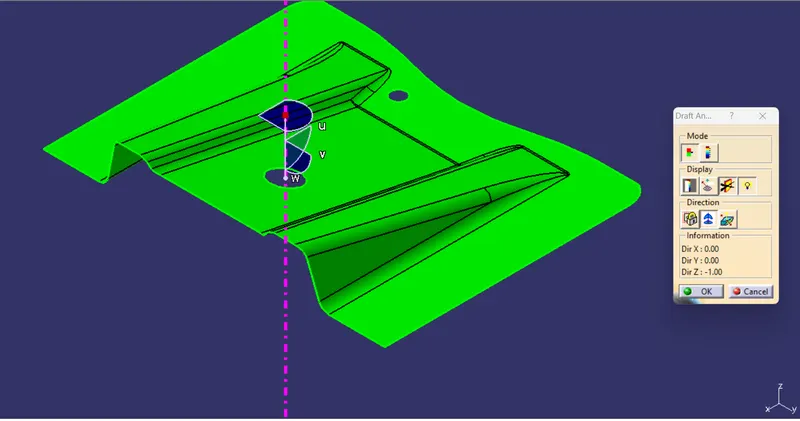
Conclusion: Green Colour indicate all the surfaces are having the angle more than 3 degree.
B Surface Creation:
We will divide the drawing into the 4 parts:
a) Rib 1 b) Rib 2 c) Base plate d) corner plate.
We will follow the same procedure to create the different parts:
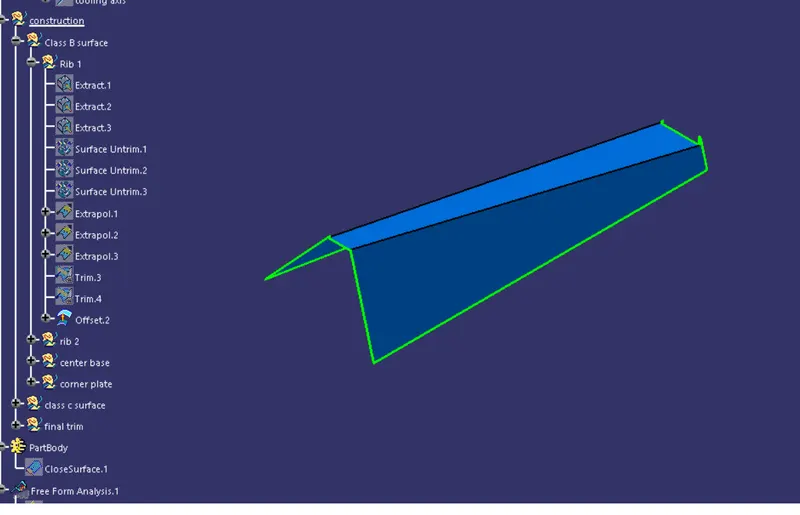
Extract ----> Untrim ----> Extrapolate ----> Trim ----> Offset
we will create the rib 1:
Extract the Elements from the A surface: Extracting the elements so we can create the desired part.
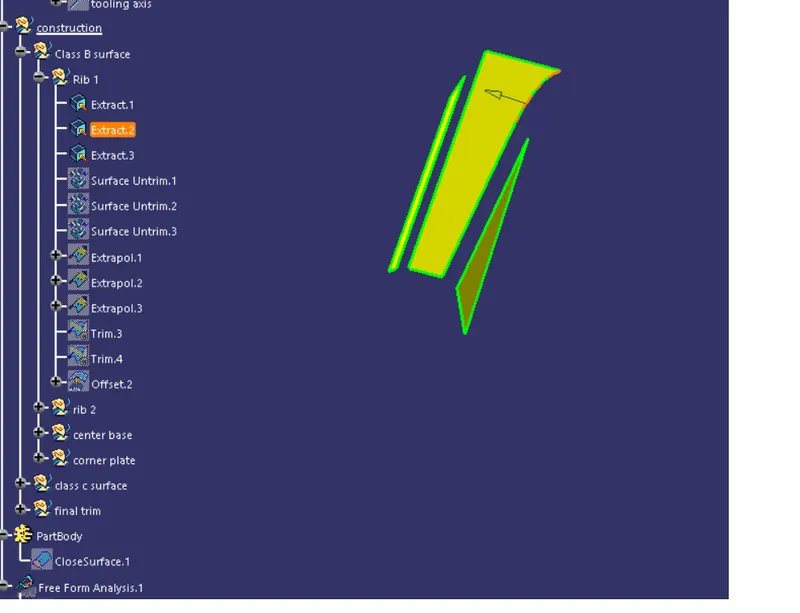
Surface Untrim: all the elements will intersect with each other
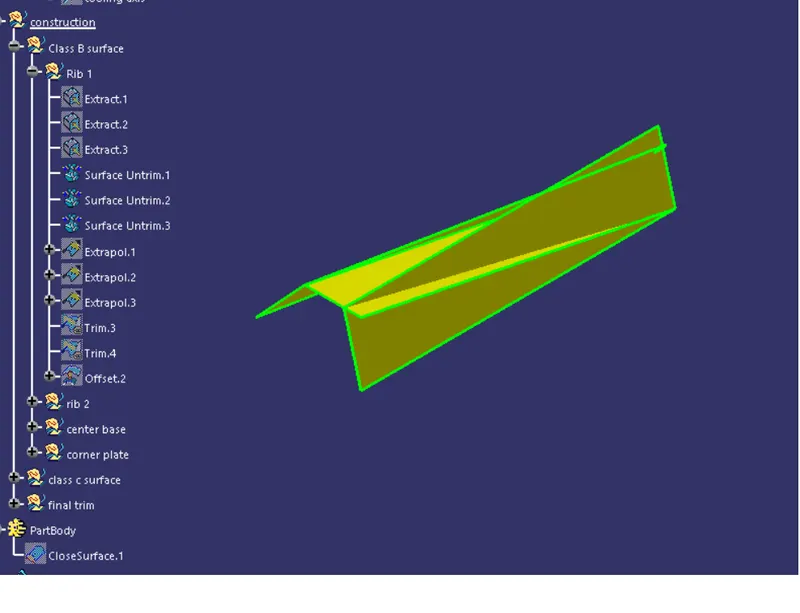
Extrapolate : so that all the elements properly intesect with each other and we can get the desired shape
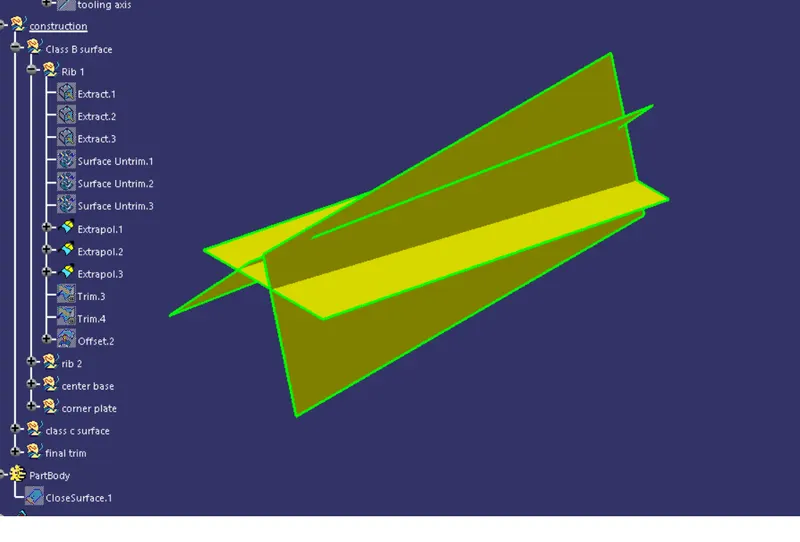
Trim: to remove the unwanted feature
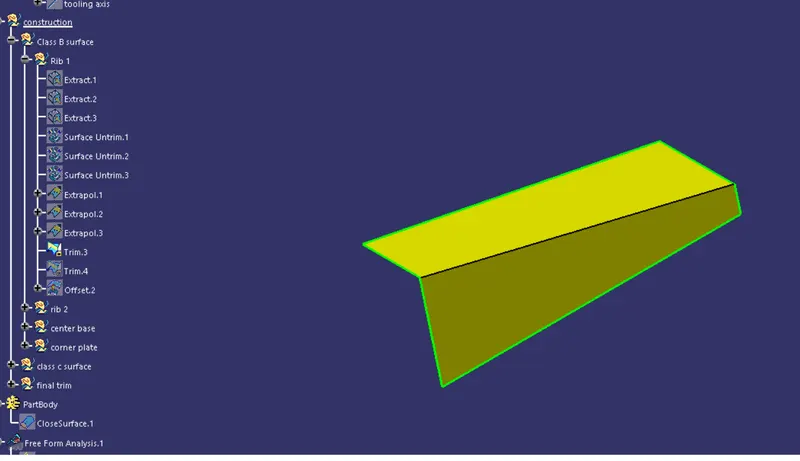
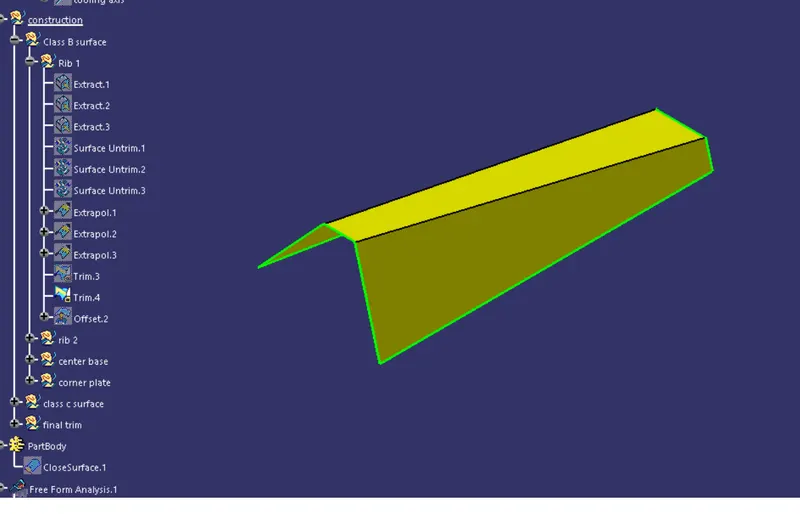
Offset: There will be gap of 2.5 mm from A and B surface:
Final Output of rib 1: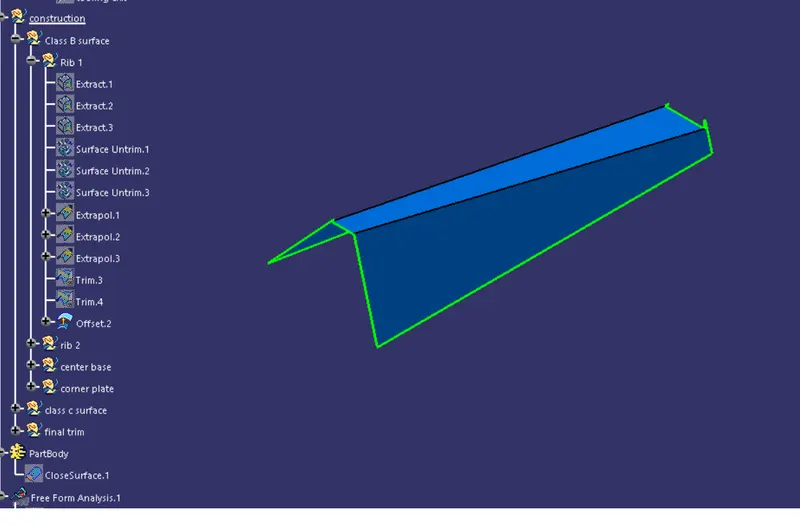
Same procedure we will use to create different Parts:
Rib 2:
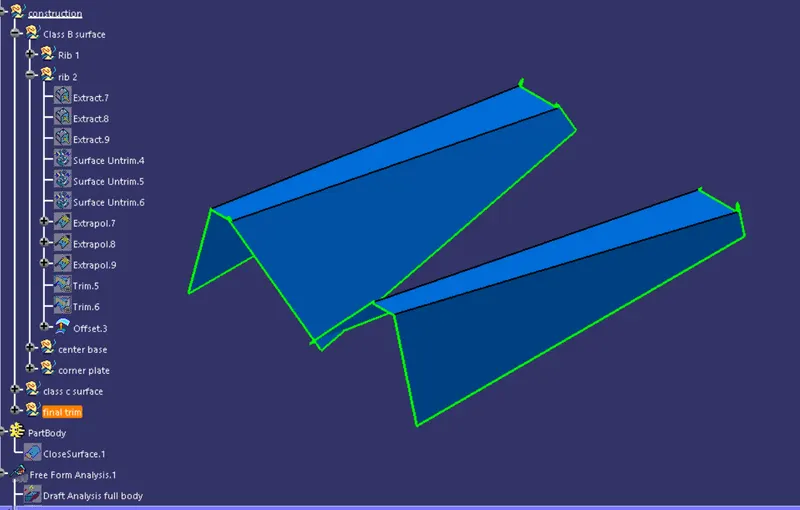
Center plate :
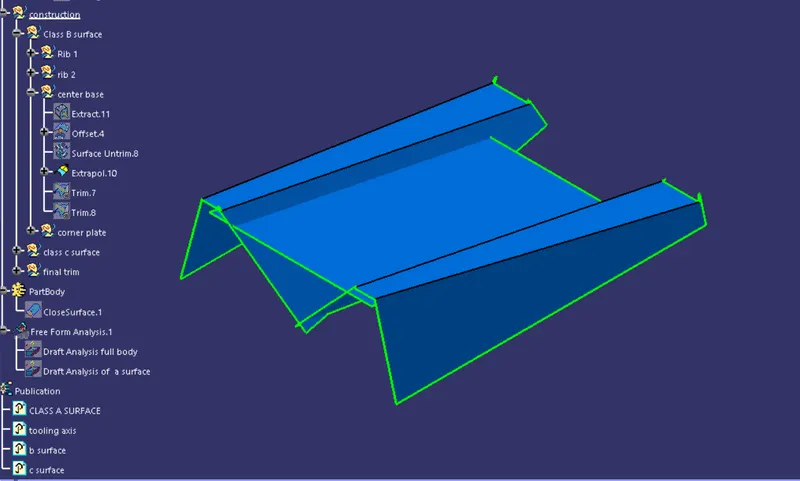
Triming both the ribs with center plate:.
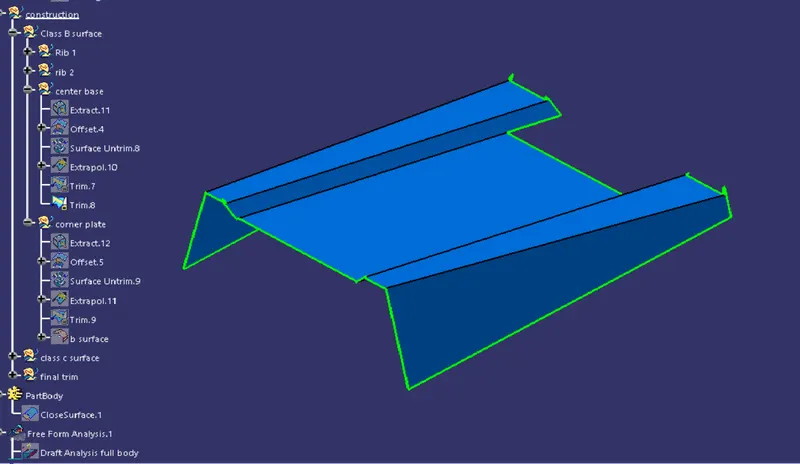
At last we will creat the corner plate and trim them with combination of both ribs and center plate. that will be B surface
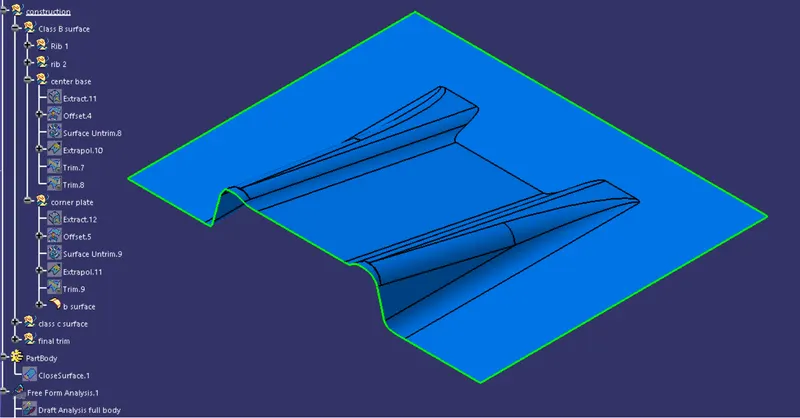
Creation of C surface:
We will use the boundarys and will sweep the to create the c surface
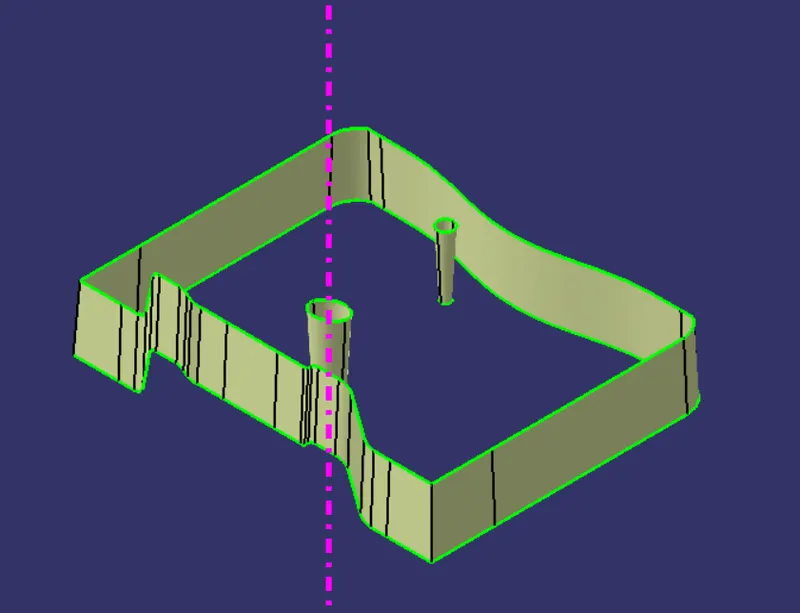
We join the A and C surface together:
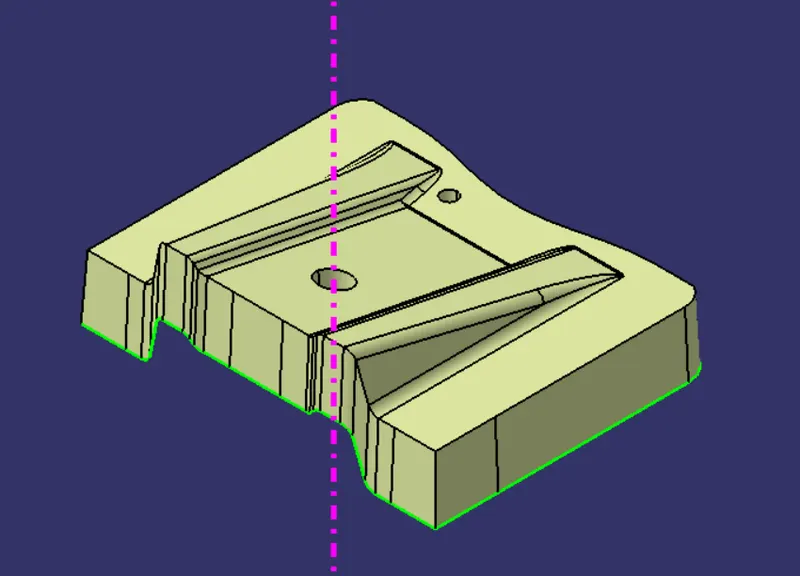
Then we will trim B surface with the join of A and C surface. This wil create the final product.
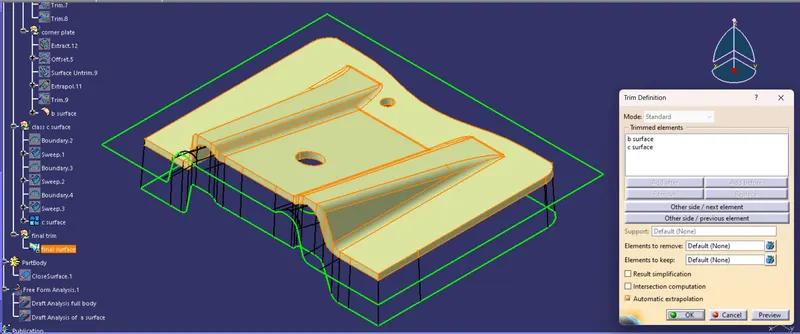
We will use the close surface to Create the solid body :
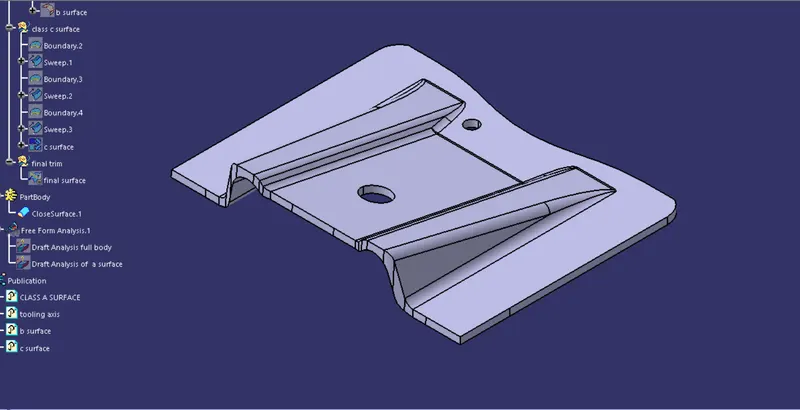
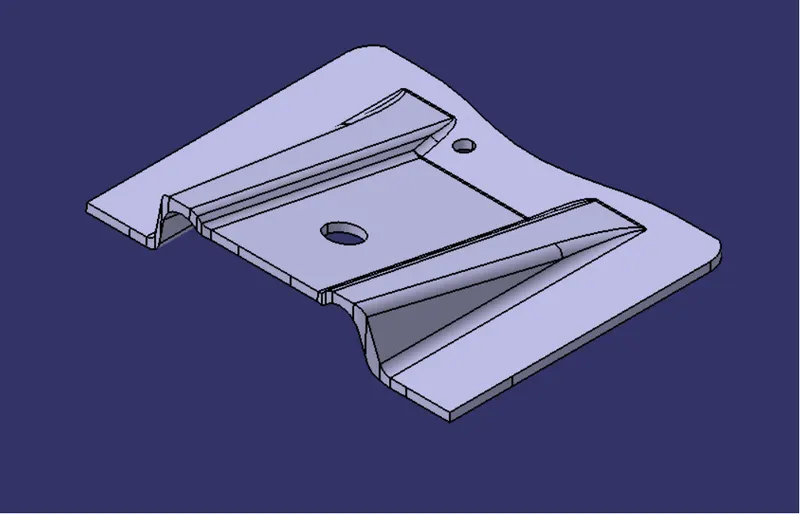
Isometric View:
Front View: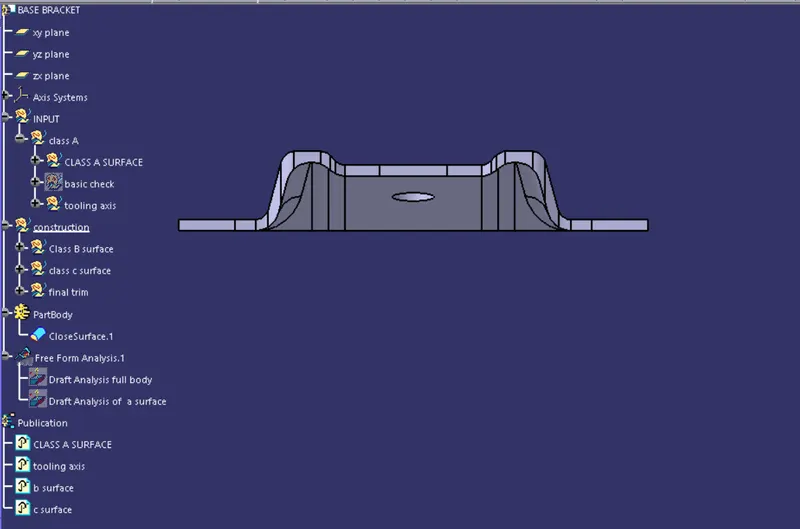
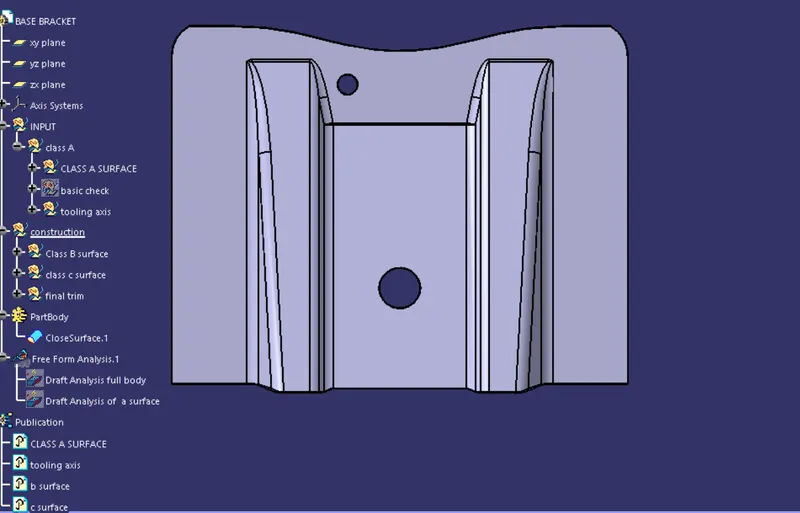
Top View:
We will carry out the draft analysis on the Close surface:
Forward Direction:
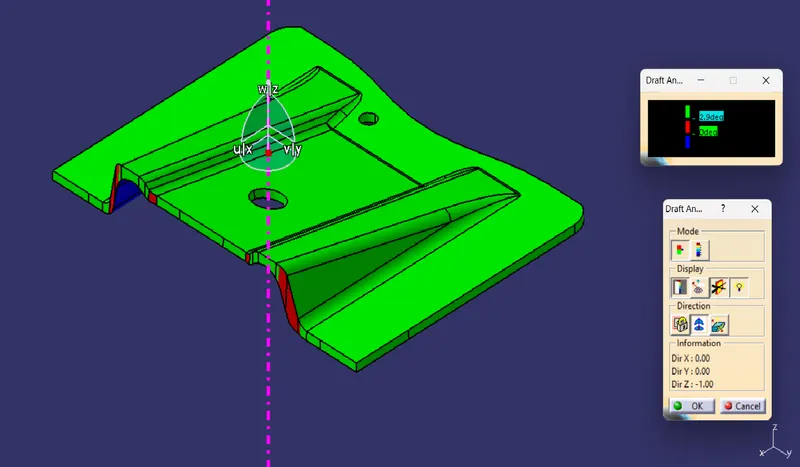
(Note: As i am using the older version of Catia V5 its not able to calculate the angle at some places. I am Sorry)
Reverse Direction:
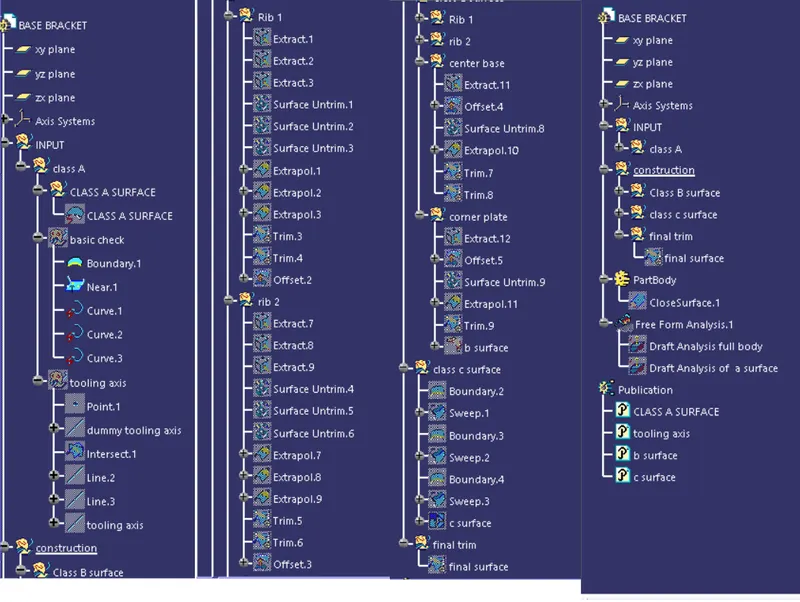
Tree strcture:
Conclusion: what have we learned after completion of the challenge:
1) We learned what are thw uses of different surface and how can we create them.
2) We have also learned that how to carry out the draft analysis and importance of tool axis and how can we create tooling axis using bisecting method.