Week 9 - Challenge 1 - Base Bracket Design
AIM -
To create the solid part body of BASE BRACKET from given Class-A surface.
OBJECTIVE -
The objective of this challenge is to create BASE BRACKET DESIGN along with solid part body from Class-A surface following OEM design standards in CATIA SURFACE WORKBENCH and PART DESIGN.
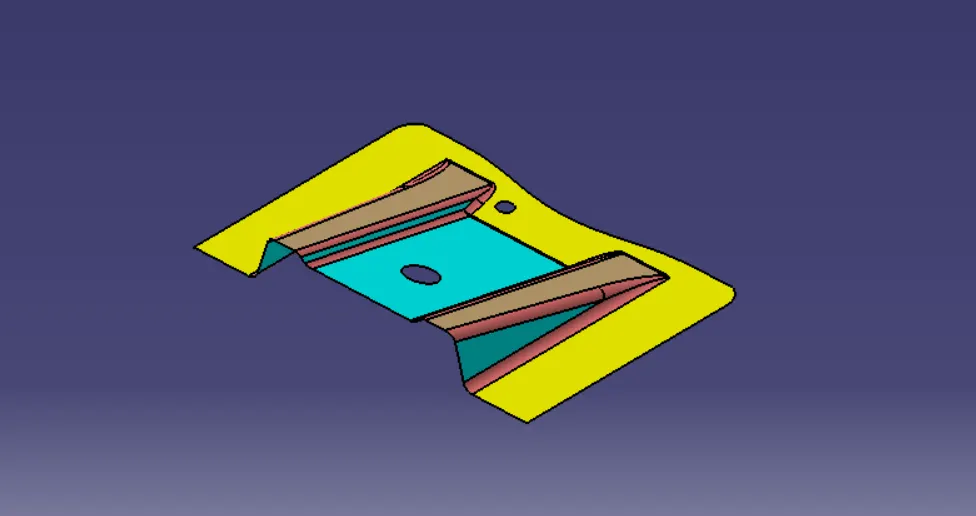
INPUT CLASS 'A' SURFACE -
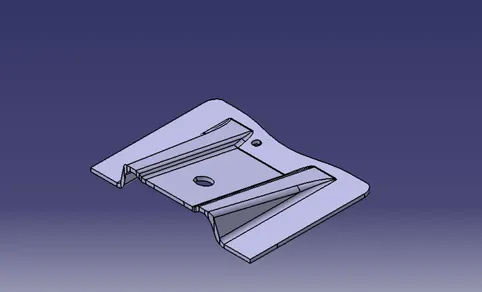
SOLID PART -
DRAFT ANALYSIS:
DRAFT ANGLE: The draft angle is the amount of taper for molded or cast parts perpendicular to the parting line. It can be measured in degrees or mm/mm(in/in). As plastic cools, it shrinks and therefore shrinks onto molding surfaces. Because of this and a few other reasons, we draft(angle) the walls of the plastic part, so as the part is removed it breaks free from the molding surfaces easier and without dragging. A functional part for injection molding has to have drafts facing both cavity and core side to reduce the risk of damage to the parts and ensure ejection. What's also important is to overcome the vacuum forces by letting air in between the mental and the plastic for the part to release properly. Adding an adequate draft angle ensures that warpage upon ejection is prevented while maintaining a decent cosmetic finish.
- Draft angles are generally a requirement of injection molding design (though there are a select few soft materials, like nylon, that can get away with draft angles of zero)
- Draft should be part of design of manufacture and plastic Designer should be aware of its need at the outset of the design process. This allows considerations for design requirements to be taken into account.
Nominal Values for Draft angle:
- 3 Degrees is nominal Draft.
- 5 Degrees can also be manufactured. But it will increase the manufacturing cost.
- 7 Degrees for textured surface.
Importance of DRAFT in Injection Molding:
- Reduces the chance of damage to the part due to friction during release.
- Reduces wear and tear and chances of damage to the mold.
- Ensures a uniform, smooth, unscratched finish when required.
- Ensures the integrity and uniformity of other surface finishes and textures.
- Reduces overall cooling time by reducing or eliminating the need for unconventional ejection setups,
- Most if not all, of these benefits offer either direct or indirect overall production cost reductions.